Independent audio reviews Updated weekly

Honest reviews of audiophile gear, told straight.

Reference-anchored coverage of headphones, speakers, DACs, amplifiers, and sources. Long listening, head-to-head comparisons against the category benchmark, and buying guides built from real verdicts. Zero sponsored takes.

Reviews published
58
Highest score
9.2
Sponsored verdicts
0
Last reviewed

The Audio Stuff is an independent audiophile review site covering hi-fi headphones, loudspeakers, DACs, amplifiers, network streamers and sources, and the cables and accessories that connect them. Every piece of gear gets tested for a minimum of two weeks against a published reference list in its category and price tier. No first-impressions takes, no review-on-arrival pieces, no sponsored verdicts, and no pre-publication review for manufacturers. The point of an honest audio review is to tell you whether a given DAC, headphone amp, or pair of speakers is genuinely worth your money in 2026, in a market where most reviews are either reductive star ratings or marketing-shaped paragraphs. A 9.0 here earns the same anchors as last year's 9.0; the scale stays honest because older gear gets re-ranked when something demonstrably better arrives. Start with the full review archive or open the free audio tools to size an amp, predict room modes, or run a blind ABX test of your own.

The editorial promise

Why our reviews are different.

Four rules, applied to every review without exception. A 9.2 here means the same thing in 2030.

  1. No sponsored verdicts

    Brands have zero editorial input. Pre-publication review is never granted. A negative review ships even if the manufacturer pulls their ad spend.

  2. Long listening, every time

    Two-week minimum on the chain, multiple sources, multiple genres. No first-impressions reviews. No demo-room verdicts.

  3. Reference-anchored scoring

    Every piece is compared head-to-head against a published reference list in its category. A 9.0 on a headphone carries the same weight as a 9.0 on a DAC.

  4. Disclosure first

    Loaner units are flagged in every review header. We never accept payment to influence a verdict - and we publish it if a brand tries.

Read the full editorial standards

The reference rig

Every review runs through the same chain.

Six in-house pieces, each one a previously published review you can read in full, form the fixed reference chain every piece of incoming gear is volume-matched against. Swap one component, hold the rest constant; that is how a single 9.0 carries the same weight across DAC, amp, headphone, and speaker categories.

  1. Reference DAC

    Denafrips Enyo 15th Anniversary

    R-2R ladder, NOS-capable. 9.1/10 - the anchor every DAC under review is volume-matched and compared against.

  2. Reference headphone amplifier

    Denafrips Hades 12th

    Discrete Class A, balanced. 9.0/10 - drives every full-size headphone in the catalogue.

  3. Reference open-back headphone

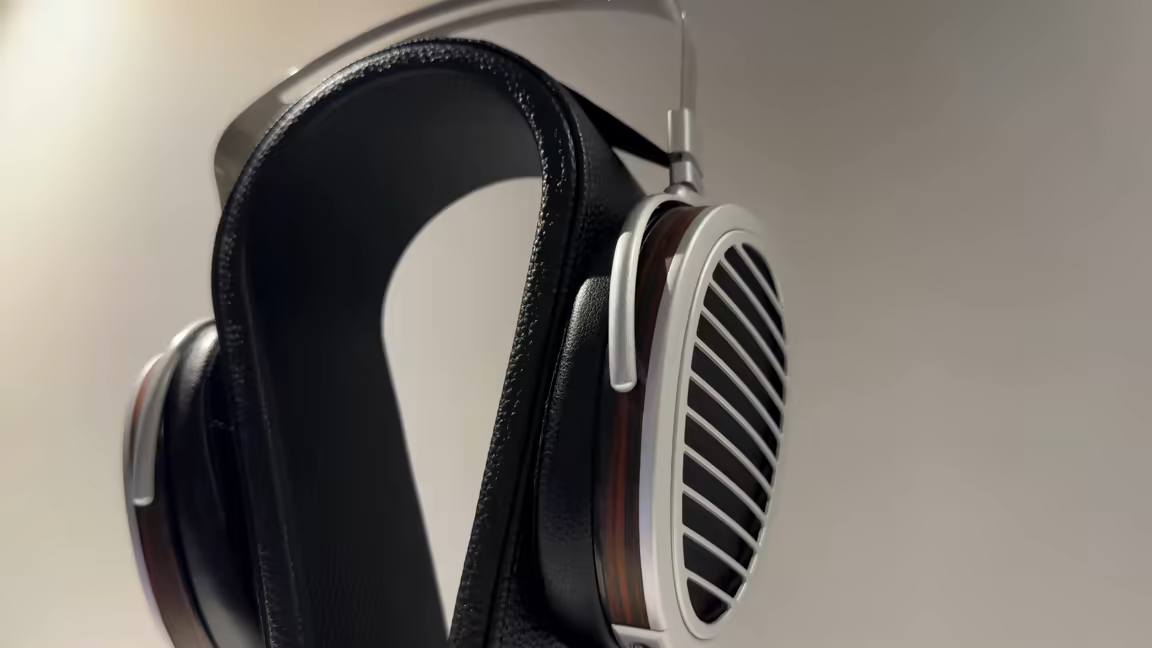
    HIFIMAN Arya Organic

    Planar magnetic, open-back. 9.2/10 - the tonality and resolution anchor for every headphone comparison.

  4. Reference loudspeaker

    Diora Acoustics Chors 5

    Two-way bookshelf. 8.5/10 - the imaging and tonal-balance benchmark for under-$3k speaker reviews.

  5. Reference digital source

    Denafrips Hermes 12th Anniversary

    Bit-perfect digital transport. 8.9/10 - identical feed to every DAC during head-to-head comparisons.

  6. Reference power conditioning

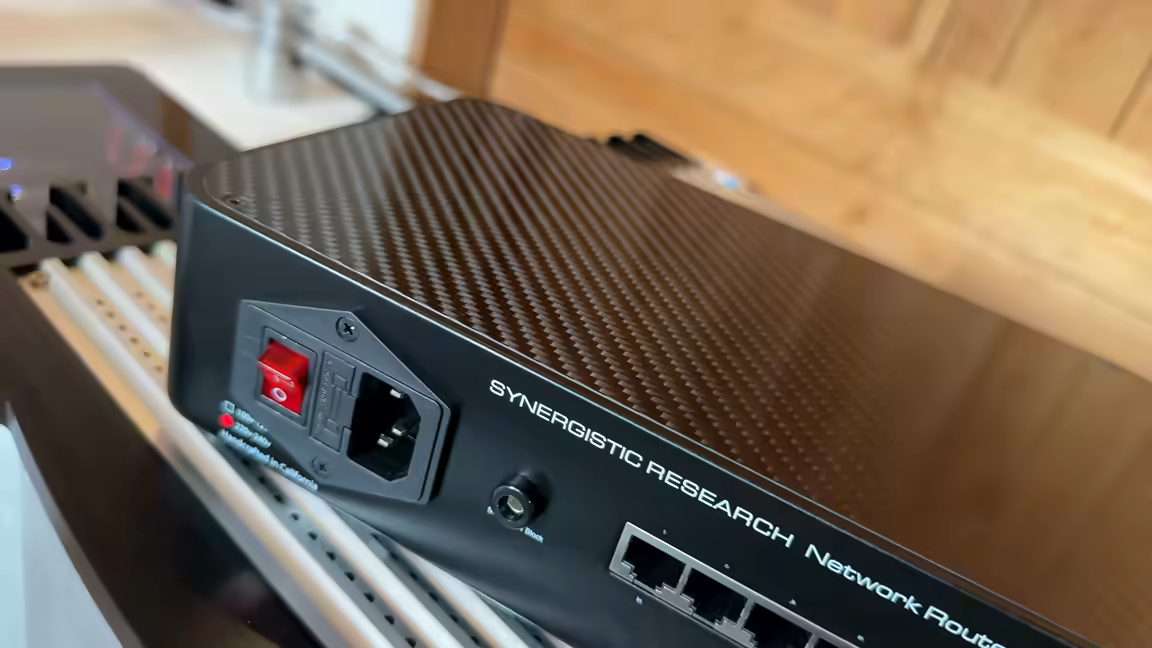
    Synergistic Research PowerCell 14

    Mains conditioning. 9.2/10 - the only Reference-tier accessory in the catalogue; the noise floor every review sits on.

Standards we cite

Independent sources, not in-house dogma.

Every methodology choice on this site (level-matching, listening protocol, loudness target, headphone coupler curve, loudspeaker measurement framework) traces back to one of the published standards listed below.

  1. Listening

    • ITU-R BS.1116-3

      International Telecommunication Union

      Subjective listening test methodology used for double-blind audio comparison.

  2. Measurement

  3. Loudness

    • ITU-R BS.1770-4

      International Telecommunication Union

      LUFS loudness measurement; every A/B comparison is volume-matched to this standard, not by ear.

    • EBU R 128

      European Broadcasting Union

      Programme loudness normalization - keeps reference material at -23 LUFS across albums and genres.

  4. Headphones

    • IEC 60318-4 (711 coupler)

      International Electrotechnical Commission

      Headphone-measurement coupler whose target curve underpins every published headphone FR plot.

    • Harman Target Curve research

      Olive, Welti & Khonsaripour (Audio Engineering Society)

      Listener-preference research informing - but never dictating - the tonality scoring on headphone reviews.

  5. Speakers

Spotted a methodology error or want a source corrected? Email the editorial team. We publish corrections in line with the same scoring rubric we publish for the gear.

Latest reviews

New audiophile gear reviews.

The newest headphones, DACs, amplifiers, speakers, and sources tested on the chain. Each piece earned its score through weeks of comparative listening against the category reference list, with no first-impressions takes.

Browse all 58 audio reviews
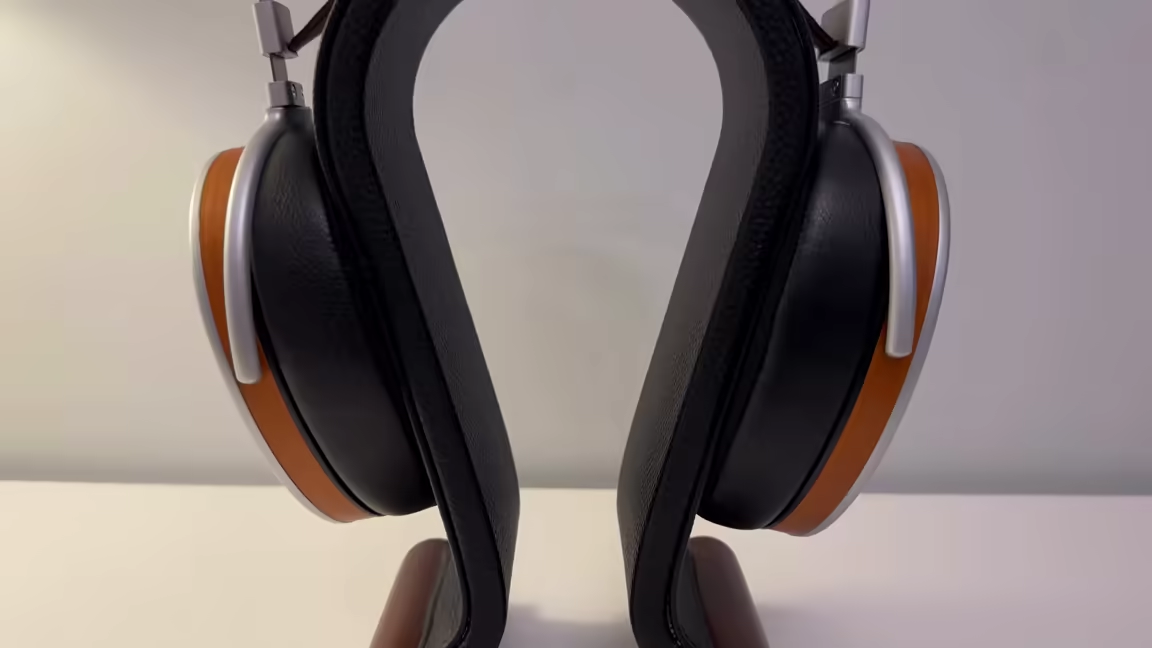
Meze 105 Silva dynamic driver open-back over-ear headphones - featured review on The Audio Stuff's homepage headphones 105 Silva

Meze 105 Silva Review: The Most Beautiful Headphone Under $500?

A $499 open-back dynamic with hand-polished walnut cups, a custom 50mm carbon-fiber driver, and a warm, fun, easy-to-drive tuning that punches well above its price.

$499 7 min Why the 105 Silva earned 8.7/10
Ekustik Woody Queen acoustic treatment pet felt broadband absorber accessory - featured review on The Audio Stuff's homepage accessories Woody Queen

Ekustik Woody Queen Review: Don't Buy Cheap Acoustic Panels

Handmade Czech acoustic panels with a luxurious wood frame and PET felt core - true broadband absorption to 100Hz, zero fiberglass, and a 0.94 NRC rating.

From €399/panel 7 min Why the Woody Queen earned 9.0/10
Kiwi Ears Atheia hybrid planar magnetic dynamic driver headphones - featured review on The Audio Stuff's homepage headphones Atheia

Kiwi Ears Atheia Review: The Best of Two Driver Worlds?

A closed-back hybrid headphone pairing a 50mm dynamic driver with a 14.5mm planar - dynamic slam on the bottom, planar speed on top, in a walnut and aluminum chassis.

$349 6 min Read the Atheia review
HarmonicDyne Eris dynamic driver semi closed over-ear headphones - featured review on The Audio Stuff's homepage headphones Eris

HarmonicDyne Eris Review: The Most Absurd Headphone Bass?

A semi-closed dynamic with 50mm ceramic-metal drivers and a deliberately overwhelming sub-bass tuning - tactile, fun, and tailor-made for EDM, hip-hop, and bass-heavy genres.

$249 6 min See the mixed Eris verdict
Synergistic Research PowerCell 14 power conditioner synergistic research flagship accessory - featured review on The Audio Stuff's homepage accessories PowerCell 14

Synergistic PowerCell 14 Review: A $15K Power Strip?

A 14-outlet flagship power conditioner with seven SRX folded EM cells, ULF+DC biasing, graphene treatment, and a silver matrix ground strap - a tier above any 'power strip'.

$14,495 6 min Why the PowerCell 14 earned Reference
Denafrips Hades 12th preamplifier r2r balanced amplifier - featured review on The Audio Stuff's homepage amplifiers Hades 12th

Denafrips Hades 12th Review: The R2R Preamp That Changes Things

A pure Class A, fully balanced, true discrete preamp with a 60-step relay-based resistor ladder volume control - perfect channel balance, 0.00045% THD, 122dB SNR.

$1,369 6 min Why the Hades 12th earned 9.0/10

Browse by category

Audiophile gear reviews, by category.

Six review hubs covering headphones, speakers, DACs, amplifiers, sources, and the accessories that connect them. Each hub is a focused review archive: every piece compared head-to-head against the category reference list, scored on the same 0 to 10 scale, with the same listening protocol so a 9.0 in one category carries the same weight as a 9.0 in any other.

On YouTube

See the gear. Hear the verdict.

The same reviews, in motion. Long-form listening sessions, A/B comparisons, and the occasional teardown. New videos most weeks.

Meze 105 Silva, latest video review thumbnail
Latest review on video Meze 105 Silva
@TheAudioStuff Watch on YouTube

FAQ

The questions we get most.

How scoring works, what the verdicts mean, and the editorial rules behind every audio review.

  1. How does The Audio Stuff score audio gear?

    Every review carries a single score from 0 to 10 plus a one-word verdict: Reference, Highly Recommended, Recommended, Mixed, or Pass. Scores are anchored to a published reference list per category, so a 9.0 on a headphone carries the same weight as a 9.0 on a DAC, an integrated amp, or a pair of bookshelf speakers. The reference list updates as new gear earns its place; older scores can move when a new benchmark arrives.

  2. Are any audio reviews paid for or sponsored?

    No - never. Brands have zero editorial input on reviews. Pre-publication review of drafts is never granted. We never accept payment to influence a verdict, and if a manufacturer pulls advertising over a negative review, that gets disclosed in the piece too. The wallet of the reader is the only one we are looking out for.

  3. Do you buy gear yourself or accept manufacturer loaners?

    Both, and it is always disclosed. Most flagship and reference-tier gear is loaned by manufacturers or distributors - those loaners are flagged at the top of every review. Mid-tier and budget pieces are usually purchased outright, often used. Either way the review still gets written, the piece still earns the score it deserves, and the unit goes back when the loan window closes.

  4. How long does each audio review take to complete?

    Two weeks minimum on the chain in real daily use - typically four to eight weeks for flagship gear, sometimes longer. Reviews are compared against multiple reference pieces, across multiple sources, in multiple genres, before a score is committed. There are no first-impressions reviews and no demo-room verdicts.

  5. Can I submit audio gear for review?

    Yes. Email contact@theaudiostuff.com with the unit name, asking price, return window, and a short pitch on why it deserves coverage. We will respond before anything ships. There is no guarantee of a positive verdict, and we do not commit to a publishing date until the listening period is complete.

  6. What does 'Reference' mean in the verdict scale?

    Reference is the highest verdict on the scale. It means the piece is a benchmark in its category - the unit that other gear in the same class is judged against. Reference is not the same as best for everyone (price, taste, system context all matter), but it is the unequivocal best at what it sets out to do, with no meaningful flaws holding it back at its price tier.

  7. What audio gear brands does The Audio Stuff cover?

    We review gear from any brand making noteworthy products - established names like Sennheiser, Focal, KEF, HIFIMAN, and SMSL, alongside specialist manufacturers like Ferrum, Holo Audio, Eversolo, Schiit, Topping, and Audeze. Category, merit, and reader requests drive the review queue. Brand relationships do not.

  8. Do reviews use measurements or just listening tests?

    Both, in that order of weight. Listening is always primary - over weeks, on multiple chains, against published references. Measurements (frequency response, distortion, output impedance, jitter, sensitivity) are added when they reveal something audible or contradict the marketing claims. We do not chase graphs over what the gear actually sounds like in a real room.

  9. How is audio gear compared head-to-head in a review?

    Two ways. Same chain, different gear - swap the DAC, swap the amp, swap the headphones - same source, same recording, same volume-matched level. And A/B comparisons against the published reference list at the same price tier. Every review names the comparison units explicitly so the verdict is reproducible if you have one of those references on hand.