
HIFIMAN EF499 vs HIFIMAN EF500
The HIFIMAN EF500 scores one step higher, 8.2 to 8.1, and the HIFIMAN EF499 costs $250 less. The EF500 review puts the choice against the EF499 this way: "Two things, and they look nearly identical otherwise. The EF500 has the more powerful amplifier section, and it is the cheapest unit HIFIMAN make that carries their own Himalaya R2R chip rather than a third-party ladder."
By Jakub Charkiewicz, updated .
Our pick HIFIMAN EF499 The EF500 leads 8.2 to 8.1, one step, the scale's narrowest gap, and the EF499 costs $250 less, so most buyers should take the EF499. Pay the $250 for the EF500 if you care most about measured noise.
When to choose the EF500 over the EF499The short version
The HIFIMAN EF499 scores 8.1/10 (Recommended) and the HIFIMAN EF500 8.2/10 (Recommended). At $299 against $549, the EF499 saves you $250 over the EF500. On measured noise, the EF500's review lists "117dB SNR, <0.0025% THD" where the EF499's lists "THD+N of 0.008% isn't a measurement chart-topper". On features the EF499 has the edge over the EF500: "Doubles as a vertical headphone stand" against "Filter differences are subtle". The published pick rule chooses the EF499, for most buyers, over the higher-scored EF500.
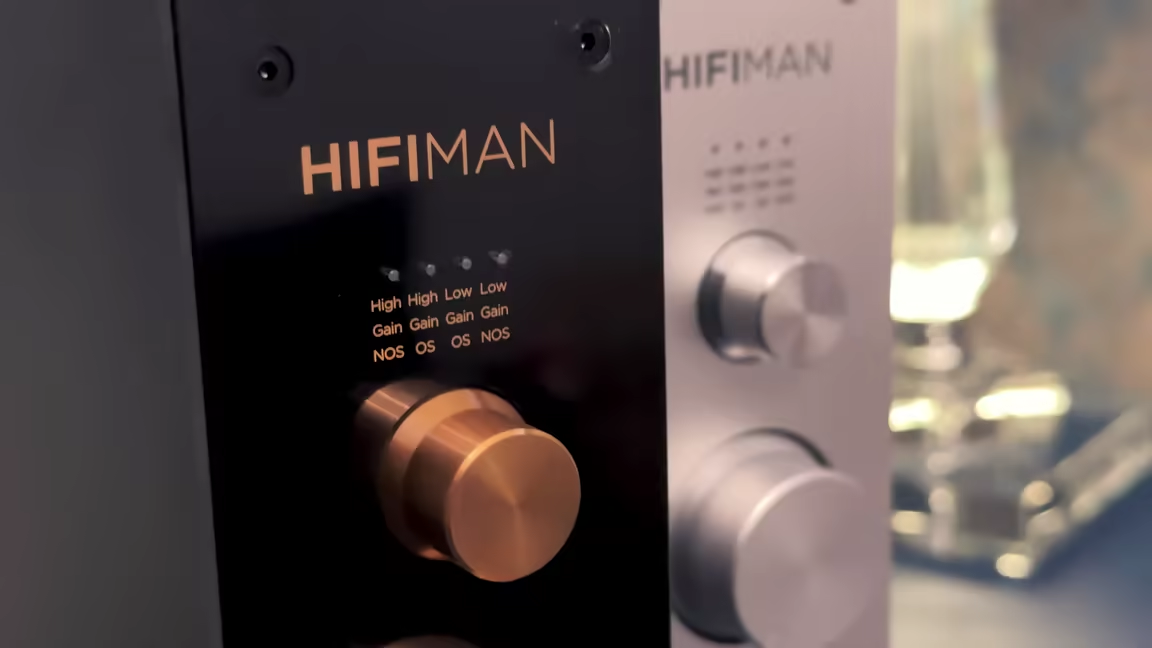
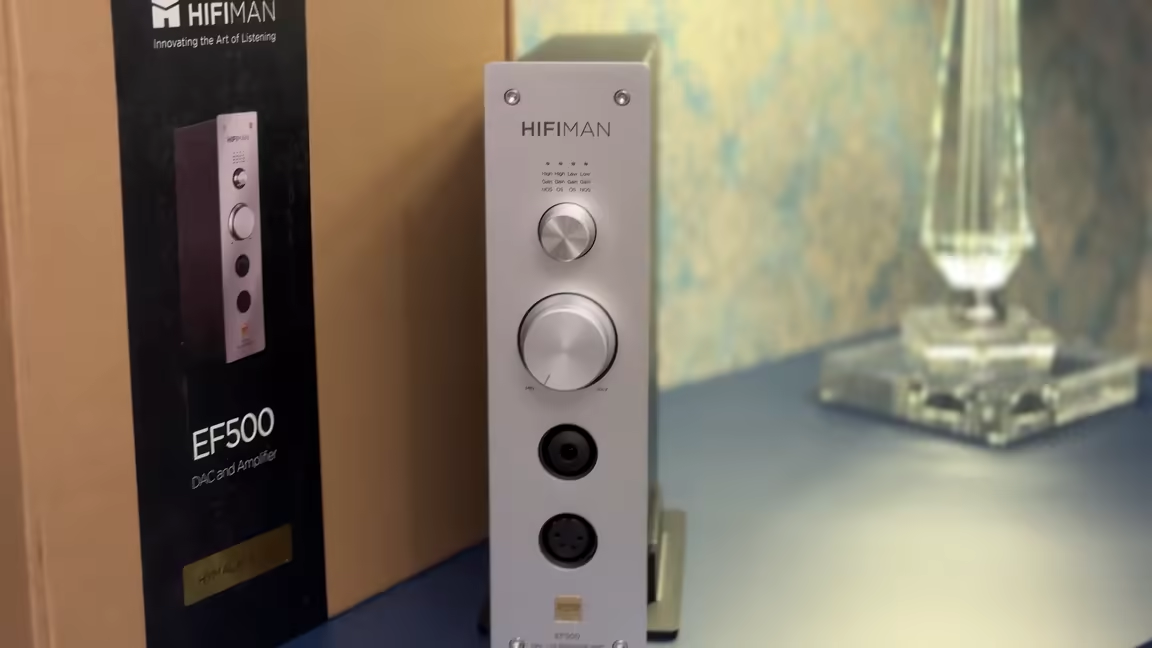
Higher score
HIFIMAN EF500
In the reviewer's words
The EF500 review compares it with the EF499 directly, verbatim below.
Two things, and they look nearly identical otherwise. The EF500 has the more powerful amplifier section, and it is the cheapest unit HIFIMAN make that carries their own Himalaya R2R chip rather than a third-party ladder. That is the real upgrade: the same architecture used in their higher-end units, in a much more affordable chassis. The feature sets overlap heavily and the EF500 costs more, so if the Himalaya chip and the extra power do not matter to you, the EF499 is the sensible buy.
Which one to buy
Our pick is the EF499 for most buyers, and the EF500 if you care most about measured noise.
HIFIMAN EF499
Our pick. Choose it if:
- The EF499's features matter more to you than the EF500's measured noise.
- Keeping $250 matters more to you than the EF500's one-step lead over the EF499, 8.2 against 8.1.
HIFIMAN EF500
Choose it instead if:
- The EF500's measured noise matters more to you than the EF499's features.
- You would pay $250 over the EF499 for the EF500's 8.2 against 8.1 on the rubric.
What matters most to you?
| What matters | HIFIMAN EF499 | HIFIMAN EF500 |
|---|---|---|
| Sound | 8.3 | 8.2 |
| Technical performance | 7.7 | 8.2 |
| Build & comfort | 8.3 | 8.5 |
| System fit | 8.2 | 8.2 |
| Value | 8.1 | 7.9 |
The widest gap is technical performance: 7.7 for the EF499 against 8.2 for the EF500. Each column comes from its own review's pros and cons, 14 for the EF499 and 14 for the EF500, and recombines to its headline score, 8.1 and 8.2. How a score is built
Where they differ
Five topics the EF499 and EF500 reviews both discuss, the most decisive first.
Only the EF500
Noise and measurements
The EF500 review lists two strengths here, the EF499 review one flaw.
- EF500, strength: "117dB SNR, <0.0025% THD"
- EF499, flaw: "THD+N of 0.008% isn't a measurement chart-topper"
Circuit and chips
The EF499 review lists one flaw here and the EF500 review one strength; the EF500 review weighs the two on this directly, quoted above.
- EF499, flaw: "Not the typical HIFIMAN Himalaya R2R architecture"
- EF500, strength: "First Himalaya R2R DAC chip at this price point"
Features and formats
The EF499 review lists three strengths here, the EF500 review two strengths and one flaw.
- EF499, strength: "Doubles as a vertical headphone stand"
- EF500, flaw: "Filter differences are subtle"
Build and controls
The EF499 review lists two strengths here and the EF500 review one strength and one flaw; the EF500 review weighs the two on this directly, quoted above.
- EF499, strength: "All-metal chassis, no QC issues"
- EF500, strength: "All-metal chassis with industrial design"
Placement
The EF500 review lists one strength and one flaw here, the EF499 review one flaw.
- EF500, strength: "Vertical tower form factor saves desk space"
- EF499, flaw: "Primarily designed for vertical placement"
Only the EF499 review discusses detail (one flaw) and bass (one strength); only the EF500 review discusses value (one flaw).
What they have in common
The EF499 and the EF500 are both DAC/amps from HIFIMAN, and both have a USB input, a coaxial input, RCA outputs, balanced XLR outputs, a built-in network streamer, an R2R conversion stage, NOS/OS filter selection, a vertical tower form, and a balanced headphone output. Neither the EF499 nor the EF500 has an analog input. The EF499 and EF500 reviews both praise system matching, and both fault connectivity and soundstage.
On paper
The EF499 ranks #3 and the EF500 #2 of the 4 headphone amps reviewed here; on value the EF499 rates Strong and the EF500 Fair. Into 32 Ω, the EF499 is rated at 4.35 W balanced / 1.28 W single-ended and the EF500 at 4.5 W balanced. Inside, the EF499 uses Philips R2R chip (NOS/OS) and the EF500 Himalaya R2R, PCM up to 24-bit / 768 kHz. The EF499 and EF500 spec sheets match on topology (R2R ladder), inputs (USB-B, USB-C, Coaxial, Ethernet (network streaming)), and outputs (XLR + RCA line out, 4-pin XLR, 6.35 mm).
The EF499 and EF500 figures come from HIFIMAN's official site.
| Spec | HIFIMAN EF499 | HIFIMAN EF500 |
|---|---|---|
| Architecture | Philips R2R chip (NOS/OS) | Himalaya R2R, PCM up to 24-bit / 768 kHz |
| Power output | 4.35 W balanced / 1.28 W single-ended into 32 Ω | 4.5 W balanced into 32 Ω |
| THD+N | 0.008% | <0.0025% |
| SNR | 99 dB (A-weighted) | 117 dB |
| Channel separation | 95 dB | 131 dB |
How these verdicts were reached
The EF499 was reviewed in February 2025 and the EF500 in June 2025, 4 months later, on one reference chain and rubric. The EF500 review compares it with the EF499 directly, quoted above. The EF499 and EF500 reviews were both re-checked in September 2026.
Questions about the EF499 and EF500
What is the difference between the HIFIMAN EF499 and the HIFIMAN EF500?
The HIFIMAN EF500 edges the EF499 where it is measured, 8.2 to 8.1. In the reviews' own lines, features go to the EF499 and measured noise to the EF500.
Which should you buy, the HIFIMAN EF499 or the HIFIMAN EF500?
The EF499, for most buyers: the EF500's 8.2 against 8.1 is the smallest gap the scale records, and the published pick rule does not pay $250 for it. The EF500 review's own answer on the EF499 is quoted in full above.
Which measures quieter, the EF499 or the EF500?
The EF500: its review lists two strengths on measured noise, the EF499 review one flaw.
Which has the more useful features, the EF499 or the EF500?
The EF499, narrowly: its review lists three strengths on features, the EF500 review two strengths and one flaw.
Is the EF500 worth $250 more than the EF499?
For most buyers, no: the EF500's extra $250 over the EF499 buys 0.1 on the rubric, one step, the smallest the scale can express. In the reviews' own lines, it buys the EF500's measured noise and placement over the EF499.
Where they rank
In Best Headphone Amplifiers the EF500 ranks #2 and the EF499 #3.
EF500 #2 EF499 #3 - Best Value 4 picks