
Sivga Anser vs Sivga Luan
The Sivga Luan scores one step higher, 8.1 to 8.0, and the Sivga Anser costs $100 less. The reviews favour the Anser over the Luan on bass.
By Jakub Charkiewicz, updated .
Our pick Sivga Anser The Luan leads 8.1 to 8.0, one step, the scale's narrowest gap, and the Anser costs $100 less, so most buyers should take the Anser.
When to choose the Luan over the AnserThe short version
The Sivga Anser scores 8.0/10 (Recommended) and the Sivga Luan 8.1/10 (Recommended). At $199 against $299, the Anser saves you $100 over the Luan. On bass, the Anser's review lists "Unique springy/bouncy mid-bass texture - addictive" where the Luan's lists "Bass rolls off below ~45Hz". On in-box accessories the Luan has the edge over the Anser: "Hard leather carrying case included" against "Hemp bag offers limited protection". The published pick rule chooses the Anser, for most buyers, over the higher-scored Luan.
Which one to buy
Our pick is the Anser; the cards say when the Luan is the better buy.
Sivga Anser
Our pick. Choose it if:
- Bass matters most to you, and that is where the reviews favour the Anser over the Luan.
- Keeping $100 matters more to you than the Luan's one-step lead over the Anser, 8.1 against 8.0.
Sivga Luan
Choose it instead if:
- You would pay $100 over the Anser for the Luan's 8.1 against 8.0 on the rubric.
What matters most to you?
| What matters | Sivga Anser | Sivga Luan |
|---|---|---|
| Sound | 7.9 | 8.1 |
| Technical performance | 7.6 | 7.8 |
| Build & comfort | 8.5 | 8.5 |
| System fit | 8.2 | 8.1 |
| Value | 8.3 | 8.1 |
No axis separates the Anser and the Luan by more than 0.2. Each column comes from its own review's pros and cons, 14 for the Anser and 14 for the Luan, and recombines to its headline score, 8.0 and 8.1. How a score is built
Where they differ
Three topics the Anser and Luan reviews both discuss, the most decisive first.
Only the Anser
Only the Luan
Mids and vocals
The Anser review lists one strength and one flaw here and the Luan review one strength and one flaw, with no clear edge.
- Anser, strength: "Natural, warm midrange with great vocal body"
- Luan, strength: "Natural, chocolatey midrange with detailed vocals"
Bass
The Anser review lists one strength and one flaw here, the Luan review one flaw.
- Anser, strength: "Unique springy/bouncy mid-bass texture - addictive"
- Luan, flaw: "Bass rolls off below ~45Hz"
In the box
The Luan review lists one strength here, the Anser review one strength and one flaw.
- Luan, strength: "Hard leather carrying case included"
- Anser, flaw: "Hemp bag offers limited protection"
Only the Anser review discusses treble (one flaw) and amp matching (one strength); only the Luan review discusses cabling (one strength, one flaw).
What they have in common
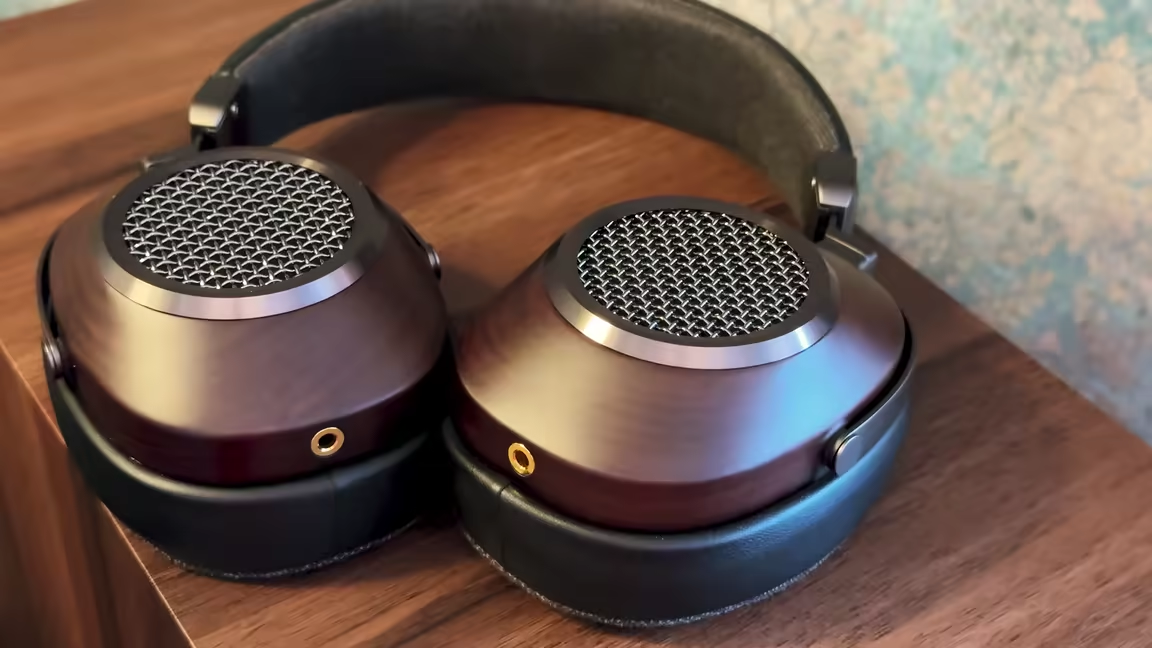
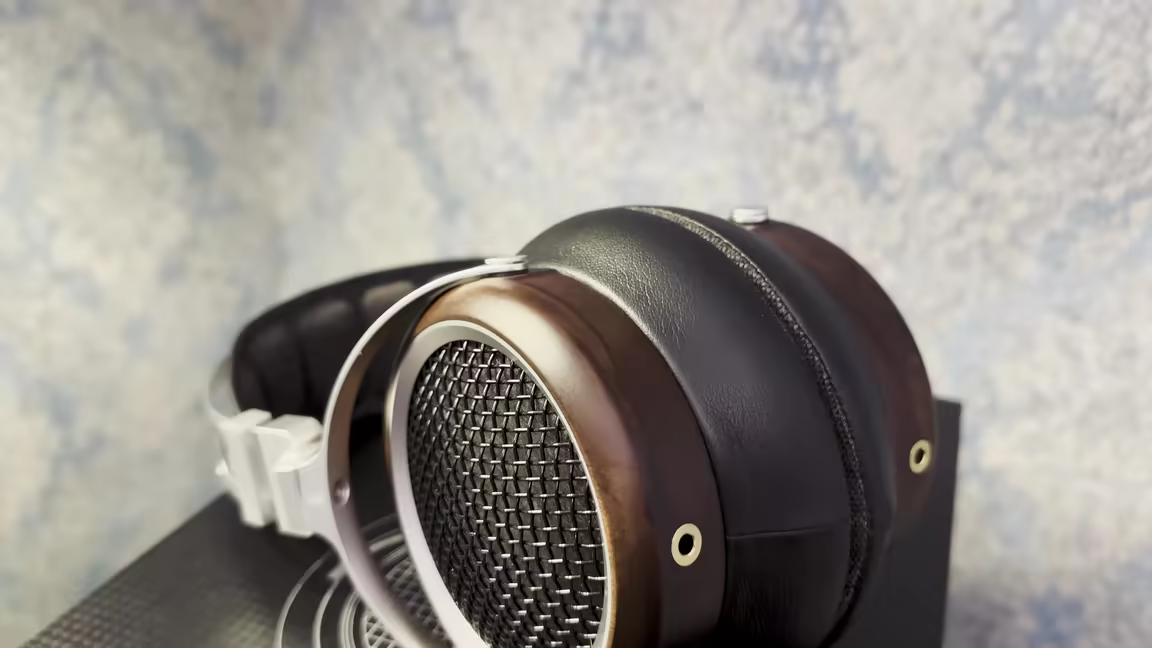
The Anser is an open-back dynamic headphone and the Luan a semi-open dynamic headphone, both from Sivga, and both have cups that swivel and wood on the earcups. The Anser and Luan reviews both praise comfort and build, and both fault soundstage.
Sound signature, overlaid
On presentation the Anser sits near neutral where the Luan sounds relaxed and on stage size the Anser sounds wide-staged where the Luan sits near neutral. The Anser and the Luan both sound warm, energetic, and lean.
On paper
The Anser ranks #15 and the Luan #13 of the 30 headphones reviewed here; on value the Anser and the Luan both rate Strong. To reach 110 dB peaks the Anser needs at most 83 mW (most dongle DACs) and the Luan at most 263 mW (a desktop headphone amplifier). The Anser and Luan spec sheets match on driver (Dynamic) and impedance (38 Ω).
The Anser and Luan figures come from Sivga's official site.
| Spec | Sivga Anser | Sivga Luan |
|---|---|---|
| Sensitivity | 105 dB | 100 dB |
Only the Anser review records frequency response and weight; only the Luan review records connector and magnets.
How these verdicts were reached
The Luan was reviewed in November 2024 and the Anser in June 2025, 7 months later, on one reference chain and rubric. The Anser review never mentions the Luan, nor the Luan review the Anser: two separate sessions. The Anser and Luan reviews were both re-checked in September 2026.
Questions about the Anser and Luan
What is the difference between the Sivga Anser and the Sivga Luan?
Scores first: the Sivga Luan takes it from the Anser, 8.1 to 8.0. The reviews favour the Anser over the Luan on bass. On signature the Anser and the Luan sit close together, axis by axis.
Which should you buy, the Sivga Anser or the Sivga Luan?
The Anser, for most buyers: the Luan's 8.1 against 8.0 is the smallest gap the scale records, and the published pick rule does not pay $100 for it.
Which has the better bass, the Anser or the Luan?
The Anser, narrowly: its review lists one strength and one flaw on bass, the Luan review one flaw.
Is the Luan worth $100 more than the Anser?
For most buyers, no: the Luan's extra $100 over the Anser buys 0.1 on the rubric, one step, the smallest the scale can express. In the reviews' own lines, it buys the Luan's in-box accessories over the Anser.
Where they rank
In Best Headphones Under $500 the Luan ranks #6 and the Anser #7; in Best Open-Back Headphones the Luan ranks #12 and the Anser #13; only the Anser makes Best Budget Headphones (#1).
Anser #1 - Best Overall Luan not listed 4 picks
Luan #6 Anser #7 12 picks
Luan #12 Anser #13 14 picks