
Sivga Anser vs Verum Audio Verum 1
The Sivga Anser and the Verum Audio Verum 1 score the same, 8.0 each, and the Anser costs $150 less. The reviews favour the Anser on amp matching, and the Verum 1 on soundstage and bass.
By Jakub Charkiewicz, updated .
Our pick Sivga Anser The Anser and the Verum 1 both score 8.0, so the $150 the Anser saves decides it. The $150 extra buys the Verum 1's soundstage and bass, where the reviews favour it.
When to choose the Verum 1 over the AnserThe short version
The Sivga Anser scores 8.0/10 (Recommended) and the Verum Audio Verum 1 8.0/10 (Recommended). At $199 against $349, the Anser saves you $150 over the Verum 1. On amp matching, the Anser's review lists "Easy to drive (38Ω, 105dB sensitivity)" where the Verum 1's lists "8Ω impedance demands real current from the amplifier". On soundstage the Verum 1 has the edge over the Anser: "Can place sounds behind your head" against "Soundstage is on the intimate side - not super wide". The published pick rule chooses the Anser over the Verum 1.

Too close to call
Verum Audio Verum 1
Which one to buy
Our pick is the Anser, unless its soundstage or bass would be a dealbreaker; then the Verum 1.
Sivga Anser
Our pick. Choose it if:
- The Anser's amp matching matters more to you than the Verum 1's soundstage and bass.
- You would rather pay $150 less for the Anser than for the Verum 1, at the same 8.0 score.
Verum Audio Verum 1
Choose it instead if:
- The Verum 1's soundstage and bass matter more to you than the Anser's amp matching.
- You want the Verum 1's more analytical sound; the Anser sits closer to neutral there.
What matters most to you?
| What matters | Sivga Anser | Verum Audio Verum 1 |
|---|---|---|
| Sound | 7.9 | 8.2 |
| Technical performance | 7.6 | 8.0 |
| Build & comfort | 8.5 | 8.3 |
| System fit | 8.2 | 7.5 |
| Value | 8.3 | 7.8 |
The widest gap is system fit: 8.2 for the Anser against 7.5 for the Verum 1. Each column comes from its own review's pros and cons, 14 for the Anser and 14 for the Verum 1, and recombines to its headline score, 8.0 and 8.0. How a score is built
Where they differ
Six topics the Anser and Verum 1 reviews both discuss, the most decisive first.
Only the Anser
Only the Verum 1
Amp and source matching
The Anser review lists one strength here, the Verum 1 review two flaws.
- Anser, strength: "Easy to drive (38Ω, 105dB sensitivity)"
- Verum 1, flaw: "8Ω impedance demands real current from the amplifier"
Soundstage and imaging
The Verum 1 review lists one strength and one flaw here, the Anser review two flaws.
- Verum 1, strength: "Can place sounds behind your head"
- Anser, flaw: "Soundstage is on the intimate side - not super wide"
Bass
The Verum 1 review lists one strength here, the Anser review one strength and one flaw.
- Verum 1, strength: "Ruler-flat bass extension down to 20Hz, fast yet with long decay"
- Anser, flaw: "Sub-bass is present but not the main focus"
Treble
The Verum 1 review lists one strength and one flaw here, the Anser review one flaw.
- Verum 1, strength: "Smooth, non-fatiguing treble"
- Anser, flaw: "Treble could be a bit more refined"
Mids and vocals
The Verum 1 review lists one strength here, the Anser review one strength and one flaw.
- Verum 1, strength: "Full, warm, inviting midrange with forward vocals"
- Anser, flaw: "Upper mids may stand out on some tracks"
In the box
The Anser review lists one strength and one flaw here, the Verum 1 review one flaw.
- Anser, strength: "Eco-friendly hemp bag and minimal packaging"
- Verum 1, flaw: "Only single-ended cable in the box"
Only the Verum 1 review discusses cabling (one strength, one flaw), and the Anser review does not.
What they have in common
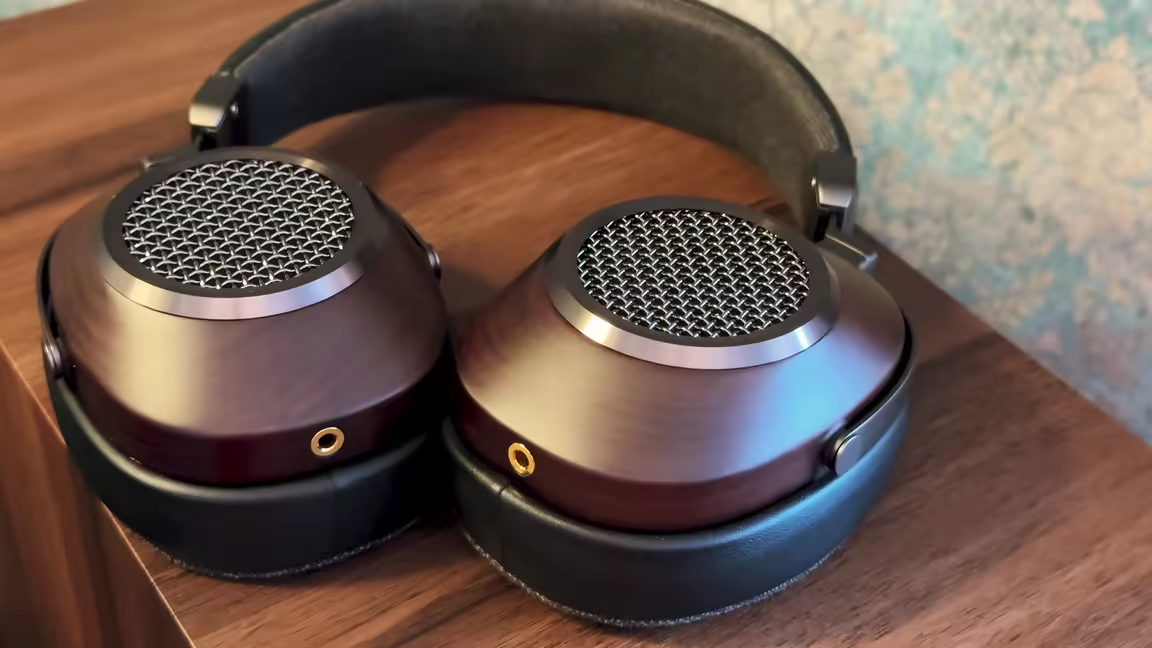
The Anser and the Verum 1 are both open-back headphones, the Anser with a dynamic driver and the Verum 1 with a planar magnetic one, and both have wood on the earcups. The Anser and Verum 1 reviews both praise comfort and build.
Sound signature, overlaid
On tonal balance the Anser sounds warm where the Verum 1 sits near neutral, on presentation the Anser sits near neutral where the Verum 1 sounds analytical, on bass weight the Anser sounds lean where the Verum 1 sits near neutral, and on stage size the Anser sounds wide-staged where the Verum 1 sits near neutral. The Anser and the Verum 1 both sound energetic.
On paper
The Anser and the Verum 1 share #15 of the 30 headphones reviewed here; on value the Anser rates Strong and the Verum 1 Fair. To reach 110 dB peaks the Anser needs at most 83 mW (most dongle DACs) and the Verum 1 about 25 mW (a phone jack or any dongle).
The Anser and Verum 1 figures come from Sivga's official site and Verum Audio's official site.
| Spec | Sivga Anser | Verum Audio Verum 1 |
|---|---|---|
| Driver | Dynamic | 82 mm planar, 28 rare-earth magnets |
| Impedance | 38 Ω | 8 Ω |
| Sensitivity | 105 dB | 96 dB/mW |
Only the Anser review records frequency response and weight, not the Verum 1 review.
How these verdicts were reached
The Verum 1 was reviewed in November 2024 and the Anser in June 2025, 8 months later, on one reference chain and rubric. The Anser review never mentions the Verum 1, nor the Verum 1 review the Anser: two separate sessions. The Anser and Verum 1 reviews were both re-checked in September 2026.
Questions about the Anser and Verum 1
What is the difference between the Sivga Anser and the Verum Audio Verum 1?
On the rubric the Anser and the Verum 1 are level at 8.0. In the reviews' own lines, amp matching goes to the Anser and soundstage and bass to the Verum 1. On voicing the Verum 1 is the more analytical of the two; the Anser does not lean far on that axis.
Which should you buy, the Sivga Anser or the Verum Audio Verum 1?
The Anser: level with the Verum 1 at 8.0, it costs $150 less.
Which is easier to drive, the Anser or the Verum 1?
The Anser: its review lists one strength on amp matching, the Verum 1 review two flaws.
How do the Anser and the Verum 1 compare on soundstage and imaging?
The Verum 1, narrowly: its review lists one strength and one flaw on soundstage, the Anser review two flaws.
Is the Verum 1 worth $150 more than the Anser?
Not on score: the Verum 1 costs $150 more than the Anser for the same score. In the reviews' own lines, it buys the Verum 1's soundstage and bass over the Anser.
Where they rank
In Best Headphones Under $500 the Anser ranks #7 and the Verum 1 #8; in Best Open-Back Headphones the Anser ranks #13 and the Verum 1 #14; only the Anser makes Best Budget Headphones (#1); only the Verum 1 makes Best Planar Magnetic Headphones (#10).
Anser #1 - Best Overall Verum 1 not listed 4 picks
Anser #7 Verum 1 #8 12 picks
Best Planar Magnetic Headphones
Verum 1 #10 Anser not listed 11 picks
Anser #13 Verum 1 #14 14 picks