
SMSL DL100 vs SMSL DO100 PRO
The SMSL DL100 scores 0.2 higher at about the same price as the SMSL DO100 PRO. Only the DL100's review singles out its measured noise and value, and only the DO100 PRO's its circuit design.
By Jakub Charkiewicz, updated .
Our pick SMSL DL100 The DL100 is 0.2 ahead on score at close to the DO100 PRO's price. Against the DL100, the DO100 PRO's case is its circuit design, which only its own review singles out.
When to choose the DO100 PRO over the DL100The short version
The SMSL DL100 scores 8.2/10 (Recommended) and the SMSL DO100 PRO 8.0/10 (Recommended). The DL100 and DO100 PRO cost about the same ($179 against $219). The published pick rule chooses the DL100 over the DO100 PRO.
In the reviewer's words
The DL100 review mentions the DO100 PRO in passing, verbatim below.
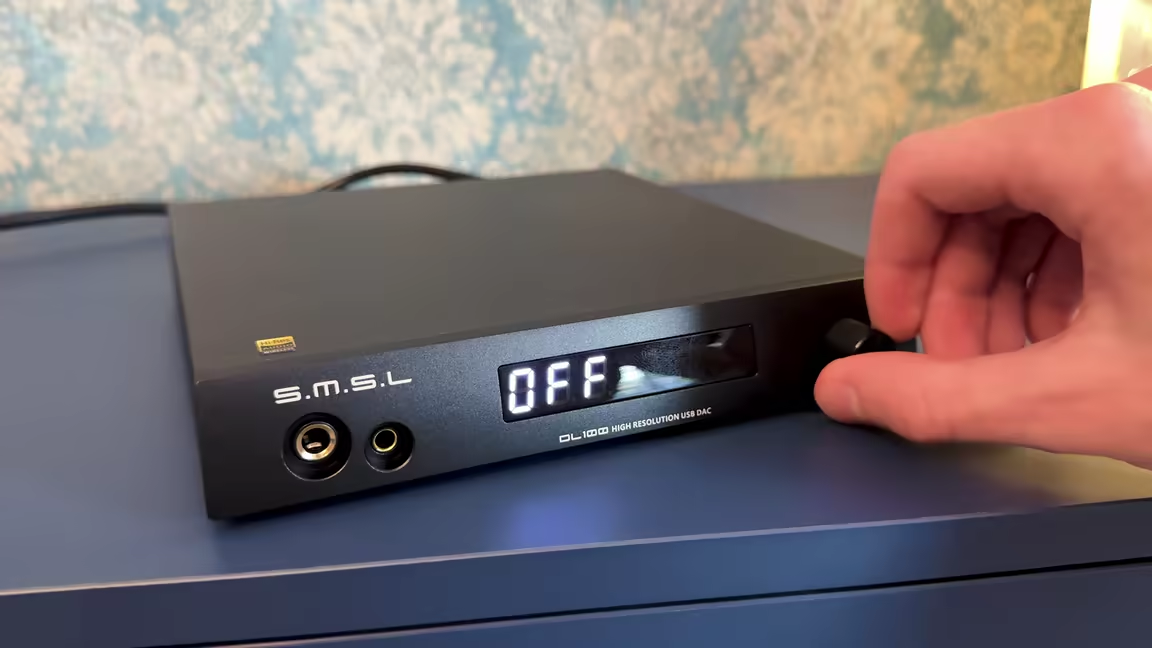
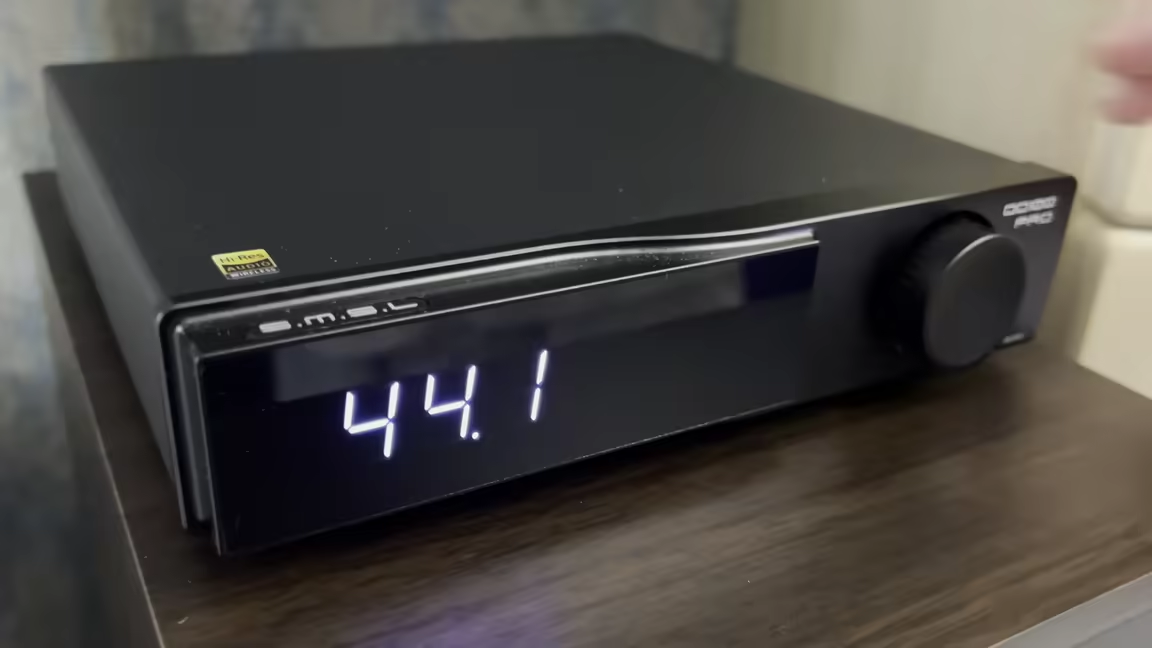
The chassis is fully metal, made out of bent aluminum sheet. It's not super thick, but it's also not as thin as on the DO100 PRO - one of their products I recently had a chance to review.
Which one to buy
Our pick is the DL100; the cards say when the DO100 PRO is the better buy.
SMSL DL100
Our pick. Choose it if:
- The DL100's measured noise and value appeal to you: only the DL100 review singles them out, where the DO100 PRO review is silent.
- You want the DL100's higher score, 8.2 against 8.0, at about the DO100 PRO's price.
SMSL DO100 PRO
Choose it instead if:
- The DO100 PRO's circuit design appeals to you: only the DO100 PRO review singles it out, where the DL100 review is silent.
What matters most to you?
| What matters | SMSL DL100 | SMSL DO100 PRO |
|---|---|---|
| Sound | 8.0 | 7.9 |
| Technical performance | 8.0 | 7.7 |
| Build & comfort | 8.2 | 8.1 |
| System fit | 8.4 | 8.5 |
| Value | 8.8 | 8.2 |
The widest gap is value: 8.8 for the DL100 against 8.2 for the DO100 PRO. Each column comes from its own review's pros and cons, 13 for the DL100 and 13 for the DO100 PRO, and recombines to its headline score, 8.2 and 8.0. How a score is built
Where they differ
No topics the DL100 and DO100 PRO reviews both discuss, the most decisive first.
Only the DL100
Only the DO100 PRO
Only the DL100 review discusses mids (two flaws), system matching (one flaw), bass (one flaw), measured noise (one strength), and value (one strength); only the DO100 PRO review discusses soundstage (one flaw), tonal balance (one flaw), build (one strength, two flaws), and circuit design (one strength).
What they have in common
The DL100 is a DAC/amp and the DO100 PRO a DAC, both from SMSL, and both have a USB input, an optical input, a coaxial input, an HDMI ARC input, Bluetooth, RCA outputs, balanced XLR outputs, MQA decoding, native DSD, and a front display. The DL100 and DO100 PRO reviews both praise connectivity and features, and both fault detail.
Sound signature, overlaid
The DL100 and the DO100 PRO both sound bright, analytical, and energetic. Neither the DL100 nor the DO100 PRO leans either way on stage size. The DL100 review reads bass weight and the DO100 PRO review does not, so the two go uncompared there.
On paper
The DL100 ranks #2 and the DO100 PRO #4 of the 8 DACs reviewed here; on value the DL100 rates Excellent and the DO100 PRO Strong. The DL100 lists 5 inputs and 4 outputs; the DO100 PRO lists 5 and 2. Inside, the DL100 uses 4× Cirrus Logic DAC + XMOS and the DO100 PRO Dual ESS DAC + 6× OPA1612, XMOS.
The DL100 and DO100 PRO figures come from SMSL's official site.
| Spec | SMSL DL100 | SMSL DO100 PRO |
|---|---|---|
| Architecture | 4× Cirrus Logic DAC + XMOS - PCM 32-bit/768 kHz, DSD256, MQA | Dual ESS DAC + 6× OPA1612, XMOS - PCM 32-bit/768 kHz, DSD512, MQA |
| Inputs | USB-C, HDMI ARC, Bluetooth, Optical, Coaxial | USB-C, Bluetooth, HDMI ARC, Optical, Coaxial |
| Outputs | Balanced XLR, RCA, 4.4 mm (HP), 6.35 mm (HP) | RCA, Balanced XLR |
Only the DL100 review records power output, THD+N, and output level; only the DO100 PRO review records weight.
How these verdicts were reached
The DO100 PRO was reviewed in June 2024 and the DL100 in August 2024, 2 months later, on one reference chain and rubric. The DL100 review mentions the DO100 PRO in passing, quoted above. The DL100 and DO100 PRO reviews were both re-checked in September 2026.
Questions about the DL100 and DO100 PRO
What is the difference between the SMSL DL100 and the SMSL DO100 PRO?
Scores first: the SMSL DL100 takes it from the DO100 PRO, 8.2 to 8.0. Only the DL100's review singles out its measured noise and value, and only the DO100 PRO's its circuit design. On signature the DL100 and the DO100 PRO sit close together, axis by axis.
Which should you buy, the SMSL DL100 or the SMSL DO100 PRO?
The DL100: it scores 8.2 against the DO100 PRO's 8.0 at close to the same price. Choose the DO100 PRO instead if its circuit design is what you are buying for.
Is the DL100 built better than the DO100 PRO?
The DL100 review answers this directly: "Yes, noticeably. The chassis is bent aluminium sheet - not super thick, but thicker than the DO100 PRO's - and the tolerances are better, which shows up as less wobble in the connectors and in the volume pot. The finish is thicker and harder to scratch through. The angled sides are pure styling to set it apart from SMSL's other black boxes. None of it is premium, but it gives me confidence the unit will not fail out of nowhere."
Where they rank
In Best DACs the DL100 ranks #3 and the DO100 PRO #5.
DL100 #3 DO100 PRO #5 8 picks