
SMSL DO100 PRO vs SMSL RAW-MDA1
The SMSL DO100 PRO and the SMSL RAW-MDA1 score the same, 8.0 each, at about the same price. The reviews favour the DO100 PRO on connectivity, and the RAW-MDA1 on tonal balance.
By Jakub Charkiewicz, updated .
Too close to call The DO100 PRO and the RAW-MDA1 are level on score at 8.0 and on price, so the pick rule does not separate them. The reviews favour the DO100 PRO on connectivity and the RAW-MDA1 on tonal balance: choose on whichever matters more to you.
When to choose the DO100 PRO or the RAW-MDA1The short version
The SMSL DO100 PRO scores 8.0/10 (Recommended) and the SMSL RAW-MDA1 8.0/10 (Recommended). The DO100 PRO and RAW-MDA1 cost about the same ($219 against $239). On tonal balance, the RAW-MDA1's review lists "Warmer-than-typical ESS tonality with forward midrange" where the DO100 PRO's lists "Tonality leans slightly analytical". On connectivity the DO100 PRO has the edge over the RAW-MDA1: "Balanced internally - XLR output sounds slightly better" against "Doubled coax/optical inputs instead of BNC or AES". The published pick rule does not separate the DO100 PRO and the RAW-MDA1.
Too close to call
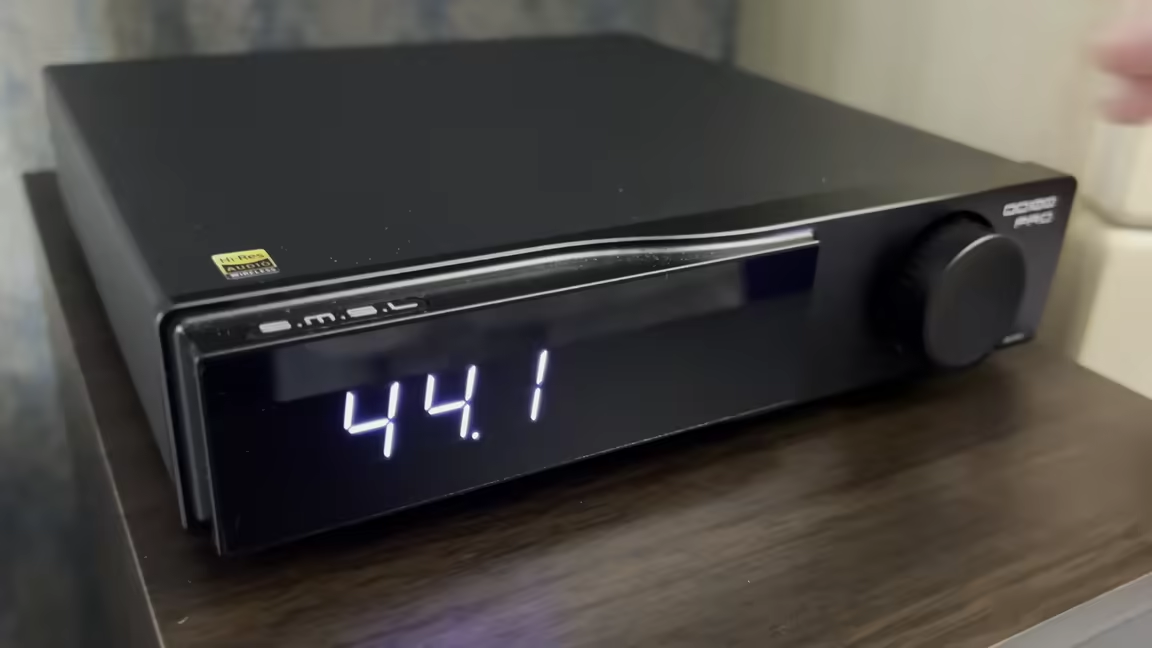
SMSL DO100 PRO
Too close to call
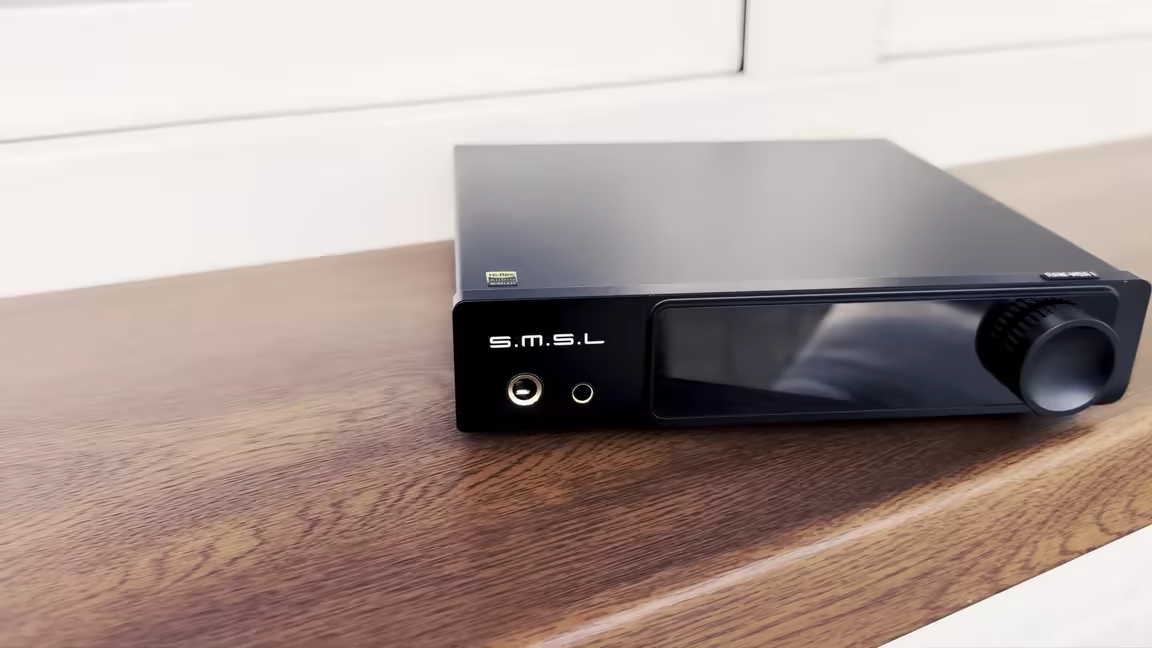
SMSL RAW-MDA1
In the reviewer's words
The RAW-MDA1 review mentions the DO100 PRO in passing, verbatim below.
While it looks almost identical to one on, for example, the DO100 PRO - it's designed with a bit more finesse.
Which one to buy
The pick rule does not separate these two: the DO100 PRO for connectivity, the RAW-MDA1 for tonal balance.
SMSL DO100 PRO
Choose it if:
- The DO100 PRO's connectivity matters more to you than the RAW-MDA1's tonal balance.
- You want the DO100 PRO's brighter sound; the RAW-MDA1 sits closer to neutral there.
SMSL RAW-MDA1
Choose it if:
- The RAW-MDA1's tonal balance matters more to you than the DO100 PRO's connectivity.
What matters most to you?
| What matters | SMSL DO100 PRO | SMSL RAW-MDA1 |
|---|---|---|
| Sound | 7.9 | 8.0 |
| Technical performance | 7.7 | 8.0 |
| Build & comfort | 8.1 | 8.2 |
| System fit | 8.5 | 8.1 |
| Value | 8.2 | 7.8 |
The widest gap is system fit: 8.5 for the DO100 PRO against 8.1 for the RAW-MDA1. Each column comes from its own review's pros and cons, 13 for the DO100 PRO and 14 for the RAW-MDA1, and recombines to its headline score, 8.0 and 8.0. How a score is built
Where they differ
Three topics the DO100 PRO and RAW-MDA1 reviews both discuss, the most decisive first.
Only the DO100 PRO
Only the RAW-MDA1
Tonal balance
The RAW-MDA1 review lists one strength here, the DO100 PRO review one flaw.
- RAW-MDA1, strength: "Warmer-than-typical ESS tonality with forward midrange"
- DO100 PRO, flaw: "Tonality leans slightly analytical"
Inputs and outputs
The DO100 PRO review lists two strengths here, the RAW-MDA1 review one strength and one flaw.
- DO100 PRO, strength: "Balanced internally - XLR output sounds slightly better"
- RAW-MDA1, flaw: "Doubled coax/optical inputs instead of BNC or AES"
Build and controls
The DO100 PRO review lists one strength and two flaws here and the RAW-MDA1 review one strength and one flaw; the RAW-MDA1 review weighs the two on this directly, quoted above.
- DO100 PRO, flaw: "Slight wobble in the (digitally stepped) plastic knob"
- RAW-MDA1, strength: "More premium feel than other SMSL DACs in the price range"
Only the DO100 PRO review discusses detail (one flaw) and soundstage (one flaw); only the RAW-MDA1 review discusses system matching (one strength, two flaws), bass (one flaw), treble (one flaw), and measured noise (one strength).
What they have in common
The DO100 PRO is a DAC and the RAW-MDA1 a DAC/amp, both from SMSL, and both have a USB input, an optical input, a coaxial input, Bluetooth, RCA outputs, balanced XLR outputs, and a front display. The DO100 PRO and RAW-MDA1 reviews both praise features and circuit design.
Sound signature, overlaid
On tonal balance the DO100 PRO sounds bright where the RAW-MDA1 sits near neutral and on stage size the DO100 PRO sits near neutral where the RAW-MDA1 sounds intimate. The DO100 PRO and the RAW-MDA1 both sound analytical and energetic.
On paper
The DO100 PRO and the RAW-MDA1 share #4 of the 8 DACs reviewed here; on value the DO100 PRO rates Strong and the RAW-MDA1 Fair. The DO100 PRO lists 5 inputs and 2 outputs; the RAW-MDA1 lists 4 and 4. Inside, the DO100 PRO uses Dual ESS DAC + 6× OPA1612, XMOS and the RAW-MDA1 Dual ES9039Q2M (dual-mono) + 6× OPA1612A + XMOS XU-316.
The DO100 PRO and RAW-MDA1 figures come from SMSL's official site.
| Spec | SMSL DO100 PRO | SMSL RAW-MDA1 |
|---|---|---|
| Architecture | Dual ESS DAC + 6× OPA1612, XMOS - PCM 32-bit/768 kHz, DSD512, MQA | Dual ES9039Q2M (dual-mono) + 6× OPA1612A + XMOS XU-316 - PCM 32-bit/768 kHz, DSD512, MQA |
| Inputs | USB-C, Bluetooth, HDMI ARC, Optical, Coaxial | USB-C, 2× Coaxial, 2× Optical, Bluetooth (LDAC / aptX / AAC / SBC) |
| Outputs | RCA, Balanced XLR | Balanced XLR, RCA, 4.4 mm (HP), 6.35 mm (HP) |
Only the DO100 PRO review records weight; only the RAW-MDA1 review records power output, dynamic range / THD+N, and output level.
How these verdicts were reached
The DO100 PRO was reviewed in June 2024 and the RAW-MDA1 in December 2024, 6 months later, on one reference chain and rubric. The RAW-MDA1 review mentions the DO100 PRO in passing, quoted above. The DO100 PRO and RAW-MDA1 reviews were both re-checked in September 2026.
Questions about the DO100 PRO and RAW-MDA1
What is the difference between the SMSL DO100 PRO and the SMSL RAW-MDA1?
On the rubric the DO100 PRO and the RAW-MDA1 are level at 8.0. In the reviews' own lines, connectivity goes to the DO100 PRO and tonal balance to the RAW-MDA1. On voicing the DO100 PRO is the brighter of the two; the RAW-MDA1 does not lean far on that axis.
Which should you buy, the SMSL DO100 PRO or the SMSL RAW-MDA1?
Neither, on the published rule: the DO100 PRO and the RAW-MDA1 are level at 8.0 and on price, so the topics further up decide it.
How do the DO100 PRO and the RAW-MDA1 differ in tonal balance?
The RAW-MDA1: its review lists one strength on tonal balance, the DO100 PRO review one flaw.
Which has the better inputs and outputs, the DO100 PRO or the RAW-MDA1?
The DO100 PRO, narrowly: its review lists two strengths on connectivity, the RAW-MDA1 review one strength and one flaw.
Where they rank
In Best DACs the RAW-MDA1 ranks #4 and the DO100 PRO #5.
RAW-MDA1 #4 DO100 PRO #5 8 picks