What is an IEM? In-ear monitors, fit and ear tips explained
An IEM, or in-ear monitor, is an earphone that seals inside the ear canal instead of resting in the outer ear or covering it. The seal does the job an ear cup would: it blocks outside noise, and it lets a tiny driver produce deep bass. That makes your fit and your choice of ear tip change the sound more than most figures on the box.
- By Jakub Charkiewicz
- Published
- Updated
- 5 min read
Glossary definition
- IEM
- In-Ear Monitor, a headphone whose shell seals inside the ear canal instead of covering the ear. The seal does the isolating work an ear cup would, so the ear tip you use changes bass response and isolation more than most specifications on the box; originally stage-monitoring gear, now the dominant portable form factor.
In-ear monitor, earbud or headphone
The three differ in where they sit and whether they seal. An IEM goes into the ear canal, and a silicone or foam tip closes it off, so the driver plays into the small sealed space in front of your eardrum. An earbud rests in the outer ear without sealing the canal, which leaves it with little isolation and a bass response that depends on how it happens to sit. A headphone covers or surrounds the ear, and its cup does the isolating.
The names blur at the edges. HIFIMAN's tiny RE800 Silver is called earbud-style in its review, yet it's worn with ear tips like any IEM, and the reviewer found the double-flange tips in the box gave the best comfort and sound.
The name comes from the stage. In-ear monitors let a performer hear a personal mix over a loud band without a wedge speaker aimed at them, which is where the demand for strong isolation came from. The same design then moved into everyday portable listening.
What the seal does to bass and isolation
A sealed canal is a tiny closed space, and a small driver can change the pressure in it enough to reach deep into the bass. Open that space even slightly and the low end leaks away. The Kiwi Ears Belle, Cadenza II and Orchestra II review found that all three models needed their tips seated deep in the ear canal before the bass showed up properly. If an IEM sounds thin, check the fit before you blame the tuning.
The same seal blocks outside noise, entirely passively. Like any passive isolation it works best on higher frequencies and less well on low rumble, and how much you get depends mostly on the tip. The Kiwi Ears review found that the deep fit it needed for bass also tightened the isolation enough for the street and the subway.
Active noise canceling adds electronics on top of the seal, and it varies a lot between products. The HIFIMAN Svanar Wireless offers ANC, transparency and ANC-off modes, and its review found the noise canceling helps without cutting outside noise as much as its $499 price suggests.
Your ear canal is part of the tuning
An IEM plays into a space bounded by your own ear. The length and shape of your canal, and how deep the tip sits in it, change the resonances between the driver and the eardrum, and a deeper insertion generally moves them higher in frequency. Two people can hear the same model differently for that reason alone.
Measurement rigs use a standard occluded-ear simulator, which stands in for an average adult ear and does not model a leaking tip. Real ears are neither average nor perfectly sealed, so your fit and your canal can move the bass and treble you hear away from a published graph. The Flare Audio E-PROTOTYPE shows how fussy fit can get: its reviewer had to seat the left earpiece within a narrow range of depth and angle, or the sound was greatly attenuated.
Ear tips are a tuning control
The tips in the box are a starting point. Size comes first, because a tip that doesn't seal loses bass whatever it's made of. After that, the material, the stiffness of the core, the bore and the shape all change the sound. Tips with a narrower bore generally soften the treble, and wider ones let more of it through.
The reviews here show how far this goes. The HIFIMAN Svanar Wireless is tuned almost entirely by its tips: the large silicone ones gave softer highs and a huge bass boost, the double-flange ones the best balance, and the foam ones a thin sound with the fullness gone. The Kiwi Ears Belle ships two sets for the purpose, a soft-core set that leans warmer and a hard-core set for a more transparent, detailed sound.
Swapping tips costs little and can be undone in a minute, which makes it the first change to try on any IEM.
What's inside the shell
Most IEMs use a single dynamic driver, several balanced armatures, or a hybrid of the two, and a few use planar or other drivers for part of the band. The driver type tells you less than you might expect, because the shell, nozzle and damping around it shape the sound too. HIFIMAN's RE2000 PRO Silver uses the same topology driver as the cheaper RE800 Silver in a redesigned, CNC-machined aluminum housing, and the RE800's reviewer suspects its shell is behind a resonance that stretches its treble decay.
Driving an IEM
Most IEMs are sensitive enough that power is rarely the limit. What a sensitive IEM does expose is the source's own noise: the Kiwi Ears Orchestra Lite, at 16 ohms and 112 dB, is easy to drive from anything, and its review warns that cheap, low-quality amps can let hiss through. The sensitivity explainer covers how to read those figures.
Multi-armature sets add one more check, because their impedance swings across the band and a source with a high output impedance can change their tonal balance. The Kiwi Ears review also found that a phone left all three of its models sounding closed-in, with the low bass and top treble rolled off, until a dongle with a proper DAC and amp brought them to life. The best IEMs guide goes through the source each of its picks needs.
Listening level and your hearing
A good seal is kind to your hearing in one way: with the background noise blocked, you can follow the music at a lower level on a train or a plane. Hearing damage depends on level and time together, and the WHO-ITU safe listening standard for personal audio sets a weekly allowance for adults of 80 dB for 40 hours. The safe listening calculator takes your headphone's sensitivity and your volume setting, works out the level you're listening at, and says how long the NIOSH limit of 85 dBA over 8 hours allows at it.
Reviewed gear that shows this
8 reviews in the catalogue, highest-scoring 6 shown. Every score is anchored to the same published reference list.
 HIFIMAN RE2000 PRO Silver Highly Recommended $349 8.8
 Kiwi Ears Belle, Cadenza II, Orchestra II Recommended $30 to $350 8.1
 Flare Audio E-PROTOTYPE Recommended $149 8.0
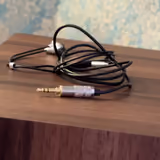 HIFIMAN RE800 Silver Recommended $99 8.0
 Kiwi Ears Orchestra Lite Recommended $249 8.0
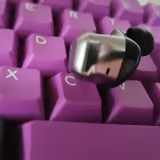 HIFIMAN Svanar Wireless Recommended $499 7.8
What our reviews say about IEM
5 reviews raise it in their pros and cons: three lines credit it and three fault it. each quoted as its review states it.
- Strength:
By far the most detailed IEM I've ever heard
- HIFIMAN RE2000 PRO Silver, 8.8/10 - Flaw:
Belle's ear tips are a real fight to fit and swap
- Kiwi Ears Belle, Cadenza II, Orchestra II, 8.1/10 - Strength:
Possibly the best low-end of any IEM I've heard
- Flare Audio E-PROTOTYPE, 8.0/10 - Flaw:
Channel imbalance in the first 10% of volume - tricky for IEMs
- HIFIMAN EF400, 7.5/10 - Strength:
Stable connection - no issues like some other wireless IEMs
- HIFIMAN Svanar Wireless, 7.8/10
Compared head to head
Comparisons between products on this page, each weighing the two reviews side by side.
Put it to use
Safety
Am I listening too loud?
Enter your headphone sensitivity and volume setting to calculate the exact output SPL, the safe listening time at that level under the NIOSH 85 dBA / 8-hour limit, and today's dose so far.
Safe Headphone Volume Calculator
Buying guide
Best IEMs
This list ranks the best in-ear monitors for audiophile music listening at every price, from a $30 wired pair with a microphone to a $499 true wireless set. Fit comes first: how well the tip seals in your ear canal sets the bass and balance you hear, so check each pick's shell, nozzle and tips before you compare how they sound.
7 ranked picks, led by the HIFIMAN RE2000 PRO Silver
Sources and further reading
- IEC 60318-4: Occluded-ear simulator
Standard · International Electrotechnical Commission · Paid full text
The occluded-ear simulator used to measure in-ears; it does not model tip leakage, so real-ear bass can differ.
- WHO-ITU: Safe listening devices and systems
Standard · World Health Organization
The WHO-ITU standard sets weekly sound allowances, 80 dB for 40 hours for adults, for personal audio devices.
- IEC 60268-7: Headphones and earphones
Standard · International Electrotechnical Commission · Paid full text
The headphone standard, covering earphones worn in the ear and classifying types by their acoustic coupling to the ear.
- Wikipedia: In-ear monitor
Encyclopedia · Wikipedia
Keep reading
Glossary
Balanced Armature
A miniature driver used in IEMs where a metal armature pivots between magnets, allowing multiple drivers to be stacked in a very small shell.
Full explanation
Glossary
LDAC
Sony's proprietary Bluetooth audio codec supporting up to 990 kbps, the highest available over Bluetooth. Quality depends heavily on signal strength; in clean RF environments LDAC at 990kbps is subjectively transparent.
Full explanation
Glossary
Sibilance
Excessive "s," "sh," and "ts" consonants caused by a peak in the 6-10kHz region; can be a characteristic of the headphone, the recording, or a bright source.
Full explanation