
The Best Audio Sources in 2026: Tested & Ranked
Everything downstream can only preserve what the source hands it. This list holds three different kinds of front end, a reclocker for playback and interfaces and microphones for recording, and the first decision is which kind your problem actually needs.
- By Jakub Charkiewicz
- 5 tested picks
- Updated
- Score floor: 7.0/10
- Prices $68.99 to $899
The short version
The Denafrips Hermes 12th Anniversary (8.9/10, $899) tops our ranking of the best audio sources. For a lot less money, the FIFINE K688 (7.2/10, $68.99) takes best value. The runner-up is the Austrian Audio OC16 (8.7/10, $449). 5 picks in all, ranked by score from 7.2 to 8.9/10: 3 microphones, 1 DDC and 1 audio interface.
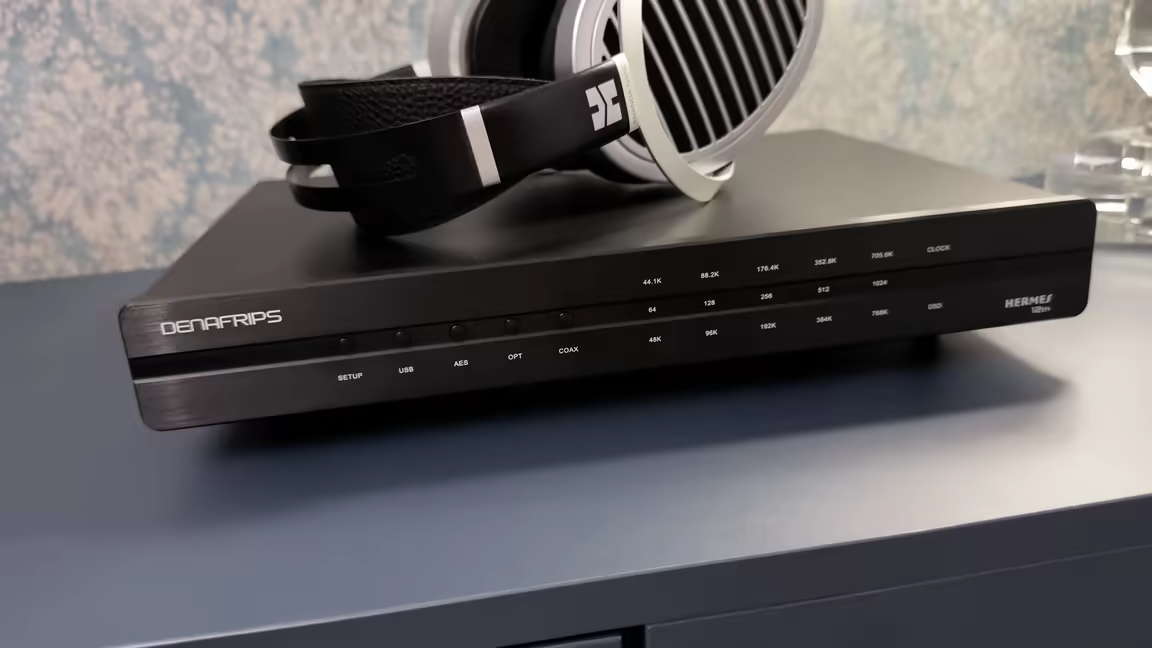
Best Overall
Denafrips Hermes 12th Anniversary
A serious DDC with OCXO clocking, FIFO reclocking, dual I²S outputs, and two BNC clock inputs - removes the veil between your source and DAC without coloring the sound.
- Score 8.9
- Verdict Highly Recommended
- Price $899
Denafrips Hermes 12th Anniversary review See all 5 ranked picks
At a glance
| # | Pick | Price | Award |
|---|---|---|---|
| 1 | Hermes 12th Anniversary | $899 | Best Overall |
| 2 | OC16 | $449 | No award |
| 3 | PUC2 Mic LEA | €769 $830 approx. | No award |
| 4 | SCT 2000 | $231 | Best Budget |
| 5 | K688 | $68.99 | Best Value |
The 5 picks by type and price
By type
- Microphones 3 picks Top-scoring: the Austrian Audio OC16 (8.7/10)
- Digital-to-digital converters 1 pick The Denafrips Hermes 12th Anniversary (8.9/10)
- Audio interfaces 1 pick The Yellowtec PUC2 Mic LEA (8.6/10)
By price
- Under $200 1 pick The FIFINE K688 (7.2/10)
- $200-500 2 picks Top-scoring: the Austrian Audio OC16 (8.7/10)
- $500-1,000 2 picks Top-scoring: the Denafrips Hermes 12th Anniversary (8.9/10)
The 5 picks, ranked
Denafrips Hermes 12th Anniversary
A serious DDC with OCXO clocking, FIFO reclocking, dual I²S outputs, and two BNC clock inputs - removes the veil between your source and DAC without coloring the sound.
- Sound: Wide stage, analytical
- Type: Digital-to-digital converter (DDC)
- Inputs: USB, AES/EBU, Optical, Coaxial, 2× BNC clock in
- Outputs: 2× I²S (RJ45 + HDMI), 2× AES/EBU, Coaxial, Optical
- Heavy, all-metal chassis with virtually no plastic
- 80VA O-Core shielded transformer + linear regulators
- OCXO oven-controlled crystal oscillator for ultra-low jitter
Watch out: Wide footprint
Denafrips Hermes 12th Anniversary review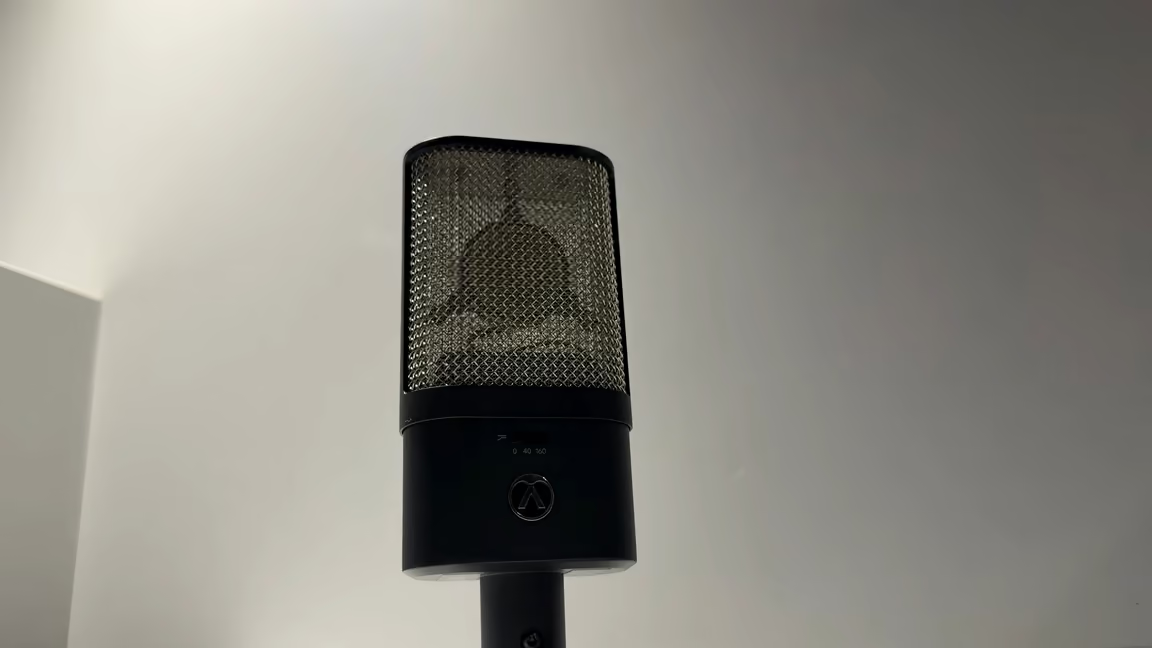
Austrian Audio OC16
A $449 cardioid condenser built around the CKR6, a ceramic-ring capsule hand-assembled and measured in Vienna: 148 dB max SPL, 14 dB(A) self-noise, one high-pass filter.
- Sound: Bright, analytical
- Type: Condenser
- Connector: XLR
- CKR6 ceramic-ring capsule, hand-assembled and individually measured in Vienna
- The same capsule Austrian Audio screws into the $899 OC18
- 148 dB max SPL - past the inside of a kick drum, with no pad needed
Watch out: One polar pattern, one switch and no pad
Austrian Audio OC16 review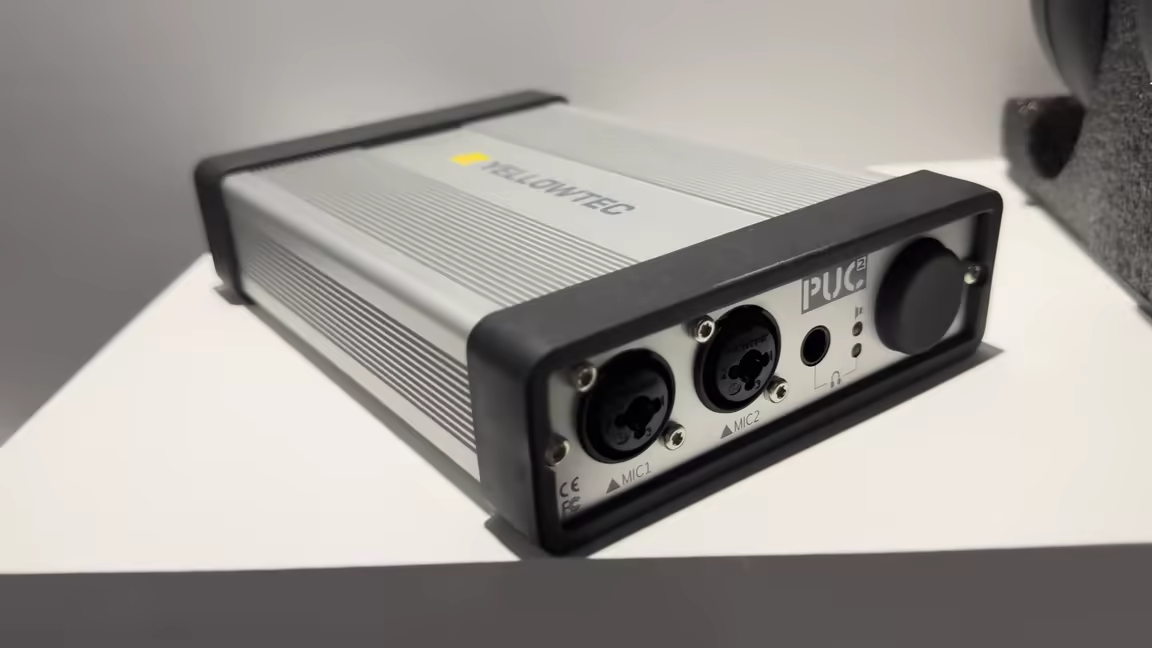
Yellowtec PUC2 Mic LEA
A €769 audio interface from Germany with proprietary LEA leveling technology - automatic perfect mic levels, zero-latency monitoring, and a slightly warm, transparent sound.
- Sound: Warm, analytical
- Type: USB audio interface
- Inputs: 2× combo XLR + 1/4" (mic), AES digital, USB
- Outputs: AES digital, 3.5 mm AUX, Headphone
- LEA technology - automatic real-time level optimization
- Zero-latency mic input AND monitoring
- 192kHz / 24-bit, dynamic range 114dB
Watch out: Premium price (€769) is significant
Yellowtec PUC2 Mic LEA review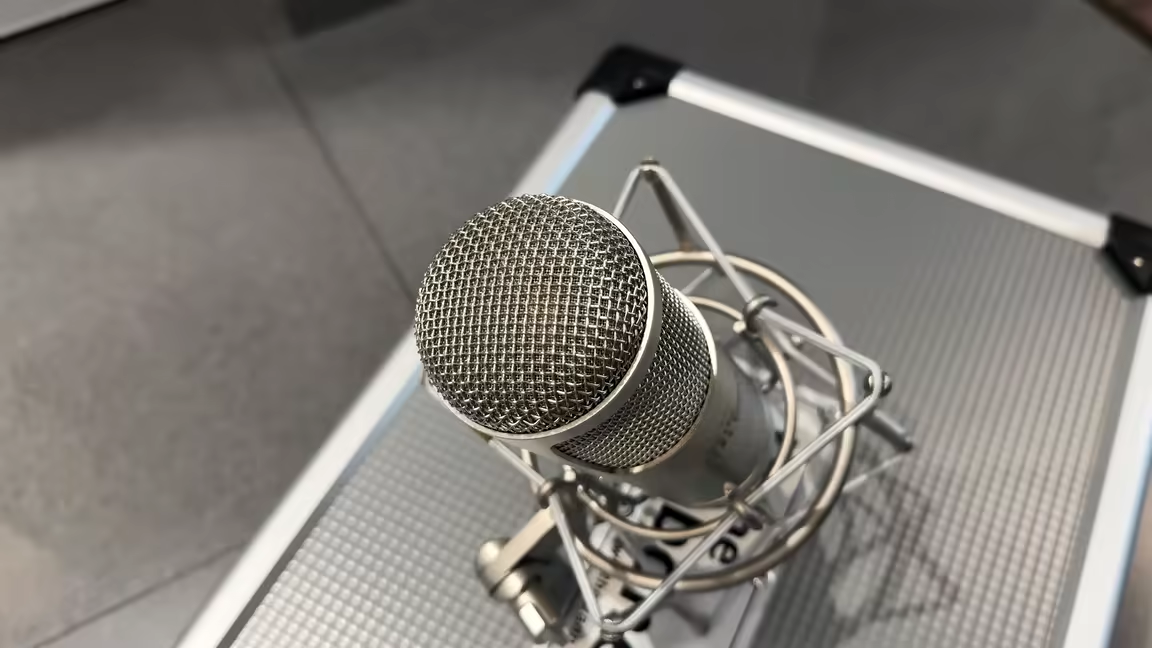
t.bone SCT 2000
A large-diaphragm tube condenser at $231 with a real 12AX7B tube, nine polar patterns, gold-sputtered diaphragm, and a sound that competes with mics 3-5x the price.
- Sound: Warm, wide stage
- Type: Tube
- Connector: 7-pin (to external PSU)
- Real, user-replaceable 12AX7B vacuum tube inside the mic
- 1.07" gold-sputtered large-diaphragm capsule
- Nine selectable polar patterns from the PSU
Watch out: Needs external PSU
t.bone SCT 2000 review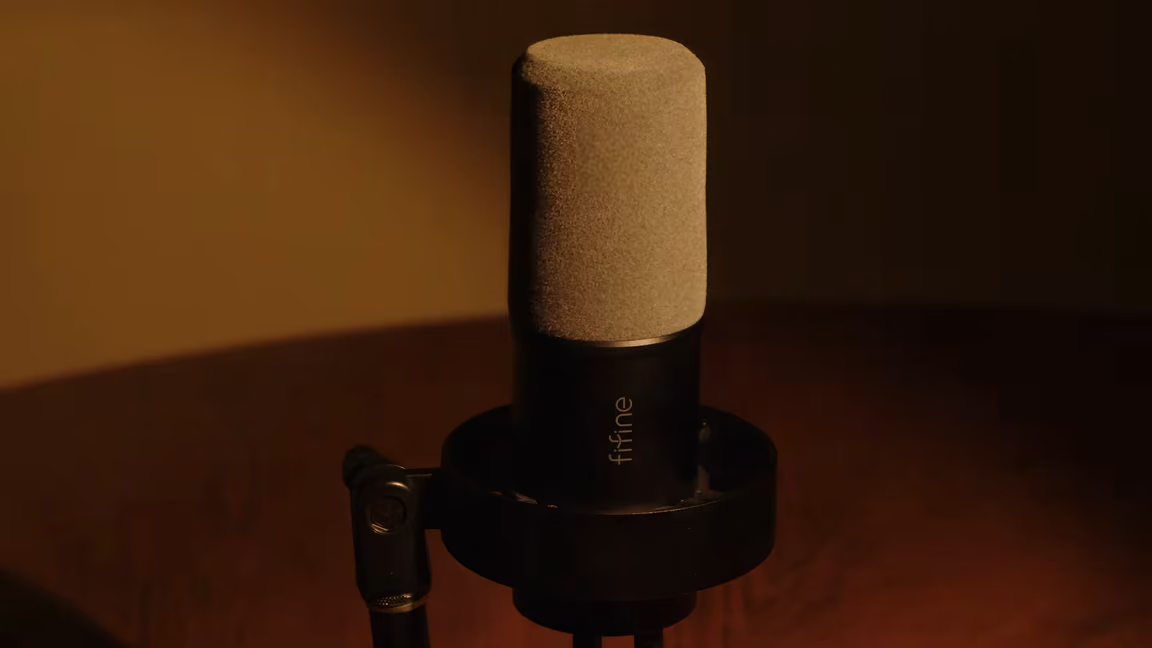
FIFINE K688
A dynamic broadcast microphone with both XLR and USB-C outputs, so the audio interface is already inside it: cardioid rejection, 130 dB max SPL, on-body gain and mute.
- Sound: Analytical, aggressive
- Type: Dynamic (moving coil)
- Outputs: XLR, USB-C, 3.5 mm headphone monitoring
- XLR and USB-C outputs - the audio interface is already inside the mic
- Metal body and metal shock mount at a budget price
- Cardioid dynamic capsule rejects fan noise, keyboards and room reflections
Watch out: Frequency response stops at 50 Hz and 16 kHz
FIFINE K688 reviewQuestions buyers ask
What counts as a source here?
Anything that puts signal into the chain rather than converting or amplifying what is already in it. In this catalogue that currently means digital-to-digital converters, which reclock and re-format a digital stream before it reaches a DAC, and capture gear: an audio interface and studio microphones. Network streamers, transports and turntables belong in this category too and will appear on this list as they come through the review process. Until they have, the page will not pretend otherwise.
Does a DDC improve a DAC that already has USB?
Sometimes, and the size depends entirely on the DAC. A DDC takes the USB stream, reclocks it against its own oscillator and hands the DAC a different interface, usually I2S or coax. If the DAC's own USB receiver is the weak point in it, that can be an audible change. If the DAC already has a good input stage and its own reclocking, you are paying to replace something that was not the limitation. This is a component to try against your specific DAC rather than to buy on principle.
Why are recording microphones in a hi-fi catalogue?
Because they are the first link in the same chain, and judging them uses the same ears and the same reference room. A microphone determines what exists to be reproduced later, which makes it a source in the most literal sense. If your interest is strictly playback, the DDC entries are the ones that touch your system; the capture gear is here for readers who record as well as listen.
Is the source really where the chain is decided?
It sets the ceiling, which is not the same as being where most systems lose the most. Nothing downstream can recover information the source never delivered, so a genuinely broken front end caps everything. But in practice most systems are limited by the room and the speakers by a much wider margin than by the source, so the source is rarely the first thing worth spending on. Treat it as a ceiling to be aware of, not as the default upgrade.
The source is where a chain's ceiling gets set. Every stage after it can lose information, colour it, or pass it along intact, but none of them can add back what never arrived. That is the argument for caring about the front end, and it is a real one.
It is also routinely overstated. A source that is doing its job is not the reason most systems sound the way they do; the room and the speakers are, by a wide margin. What matters here is knowing whether your front end is imposing a ceiling at all, and that is a much cheaper question to answer than the marketing around it suggests.
Which kind of source do you need
The picks on this list do three unrelated jobs, and they are never alternatives to each other.
A digital-to-digital converter is for playback. The Denafrips Hermes 12th Anniversary takes a USB stream, reclocks it against its own oscillator and hands your DAC a cleaner interface, including I²S. It only has something to fix if your DAC's own USB input is the weak point, and it is worth most to a DAC that accepts I²S.
An audio interface is for getting a microphone or an instrument into a computer. The Yellowtec PUC2 Mic LEA adds automatic level control and zero-latency monitoring, which is what a speaking or recording workflow needs and a playback system does not.
A microphone decides what exists to be reproduced later. A dynamic microphone such as the FIFINE K688 rejects more of the room around it, which suits an untreated space and a voice close to the capsule; a condenser such as the Austrian Audio OC16 is more sensitive and more detailed, and hears more of the room with it. The t.bone SCT 2000 is a tube condenser that runs from its own external power supply.
The mistakes follow from mixing the jobs up. A DDC bought for a DAC whose input was never the limitation changes little. A condenser bought for a bare, echoey room records the room. And a USB microphone like the K688 already has its interface inside, so it does not need a second one until you want to use it over XLR.
What is on this list, and what is not
This is the smallest catalogue on the site, and being straight about that is more useful than padding it. What has been through the full review process so far is digital-to-digital conversion and capture gear: units that reclock and re-format a stream before it reaches a DAC, and equipment that puts a performance into the chain in the first place.
Network streamers, CD transports and turntables belong in this category and are not on this page, because they have not been on the reference chain long enough to score. When they have, they will appear here and the ranking will reorder itself around them. A buying guide that listed categories it had not tested would be worth less than a short one that says so.
How the front ends were judged
Every unit ran at matched levels with the rest of the chain held constant. For a source that constraint matters more than usual: the differences at the front of a chain are smaller than the differences at the end of it, and anything else changing at the same time would swamp them.
For digital front ends, one extra thing gets checked that a spec sheet will not tell you, which is what the unit does at the edges of its claimed capability rather than in the middle of it.
How to tell if your source is the limitation
Work backwards, because it is cheaper. If your room is untreated and your listening position is where the sofa fits rather than where the speakers image, the front of the chain is not what is holding the system back, and no source will fix a null at your ears.
If the room and speakers are sorted, the question becomes whether your current source is measurably or audibly compromised, not whether a better one exists. A DAC with a weak input stage, a laptop's built-in output, or a streamer that struggles with high sample rates are real limitations with real fixes. A competent modern source feeding a competent modern DAC usually is not.
The honest test is substitution in your own system, over days rather than minutes, with levels matched. If you cannot tell in that arrangement, the ceiling was not the source, and the money is better spent further down the chain. That is not a fashionable conclusion, but it is the one the listening supports.
Ranked by score, on the one rubric every review uses: Sound 30%, Technical performance 25%, Build & comfort 15%, System fit 15% and Value 15%. Best Value goes to the pick, other than the winner, with the most score for its price (score against the log of the price). Best Budget goes to the highest-ranked pick not already awarded in the cheapest quarter of the list. No placement here is sponsored, paid for, or negotiable. How a score is built · Funding and independence · All sources reviews