
The Best Budget Headphones Under $200 in 2026: Ranked
Two hundred dollars buys more headphone than it has any right to. It also buys a very specific set of compromises, the same ones almost every time, and the useful thing to know is which one each pick asks you to accept.
- By Jakub Charkiewicz
- 4 tested picks
- Updated
- Score floor: 7.0/10
- Prices $109 to $199
The short version
Our top pick among the best budget headphones is the Sivga Anser (8.0/10, $199). Our best value pick is the HIFIMAN HE400se (7.6/10, $109). The runner-up is the Sivga Robin SV021 (7.8/10, $149). 4 picks in all, ranked by score from 7.6 to 8.0/10: 2 open-back and 2 closed-back.
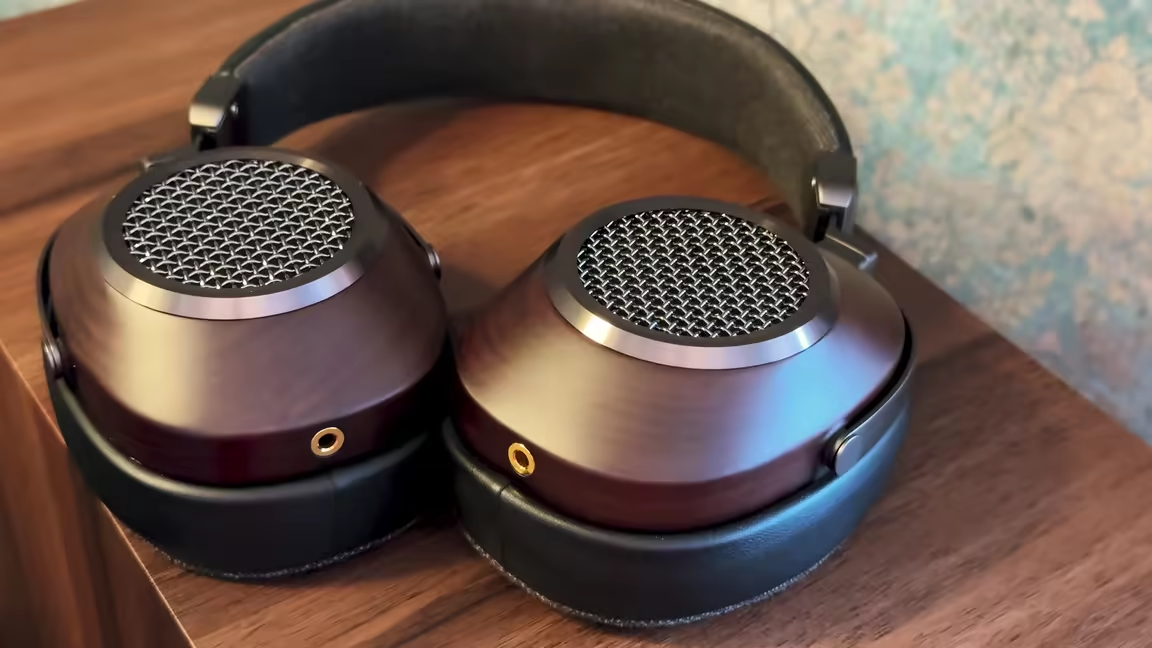
Best Overall
Sivga Anser
A $200 open-back dynamic with real wood cups and a tuning that delivers springy, bouncy mid-bass you won't find on $2,000 headphones - musical, fun, and built to last.
- Score 8.0
- Verdict Recommended
- Price $199

At a glance
| # | Pick | Price | Award |
|---|---|---|---|
| 1 | Anser | $199 | Best Overall |
| 2 | Robin SV021 | $149 | No award |
| 3 | SV021 Pro | $179 | No award |
| 4 | HE400se | $109 | Best Value |
The 4 picks by type
By type
- Open-back 2 picks Top-scoring: the Sivga Anser (8.0/10)
- Closed-back 2 picks Top-scoring: the Sivga Robin SV021 (7.8/10)
The 4 picks, ranked
Sivga Anser
A $200 open-back dynamic with real wood cups and a tuning that delivers springy, bouncy mid-bass you won't find on $2,000 headphones - musical, fun, and built to last.
- Sound: Warm, lean bass
- Impedance: 38 Ω
- Sensitivity: 105 dB
- Weight: 342 g
- Solid wood earcups with aluminum grilles and yokes
- No plastic - just wood, metal, and leather
- 342g - light enough for hours of listening
Watch out: Soundstage is on the intimate side
Sivga Anser review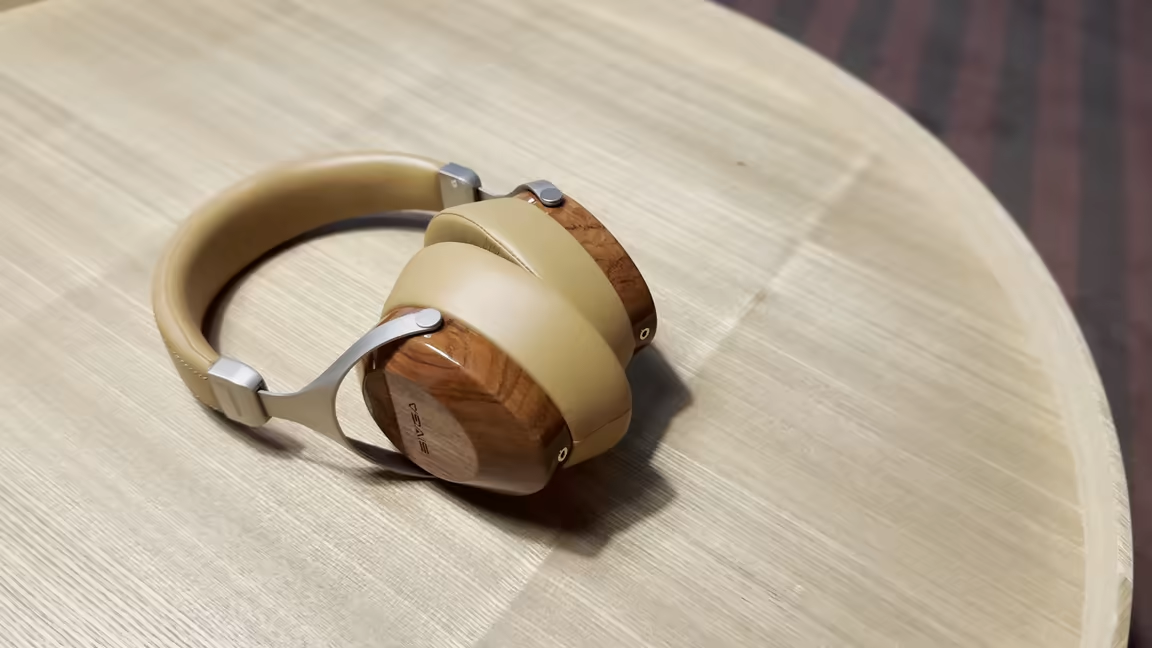
Sivga Robin SV021
A $150 closed-back dynamic with real wood earcups, masterpiece-level build, and a fun, exciting V-shaped sound that breaks the 'budget closed-back' mold.
- Sound: Warm, bass-heavy
- Impedance: 32 Ω
- Sensitivity: 105 dB
- Weight: 275 g
- Built like a masterpiece for the price - real wood earcups
- Extremely soft pads that adapt to any ear shape
- Lightweight at 275g with light clamp force
Watch out: Very uneven tonality
Sivga Robin SV021 review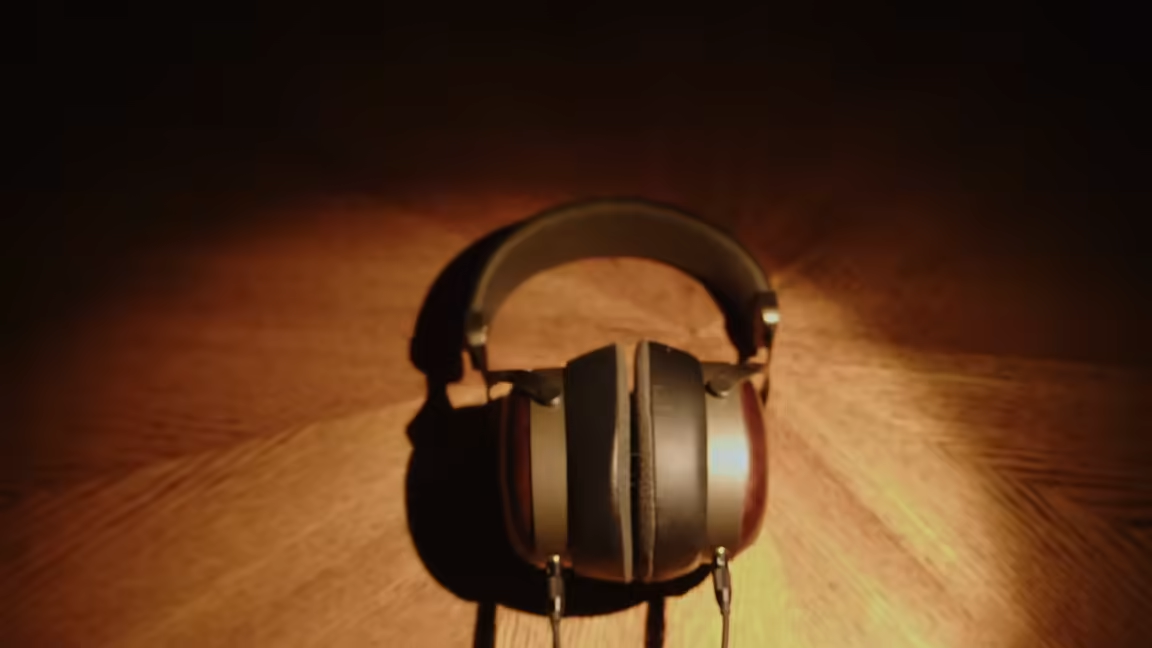
Sivga SV021 Pro
A $179 wood-earcup closed-back with a fun, bass-forward sound. A revised driver fixes the original's treble sibilance, though isolation and midrange refinement still lag.
- Sound: Relaxed, aggressive
- Impedance: 45 Ω
- Sensitivity: 106 dB
- Weight: 289 g
- Real wood earcups at $179 - a look and feel that usually costs thousands
- Beautiful design and genuinely solid build quality
- Very light at 289g, with breathable, comfortable materials
Watch out: Poor passive isolation
Sivga SV021 Pro review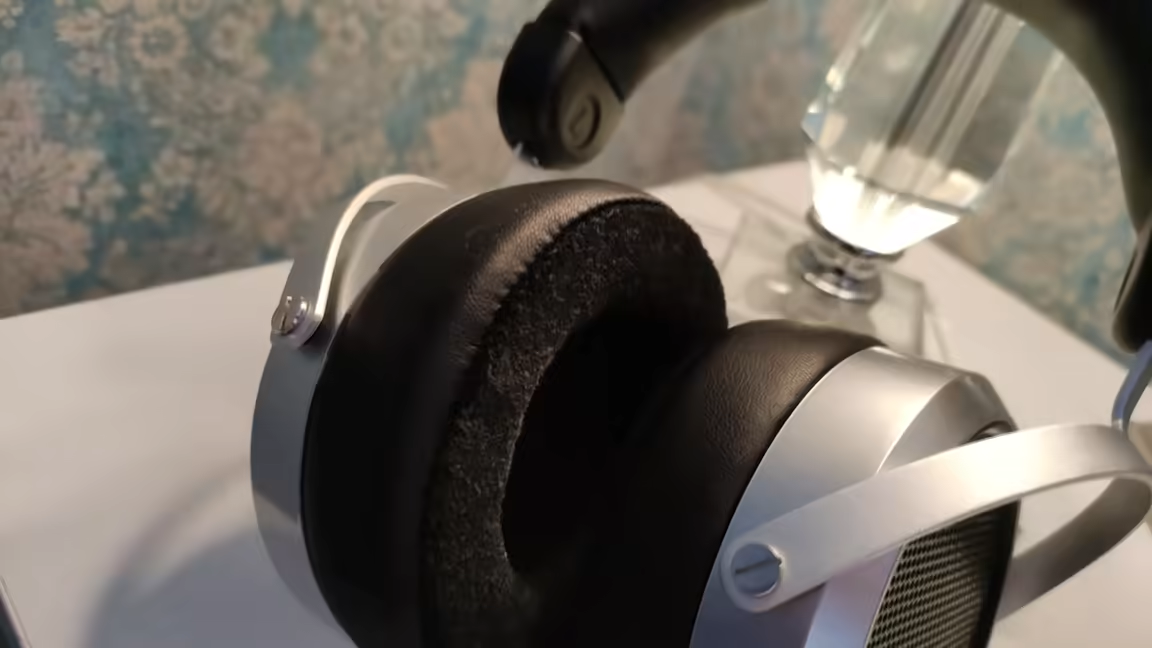
HIFIMAN HE400se
A stupidly cheap open-back planar with Stealth Magnets technology at $109 - loved by some, criticized by others. So what's actually going on with it?
- Sound: Relaxed, aggressive
- Impedance: 32 Ω
- Sensitivity: 91 dB/mW
- Driver: Planar magnetic
- Stealth Magnets technology at just over $100 - hard to believe
- Soft, hybrid angled pads
- Lightweight - no hotspots from the solid headband
Watch out: Bass extension lacking below 60Hz
HIFIMAN HE400se reviewQuestions buyers ask
Are budget headphones actually good now, or is that marketing?
They are genuinely good, and the reason is boring: the driver technology stopped being the expensive part. HIFIMAN puts its Stealth Magnets, a technology that started in its flagship planars, into a $109 open-back. Sivga wraps a $149 closed-back in real wood with aluminium grilles and yokes. Ten years ago each of those was a several-hundred-dollar feature. What you still cannot buy at this price is tonal refinement, and that is exactly where every pick on this list gives something up.
Do I need an amplifier for headphones this cheap?
For most of this list, no. The Sivga picks sit at 32 to 45 ohms and are efficient enough that a phone or a cheap dongle drives them to honest volume. The important exception is the HIFIMAN HE400se: it is the cheapest pick here and the only one whose review says plainly that phones are not enough and it needs an external amp to perform. Budget for that. A $109 headphone that needs a $100 amplifier is a $209 decision, and it stops being the cheapest option on this page.
Open-back or closed-back at this budget?
It is decided by your room, not by the sound. Both of the open-backs here leak in and out, so they are for a quiet space you have to yourself. Both closed-backs seal, and both pay for it in the midrange - the Robin's tonality is uneven enough that vocals sound hollow, and the SV021 Pro's mids are recessed. Worth knowing before you buy a closed-back for isolation: the SV021 Pro's review is explicit that its passive isolation is poor and you still hear the street while you walk.
Is a used mid-range headphone better than a new budget one?
Often yes on sound, and that is a real argument. What you give up is the warranty, the return window, and any idea of how hard the previous owner drove it. Pads and cables are consumables, and on some designs replacing them costs a meaningful fraction of what you paid. We rank new product because that is what we can put on the chain and stand behind. If you are comfortable buying used, read our reviews of the mid-range models and shop against those scores rather than against this list.
What is not worth spending money on at this price?
Cables and accessories. At $150 the limiting factor is the transducer and its tuning, not the copper feeding it, and money spent on an aftermarket cable at this tier buys close to nothing you can hear. If you have spare budget after the headphone, a competent DAC or dongle is the upgrade that actually changes what you hear, and on the HE400se it is not optional. Spend there first.
The interesting thing about shopping under $200 is not that the sound is surprisingly good. It is that the compromise is so consistent. Across every pick on this list, build quality, driver technology, and ease of driving are close to solved. What gives way, every single time, is tonal evenness.
Read the cons on any pick here and you will see the same shape. A mid-bass lift that thickens vocals. A dip somewhere in the midrange. A treble region that is either slightly hot or slightly rolled off. None of it is a defect at the price, and none of it stops these from being enjoyable headphones. But it is worth knowing before you buy that this is the axis you are trading down on, rather than discovering it three weeks in and assuming you bought the wrong pair.
What $200 actually buys
Build, first. The Sivga picks on this list use solid wood earcups with metal grilles and yokes, and they weigh between 275 and 342 grams. That is a genuinely premium object, and a decade ago the look and feel would have cost several times as much. HIFIMAN's contribution at the bottom of the range is different but no less real: Stealth Magnets, a technology that started life in its flagship planars, in a headphone priced just over $100.
Efficiency, second. Almost everything here runs off modest equipment. The Sivga models sit between 32 and 45 ohms, the Sivga Anser at 105 dB sensitivity, and the review notes on each say the same thing: a dongle is enough, and they scale a little further with a real amplifier.
What the money does not buy is refinement in the midrange and treble. On the closed-back picks the midrange is recessed and vocals can sound hollow or compressed. On the cheapest open-back the mids are muffled with a dip around 2 kHz and bass extension falls away below 60 Hz. That is the deal at this price, and every pick here makes some version of it.
Three of the four are Sivga, and that is not an accident
It is worth saying plainly, because a list where one brand takes three of four slots normally deserves suspicion. Sivga occupies this bracket because it has decided to compete on the part of a headphone you can see and hold - real wood, metal yokes, soft pads, a cable that is not an afterthought - in a price band where almost everyone else competes on plastic. The scores reflect that, and they also reflect its limits: all three Sivga picks lose their marks in the same place, on tonal evenness.
If you want the opposite trade at this price - a driver technology borrowed from flagships, wrapped in something plainer - that is the HE400se, and it is the one pick here that is not a Sivga.
Where budget buyers go wrong
Buying a closed-back for isolation it does not have. A closed back is not noise cancelling. The Sivga SV021 Pro's review is explicit that its isolation leaks and you still hear the street; if blocking the outside world is the reason you are buying, a sealed in-ear does that job better at this money.
Taking an open-back out of the house. The two open-backs here leak sound in both directions. They are for a quiet room you have to yourself, not a train or a shared office.
Counting the headphone and not the source. The cheapest pick on the list is the one that needs an amplifier, which the next section works through. Price the whole setup, not the box.
Spending the leftover money on a cable. At this tier the transducer and its tuning are the limit. Spare budget belongs in a competent dongle or DAC, which changes what you hear; an aftermarket cable does not.
The hidden cost of the cheapest pick
Worth isolating, because it inverts the price order on this page. Most picks here are easy to drive and genuinely work from a phone. The HIFIMAN HE400se does not. Its review is explicit that it needs an external amp to perform and that phones are not enough, and that is a cost the price tag does not show.
Add a competent dongle or desktop amplifier and the cheapest headphone on this list is no longer the cheapest way onto it. If your budget is genuinely fixed at around $110 and you have nothing to drive it with, one of the efficient picks will give you more of what you paid for. If you already own a dongle or an amplifier, the calculation flips and the HE400se becomes the bargain it looks like. Use the headphone power calculator to check what your current source can actually deliver into a given load before you decide.
Not on this list: in-ear monitors
This guide used to rank in-ears alongside over-ears, and it should not have: an in-ear is a different product with a different fit decision, and putting a $30 IEM and a $109 planar in one ranked list on the strength of a shared price ceiling helped nobody choose either. They are ranked in the best budget IEMs guide instead, which is this same bracket for that form factor. If you have not decided between the two, read both lists rather than one mixed one.
If your budget stretches past $200, the step up is its own decision rather than more of the same, and the under-$500 guide is where it is made.
Ranked by score, on the one rubric every review uses: Sound 30%, Technical performance 25%, Build & comfort 15%, System fit 15% and Value 15%. Best Value goes to the pick, other than the winner, with the most score for its price (score against the log of the price). No placement here is sponsored, paid for, or negotiable. How a score is built · Funding and independence · All headphones reviews