
Buying guide · IEMs
The Best Budget IEMs Under $200 in 2026
An in-ear at $150 does not have to fund a headband, two cups, pads and a yoke out of the same money, so almost all of it goes into drivers and tuning. That is why this bracket punches so far above its price, and why the complaints here are about fit and cables rather than about resolution. These are the sub-$200 in-ears that earned a recommendation on the reference chain.
- By Jakub Charkiewicz
- 4 tested picks
- Updated
- Score floor: 7.0/10
- Price ≤ $200
The short version
Our top pick among the best budget IEMs is the Kiwi Ears Belle, Cadenza II, Orchestra II (8.1/10, $30 to $350). The runner-up is the HIFIMAN RE800 Silver (8.0/10, $99), which also takes best value. The full list runs to 4 picks by score, 7.6 to 8.1/10, each one reviewed here rather than pulled off a spec sheet.
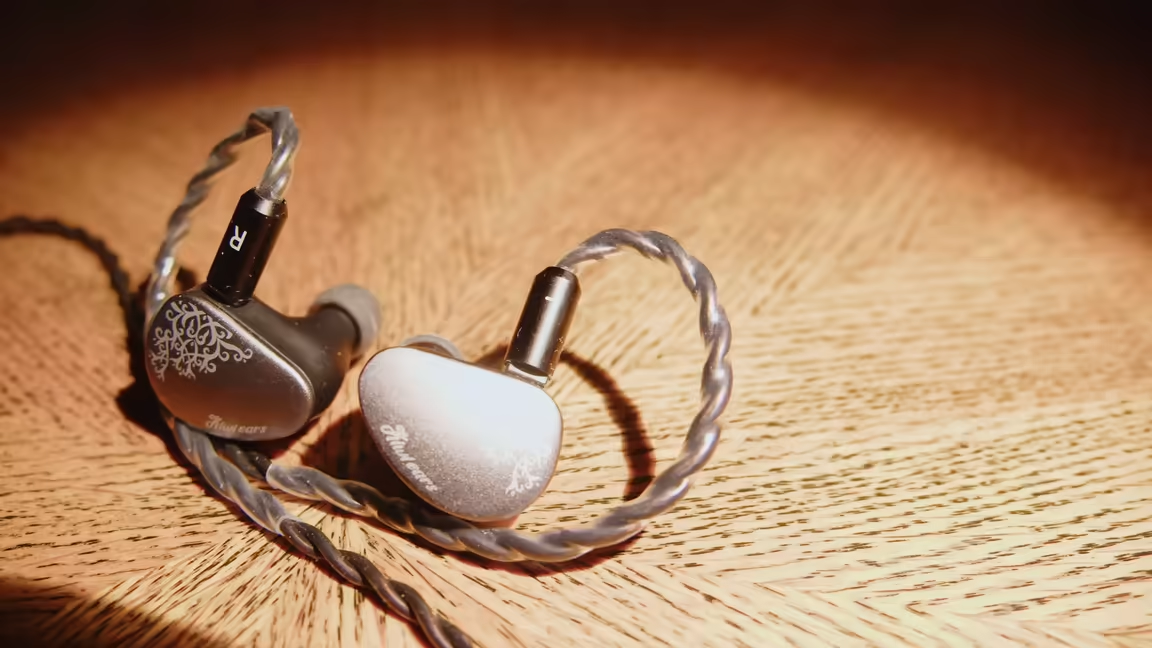
Best Overall
Kiwi Ears Belle, Cadenza II, Orchestra II
Three Kiwi Ears IEMs head-to-head - the $30 Belle with a mic, the $50 Cadenza II with KARS 2.0, and the 10-BA $350 Orchestra II flagship. Which is the value pick?
- Score 8.1
- Verdict Recommended
- Price $30 to $350
Read the full Belle, Cadenza II, Orchestra II review See all 4 ranked picks
The shortlist
At a glance
All 4 picks in ranked order, with price in USD and any award they earned. Every row links straight to that pick's write-up, where its score and verdict sit with the full notes.
| # | Pick | Price | Award |
|---|---|---|---|
| 1 | Belle, Cadenza II, Orchestra II | $30 to $350 | Best Overall |
| 2 | RE800 Silver | $99 | Best Value |
| 3 | E-PROTOTYPE | $149 | No award |
| 4 | EM6L | $109 | No award |
The ranking
The 4 picks, ranked
Kiwi Ears Belle, Cadenza II, Orchestra II
Three Kiwi Ears IEMs head-to-head - the $30 Belle with a mic, the $50 Cadenza II with KARS 2.0, and the 10-BA $350 Orchestra II flagship. Which is the value pick?
- Covers three budgets - $30 Belle, $50 Cadenza II, $350 Orchestra II
- Belle is a tremendous-value V-shape with a built-in microphone
- Cadenza II betters the Belle in every sonic way and stays light
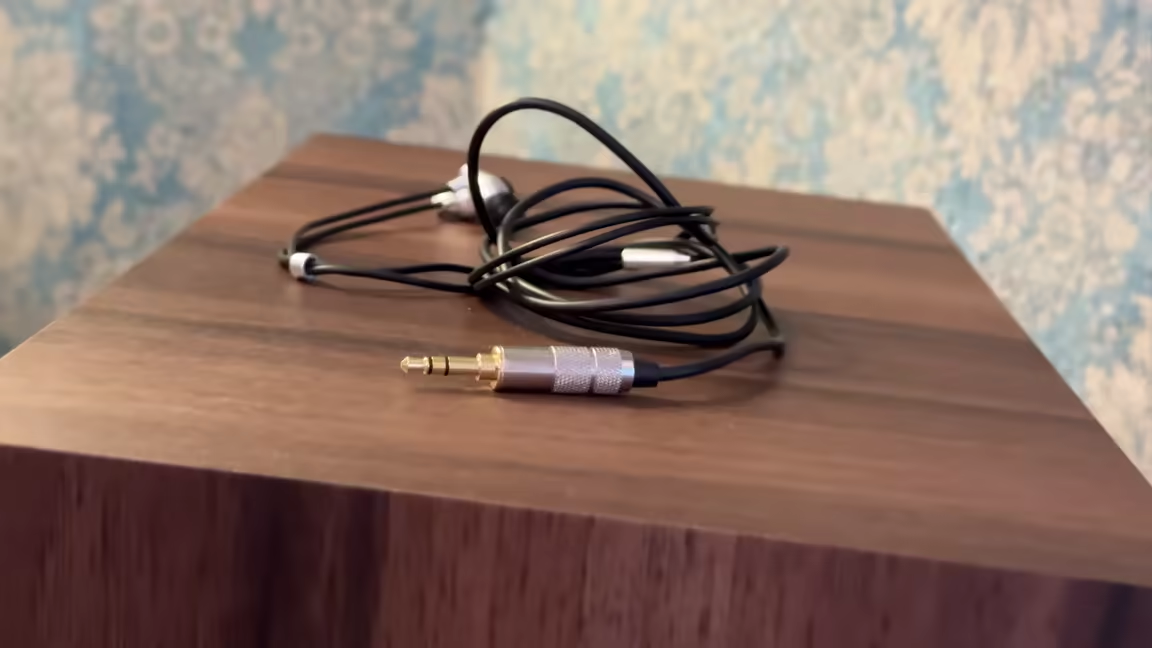
HIFIMAN RE800 Silver
An older flagship IEM with topology driver tech, now $100 (down from $600) - audiophile-grade performance with surprisingly wide staging and an interesting non-target tuning.
- Topology driver - HIFIMAN's signature tech
- Aluminum alloy shell - feels premium
- Very small, lightweight earbud-style fit
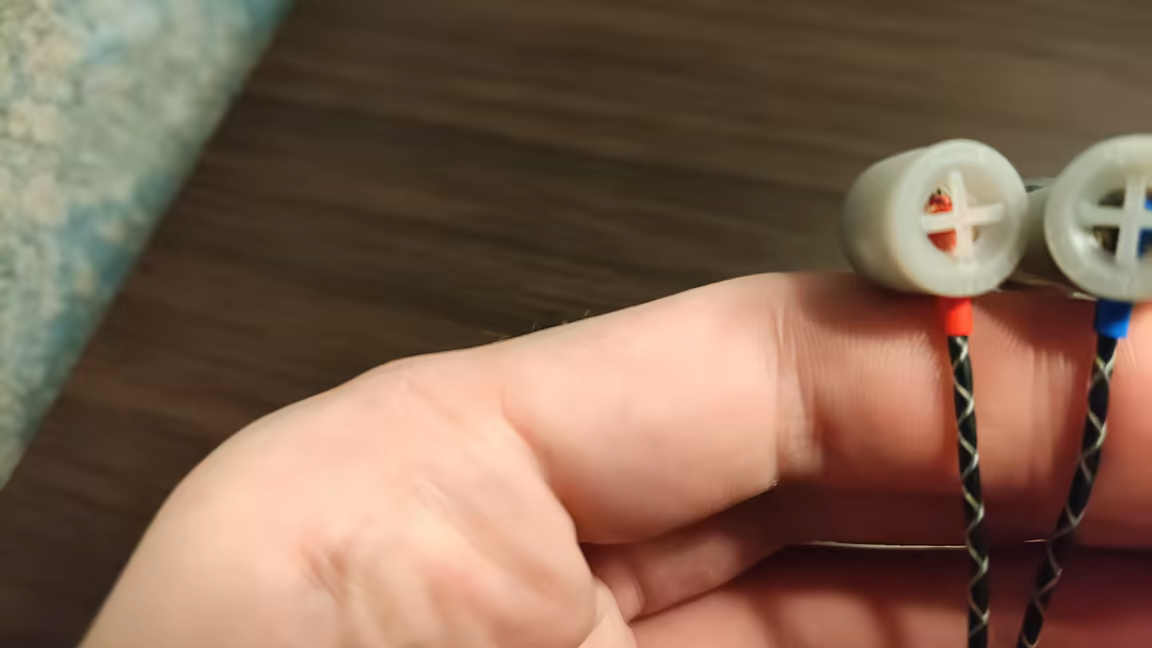
Flare Audio E-PROTOTYPE
Unlike anything you've heard or seen. The E-PROTOTYPE goes to extremes - both positive and negative - using proprietary technologies you won't find anywhere else.
- Possibly the best low-end of any IEM I've heard
- Bass is extremely well layered, resolving, and punchy
- Ideal sound separation - nothing blends, no matter how busy
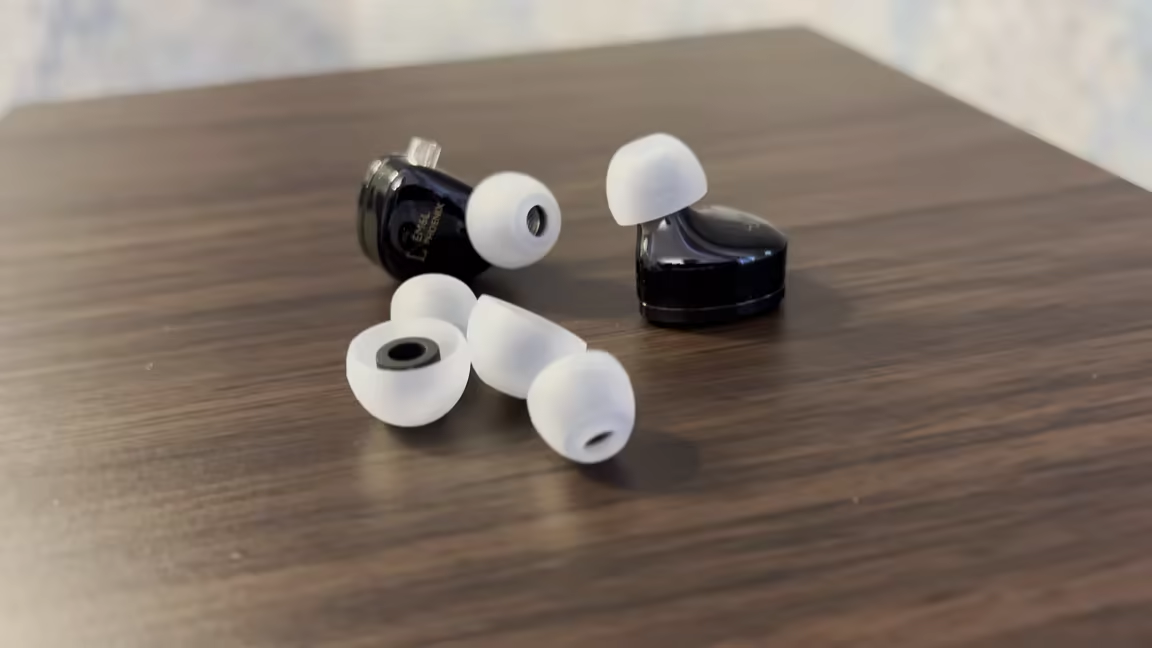
Simgot EM6L
A budget hybrid IEM with 1 dynamic + 4 BA drivers, a 3-way crossover, and an attempt at the Harman 2019 target - mostly successful, with a fun 'weirdly big' soundstage.
- 1 dynamic + 4 BA drivers with hybrid 3-way crossover
- Frequency response 8Hz-40kHz - excellent low-end extension
- Glossy 3D-printed shell with no visible imperfections
Head-to-head
Torn between two picks?
These pairs from the list above have a full head-to-head page - every spec, score, and trade-off side by side.
Common questions
Questions buyers ask
Do budget IEMs really beat over-ear headphones at the same price?
On raw performance per dollar, usually yes, and the reason is structural rather than mysterious. An over-ear at $150 has to pay for a headband, two earcups, pads, yokes and a cable. An in-ear at $150 pays for two small shells and puts the rest into drivers and tuning. Look at what the cons complain about and you can see it: the over-ear picks in the same bracket lose marks on tonality and soundstage width, while the in-ears here lose them on fit, on cables, and on tonality being an acquired taste. A tonal dip is permanent; a fit problem is often solved with different ear tips.
Do I need a dongle or amp for an IEM this cheap?
Not for volume - every pick here plays loud from a phone. It matters for tonality on some of them. The Kiwi Ears roundup is explicit that low bass and high treble roll off straight from a phone and that all three models really want a dongle of around $79 to open up. If you are buying at the very bottom of this list, budget for a dongle before you budget for a more expensive in-ear.
How many drivers should a budget IEM have?
Fewer than the marketing implies, and the count tells you very little on its own. The Simgot EM6L puts one dynamic driver and four balanced armatures behind a three-way crossover at $109 and still loses marks for mid-bass bloat that muddies vocals. The Flare Audio E-PROTOTYPE runs a single dynamic driver at $149 and has possibly the best low end of any in-ear on this chain. A crossover is a hard thing to get right, and an extra driver that is not integrated is worse than not having it.
What is the catch with budget in-ears?
Fit and cables, almost every time. Stock cables at this price are generic and sometimes microphonic, and the RE800 Silver's is not even detachable. Ear tips are the other half: the Kiwi Ears Belle's tips are a genuine fight to fit and swap. Neither is a sound problem, both are ownership problems, and both are cheap to fix - which is exactly why they cost these picks less score than a tonal dip would.
The full reasoning
The sub-$200 in-ear bracket is the most competitive part of this catalogue, and it is competitive for a reason that has nothing to do with anyone being generous. An in-ear does not have to build a headband. It does not have to fund two earcups, four yokes, a suspension strap or a set of pads that has to survive being worn for eight hours. Two small shells, a cable, and everything else goes into the transducer.
That is the whole story of this price bracket. What you get is resolution A system's ability to retrieve and reproduce fine detail in the recording; high resolution reveals micro-dynamics, spatial cues, and timbral nuance. and tuning that would have been a flagship's job a decade ago. What you give up is not sound quality; it is the ownership experience.
What actually goes wrong at this price
Read the cons across this list and the pattern is unmistakable. Ear tips that are a fight to fit. Cables that are generic, microphonic, tangle-prone, or in one case not detachable at all. Shells that need the right tip to seal properly. Almost none of it is about the drivers.
Compare that to the over-ear Headphones whose ear cups enclose the whole ear and seal against the side of the head, rather than pressing on the ear itself. The standard full-size shape, and the one where weight distribution and clamp force decide comfort long before tuning does. picks in the same bracket, where the complaints are about a dip at 500 Hz, hollow vocals, or bass extension How low in frequency a system accurately reproduces sound; good bass extension means 20Hz output, not just 60Hz. that falls away below 60 Hz. Those are permanent properties of the headphone. A cable is $20 and a set of tips is $10.
This is the honest case for buying an in-ear at this budget, and it is a strong one. It is also why the recommendation is conditional: all of it assumes you can wear in-ears comfortably for as long as you want to listen. If you cannot, none of the above helps you, and the budget over-ear list is the page you want.
Driver counts are not a ranking
The most expensive-sounding spec in this bracket is the driver count, and it is close to useless as a shortcut. The Simgot EM6L fits one dynamic driver The most common transducer type, using a voice coil in a magnetic gap to push a cone or dome diaphragm, the same principle as a traditional loudspeaker. and four balanced A signal transmission method using two opposite-polarity signal lines plus a ground; noise induced on both lines is cancelled at the differential input. armatures behind a three-way A loudspeaker that splits the signal across three drivers, typically woofer, midrange and tweeter, with a crossover at each handover. Each driver works over a narrower band than a two-way asks of it, at the cost of two crossover points instead of one. crossover A network of filters that divides the audio signal into frequency bands before each reaches its appropriate driver, passive (in the speaker) or active (before the amp). for $109, which reads like a bargain and mostly is - but it still loses marks because the mid-bass has extra energy that bloats and slightly muffles vocal clarity. The Flare Audio E-PROTOTYPE uses a single dynamic driver, costs more, and has possibly the best low end of any in-ear that has been on this chain: extremely well layered, resolving and punchy, with ideal separation.
What separates them is not how many drivers are in the shell but whether the crossover integrates them. That is a hard, expensive engineering problem, and it is the thing budget in-ears most often get wrong.
The one that needs a dongle
Worth isolating, because it changes the price. The Kiwi Ears roundup covers three models across three budgets, and its review is explicit that low bass Say: BAYSS /beɪs/The low-frequency foundation of audio, roughly 20-250 Hz - felt as much as heard, carrying a track's weight, warmth, and impact. (Said "BAYSS", like the guitar, not the fish.) and high treble roll off straight from a phone, and that all three really want a dongle of around $79 behind them to open up.
That is not a criticism of the in-ears, it is a description of what you are buying. If you already own a dongle it is free. If you do not, add it to the price before you compare this pick against the others on the list. The same arithmetic applies here that applies to the HE400se on the over-ear list: the cheapest thing on the page is not always the cheapest decision.
How the rankings work
Picks are sorted by raw score, ties broken by recency. Every score on this site is anchored to a published per-category reference list, so a 7.6 here means the same thing a 7.6 means anywhere else in the catalogue - it is not a separate "good for the money" scale. Value is judged inside the score rather than bolted on after it.
One entry needs a note. The Kiwi Ears pick is a three-product roundup rather than a single in-ear, covering the $30 Belle, the $50 Cadenza II and the $350 Orchestra II. It qualifies for this list on its budget models, and those are the two we would point a sub-$200 shopper at. The Orchestra II sits well above this guide's ceiling.
What this guide does not cover
Over-ear headphones, which are ranked in the budget headphones guide for this same bracket. True wireless earbuds, because a radio, a codec, a battery and an amplifier all come out of the same budget and need latency and battery life treated as first-class scoring variables. And the used market, because these scores are for new product bought with a warranty.
The picks are above, sorted by score.
Every pick on this guide was tested on the chain for a minimum of two weeks, compared head-to-head against the category reference list, and scored on sound, technical performance, build, system fit, and value before earning its place. No placement on this list is sponsored, paid for, or negotiable: the order is the score. Advertising & affiliate policy → · How we test → · All headphones reviews →