
The Best DACs in 2026: Tested & Ranked
This guide is for anyone adding a DAC under $2,000 to a desk, a TV or a hi-fi rack, and its picks run from $29 to €1,600. The choice that matters most is what the box has to connect to and control: the inputs your sources use, XLR or RCA into your amplifier, and whether it also sets the volume or drives headphones.
By Jakub Charkiewicz Published Updated Checked
8 picks 7.0/10 minimum to qualify list prices $29 to €1,600 about $1,730
The short version
Our top pick among the best DACs is the Denafrips Enyo 15th Anniversary (9.1/10, list price $699). Our best value pick, the most score for its price, is the SMSL PS100 (7.0/10, list price $29). The runner-up is the Henry Audio DA 256 (8.2/10, list price €1,600). 8 picks in all, ranked by score from 7.0 to 9.1/10. This list's $2,000 ceiling applies to list prices.
How we tested this gear
All 8 picks reviewed first-hand · at least two weeks each on the Denafrips Hermes 12th and Denafrips Hades 12th · heard sighted against the reference at each price. 8 DACs in this guide's field, every one reviewed first-hand, linked from this page and ranked. Every one has a video review on the channel, where the product is shown and heard. Jakub Charkiewicz, who signed every review on the list. At least two weeks of daily listening before a score is committed, typically four to eight weeks for flagship gear, and never a first-impressions verdict. Jakub Charkiewicz's listening room, where the reference chain lives: The system the reference chain runs on, in Jakub Charkiewicz's listening room: Every piece is compared head-to-head with the reference unit at its price tier on the same chain, sighted and with levels set by ear. No pick was compared blind and none was measured here: a score is the writer's judgment against the product's own price tier, and a small difference between two picks is an impression a blind test (ITU-R BS.1116) would be needed to confirm. ITU-R BS.1116-3 and AES17, each listed with what it is used for on the about page.The chain, the room, the protocol and the evidence
What was tested
Reviewed by
How long
Test chain
Listening room
Power and digital
Protocol
For this list
Standards cited
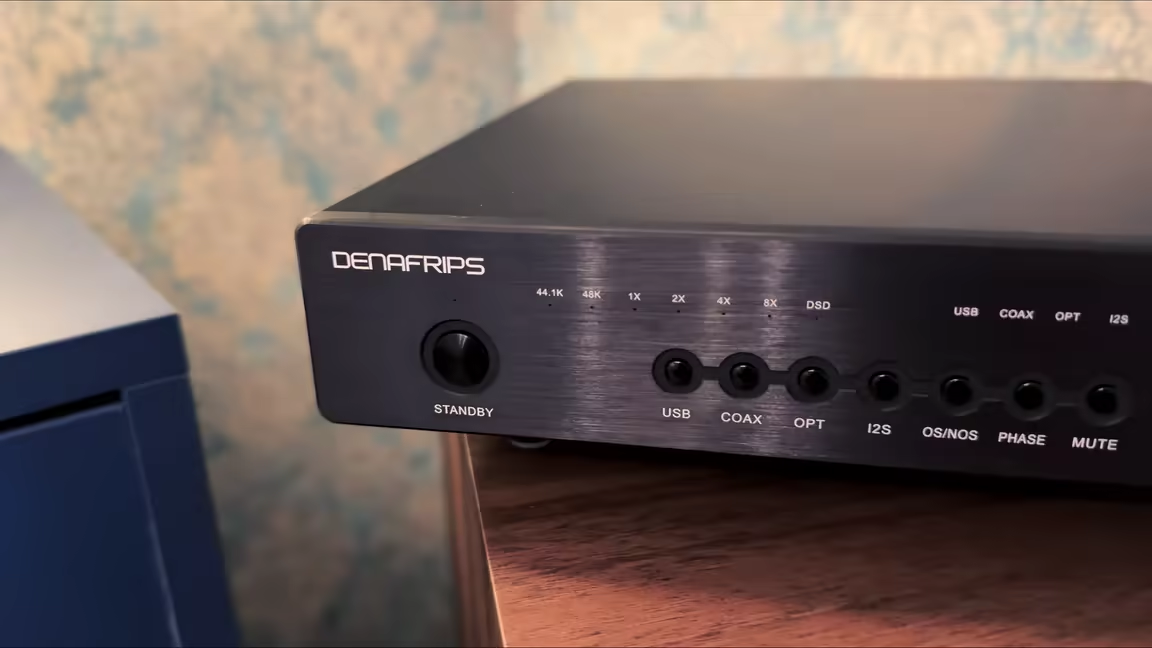
Best Overall: the highest score of the 8
Denafrips Enyo 15th Anniversary
A $699 true balanced R2R ladder DAC with an O-Core transformer, I²S input, and a natural, musical sound that easily competes with delta-sigma converters costing far more.
- Score 9.1
- Verdict Highly Recommended
- List price $699
Denafrips Enyo 15th Anniversary review See all 8 ranked picks
At a glance
The 8 picks, ranked
Denafrips Enyo 15th Anniversary
A $699 true balanced R2R ladder DAC with an O-Core transformer, I²S input, and a natural, musical sound that easily competes with delta-sigma converters costing far more.
- Sound: Warm, wide stage
- Inputs: USB, Coaxial, Optical, I²S
- Outputs: RCA, Balanced XLR
- Architecture: True balanced R2R ladder, 24-bit + 6-bit DSD (OS/NOS, slow/sharp filters)
- List price: $699
- Thick anodized aluminum chassis - dense, rattle-free, scratch-resistant
- All-metal buttons and controls - zero plastic
- Four-foot design with rubber inserts for stability
Watch out: I²S pinout isn't standardized
Denafrips Enyo 15th Anniversary review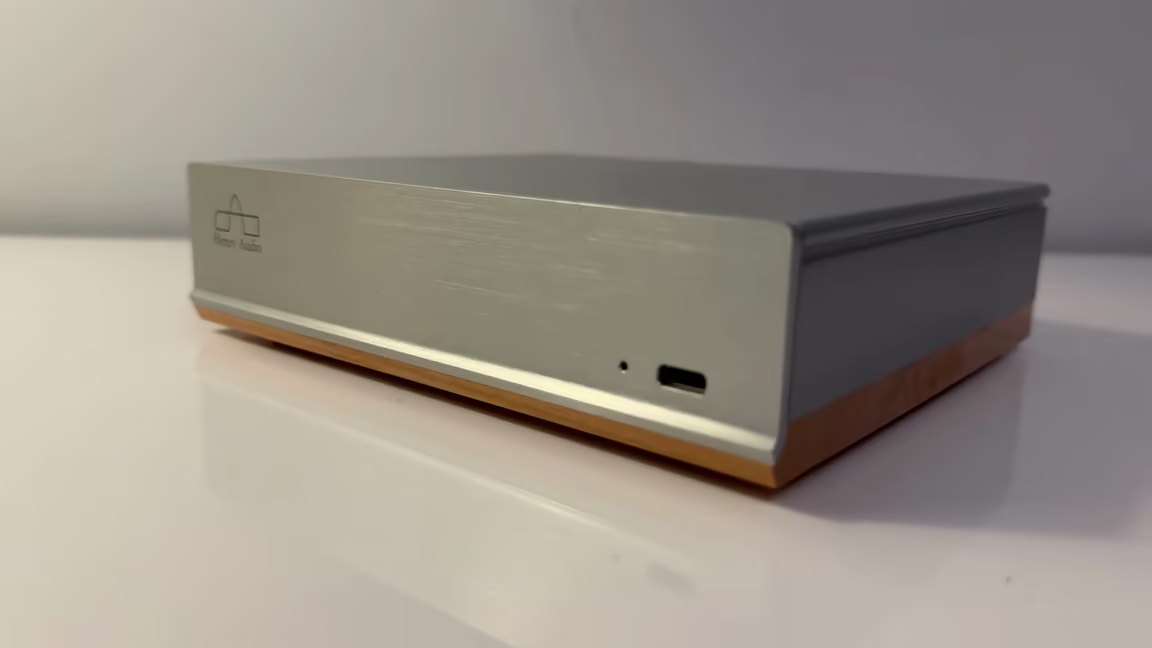
Henry Audio DA 256
Twenty years of one engineer's work in a €1,600 box: a published schematic and firmware, reclocked coax and optical, RCA only, PCM to 24-bit/192 kHz, and every omission deliberate.
- Inputs: USB-B, USB-C (front), Coaxial, Optical x2
- Outputs: RCA
- Architecture: Texas Instruments PCM5142 delta-sigma, chip filter only, no upsampling
- List price: €1,600 about $1,730
- Thick brushed aluminum case on a real solid wood base, designed in Norway and built in Germany
- Coax and optical are buffered and replayed on the DAC's own precision clocks, not the source's
- Automatic input switching - no selector, no menu, nothing to set
Watch out: No XLR outputs at all
Henry Audio DA 256 review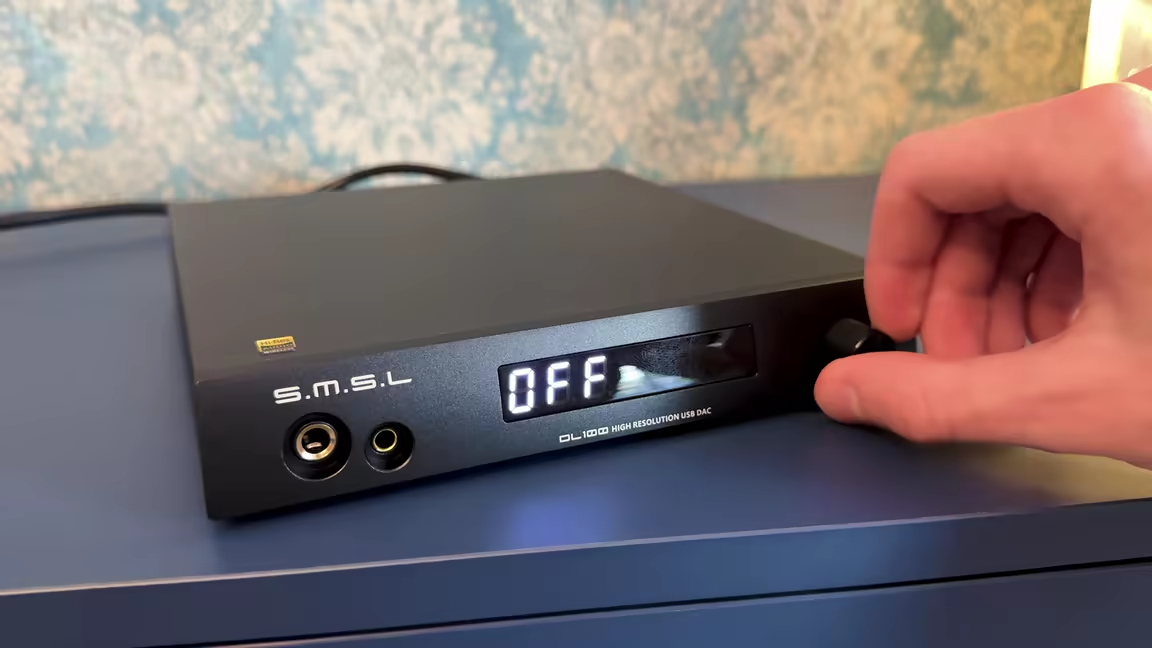
SMSL DL100
A $179 balanced DAC/amp combo with MQA, DSD256, 4 Cirrus Logic chips, and a clarity-focused house sound that punches well above its budget category.
- Inputs: USB-C, HDMI ARC, Bluetooth, Optical, Coaxial
- Outputs: Balanced XLR, RCA, 4.4 mm (HP), 6.35 mm (HP)
- Architecture: 4× Cirrus Logic DAC + XMOS - PCM 32-bit/768 kHz, DSD256, MQA
- List price: $179
- Lowest price now: $152.99 at Apos Audio on
- Balanced DAC + balanced headphone amp at $180
- 4x Cirrus Logic DAC chips - 0.00009% THD+N
- USB-C, HDMI ARC, Bluetooth, Optical, Coax inputs
Watch out: Sub-bass is less extended than measurements suggest
SMSL DL100 review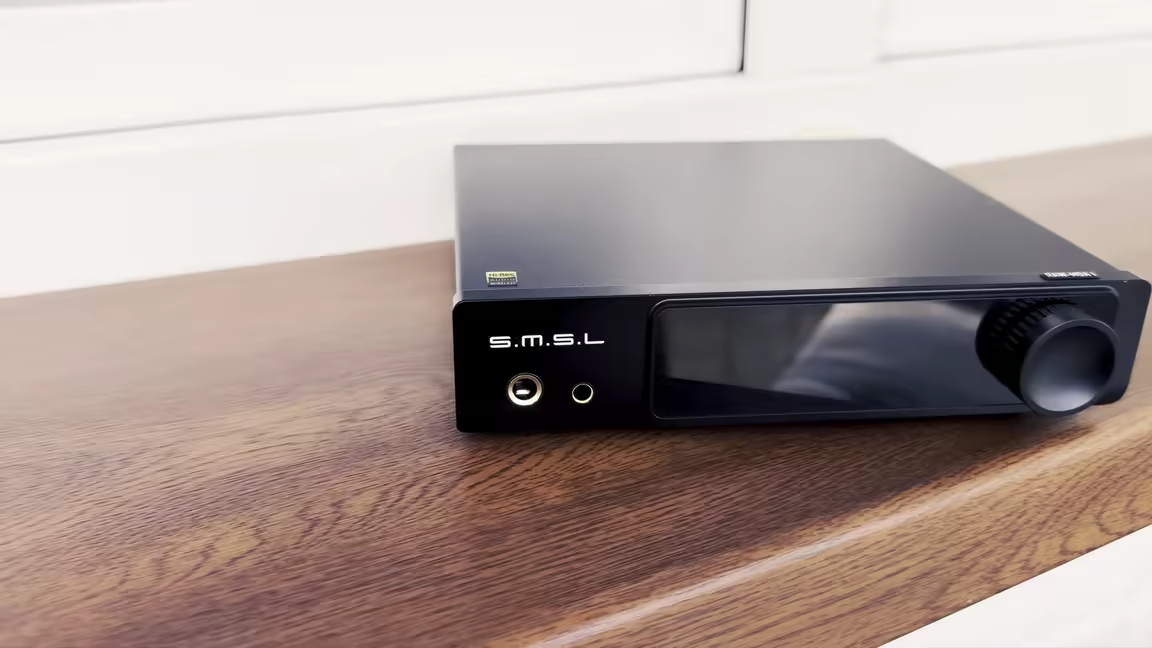
SMSL RAW-MDA1
A $239 balanced DAC/headphone amp with dual ES9039Q2M chips that doesn't sound like every other ESS box - warmer tonality, forward mids, and a flexible soundstage.
- Inputs: USB-C, 2× Coaxial, 2× Optical, Bluetooth (LDAC / aptX / AAC / SBC)
- Outputs: Balanced XLR, RCA, 4.4 mm (HP), 6.35 mm (HP)
- Architecture: Dual ES9039Q2M (dual-mono) + 6× OPA1612A + XMOS XU-316 - PCM 32-bit/768 kHz, DSD512, MQA
- List price: $239
- Lowest price now: $279.99 at Apos Audio on
- More premium feel than other SMSL DACs in the price range
- High-resolution LCD with tempered glass front
- Dual ES9039Q2M chips in dual mono configuration
Watch out: Doubled coax/optical inputs instead of BNC or AES
SMSL RAW-MDA1 review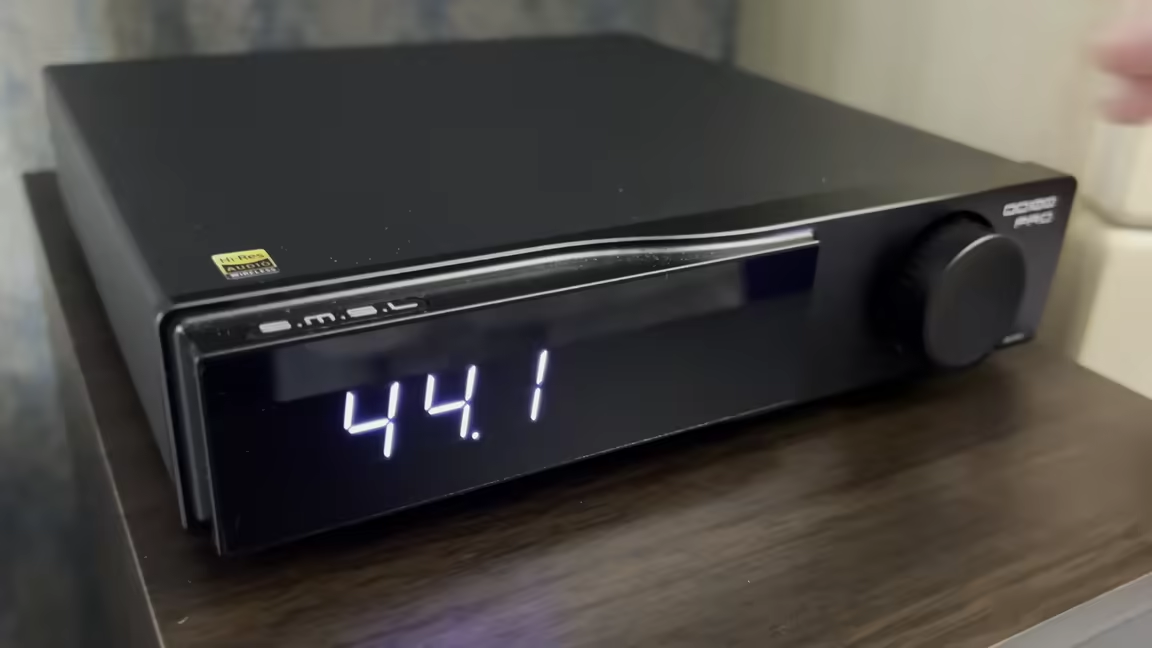
SMSL DO100 PRO
A balanced lower-mid-range DAC with dual ESS chips, MQA, DSD512, and a tinker-friendly DPLL value control - solid sound that doesn't break records but offers great value.
- Sound: Analytical
- Inputs: USB-C, Bluetooth, HDMI ARC, Optical, Coaxial
- Outputs: RCA, Balanced XLR
- Architecture: Dual ESS DAC + 6× OPA1612, XMOS - PCM 32-bit/768 kHz, DSD512, MQA
- List price: $219
- Lowest price now: $239 at HiFiGo (ships from China) on
- Dual ESS DAC chips with 6 OPA1612 op-amps
- Balanced internally - XLR output sounds slightly better
- Bluetooth, USB-C, HDMI ARC, Optical, Coaxial inputs
Watch out: Slight wobble in the (digitally stepped) plastic knob
SMSL DO100 PRO review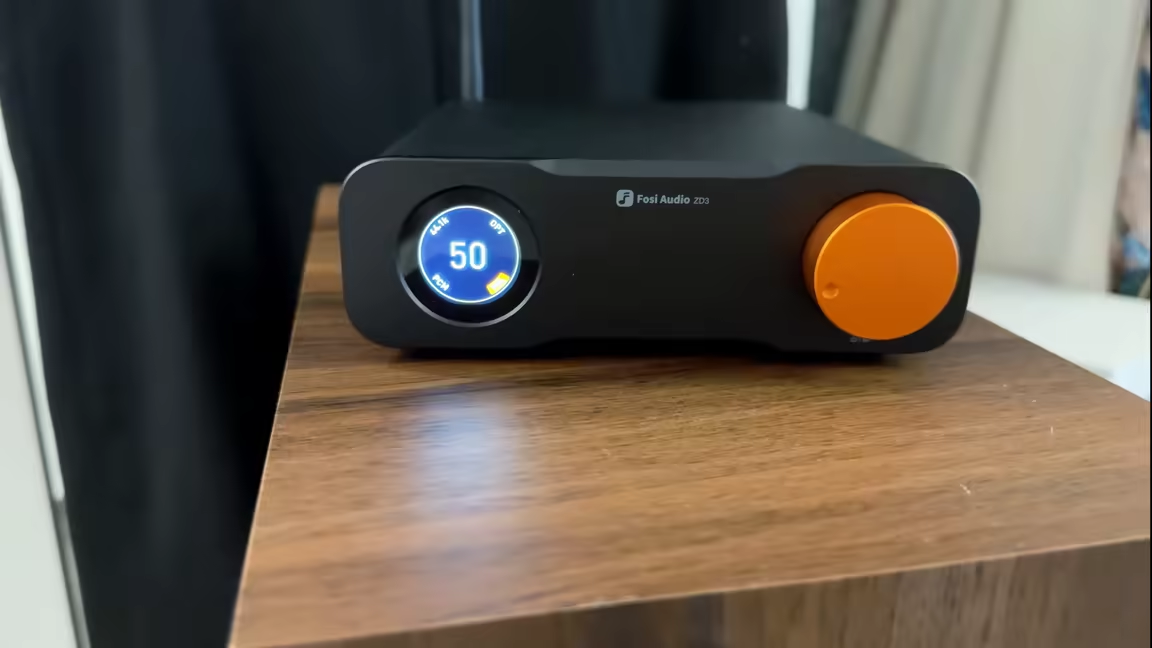
Fosi Audio ZD3
A $150 desktop DAC that punches above its price - swappable op-amps, balanced XLR and RCA, HDMI ARC, Bluetooth aptX HD, a 126 dB SNR, and a clean, slightly bright sound.
- Sound: Bright
- Inputs: USB, Optical, Coaxial, HDMI ARC, Bluetooth (aptX HD)
- Outputs: Balanced XLR, RCA
- Architecture: ESS DAC chip + XMOS USB interface; swappable op-amps (delta-sigma)
- List price: $150
- Lowest price now: $179.99 at Bloom Audio on
- Swappable op-amps - rare end-user sound tuning at this price
- HDMI ARC input - plug straight into a TV, no extra box
- Balanced XLR and RCA outputs, both active at the same time
Watch out: Faint hollow echo when you tap or spin the volume knob
Fosi Audio ZD3 review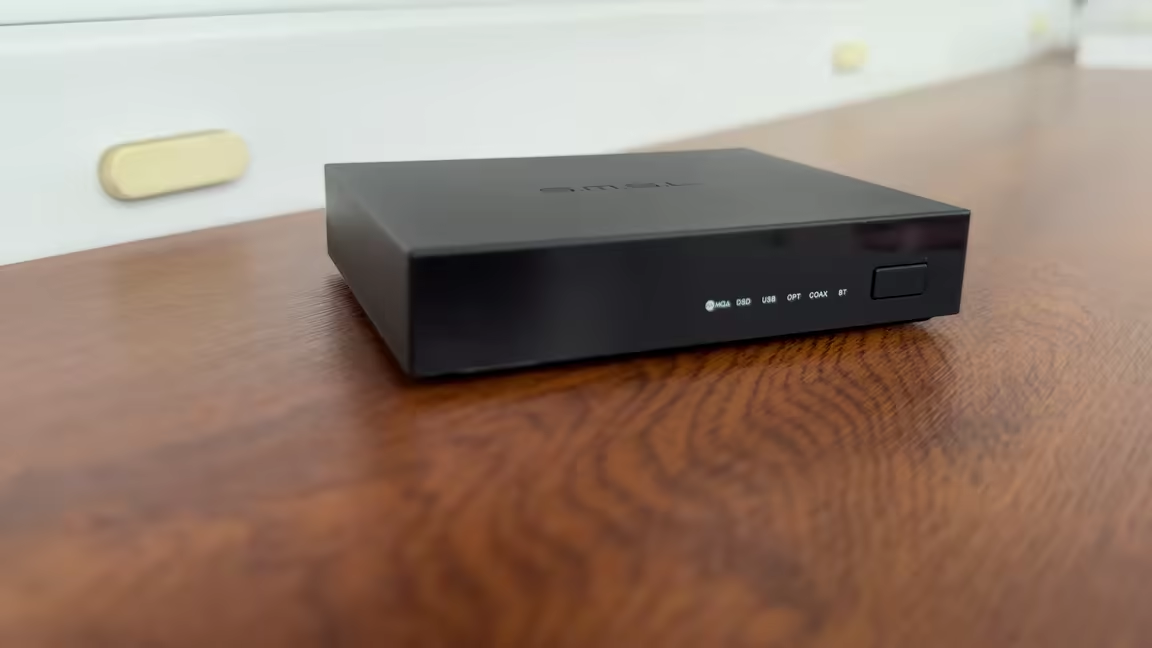
SMSL PS200
A $89 ESS-based DAC that measures fantastically but illustrates why specs aren't the whole story - it sounds fine, just not exceptional.
- Inputs: USB-C, Optical, Coaxial, Bluetooth 5.0
- Outputs: RCA
- Architecture: ESS ES9039Q2M + XMOS XU-316 - PCM 32-bit/768 kHz, DSD512
- Award: Best Budget, the highest-ranked pick in the cheapest quarter of this list ($89 or less)
- List price: $89
- Lowest price at last check: $80.99 at HiFiGo (ships from China) on
- ES9039Q2M chip - high-end ESS DAC at this price
- Excellent measurements (0.0001% THD+N, 123dB DR)
- PCM 768kHz/32-bit, DSD512
Watch out: All-plastic chassis
SMSL PS200 review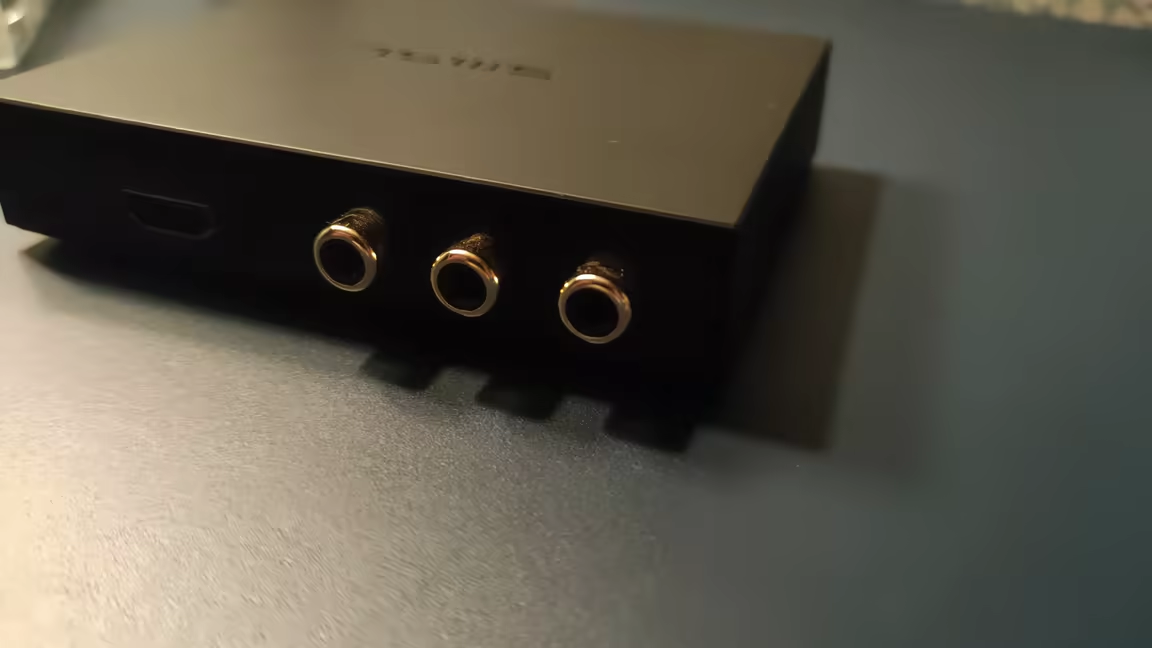
SMSL PS100
Below $30 for a DAC. It's not a measurement monster and the sound doesn't shine in any aspect, but it does what it has to do - and frees up your budget for a better amp.
- Inputs: USB-C, HDMI, Optical, Coaxial, Bluetooth
- Outputs: RCA
- Architecture: ESS ES9023 - optical/coax up to 24-bit / 192 kHz; USB 44.1-48 kHz
- Award: Best Value, the most score for its price after the top pick
- List price: $29
- Lowest price now: $35.99 at HiFiGo and 1 other store (ships from China) on
- Below $30 for a dedicated DAC - very rare on the HIFI market
- Multiple inputs: USB-C, HDMI, Optical Toslink, Coax, Bluetooth
- 192kHz support over optical and coax
Watch out: Sound is decent but doesn't shine in any aspect
SMSL PS100 reviewBy price
A euro list price goes in the band of its approximate dollar figure, the one printed beside it, at €1 = $1.08. How prices are dated
- Under $200 4 picks Top-scoring: the SMSL DL100 (8.2/10)
- $200-500 2 picks Top-scoring: the SMSL RAW-MDA1 (8.0/10)
- $500-1,000 1 pick The Denafrips Enyo 15th Anniversary (9.1/10)
- $1,000-2,500 1 pick The Henry Audio DA 256 (8.2/10)
If you need a particular connection
Every pick that has it, highest-ranked first, from the inputs and outputs listed in each review.
- Balanced XLR outputs 5 picks Denafrips Enyo 15th Anniversary (#1), SMSL DL100 (#3), SMSL RAW-MDA1 (#4), SMSL DO100 PRO (#5) and Fosi Audio ZD3 (#6)
- A headphone output on the same box 2 picks SMSL DL100 (#3) and SMSL RAW-MDA1 (#4)
- An HDMI ARC input, for a TV 3 picks SMSL DL100 (#3), SMSL DO100 PRO (#5) and Fosi Audio ZD3 (#6)
- Bluetooth 6 picks SMSL DL100 (#3), SMSL RAW-MDA1 (#4), SMSL DO100 PRO (#5), Fosi Audio ZD3 (#6), SMSL PS200 (#7) and SMSL PS100 (#8)
- An I²S input 1 pick Denafrips Enyo 15th Anniversary (#1)
What changes at the next price tier
The best-ranked pick in each price band of this list, from the cheapest up, and what the next band's best pick adds or gives up. Prices are the reviews' list prices; the axis figures are each review's own score breakdown.
Under $200 to $200-500
The best pick goes from the SMSL DL100 (8.2/10, $179) to the SMSL RAW-MDA1 (8.0/10, $239): $60 more for 0.2 lower on score. By the two reviews' breakdowns, the RAW-MDA1 rates value 1.0 lower and system fit 0.3 lower. In this list, the dearer band does not buy a higher score.
$200-500 to $500-1,000
The best pick goes from the SMSL RAW-MDA1 (8.0/10, $239) to the Denafrips Enyo 15th Anniversary (9.1/10, $699): $460 more for 1.1 higher on score. By the two reviews' breakdowns, the Enyo 15th Anniversary rates system fit 1.3 higher, technical performance 1.2 higher and build & comfort 1.1 higher.
$500-1,000 to $1,000-2,500
The best pick goes from the Denafrips Enyo 15th Anniversary (9.1/10, $699) to the Henry Audio DA 256 (8.2/10, €1,600): about $1,030 more for 0.9 lower on score. By the two reviews' breakdowns, the DA 256 rates system fit 1.2 lower, value 1.2 lower and build & comfort 0.9 lower. By their reviews, the DA 256 sounds neutral and the Enyo 15th Anniversary warm. In this list, the dearer band does not buy a higher score.
Torn between two picks?
5 pairs from this list with a head-to-head page of their own.
Questions buyers ask
Do I need an external DAC?
Buy one when the DAC already inside your computer, phone or TV falls short. The usual reasons are a missing connection, such as analog outputs for a stereo amplifier from a TV that sends digital audio only over optical or HDMI ARC, or a built-in output that hisses or hums. Expect a smaller change in sound than a new amplifier or new speakers would make: the SMSL PS100 review replaced a high-end DAC with a $29 one, and the system still sounded decent.
Does an expensive DAC sound better than a cheap one?
The extra money here mostly buys space, texture and weight, and those show most on revealing speakers or headphones. The SMSL PS200 measures excellently, with 0.0001% THD+N, yet on a resolving speaker system its review heard a narrower stage, no depth and a plasticky edge on strings and brass. The Henry Audio DA 256 layers the stage front to back, and the Denafrips Enyo 15th throws it past the speakers with deep, textured bass. Neither of the two cheapest picks made a system unpleasant to listen to.
R-2R or delta-sigma: which should I buy?
Choose on the sound and the output specs, because both types can be done well. The Denafrips Enyo 15th's R-2R ladder was heard as warm and textured, with deep bass and a wide stage, though it measures less cleanly than the best delta-sigma converters and its treble extends less far. Its output impedance is high, 625 Ω on RCA and 1250 Ω on XLR, and the usual rule of thumb asks for an amp input impedance at least ten times that. The Henry Audio DA 256 is delta-sigma and was heard as neutral, without the dry, gray character its review hears in most chip DACs.
Which DAC chip is best?
No chip ranking predicts how a finished DAC sounds. The SMSL PS200 and SMSL RAW-MDA1 share ESS's ES9039Q2M, yet the PS200 was heard with a slight bright tilt and a closed-in stage, and the RAW-MDA1 as warmer than most ESS designs, with a forward midrange. The Henry Audio DA 256 runs a Texas Instruments PCM5142 from the family used on Raspberry Pi audio boards, and its effort went into filtering the chip's power and reclocking the coax and optical inputs. The Denafrips Enyo 15th has no DAC chip at all: its R-2R ladder is built from separate resistors.
Do I need a DAC with XLR outputs?
Only if your amplifier or powered speakers have XLR inputs. As a connection, balanced mostly pays off over long cable runs and in electrically noisy rooms. Some DACs also sound better from their own XLR outputs, and the three SMSL picks with both did in their reviews: the DL100 cleaner, more detailed and more dynamic, the RAW-MDA1 with more dynamics, detail and stage width, and the DO100 PRO slightly better. The Henry Audio DA 256, SMSL PS200 and SMSL PS100 are RCA only.
Which input should I use: USB, optical or coaxial?
Use the one your source has, then check the DAC's own limits. The Henry Audio DA 256 sounded more precise over USB, with coax and optical a touch mellower, and it narrows that gap by buffering those two inputs and replaying them on its own clocks. The SMSL PS100's USB input stops at 48 kHz, while its optical and coax reach 192 kHz. Optical can't carry electrical noise from a computer's motherboard, and the Denafrips Enyo 15th's I2S input only works once its pinout is matched to the source.
The eight DACs here run from the $29 SMSL PS100, a small plastic box, to the €1,600 Henry Audio DA 256, thick aluminum on a solid wood base. What separates them day to day is what they connect to, what else they do and the tonal balance each one adds to your chain.
Which sockets your sources and amp need
All eight take USB, optical and coaxial. For a TV, the SMSL DL100, SMSL DO100 PRO and Fosi Audio ZD3 take HDMI ARC, and the PS100 has an HDMI input too. Six of the eight add Bluetooth, and the Denafrips Enyo 15th Anniversary and the DA 256 are the two without it. The Enyo is the only pick with I²S, which its review rates as its best input once you've stepped through the pinout modes to match your source, since I²S has no standard pinout.
Two input limits are easy to miss. The PS100's USB stops at 48 kHz while its optical and coax reach 24-bit/192 kHz, so it suits a TV, a console or a CD transport better than a computer full of hi-res files. The DA 256 plays no DSD or MQA and stops at 24/192 on every input, which its review notes is as far as any major streaming service goes.
On the output side, the Enyo, DL100, SMSL RAW-MDA1, DO100 PRO and ZD3 have balanced XLR and RCA, and the ZD3 runs both at once. The DA 256, SMSL PS200 and PS100 are RCA only, which loses nothing into an amp with RCA inputs and rules them out for one that takes only XLR. Two picks need a look at the amp's spec sheet. The Enyo's output impedance is high, 625 Ω on RCA and 1250 Ω on XLR, and the usual rule of thumb asks for an amp input impedance at least ten times that. The RAW-MDA1's outputs run hot, 5.2 Vrms on XLR, and its review warns that some amps will clip if you're careless with levels.
Check the power arrangements too. The DA 256 ships without a supply and runs from the USB cable, any 8 to 16 V adapter or a 9 V battery, and the PS200 needs a phone charger or a linear supply on its USB-C port.
Volume control, fixed output or headphone amp
With an integrated amp or a preamp setting the volume, a fixed output is all you need. The DA 256 works that way, with no remote and no input selector: it switches itself to whichever input starts playing. The PS100 has no volume control either, so it wants an amplifier or powered speakers with one of their own.
To feed a power amp or powered speakers directly, pick a DAC that sets the level. The DL100 can work as a digital preamp and comes with a remote. The ZD3 has a volume knob plus a bypass mode for a fixed-level output, which its review heard as subtly more immediate. Turning a fixed-output DAC down with the computer's volume slider throws away resolution, and the bit depth calculator shows how much.
The DL100 and the RAW-MDA1 are headphone amplifiers too, each with a 6.35 mm and a 4.4 mm output, rated at 1.5 W and 1.7 W into 32 Ω respectively. That's enough for most headphones, though the RAW-MDA1's review wouldn't trust it with the notoriously hard-to-drive ones. If you already own a headphone amp you like, you'd be paying for a second one, and if you need more power than these two give, Best headphone amplifiers is the next list to read.
How much a new DAC changes the sound
The PS100 review ranks a DAC's effect below an amplifier's and far below that of speakers or headphones. Swapping a high-end DAC for the $29 box left the system sounding decent, and the review argues for spending the difference on the amp, the speakers or the headphones.
A cheap DAC does show on a revealing system. The PS200 measures excellently, with 0.0001% THD+N, yet on a resolving speaker system its review heard clear signs of mismatch, along with a slightly narrower stage, no real depth and a plasticky edge on strings and brass. It suits a headphone amp driving budget headphones, or active speakers at that level. If the rest of your system comes from Best reference-grade audio gear, the Enyo is the one pick here that also ranks there.
The chip name predicts little. The PS200 and the RAW-MDA1 both use ESS's ES9039Q2M, yet the PS200 was heard with a slight bright tilt and a closed-in stage and the RAW-MDA1 as warmer than most ESS designs, with a forward midrange. The DA 256 runs a Texas Instruments PCM5142 from the family used on Raspberry Pi audio boards, and its effort went into filtering the chip's power and reclocking the coax and optical inputs.
Matching a DAC's voicing to your system
Each pick's tilt stacks on top of what your amp and your speakers or headphones already do:
- The DL100 leans toward clarity and air, with less low-mid warmth, and its review steers it away from bright, thin gear toward warmer partners.
- The RAW-MDA1 pushes the midrange forward, which fills in slightly V-shaped headphones or speakers, and its review warns that the extra midrange may not suit every system.
- The DO100 PRO is mostly neutral with a slightly analytical lean, and a faster filter reins in its top end.
- The ZD3 sits near neutral with a little sparkle and tight bass, and puts little depth behind the instruments.
- The Enyo 15th is warm and textured, with deep, slightly rough bass and a stage that reaches past the speakers.
- The DA 256 is neutral, with full bass and standout imaging and timing, and a bad source can tip it a touch bright.
Three mistakes follow from skipping these checks: a DAC with a headphone amp bought for a desk that already has one, an RCA-only DAC bought for an XLR-only amp, and DSD or MQA decoding paid for and never used.
Streamers, dongles and what these DACs leave out
None of these eight connects to a network, so a computer on USB, a phone on Bluetooth, a TV on HDMI ARC or optical, or a network streamer has to feed it. No standalone streaming DAC or portable dongle has been reviewed here, so neither type is on the list, though three of the four picks on the headphone amplifier guide stream on their own. The Enyo reaches DSD1024 and PCM at 1536 kHz over I²S and USB, which leaves room for upsampling software in NOS mode. Before paying for high sample rates, the hi-res audio checker shows whether a 192 kHz download is an upsampled 44.1 kHz file.
Ranked by score, on the one rubric every review uses: Sound 30%, Technical performance 25%, Build & comfort 15%, System fit 15% and Value 15%. Best Value goes to the pick, other than the winner, with the most score for its price: its score divided by log10(price + 9), on the review's list price. Best Budget goes to the highest-ranked pick not already awarded in the cheapest quarter of the list, which here runs to $89. No placement here is sponsored, paid for, or negotiable.
How a score is built Funding and independence All DAC reviews
Sources
- AES17: Measurement of digital audio equipment
Standard Audio Engineering Society Paid full text
Definitions of the SNR, THD+N and IMD figures that DAC and amplifier makers publish and those reviews quote. Nothing is measured in-house.
- IEC 60958-3: Digital audio interface, consumer applications
Standard International Electrotechnical Commission Paid full text
The consumer digital audio interface (S/PDIF) that optical and coaxial connections carry.
- USB Device Class Definition for Audio Devices, Release 2.0
Standard USB Implementers Forum
USB-IF's class definition for USB audio devices, Release 2.0, with its errata.
- Stanford CCRMA: Sampling theorem
Reference Stanford University
The sampling theorem: why a sample rate captures everything below half of it, and what a higher rate does and does not add.