
The Best Hi-Fi Accessories in 2026: Tested & Ranked
Accessories are where audio spends the most money on the least evidence. The useful question is not which cable or conditioner is best, but which problem you actually have, because room treatment, power, cabling and networking fix different ones by very different amounts.
- By Jakub Charkiewicz
- 13 tested picks
- Updated
- Score floor: 7.5/10
- Prices From $30 to $14,495
The short version
The Synergistic Research PowerCell 14 (9.2/10, $14,495) tops our ranking of the best hi-fi accessories. For a lot less money, the Monosaudio PS75R1R, CAT 8, P903M0 (7.8/10, From $30) takes best value. The runner-up is the Ekustik Woody Queen (9.0/10, From €399/panel). 13 picks in all, ranked by score from 7.5 to 9.2/10.
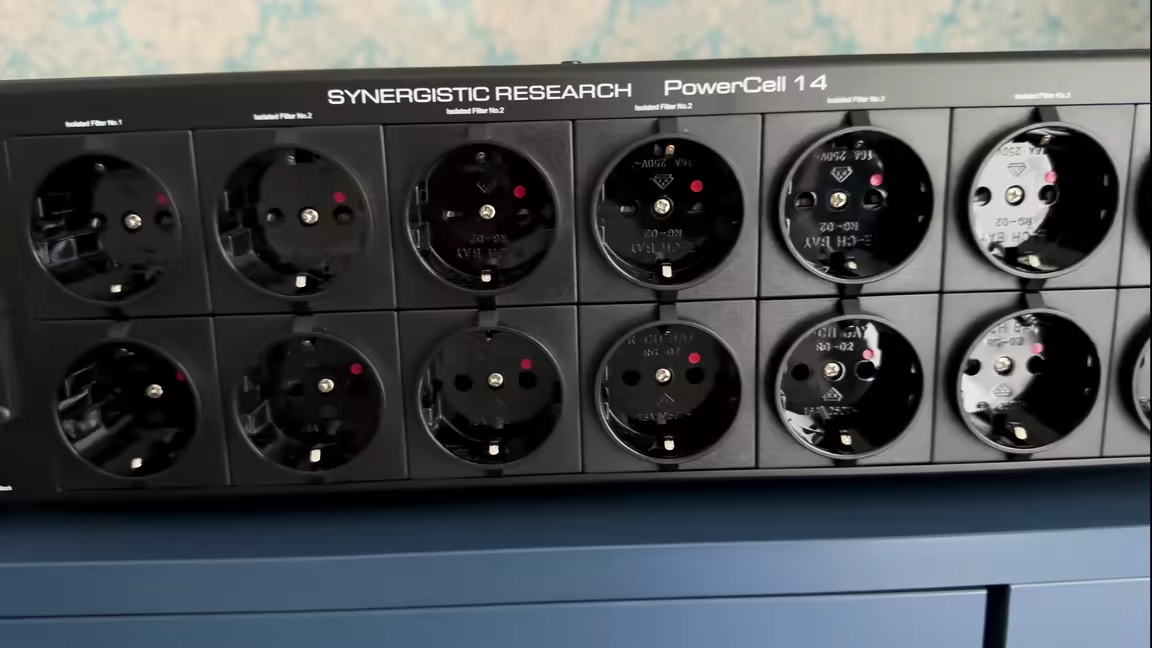
Best Overall
Synergistic Research PowerCell 14
A 14-outlet flagship power conditioner with seven SRX folded EM cells, ULF+DC biasing, graphene treatment, and a silver matrix ground strap - a tier above any 'power strip'.
- Score 9.2
- Verdict Reference
- Price $14,495
Synergistic Research PowerCell 14 review See all 13 ranked picks
At a glance
| # | Pick | Price | Award |
|---|---|---|---|
| 1 | PowerCell 14 | $14,495 | Best Overall |
| 2 | Woody Queen | From €399/panel from $430/panel approx. | No award |
| 3 | Parametric Tower | Varies | No award |
| 4 | 4-all-in-1 Cable Set | €790 $855 approx. | No award |
| 5 | Brown Sugar BSSC95xx | Varies by length | No award |
| 6 | Brown Sugar BSSC4500 | Varies by length | No award |
| 7 | PF-1000LPS | $445 | No award |
| 8 | AS-EU08 + SP-USB | From $200 | No award |
| 9 | Network Router UEF | From $2,995 | No award |
| 10 | HiFi Tweaks Roundup | Varies | No award |
| 11 | P902E6R + USB Cables | Under $150 | Best Budget |
| 12 | PS75R1R, CAT 8, P903M0 | From $30 | Best Value |
| 13 | Brown Sugar BSSC3300 | Varies by length | No award |
- 1 Synergistic Research PowerCell 14 Best Overall $14,495
- 2 Ekustik Woody Queen From €399/panel from $430/panel approx.
- 3 Ortvik Parametric Tower Varies
- 4 AudioMica 4-all-in-1 Cable Set €790 $855 approx.
- 5 Melodika Brown Sugar BSSC95xx Varies by length
- 6 Melodika Brown Sugar BSSC4500 Varies by length
- 7 Taga Harmony PF-1000LPS $445
- 8 Monosaudio AS-EU08 + SP-USB From $200
- 9 Synergistic Research Network Router UEF From $2,995
- 10 DH Labs, iFi, Vera-Fi HiFi Tweaks Roundup Varies
- 11 Monosaudio P902E6R + USB Cables Best Budget Under $150
- 12 Monosaudio PS75R1R, CAT 8, P903M0 Best Value From $30
- 13 Melodika Brown Sugar BSSC3300 Varies by length
The 13 picks by type
By type
- Cables 6 picks Top-scoring: the AudioMica 4-all-in-1 Cable Set (8.5/10)
- Power conditioning 4 picks Top-scoring: the Synergistic Research PowerCell 14 (9.2/10)
- Room treatment 2 picks Top-scoring: the Ekustik Woody Queen (9.0/10)
- Network 1 pick The Synergistic Research Network Router UEF (7.8/10)
The 13 picks, ranked
Synergistic Research PowerCell 14
A 14-outlet flagship power conditioner with seven SRX folded EM cells, ULF+DC biasing, graphene treatment, and a silver matrix ground strap - a tier above any 'power strip'.
- Type: Power conditioner
- Weight: 12.00 kg (12000 g)
- Outlets: 14 UEF Purple 2.0 (three isolated banks)
- Carbon-fiber composite + plexiglass top - visible internals
- 14 UEF Purple 2.0 outlets across three isolated banks
- EM Cells doubled as supercapacitors for current peaks
Watch out: $15,000 entry price is far from affordable
Synergistic Research PowerCell 14 review
Ekustik Woody Queen
Handmade Czech acoustic panels with a luxurious wood frame and PET felt core - true broadband absorption to 100Hz, zero fiberglass, and a 0.94 NRC rating.
- Type: Broadband acoustic absorber
- Dimensions: 60 × 120 cm
- Core: PET felt (Envizol), fiberglass-free
- Handmade in the Czech Republic with luxurious wood frame
- Eco-friendly PET felt Envizol core - zero fiberglass
- Three depth options: 5cm decorative, 10cm performance, 15cm bass
Watch out: 15cm Performance Bass version is chunky on the wall
Ekustik Woody Queen review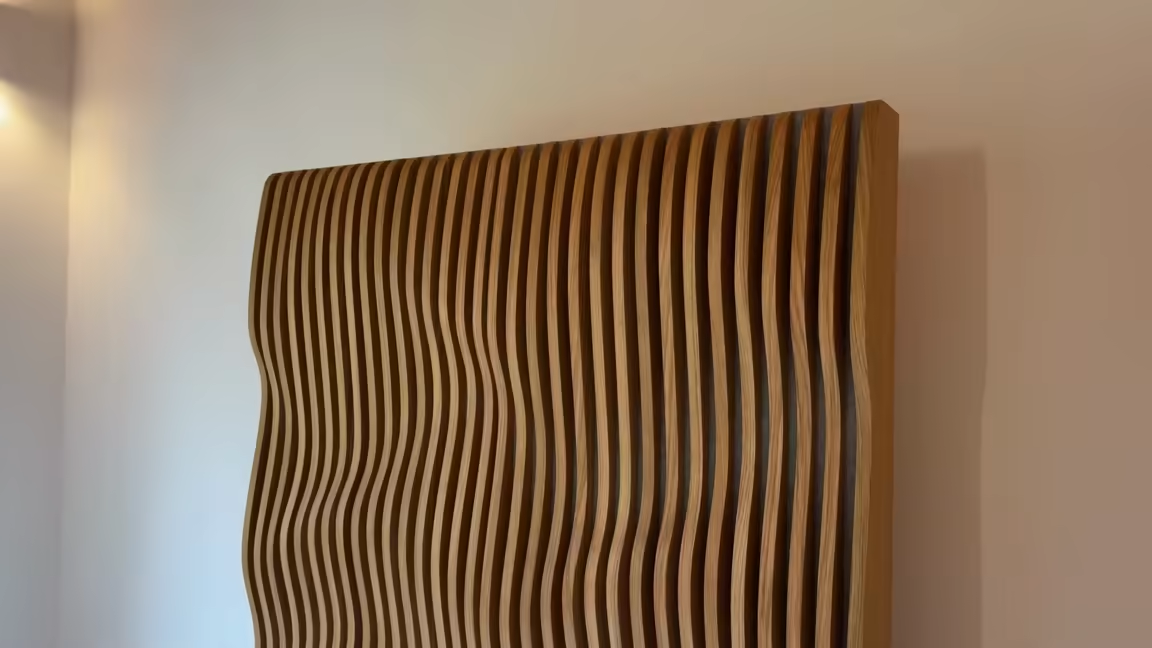
Ortvik Parametric Tower
A freestanding acoustic tower that scatters and absorbs at the same time - handmade Czech oak over a recycled PET felt core, placed wherever the room needs it.
- Type: Freestanding diffuser and broadband absorber
- Weight: Over 30 kg per tower
- Width: 60 cm
- Diffusion and broadband absorption from one freestanding unit
- Stands anywhere, so it treats spots no wall panel can reach
- Recycled PET Envizol core - no mineral or glass wool
Watch out: No bass absorption
Ortvik Parametric Tower review
AudioMica 4-all-in-1 Cable Set
A pre-matched cable kit at €790 (or PRO version) - speaker cables, power cord, and shared geometry tuned together to give you synergy out of the box without trial and error.
- Type: Pre-matched cable set (speaker + power)
- Conductor: Tinned OFC, 192-256 micro-conductors
- Shielding: Aluminum foil + tinned copper braid
- Pre-matched: power cable + speaker cables in one set
- Tinned OFC conductors with 192-256 micro-conductors
- Aluminum foil + tinned copper round braid shielding
Watch out: Premium price point
AudioMica 4-all-in-1 Cable Set review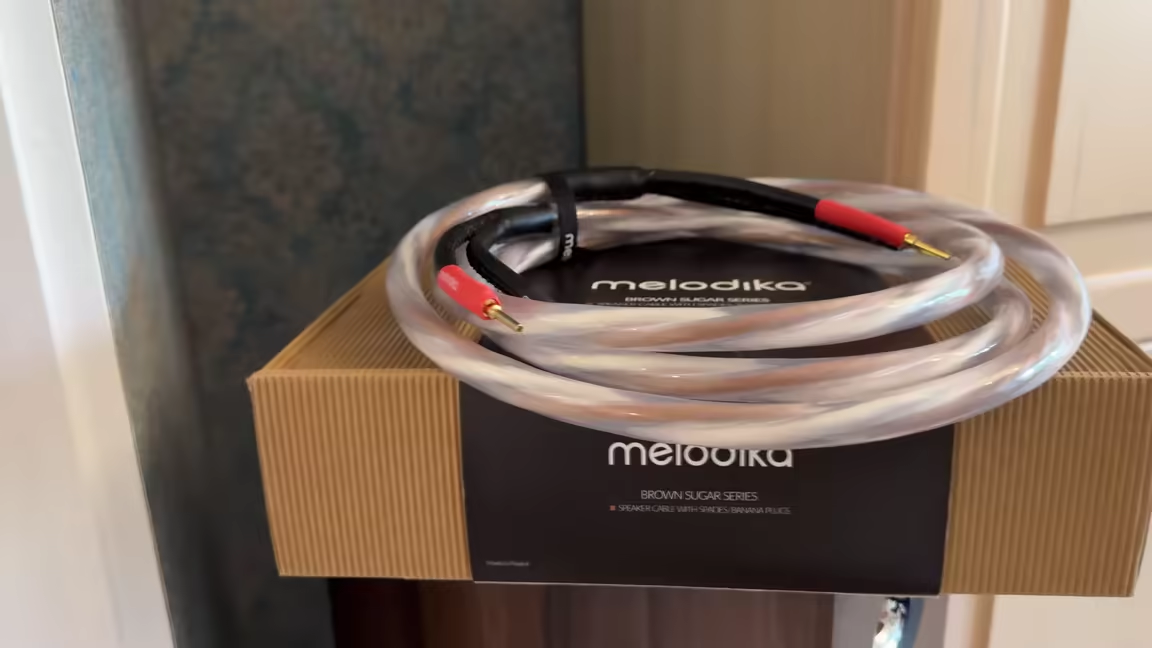
Melodika Brown Sugar BSSC95xx
Melodika's flagship 9.5mm² LITZ speaker cable - super thick OFC copper, hand-finished Italian leather, and a big improvement in extension, dynamics, and treble air.
- Type: LITZ speaker cable (flagship)
- Conductor: 9.5 mm² 6N OFC
- Construction: Twisted dual-conductor LITZ
- Massive 9.5mm² conductor with 6N OFC copper
- True LITZ construction - every strand individually insulated
- Hand-finished real Italian leather details
Watch out: Heavy and stiff due to massive thickness
Melodika Brown Sugar BSSC95xx review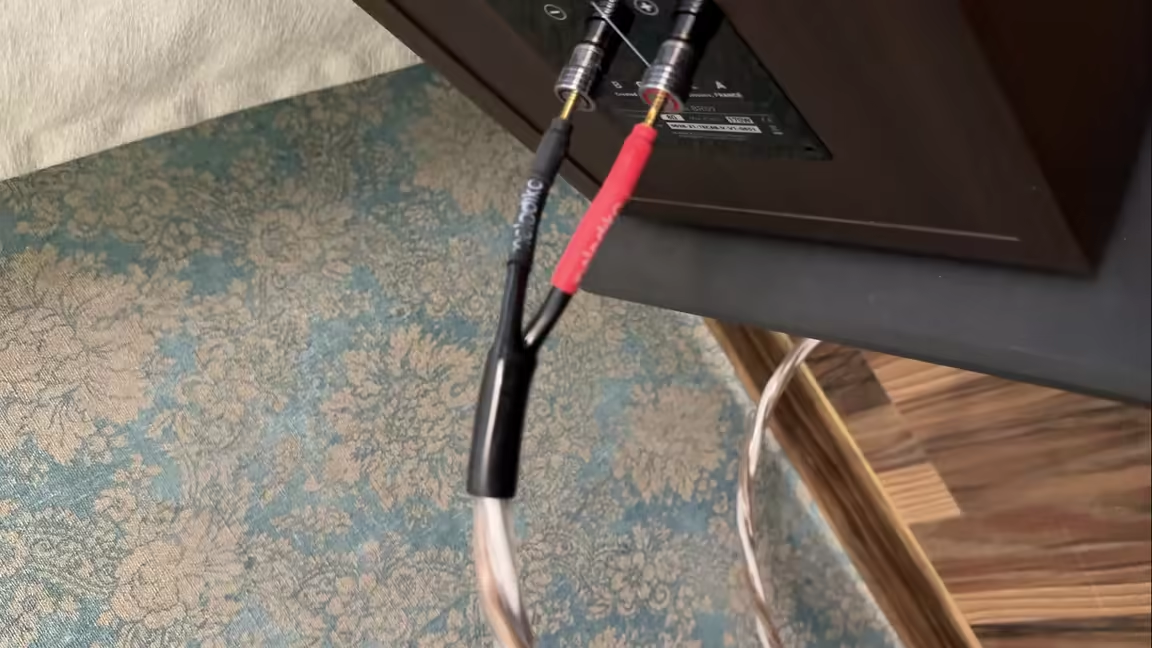
Melodika Brown Sugar BSSC4500
A higher-tier 4.5mm² LITZ speaker cable that delivers tighter mid-bass, better instrument separation, and a more natural, lifelike sound - a clear upgrade over the BSSC3300.
- Type: LITZ speaker cable
- Conductor: 4.5 mm² 6N OFC
- Construction: Spiral LITZ, Multi-Gauge BassCore, triple LDPE
- Larger 4.5mm² conductor with 6N OFC copper
- Spiral LITZ technology with individually insulated strands
- Multi-Gauge BassCore for cleaner bass / treble separation
Watch out: About 50% more expensive than the BSSC3300
Melodika Brown Sugar BSSC4500 review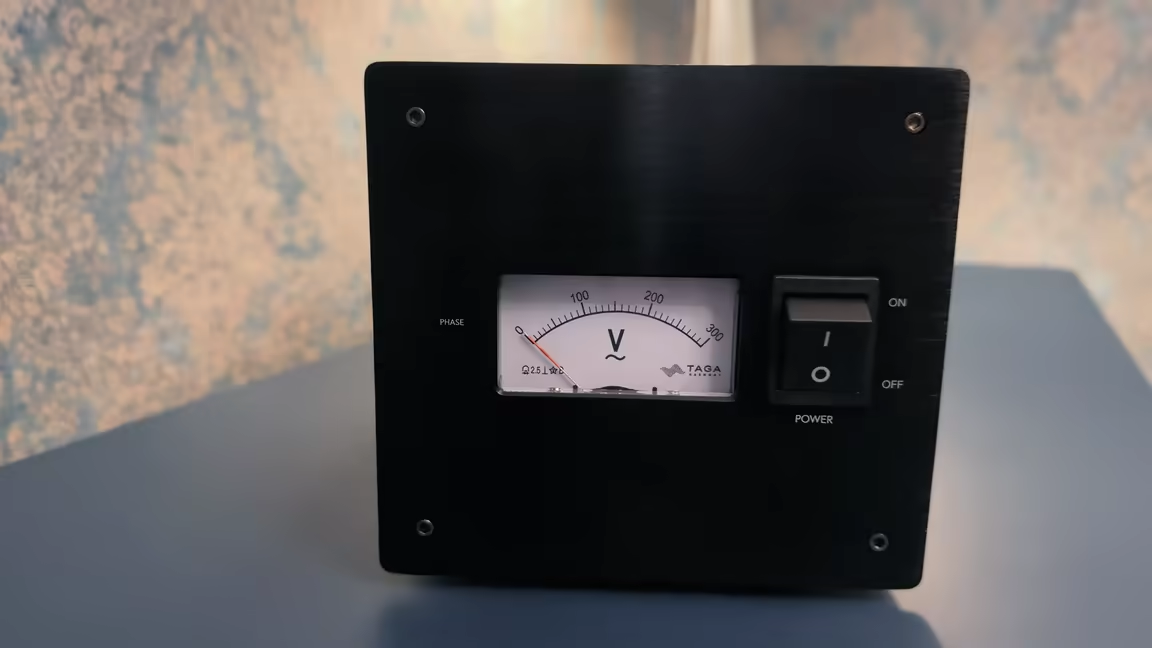
Taga Harmony PF-1000LPS
A serious 8-outlet power conditioner with a linear DC/USB supply, 3-tier filtering, audiophile fuses, and a phase detector - real protection and a measurable noise drop.
- Type: Power conditioner + linear DC/USB supply
- Outlets: 8 Schuko (4 direct, 4 filtered)
- DC output: 5 / 9 / 12 / 15 / 19 / 24 V, up to 3 A
- Heavy, all-metal chassis acts as additional EMI/RFI shielding
- VU-style voltage meter for at-a-glance power monitoring
- Phase detector flags incorrect polarity at the wall
Watch out: Heavy
Taga Harmony PF-1000LPS review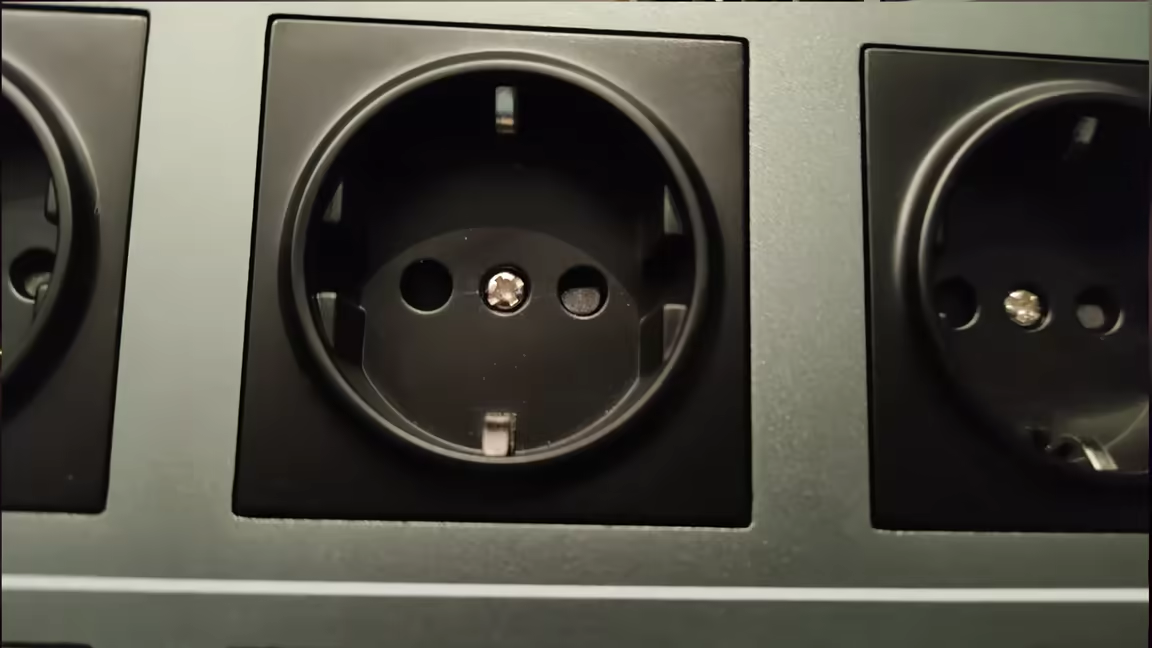
Monosaudio AS-EU08 + SP-USB
An affordable alternative to PS Audio and AudioQuest. The AS-EU08 paired with the SP-USB delivers a darker background, lower noise floor, and a more refined sound.
- Type: Power conditioner + USB filter
- Weight: 3.00 kg (3000 g)
- Outlets: 8 Schuko (pure copper)
- Outstanding build - 3 solid metal pieces, ~3 kg
- 8 pure copper Schuko sockets with proper spacing for thick plugs
- Audio-grade Furutech FI-06 inlet for your own power cable
Watch out: Total cost climbs once you start adding both pieces
Monosaudio AS-EU08 + SP-USB review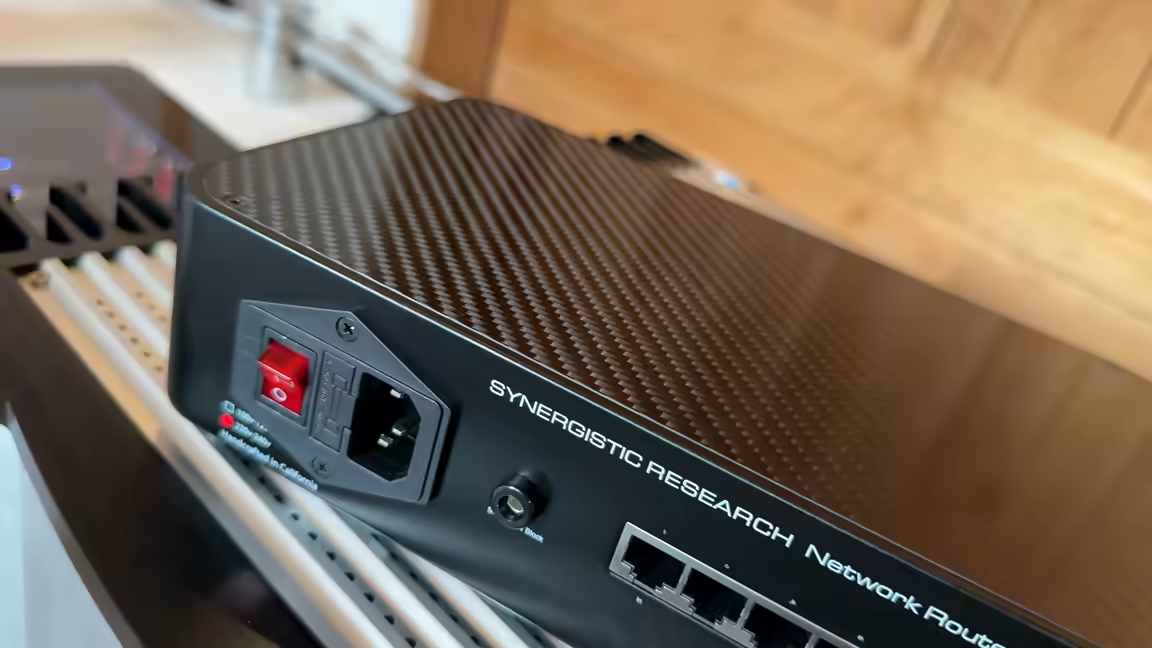
Synergistic Research Network Router UEF
A wired-only audiophile router with a linear power supply, EM cell, ULF generator and carbon fiber voicing. In my system it lowered the noise floor on everything I stream.
- Type: Wired audiophile network router
- Dimensions: 10 × 2.6 × 6 in (W×H×D)
- Weight: 2.80 kg (2800 g)
- Aircraft-grade aluminum chassis with a carbon fiber lid
- 2.8 kg in a footprint smaller than a shoebox
- Linear power supply adapted from the Galileo PowerCell
Watch out: Three thousand dollars, for a network router
Synergistic Research Network Router UEF review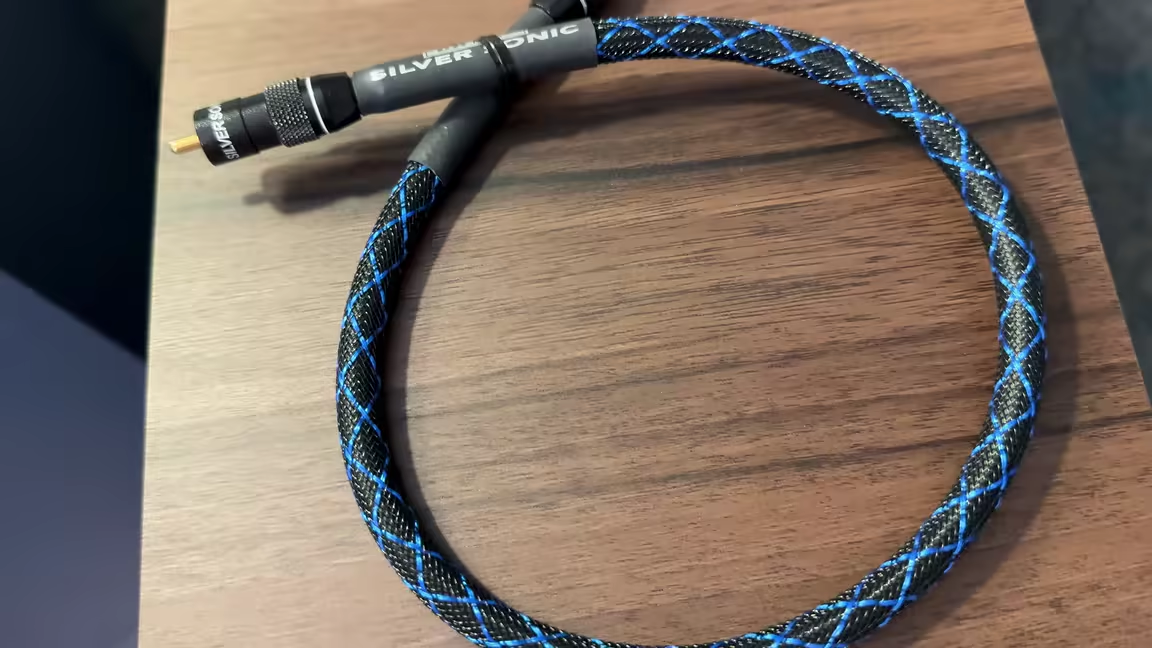
DH Labs, iFi, Vera-Fi HiFi Tweaks Roundup
Three real tweaks that improve a high-end system without swapping speakers or amps - audiophile network/USB/digital cables, AC power conditioning, and parallel filtering.
- Type: Tweaks roundup (cable, power, filtering)
- Cables: DH Labs Cat8 / HDMI I²S / Mirage USB / D-750 75 Ω coax
- Power: iFi DC Blocker+, Vera-Fi parallel conditioners
- DH Labs Reunion Cat8 reduces digital haze, sharpens imaging
- DH Labs HDMI 2.1 for clean I²S - opens up the soundstage
- DH Labs Mirage USB separates data and power - 4 shields total
Watch out: Improvements are cumulative, not night-and-day
DH Labs, iFi, Vera-Fi HiFi Tweaks Roundup review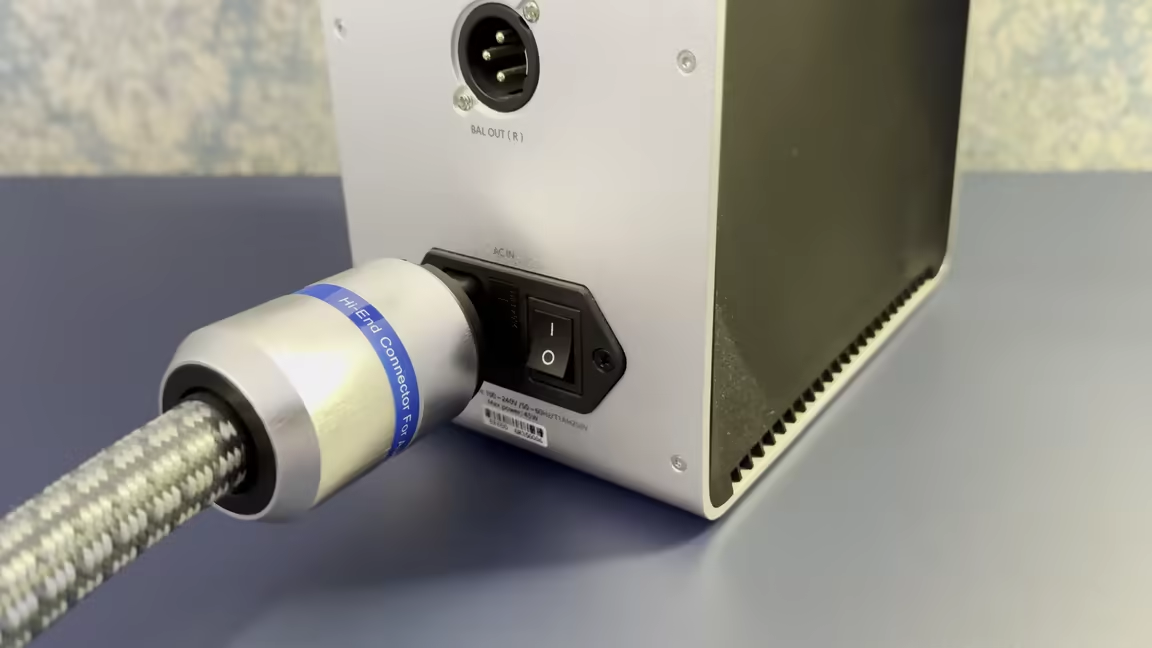
Monosaudio P902E6R + USB Cables
Sub-$150 high-end power cables and audiophile USB cables that brought tighter bass, a wider soundstage, and unexpectedly large clarity gains across an entire HiFi chain.
- Type: Power cable + USB cable
- Diameter: 17 mm
- Conductor: 5.5 mm² 99.998% OFC
- Thick 17mm diameter with 5.5mm² cross-section
- 99.998% OFC copper, 100% copper shielding, Teflon insulation
- Heavy-duty aluminum alloy plug body, anti-corrosion plated pins
Watch out: Power cable itself is stiff (especially at shorter lengths)
Monosaudio P902E6R + USB Cables review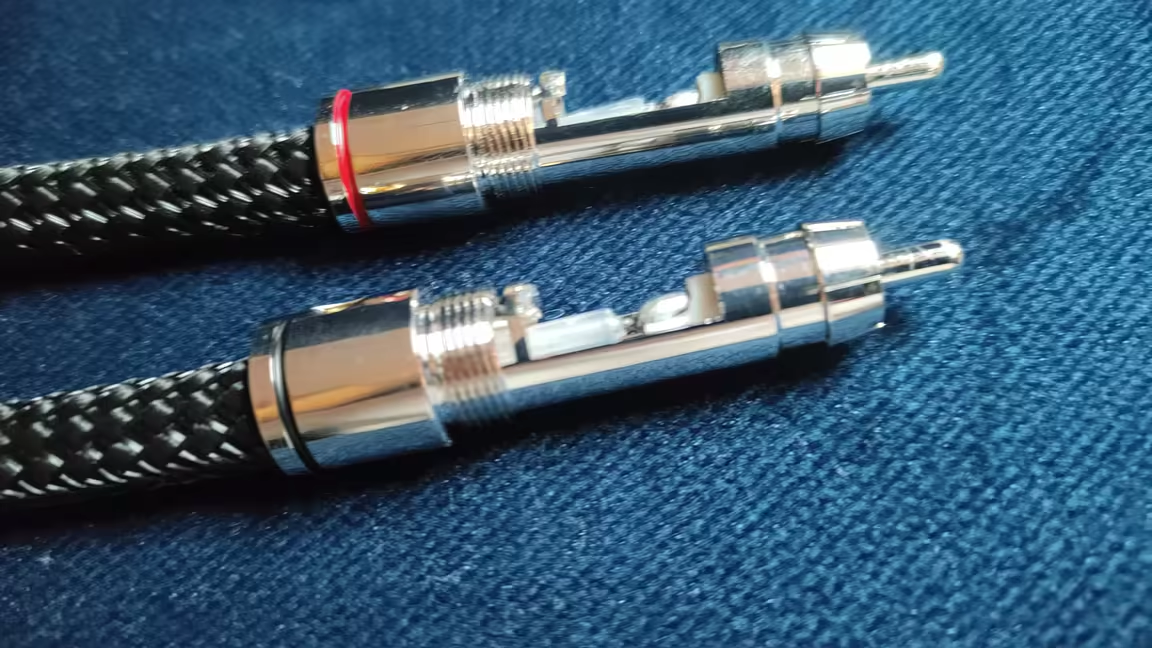
Monosaudio PS75R1R, CAT 8, P903M0
Affordable audiophile cables from AliExpress that genuinely deliver - silver RCA interconnects, OFC CAT 8 Ethernet, and a power cord with real, audible improvements.
- Type: Interconnect / Ethernet / power cable set
- RCA (PS75R1R): Pure silver, 4 shielding layers, 0.8 mm conductor / 8 mm outer
- Ethernet (CAT 8): 99.998% OFC copper
- PS75R1R RCAs use pure silver conductors with 4 shielding layers
- Polished brass, chrome-plated R201R connectors with locking mechanism
- Surprisingly flexible despite the thickness
Watch out: Improvements are small and system-dependent
Monosaudio PS75R1R, CAT 8, P903M0 review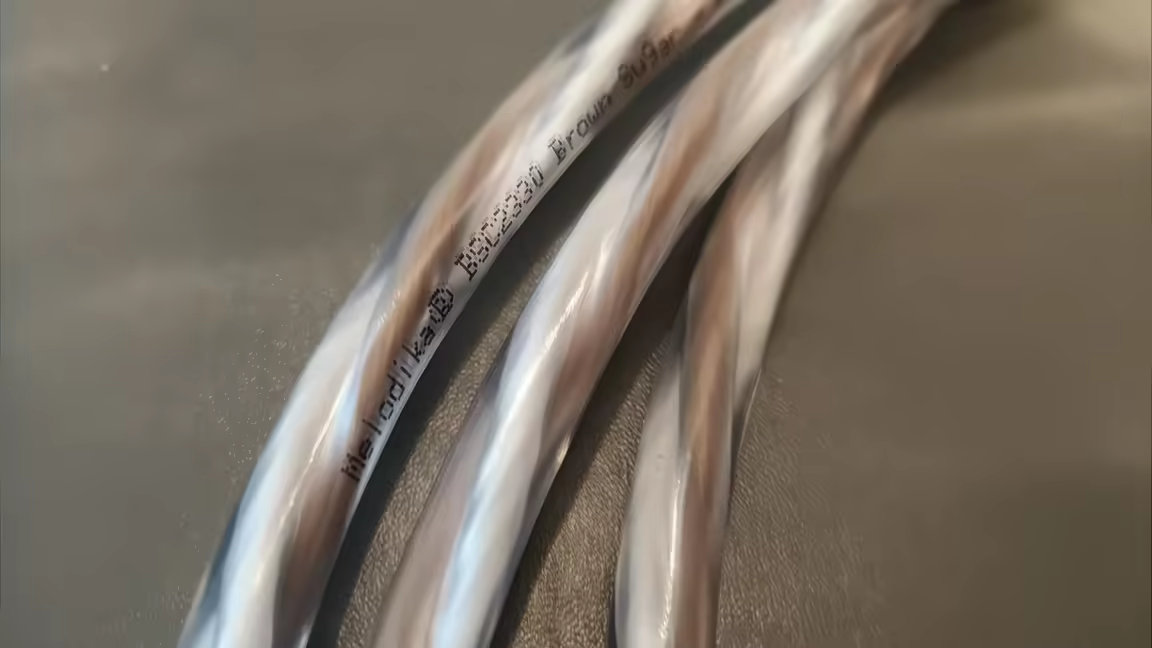
Melodika Brown Sugar BSSC3300
Polish-made LITZ speaker cables with Multi-Gauge Core technology - clean, neutral, and detail-rich, but the 3.3mm² gauge is on the lighter side for full dynamic punch.
- Type: LITZ speaker cable (single-wire)
- Conductor: 2 × 3.3 mm²
- Construction: Multi-Gauge Core LITZ, triple LDPE dielectric
- True LITZ construction - every conductor individually insulated
- Multi-Gauge Core technology splits frequency bands across strands
- Triple LDPE dielectric insulation
Watch out: Slightly calmer and less dynamic than expected
Melodika Brown Sugar BSSC3300 reviewQuestions buyers ask
Which accessory should I buy first?
Acoustic treatment, in almost every case. It is the only category on this list that changes the sound at your listening position by an amount you can measure without instruments, because the room is doing more to your frequency response below 300 Hz than any component in the chain. Treatment is also the only one whose benefit does not depend on what the rest of your system already does well. Cables and power conditioning come after, and both do less.
Do speaker cables actually change anything?
Gauge and length do, measurably, and that is most of the story. A long run of thin cable into a low-impedance speaker adds series resistance in the path, which costs damping factor and a fraction of a decibel of level. Choose enough copper for the distance and the load and you have collected essentially all of the available benefit. Beyond that the differences get small quickly, which is why the cables on this list are scored on build, geometry and value rather than on claims about what they transform.
Is a power conditioner worth it if my mains is clean?
Depends what you mean by clean. A conditioner does two separable things: it filters high-frequency noise riding on the mains, and it manages how multiple components share a supply and a ground. If your system has an audible noise floor problem, particularly a hum or a hash you can hear between tracks, that is a real fault and worth fixing at the source. If it does not, a conditioner is insurance and convenience rather than an upgrade, and it should be priced accordingly in your head.
Why are the scores here not comparable to a DAC's score?
They are, and that is deliberate. Every score on this site is anchored to a published per-category reference list, so an 8.5 accessory and an 8.5 DAC mean the same standing against their peers at their price. What that does not mean is equal effect on your system. An 8.5 cable is an excellent cable; it will still change less than a mediocre speaker swap. The score rates the product against its peers, not the size of the upgrade.
Accessories are the part of this hobby with the worst evidence-to-spending ratio, and pretending otherwise would make this guide useless. A great deal of what is sold as an upgrade is priced on belief rather than on effect, and the honest position is that the size of the change varies enormously between categories on this list.
So this guide is ordered by score, like every other list on the site, but it is worth reading with a second axis in mind: how much a given category can change at all. Acoustic treatment can move your in-room response by an amount that would be a scandal in any electronic component. A cable, chosen sensibly, collects most of its available benefit from gauge and length. Both can be excellent products; they are not the same size of decision.
Which accessory fixes which problem
The four kinds of product on this list solve four different problems, and buying one to fix another's problem is the most expensive mistake in the category.
Room treatment is for how the room sounds. Absorbers such as the Ekustik Woody Queen take energy out of the reflections and the low-frequency build-up a room adds at the listening seat, and a freestanding piece like the Ortvik Parametric Tower scatters as well as absorbs. If the complaint is boom, smear, or a stage that shifts when you move your head, this is where the money goes first.
Power conditioning is for noise you can hear. A conditioner filters what rides in on the mains and manages how several components share one supply and one ground. It earns its price on a system with an audible hum, a hash between tracks or noise that changes when an appliance switches, and it does much less on a system that is already silent.
Cables are for connecting things adequately. Speaker cable needs enough copper for the length of the run and the load at the end of it; interconnects, USB and Ethernet need to be well made and to stay seated. Past adequate, the change a cable makes is small, which is why the cable picks here are judged as much on build, geometry and value as on sound.
Network hardware is for streaming systems only. A router such as the Synergistic Research Network Router UEF sits upstream of everything you stream, so it has something to work on only when the network is your source.
The order that actually helps
If you are working through a system rather than shopping one item, the sequence below does more per pound than the reverse of it.
Treat the room first. Room modes below 300 Hz add and cancel by tens of decibels at a fixed listening position, and no cable, conditioner or component compensates for a null caused by where you sit. The room-mode calculator on this site will show you where yours land from three measurements.
Fix a noise floor problem second, if you have one. A hum, a hash between tracks, or noise that changes when other appliances switch is a real fault with a real cause. That is what power conditioning is for, and it is worth money when the problem exists.
Get cables right third, which mostly means getting them adequate. Enough gauge for the run, connectors that stay tight, and a length that suits the layout. That is the majority of the benefit available from cabling.
Everything after those three is refinement, and should be bought as refinement rather than as a fix.
Mistakes that cost the most
Spending on the chain to fix the room. A bass peak or a null at the listening seat is a property of the room's dimensions and of where you sit. Moving the chair or the speakers, or treating the room, changes it; a new cable does not.
Conditioning a system that is already quiet. If there is no hum or hash to hear with the volume up and nothing playing, a conditioner is insurance and convenience, not an upgrade, and it should be priced that way in your head. The flagship on this list costs $14,495; the cheapest conditioning pick starts from $200.
Judging an accessory the evening it arrives. Live with it for a few weeks, then take it back out. What you miss when it is gone is a far better guide than what you think you heard when it went in.
Buying speaker cable by the price of the speakers. Gauge for the run is the part that is physics. Choose that first, then choose on build and connectors, and treat anything beyond as a matter of taste.
How the accessories were judged
Where an accessory claims a specific mechanism, the listening was arranged to try to expose that mechanism rather than to confirm it.
Accessories also get one test that components do not: removal. A component is judged by what it does in the chain. An accessory is judged by what changes when it comes back out, after enough time that the novelty of installing it has worn off. That order matters, because the direction of an expectation is easiest to hear immediately after you have spent money.
The scoring rubric is the same one every review on the site uses; what changes here is which part of it separates two products. Most of these accessories have no active parts, so the whole proposition is materials, geometry and assembly, and that is where two cables or two panels at the same price most often part ways.
A high score is not a big change
A high score on this list means the product is excellent against others of its own kind at its own price. It does not mean the change it makes is large, and this is the single most important thing to carry away from this page.
That distinction is why the guide is worth having at all. Plenty of accessory coverage elsewhere reports the size of an effect that would be remarkable if it were real, without ever saying what it was compared against or whether the comparison could have been reversed. What you get here is a product judged against its peers, a verdict that says how confident we are, and a page that will tell you when the honest answer is that the category itself does less than the marketing implies.
Ranked by score, on the one rubric every review uses: Sound 30%, Technical performance 25%, Build & comfort 15%, System fit 15% and Value 15%. Best Value goes to the pick, other than the winner, with the most score for its price (score against the log of the price). Best Budget goes to the highest-ranked pick not already awarded in the cheapest quarter of the list. No placement here is sponsored, paid for, or negotiable. How a score is built · Funding and independence · All accessories reviews