
The Best Open-Back Headphones in 2026: Tested & Ranked
Stage, imaging, and honesty - the open-back form factor has owned audiophile listening for forty years for a reason. The price is isolation in both directions, so buy one for a quiet room, and choose the driver type before the brand.
- By Jakub Charkiewicz
- 14 tested picks
- Updated
- Score floor: 7.5/10
- Prices $199 to $1,700
The short version
Our top pick among the best open-back headphones is the HIFIMAN HE1000se (9.3/10, $1,700). Our best value pick is the HIFIMAN Sundara (9.0/10, $299). The runner-up is the HIFIMAN Arya Organic (9.2/10, $1,099). 14 picks in all, ranked by score from 8.0 to 9.3/10: 10 planar magnetic and 4 dynamic.
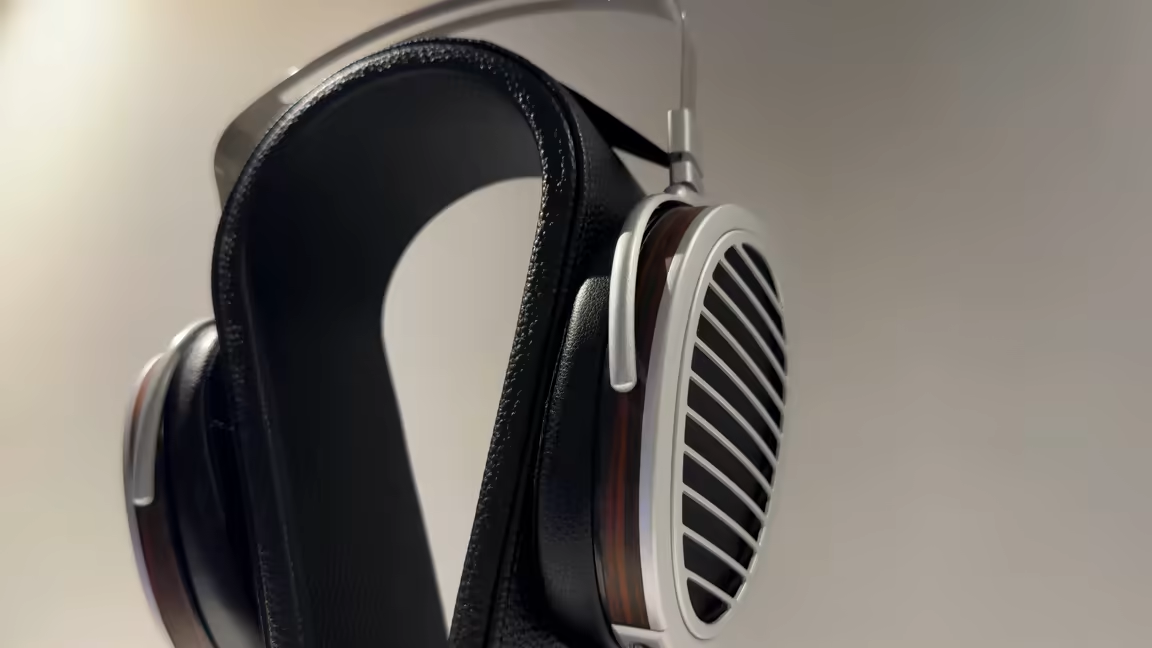
Best Overall
HIFIMAN HE1000se
An ex-$3,500 flagship, now $1,700: nanometer diaphragm, Stealth Magnets, a holographic soundstage, and state-of-the-art detail - bright, honest, merciless with bad sources.
- Score 9.3
- Verdict Reference
- Price $1,700

At a glance
| # | Pick | Price | Award |
|---|---|---|---|
| 1 | HE1000se | $1,700 | Best Overall |
| 2 | Arya Organic | $1,099 | No award |
| 3 | Arya Unveiled | $1,299 | No award |
| 4 | Sundara | $299 | Best Value |
| 5 | X1 | $549 | No award |
| 6 | Ananda Stealth | $359 | No award |
| 7 | Edition XS | $269 | Best Budget |
| 8 | 105 Silva | $499 | No award |
| 9 | Arya Stealth | $759 | No award |
| 10 | Ananda Nano | $499 | No award |
| 11 | HE1000 Stealth | $1,119 | No award |
| 12 | Luan | $299 | No award |
| 13 | Anser | $199 | No award |
| 14 | Verum 1 | $349 | No award |
- 1 HIFIMAN HE1000se Best Overall $1,700
- 2 HIFIMAN Arya Organic $1,099
- 3 HIFIMAN Arya Unveiled $1,299
- 4 HIFIMAN Sundara Best Value $299
- 5 OLLO Audio X1 $549
- 6 HIFIMAN Ananda Stealth $359
- 7 HIFIMAN Edition XS Best Budget $269
- 8 Meze 105 Silva $499
- 9 HIFIMAN Arya Stealth $759
- 10 HIFIMAN Ananda Nano $499
- 11 HIFIMAN HE1000 Stealth $1,119
- 12 Sivga Luan $299
- 13 Sivga Anser $199
- 14 Verum Audio Verum 1 $349
The 14 picks by driver and price
By driver
- Planar magnetic 10 picks Top-scoring: the HIFIMAN HE1000se (9.3/10)
- Dynamic 4 picks Top-scoring: the OLLO Audio X1 (8.9/10)
By price
- Under $200 1 pick The Sivga Anser (8.0/10)
- $200-500 7 picks Top-scoring: the HIFIMAN Sundara (9.0/10)
- $500-1,000 2 picks Top-scoring: the OLLO Audio X1 (8.9/10)
- $1,000-2,500 4 picks Top-scoring: the HIFIMAN HE1000se (9.3/10)
The 14 picks, ranked
HIFIMAN HE1000se
An ex-$3,500 flagship, now $1,700: nanometer diaphragm, Stealth Magnets, a holographic soundstage, and state-of-the-art detail - bright, honest, merciless with bad sources.
- Sound: Bright, lean bass
- Impedance: 35 Ω
- Sensitivity: 96 dB/mW
- Weight: 440 g
- State-of-the-art detail retrieval - hears deep into any mix
- Huge, holographic, out-of-your-head stage with pinpoint imaging
- Blazing transient speed keeps busy, crowded tracks clean
Watch out: Bright, peaky treble
HIFIMAN HE1000se review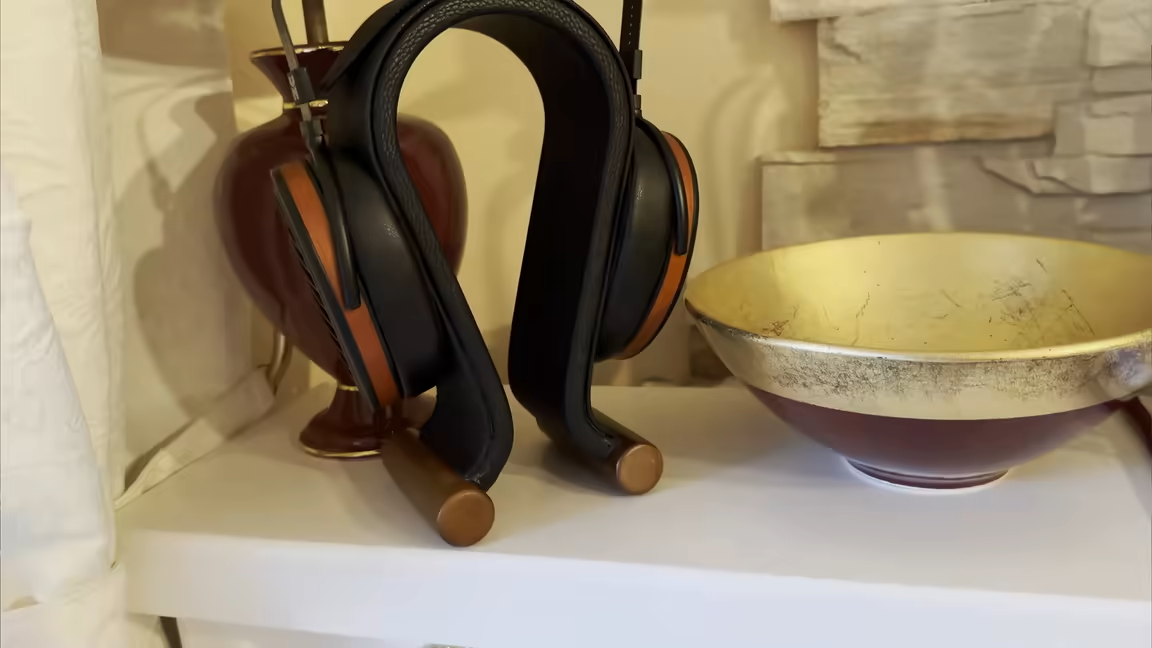
HIFIMAN Arya Organic
A continuation of the Arya series at $1,300 (or $1,100 on sale) - the most resolving headphone at this price, with spectacular detail and bass you can feel.
- Sound: Bright, wide stage
- Impedance: 16 Ω
- Sensitivity: 94 dB/mW
- Driver: Planar magnetic
- Most resolving headphones at this price - microdetails pop clearly
- Wood veneer surrounding earcups - much more premium look
- Smooth, bright treble that's somehow not fatiguing
Watch out: Vocals slightly forward, background vocals also pop
HIFIMAN Arya Organic review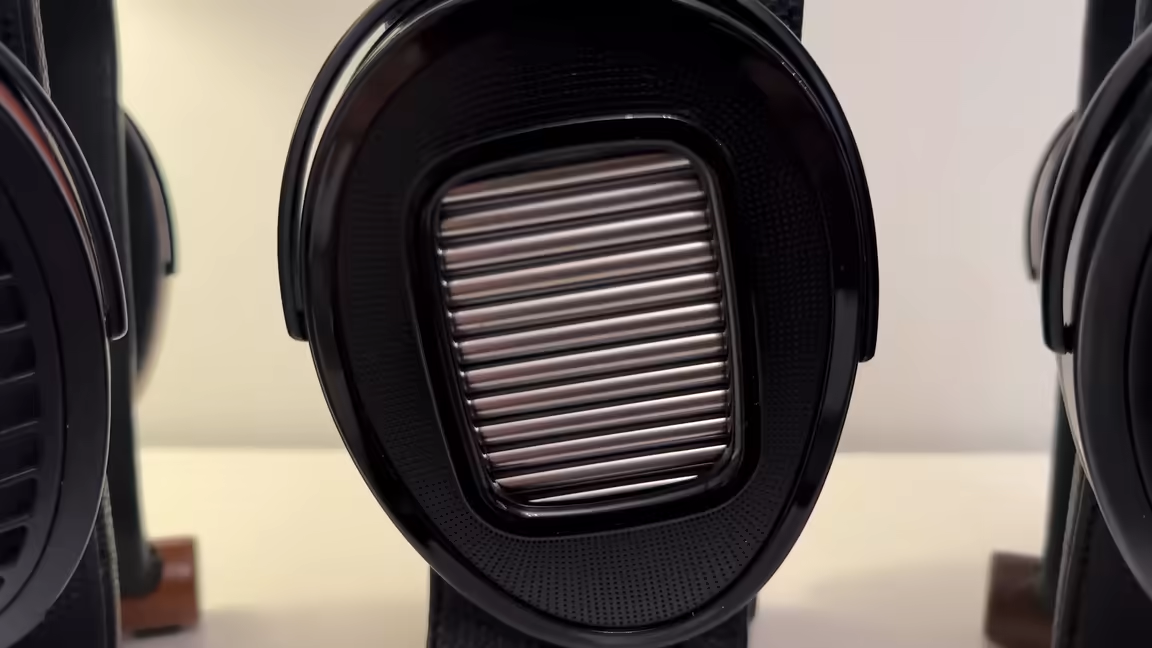
HIFIMAN Arya Unveiled
An open-back planar that strips away the outer grill entirely - exposing the driver to deliver dead-silent backgrounds, holographic imaging, and the smoothest Arya treble yet.
- Sound: Warm, analytical
- Impedance: 27 Ω
- Sensitivity: 94 dB
- Driver: Planar magnetic
- Grill-less design eliminates micro-reflections off protective metal
- Stealth Magnets pass sound waves without turbulence
- Nanometer-thickness diaphragm - extremely fast and detailed
Watch out: Driver fully exposed
HIFIMAN Arya Unveiled review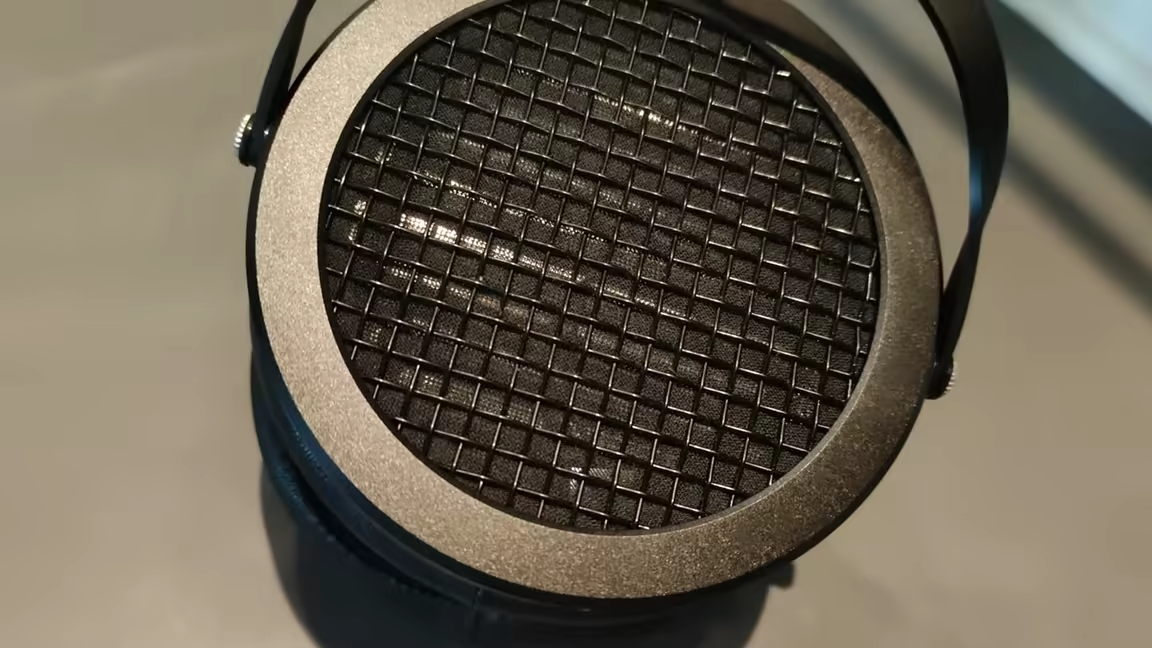
HIFIMAN Sundara
An amazing value proposition - the latest Sundara revision performs exceptionally well at $300 in the open-back planar market. It's just steel.
- Sound: Warm, bass-heavy
- Impedance: 32 Ω
- Sensitivity: 94 dB/mW
- Weight: 372 g
- Strong dynamics with serious punch and slam
- Fast transients with above-average decay
- Excellent build - metal parts, suspension strap, dual 3.5mm
Watch out: Inner pad diameter likely too small for many ears
HIFIMAN Sundara review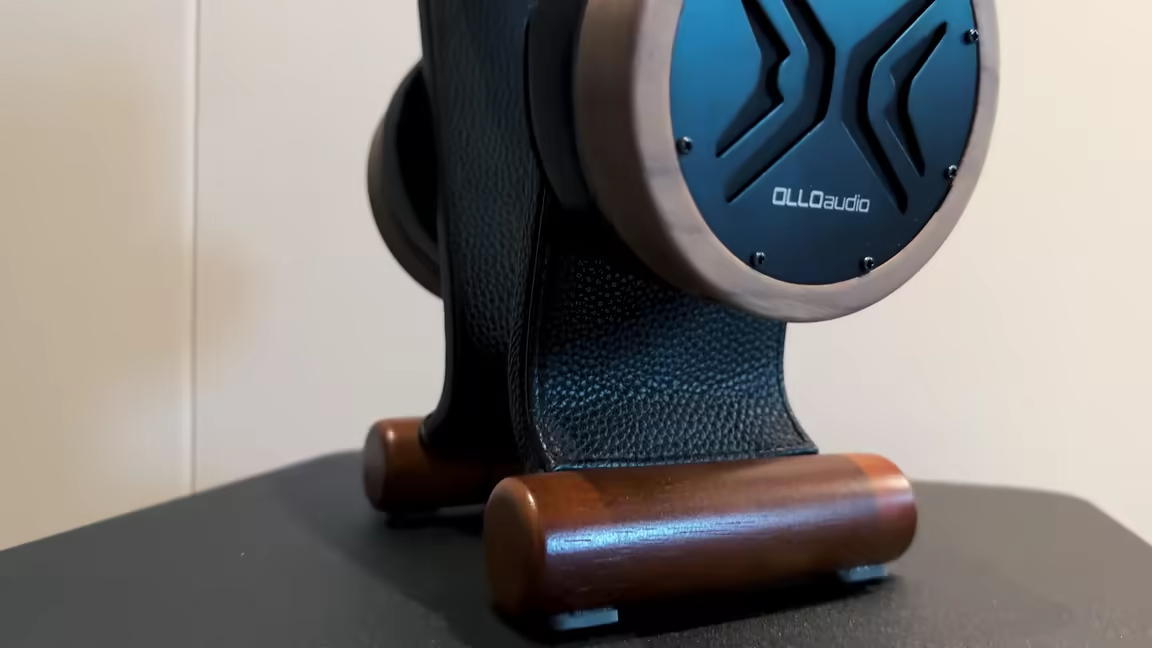
OLLO Audio X1
An open-back studio reference headphone with AI-assisted per-unit calibration (±1dB), modular design, real wood cups, and a flat tuning that works for both mixing and music.
- Sound: Bright, lean bass
- Impedance: 32 Ω
- Sensitivity: 101 dB
- Driver: Dynamic
- USC II per-unit calibration to ±1dB tolerance
- Real wood machined earcups, no veneer
- Modular, repairable, service-friendly design
Watch out: Tight clamp force
OLLO Audio X1 review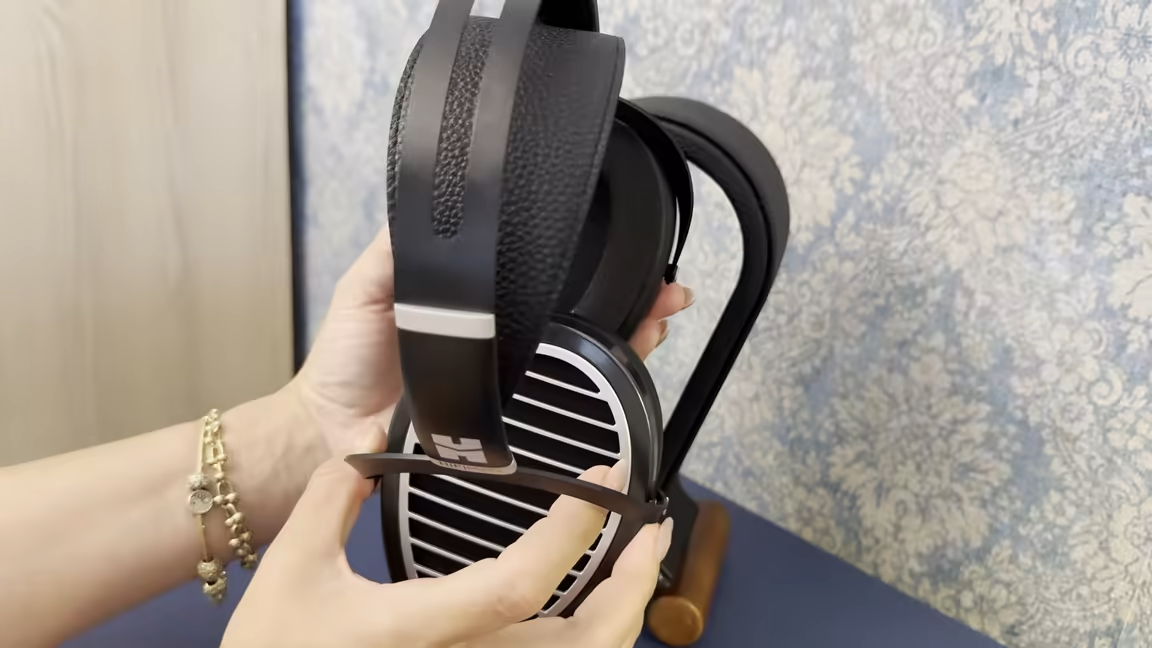
HIFIMAN Ananda Stealth
An overlooked HIFIMAN planar at $360 with a slightly warm tonality, fantastic imaging, and a 'pleasantly wet' sound that beats the Edition XS in almost every way.
- Sound: Warm
- Impedance: 16 Ω
- Sensitivity: 93 dB
- Weight: 400 g
- Suspension-strap headband - distributes weight well
- Stealth Magnets + NEO Supernano Diaphragm
- Lightweight at 400g
Watch out: Inner foam isn't very soft
HIFIMAN Ananda Stealth review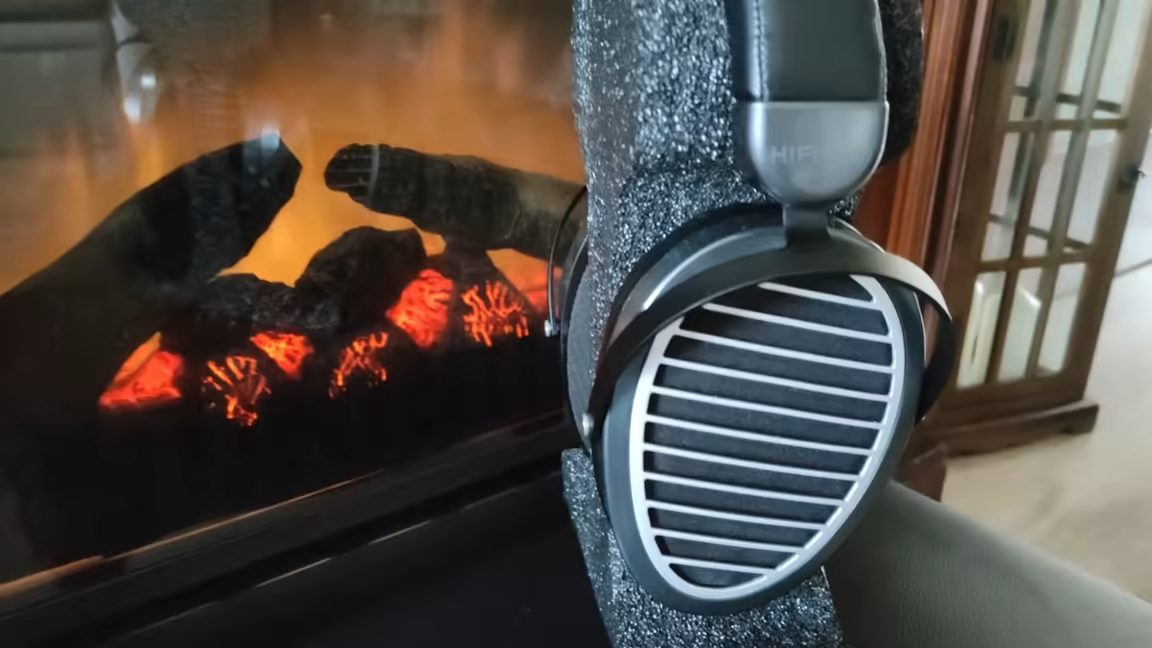
HIFIMAN Edition XS
An exceptional open-back planar at $269 with a sound signature that's hard to find elsewhere - held back only by a controversial headband design choice.
- Sound: Wide stage, relaxed
- Weight: 400 g
- Driver: Planar magnetic
- Fantastic, wide soundstage with great image separation
- Easy to drive - works fine from a dongle or cheap amp
- Truly exceptional sound for the price
Watch out: Solid headband (no suspension strap) creates a hotspot after a few hours
HIFIMAN Edition XS review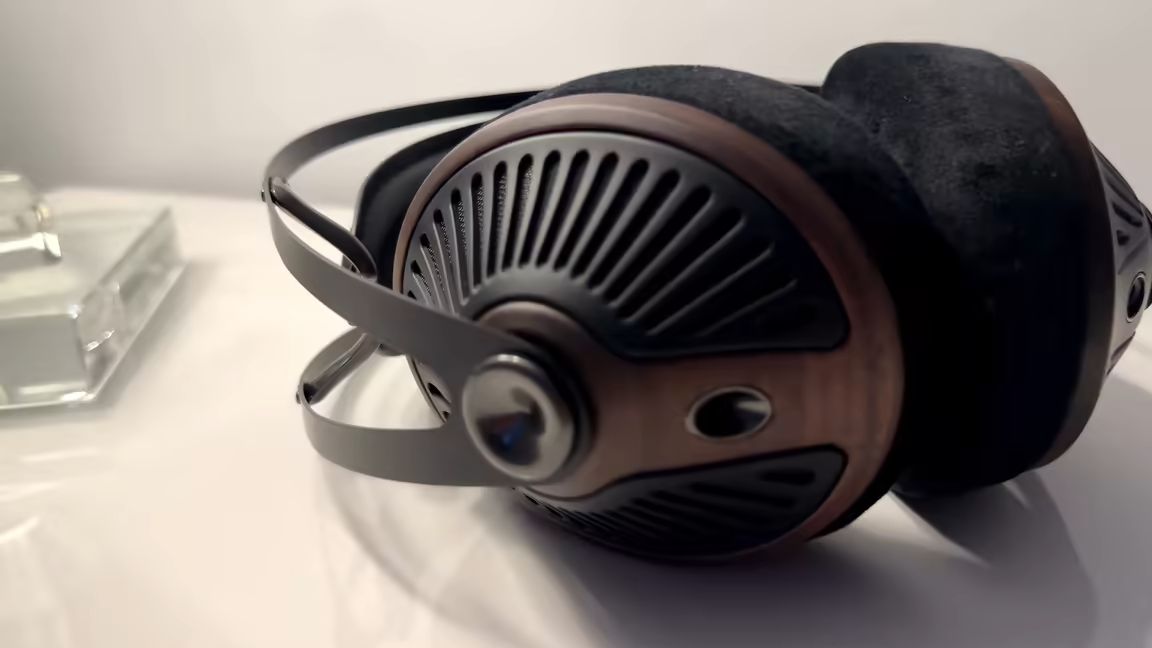
Meze 105 Silva
A $499 open-back dynamic with hand-polished walnut cups, a custom 50mm carbon-fiber driver, and a warm, fun, easy-to-drive tuning that punches well above its price.
- Sound: Bass-heavy, wide stage
- Impedance: 42 Ω
- Sensitivity: 112 dB
- Weight: 350 g
- Light 350g weight for a full-size wooden headphone
- Plush, breathable velour earpads - glasses-friendly
- Modular, fully serviceable - assembled with screws, not glue
Watch out: Musical, warm tuning
Meze 105 Silva review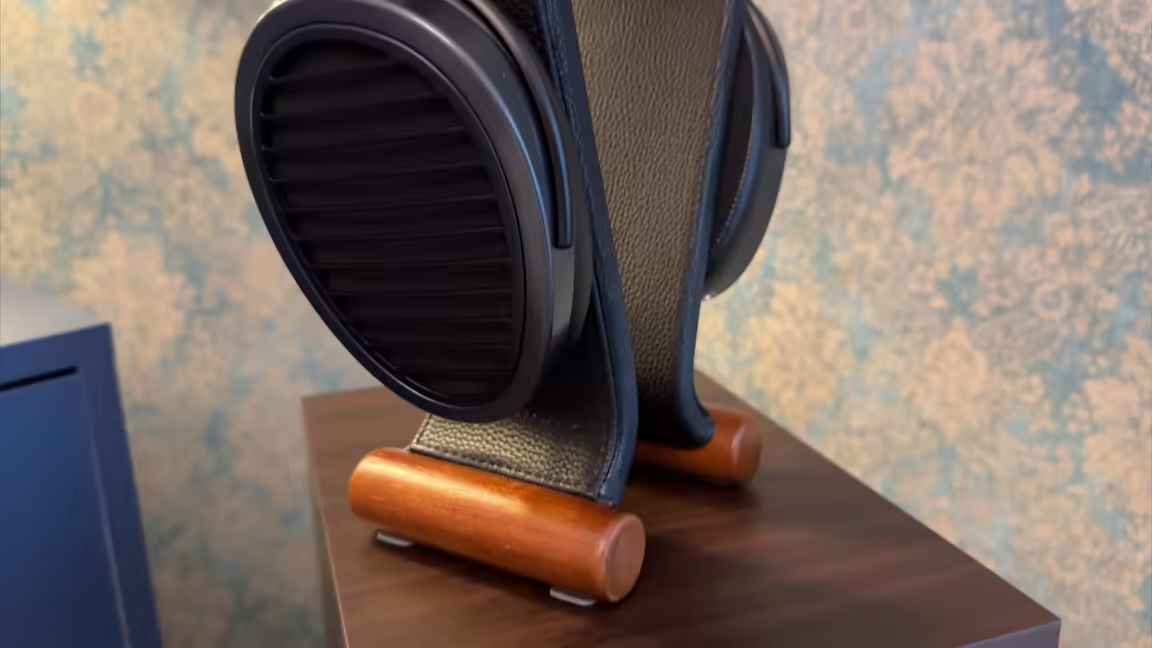
HIFIMAN Arya Stealth
An exceptionally comfortable HIFIMAN flagship at $759 with a rare warm-leaning balance, unbeatable imaging, and a taste of high-end sound at a non-flagship price.
- Sound: Wide stage, analytical
- Impedance: 32 Ω
- Sensitivity: 94 dB/mW
- Driver: Planar magnetic
- Most comfortable HIFIMAN at this price
- Highest-end suspension strap headband with full 360° cup rotation
- Stealth Magnets + nanometer-thickness diaphragm + Window Shade Grills
Watch out: Doesn't feel premium when you pick it up
HIFIMAN Arya Stealth review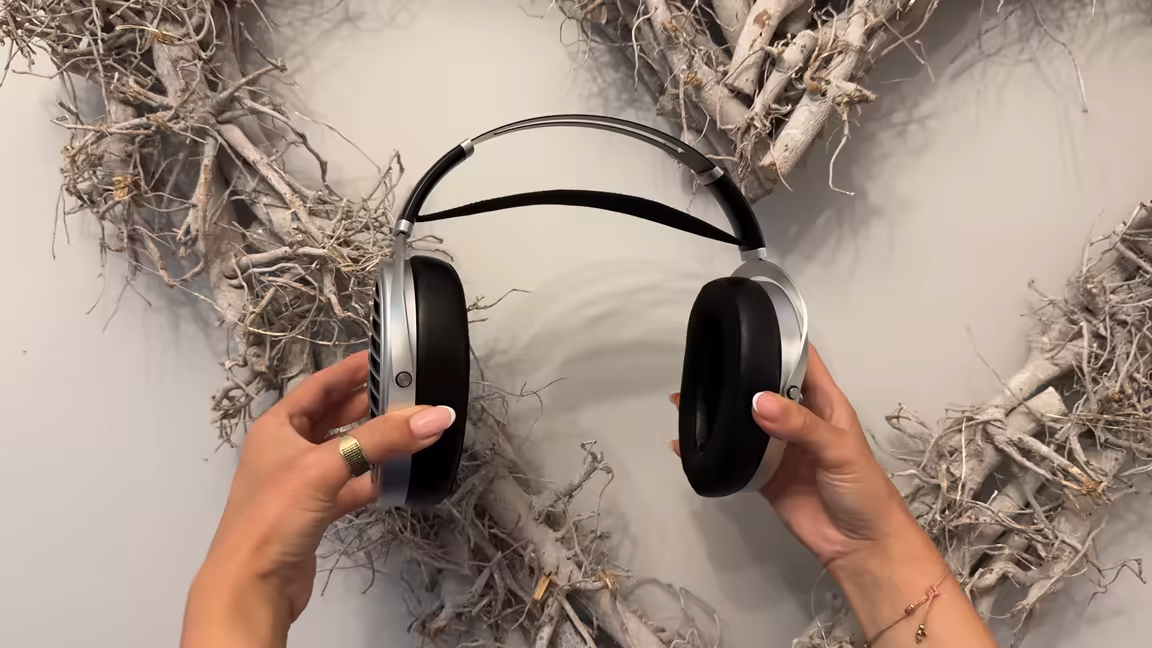
HIFIMAN Ananda Nano
A nanometer-thickness diaphragm trickled down into the Ananda line - one of the best picks in its price range, with detailed treble that can occasionally cross the line.
- Sound: Wide stage, analytical
- Sensitivity: 94 dB
- Driver: Planar magnetic
- Best soundstage width in its class
- Very accurate, almost 3-dimensional imaging
- Great for string instruments - quick decay, realistic reproduction
Watch out: Treble can cross into too-bright territory for some
HIFIMAN Ananda Nano review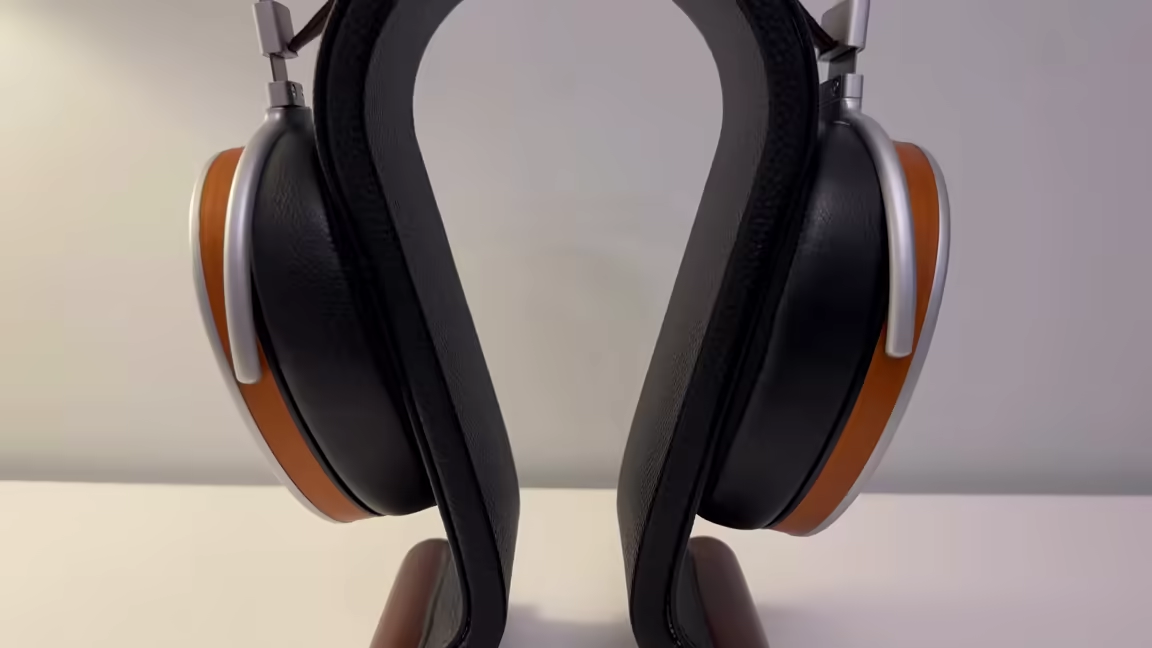
HIFIMAN HE1000 Stealth
A years-old HIFIMAN flagship, cheaper than ever: Stealth Magnets, a nanometer diaphragm, a wide open soundstage, and a fun, bright tuning - mind the treble peaks and the large fit.
- Sound: Bright, wide stage
- Impedance: 32 Ω
- Sensitivity: 93 dB
- Weight: 458 g
- Excellent comfort despite 458g - the wide suspension band spreads the weight
- Spacious, deep, breathable three-material hybrid pads; user-replaceable
- Top-tier hand-polished, CNC-machined aluminium and real leather build
Watch out: Genuinely large
HIFIMAN HE1000 Stealth review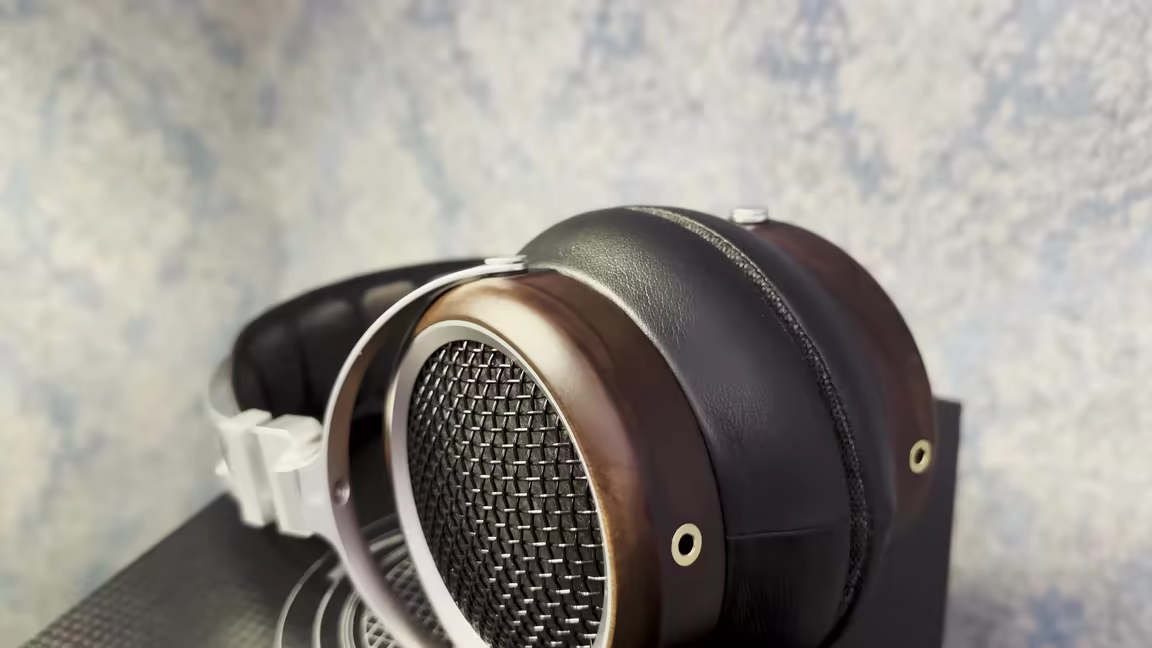
Sivga Luan
A semi-open dynamic with real wood cups and a natural, chocolatey midrange - $360 at launch, now $299.
- Sound: Warm, lean bass
- Impedance: 38 Ω
- Sensitivity: 100 dB
- Driver: Dynamic
- Silent, perfectly damped cup swivel and tilt mechanism
- Large pads relative to cups - plenty of ear space
- Standard 3.5mm jacks - no fragile 2.5mm connectors
Watch out: Bass rolls off below ~45Hz
Sivga Luan review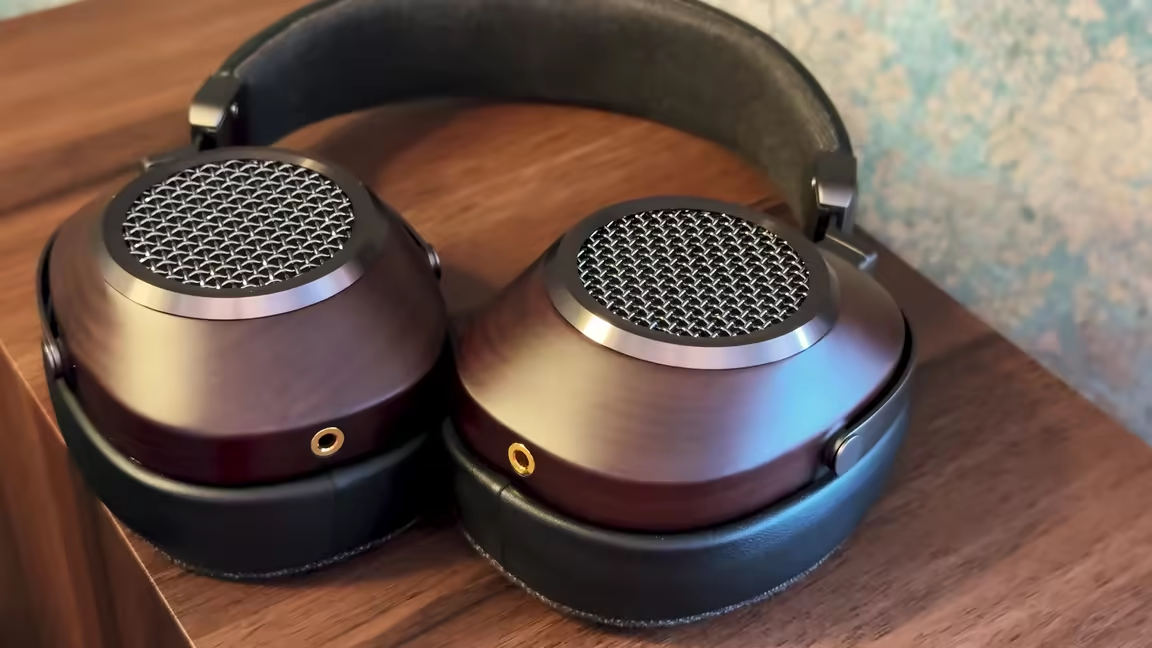
Sivga Anser
A $200 open-back dynamic with real wood cups and a tuning that delivers springy, bouncy mid-bass you won't find on $2,000 headphones - musical, fun, and built to last.
- Sound: Warm, lean bass
- Impedance: 38 Ω
- Sensitivity: 105 dB
- Weight: 342 g
- Easy to drive (38Ω, 105dB sensitivity)
- Eco-friendly hemp bag and minimal packaging
- Solid wood earcups with aluminum grilles and yokes
Watch out: Soundstage is on the intimate side
Sivga Anser review
Verum Audio Verum 1
A $350 open-back planar that goes the opposite direction from most of the market - smooth, refined highs, full warm mids, and ruler-flat bass to 20Hz.
- Sound: Analytical, aggressive
- Impedance: 8 Ω
- Sensitivity: 96 dB/mW
- Driver: 82 mm planar, 28 rare-earth magnets
- Suspension-style leather headband adjusts beautifully
- Smooth, non-fatiguing treble - almost impossible to make sibilant
- Full, warm, inviting midrange with forward vocals
Watch out: 8Ω impedance demands real current from the amplifier
Verum Audio Verum 1 reviewTorn between two picks?
6 pairs from this list with a head-to-head page of their own.
#2 HIFIMAN Arya Organic #1 HIFIMAN HE1000se
9.2 vs 9.3
#3 HIFIMAN Arya Unveiled #1 HIFIMAN HE1000se
9.1 vs 9.3
#2 HIFIMAN Arya Organic #3 HIFIMAN Arya Unveiled
9.2 vs 9.1
#6 HIFIMAN Ananda Stealth #4 HIFIMAN Sundara
8.8 vs 9.0
#3 HIFIMAN Arya Unveiled #7 HIFIMAN Edition XS
9.1 vs 8.7
#7 HIFIMAN Edition XS #4 HIFIMAN Sundara
8.7 vs 9.0
Alternatives under $250
Didn't crack the main list, but worth knowing about at a tighter budget.
Questions buyers ask
Are open-back headphones better than closed-back?
For critical listening at home, yes - open-backs almost always image wider, sound more natural, and produce less in-head bass coloration than a closed equivalent at the same price. They give up isolation in both directions: you hear the room, the room hears you, and they're not the right tool for an open office, a flight, or a noisy apartment. For dedicated stereo listening in a quiet space, the open-back form factor still wins.
Do I need an expensive amplifier to drive these?
Most of the picks on this list run cleanly off a competent desktop DAC/amp combo in the $200-500 range. HIFIMAN's Susvara and a handful of high-impedance vintage designs are the exceptions that genuinely demand current-rich amplification - none of those are on this list. If you're shopping a sub-$500 open-back, almost any modern balanced desktop chain has enough headroom. The one to plan around is the Verum 1, an 8-ohm planar whose review asks for about 2 W per channel.
How long should I burn in open-back headphones?
Burn-in for modern planar magnetic designs is largely a perception-adjustment phenomenon - the driver mechanically settles in the first 5-10 hours, but the larger shift is your ears learning the headphone's signature. Dynamic-driver open-backs measure within a fraction of a dB across the first 100 hours. Buy a pair, listen for a week, and trust what you hear at the end - not what marketing says you should hear after 200.
What's the difference between open-back and semi-open?
Open-back ear cups are perforated or meshed across most of their rear surface; semi-open designs have a partial vent that bleeds some pressure without fully decoupling the driver from the rear chamber. Semi-open tends to land between open-back's spaciousness and closed-back's bass control - useful when you want some isolation but still need the staging.
The open-back debate is over: if you listen to stereo recordings in a quiet room and don't need isolation, an open-back headphone in 2026 outperforms a closed-back of equal price on every metric that matters - stage, imaging, decay, and tonal naturalness. The only things you give up are leakage in both directions and a few dB of in-ear pressure response in the sub-bass region.
What you gain is the headphone form factor playing to its strengths. A sealed cup forces a small acoustic volume to behave like a much bigger one through tuning and damping tricks; an open-back simply lets the air do what air does. The result, when the rest of the design is competent, is the headphone presentation that comes closest to what a small pair of nearfield monitors can do in a treated room.
Planar or dynamic, inside the open-backs
Most of this list is planar magnetic, but the dynamic open-backs on it are not there to make up the numbers, and the choice between the two drivers is the first one to make.
Planar open-backs are the detail-and-control camp. A thin, evenly driven diaphragm gives tight, extended bass and low distortion at high levels, and at the top of this list the HIFIMAN HE1000se and the Arya Organic are what that sounds like at its most resolving. The costs are weight, since the flagships run from 440 grams on the HE1000se to 458 on the HE1000 Stealth, and, on some designs, current: the Verum 1 is an 8-ohm planar that wants about 2 W per channel to open up.
Dynamic open-backs are lighter and usually easier to drive, and they tend to trade a little of the planar's control for punch and texture. The OLLO Audio X1 is the flat one, calibrated per unit to within 1 dB, and it works for mixing as well as for listening. The Meze 105 Silva is deliberately warm and musical, and weighs 350 grams. The Sivga Luan is semi-open, which gives up a little of the open sound for a little more bass control and a little less leakage.
If you want to hear everything and your amplifier has current to spare, start with the planars. If comfort over long sessions or a modest source matters more, start with the dynamics.
Mistakes worth avoiding with an open-back
Buying one for a room that is not quiet. An open-back lets the room in as freely as it lets the music out. Traffic, a fridge or a fan sits on top of the quietest passages, and that noise costs more resolution than any step up the list buys back.
Treating it as a portable. Everyone near you hears what you are playing. An open-back is a headphone for a room you have to yourself, not for a commute, an office or a flight.
Ignoring the weight. A flagship planar that sounds best in a demo can be the one you stop wearing after an hour. The comfort notes in each review, and the weights where the maker publishes them, deserve as much attention as the score.
Paying flagship money for a small step. The scores here rise much more slowly than the prices near the top, which the planar guide maps in detail. Decide what the extra is for before paying for it.
How the open-backs were heard
Listening was done across multiple genres and on multiple sources, against the reference list at each price tier.
A 9.0 on this list means the headphone is a reference-class performer at its price - not the best headphone in the world, but the unambiguous best at what it sets out to do without meaningful flaws holding it back. The Susvara is not on this list, and not because we don't think it's brilliant; it just hasn't been on the chain for the full review window yet. When that changes, it shows up.
Not on this list: gaming headsets and wireless models
Gaming headsets are left out because they are built around different priorities, and wireless models because the radio and the battery change what the money buys. In-ear monitors are ranked on their own IEM list, and the semi-open Luan is the nearest this list comes to a closed-back.
Ranked by score, on the one rubric every review uses: Sound 30%, Technical performance 25%, Build & comfort 15%, System fit 15% and Value 15%. Best Value goes to the pick, other than the winner, with the most score for its price (score against the log of the price). Best Budget goes to the highest-ranked pick not already awarded in the cheapest quarter of the list. No placement here is sponsored, paid for, or negotiable. How a score is built · Funding and independence · All headphones reviews