
The Best Planar Magnetic Headphones in 2026: Ranked
Planar magnetic is the driver that quietly took over audiophile headphone listening over the last decade. It buys control, extension and low distortion, and asks for weight and a capable amplifier in return.
- By Jakub Charkiewicz
- 11 tested picks
- Updated
- Score floor: 7.5/10
- Prices $269 to $1,700
The short version
The HIFIMAN HE1000se (9.3/10, $1,700) tops our ranking of the best planar magnetic headphones. For a lot less money, the HIFIMAN Sundara (9.0/10, $299) takes best value. The runner-up is the HIFIMAN Arya Organic (9.2/10, $1,099). 11 picks in all, ranked by score from 7.9 to 9.3/10: 10 open-back and 1 closed-back.

Best Overall
HIFIMAN HE1000se
An ex-$3,500 flagship, now $1,700: nanometer diaphragm, Stealth Magnets, a holographic soundstage, and state-of-the-art detail - bright, honest, merciless with bad sources.
- Score 9.3
- Verdict Reference
- Price $1,700


At a glance
| # | Pick | Price | Award |
|---|---|---|---|
| 1 | HE1000se | $1,700 | Best Overall |
| 2 | Arya Organic | $1,099 | No award |
| 3 | Arya Unveiled | $1,299 | No award |
| 4 | Sundara | $299 | Best Value |
| 5 | Ananda Stealth | $359 | No award |
| 6 | Edition XS | $269 | Best Budget |
| 7 | Arya Stealth | $759 | No award |
| 8 | Ananda Nano | $499 | No award |
| 9 | HE1000 Stealth | $1,119 | No award |
| 10 | Verum 1 | $349 | No award |
| 11 | Atheia | $349 | No award |
- 1 HIFIMAN HE1000se Best Overall $1,700
- 2 HIFIMAN Arya Organic $1,099
- 3 HIFIMAN Arya Unveiled $1,299
- 4 HIFIMAN Sundara Best Value $299
- 5 HIFIMAN Ananda Stealth $359
- 6 HIFIMAN Edition XS Best Budget $269
- 7 HIFIMAN Arya Stealth $759
- 8 HIFIMAN Ananda Nano $499
- 9 HIFIMAN HE1000 Stealth $1,119
- 10 Verum Audio Verum 1 $349
- 11 Kiwi Ears Atheia $349
The 11 picks by type and price
By type
- Open-back 10 picks Top-scoring: the HIFIMAN HE1000se (9.3/10)
- Closed-back 1 pick The Kiwi Ears Atheia (7.9/10)
By price
- $200-500 6 picks Top-scoring: the HIFIMAN Sundara (9.0/10)
- $500-1,000 1 pick The HIFIMAN Arya Stealth (8.7/10)
- $1,000-2,500 4 picks Top-scoring: the HIFIMAN HE1000se (9.3/10)
The 11 picks, ranked
HIFIMAN HE1000se
An ex-$3,500 flagship, now $1,700: nanometer diaphragm, Stealth Magnets, a holographic soundstage, and state-of-the-art detail - bright, honest, merciless with bad sources.
- Sound: Bright, lean bass
- Impedance: 35 Ω
- Sensitivity: 96 dB/mW
- Weight: 440 g
- Fast, tight, dead-linear bass with real slam on demand
- Neutral, honest mids; vocals clean and beautifully separated
- One of the most comfortable flagships - light 440g, deep breathable pads
Watch out: Bright, peaky treble
HIFIMAN HE1000se review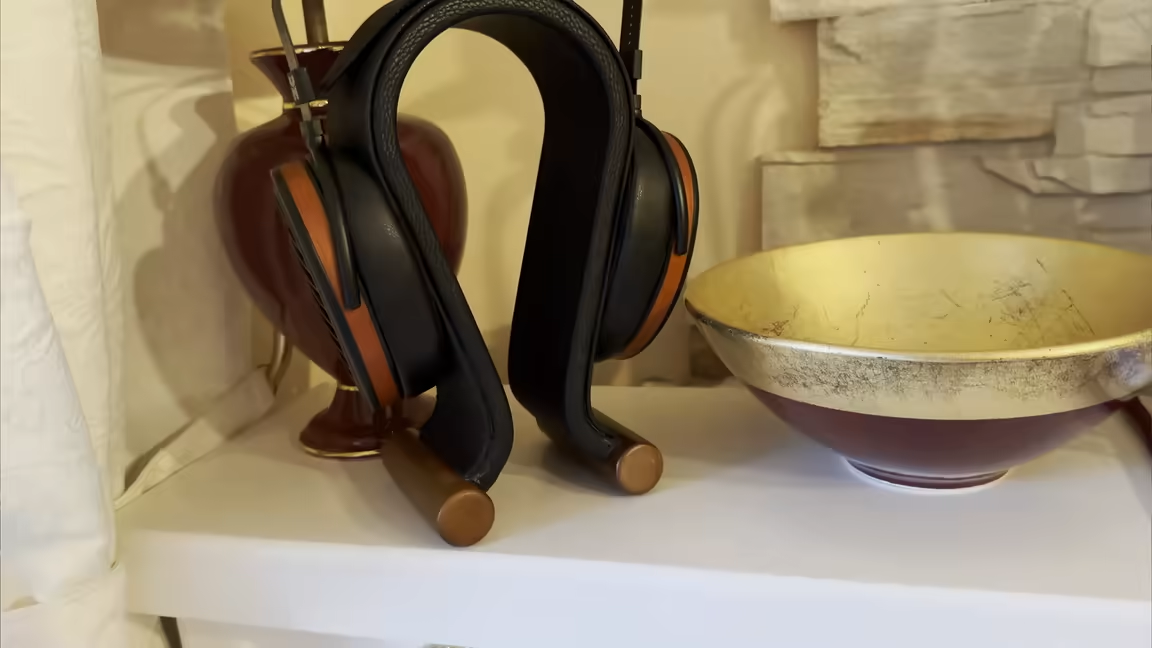
HIFIMAN Arya Organic
A continuation of the Arya series at $1,300 (or $1,100 on sale) - the most resolving headphone at this price, with spectacular detail and bass you can feel.
- Sound: Bright, wide stage
- Impedance: 16 Ω
- Sensitivity: 94 dB/mW
- Driver: Planar magnetic
- Bass that can be felt, not just heard - speaker-like
- Wide, out-of-head soundstage that beats Stealth Arya
- Long, satisfying decay - room reverbs become audible
Watch out: Vocals slightly forward, background vocals also pop
HIFIMAN Arya Organic review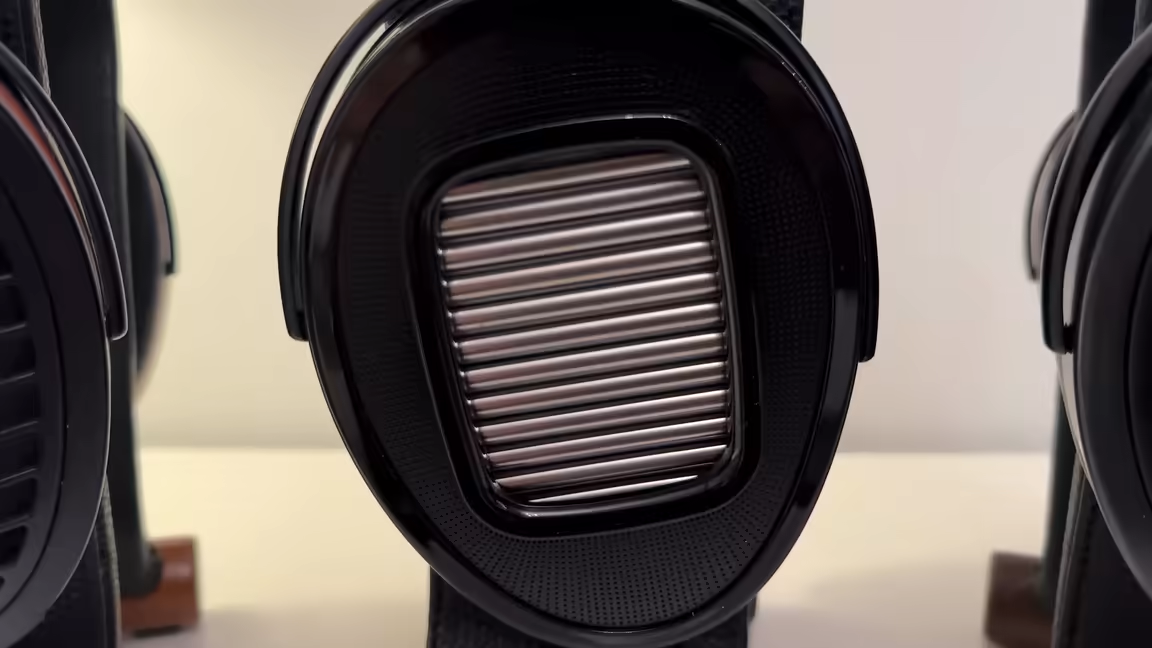
HIFIMAN Arya Unveiled
An open-back planar that strips away the outer grill entirely - exposing the driver to deliver dead-silent backgrounds, holographic imaging, and the smoothest Arya treble yet.
- Sound: Warm, analytical
- Impedance: 27 Ω
- Sensitivity: 94 dB
- Driver: Planar magnetic
- Most comfortable Arya yet - lighter, less clamp
- Suspension strap with zero hotspots over hours
- Smoothed-out, mature treble - no glassy edge
Watch out: Driver fully exposed
HIFIMAN Arya Unveiled review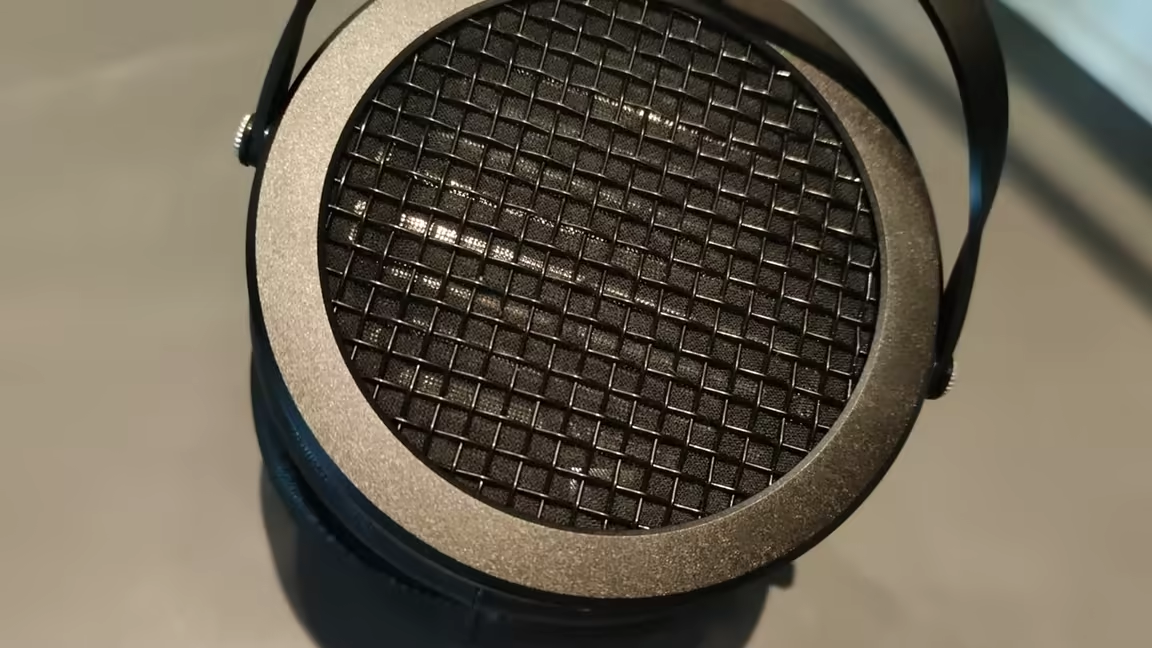
HIFIMAN Sundara
An amazing value proposition - the latest Sundara revision performs exceptionally well at $300 in the open-back planar market. It's just steel.
- Sound: Warm, bass-heavy
- Impedance: 32 Ω
- Sensitivity: 94 dB/mW
- Weight: 372 g
- Quite lightweight at 372g
- Balanced and neutral tonality - never boring
- Outstanding micro-detail retrieval, especially for the price
Watch out: Inner pad diameter likely too small for many ears
HIFIMAN Sundara review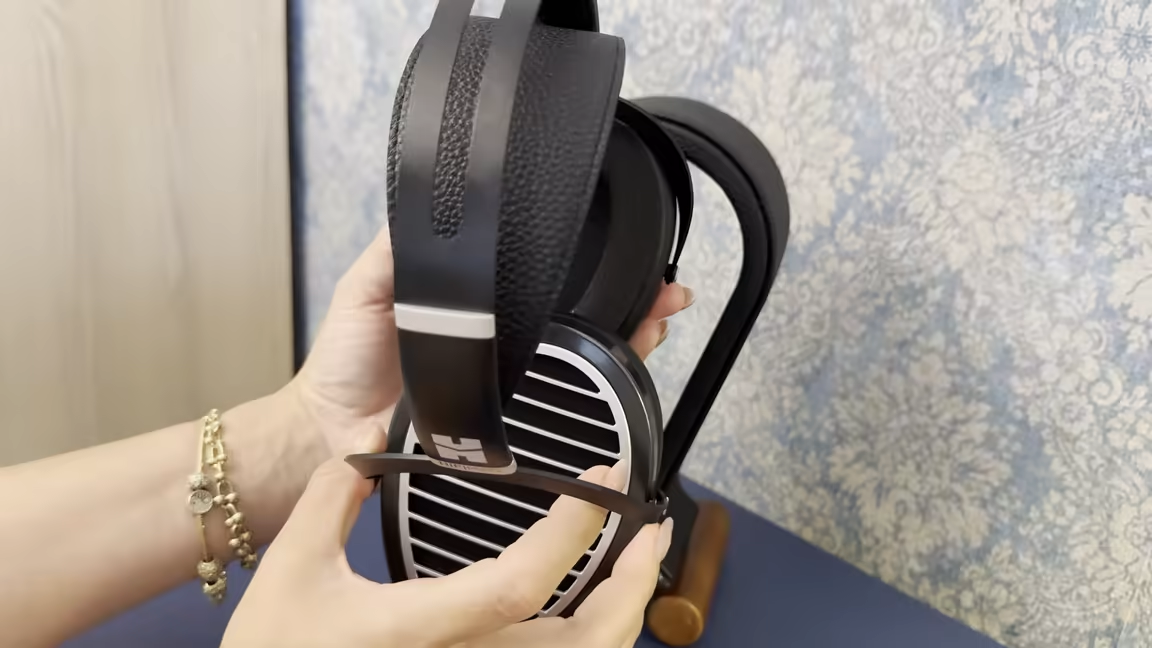
HIFIMAN Ananda Stealth
An overlooked HIFIMAN planar at $360 with a slightly warm tonality, fantastic imaging, and a 'pleasantly wet' sound that beats the Edition XS in almost every way.
- Sound: Warm
- Impedance: 16 Ω
- Sensitivity: 93 dB
- Weight: 400 g
- Easy to drive (16Ω, 93dB sensitivity)
- Beats the Edition XS in presentation, imaging, and bass extension
- Slightly warm tonality - rare for HIFIMAN
Watch out: Inner foam isn't very soft
HIFIMAN Ananda Stealth review
HIFIMAN Edition XS
An exceptional open-back planar at $269 with a sound signature that's hard to find elsewhere - held back only by a controversial headband design choice.
- Sound: Wide stage, relaxed
- Weight: 400 g
- Driver: Planar magnetic
- Unique, pretty earcup design
- Large, deep earcups fit any ear shape
- Bass extends to 20Hz, clean and free of distortion
Watch out: Solid headband (no suspension strap) creates a hotspot after a few hours
HIFIMAN Edition XS review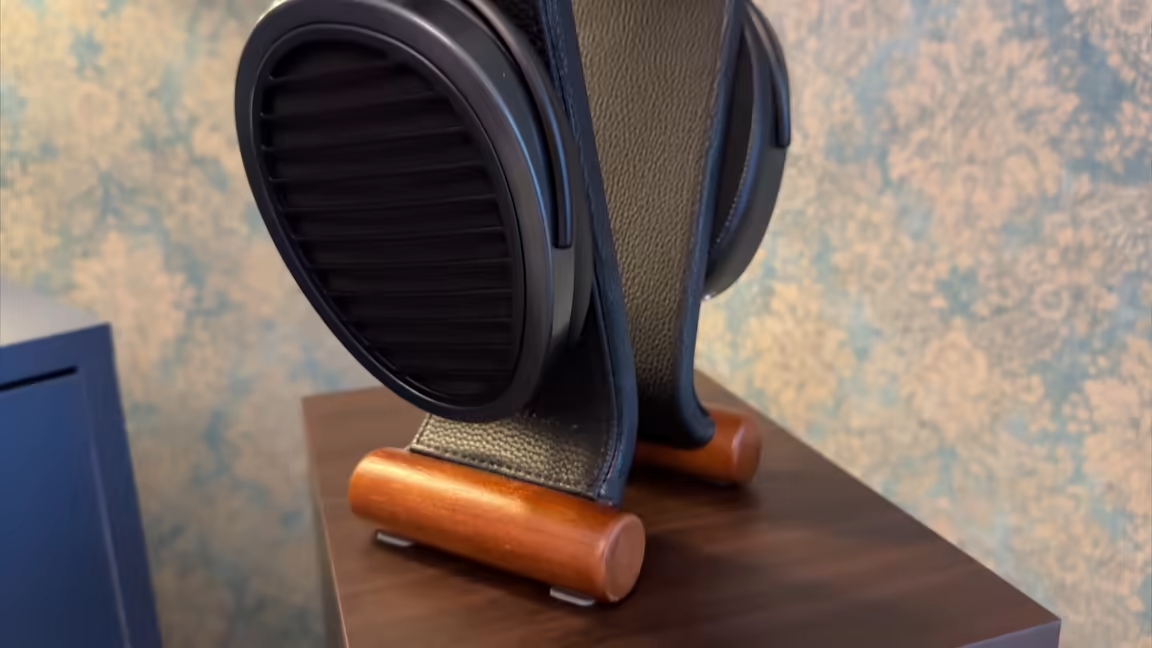
HIFIMAN Arya Stealth
An exceptionally comfortable HIFIMAN flagship at $759 with a rare warm-leaning balance, unbeatable imaging, and a taste of high-end sound at a non-flagship price.
- Sound: Wide stage, analytical
- Impedance: 32 Ω
- Sensitivity: 94 dB/mW
- Driver: Planar magnetic
- Slightly warm, full presentation - very rare for HIFIMAN
- Bass extends to 20Hz, fast and transparent
- Unbeatable, accurate, near-3D imaging
Watch out: Doesn't feel premium when you pick it up
HIFIMAN Arya Stealth review
HIFIMAN Ananda Nano
A nanometer-thickness diaphragm trickled down into the Ananda line - one of the best picks in its price range, with detailed treble that can occasionally cross the line.
- Sound: Wide stage, analytical
- Sensitivity: 94 dB
- Driver: Planar magnetic
- Easy to drive (16Ω, 94dB sensitivity)
- Frequency response 5Hz-55kHz
- Nanometer-thickness diaphragm at $500 - previously Susvara-only tech
Watch out: Treble can cross into too-bright territory for some
HIFIMAN Ananda Nano review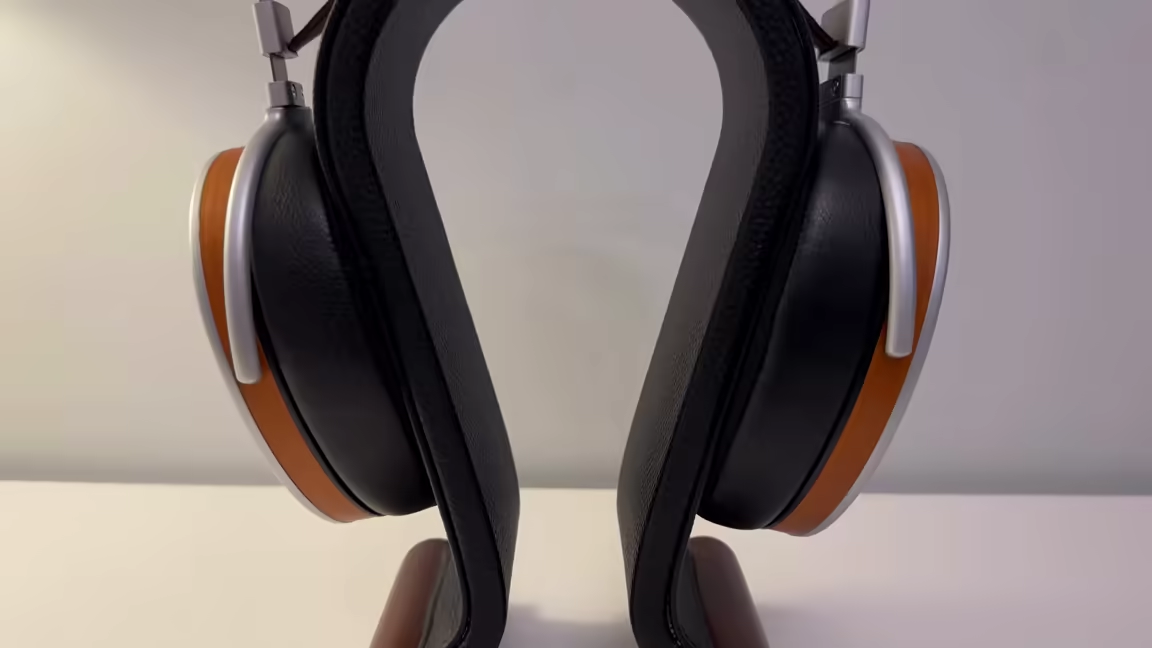
HIFIMAN HE1000 Stealth
A years-old HIFIMAN flagship, cheaper than ever: Stealth Magnets, a nanometer diaphragm, a wide open soundstage, and a fun, bright tuning - mind the treble peaks and the large fit.
- Sound: Bright, wide stage
- Impedance: 32 Ω
- Sensitivity: 93 dB
- Weight: 458 g
- Stealth Magnets + nanometer diaphragm + Window Shade grille
- Dual 3.5mm connectors; includes an extra balanced cable
- Wide, open, out-of-your-head soundstage with strong imaging
Watch out: Genuinely large
HIFIMAN HE1000 Stealth review
Verum Audio Verum 1
A $350 open-back planar that goes the opposite direction from most of the market - smooth, refined highs, full warm mids, and ruler-flat bass to 20Hz.
- Sound: Analytical, aggressive
- Impedance: 8 Ω
- Sensitivity: 96 dB/mW
- Driver: 82 mm planar, 28 rare-earth magnets
- Ruler-flat bass extension down to 20Hz, fast yet with long decay
- Can place sounds behind your head
- Stunning wooden earcup design with metal cut-out grills
Watch out: 8Ω impedance demands real current from the amplifier
Verum Audio Verum 1 review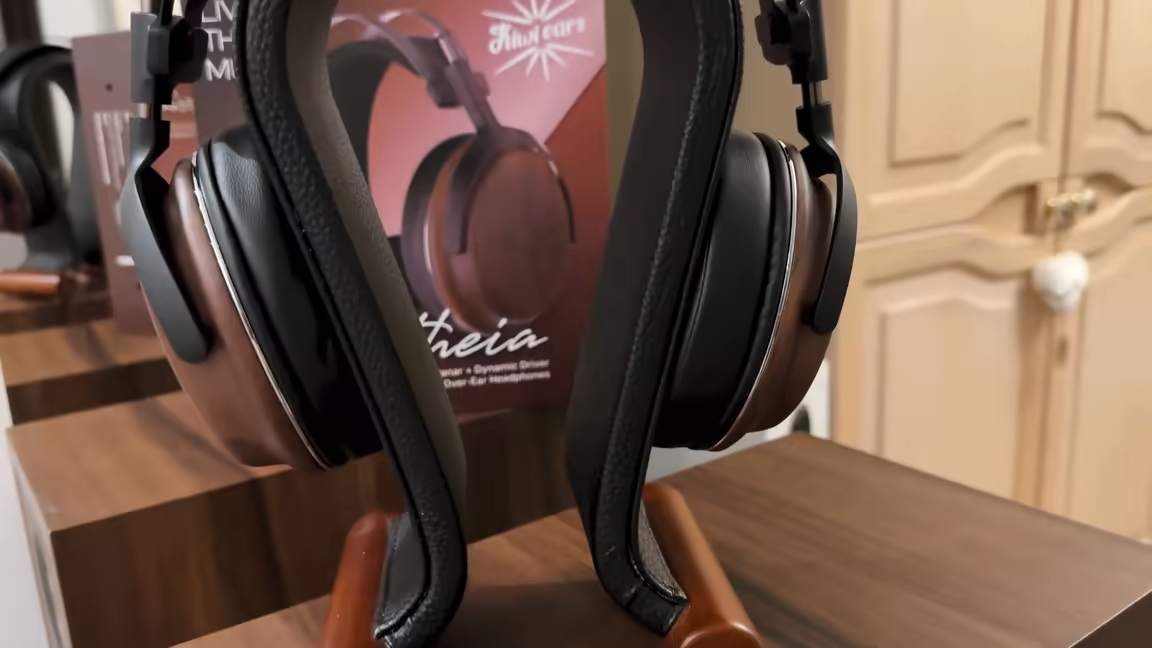
Kiwi Ears Atheia
A closed-back hybrid headphone pairing a 50mm dynamic driver with a 14.5mm planar - dynamic slam on the bottom, planar speed on top, in a walnut and aluminum chassis.
- Sound: Warm, bass-heavy
- Impedance: 32 Ω
- Sensitivity: 102 dB/mW
- Driver: 50 mm dynamic + 14.5 mm planar (hybrid)
- Bass extension deeper than many pricier planars
- Auto-adjusting suspension headband with stretchy bands
- Locking 3.5mm cable connectors with mixed braided/rubber
Watch out: Vegan leather pads feel a bit generic
Kiwi Ears Atheia reviewTorn between two picks?
6 pairs from this list with a head-to-head page of their own.
#2 HIFIMAN Arya Organic #1 HIFIMAN HE1000se
9.2 vs 9.3
#3 HIFIMAN Arya Unveiled #1 HIFIMAN HE1000se
9.1 vs 9.3
#2 HIFIMAN Arya Organic #3 HIFIMAN Arya Unveiled
9.2 vs 9.1
#5 HIFIMAN Ananda Stealth #4 HIFIMAN Sundara
8.8 vs 9.0
#3 HIFIMAN Arya Unveiled #6 HIFIMAN Edition XS
9.1 vs 8.7
#6 HIFIMAN Edition XS #4 HIFIMAN Sundara
8.7 vs 9.0
Alternatives under $200
Didn't crack the main list, but worth knowing about at a tighter budget.
Questions buyers ask
Why are most picks on this list HIFIMAN?
Because HIFIMAN's planar driver IP - originally developed for the HE-6 and refined through the Susvara, Susvara Unveiled, Arya series, Ananda series, and Edition lineup - is currently the most mature planar magnetic technology in production. The catalogue reflects what we've had on the chain, and the chain reflects what the reference list says: planar magnetic headphones under $2,000 are dominated by HIFIMAN's various Stealth-Magnet, Topology-Diaphragm, and now Organic implementations. When a credible contender from another brand arrives - Audeze LCD-X, Meze Empyrean, Final D8000, Verum 1 - it gets reviewed and lands on this list if it earned the score. Verum 1 is on the list. The others either haven't hit our chain yet or haven't cleared the score threshold.
Are planar magnetic headphones really harder to drive?
Usually not at the consumer end of the market. The Sundara, Edition XS, Ananda Nano, and HE400se all drive cleanly from any competent desktop amplifier above 1W into 32 ohms. The genuinely hard-to-drive planars - Susvara, HE-6, Abyss AB-1266 - are not on this list, and they earn their reputation honestly. As a rule of thumb: if the published sensitivity is under 90 dB/mW, plan for serious amplification; above 92 dB/mW, almost any amp from $200 up will do. Impedance still counts: the Verum 1 is 96 dB/mW but only 8 ohms, and wants current rather than voltage.
Planar vs. dynamic - which sounds better?
Different things at different prices. Below $500, planars usually win on resolution, bass texture, and decay realism; dynamics win on warmth and impact. Above $1,500, the comparison flips - the best dynamic-driver headphones (Sennheiser HD800S, Focal Utopia, ZMF flagship lineup) compete on stage and resolution with anything planar at the same price. There is no universal answer. Every pick on this list uses a planar driver - the Kiwi Ears Atheia pairs one with a dynamic woofer - and the dynamic open-backs worth knowing are ranked on the open-back guide.
What's a Stealth Magnet driver, and does it matter?
HIFIMAN's 'Stealth Magnet' geometry shapes the magnet arrays around the diaphragm so the magnetic field is more uniform across the diaphragm's surface, which improves transient response and reduces some forms of distortion. In practice, the audible improvement is real but smaller than the marketing copy suggests - it's not a generational leap, it's a refinement. The 'Topology Diaphragm' and 'Organic Diaphragm' branding refers to surface coatings that further reduce uncontrolled diaphragm motion. All real, all incremental.
Planar magnetic drivers solved a problem that dynamic drivers couldn't: how to move a large, low-mass, perfectly uniform diaphragm without piston-mode breakup. A dynamic-driver headphone uses a voice coil to push a cone, and once the cone gets above a certain frequency, parts of it stop moving in phase with the rest. A planar magnetic driver uses a thin film with embedded conductors suspended in a magnetic field - the entire surface moves uniformly, all the way from sub-bass to ultrasonic.
That single architectural choice produces most of what audiophiles describe as "the planar sound": tighter, more controlled bass; faster transient response; lower distortion at high SPLs; and a particular tonal honesty that comes from the absence of cone breakup artifacts. It also produces the form factor's signature weakness - the magnet arrays are heavy, and a planar headphone usually weighs noticeably more than a dynamic equivalent.
Choosing a planar: weight, drive and enclosure
Three practical questions separate the planars on this list more than the sound does.
How much weight you will wear. The spread runs from 372 grams on the HIFIMAN Sundara through 400 on the Ananda Stealth and Edition XS to 440 on the HE1000se and 458 on the HE1000 Stealth. A suspension strap spreads that load; a solid headband concentrates it, which is exactly the Edition XS's weakness.
What will drive it. The picks here sit between 93 and 96 dB/mW, which is efficient for planars, but sensitivity is only half of it. The Verum 1 is 96 dB/mW at 8 ohms, so it gets loud easily and still wants real current, around 2 W per channel, before it sounds right. A planar bought to run from a phone is usually a planar heard at a fraction of what it can do.
Open or closed. Every pick is open-back except one: the Kiwi Ears Atheia, a closed-back hybrid that pairs a 50 mm dynamic woofer with a 14.5 mm planar on top. It is the pick for a listener who needs the seal, and its planar is a tweeter rather than a full-range driver, so it is the least planar-sounding thing here.
The mistake that follows from all three is buying on the flagship name: a 458-gram planar on a weak amp is a worse experience than a lighter one on the right amp.
HIFIMAN's lines, and the two that are not HIFIMAN
Nine of the eleven picks are HIFIMAN, because the catalogue reflects what has been on the chain and HIFIMAN has been the most prolific maker of credible planar designs for the last decade. Reading its range is easier by family than by model. The HE400se, the Edition XS and the Sundara are the entry point. The Ananda line sits a step above, and the Ananda Nano brings the nanometer-thickness diaphragm down to 99. The Arya line - Stealth, Organic and Unveiled - is the upper tier, and the HE1000 models sit above it with Stealth Magnets and the nanometer diaphragm together.
The Sundara at $299 is the cheapest headphone in the catalogue to score 9.0. The HE1000se at $1,700 is the highest-scoring planar we have tested, at 9.3, with the Arya Organic a tenth behind it at $1,099.
The two exceptions are worth knowing. The Verum 1 from Verum Audio goes the opposite way from most of the market: smooth highs, warm mids and flat bass to 20 Hz. The Atheia is the closed-back hybrid above. Audeze, Meze, Final, ZMF and Dan Clark Audio all make excellent planars that aren't on this list yet because we haven't had them on the chain through a full review window. When that changes, the rankings shift.
The price-vs-score curve for planars
The catalogue's data on planar headphones shows a non-linear price/score relationship that's worth understanding before you spend. The jump from a $109 HE400se (7.6) to a $299 Sundara (9.0) is enormous - 1.4 points of score for under $200 of price, and the difference is immediately audible on every test recording. The jump from the $299 Sundara to a $1,099 Arya Organic (9.2) is much smaller in raw score - 0.2 points for an additional $800.
This isn't a failure of the more expensive headphone. It's diminishing returns expressed in our scale: above 8.5 or so, each further step costs far more than the last. If you're new to the format and want to know whether to start at the budget end and work up, the answer is: start at the budget end, listen for a year, then decide whether the next jump is worth the price multiplier to you.
It also means an upgrade needs choosing with care. If you already own a Sundara, the Ananda Stealth and the Edition XS are different presentations at a similar level rather than steps up - both score a little lower. The picks that score higher start at the Arya tier.
Ranked by score, on the one rubric every review uses: Sound 30%, Technical performance 25%, Build & comfort 15%, System fit 15% and Value 15%. Best Value goes to the pick, other than the winner, with the most score for its price (score against the log of the price). Best Budget goes to the highest-ranked pick not already awarded in the cheapest quarter of the list. No placement here is sponsored, paid for, or negotiable. How a score is built · Funding and independence · All headphones reviews