
The Best Reference-Grade Audio Gear in 2026: Ranked
Reference is the highest verdict on our scale: the piece is the benchmark in its category, the unit other gear in the same class gets compared against. This is every product that reached 9.0 or higher, across categories, and what a 9.0 means in each.
- By Jakub Charkiewicz
- 10 tested picks
- Updated
- Score floor: 9.0/10
- Prices $299 to $14,495
The short version
Our top pick among the best reference-grade audio gear is the HIFIMAN HE1000se (9.3/10, $1,700). Our best value pick is the HIFIMAN Sundara (9.0/10, $299). The runner-up is the HIFIMAN Serenade (9.3/10, $999). 10 picks in all, ranked by score from 9.0 to 9.3/10.

Best Overall
HIFIMAN HE1000se
An ex-$3,500 flagship, now $1,700: nanometer diaphragm, Stealth Magnets, a holographic soundstage, and state-of-the-art detail - bright, honest, merciless with bad sources.
- Score 9.3
- Verdict Reference
- Price $1,700

At a glance
| # | Pick | Price | Award |
|---|---|---|---|
| 1 | HE1000se | $1,700 | Best Overall |
| 2 | Serenade | $999 | No award |
| 3 | PowerCell 14 | $14,495 | No award |
| 4 | Arya Organic | $1,099 | No award |
| 5 | Arya Unveiled | $1,299 | No award |
| 6 | Enyo 15th Anniversary | $699 | Best Budget |
| 7 | AD-1PA+ | $3,175 | No award |
| 8 | Woody Queen | From €399/panel from $430/panel approx. | No award |
| 9 | Hades 12th | $1,369 | No award |
| 10 | Sundara | $299 | Best Value |
- 1 HIFIMAN HE1000se Best Overall $1,700
- 2 HIFIMAN Serenade $999
- 3 Synergistic Research PowerCell 14 $14,495
- 4 HIFIMAN Arya Organic $1,099
- 5 HIFIMAN Arya Unveiled $1,299
- 6 Denafrips Enyo 15th Anniversary Best Budget $699
- 7 Tonewinner AD-1PA+ $3,175
- 8 Ekustik Woody Queen From €399/panel from $430/panel approx.
- 9 Denafrips Hades 12th $1,369
- 10 HIFIMAN Sundara Best Value $299
The 10 picks by category and price
By category
- Headphones 4 picks Top-scoring: the HIFIMAN HE1000se (9.3/10)
- Accessories 2 picks Top-scoring: the Synergistic Research PowerCell 14 (9.2/10)
- Speaker Amps & Preamps 2 picks Top-scoring: the Tonewinner AD-1PA+ (9.0/10)
- Headphone Amps 1 pick The HIFIMAN Serenade (9.3/10)
- DACs 1 pick The Denafrips Enyo 15th Anniversary (9.1/10)
By price
- $200-500 2 picks Top-scoring: the Ekustik Woody Queen (9.0/10)
- $500-1,000 2 picks Top-scoring: the HIFIMAN Serenade (9.3/10)
- $1,000-2,500 4 picks Top-scoring: the HIFIMAN HE1000se (9.3/10)
- $2,500 + 2 picks Top-scoring: the Synergistic Research PowerCell 14 (9.2/10)
The 10 picks, ranked
HIFIMAN HE1000se
An ex-$3,500 flagship, now $1,700: nanometer diaphragm, Stealth Magnets, a holographic soundstage, and state-of-the-art detail - bright, honest, merciless with bad sources.
- Sound: Bright, lean bass
- Impedance: 35 Ω
- Sensitivity: 96 dB/mW
- Weight: 440 g
- Top-tier CNC aluminium, wood veneer, and real-leather build
- Easy-to-drive flagship: 35 ohms / 96 dB, three cables incl. balanced XLR
- State-of-the-art detail retrieval - hears deep into any mix
Watch out: Bright, peaky treble
HIFIMAN HE1000se review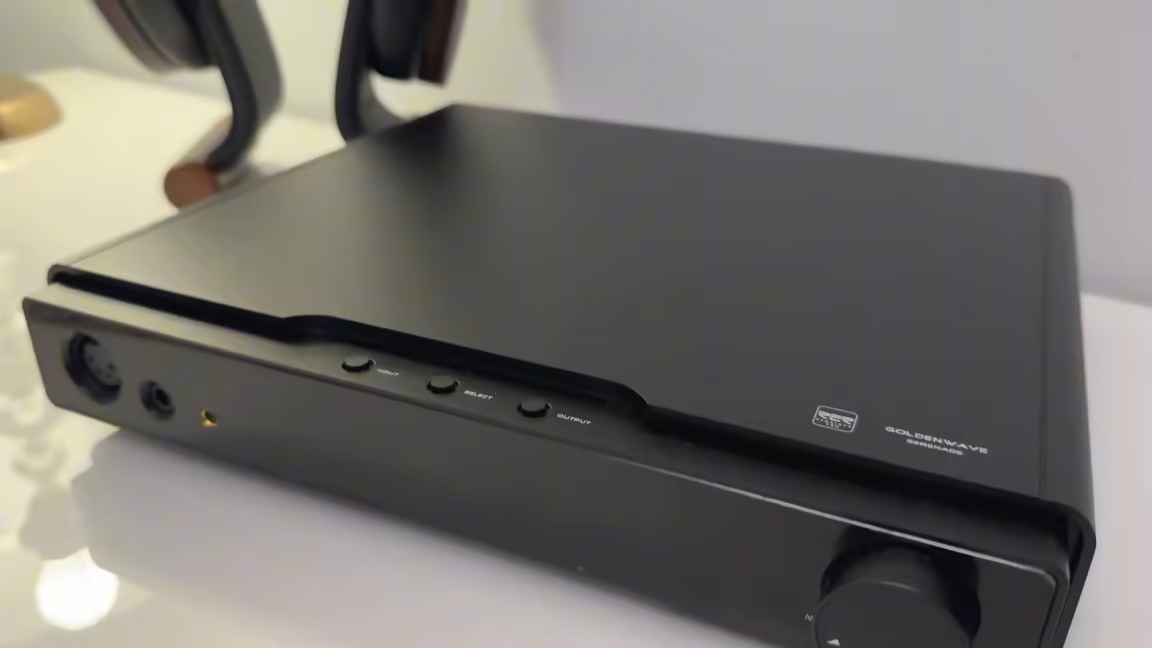
HIFIMAN Serenade
HIFIMAN's all-in-one R2R DAC, discrete Class A amp, and hi-res network streamer in one 3kg box - lush, musical, and powerful enough to drive almost anything.
- Power output: 4 W balanced / 2.8 W single-ended into 32 Ω
- Inputs: USB, Optical, Coaxial, Ethernet, Bluetooth, RCA (analog)
- Outputs: XLR + RCA line out, 4-pin XLR, 4.4 mm, 6.35 mm
- Massive, ultra-clean power supply (50W toroidal + 30,000µF)
- 4W into 32Ω balanced - drives 99% of headphones with headroom
- Every input and output you'd need: USB, optical, coax, Ethernet, Bluetooth, RCA
Watch out: Voiced warm and lush on purpose
HIFIMAN Serenade review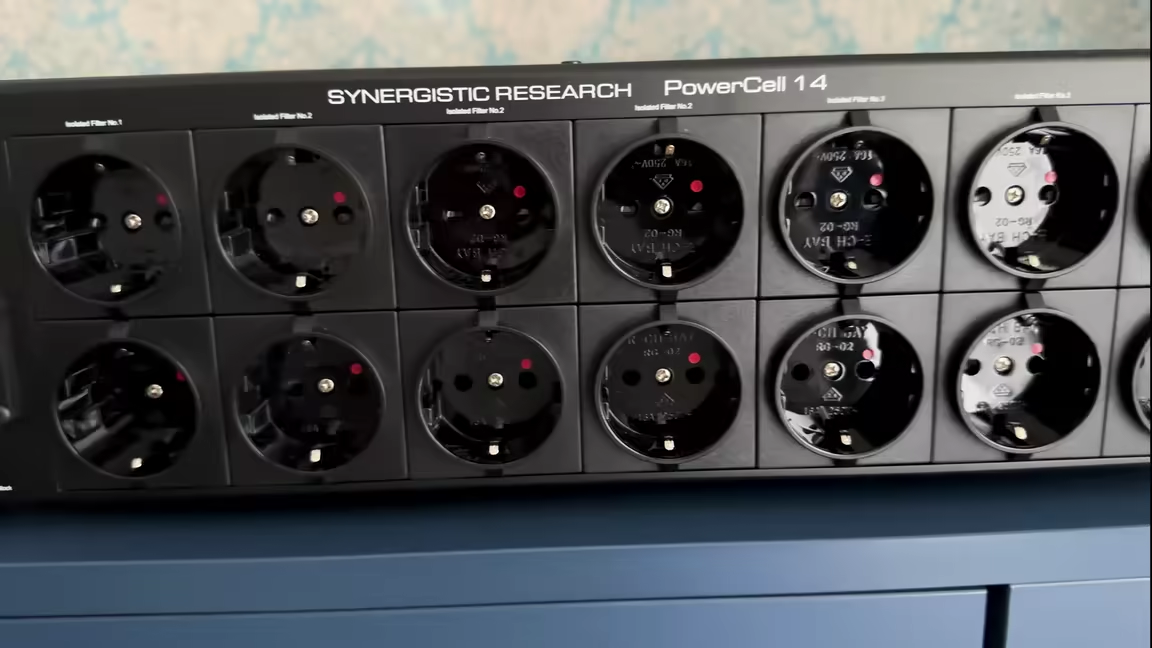
Synergistic Research PowerCell 14
A 14-outlet flagship power conditioner with seven SRX folded EM cells, ULF+DC biasing, graphene treatment, and a silver matrix ground strap - a tier above any 'power strip'.
- Type: Power conditioner
- Weight: 12.00 kg (12000 g)
- Outlets: 14 UEF Purple 2.0 (three isolated banks)
- ULF + DC Bias system with 3 selectable bias settings
- 24-karat gold UEF tuning circuits
- 10-gauge silver matrix point-to-point wiring
Watch out: $15,000 entry price is far from affordable
Synergistic Research PowerCell 14 review
HIFIMAN Arya Organic
A continuation of the Arya series at $1,300 (or $1,100 on sale) - the most resolving headphone at this price, with spectacular detail and bass you can feel.
- Sound: Bright, wide stage
- Impedance: 16 Ω
- Sensitivity: 94 dB/mW
- Driver: Planar magnetic
- Black plastic earcups feel premium vs. gunmetal Stealth
- Halved impedance (16Ω) - drives easily
- Most resolving headphones at this price - microdetails pop clearly
Watch out: Vocals slightly forward, background vocals also pop
HIFIMAN Arya Organic review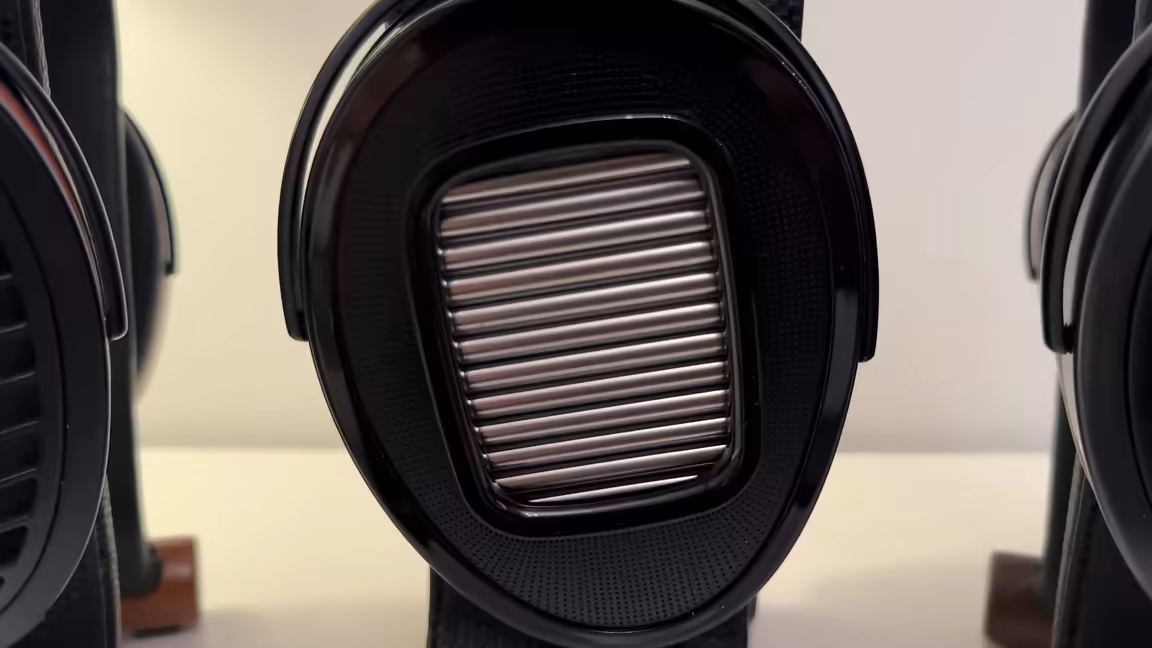
HIFIMAN Arya Unveiled
An open-back planar that strips away the outer grill entirely - exposing the driver to deliver dead-silent backgrounds, holographic imaging, and the smoothest Arya treble yet.
- Sound: Warm, analytical
- Impedance: 27 Ω
- Sensitivity: 94 dB
- Driver: Planar magnetic
- Holographic imaging with dead-silent background
- New fabric-sleeved crystalline copper stock cable
- Grill-less design eliminates micro-reflections off protective metal
Watch out: Driver fully exposed
HIFIMAN Arya Unveiled review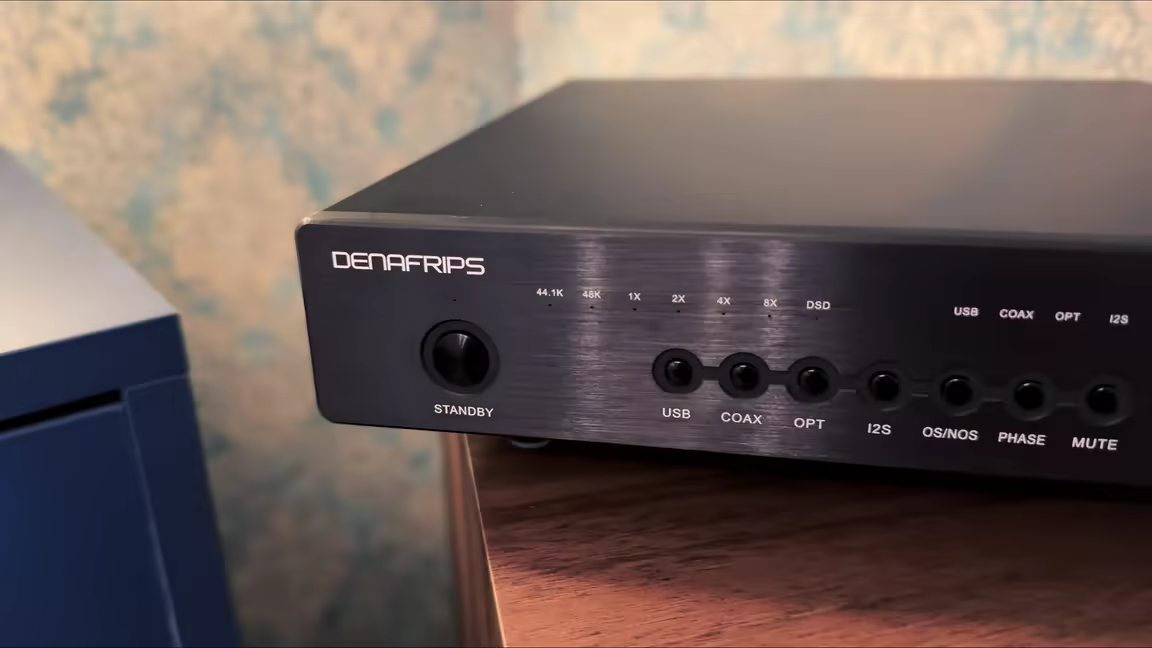
Denafrips Enyo 15th Anniversary
A $700 true balanced R2R ladder DAC with an O-Core transformer, I²S input, and a natural, musical sound that easily competes with delta-sigma converters costing far more.
- Sound: Warm, wide stage
- Inputs: USB, Coaxial, Optical, I²S
- Outputs: RCA, Balanced XLR
- Architecture: True balanced R2R ladder, 24-bit + 6-bit DSD (OS/NOS, slow/sharp filters)
- I²S input alongside USB, coax, and optical
- True balanced R2R ladder with 0.01% tolerance resistors
- Selectable OS/NOS modes and slow/sharp filters
Watch out: I²S pinout isn't standardized
Denafrips Enyo 15th Anniversary review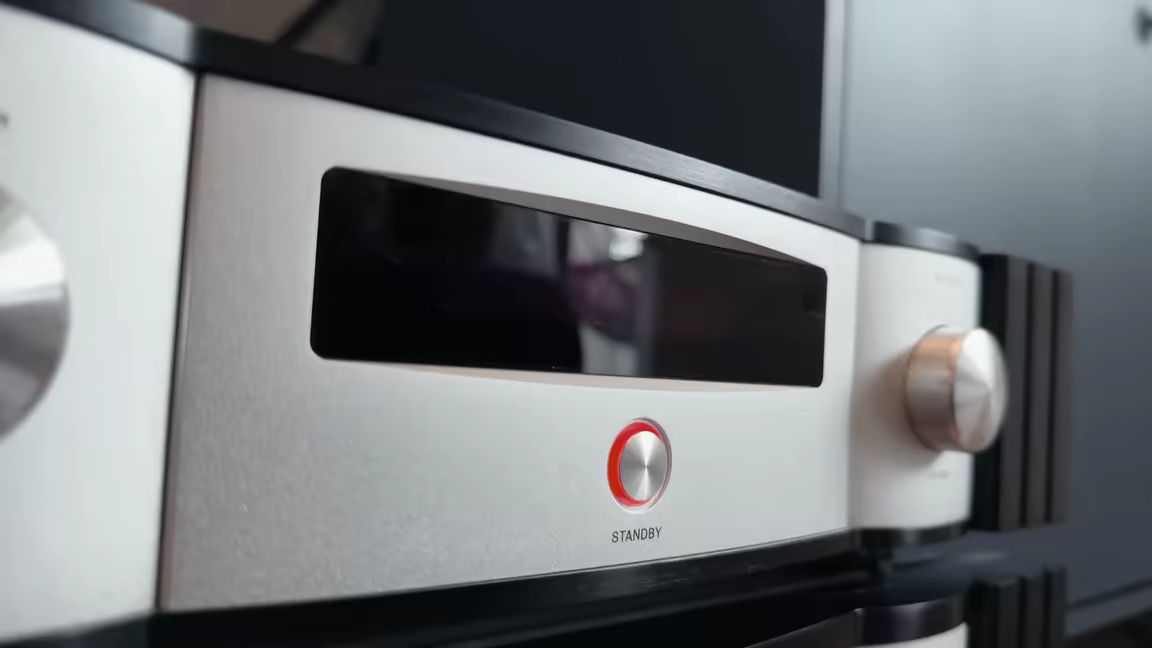
Tonewinner AD-1PA+
A 43kg switchable Class A/AB power amplifier paired with a fully balanced preamp - 100W Class A or 500W Class AB into 4Ω with serious bass control and golden-hued mids.
- Power output: 100 W Class A / 300 W Class AB into 8 Ω · 500 W Class AB (one channel driven) into 4 Ω
- Inputs: Balanced XLR, RCA
- Outputs: Dual A/B speaker binding posts
- Massive 43kg overbuilt chassis with side heatsinks
- Switchable Class A / Class AB topology
- Fully balanced differential input and BTL output stages
Watch out: Significant heat output in Class A mode
Tonewinner AD-1PA+ review
Ekustik Woody Queen
Handmade Czech acoustic panels with a luxurious wood frame and PET felt core - true broadband absorption to 100Hz, zero fiberglass, and a 0.94 NRC rating.
- Type: Broadband acoustic absorber
- Dimensions: 60 × 120 cm
- Core: PET felt (Envizol), fiberglass-free
- NRC up to 0.94 - 94% sound absorption
- True broadband absorber, effective down to 100Hz
- 60x120cm standard footprint suits most rooms
Watch out: 15cm Performance Bass version is chunky on the wall
Ekustik Woody Queen review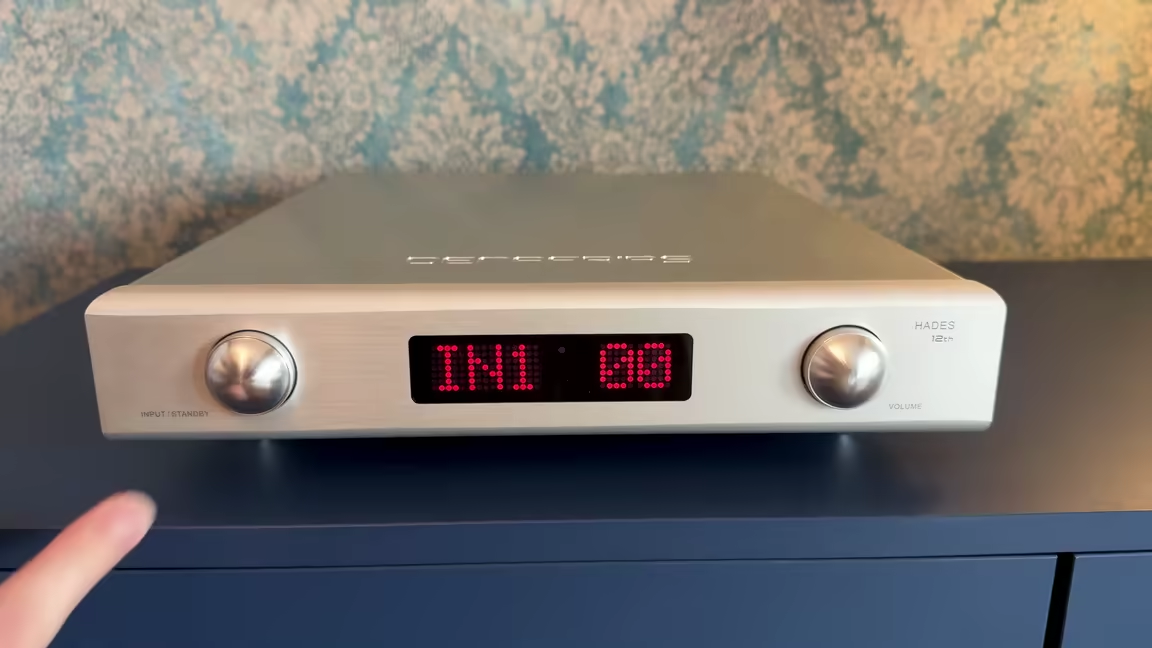
Denafrips Hades 12th
A pure Class A, fully balanced, true discrete preamp with a 60-step relay-based resistor ladder volume control - perfect channel balance, 0.00045% THD, 122dB SNR.
- Inputs: 2× balanced XLR, 1× RCA
- Outputs: Balanced XLR, RCA
- Topology: R2R ladder
- Precision-machined thick aluminum chassis, no flex
- 60-step relay-based stepped attenuator (R2R volume)
- Perfect channel balance at any volume
Watch out: Three feet instead of four
Denafrips Hades 12th review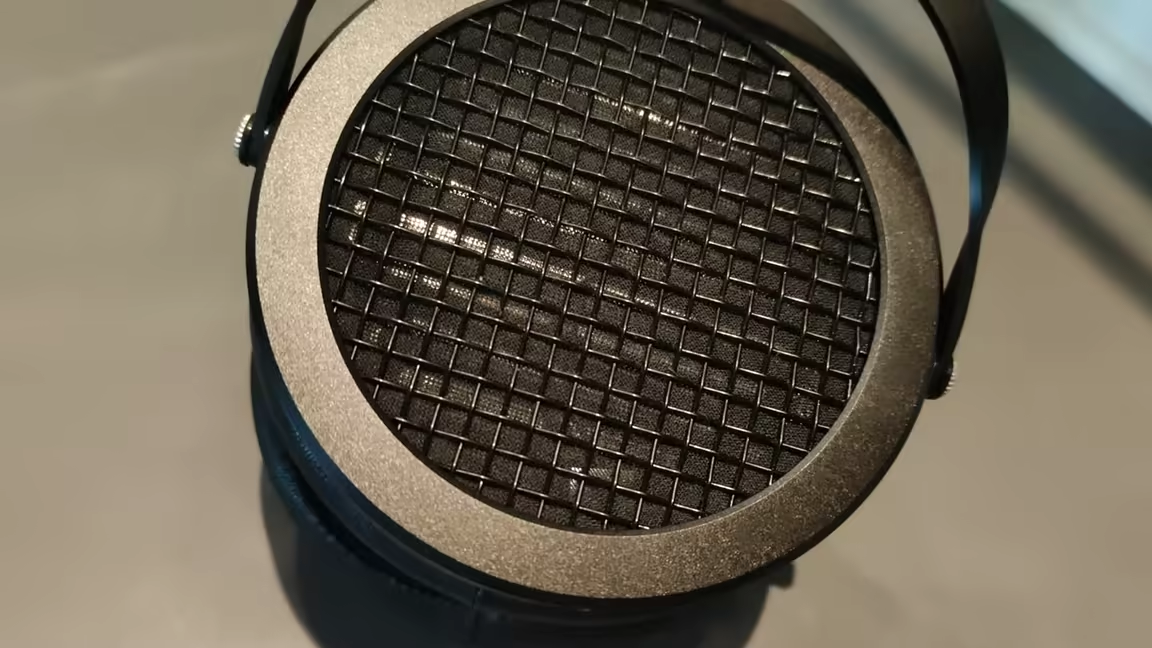
HIFIMAN Sundara
An amazing value proposition - the latest Sundara revision performs exceptionally well at $300 in the open-back planar market. It's just steel.
- Sound: Warm, bass-heavy
- Impedance: 32 Ω
- Sensitivity: 94 dB/mW
- Weight: 372 g
- Great wide and decently accurate soundstage
- Strong dynamics with serious punch and slam
- Fast transients with above-average decay
Watch out: Inner pad diameter likely too small for many ears
HIFIMAN Sundara reviewTorn between two picks?
3 pairs from this list with a head-to-head page of their own.
Questions buyers ask
What does 'reference grade' actually mean?
On this site, a 9.0 or higher means the piece is the benchmark in its category at its price tier - the unit that other gear in the same class gets compared against. A 9.0 headphone is reference for headphones; a 9.0 DAC is reference for DACs. The scale is anchored within each category, not against the catalogue as a whole, so a 9.0 doesn't mean a piece is better than every 8.9; it means it's the unit that defines what the price tier can do.
Is every 9.0+ piece automatically 'Reference' verdict?
No. The Reference verdict is reserved for pieces that hit 9.0+ AND have no meaningful flaws at their price tier. A 9.1 headphone with a known driver quirk that affects 5% of users gets Highly Recommended, not Reference. A 9.2 power conditioner with no meaningful flaws gets Reference. Both are on this list because both crossed the 9.0 threshold.
Why is the list ranked by raw score and not by category?
Score is the only number that's directly comparable across categories on this site. A 9.2 headphone earned the same scoring rigor as a 9.2 DAC or 9.2 power conditioner. Ranking by category would imply we think one category is more important than another - we don't. We just publish the score, and the score sorts itself.
What changes a piece's score after it's published?
Two things. First, a new reference arrives - if something genuinely better at the same price tier ships, the old reference may drop a fraction of a point as the bar moves. Second, a long-term reliability issue emerges that wasn't visible during the review window. A changed score is a substantive edit, so it moves the review's updated date.
Most audio reviews use a five-star scale because most audio reviews are written for SEO. Five stars is generous, easy to skim, and meaningless - half the products on every retail aggregator land between 4.2 and 4.7. The scale has no anchor: a five-star $30 cable and a five-star $30,000 speaker are calibrated against different benchmarks, by different reviewers, on different days, against nothing in particular.
We use a 10-point scale anchored to a published reference list. A 9.0 here means something: it means the piece is the benchmark in its category at its price tier. A 9.0 doesn't get awarded because the marketing was compelling. It gets awarded after weeks of head-to-head testing against whatever currently holds the reference slot in that category, on the same chain, with the same recordings.
This shortlist is everything in the catalogue that crossed that line.
Reading a 9.0 across categories
A 9.2 power conditioner earned its score against other power conditioners, not against a 9.2 headphone. When two pieces from different categories share a score, both sit at the top of their own field; they do not sound the same, and they do not solve the same problem. That is the only way a cross-category list can be honest, and it is also why this one is uneven by category.
Headphones make up most of it, because the catalogue's deepest field is open-back planars and four of them have reached 9.0: the HIFIMAN HE1000se, Arya Organic, Arya Unveiled and Sundara. Amplification contributes three, one for headphones and two for speakers. There is one DAC, and two accessories whose categories rarely produce a benchmark at all.
What is missing says as much. No loudspeaker, no in-ear monitor and no digital source has reached 9.0 yet; the best of each sits on its own guide, just under the line. If you are building a speaker system, this list gives you the electronics and the room, and the speakers guide gives you the speakers.
Building a chain from this list
Because every piece here is a benchmark in its own role, the list can be read as a set of systems rather than a ranking.
A headphone system. The HIFIMAN Serenade is an R2R DAC, a discrete Class A headphone amp and a network streamer in one box, so it and one headphone from this list are a complete chain: the HE1000se at the top, or the Sundara at $299 for most of the way there.
A speaker system's electronics. The Denafrips Enyo 15th Anniversary has balanced XLR outputs, the Denafrips Hades 12th is a fully balanced preamp with XLR in and out, and the Tonewinner AD-1PA+ takes balanced XLR in and is stable down to 2 ohms. One caution from the Enyo's own review: its outputs are high impedance, so check the input impedance of whatever follows it.
The room and the mains. The Ekustik Woody Queen panels and the Synergistic Research PowerCell 14 work on the two things every system shares. Treat the room first; conditioning earns its place only where there is noise to remove.
Reference-grade is not the reference chain
The six pieces every review on this site is heard against are published on the homepage as the reference chain. Four of them are on this list. The other two, the Triangle Australe EZ loudspeaker and the Denafrips Hermes 12th digital source, are not, because they score below 9.0. The chain is a fixed yardstick, chosen so that every review is heard the same way; this list is a score threshold. Being on one is not the same as being on the other.
What "reference" actually means on this list
The Reference verdict is the highest in our five-tier scale: Reference, Highly Recommended, Recommended, Mixed, Pass. To earn Reference, a piece needs a 9.0-or-better score, no meaningful flaws at its price tier, and a sound or function that defines what the category can do at the price.
Highly Recommended is one tier down, and it can carry a 9.0-plus score with a meaningful caveat - a known driver behavior, an ergonomic issue, software stability, a feature gap - that stops it being called the unambiguous benchmark. Pieces in this tier are on this list because the score is the same. The verdict tier is the asterisk.
Just below the line
Pieces scoring 8.7 to 8.9 are not on this list, and they are still excellent: they are the difference between "extraordinary at the price" and "the reference at the price." The open-back guide and the headphone amplifier guide both reach further down the score scale.
Pieces in active testing are not on this list either. We don't pre-announce reviews, and a piece doesn't appear in any guide until the listening window is complete and the verdict is published.
Ranked by score, on the one rubric every review uses: Sound 30%, Technical performance 25%, Build & comfort 15%, System fit 15% and Value 15%. Best Value goes to the pick, other than the winner, with the most score for its price (score against the log of the price). Best Budget goes to the highest-ranked pick not already awarded in the cheapest quarter of the list. No placement here is sponsored, paid for, or negotiable. How a score is built · Funding and independence