
The Best Speakers in 2026: Tested & Ranked
A speaker is the one component in the chain that has to move air in your actual room, which is why the spec sheet tells you less here than anywhere else. Buy for the room you have and the amplifier you own, not for the showroom.
- By Jakub Charkiewicz
- 6 tested picks
- Updated
- Score floor: 7.5/10
- Prices €249/pair $270/pair approx. to $4,999/pair
The short version
Our top pick among the best speakers is the Diora Acoustics Chors 5 (8.5/10, $2,499/pair). Our best value pick is the Taga Harmony TAV-500B v.2 (7.9/10, €249/pair). The runner-up is the Taga Harmony DIAMOND B-60 v.3 (8.2/10, $1,099/pair). 6 picks in all, ranked by score from 7.9 to 8.5/10: 4 floor-standing and 2 bookshelf.
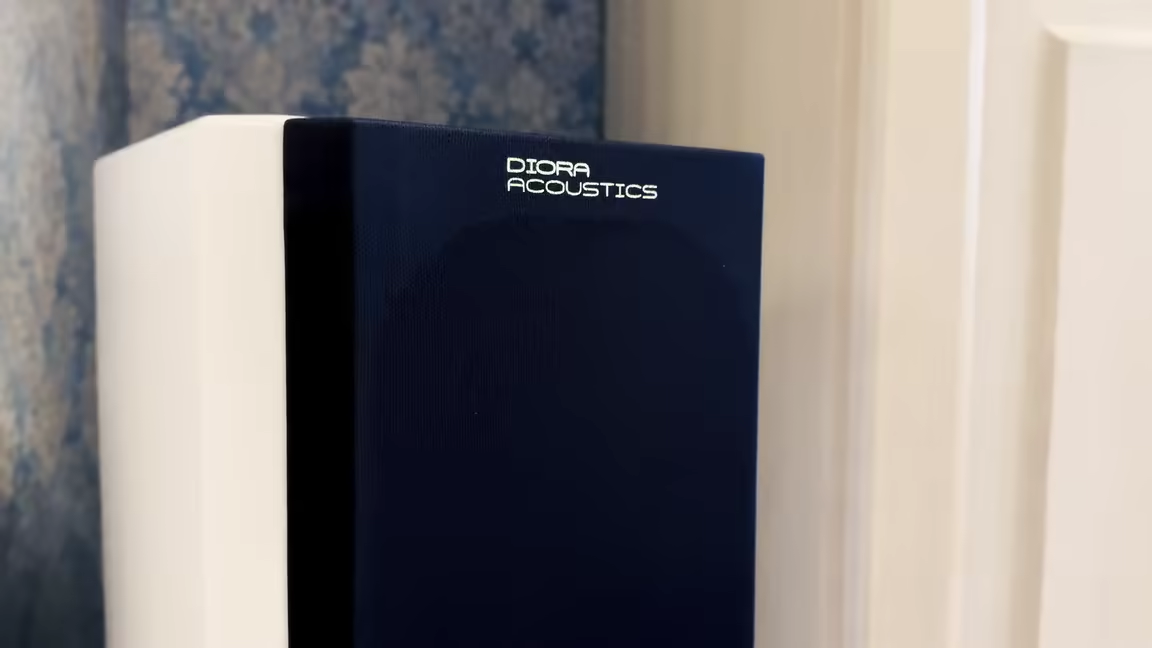
Best Overall
Diora Acoustics Chors 5
A 2-way closed-box floor-stander with ceramic-coated drivers, fast dynamic bass with no port, and uniquely smooth treble - one of the most distinct speakers in its class.
- Score 8.5
- Verdict Highly Recommended
- Price $2,499/pair
At a glance
| # | Pick | Price | Award |
|---|---|---|---|
| 1 | Chors 5 | $2,499/pair | Best Overall |
| 2 | DIAMOND B-60 v.3 | $1,099/pair | No award |
| 3 | Australe EZ | $4,999/pair | No award |
| 4 | Borea BR09 | $1,099/pair | No award |
| 5 | TAV-607F | €699/pair $755/pair approx. | Best Budget |
| 6 | TAV-500B v.2 | €249/pair $270/pair approx. | Best Value |
The 6 picks by type and price
By type
- Floor-standing 4 picks Top-scoring: the Diora Acoustics Chors 5 (8.5/10)
- Bookshelf 2 picks Top-scoring: the Taga Harmony DIAMOND B-60 v.3 (8.2/10)
By price
- $200-500 1 pick The Taga Harmony TAV-500B v.2 (7.9/10)
- $500-1,000 1 pick The Taga Harmony TAV-607F (7.9/10)
- $1,000-2,500 3 picks Top-scoring: the Diora Acoustics Chors 5 (8.5/10)
- $2,500 + 1 pick The Triangle Australe EZ (8.1/10)
The 6 picks, ranked
Diora Acoustics Chors 5
A 2-way closed-box floor-stander with ceramic-coated drivers, fast dynamic bass with no port, and uniquely smooth treble - one of the most distinct speakers in its class.
- Sound: Bright, analytical
- Type: 2-way closed-box floor-stander
- Sensitivity: 90 dB SPL
- Impedance: 4 Ω
- Closed-box floor-stander - rare design choice
- Ceramic-coated drivers throughout for unified timbre
- Beautiful gloss white finish with multiple options
Watch out: Single pair of binding posts
Diora Acoustics Chors 5 review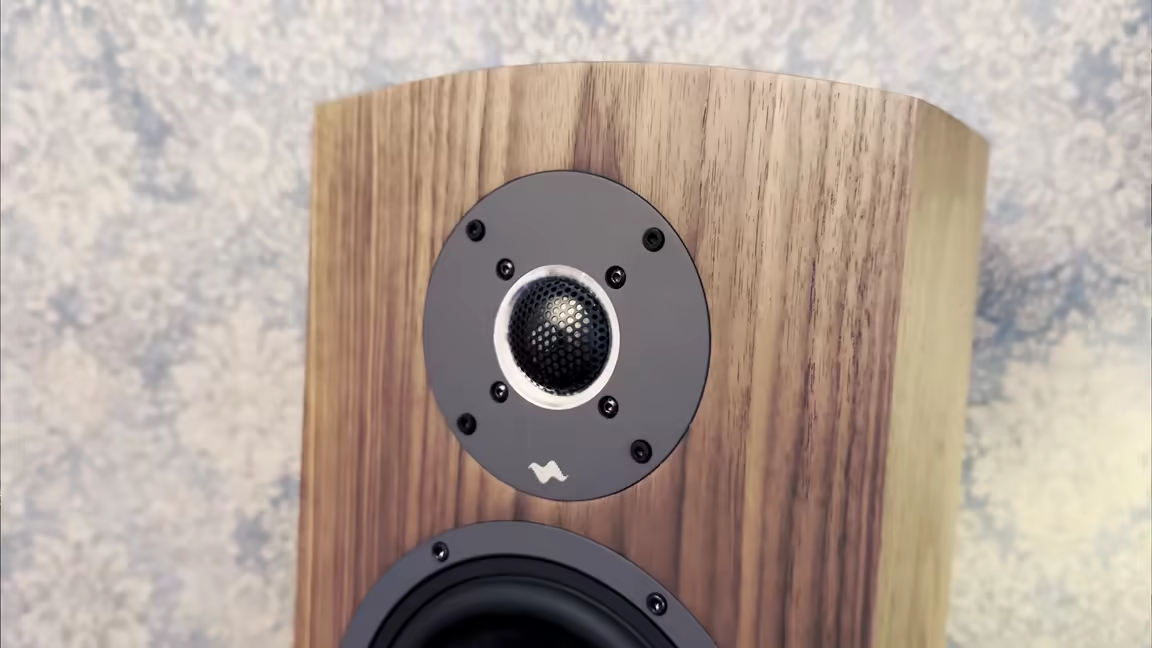
Taga Harmony DIAMOND B-60 v.3
Bookshelf speakers with no parallel surfaces, neutral and organic tonality, and a midrange focus that's so inoffensive you'll listen for hours without noticing time pass.
- Sound: Analytical, aggressive
- Type: 2-way bass-reflex bookshelf
- Sensitivity: 90 dB SPL
- Impedance: 6 Ω
- No parallel surfaces - curves inward toward the rear
- 2nd-generation 36mm titanium dome tweeter
- Silver-wired voice coil with ferrofluid cooling
Watch out: Initial impressions can feel boring
Taga Harmony DIAMOND B-60 v.3 review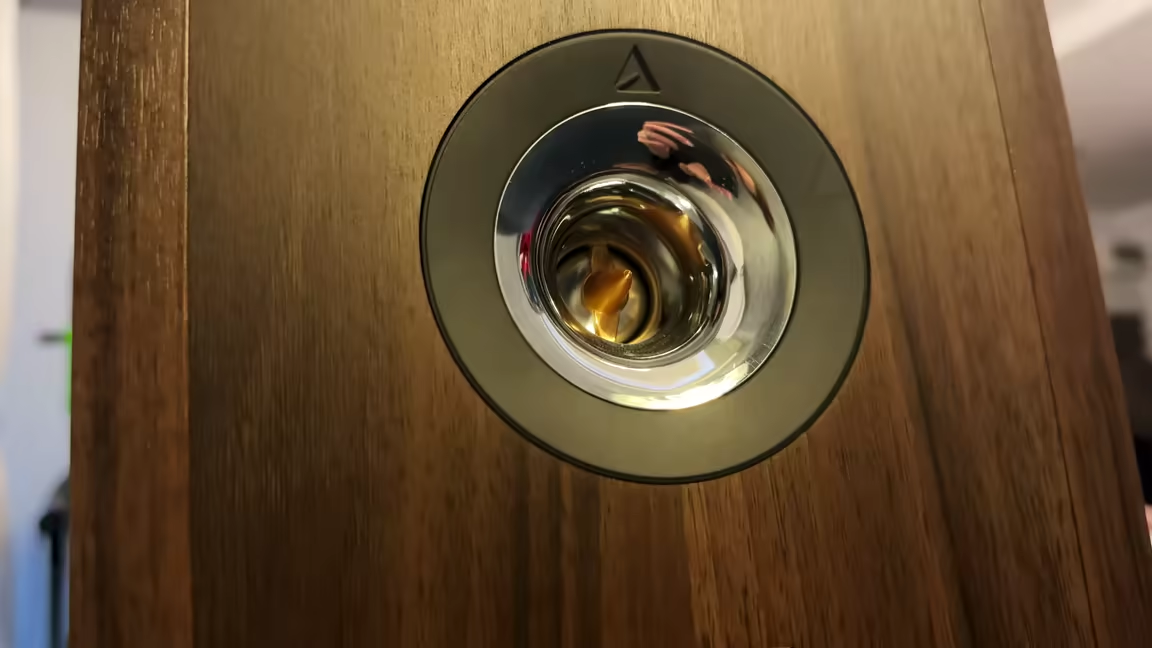
Triangle Australe EZ
French three-way floor-standers with a rear-firing DPS tweeter that 'cheats' a massive soundstage - lively, detailed, and demanding the right partnering gear.
- Sound: Bright, wide stage
- Type: 3-way floor-stander
- Sensitivity: 92.5 dB SPL
- Impedance: 8 Ω
- Real wood veneer (or high-gloss) finish in 6 colorways
- Glass pedestal with rubber damping isolates the speaker from the floor
- Premium copper/aluminum binding posts - bi-wire/bi-amp capable
Watch out: Treble can become bright/fatiguing without careful system matching
Triangle Australe EZ review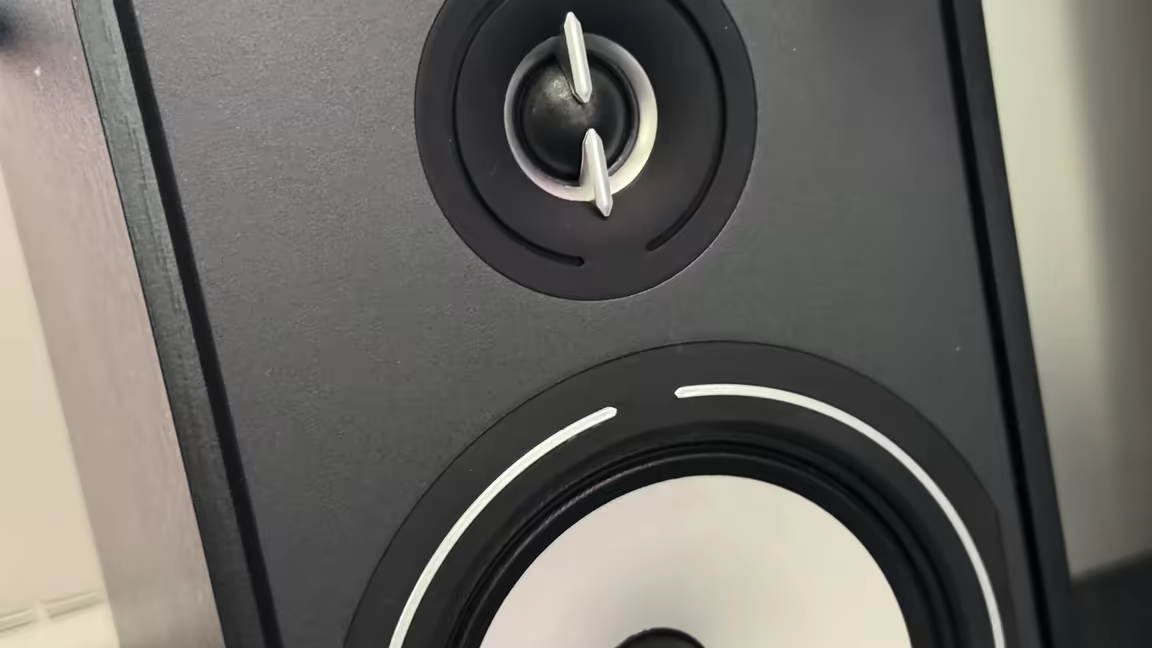
Triangle Borea BR09
Three-way French floor-standers with three bass drivers, neutral tonality, and a bigger-than-expected soundstage - balanced, distortion-free, and free of overdone bass.
- Sound: Warm, wide stage
- Type: 3-way floor-stander
- Sensitivity: 92 dB SPL
- Impedance: 8 Ω
- Clean, slim aesthetic - blends into any room
- Three-way design with 3x 165mm bass drivers
- Driver Vibration Absorption System reduces cabinet resonance
Watch out: Single pair of binding posts
Triangle Borea BR09 review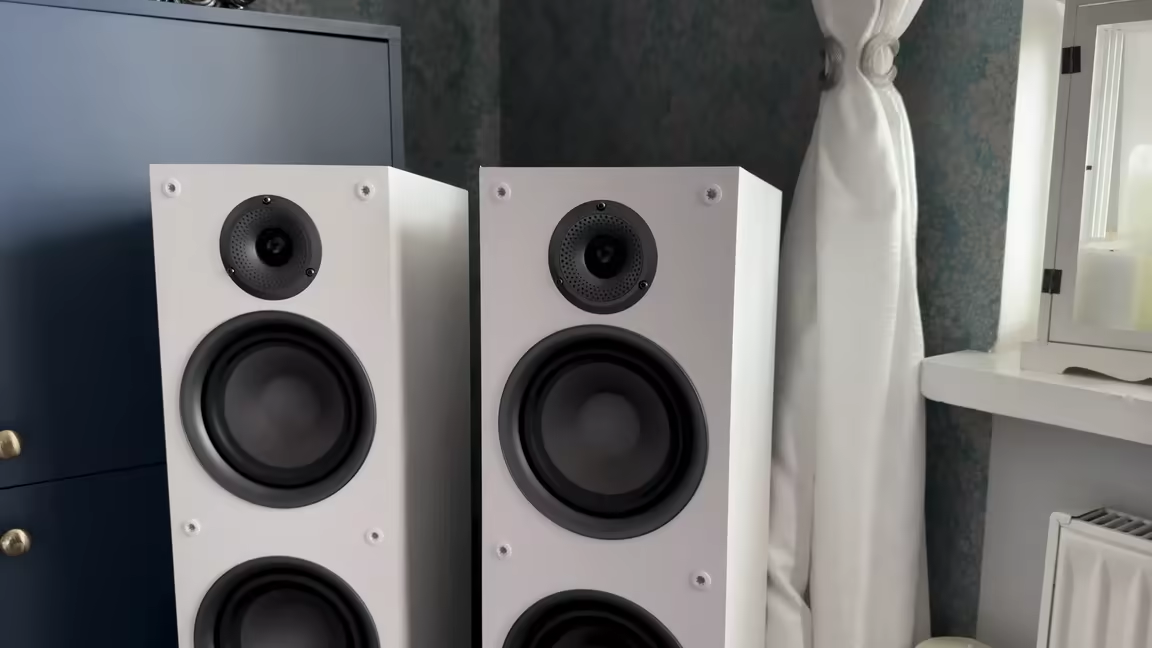
Taga Harmony TAV-607F
A surprisingly capable three-way floor-stander with twin 6.5" woofers, an angled-top low-interference cabinet, and an articulate, energetic sound that punches above its budget.
- Sound: Bright, wide stage
- Type: 3-way floor-stander
- Sensitivity: 91 dB SPL
- Impedance: 6 Ω
- True three-way design with twin 6.5" woofers
- Taga Low Interference Enclosure (2nd gen) with extra bracing
- Angled top minimizes standing waves
Watch out: Vinyl wrap finish, not real wood veneer
Taga Harmony TAV-607F review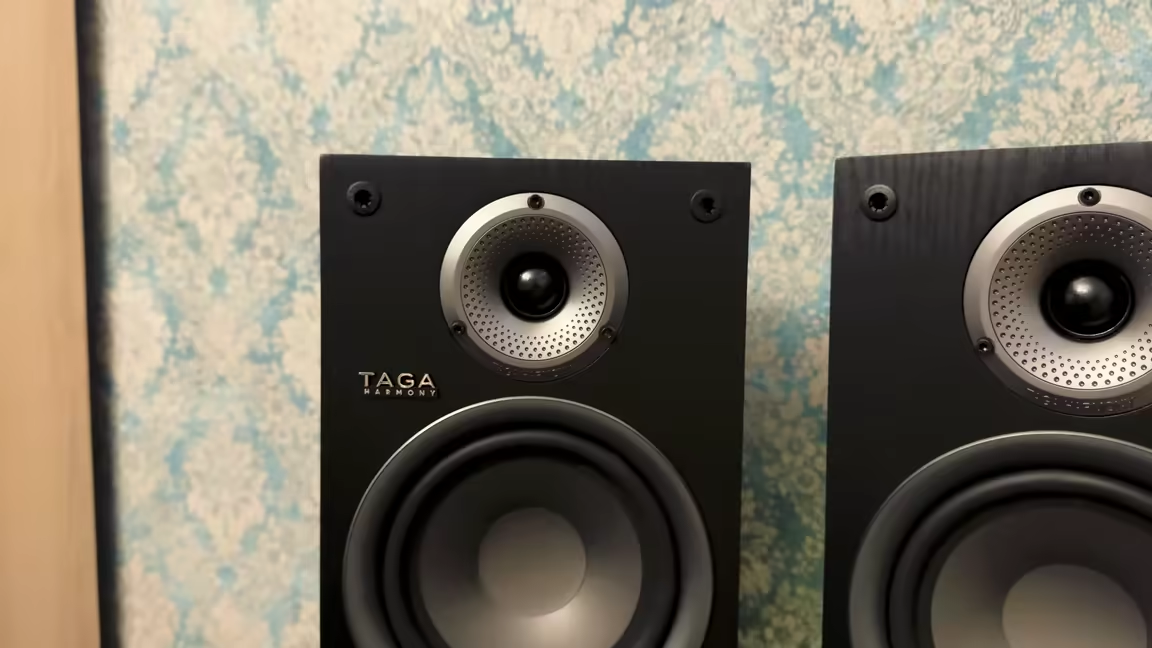
Taga Harmony TAV-500B v.2
Active 6.5-inch bookshelf speakers with built-in Class D amplification, Bluetooth, USB, optical, and a 30Hz bass extension that punches way above their €249 price.
- Sound: Bright, wide stage
- Type: 2-way active bookshelf (Class D)
- Sensitivity: 87 dB
- Power output: 2× 40 W RMS (100 W peak) into 4 Ω
- Active speakers - no separate amplifier needed
- Angled top reduces standing waves and resonances
- Veneer finish in 4 colors - rare at this price
Watch out: Plastic finishes feel modest in hand
Taga Harmony TAV-500B v.2 reviewTorn between two picks?
3 pairs from this list with a head-to-head page of their own.
Questions buyers ask
Bookshelf or floor-standing?
Room size decides it more often than budget does. A floor-stander puts more radiating area and usually more low-end extension into the room, which is what you want past roughly 20 square metres or when you listen loud. In a small or heavily furnished room the same speaker can overload the space and turn bass into boom, and a bookshelf on a solid stand will sound tighter and image better. If you are between the two, the honest tiebreaker is whether you can pull the speaker away from the wall behind it: floor-standers care far more about that gap than bookshelves do.
Do active speakers make the amplifier list irrelevant?
For an active pair, yes, and that is most of their appeal. The amplifier is built in, matched to the drivers by the people who designed them, and crossed over before amplification rather than after. You give up the ability to change the amp later, and you need mains power at both speakers rather than one box. Passive speakers keep that flexibility and let the amplifier become an upgrade path, which is why the rest of the catalogue is built around them.
How much does the room matter compared to the speaker?
Enough that a treated room with modest speakers routinely beats an untreated room with expensive ones, particularly below 300 Hz where room modes add and cancel by tens of decibels. Nothing in a speaker's design can undo a null caused by your listening position. Before spending the next tier up, run the room-mode calculator and try moving the seat, because both are free.
Is a more expensive pair always a better pair?
No, and this list makes that visible: the scores do not climb monotonically with price, because a score is against the reference list at that price tier, not against the whole market. A cheaper speaker that does everything asked of it at its price can out-score a dearer one that is merely competent at its own. Read the gap between two picks rather than the gap between their prices.
Speakers are where a hi-fi system stops being electronics and starts being acoustics. Every other component in the chain does its job in a box, at a known impedance, into a load that does not move. A loudspeaker has to push a room full of air, and that room pushes back differently depending on its dimensions, its furniture, and where you happen to sit in it.
That is why speaker shopping goes wrong more often than anything else in audio. The measurements that matter most are the ones nobody publishes: what the pair does at your listening position, in your room, with your walls. What a review can honestly tell you is how a speaker behaves on a known chain in a known space against other speakers heard the same way, which is exactly what this list is.
Matching a pair to your room and your amplifier
Two numbers on a speaker's spec sheet are worth reading closely, because they decide what the rest of your system has to do. Sensitivity says how loud the speaker plays for a given input, and on this list it runs from 90 dB to 92.5 dB. A few decibels sounds small and is not: every 3 dB less sensitivity asks the amplifier for twice the power to reach the same level. Impedance says how hard the speaker leans on the amplifier's current, and here it runs from 4 ohms to 8. The Diora Acoustics Chors 5 is a 4-ohm, 90 dB design and wants an amplifier that is comfortable into a low load; the Triangle Borea BR09 and Australe EZ are 8-ohm designs at 92 dB and above, and much easier to drive well.
The mistakes that follow from ignoring this are predictable, and so are the others that come up in almost every speaker purchase.
Buying what sounded best in someone else's room. A showroom, a friend's lounge and a show hotel all have their own bass. What impressed you there was partly the room, and it does not come home with the speakers.
Underpowering a low-impedance pair. An amplifier that sounds fine into 8 ohms can run out of current into 4, and the first symptom is bass that goes soft and loose when the music gets busy, long before anything sounds broken.
Putting a rear-ported speaker against the wall. A bass-reflex port on the back needs space to breathe. Pushed into the wall, it loads up the bass and turns it into boom. A closed-box design such as the Chors 5 has no port to choke, which makes it the easier pair to place near a wall.
Skipping placement before upgrading. Distance from the side and back walls, toe-in and seat position cost nothing to change and move the sound more than most component swaps. Try them before you buy the next tier up.
How the pairs were heard
Every pair here was heard in the same room, at matched levels, on recordings chosen to expose the things a speaker gets wrong: small-ensemble acoustic material for tonal honesty and decay, vocal-led recordings for midrange truth, dense modern production for how the speaker holds together when everything is loud at once, and large-scale orchestral music for dynamic range and stage.
Tonal balance matters more here than anywhere else in the chain, because a speaker that gets the frequency balance wrong cannot be fixed downstream. And for a speaker, build is not only finish: it is how the cabinet behaves, whether it rings, and how cleanly the bass starts and stops.
A score here is always relative to its price tier. An 8.0 does not mean a speaker is worse than an 8.5 in some absolute sense; it means that against everything else we have heard near its price, it earned an 8.0. That distinction matters more in speakers than in any other category, because the price range is enormous and the honest answer at €249 a pair looks nothing like the honest answer at $4,999.
Bookshelf or floor-standing
The catalogue covers both, and the choice is mostly about your room rather than your budget. A floor-stander typically gives you more low-end extension and more radiating area, which is what a larger room needs to stay convincing at realistic volume. Put the same speaker in a small room and the extra output below 80 Hz can excite room modes hard enough that the bass gets slower and less tuneful, not better.
Bookshelf speakers ask for a solid stand and a gap behind them, and in exchange they tend to disappear more completely as sound sources. If you sit close, if the room is modest, or if the speakers have to live near a wall, that is usually the better trade. What no bookshelf can do is move the air a large room wants below 40 Hz, which is where a subwoofer, not a bigger bookshelf, is the answer.
Active or passive
Most of this list is passive, which is still the mainstream of hi-fi: you choose the amplifier, and the crossover happens after amplification inside the speaker. That is the flexible route, and it is why an amplifier upgrade can genuinely change what a passive pair sounds like.
The active pair on this list, the Taga Harmony TAV-500B v.2, works the other way around. Amplification is built in and matched to the drivers by the people who designed them, and the optical, RCA and Bluetooth inputs are on the speaker itself. That removes an entire purchasing decision and a pair of cables, and it removes the ability to change the amplifier later. Neither approach wins on principle. Passive gives you an upgrade path; active gives you a system somebody already matched.
Not on this list: studio monitors, in-walls and subwoofers
Studio monitors used at the production stage sit outside this list. They are voiced for a different job, and judging them against domestic speakers on domestic material would be unfair to both. In-wall and on-wall installation speakers are out for the same reason, since their performance depends on a wall we have not heard.
Subwoofers are not here either. A subwoofer is a room-correction problem more than a speaker-buying one, and pairing advice that ignores the room would be worse than no advice.
Ranked by score, on the one rubric every review uses: Sound 30%, Technical performance 25%, Build & comfort 15%, System fit 15% and Value 15%. Best Value goes to the pick, other than the winner, with the most score for its price (score against the log of the price). Best Budget goes to the highest-ranked pick not already awarded in the cheapest quarter of the list. No placement here is sponsored, paid for, or negotiable. How a score is built · Funding and independence · All speakers reviews