
AIYIMA A80 Review: A $200 Class D Amp Measured Against One 10x the Price
A $200 Class D integrated amp with Bluetooth, USB-C, optical, coax, RCA and TRS inputs and a one-knob menu, whose sound came surprisingly close to an amp at ten times its price.
- Standout
- Rated 300 W per channel into 4 Ω from a tiny chassis
- Watch out for
- Light enough that stiff cables can shift or lift it
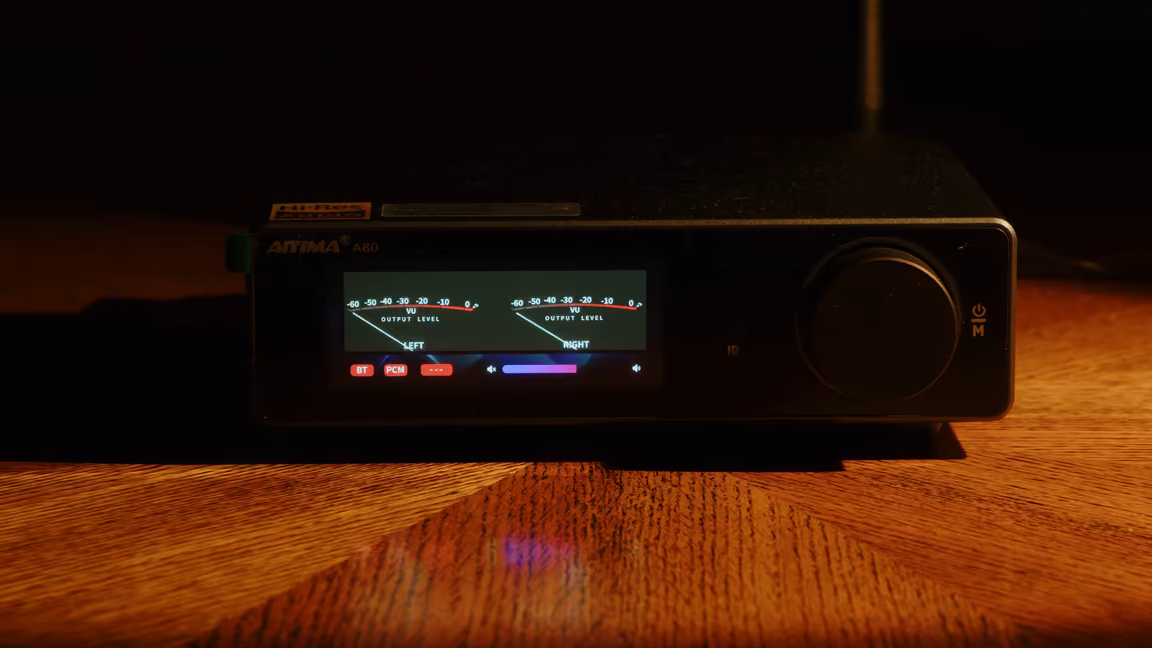
Named Best Value in our Best Speaker Amps and Preamps guide.
The AIYIMA A80 is a small integrated amplifier that costs about $200, and about the same in euros. To see what that money buys, I compared it with my reference system, the Heaven 11 Billie MkII, an amplifier that costs about ten times as much. Up front, I didn't use a subwoofer: I didn't have the 3.5 mm cable needed to plug one into the A80. Even so, this little amplifier is very surprising for the price.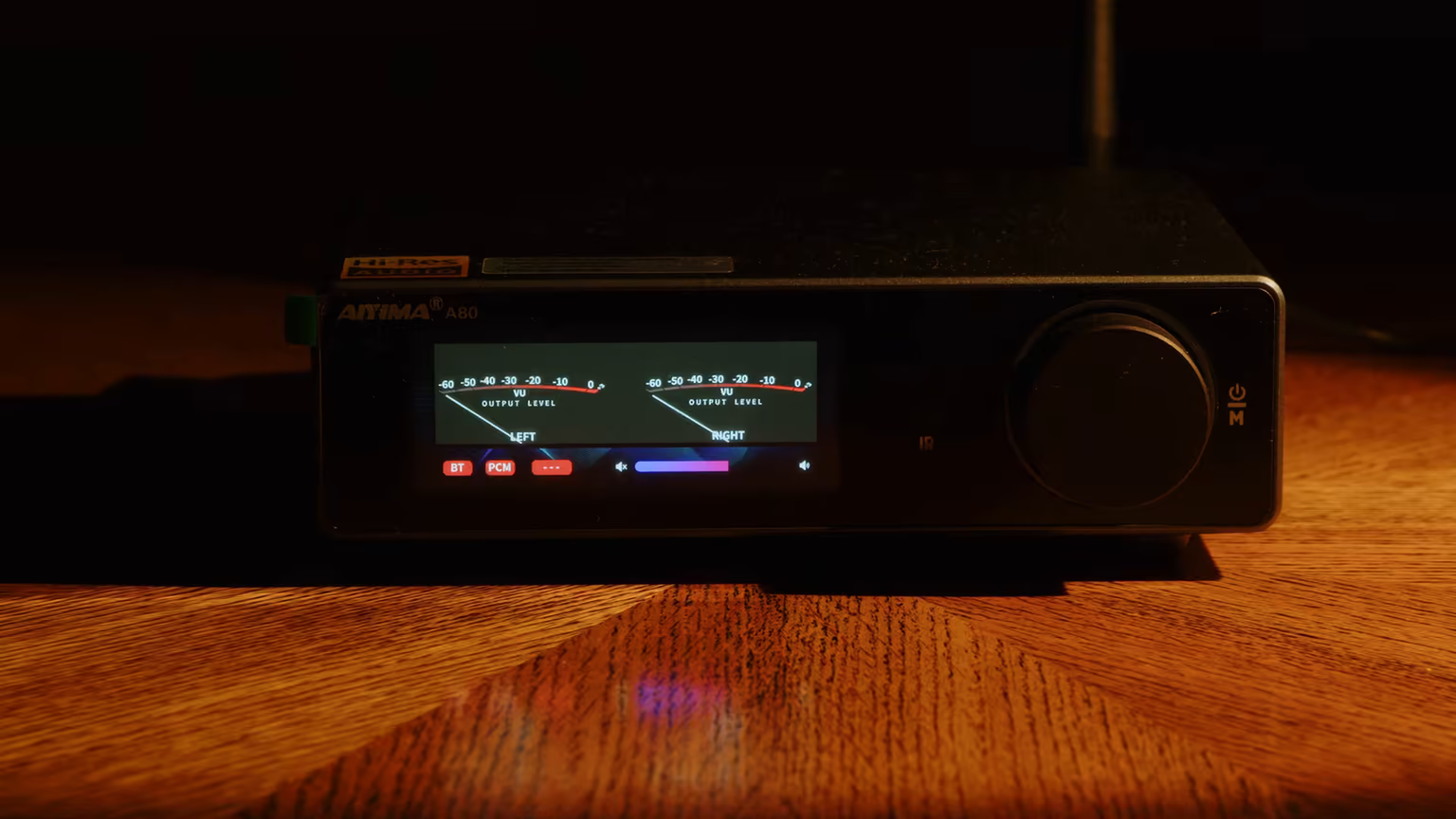 (view larger)
First I'll cover the technical specifications and what the A80 is like to use, then a side-by-side listening comparison with the Billie MkII over five tracks. After that, I measured the frequency response of both amplifiers with REW (Room EQ Wizard) software and a measurement microphone. And finally, my conclusions: is this amplifier worth recommending if you're on a tight budget?
TPA3255 specs, 300 W at 4 Ω and what's in the box
The A80 comes with a Bluetooth antenna, optical and USB-C cables, and a nice remote control. When I say nice, I mean for the price: it's totally fine.
Inside, a TPA3255 Class D amplifier chip is paired with an ESS ES9038Q2M DAC chip. One thing that is nice is that you can swap the op-amp chips if you want to, and AIYIMA provides other options as well. Distortion is rated at 0.006%. The signal-to-noise ratio on the TRS and RCA inputs is 109 dB or better. The frequency response runs from 20 Hz to 20 kHz, which is totally fine, and the A80 takes speakers from 4 to 8 Ω. Maximum output power is 300 W per channel into 4 Ω, which is very powerful for such a tiny machine.
Overall, for about $200, the A80 looks like an amazing deal. It has really impressive technical specifications. But is it a good deal? That depends on two things: the user experience, and the performance, meaning the sound.
Build quality: light, and the knob could be sturdier
Does it sound good? First, the user experience. This amplifier is a little lightweight, so when you plug in your cables, it moves, and it sometimes has trouble staying put. Depending on the cables you're using, it can lift a little, so that might be a problem. Also, the knob doesn't feel very solid. I'm not saying it's weak, but the feeling is not super solid.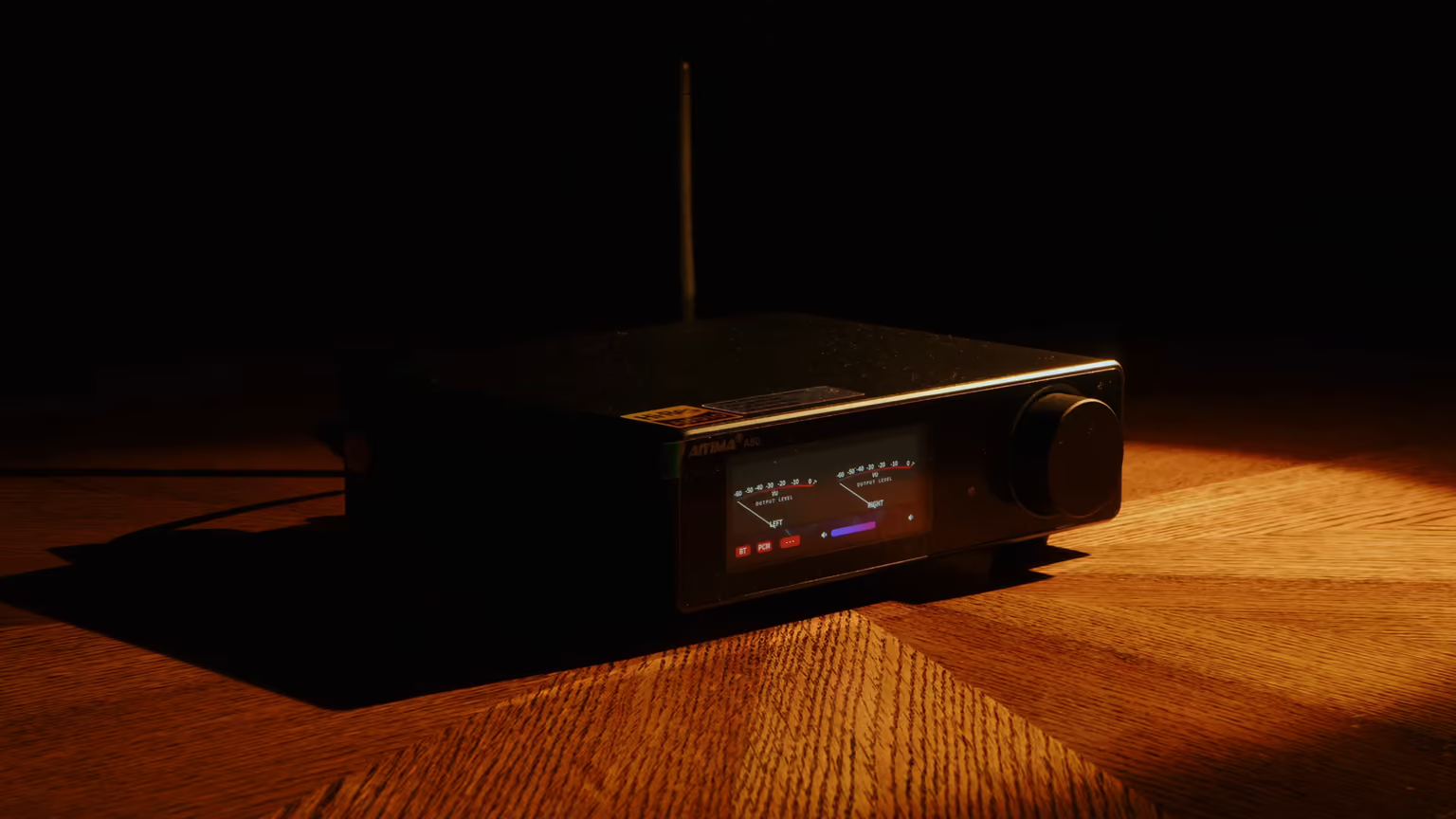 (view larger)
Six inputs with Bluetooth, but no phono stage
Besides those two things, the rest of the user experience is very impressive. You can use this amplifier as a preamp or as a power amp, and you can use it with your TV, your computer, your tablet, your cell phone, a streamer, or any other audio device. It's very flexible. The only exception is a turntable: you can't plug one directly into this amp, so you need an external phono preamp, an extra box between the two.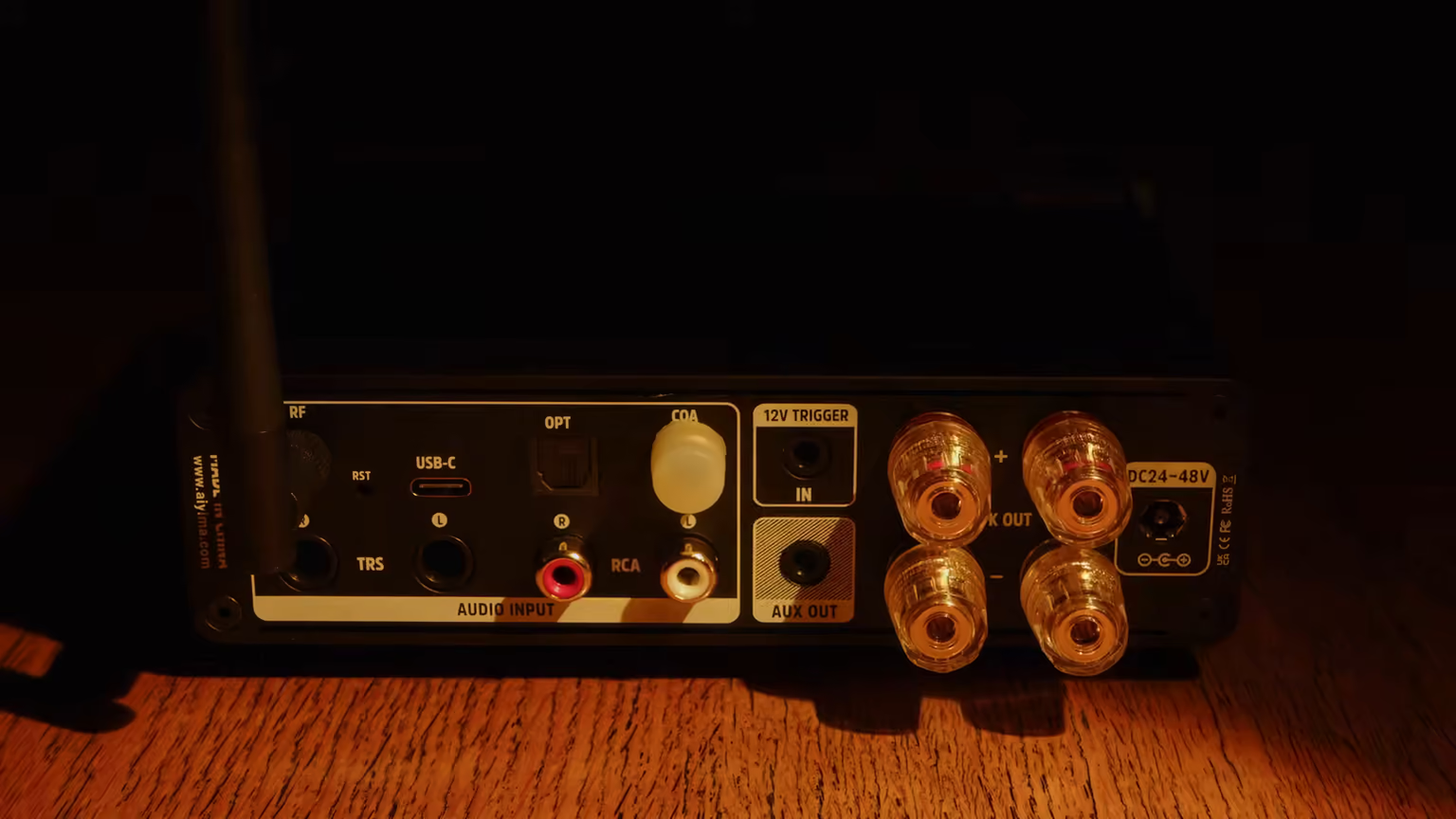 (view larger)
A one-knob menu with tone controls and VU meters
The menu is extremely simple to operate. You just click the knob and turn it to navigate the menu. There's no learning curve, and it's pretty much straightforward: you try it the first time, and you feel like you've known this amplifier the whole time. There's only one knob and a small screen, which is plenty for this amplifier, and the same knob controls the volume.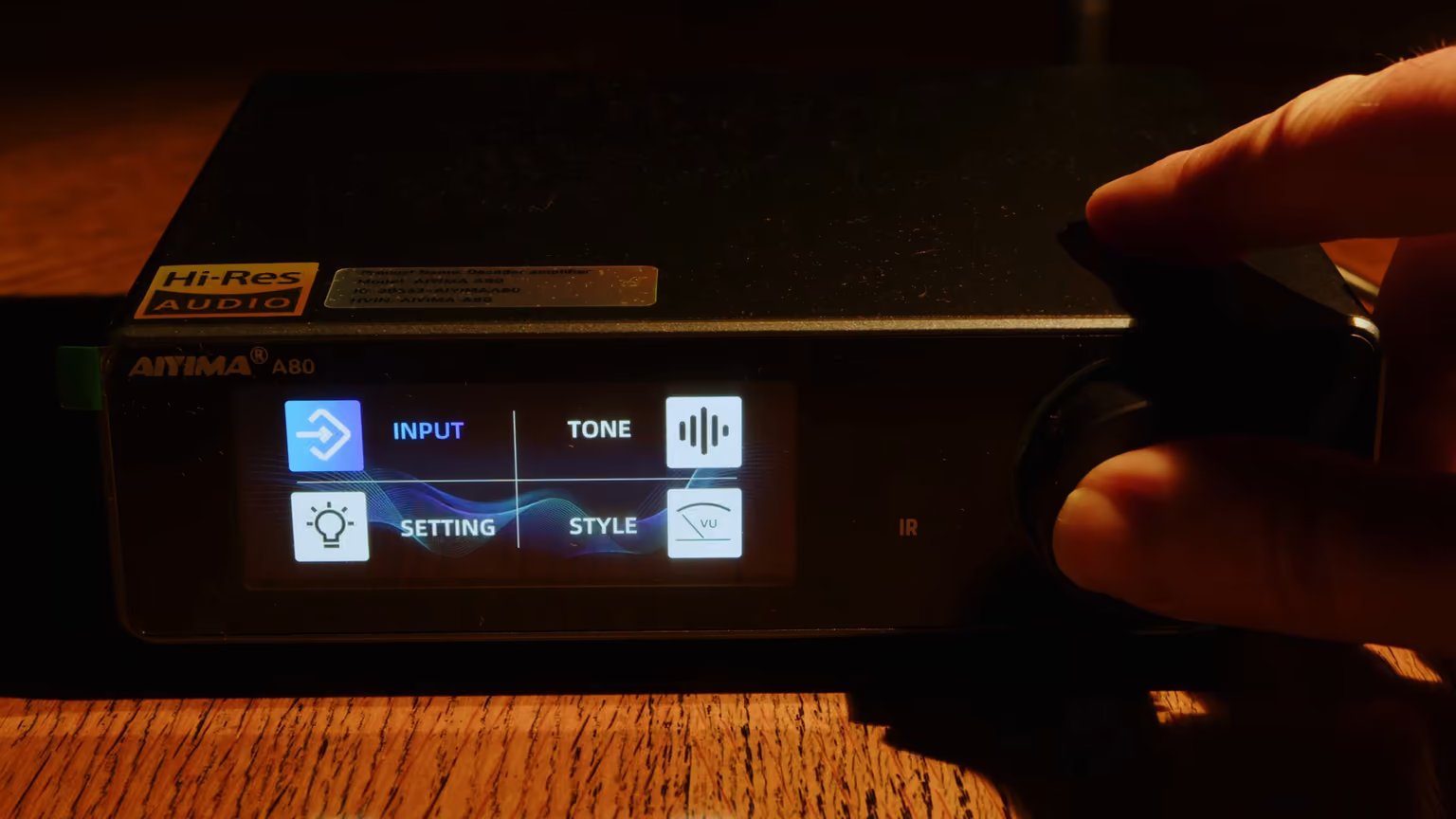 (view larger)
In the menu, you first choose the audio input: Bluetooth, USB-C, optical, coaxial, TRS or RCA. Then you can shape the tonality of the sound with the treble and bass controls, and adjust your settings. Finally, you can choose between four VU meter styles. It's as easy as it can be.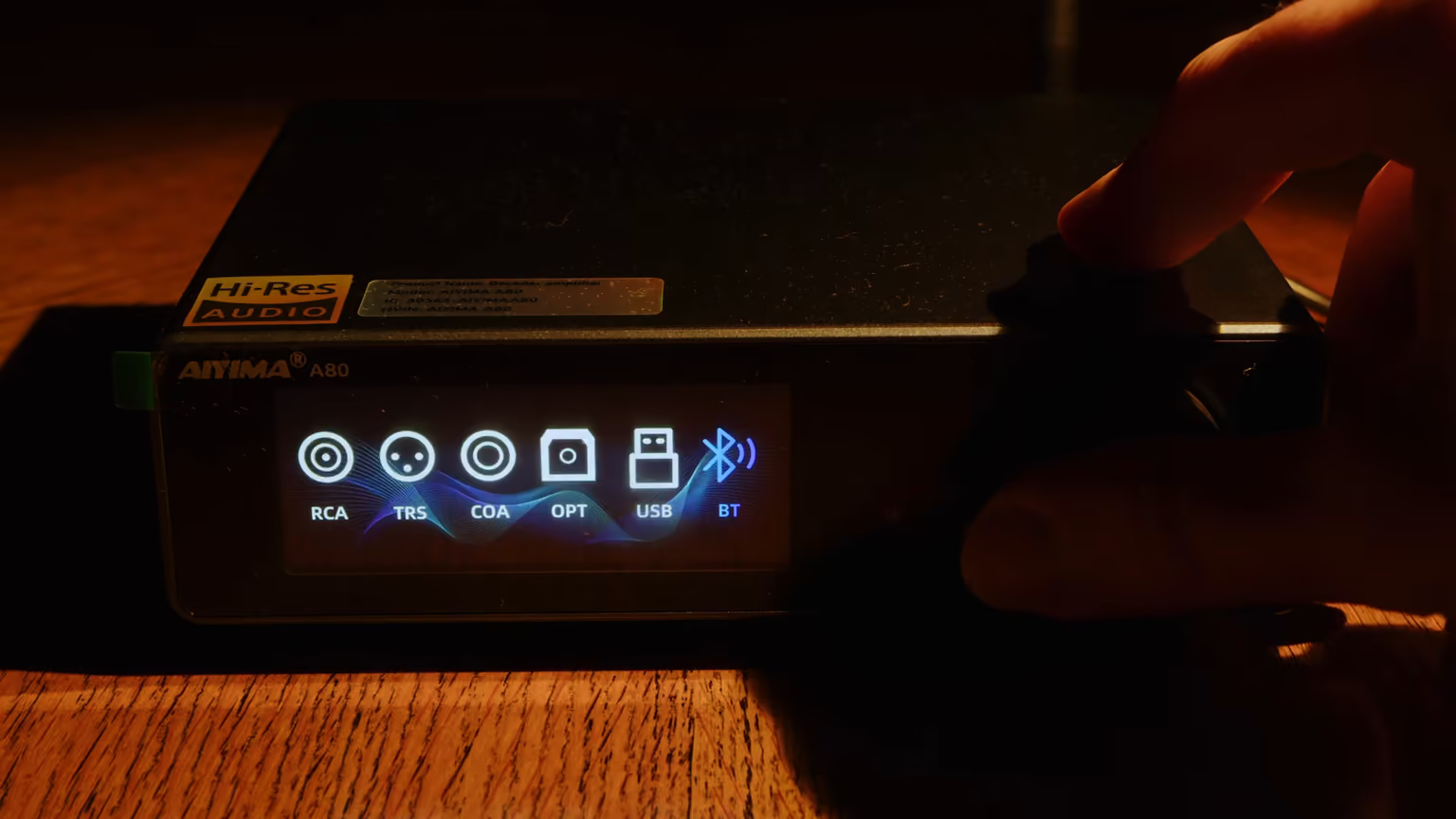 (view larger)
So this tiny integrated amplifier seems to do it all. It's impressive on paper, but the real question is how it sounds.
Sound quality comes close to a $2,000 tube hybrid
To find out, I listened for differences between the Heaven 11 Billie MkII and the AIYIMA A80 over five tracks, and they were really, really slim. In the room, the differences are there, but they're not that obvious. Both are Class D integrated amplifiers, but the Billie has tubes in its preamp stage, running in Class A, which tint the sound a little, though very subtly.
So, at ten times the price, is my reference system worth it? Well, it depends. First, it wasn't connected to a subwoofer, and a subwoofer really makes the Billie MkII shine. Second, the result was so close that I wanted to measure it.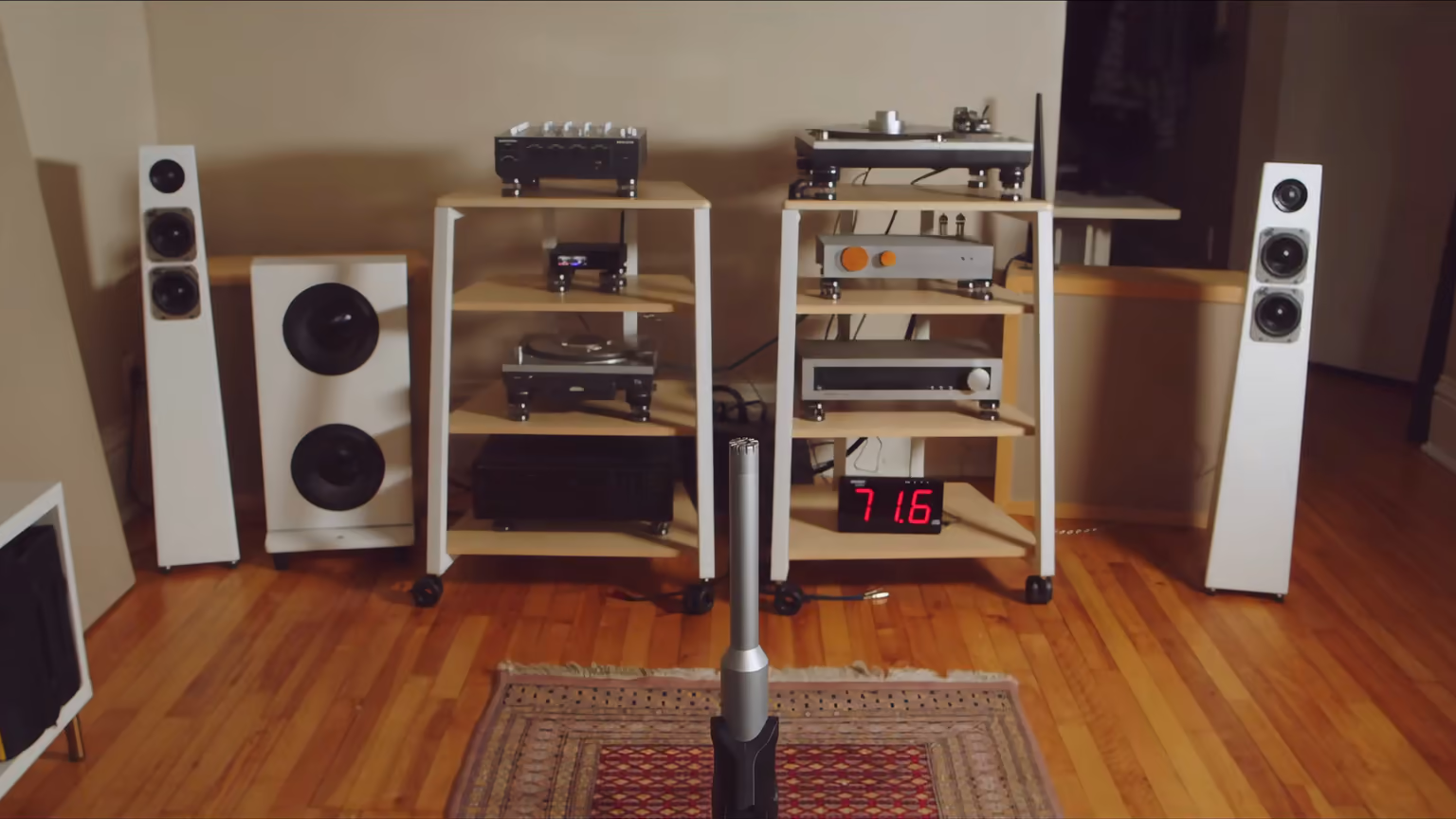 (view larger)
Frequency response measurements barely differ
I measured the frequency response of both amplifiers in my room, with REW and a measurement microphone. Comparing the two, the Billie MkII has more sub-bass, up to 60 Hz, but the A80 has more prominent bass from 60 to 400 Hz. Then, from 400 Hz to 10 kHz, the Billie MkII performs better. But the differences are subtle, it must be said.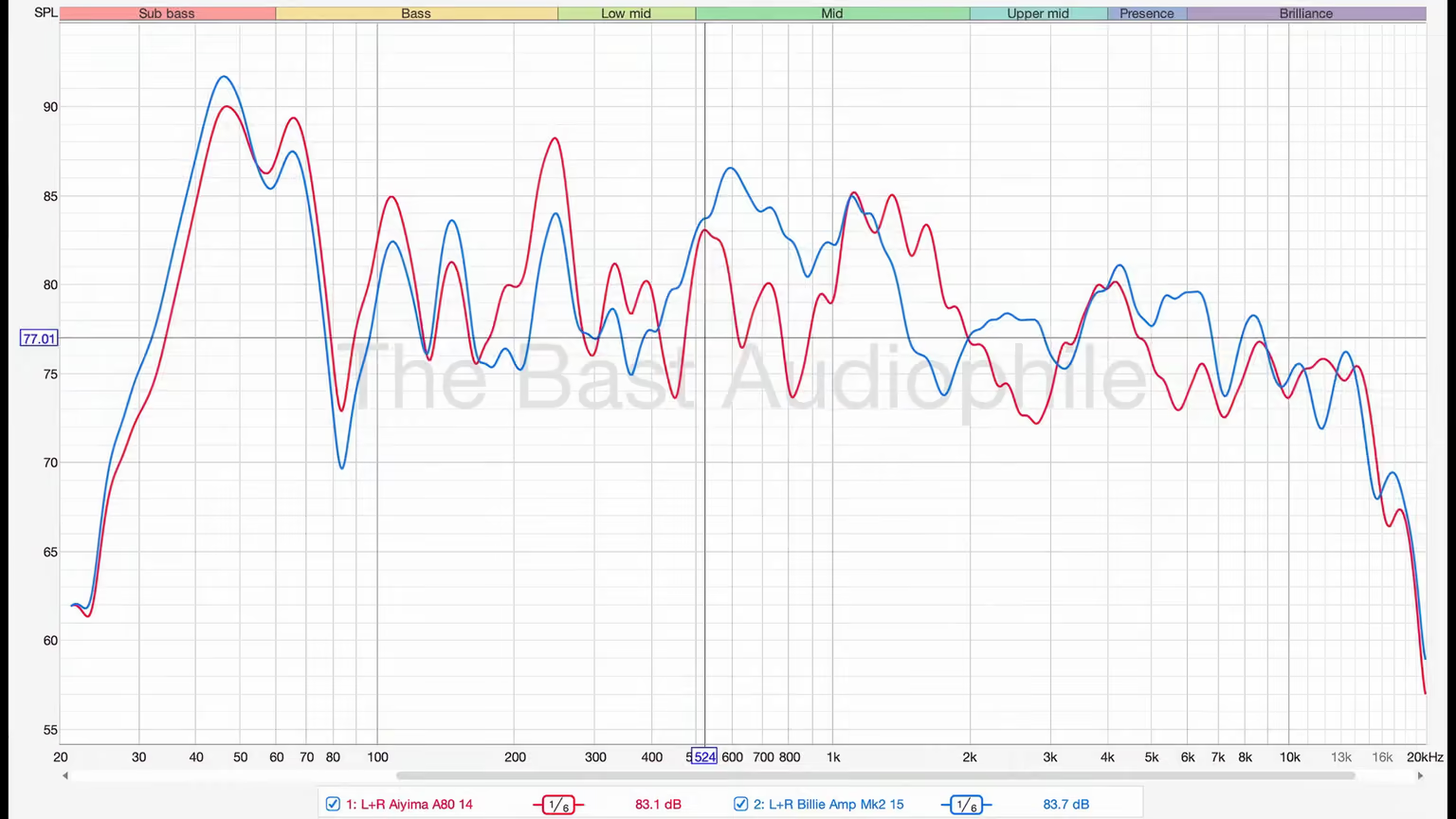 (view larger)
Is the AIYIMA A80 worth it at $200?
In conclusion, the AIYIMA A80 is very surprising for the price. For about $200, you get an amplifier that can compete with higher-grade amplifiers. I would still say that in the room the Billie MkII shines: it was a little fuller, more pleasant and more alive. But for the price, the A80 can challenge some people's decision.
So I'm confident recommending this amplifier for the price, the ease of use, the usability and the quality of sound. It's very, very surprising. And again, you can connect your TV, your computer, your smartphone, your tablet or any other audio device to it.
Watch the video review
Subscribe on YouTube (opens in new tab)
Prefer to read? The written review above covers everything in the video.
- 0:00 A $200 Amp vs a $2,000 Reference - What Is Being Tested (opens in new tab)
- 1:20 Specs & What's in the Box - TPA3255, 300 W at 4 Ohms, 0.006% THD, Remote, Bluetooth Antenna (opens in new tab)
- 2:24 Build & User Experience - Lightweight Chassis, Volume Knob Feel (opens in new tab)
- 3:01 Inputs & Flexibility - Preamp, Power Amp, TV, PC, Phone, No Phono Stage (opens in new tab)
- 3:28 Menu, Tone Controls & VU Meters - One Knob, Bass & Treble, Four Meter Styles (opens in new tab)
- 4:25 ModMic Wireless by Antlion Audio (opens in new tab)
- 5:26 Sound Test - Billie Amp MkII vs Aiyima A80, 5 Tracks (opens in new tab)
- 6:40 Listening Impressions - Tube Preamp vs Pure Class D, How Close Are They? (opens in new tab)
- 7:29 Frequency Response Measurements (REW) - Sub-Bass, 60-400 Hz, 400 Hz-10 kHz (opens in new tab)
- 7:51 Verdict - Is the Aiyima A80 Worth It? (opens in new tab)
Common questions about the A80
Is the AIYIMA A80 worth $200?
On a tight budget, it's an easy one to recommend. It scored 7.8/10, Recommended: $200 buys a Class D integrated amp rated at 300 W per channel into 4 Ω, six inputs including Bluetooth and USB-C, bass and treble controls and a remote, and its sound came very close to the Heaven 11 Billie MkII, an amplifier costing about ten times as much. The trade-offs are a light chassis that stiff cables can shift, a knob that doesn't feel very solid and no phono input.
Who should buy the AIYIMA A80?
Anyone on a tight budget who wants one small box to drive a pair of passive speakers from a TV, a computer, a phone, a tablet or a streamer. It also works as a preamp or a power amp in a bigger system. Look elsewhere if you play vinyl and don't want to add a phono preamp, or if you want a heavy chassis and a knob that feels solid: the A80 is light enough for its cables to move it.
What alternatives to the AIYIMA A80 have been tested?
No comparison page covers it. Nothing else in the category lists within the same price bracket; nearest on score: the Tonewinner AD-2PRO+ at 8.8/10 and the Tonewinner AD-1PA+ at 9.0/10.
How does the AIYIMA A80 compare with the Heaven 11 Billie MkII?
Closer than the price gap suggests. Over five tracks the differences were slim, and even in the room they weren't obvious. The Billie MkII, a Class D integrated with a Class A tube preamp stage, still sounded a little fuller, more pleasant and more alive, and a subwoofer, which wasn't used in this comparison, brings out more of it. Measured in the room, the Billie had more sub-bass up to 60 Hz, the A80 more prominent bass from 60 to 400 Hz, and the Billie the better result from 400 Hz to 10 kHz, all by small margins.
Can the AIYIMA A80 be used as a preamp?
Yes. Besides driving speakers as an integrated amp, it can work as a preamp in front of a separate power amp, or as a power amp behind another preamp, so it can stay in a system that grows. Its subwoofer output is a 3.5 mm jack, so connecting a subwoofer takes a cable with a 3.5 mm plug.
Can the AIYIMA A80 drive 4 Ω speakers?
AIYIMA rates it for speakers from 4 to 8 Ω and quotes its maximum output of 300 W per channel into 4 Ω, which is a lot of power for a box this small. How much of that rated power your own speakers need depends on their sensitivity, your distance from them and how loud you listen.
Does the AIYIMA A80 have a phono input?
No. A turntable can't plug straight into the A80: it needs an external phono preamp, which then feeds one of the A80's analog inputs. Every other common source connects directly, over Bluetooth, USB-C, optical, coaxial, RCA or TRS, which covers TVs, computers, phones, tablets and streamers.
How easy is the AIYIMA A80 to use?
Very easy. One knob and a small screen do everything: click the knob and turn it to move through the menu, where you choose the input, adjust bass and treble, change settings and pick one of four VU meter styles. There's no learning curve, and a remote is included.
Sources
- IEC 60268-3: Amplifiers
Standard International Electrotechnical Commission Paid full text
How the rated output power, distortion and signal-to-noise figures that amplifier makers publish are defined. The figures quoted here are published ones; nothing is bench-measured in-house.
- Bluetooth A2DP 1.4: Advanced Audio Distribution Profile
Standard Bluetooth Special Interest Group
The Bluetooth profile that defines stereo audio streaming, with SBC as its baseline codec.
- Sakamoto et al. (2014): Experimental study on hearing thresholds for low-frequency pure tones
Paper Acoustical Society of Japan
Measured hearing thresholds for low-frequency tones: why the bottom octave needs far more level to be heard than the midrange.
Discussed in Frequency response measurements barely differ
Alternatives to the A80
All 4 speaker amp and preamp reviewsNearest we have reviewed
- Tonewinner AD-2PRO+ $2,500 more, scores 1.0 higher 8.8