Monosaudio AS-EU08 + SP-USB Review: A Darker Background Without PS Audio Money
An affordable alternative to PS Audio and AudioQuest. The AS-EU08 paired with the SP-USB delivers a darker background, lower noise floor, and a more refined sound.
higher than 34% of everything we have tested
- Standout
- Outstanding build
- Watch out for
- Total cost climbs once you start adding both pieces
- Closest rival
- Taga Harmony PF-1000LPS: $250 more, a near-tie on score.
Is it for you?
- You can hear hum or hash between tracks and want the fault fixed at the source
- You have a rack or a deep desk to give it
- Your system is already silent at the listening seat, where this is insurance rather than an upgrade
- It has to share a small desk, or move
Pick #8 of 13 in our Best Hi-Fi Accessories guide.
In a world where high-end power filters, conditioners, and regenerators like PS Audio or AudioQuest can be costly, you might wonder if there is a more affordable way to improve the quality of the power supply going into your audio devices.
Many inexpensive devices claim to do this, but are they effective and a good idea to implement in your system? Let's investigate.
I'll present two solutions you might find helpful.
AS-EU08 Power Conditioner: Eight Outlets, a Darker Background
The first is the AS-EU08 Power Conditioner, which comes at roughly $200. It's not the cheapest option to simply get more power outlets out of a single one, but it does that much more, which in my opinion makes it at least worth considering.
The first thing we notice immediately after picking it up is the weight and the build quality. It's outstanding. It's made out of 3 solid pieces of metal and weighs about 3 kilograms. The solid metal enclosure effectively works like shielding, greatly reducing the noise getting in and out of it.
There are 8 pure copper European Schuko power sockets on top, each separated by about a centimeter of space to make plugging in larger barrel plugs easier - or in some cases, possible at all. Next to the outlets, there is a fancy power switch with a red LED that illuminates when the power is on and turns off when either the switch is turned off or the power strip is unplugged. The power switch feels very tactile and is of a high-quality standard.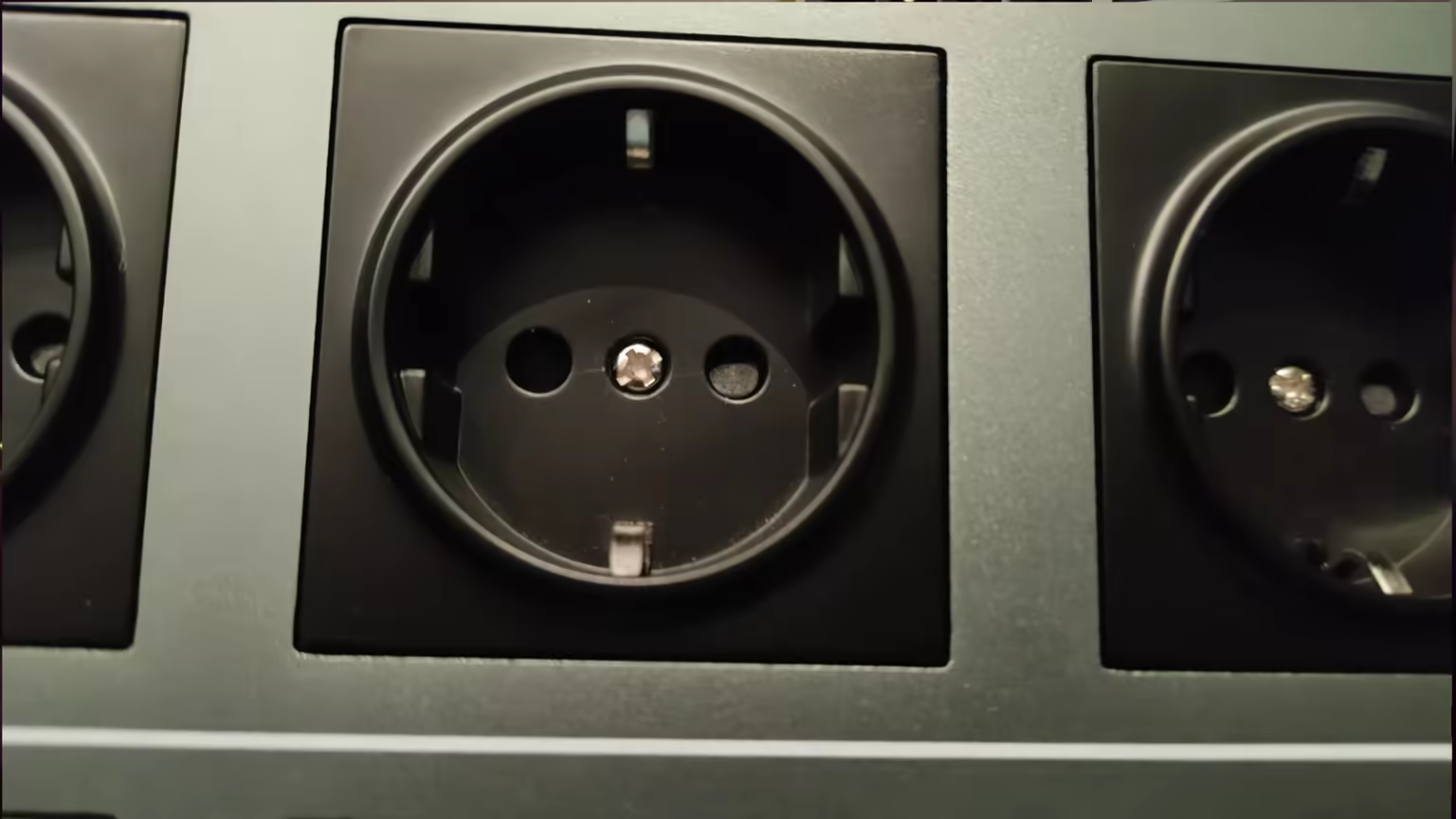 (view larger)
On the side we've got even more audiophile goodies. Of course, there's a breaker, but in addition to that, there's a ground connector that can take a bare wire, a banana plug, or a spade connector. I didn't end up using it, but I did check if the terminal works properly. I was pleasantly surprised to find out that it makes good contact with banana plugs especially, without causing any damage to them due to excessive clamping.
Speaking about contact - making good contact with a power cable going into the device is equally as important as making good contact with the cables going out of it, as this power filter lets you use your own power cables. I appreciate it a lot. I also appreciate the power connector used on it. It's an audio-grade Furutech, model FI-06, in what seems to me like a rhodium-plated version. It securely holds my HiFi power cables without squeezing them too tightly, but ensuring a good connection.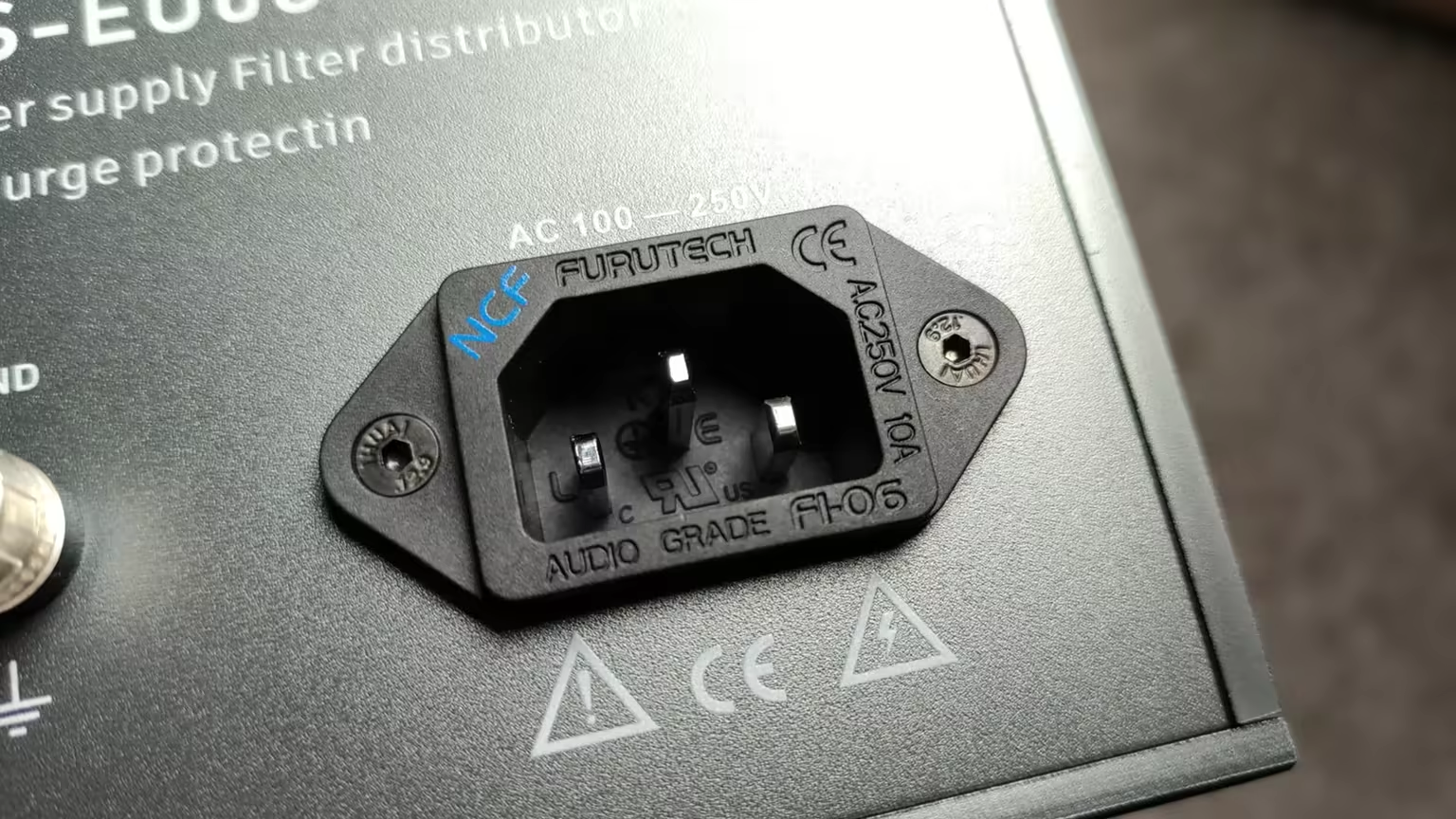 (view larger)
For the internal wiring, rather than using some thin and unknown material options, they used 4mm² PVC-insulated pure copper cables and made them as short as possible to reduce resistance. Inside there's an array of blue capacitors made for EMI filtering, accompanied by a metallized paper safety capacitor.
It may look good on paper, but you're probably as curious as I am if it had any impact on the sound quality.
In the past, I've experienced instances where using low-quality power conditioners resulted in a worse sound - it was more restricted and less dynamic. However, with this product, it seems to be the opposite. After plugging in my integrated amplifier to this power conditioner, the sound seemed a bit more refined, with a darker background, and more dynamics.
Why would that be, you might ask? I assume that the blackness of the background comes from a lower noise floor or the amount of noise getting into the components. The same goes for the dynamics, as it allows for a higher difference between the lowest level signal (in this case, noise) and the highest level signal (the dynamic peaks). The slight improvement in refinement likely comes from the quality of the parts used, as even small things can have an impact on the sound. The sound path starts at the AC stage and then gets converted into other types of energy. So essentially the sound you're getting goes through all of these internal parts.
If it's not enough, this power conditioner additionally serves the function of protecting your expensive gear against power surges, lightning strikes, or any other similar accidents that could otherwise destroy your equipment.
SP-USB Data + Power Filter: Blacker Background, No Glare
One thing is AC noise that can be minimized by a power filter, while another is DC noise generated by low-quality switch-mode power supplies and imperfections in the USB data bus. These issues are more complex in their nature and require more specialized tools to reduce their impact on the audio quality. I've got a device which aims to do precisely that.
The SP-USB is a small yet weighty rectangular aluminum box that comes in black or silver. I have the silver one. On the front, there's a nice front plate with a cutout to fit a blue LED digital display that acts as a voltage indicator.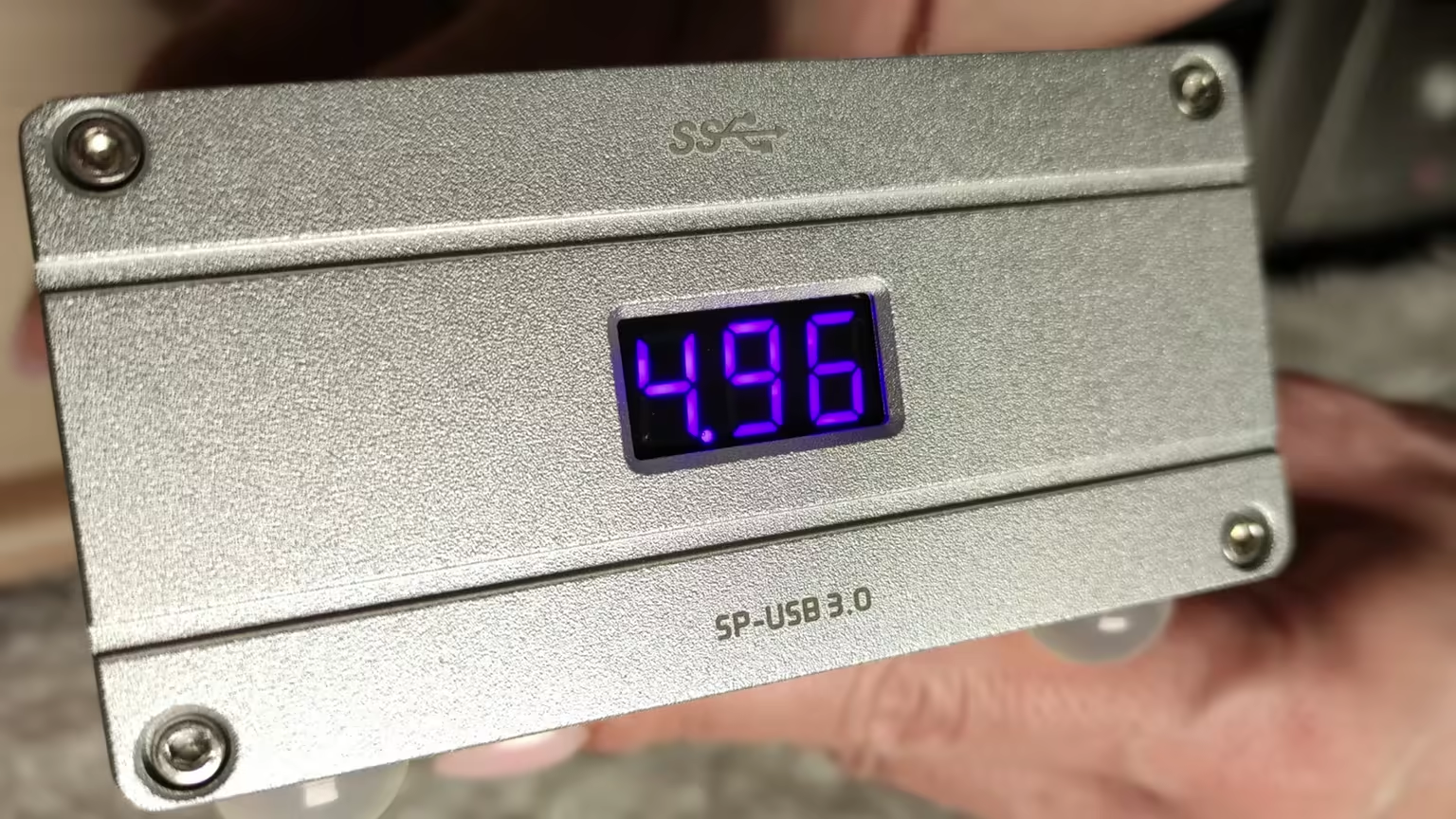 (view larger)
All of the I/O is located on the rear of the unit, which is the perfect position to place it, in my opinion. It makes cable positioning, especially with thick audio-grade ones, much easier and cleaner. There's a USB Type-B input, but not in a regular form. It's a 3.0 port that can support higher speeds if needed, and despite its different shape, it's backward compatible with the more popular USB 2.0 standard. There are 2 USB outputs - one carries both data and power, while the other is only for power and cuts out USB data.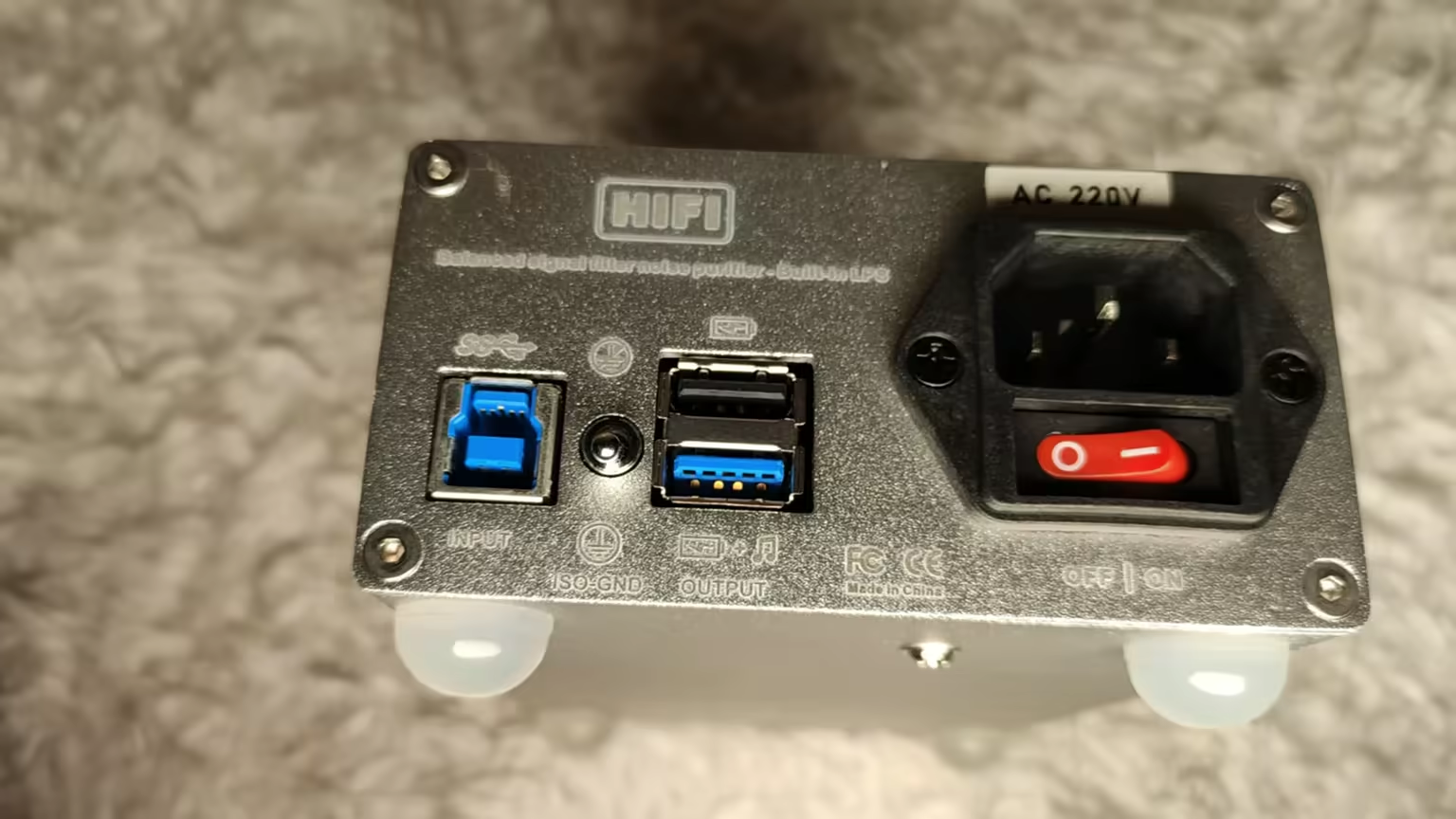 (view larger)
There's a unique switch that has a satisfying tactile feel when pressed. Its primary function is to control how the grounding process occurs. The switch can either connect the ground to the device's chassis or disconnect it when it's in the top position. It's usually better to keep the switch in the bottom position - leave it on - but feel free to experiment with both options to determine which one works better for you.
There is a standard power socket that can fit even larger power cables, accompanied by a small power switch. There are four rubber feet on the bottom in the corners of the device, which keep it firmly in place, preventing it from moving even when a heavy cable is hanging from it.
Now let's get to the internals. It uses a built-in low-noise linear stabilized power supply to replace the high-noise switch-mode power supply from the PC, so it essentially cuts out the power from your PC and replaces it with clean, stabilized 5V and up to 3A of power generated by a hermetic toroidal transformer. Moreover, it uses a high-speed op-amp and a MOS output stage to reduce and regulate the voltage even further.
For the data line, the data coming in and out goes through Foxconn's USB terminals. Then it goes through a balanced noise elimination circuit, working together with HiFi filtering electrolytic capacitors and EMI filter inductors.
Regarding the sound quality improvements, quite a few things got better, which was surprising and proves digital isn't always perfect.
First of all, a blacker background was noticeable when taking it in and out of the system. It's definitely not a bad feature to have, as it makes for a much more enjoyable experience once you solve all your noise-related issues.
Then, the biggest improvement I heard was the lack of high-frequency glare that I didn't even know I had to begin with. It made the upper range cleaner and more natural, although it didn't sacrifice any details. Perhaps it made the sound ever so slightly more detailed.
Watch the video review
Subscribe on YouTube (opens in new tab)Prefer to read? The written review above covers everything in the video.
- 0:00 Should You Buy An Expensive Audio-Grade Power Conditioner? (opens in new tab)
- 0:32 Budget 8-Way HiFi Power Filter (opens in new tab)
- 0:47 Build Quality & Design (Weight, Aluminum Chassis, Shielding, Power Switch) (opens in new tab)
- 1:35 Audiophile Features (Ground Connector, Furutech Audio Grade Plug) (opens in new tab)
- 2:35 Internal Circuit Parts (Pure Copper Internal Wiring, EMI Filtering Capacitors) (opens in new tab)
- 3:12 Can HiFi Power Filtering Improve The Sound Quality Of Your System? (Sound Stage, Dynamics, Realism) (opens in new tab)
- 4:20 How To Reduce The USB Power & Data Noise? (SP-USB Linear PSU + Noise Purifier) (opens in new tab)
- 5:00 I/O (USB-B, USB-A, Power Plug, Ground) (opens in new tab)
- 6:10 Internal Parts (Hermetic Toroidal Transformer, OP AMP, MOS Output, Electrolytic Capacitor) (opens in new tab)
- 6:54 Sound Quality Improvements - Why Digital Isn't Always Perfect? (opens in new tab)
Common questions about the AS-EU08 + SP-USB
Is the Monosaudio AS-EU08 + SP-USB worth it?
Yes, for the right listener - 8.0/10, Recommended, higher than 34% of everything we have tested, against a catalogue median of 8.1. On value it rates strong: above average for the price in accessories. Price: From $200.
Who should buy the Monosaudio AS-EU08 + SP-USB, and who should skip it?
Buy it if you can hear hum or hash between tracks and want the fault fixed at the source, and you have a rack or a deep desk to give it. Skip it if your system is already silent at the listening seat, where this is insurance rather than an upgrade, and it has to share a small desk, or move.
What else have you tested that is close to the Monosaudio AS-EU08 + SP-USB?
No matchup page yet, and no close price match in the catalogue either. The nearest things we have scored in the same category: the Taga Harmony PF-1000LPS at 8.0/10, the DH Labs, iFi, Vera-Fi HiFi Tweaks Roundup at 7.8/10, and the Synergistic Research PowerCell 14 at 9.2/10.
Can a cheap power conditioner make things worse?
Yes, and I have had exactly that happen - low-quality conditioners in the past gave me a more restricted, less dynamic sound. That is the real risk with this category and it is why the cheapest option is not automatically the safe one. With the AS-EU08 it went the other way: plugging my integrated amplifier into it gave a more refined sound, a darker background and more dynamics.
Why would a power conditioner increase dynamics?
Because dynamic range is the gap between the quietest signal and the loudest, and the quietest signal here is noise. Lower the noise floor and that gap grows. The darker background comes from the same place - less noise getting into the components. The refinement is probably down to component quality: the audio path starts at the AC stage before it becomes anything else, so it passes through every one of these internal parts.
Can you use your own power cable with the AS-EU08?
Yes, and I appreciate that more than most features. Good contact into the device matters as much as good contact out of it, and the inlet is an audio-grade Furutech FI-06 in what looks to me like a rhodium-plated version - it holds a hi-fi power cable securely without over-squeezing. The eight pure copper Schuko sockets on top are spaced about a centimetre apart, which makes large barrel plugs possible rather than merely awkward.
What does the SP-USB actually filter?
Two different problems that a power conditioner cannot touch. It replaces the high-noise switch-mode supply coming from your PC with clean, stabilised 5V at up to 3A from a hermetic toroidal transformer, further regulated through a high-speed op-amp and a MOS output stage. Separately, the data line runs through Foxconn USB terminals into a balanced noise elimination circuit with hi-fi filtering electrolytics and EMI filter inductors.
How should you set the SP-USB's ground switch?
Usually down - leave it on, connecting ground to the chassis - and then experiment, because which position works better genuinely depends on your system. The switch itself is satisfyingly tactile, and the top position disconnects the ground instead. There is no universal right answer here, which is why it is a switch and not a solder joint. Try both and keep whichever gives you the quieter background.
What did the SP-USB change most?
The loss of a high-frequency glare I did not know I had. That was the biggest improvement - the upper range came out cleaner and more natural without sacrificing any detail, and perhaps ended up very slightly more detailed. A blacker background was noticeable too, taking the unit in and out of the system. It is a useful reminder that digital is not automatically perfect.
Why are there two USB outputs on the SP-USB?
One carries both data and power; the other carries power only and cuts the data line. That gives you a choice about how a downstream device is fed, which matters when a DAC would rather take its power from a clean local supply than from the computer. The input is a USB Type-B 3.0 port, which supports higher speeds if you need them and stays backward compatible with ordinary USB 2.0 despite the different shape.