Digital-to-analog converter reviews across desktop and portable, R-2R ladder and delta-sigma topologies, NOS and oversampling implementations. Tested through balanced and single-ended outputs, USB and S/PDIF inputs, with the same chain and the same reference recordings every time so differences are about the DAC, not the system.
8 reviews published so far, scored against the same reference list.
Filter by driver / topology, price and connectivity. Pick within a row to widen; combine rows to narrow. Only options the catalogue actually covers are shown.
Driver / topology
Price
Connectivity
DACsDA 256
8.2
Recommended
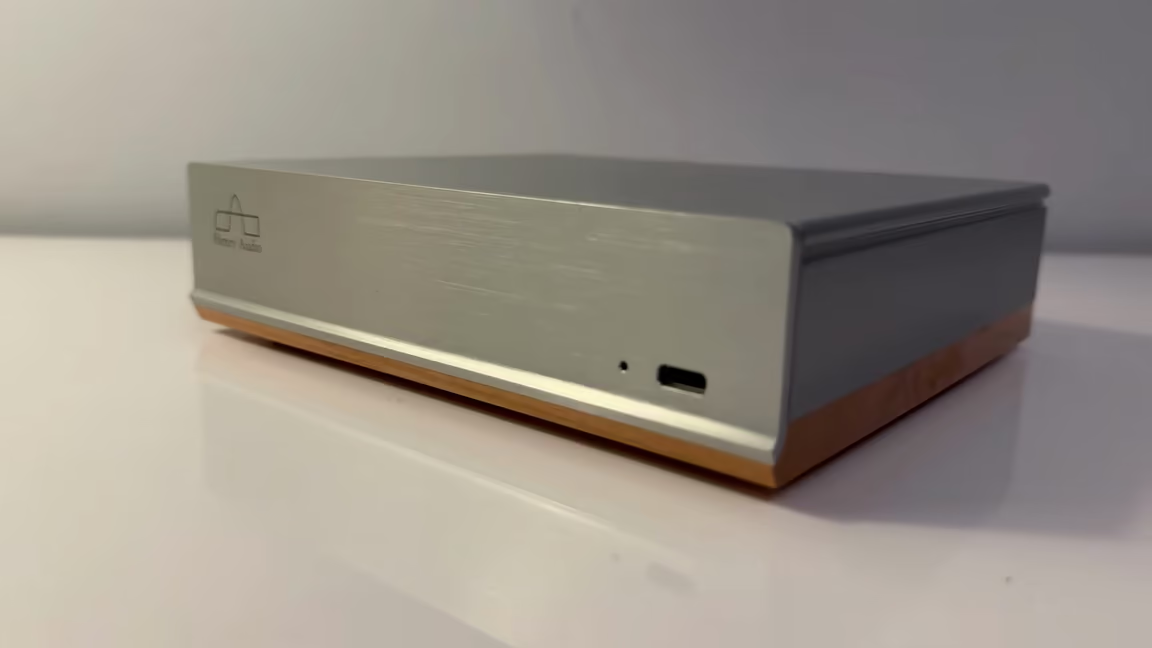
Henry Audio DA 256 Review: A €1,600 Open-Source DAC That Skips XLR on Purpose
Twenty years of one engineer's work in a €1,600 box: a published schematic and firmware, reclocked coax and optical, RCA only, PCM to 24-bit/192 kHz, and every omission deliberate.
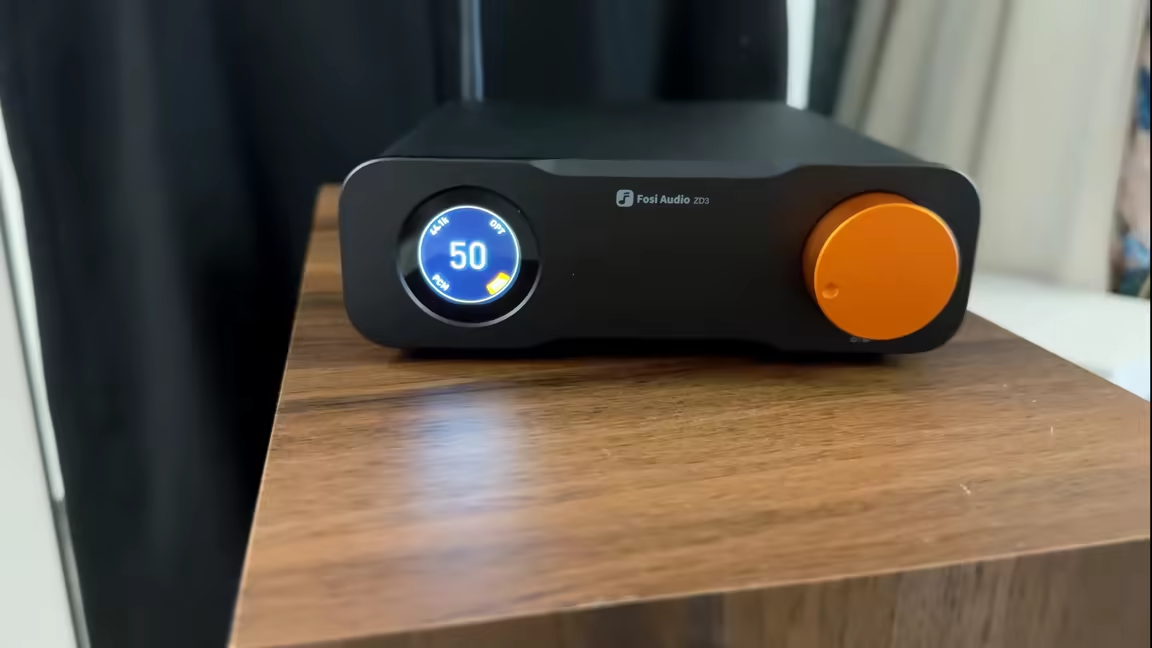
Fosi Audio ZD3 Review: A $150 DAC With Swappable Op-Amps
A $150 desktop DAC that punches above its price - swappable op-amps, balanced XLR and RCA, HDMI ARC, Bluetooth aptX HD, a 126 dB SNR, and a clean, slightly bright sound.
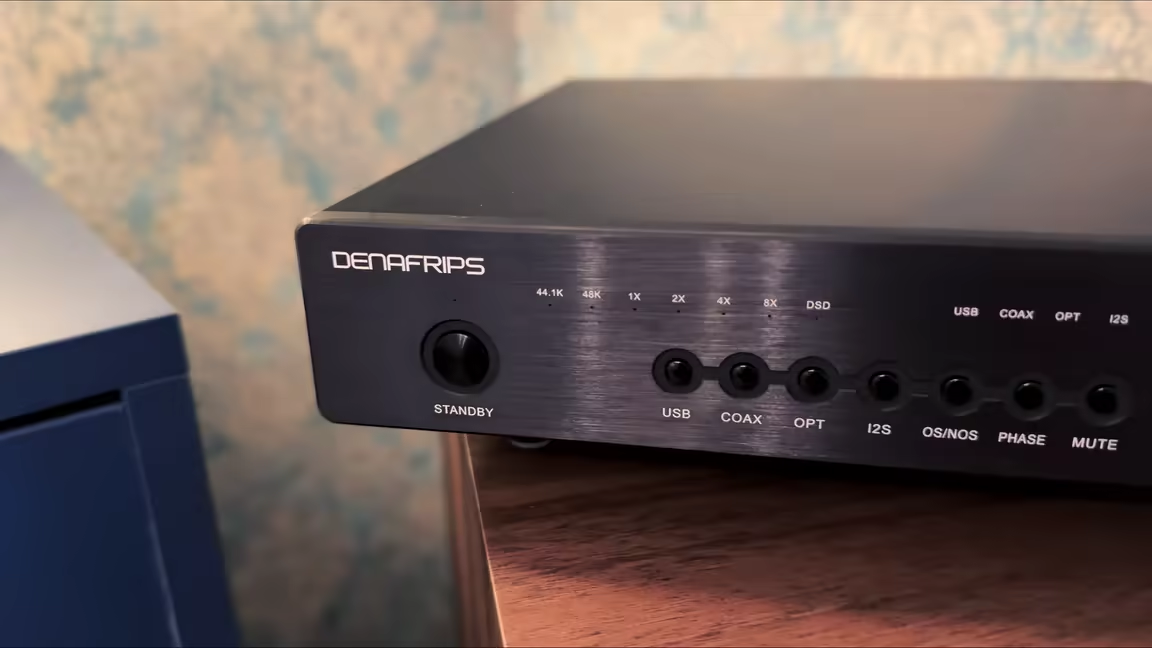
Denafrips Enyo 15th Review: A True Balanced R2R DAC at $699
A $700 true balanced R2R ladder DAC with an O-Core transformer, I²S input, and a natural, musical sound that easily competes with delta-sigma converters costing far more.
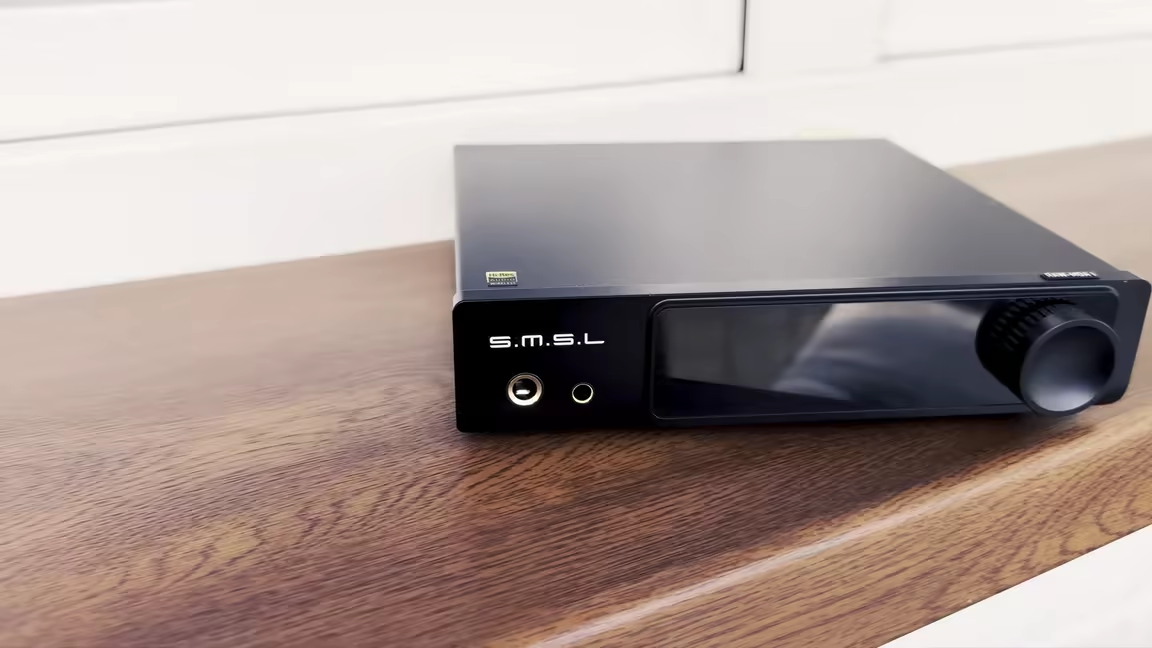
SMSL RAW-MDA1 Review: The ESS DAC That Sounds Different
A $240 balanced DAC/headphone amp with dual ES9039Q2M chips that doesn't sound like every other ESS box - warmer tonality, forward mids, and a flexible soundstage.
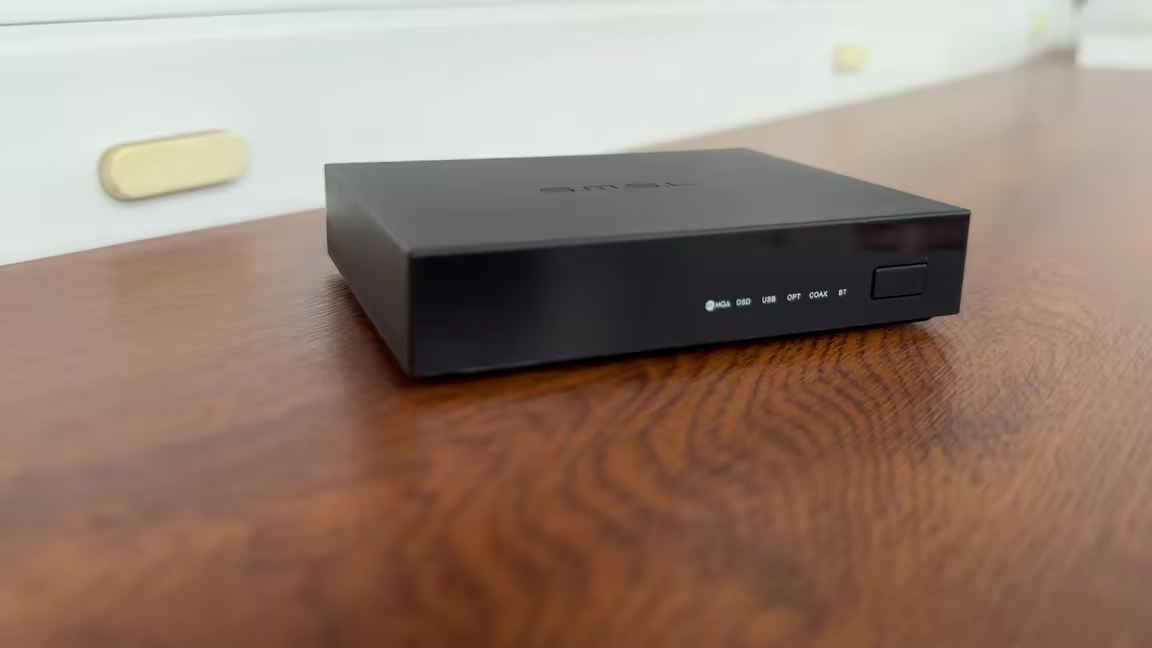
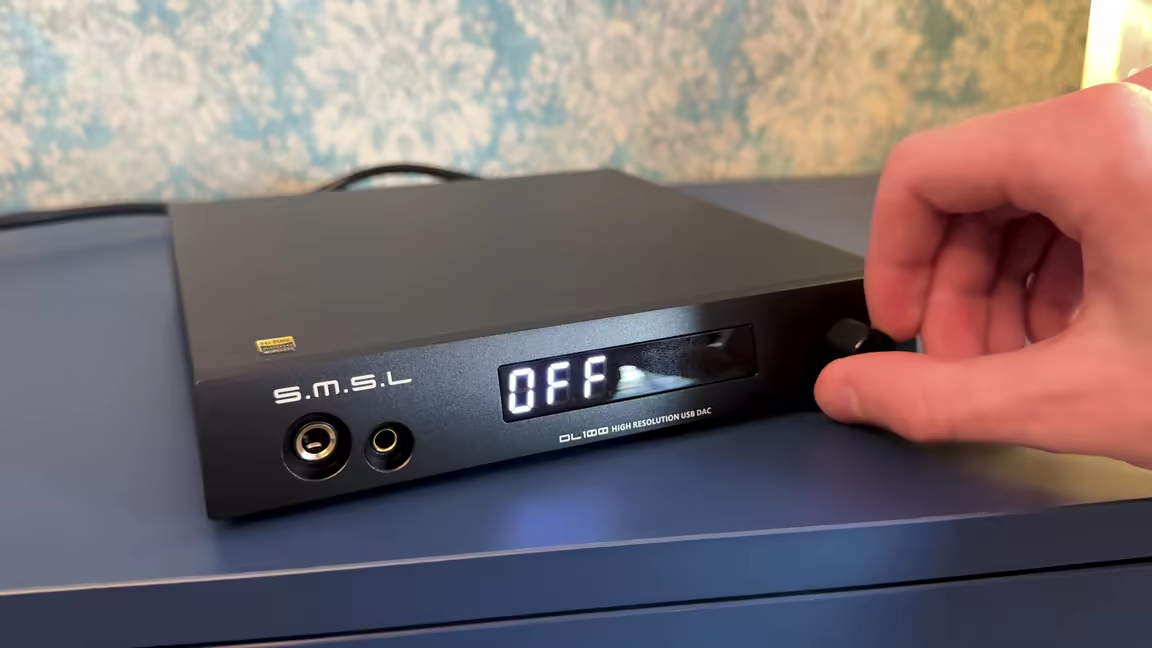
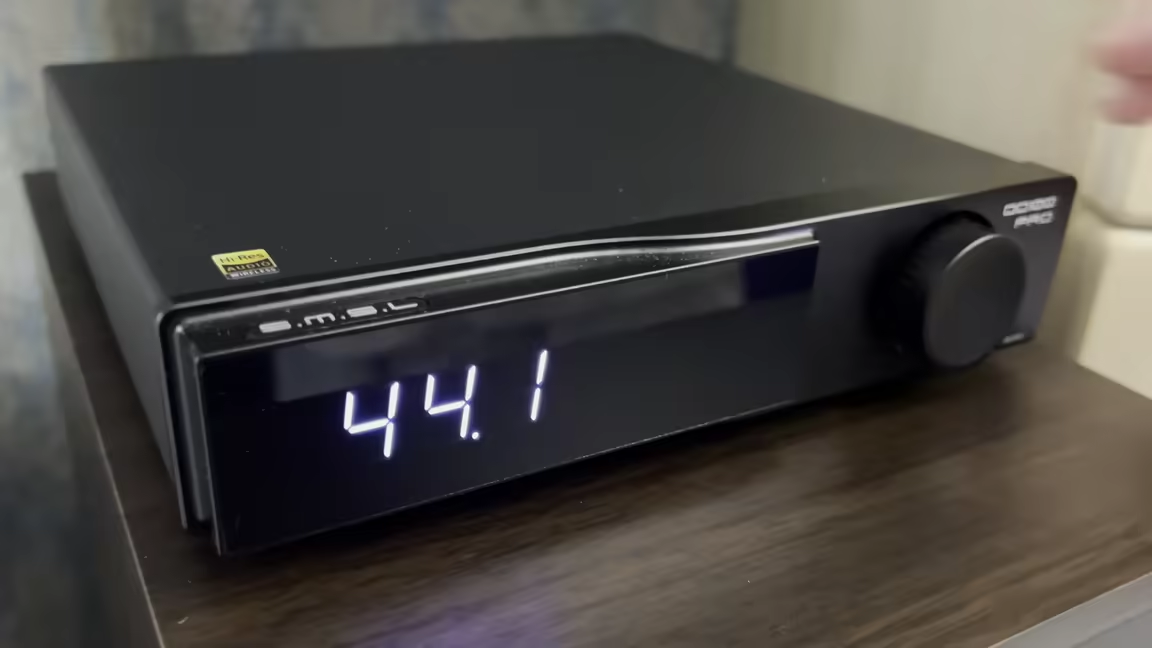
SMSL DO100 PRO Review: A $219 DAC With a Tinkerer's Switch
A balanced lower-mid-range DAC with dual ESS chips, MQA, DSD512, and a tinker-friendly DPLL value control - solid sound that doesn't break records but offers great value.
SMSL PS100 Review: A $29 'Audiophile' DAC - Can't Be Good, Right?
Below $30 for a DAC. It's not a measurement monster and the sound doesn't shine in any aspect, but it does what it has to do - and frees up your budget for a better amp.
Curated shortlists and free calculators to take you from browsing the list above to a decision you can act on.
Buying guideBest DACsEvery DAC we've had on the chain, ranked by score. Desktop, balanced, R-2R and delta-sigma, from $29 to €1,600, tested for weeks each and never sponsored.Read the guide
TestABX Blind TestSix built-in synthetic test pairs, no upload needed - or drag in two files of your own. Level-matched and sample-accurate, with a shareable certificate.Open the tool
Listening testSound Signature QuizA blind A/B preference test over royalty-free music. Pick by ear between more or less bass, mids, treble, reverb, dynamics, even-harmonic warmth, and stereo width - then get your signature in plain English.Open the tool
FinderHelp Me Choose: Audio Gear Finder QuizAnswer four quick questions - category, budget, sound preference, use case - for a ranked shortlist pulled straight from our scored reviews. Then see every product mapped by price against score, your picks highlighted, every dot linking to its review.Open the tool
Head-to-head comparisons for DACs
The DACs we get asked about most, compared on one page - scores, sound signature, and which one to actually buy.
Every DAC review on this page came from a fixed test chain: the same Hermes 12th digital transport feeding bit-perfect audio to the DAC under review, then into the same Denafrips Hades 12th amplifier, with the in-house Denafrips Enyo 15th sitting as the R-2R reference. USB, S/PDIF, AES, and I²S inputs are each tested individually when present; balanced and single-ended outputs are tested into both balanced and single-ended amplifier inputs.
Whether the DAC presents the signal neutrally or imposes a topology-driven colour. Both can be valid; what we score is whether the character is consistent and whether the recording shines through it.
Resolution and microdetail
How much of the recording's low-level information survives the conversion. Listen for room tone, reverb tails, pick noise on guitar, breath sounds on vocals.
Measurement and noise floor
THD+N, SINAD, output noise, channel matching. Modern delta-sigma DACs are transparently low on these; R-2R designs trade some measurement performance for a different presentation.
Connectivity and stability
Input handshaking (USB lock, S/PDIF re-clocking), DSD support, MQA decoding if applicable, output stage flexibility, gain options, software stability for streaming DACs.
Value at the tier
Performance against the reference list at the price bracket. A $500 DAC that sits within 0.3 points of a $1,500 reference is doing remarkable work; we say so when it is.
How to read the scores: DAC scoring is conservative on purpose. Above the budget tier, audible differences between competent DACs are smaller than they are between headphones or speakers, and the rubric reflects that. A 9.0 DAC is doing something genuinely special: either measurement transparency at flagship level or a coherent voicing that earns its presence in the signal chain. An 8.0 is excellent; below 7.0 means there is a real, audible flaw.
Terms you will hit in the reviews
R-2R (ladder DAC)
A digital-to-analog converter built from a precision resistor ladder rather than a delta-sigma modulator. Often described as more "analog" sounding; can trade THD performance for a specific character.
Delta-sigma
The mainstream DAC topology, which uses a high-rate 1-bit modulator and aggressive filtering. Extremely low distortion and noise; the standard in commercial DACs from $100 to $10,000.
NOS (non-oversampling)
A DAC mode that skips upsampling and digital filtering, sending the native sample rate to the analog stage. Trades technical measurements for a different time-domain presentation.
I²S over HDMI
A direct digital-audio interface bypassing USB / S/PDIF, originally an internal chip-to-chip protocol. Used between high-end transports and DACs from Denafrips, Holo Audio, and others.
MQA
A controversial lossy-and-licensed format claiming hi-res fidelity. Some streaming services (Tidal) used it as a hi-res tier; coverage is shrinking and our scores never depend on it.
We do not score DACs by chip name, by spec-sheet SINAD alone, or by what the brand charges. The audible result through a real chain is the thing; everything upstream of that is just inputs to the verdict.
DACs reviews: common questions.
Buying advice, terminology, and how the DACs category is reviewed on The Audio Stuff.
Do DACs really make an audible difference?
Above the budget tier, yes, but the differences are subtler than headphones or speakers. Modern delta-sigma DACs from $200 up are transparently low in distortion. Above that, R-2R designs and high-end implementations bring tonality differences (sometimes warmer, sometimes more analog) that are real but small. Spend the headphone/speaker budget first.
R-2R vs delta-sigma DACs: what is the difference?
Delta-sigma uses a high-frequency 1-bit modulator and aggressive filtering; it is the standard chip approach with extremely low distortion and excellent measurements. R-2R (resistor ladder) reconstructs the signal directly from a network of precision resistors; the topology is older but offers a different, often described as more "natural" or "analog" presentation. Both can sound great; the implementation matters more than the topology.
Do I need a balanced DAC?
Only if your downstream amplifier accepts balanced (XLR) input and benefits from it. Balanced cables reject common-mode noise on long runs and can drive balanced amplifier topologies. For short runs (<2 m) into a single-ended amp, balanced output gives no audible benefit. Most desktop systems work fine with RCA.
What is the best USB DAC under $500?
Sort the DAC reviews by score and price. The top-scoring picks under $500 are highlighted with the "Highly Recommended" verdict. The category gets refreshed regularly as new pieces launch from SMSL, Topping, JDS Labs, Schiit, and the rest of the desktop DAC field.
Should I use the DAC in my computer or buy an external one?
Buy external. Internal computer DACs share board space with switching power supplies, USB controllers, and dozens of noise sources. Even a $150 external USB DAC measures and sounds substantially cleaner than a typical motherboard codec, and the gap widens with better headphones.
 DACs DA 256