Diora Acoustics Chors 5 Review: Speakers That Break the Rules
A 2-way closed-box floor-stander with ceramic-coated drivers, fast dynamic bass with no port, and uniquely smooth treble - one of the most distinct speakers in its class.
higher than 63% of everything we have tested
Value Steep. You are buying performance here, not value.
- Standout
- Closed-box floor-stander
- Watch out for
- Single pair of binding posts
- Closest rival
- Taga Harmony DIAMOND B-60 v.3: $1,400 less, scores 0.3 lower.
Is it for you?
- You want the balance to lean bright, with the detail pushed forward
- You're treble-sensitive
- $2,499/pair has to buy value as well as performance
Named Best Overall in our Best Speakers guide, ahead of 5 others.
Audiophiles often prefer large, three-way floor-standing speakers with bass reflex ports that enhance bass output. This setup has become the industry standard. However, there are various alternatives to consider. The Diora Acoustics Chors 5 moves away from traditional designs with its innovative approach to cabinet type, driver material, and technology.
Build Quality and Design: Compact, Clean, Gloss White
Those speakers are rather on the smaller side for floor-standing. They aren't particularly tall, deep, or wide, so positioning in a room is going to be made significantly easier. Technically it is just a rectangle with sliced-off corners to make it look more fun, but in reality, it is so much more.
The design choices made by Diora Acoustics contribute to a very clean and simple look. My unit has a beautiful gloss white finish, but there are other options available as well. You can even purchase additional front plates in different colors to change things up a bit.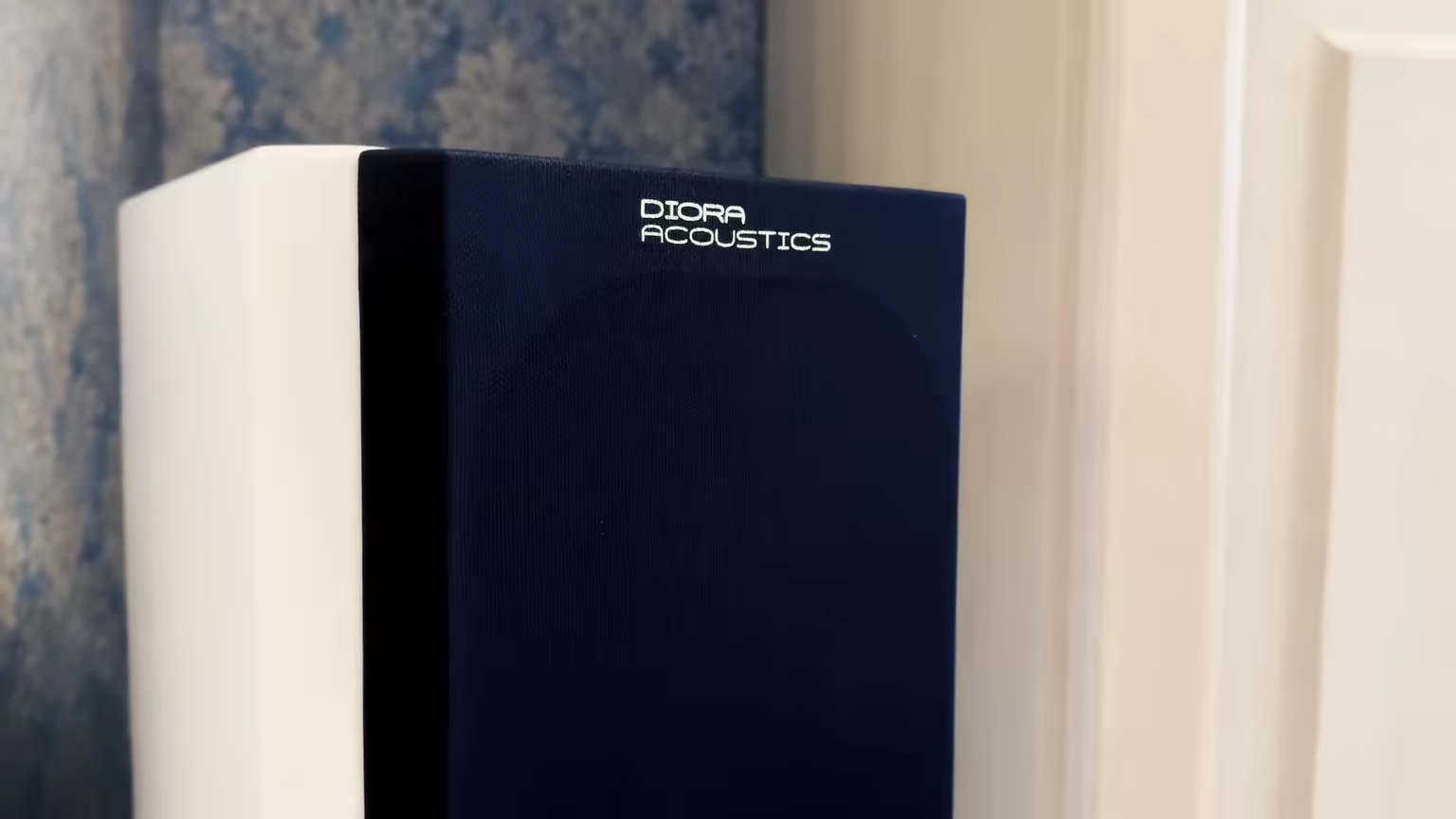 (view larger)
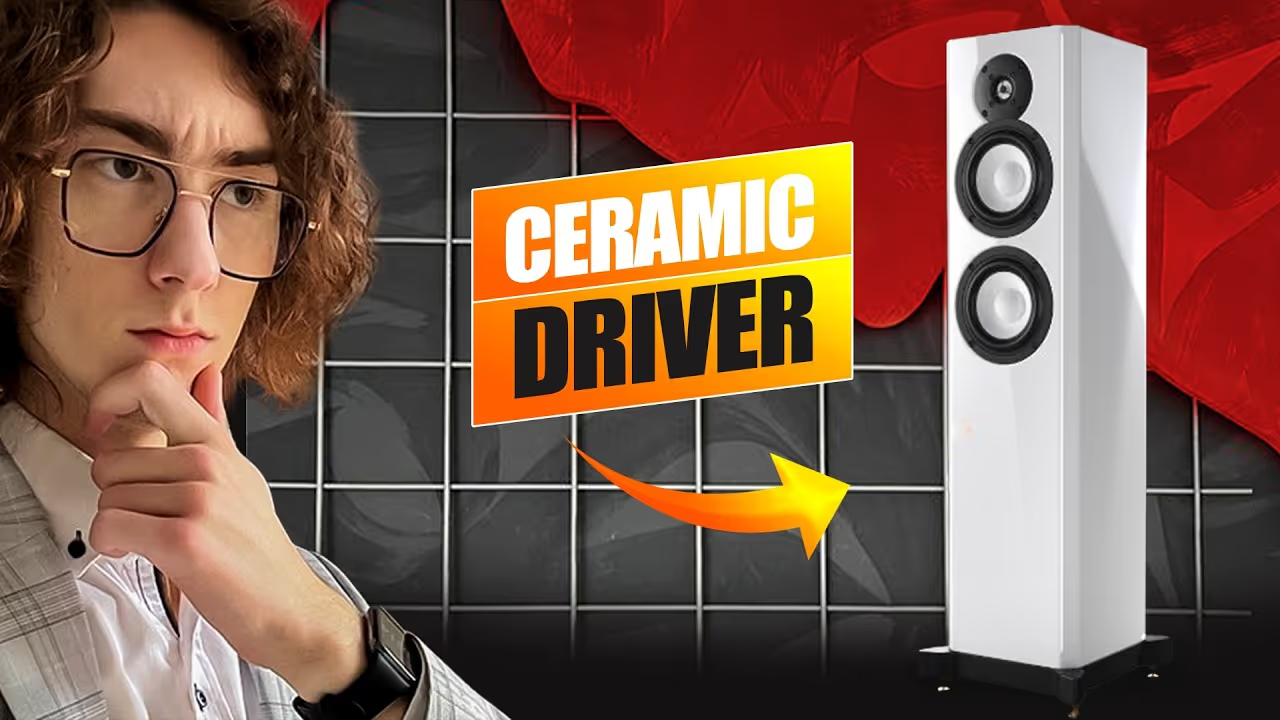
The drivers are always white for a specific reason that I'll explain shortly. They technically have exposed screws, but they're color-matched to the black ring surrounding them, so it doesn't look any worse because of that.
The included fabric grills feel super heavy and premium. They are black, magnetically attached, and have an angled bottom edge. You also get a speaker base - it seems like it's made out of a different material, but it's not very heavy. It surely helps with stability and allows you to screw in the spikes, which are the real deal - super well-built, beautiful, and sharp like a knife - be careful with them.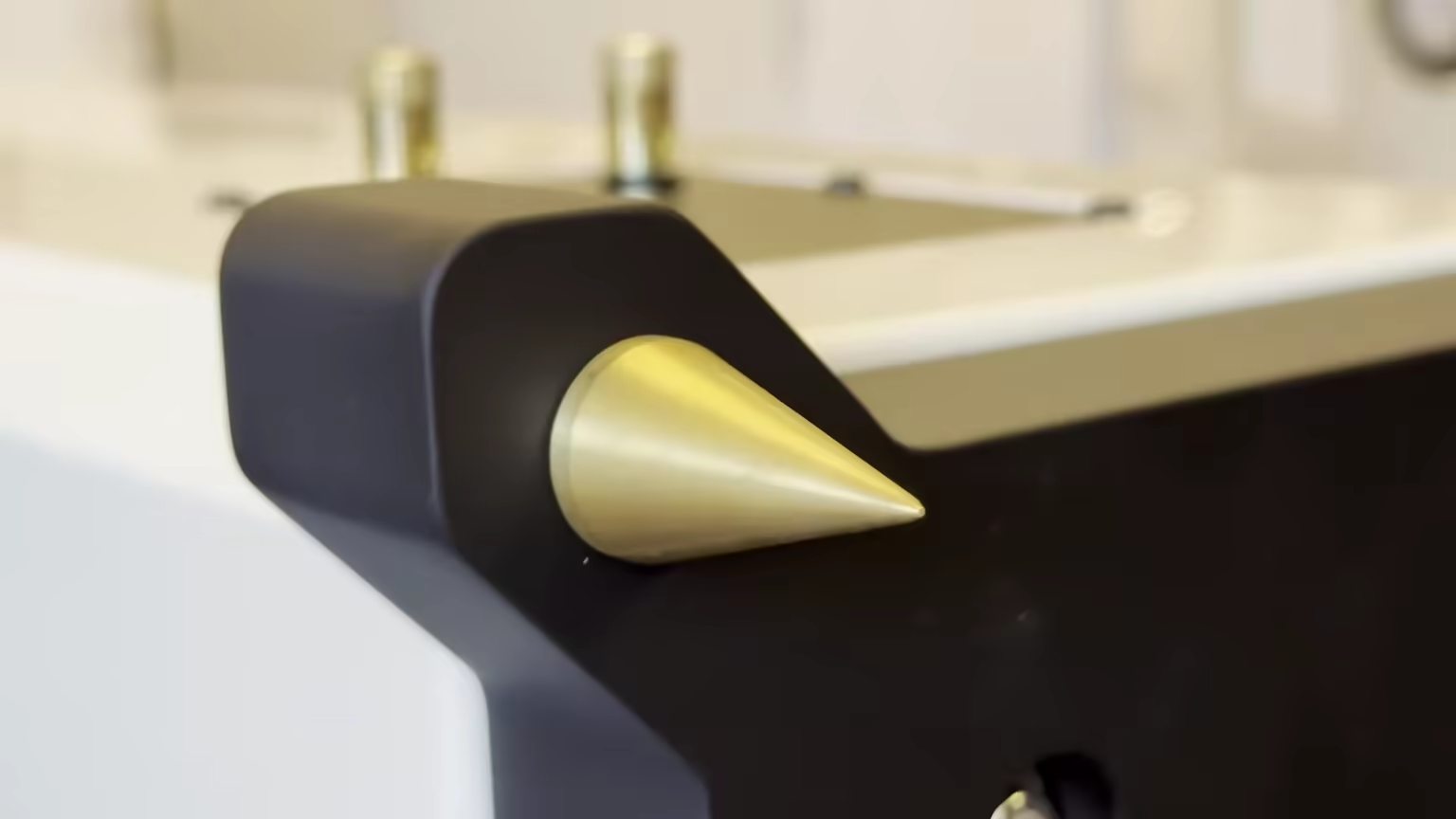 (view larger)
You get a single pair of decent-quality binding posts, which limits bi-wiring or bi-amping options. These posts accept bare wire, spade connectors, and banana plugs, covering all your needs.
Technologies: 2-Way, Closed-Box, All-Ceramic Drivers
This speaker is a 2-way passive floor stander. Yes, two-way - which means that the tweeter is separate, dedicated to high frequencies, while two woofers work together reproducing midrange and bass. That's a unique approach, as a 3-driver speaker would usually have a dedicated midrange and a dedicated bass unit. However, such a configuration allows for better bass extension. The middle driver is not wasting its capabilities by being limited in its frequency band on the low end.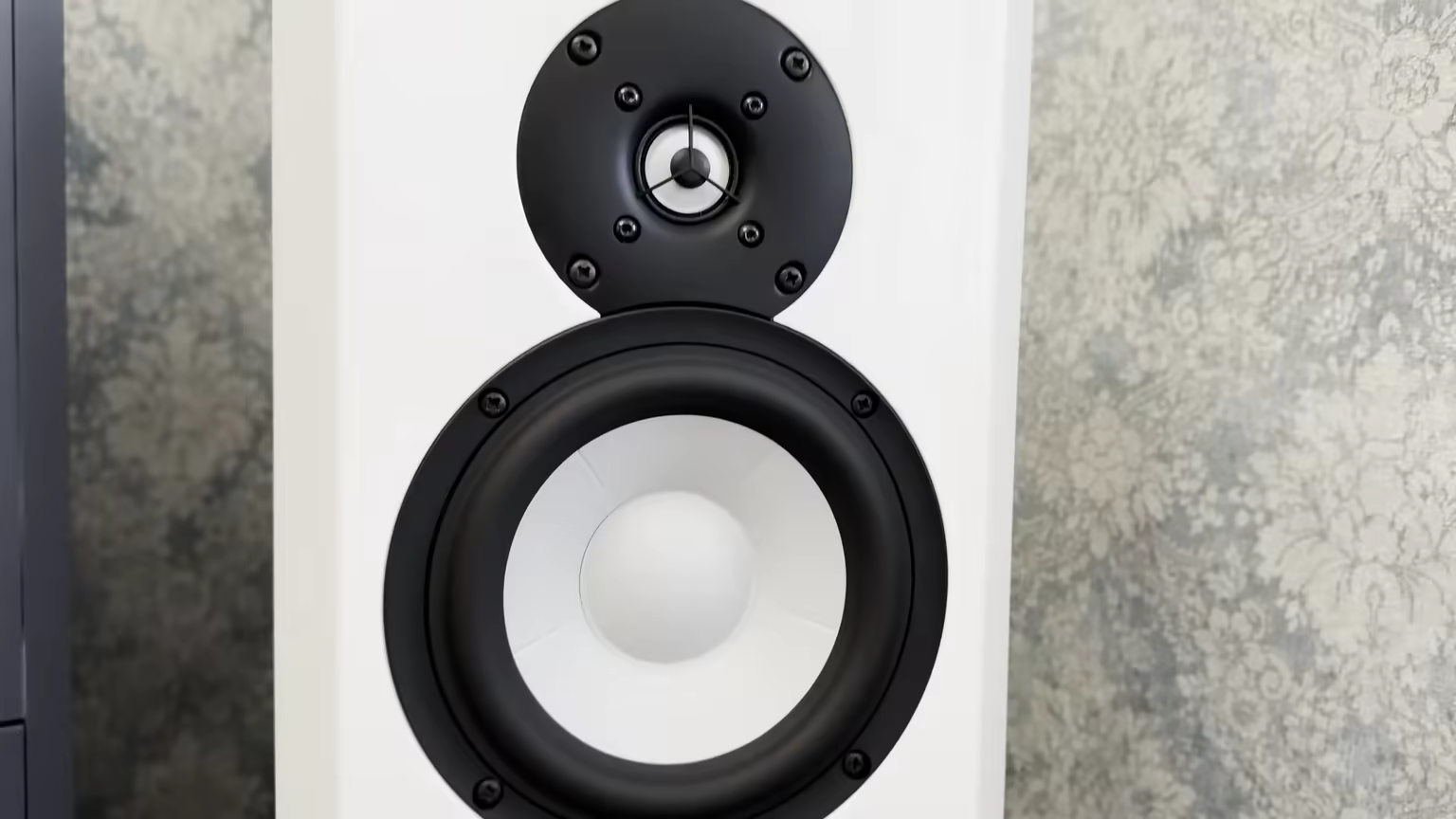 (view larger)
The tweeter itself is a dome construction with ceramic coating and a 25.5mm voice coil. It has a type of phase plug in the middle, to help the sound diffuse in all directions, instead of beaming from just the very middle.
The low-frequency transducers are 170mm, around 6.7 inches with 35.5mm voice coils. They also have ceramic coating, with a very nice texture. The drivers seem to be of superb quality, and all of them are made of the same material - ceramic - so all frequency bands should have a similar timbre.
Technical Specs: Easy to Drive, Bass Down to 44Hz
The Chors 5 has a nominal impedance of 4 ohms, and it doesn't dip below 3.7 ohms. That, paired with a sensitivity of 90dB, makes it possible to drive with lots of electronics. It's not the easiest to drive like some horn designs - you probably won't get away with the least powerful, tiny tube amps - but it's even further away from the most difficult to drive. I found that it pairs well with clean, fully transistor amplifiers, but you can feel free to experiment.
The speaker can handle up to 120W of power, which is a significant number considering its size. It probably won't fill a huge hall, but you also won't complain about the volume levels you're able to achieve in real-world scenarios.
The frequency extension goes from 44Hz up to 22kHz at -3dB. This might not sound like anything special, but it has just two woofers that are doing the midrange at the same time. Plus, what's even more surprising - it's a closed-box design. Once you take those two aspects into consideration, it becomes much more serious. The bass rolls off much slower when it's non-vented, so at let's say 35Hz you're still getting some usable output.
Sound Quality: Fast Closed-Box Bass, Smooth Treble
If you placed Chors 5 in a room with 20 other loudspeakers and listened blindly to each one, it would likely stand out the most. Its sound is so distinct and unique that I am not sure I have ever heard anything similar.
Starting with the bass, it's just different. And I'm so glad it is the way it is. Despite having just 2 medium-sized drivers, it doesn't sound like it's limited. The closed-box construction makes every note, from low bass to midrange, super dynamic, fast, and hard-hitting. It sounds like it extends much deeper than what the specs say. Yet it's never bloated, it is quite far from that actually - some could even call them bass-light in some cases, but I think it is very balanced.
It sounded amazing with modern music filled with low-frequency energy. I usually don't listen to such tracks, but these speakers made me occasionally pick a few electronic or pop songs.
The midrange seems to be slightly scooped out, not very forward, in your face, or shouty. The vocals take a step or two back in the mix, giving instruments the upper hand. Since it's being reproduced by the same transducers as the bass, it shares very similar characteristics. It is also very dynamic, snappy, and "bouncy".
The treble is another standout feature of this speaker. Tonally it is slightly brought up, but it is very, very smooth, almost to the point of feeling a bit rolled off, although it is definitely not. I would attribute that mostly to the ceramic coating, but I'm no engineer to guarantee that no other factor contributes to that.
I found that it sounded best at medium-high volumes, slightly above my regular listening levels, around 3 to 4dB higher, but not excessively loud. That's when the soundstage expanded dramatically, and the dynamic range truly excelled. This speaker is one of the most dynamic in its class, without a doubt.
The detail retrieval is at a good level - it doesn't project the nuances at you with a lot of force though. Instead, it makes most of them available to you, but you have to look for them. It makes for quite a pleasant experience in my opinion.
Older and less well-made recordings sound quite good with this speaker. It extracts a good amount of detail while smoothing over issues like pops, crackles, or reverberations. Whether you prefer a speaker that is true to the original recording or one that enhances your listening experience is personal. This speaker is clearly designed for enjoyment.
The soundstage size, while not the widest, is very believable. It does a good job of sounding real in the spatial cues, diffusing the individual sound sources just a little bit. Therefore the imaging is far from being razor-sharp. But when you think about it, in real life audio sources also don't sound like they come from a single point in space.
Overall, the Chors 5 is a very fun speaker with a fairly balanced, yet slightly V-shaped tonality. It can surprise you with the dynamic range, going from soft and delicate to super punchy notes. It can do a good job with both modern and very old recordings, because of its technical characteristics and tuning. It also makes it easy to enjoy it to its fullest with a small size for a floor-standing speaker and a relatively low weight. Additionally, you can place it somewhat close to the rear or side walls, as it doesn't have a port, which would limit your options, making it sound overly boomy in non-ideal environments.
Sound signature
Derived from the words this review uses: each axis runs between two opposite descriptors, and the shape leans toward whichever side the writing does.
- Warm ↔ Bright Leans bright
- Relaxed ↔ Analytical Leans analytical
- Polite ↔ Aggressive Leans aggressive
- Lean ↔ Bass-heavy Neutral, no clear signal in the review language
- Intimate ↔ Wide stage Neutral, no clear signal in the review language
Hear what "bright, analytical, aggressive" means: a short synthesised loop, flat and then with those leanings. An illustration of the words, not a recording of the Chors 5.
Not sure which signature suits you? Find yours with a blind A/B test
Watch the video review
Subscribe on YouTube (opens in new tab)Prefer to read? The written review above covers everything in the video.
- 0:00 Why Are Ported Speaker Designs So POPULAR? (opens in new tab)
- 0:24 Design & Build Quality (Floorstanding Construction, Gloss Finish, Driver Color, Spikes) (opens in new tab)
- 2:00 Technologies (2-Way Crossover, Ceramic Coating, Dual Mid-Woofers) (opens in new tab)
- 3:14 Technical Specifications (Nominal / Minimum Impedance, Sensitivity, Amp Pairing) (opens in new tab)
- 4:40 Sound Quality (Dynamic Range, Bass Extension, Midrange, Detail Retrieval) (opens in new tab)
Common questions about the Chors 5
Is the Diora Acoustics Chors 5 worth it?
Yes - 8.5/10, Highly Recommended, higher than 63% of everything we have tested, against a catalogue median of 8.1. On value it rates steep: better value exists in speakers, so you are buying performance here, not value. Price: $2,499/pair.
Who should buy the Diora Acoustics Chors 5, and who should skip it?
Buy it if you want the balance to lean bright, with the detail pushed forward. Skip it if you're treble-sensitive, and $2,499/pair has to buy value as well as performance.
What should I consider instead of the Diora Acoustics Chors 5?
The pieces we have actually run against it: the Triangle Australe EZ scores 0.4 lower and costs $2,500 more and the Triangle Borea BR09 scores 0.5 lower and costs $1,400 less. Every one of those matchups has its own page in the head-to-head section.
Can the Chors 5 go close to a wall?
Yes, and it is one of the practical advantages of the design. There is no port, so you avoid the boominess that ruins a rear-ported speaker in a non-ideal room - you can place these somewhat close to the rear or side walls without the low end falling apart. Combined with the compact size for a floor-stander and the relatively low weight, positioning is far less of a puzzle than it usually is at this level.
Why is the Chors 5 a two-way floor-stander?
Because it buys bass extension. A three-driver speaker normally splits the work into a dedicated midrange and a dedicated bass unit; here a single tweeter handles the highs while two woofers cover midrange and bass together. That means neither of those drivers is limited at the bottom of its range, which is how a closed box with two medium woofers reaches 44Hz at -3dB - and because it is sealed, the roll-off below that is gentle enough to leave usable output at 35Hz.
Is the Chors 5 bass-light?
Some people will hear it that way at first, and I think it is balanced rather than shy. The closed-box construction makes every note from low bass into the midrange dynamic, fast and hard-hitting, and it sounds like it extends far deeper than the specification suggests. It is never bloated - nowhere close - and that absence of bloat is what reads as lightness against a ported rival. It sounded genuinely great with modern low-frequency-heavy music that I do not normally listen to.
Does the Chors 5 need volume to come alive?
It does, and it is worth knowing before a quiet audition. I found it sounded best at medium-high volumes, slightly above my usual listening level - around 3 to 4dB higher, not excessively loud. That is when the soundstage expanded dramatically and the dynamic range really showed itself. This is one of the most dynamic speakers in its class, and a demo at conversational volume will not tell you that.
What amplifier does the Chors 5 need?
A clean transistor amplifier is where I would start. The nominal impedance is 4 ohms and it does not dip below 3.7, which with 90dB sensitivity puts it in the middle of the difficulty range - not horn-easy, so the smallest tube amps are probably out, but a long way from the hardest loads. It handles up to 120W, a significant figure for its size. It will not fill a hall, and in a real room you will not be short of volume.
Why are all the Chors 5 drivers ceramic?
Timbre consistency. The tweeter is a ceramic-coated dome with a 25.5mm voice coil and a phase plug to stop it beaming; the two 170mm woofers are ceramic-coated as well, with 35.5mm voice coils. Because every band is reproduced by the same material, the tonal character stays unified across the spectrum. I would also attribute the treble's unusual smoothness largely to that coating, though I am not an engineer and cannot rule out other factors.
Does the Chors 5 flatter bad recordings?
Yes, deliberately. Older and less well-made recordings sound quite good on it - it pulls out a decent amount of detail while smoothing over pops, crackles and reverberation artefacts. Whether you want a speaker that is true to the recording or one that improves your evening is a personal call, and this one is clearly designed for enjoyment. The imaging follows the same logic: it diffuses sources slightly rather than pinpointing them, which is closer to how real sound behaves.
If you're interested in this
All 6 speakers reviewsClosest alternatives