
Douk Audio U2 Pro Review: Does a $70 DDC Reclocker Actually Work?
A $70 XMOS XU316 DDC reclocker (USB-C in; TOSLINK, coax, I²S out). Tighter timing and a fuller, more detailed sound - at the cost of some air and openness.
higher than 0% of everything we have tested
Value Excellent. It is one of the best-value pieces we have scored.
- Standout
- Genuinely affordable
- Watch out for
- It's a trade-off, not a free upgrade
Is it for you?
- You want to hear into a mix rather than be soothed by it
- You want the most performance per dollar on the list
- You want a forgiving listen that flatters a bad file
For the wider field, our Best Audio Sources guide ranks 5 rivals in this class. This one is not among them.
A DDC reclocker is one of those little boxes that splits a room. Some people swear it lifts a veil off their system; others call it snake oil. So when a digital-to-digital converter lands on my desk costing $69.99 - when some of them run past $5,000 - the obvious question is whether spending this little on jitter actually changes anything. Today I'm reviewing the Douk Audio U2 Pro to find out.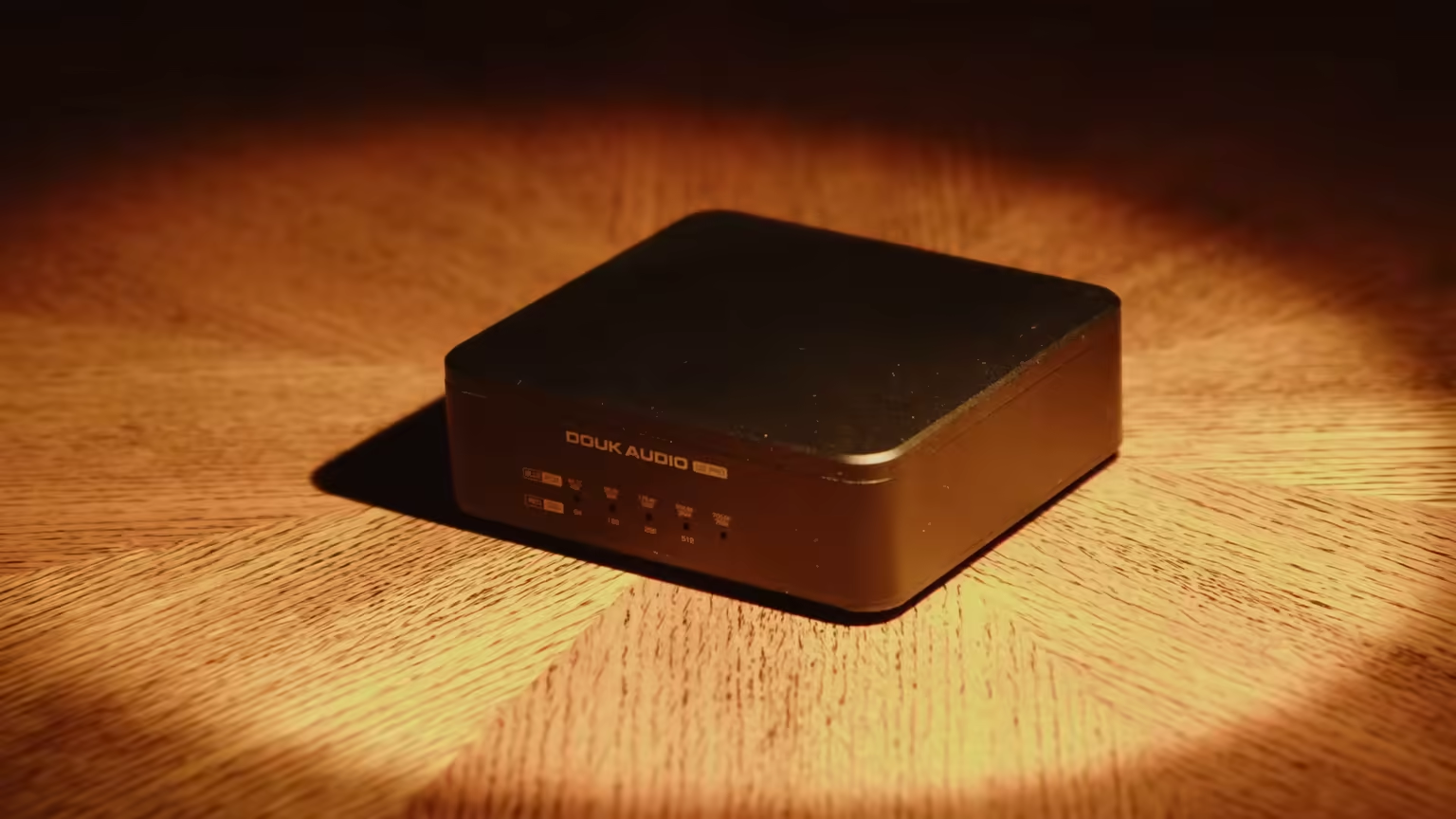 (view larger)
What Is a DDC Reclocker?
DDC means digital-to-digital converter, and "reclocker" tells you what it really does: it re-establishes the clock timing out of the data. Think of it as a buffer that makes sure all of the data is there, then reorganises it onto correct, even timing. The aim is to eliminate jitter and guarantee that no information is lost in transmission.
The important thing to understand is what a DDC is not. It is not a DAC. It never turns the signal into analogue and it never drives a headphone or a speaker. It sits between your source and your DAC, cleaning up the digital handoff between them - taking USB from a computer, say, and handing your DAC a cleaner, better-timed S/PDIF or I²S signal. We'll get to how that affects the sound. First, the machine itself.
Build, Connections and the XMOS XU316
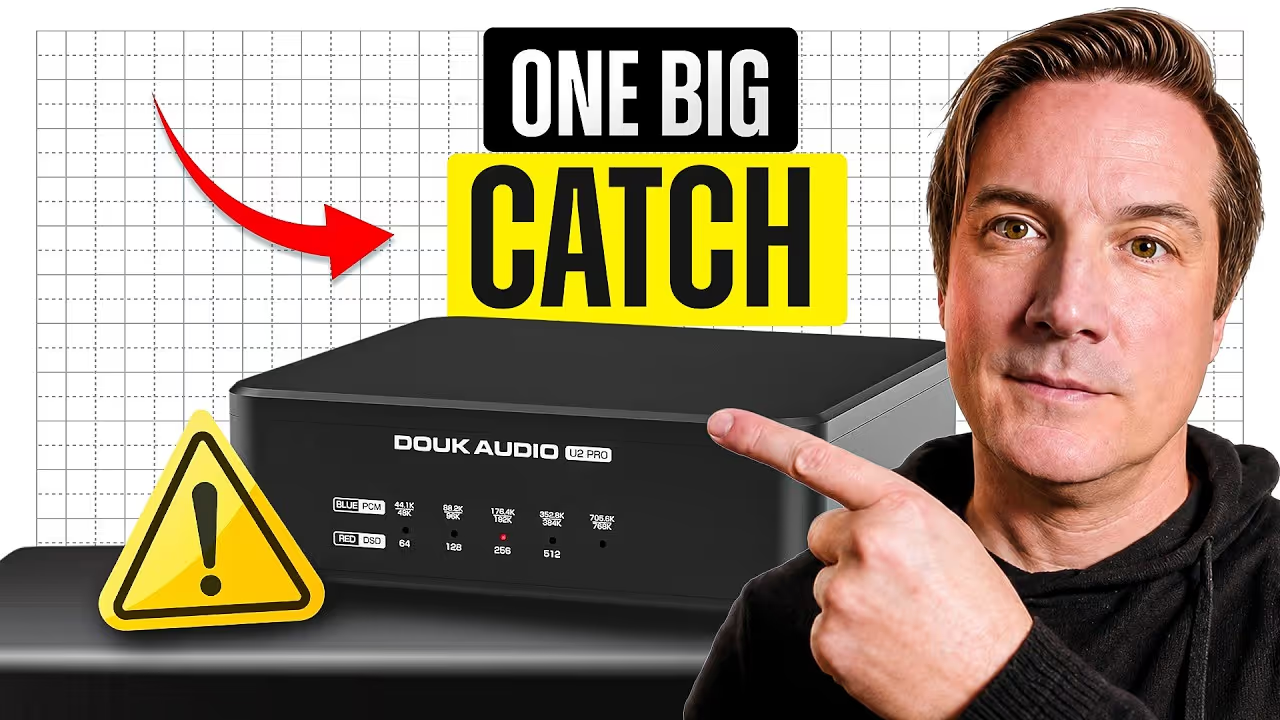
The U2 Pro comes in a small box. It takes a single USB-C input and gives you three outputs: optical TOSLINK, coaxial, and I²S. On the front there is a PCM/DSD indicator that shows the resolution of your files during playback, so you can confirm at a glance what is actually being passed through.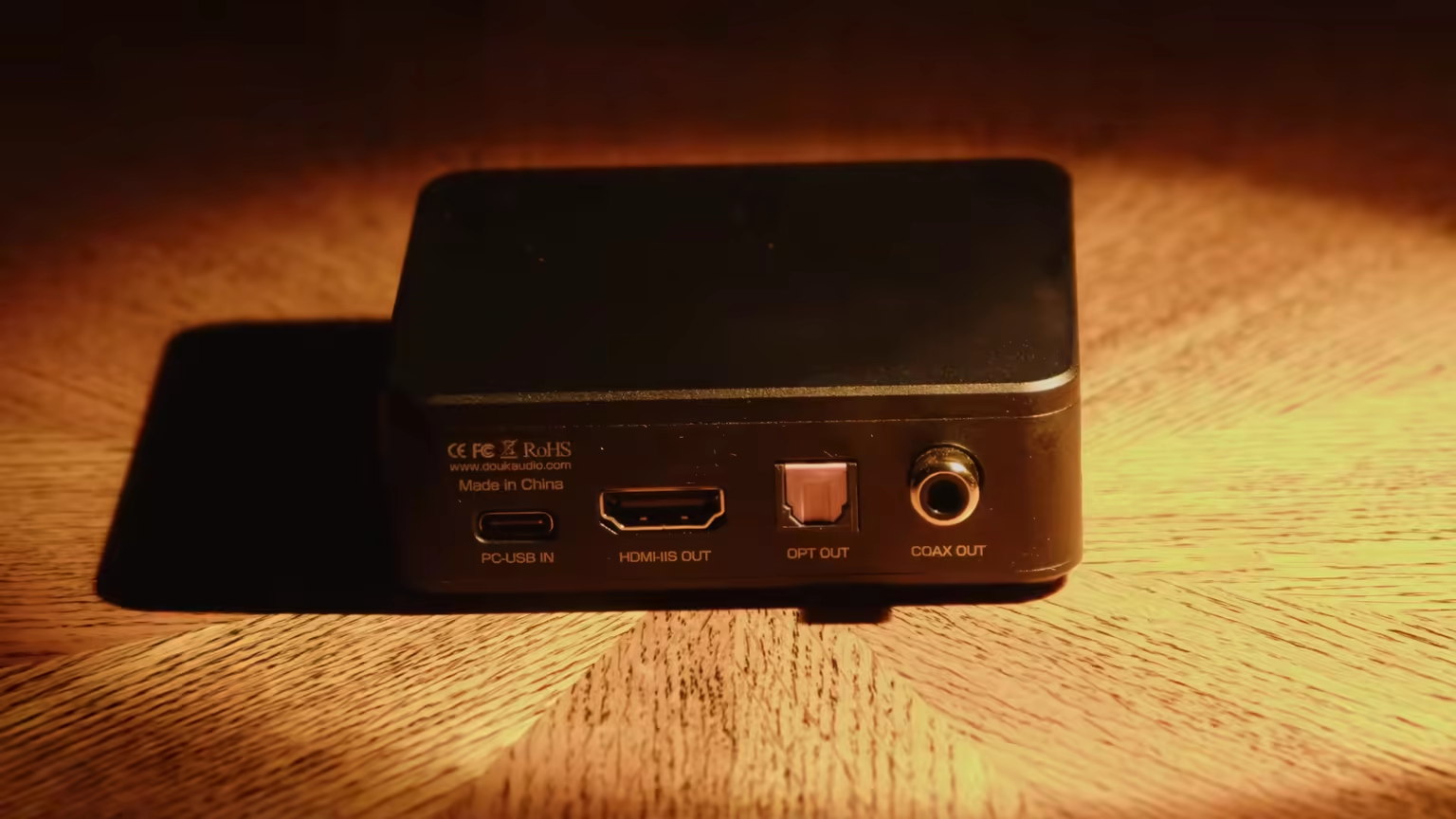 (view larger)
Underneath there is a UAC switch. UAC stands for USB Audio Class: set it to 1.0 for devices like game consoles, and to 2.0 for proper audio equipment. It's a small touch, but it's the difference between the unit working with a console and working with a hi-fi source.
At the heart of the U2 Pro is the XMOS XU316 - a high-performance 32-bit multi-core microcontroller. It supports USB 2.0 and handles high-resolution music streaming comfortably, and it includes a hardware-based scheduler that behaves like a real-time operating system in silicon. One detail I appreciate is that the reclocker is expandable: you can replace the clock yourself with any compatible crystal and oscillator, because Douk has deliberately left room inside the box for it. For a unit at this price, an upgrade path you can actually use is rare.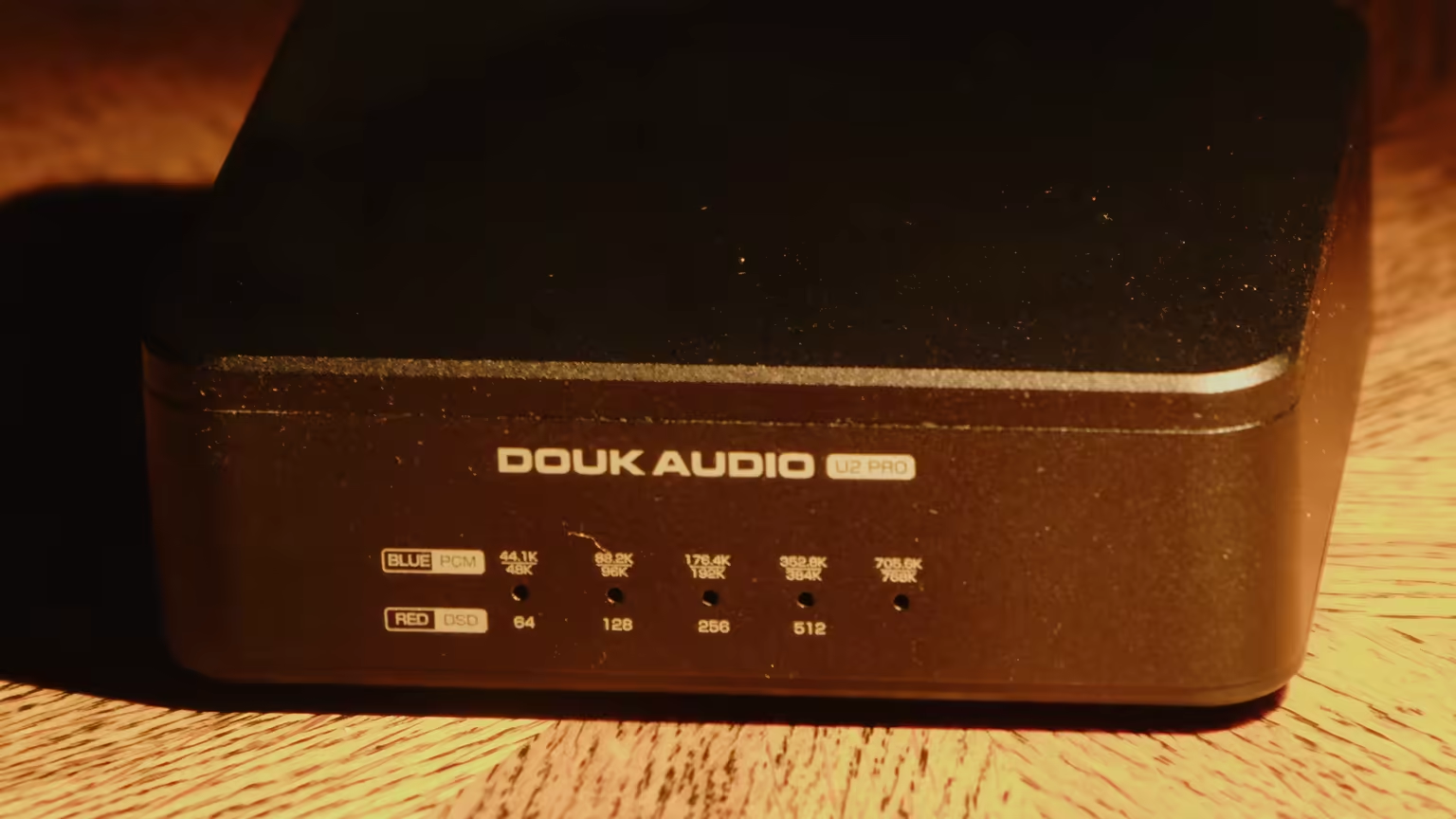 (view larger)
And the price really is the headline here: $69.99. For a DDC reclocker, that is very, very affordable.
Sound Quality: A Trade-Off, Not a Free Upgrade
Our reviews are always honest, so here it is: the sound of the U2 Pro is a trade-off.
On one hand, this machine helps toward a more detailed, precise and full sound. There is more information in the signal, and the timing is better, so the jitter is gone. On the other hand, you have added electronics into the audio chain - and that has a cost. What you gain in clarity and timing, you lose in airiness and transparency.
The result is that you end up feeling your music is better - greater dynamics, more detail, a fuller and richer presentation - while at the same time sensing that your speakers are covered by a tiny silk sheet that limits the soundstage and the air. The body comes up; the openness comes down. Neither impression is imaginary, and which one matters more to you is genuinely personal.
Who It's For: Detail Chasers, Not Transparency Purists
Some people will welcome the fuller, richer sound of the U2 Pro. Others will miss the full scale of an open, airy presentation. If your system has real jitter problems, or if you have an appetite for detail above all else, this is a product you'll likely enjoy. Purists chasing maximum transparency probably won't.
Only you really know whether you'll like it - and at $70, the cost of finding out is low, which is the strongest argument in the U2 Pro's favour.
Verdict: Honest Work, Not Magic
The Douk Audio U2 Pro makes digital reclocking genuinely cheap to try, and it does what a DDC sets out to do: tighter timing, no audible jitter, more detail and a fuller body. But it is honest work, not magic - the same electronics that add richness also take a little air and openness out of the soundstage. If that trade reads as an upgrade in your system, it's an easy recommendation at the price. If you prize transparency above everything, audition before you commit.
If you've experimented with this machine, I'd love to hear your impressions of the sound - did it lift the veil, or add one?
Sound signature
Derived from the words this review uses: each axis runs between two opposite descriptors, and the shape leans toward whichever side the writing does.
- Warm ↔ Bright Neutral, no clear signal in the review language
- Relaxed ↔ Analytical Leans analytical
- Polite ↔ Aggressive Neutral, no clear signal in the review language
- Lean ↔ Bass-heavy Neutral, no clear signal in the review language
- Intimate ↔ Wide stage Neutral, no clear signal in the review language
Hear what "analytical" means: a short synthesised loop, flat and then with those leanings. An illustration of the words, not a recording of the U2 Pro.
Not sure which signature suits you? Find yours with a blind A/B test
Watch the video review
Subscribe on YouTube (opens in new tab)Prefer to read? The written review above covers everything in the video.
Common questions about the U2 Pro
Is the Douk Audio U2 Pro worth it?
Only for some buyers - 6.5/10, Mixed, higher than 0% of everything we have tested, against a catalogue median of 8.1. On value it rates excellent: top 20% for the price in sources, so it is one of the best-value pieces we have scored. Price: $70.
Who should buy the Douk Audio U2 Pro, and who should skip it?
Buy it if you want to hear into a mix rather than be soothed by it, and you want the most performance per dollar on the list. Skip it if you want a forgiving listen that flatters a bad file.
What else have you tested that is close to the Douk Audio U2 Pro?
No matchup page yet, and no close price match in the catalogue either. The nearest things we have scored in the same category: the Denafrips Hermes 12th Anniversary at 8.9/10.
What is a DDC reclocker, and what is it not?
It re-establishes clock timing out of the data - think of it as a buffer that checks all the information is present, then reorganises it onto correct, even timing, so jitter goes and nothing is lost in transmission. What it is not is a DAC. It never converts to analogue and it never drives a headphone or a speaker. It sits between your source and your DAC, taking USB from a computer and handing the DAC a cleaner, better-timed S/PDIF or I²S signal.
Does the U2 Pro make your system sound better?
It makes it sound different, and whether that is better is genuinely personal. You gain detail, precision and a fuller, richer body, with the timing tightened and the jitter gone. You also add electronics to the chain, and that costs you airiness and transparency - the sensation is of your speakers being covered by a tiny silk sheet that narrows the soundstage. Both impressions are real. Which one matters more is the whole decision.
Who should buy the Douk U2 Pro?
Detail chasers rather than transparency purists. If your system has real jitter problems, or if you want detail above all else, you will likely enjoy this. If you prize an open, airy presentation above everything, you will miss the scale it takes away. At $70 the cost of finding out is low, and that is the strongest argument in its favour - most DDCs make this an expensive experiment, some of them past $5,000.
Can you upgrade the U2 Pro's clock?
Yes, and it is a rare thing to find at this price. The oscillator is socketed and Douk have deliberately left room inside the box, so you can fit any compatible crystal and oscillator yourself. On a unit whose entire job is timing, an upgrade path you can actually use is more than a marketing line - it is the one component that would change what the box does.
What is the UAC switch on the U2 Pro for?
Compatibility, and it is a small touch that decides whether the unit works at all with some sources. UAC means USB Audio Class: set it to 1.0 for devices like game consoles, and 2.0 for proper audio equipment. Without it a console simply would not talk to the box. The front PCM/DSD indicator is the other practical detail - it shows the resolution actually being passed through, so you can confirm at a glance rather than trusting the player.
If you're interested in this
All 6 sources reviewsClosest alternatives