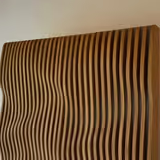
Ekustik Woody Queen Review: Don't Buy Cheap Acoustic Panels
Handmade Czech acoustic panels with a luxurious wood frame and PET felt core - true broadband absorption to 100Hz, zero fiberglass, and a 0.94 NRC rating.
higher than 86% of everything we have tested
- Standout
- Handmade in the Czech Republic with luxurious wood frame
- Watch out for
- 15cm Performance Bass version is chunky on the wall
- Closest rival
- Ortvik Parametric Tower: scores 0.5 lower.
Is it for you?
- You listen on speakers and the room is the loudest thing in the chain
- You want more performance per dollar than most of its peers
- You listen on headphones, where the room gets no vote
Pick #2 of 13 in our Best Hi-Fi Accessories guide.
If you're anything like me, you've probably looked at your listening space and realized you desperately need acoustic treatment. But let's be honest, the usual options kind of suck. You either stick cheap, ugly foam to your walls that barely absorbs anything, or you fill your room with DIY panels stuffed with itchy, toxic fiberglass. I wanted something better - the Ekustik Woody Queen absorbers. These are premium, handmade acoustic panels that ditch the mineral wool completely in favor of safe PET felt, all wrapped in a gorgeous wood frame. But do they actually fix your room's sound, or are you just paying for luxury furniture?
Design & Build Quality: Furniture-Grade, Fiberglass-Free
The moment you pull these out of the box, you realize this isn't your typical studio gear. This genuinely feels like high-end furniture.
The Woody Queen panels are completely handmade in the Czech Republic, and they feature this patented, really luxurious wooden frame that makes things look fantastic in any room. These aren't the kind of panels you try to hide in a dark corner of your studio - you actually want them on display in your living room or home theater.
Ekustik offers these in a standard footprint of 60 by 120 centimeters, but you get to choose the depth. They have a 5-centimeter Decorative version, a 10-centimeter Performance version, and the ones I have right here - the massive 15-centimeter Performance Bass version. At 15 centimeters thick, these things are chunky. They really have a presence on your wall, unlike thin black foam panels. But despite their size, the build is exceptionally clean. Everything is tight, the fabric is perfectly stretched, and there are no visible screws or loose seams anywhere.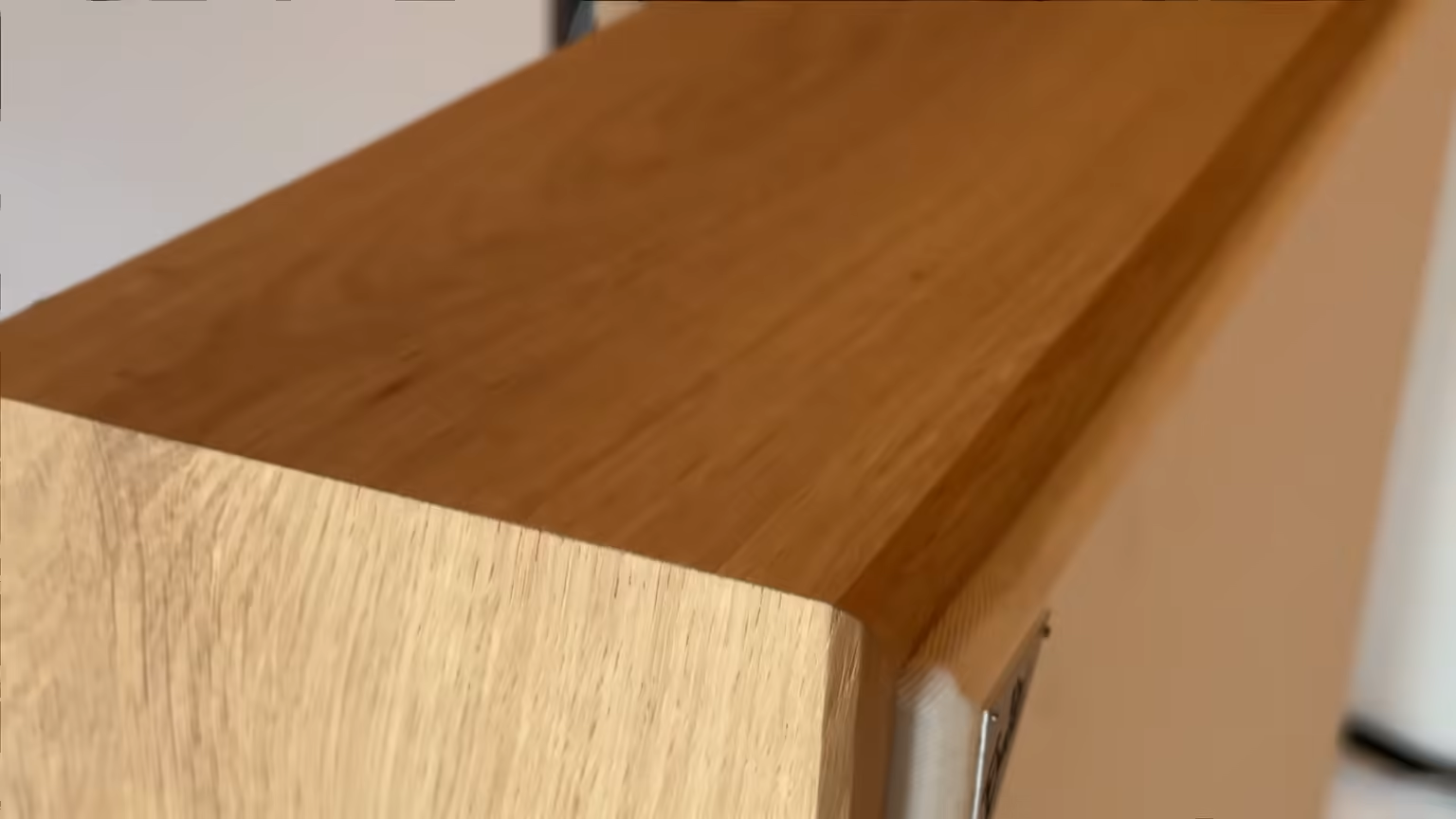 (view larger)
Honestly though, the biggest selling point of the build quality isn't even what you can see on the outside - it's what's inside. If you've ever built your own acoustic panels or handled traditional bass traps, you know one thing. You have to wear gloves, long sleeves, and a mask because they are stuffed with rockwool or fiberglass. It's awful, it sheds micro-particles into the air, and you really don't want to be breathing that in every single day.
Ekustik completely eliminated that problem. Inside these panels is an eco-friendly, certified acoustic material made entirely from recycled PET felt. That means no itchy fiberglass, no toxic micro-particles, and perfectly safe air quality in your room. That is a massive win in my book.
Technologies: Why Dense PET Felt Beats Foam
The actual technology and the acoustic concepts behind these panels is quite unique. If you're dropping this kind of money, you need to understand the physics of why they work.
A massive mistake people make when building a home studio or a listening room is buying thin foam squares, slapping them on the wall, and wondering why their room still sounds muddy. The physics of sound are pretty unforgiving. High frequencies are short, fast waves, so thin, porous materials catch them easily. But low-end bass frequencies are massive, slow-moving waves. To trap a bass wave, you need physical mass and depth.
The secret weapon inside the Woody Queen is the Envizol core - recycled PET felt is incredibly dense. While cheap acoustic foam is mostly just air, which is why it only dampens the high-end treble. That leaves your room sounding weirdly dead, but still boomy - they lack balance. The density of the PET felt in the Woody Queen acts as a true broadband absorber. That means it pulls energy evenly out of the lows, the mids, and the highs, which keeps the frequency response of your room totally balanced instead of killing just all the treble.
Technical Specifications: NRC 0.94, Effective to 100Hz
The most important spec to look for with acoustic treatment is the NRC rating, or Noise Reduction Coefficient. This is basically the industry standard measurement for how much sound a panel actually absorbs rather than reflecting it back into the room.
The 5-centimeter decorative version of the Woody Queen has a respectable NRC of 0.75. But this 15-centimeter Performance Bass version pushes that rating all the way up to 0.94. In simple terms, that means it is absorbing 94 percent of the sound energy that hits it across the tested frequency range. You can think of it like a black hole on your wall. Whatever gets in, doesn't get out to the room or your ears.
And because of that extreme 15-centimeter depth, Ekustik rates the absorption effectiveness starting all the way down at 100 Hertz. That is the key frequency range where rooms usually get incredibly boomy and problematic. Looking at the prices of those panels, I'd easily recommend getting the thickest version. If you're a producer trying to mix a track, or an audiophile trying to get tight, punchy bass out of your speakers without the room ringing, controlling that 100 Hertz range is absolutely mandatory, and these specs prove the panels are built exactly for that job.
Sound Quality: The Wall Behind the Speakers Vanishes
What actually happens when you put these in your listening room? It's probably the biggest audio upgrade you can make. Period.
For my testing, I started exactly where you should always start in a proper Hi-Fi setup, which is the front wall, directly behind the speakers. A lot of people think they need to cover their entire room from floor to ceiling to hear a difference, but treating the front wall and those first reflection points is going to give you a decent chunk of your overall results.
When you place these thick Woody Queen absorbers behind your speakers, the physical wall basically vanishes acoustically. Before I put the panels up, the soundstage of my speakers would hit the wall behind them and just stop. It felt a bit flat, like the music was trapped in the physical dimensions of the room. The moment I hung these up, the depth of the soundstage completely opened up. The imaging became incredibly holographic, allowing me to pinpoint exactly where every instrument was positioned in the mix.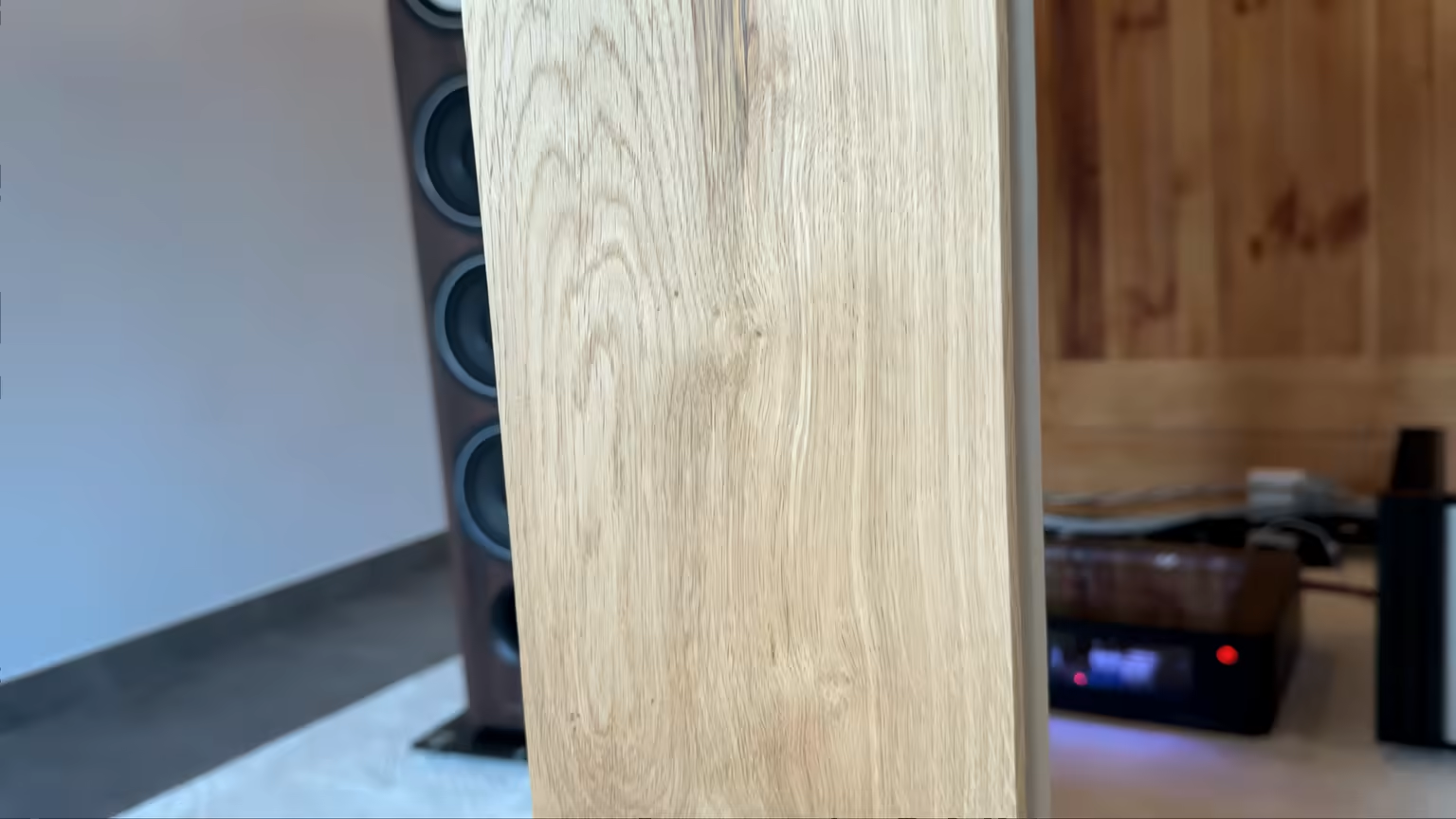 (view larger)
Then there is the tonal balance, which was a night and day difference. In untreated rooms, bass frequencies fire out of your speakers, bounce off the front wall, and collide with the sound coming directly at you. This creates standing waves, which makes your bass sound muddy, bloated, and fatiguing. With the 15-centimeter Envizol core soaking up that energy, that low-end boominess largely disappeared. And to be clear, the bass didn't lose its impact or its volume - it actually gained punch and definition. Kick drums sounded tight and fast instead of loose and resonant, and bass guitar lines became incredibly easy to follow.
Because the panels are absorbing that excess acoustic energy across the entire frequency spectrum, the overall reverb decay time in the room drops significantly. And this does something truly magical to the music. By lowering the acoustic noise floor of your room and killing that nasty echo, you start hearing micro-details that your speakers were already producing, but your room was masking. It all gets completely unveiled. It is exactly like wiping a thick layer of dust off a window. You just get pure, direct sound from your gear.
Placement and Service: Ekustik Helps You Position Them
Acoustics can be super intimidating. Figuring out exactly where to put these panels to get that perfect soundstage and tame your specific room modes can feel a bit overwhelming. But one of the best things about going with a premium brand like Ekustik is the service that comes with it. You don't just buy the panels and get left in the dark to guess where they go. They actually help their customers with placement. If you give them your room measurements, send them some photos, or provide other factors about your setup, their team will consult with you to make sure you are putting the right panels in the exact right spots for your specific space.
Verdict: Treat Your Walls First
The truth is, we as audiophiles will happily spend thousands of dollars on DACs, amplifiers, and upgraded cables trying to chase that extra five percent of detail. But if your room isn't treated, you are never actually hearing your gear - you are just hearing your room bouncing sound around. The Ekustik panels fix the room, they are totally safe to be around, and they look like absolute luxury furniture while doing it. So don't make the same mistake over and over again - treat your walls first, and you will completely rediscover your music just the way I did.
Watch the video review
Subscribe on YouTube (opens in new tab)Prefer to read? The written review above covers everything in the video.

- 0:00 The BEST Acoustic Panels You Can Buy (opens in new tab)
- 0:52 Design & Build Quality (Handmade, Patented Wooden Frame, Multiple Colors) (opens in new tab)
- 3:00 Technologies (Envizol Core, High-mass Absorption, Recycled PET Felt) (opens in new tab)
- 4:33 Technical Specs (High NRC Rating, Bass Reverb Reduction, 100 Hz Damping) (opens in new tab)
- 6:41 Sound Quality (Cleaner Sound, Better Linearity, Sound Stage Size Improvement) (opens in new tab)
Common questions about the Woody Queen
Is the Ekustik Woody Queen worth it?
Yes - 9.0/10, Highly Recommended, higher than 86% of everything we have tested, against a catalogue median of 8.1. On value it rates strong: above average for the price in accessories. Price: From €399/panel (≈ from $430/panel approx.).
Who should buy the Ekustik Woody Queen, and who should skip it?
Buy it if you listen on speakers and the room is the loudest thing in the chain, and you want more performance per dollar than most of its peers. Skip it if you listen on headphones, where the room gets no vote.
What else have you tested that is close to the Ekustik Woody Queen?
No matchup page yet, and no close price match in the catalogue either. The nearest things we have scored in the same category: the Ortvik Parametric Tower at 8.5/10.
Where should you put acoustic panels first?
The front wall, directly behind the speakers, and then your first reflection points. A lot of people assume they need to cover a room floor to ceiling before anything changes; treating those two areas gets you a decent chunk of the total result. With thick panels behind the speakers the wall effectively vanishes acoustically - before I hung mine, the soundstage hit that wall and stopped, which felt flat, and the moment they went up the depth opened right out.
Which Woody Queen depth should you buy?
The thickest you can justify. The 5cm decorative version rates NRC 0.75, which is respectable; the 15cm Performance Bass version reaches 0.94, meaning it absorbs 94 percent of the energy that hits it across the tested range. The depth is also what pushes effectiveness down to 100Hz, which is exactly where rooms get boomy and problematic. Looking at the prices, I would take the 15cm without much hesitation - it is chunky on the wall, and that chunk is the product working.
Why does PET felt beat acoustic foam?
Density, and it is the whole argument. High frequencies are short, fast waves that thin porous materials catch easily; bass is massive and slow-moving, and trapping it needs physical mass and depth. Cheap foam is mostly air, so it only damps treble - which leaves a room sounding weirdly dead and still boomy. The Envizol recycled PET core is genuinely dense, so it pulls energy evenly out of lows, mids and highs and keeps the room's balance intact.
Is there fiberglass in the Woody Queen?
None, and it is the reason I would recommend these over building your own. Anyone who has handled traditional bass traps knows the routine: gloves, long sleeves and a mask, because rockwool and fiberglass shed micro-particles into the air you then breathe every day. The Envizol core is certified, made entirely from recycled PET felt, and eliminates that completely. If you spend hours a day in the room, that is not a small consideration.
Will panels make the bass quieter?
No - mine gained punch and definition. The mechanism is worth understanding: in an untreated room, bass fires from the speakers, bounces off the front wall and collides with the sound coming straight at you, creating standing waves that read as muddy, bloated and fatiguing. Absorbing that returning energy removes the collision rather than the bass. Kick drums came out tight and fast instead of loose and resonant, and bass lines became easy to follow.
Do you have to work out the placement yourself?
No, and it is one of the real advantages of buying from a premium brand rather than a box shifter. Acoustics are intimidating, and working out where panels go to tame your specific room modes is genuinely hard. Ekustik consult with customers on it - send them your room measurements, photographs and the details of your setup, and their team will tell you which panels go where for your space.
Are the Woody Queen panels worth the money against DIY?
That depends on whether the room they live in is one you look at. These are handmade in the Czech Republic with a patented wooden frame, and they read as high-end furniture rather than studio gear - you want them on display rather than hidden in a corner. The build is exceptionally clean: tight construction, perfectly stretched fabric, no visible screws or loose seams. DIY is cheaper and itchier, and you will want to hide it.
If you're interested in this
All 13 accessories reviewsClosest alternatives