
HarmonicDyne Eris Review: The Most Absurd Headphone Bass?
A semi-closed dynamic with 50mm ceramic-metal drivers and a deliberately overwhelming sub-bass tuning - tactile, fun, and tailor-made for EDM, hip-hop, and bass-heavy genres.
higher than 1% of everything we have tested
Value Steep. You are buying performance here, not value.
- Standout
- 50mm ceramic-metal long-stroke dynamic drivers
- Watch out for
- Mostly plastic construction with glossy fingerprint magnet
- Better alternative
- HIFIMAN Edition XS: scores 1.9 higher.
Is it for you?
- You want weight and slam low down
- You do not want to buy an amplifier before you can hear it properly
- You want the bass to stay out of the mids
- $249 has to buy value as well as performance
For the wider field, our Best Open-Back Headphones guide ranks 14 rivals in this class. This one is not among them.
Some headphones chase balance. The HarmonicDyne Eris? It chases bass - a lot of it. But it isn't just a one-note bass cannon. This thing comes in a gorgeous package with accessories you'd expect from something way pricier. Today we're going to see if all that low-end power and premium extras add up to something special.
Is It Comfortable? Decent Plastic, Standout Cable
I like to start with the packaging, because first impressions matter. The Eris comes in a sleek box with foam inserts and a separate compartment for cables and accessories. It's not flimsy - it gives you that "this is something more than a budget knock-off" vibe out of the box. Once it's in your hands, you sense why.
The build is mostly plastic. I won't pretend it's metal-armored, but the plastic is nicely molded. It's not premium-feeling, but it doesn't feel fragile either. The earcups have a glossy finish - they look good, but they're fingerprint magnets. Any time you handle them, you'll see smudges. The headband and hinges seem solid enough for everyday use, but I wouldn't abuse them.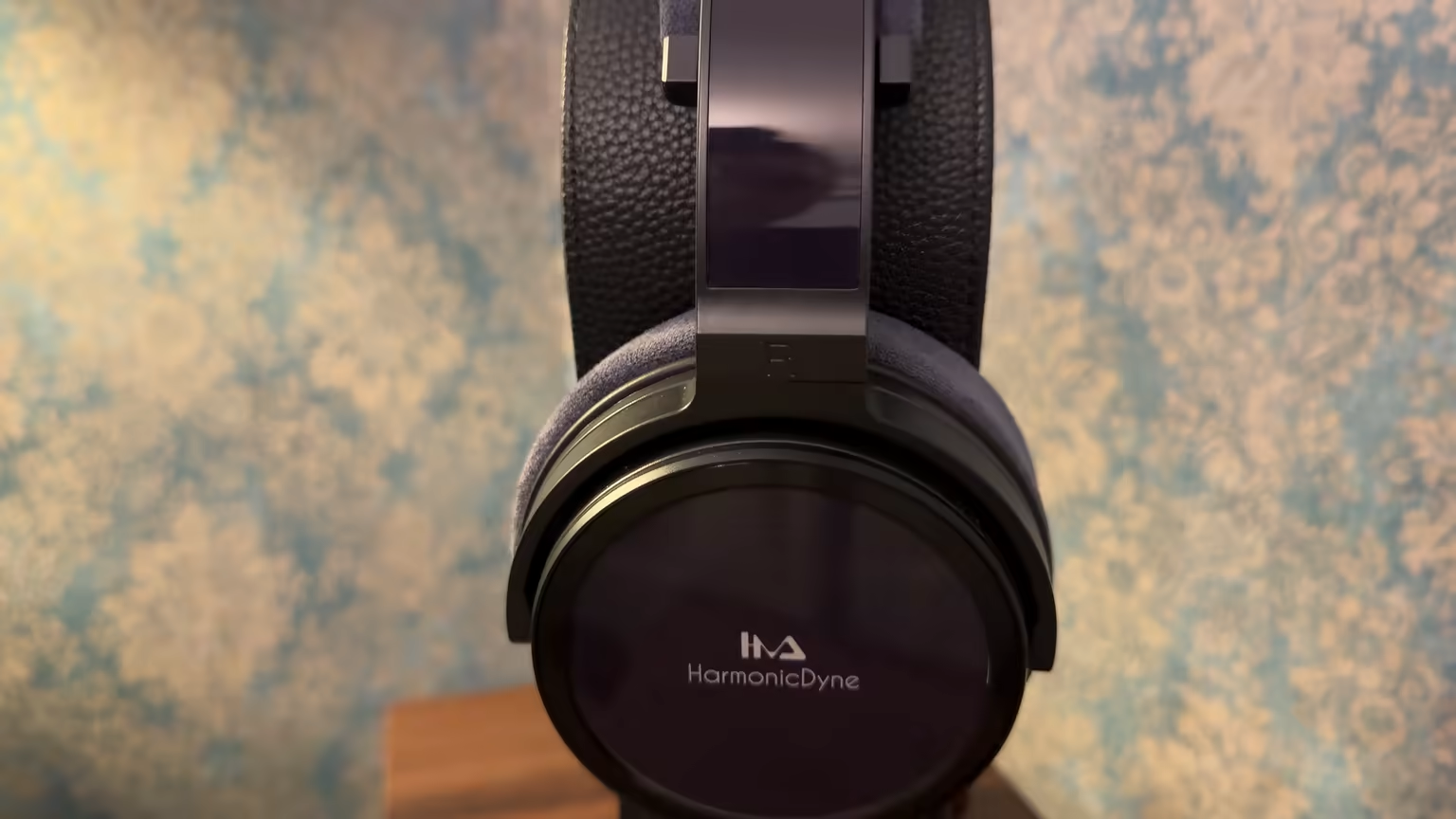 (view larger)
The ear pads are interesting. The openings aren't huge, so for me, and I suspect for many others, my ears do end up touching the pads. It's not perfect, but it's tolerable for a compact headphone. The material is soft, but during longer sessions, you'll feel warmth building. For shorter listening it's comfortable - for longer sessions, it's fine, just a bit warm.
Now, the headband clamping is decent. It's neither loose nor crushing. You can wear it for at least 2 hours before realizing you might want a break. It's balanced - not extreme in either direction.
The cable is one of the highlights. It's thick, sturdy, well-made, and ends in a solid 4.4mm balanced connector. It doesn't feel like something they just threw in. That cable gives confidence - you don't feel like it's going to fail quickly. That's a plus, since you won't feel the need to upgrade the cable for any reason.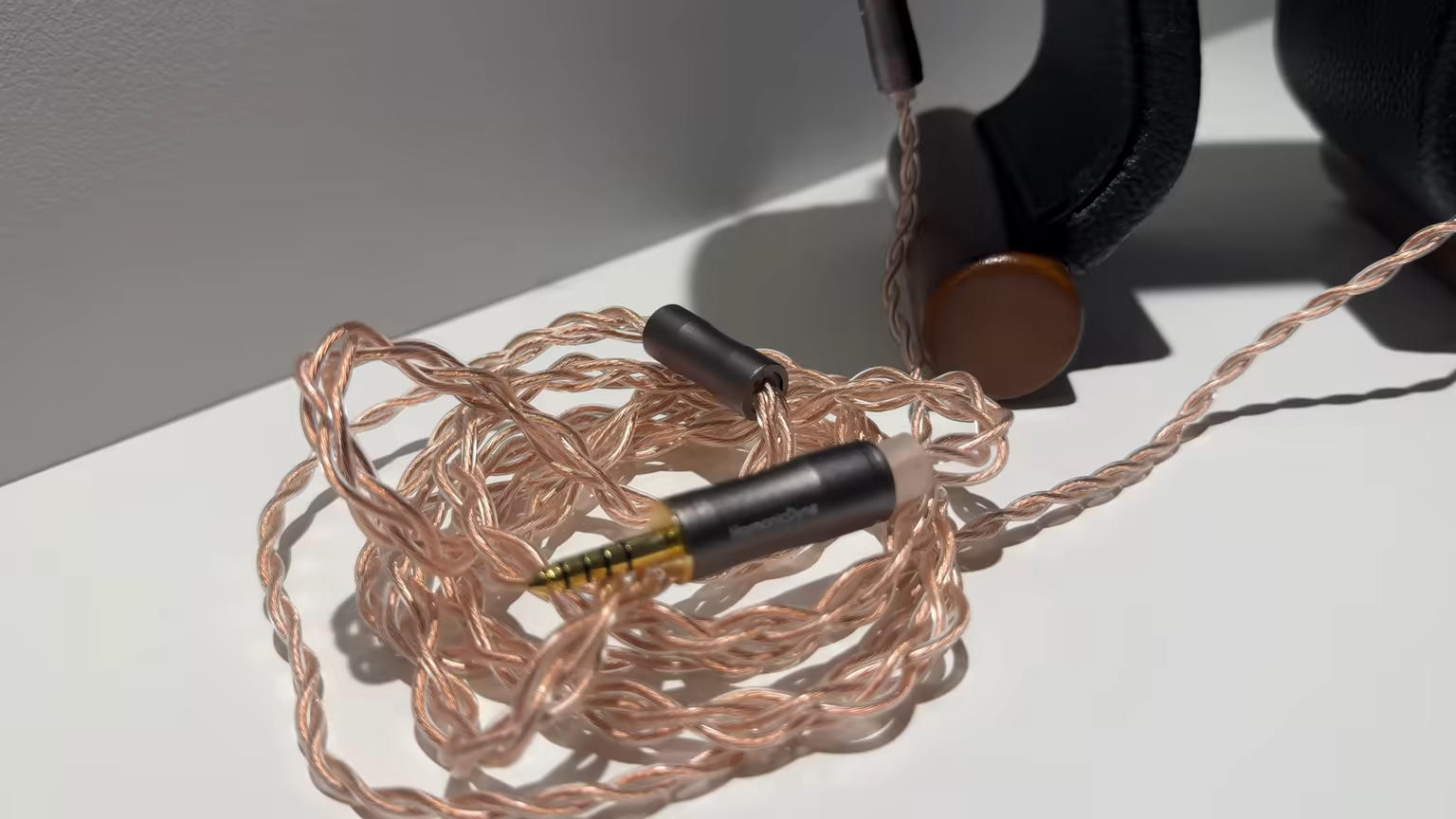 (view larger)
Overall, the Eris manages to walk a line: it doesn't feel like a $2,000 headphone, but it also doesn't feel like a toy. It looks modern, the build is reasonable, the packaging is nicer than average, and the cable is surprisingly solid.
Technologies: 50mm Drivers in a Semi-Closed Cup
The star of the show is a pair of 50mm ceramic-metal dynamic drivers. These long-stroke drivers can move a lot of air without losing control, which is a big reason why the bass hits so hard while staying relatively clean.
HarmonicDyne also went with a semi-closed, four-vent cup design. That balance between closed and open helps the Eris produce that deep, physical low end while keeping some openness in the mids and highs. It's not as airy as a true open-back, but it doesn't have the boxy, boomy character of a sealed cup either.
The included 1.5-meter balanced cable is made from high-purity copper and plugs into dual 3.5mm sockets on the cups, so you can easily run balanced or swap to aftermarket cables. It's thicker and better built than most stock cables in this price range, and you can feel the difference right away.
Comfort-wise, the Eris uses micro-suede and vegan leather pads that feel soft and premium at first touch. All of these small choices - driver materials, venting, cabling, and pad design - add up to a headphone that's deliberately tuned for impact and excitement rather than strict neutrality.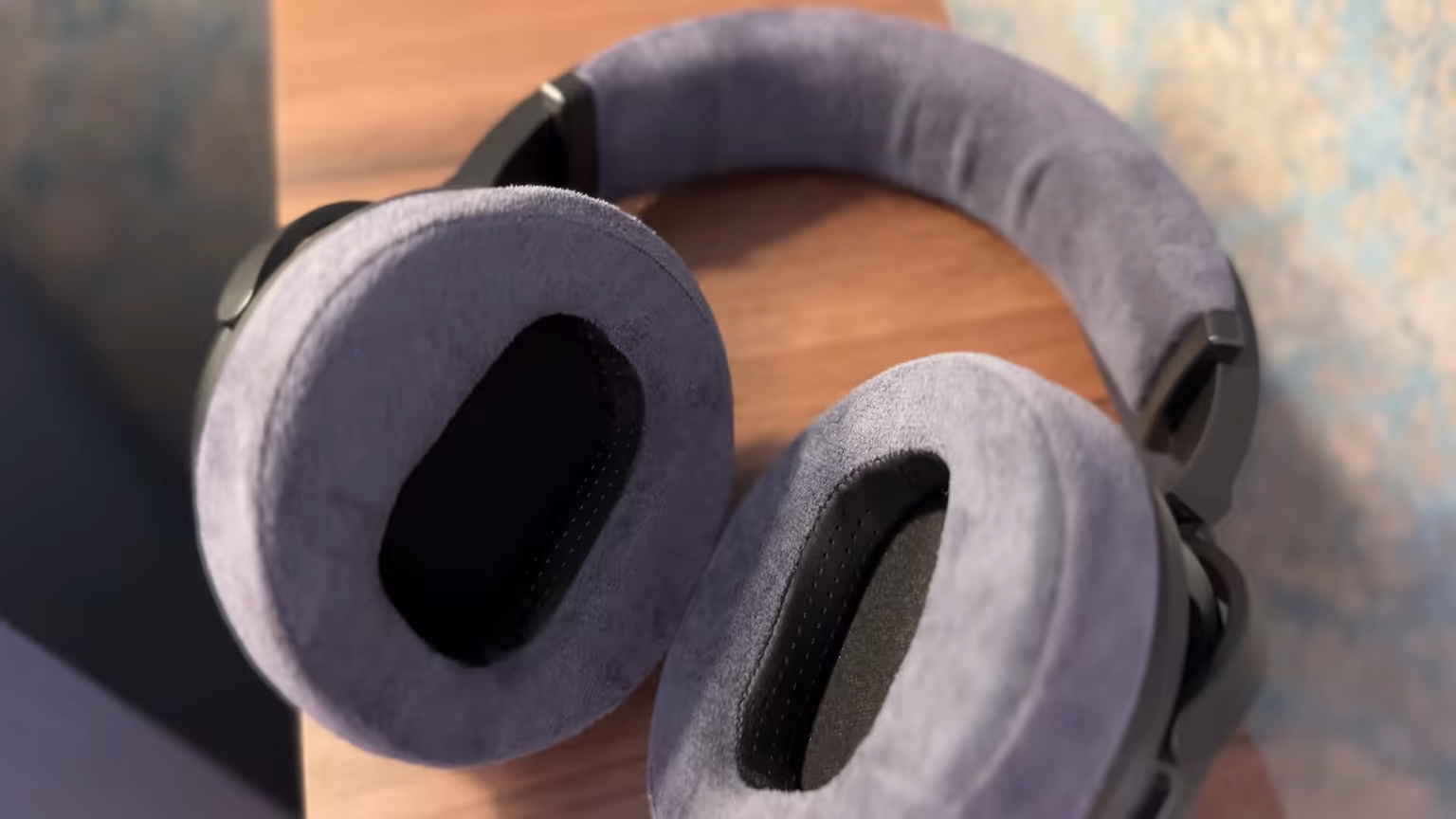 (view larger)
Does It Need an Amp? 32Ω and Very Easy to Drive
On paper, the Eris looks straightforward, but the numbers tell a story about how it behaves in real use. With an impedance of 32Ω and a sensitivity of around 118dB, it's incredibly easy to drive. A modest portable DAC or even a decent phone output can get it plenty loud, so you don't need a giant desktop amp to unlock its performance and it doesn't scale much with source gear.
The frequency range is rated from 10Hz up to 70kHz - most of that top end is way beyond human hearing, but it signals that the drivers are capable of extended treble and sub-bass reach.
Distortion is kept to a respectable 0.2% or lower, which isn't laboratory-grade perfection but more than clean enough for a headphone in this category.
Weight comes in around 320 grams, which strikes a nice middle ground. The semi-closed design also provides a touch of isolation - not like noise-cancelling, but enough to cut down on the background a bit.
Sound Quality: Bass First, Everything Else Second
The first thing that hits you with the Eris is the bass - and I mean really hits you. This is not a gentle low-end lift or a tasteful sub-bass extension - it's a deliberate, overwhelming emphasis on the lowest octaves. Sub-bass extends very deep and carries real physical weight. That power is thrilling with dance music, hip-hop and electronic stuff - if you want visceral impact, this is where it's at.
Because the bass is so dominant, though, there are clear trade-offs. The midrange sits behind a curtain - not crushed or muddy, but recessed enough that vocals lose quite a bit of presence and intimacy. Male and female voices both sound slightly pulled back - there's body, but the immediacy that makes a vocal feel in-your-face is reduced. Instruments that live in the midband - acoustic guitars, pianos, some horns - lose some bite and texture, and complex mixes can feel less transparent because the bass fills a lot of sonic real estate.
Up top, there's a modest treble lift. The Eris isn't harsh, but the highs are pushed enough to give cymbals, hi-hats, and some upper harmonics a touch of sparkle. That helps the tuning avoid total muddiness. Still, compared to the enormous sub-bass level, the treble feels like it's competing for attention rather than balancing the spectrum.
Detail, Dynamics, and Imaging: Impact over Nuance
Technically speaking, detail retrieval and resolution aren't strong suits. Small micro-details - the very fine textures in a guitar pick, the microscopic room reverberations - can get swallowed by the bass energy. Transient response is okay for the price: drums have impact, but the leading edge isn't as razor-sharp as on more neutral, high-resolution cans. Dynamics are present - there's energy and drive - but the extreme subtlety of microdynamics isn't what this headphone does best. It prefers impact over nuance.
Imaging and staging follow a similar theme. Width is there - you get a wide left-to-right spread and a satisfying sense of stereo separation. Depth, however, is the weaker axis - the presentation tends to be fairly forward and dense rather than airy and layered. Instruments are placed broadly across the stage, but precise three-dimensional placement and layering aren't strengths. In short: it feels big and bold rather than finely mapped.
What Music Suits It? Built for Bass-Heavy Music
Genre suitability is pretty straightforward. EDM, trap, hip-hop, bass-heavy pop and a lot of modern electronic music feel fantastic - the Eris turns those tracks into immersive, tactile experiences. Acoustic folk, classical, chamber jazz and anything where midrange timbre and microdetail matter? Less ideal - you'll miss the nuance and the vocal closeness those genres often demand.
One other practical note: because the tuning leans so far into the lows, you need to be mindful of source and volume. On bright, aggressively mastered tracks the treble push can make the combination feel slightly shouty, and on very bassy recordings the midrange becomes even more masked. A light EQ cut in the sub-bass or a small bump to the lower mids can help rescue a lot of detail if you want a more balanced sound without losing the fun factor.
Verdict: Fun First, Accuracy Second
The HarmonicDyne Eris isn't aiming for reference neutrality or studio accuracy. It's a fun headphone that favors visceral low-end punch and sheer musical excitement over analytical detail and absolute realism. If you love big bass and dramatic presentation, you'll probably adore it. If you care most about vocal intimacy, microdetail and natural timbre, you'll notice those things missing. Either way, it makes a very clear statement about what it wants to do - and it does that.
Sound signature
Derived from the words this review uses: each axis runs between two opposite descriptors, and the shape leans toward whichever side the writing does.
- Warm ↔ Bright Sits close to centre
- Relaxed ↔ Analytical Sits close to centre
- Polite ↔ Aggressive Leans aggressive
- Lean ↔ Bass-heavy Leans bass-heavy
- Intimate ↔ Wide stage Leans wide stage
Hear what "aggressive, bass-heavy, wide stage" means: a short synthesised loop, flat and then with those leanings. An illustration of the words, not a recording of the Eris.
Not sure which signature suits you? Find yours with a blind A/B test

Watch the video review
Subscribe on YouTube (opens in new tab)Prefer to read? The written review above covers everything in the video.

- 0:00 HarmonicDyne x Zeos Eris - Epic Collaboration or Overhyped Marketing? (opens in new tab)
- 0:31 Comfort & Build Quality (Premium Packaging, Glossy Plastic, Soft Earpads) (opens in new tab)
- 2:16 Technologies (Ceramic-Metal Drivers, Semi-Closed Cups, Bass Ports, 4.4mm Cable) (opens in new tab)
- 4:11 Technical Specs (Low Impedance, High Sensitivity, Frequency Response) (opens in new tab)
- 5:00 Sound Quality (Tonal Balance, Bass Quantity, Treble Boost, Technicalities) (opens in new tab)
Common questions about the Eris
Is the HarmonicDyne Eris worth it?
Only for some buyers - 6.8/10, Mixed, higher than 1% of everything we have tested, against a catalogue median of 8.1. On value it rates steep: better value exists in headphones, so you are buying performance here, not value. Price: $249.
Who should buy the HarmonicDyne Eris, and who should skip it?
Buy it if you want weight and slam low down, and you do not want to buy an amplifier before you can hear it properly. Skip it if you want the bass to stay out of the mids, and $249 has to buy value as well as performance.
What amplifier does the HarmonicDyne Eris need?
Impedance is 32 Ω. By the rule of eighths the amplifier feeding it wants an output impedance no higher than 4 Ω, otherwise the interaction between the two tilts the frequency response rather than simply making it quieter. Power is the separate question. At most 5.0 mW to reach 110 dB peaks, which is a phone jack or any dongle. The review records 118 dB without saying against what, and the two conventions differ by a factor of 31 at this impedance - so that is the worst case, and the real figure is at or below it.
What else have you tested around the price of the HarmonicDyne Eris?
No head-to-head page for this one yet. The closest reference points we have scored in the same bracket: the HIFIMAN Edition XS at 8.7/10, the HIFIMAN Sundara Closed-back at 6.8/10, and the HIFIMAN HE-R9 at 6.9/10.
Is the HarmonicDyne Eris too bass-heavy?
Almost certainly, and that is the design rather than a mistake. This is not a gentle low-end lift or a tasteful sub-bass extension - it is a deliberate, overwhelming emphasis on the lowest octaves, with real physical weight behind it. The consequence is that the midrange sits behind a curtain: not crushed or muddy, but recessed enough that voices lose presence and intimacy, and acoustic guitars, pianos and horns give up some bite and texture.
What music suits the HarmonicDyne Eris?
EDM, trap, hip-hop, bass-heavy pop and most modern electronic music - it turns those tracks into immersive, tactile experiences and it is genuinely thrilling. Acoustic folk, classical, chamber jazz and anything that lives on midrange timbre or microdetail is the wrong fit; you will miss the nuance and the vocal closeness those genres need. It makes a very clear statement about what it wants to do, and it does that.
Can you EQ the Eris into balance?
Partly, and it is worth trying before writing it off. A light EQ cut in the sub-bass, or a small bump to the lower mids, rescues a lot of detail without losing the fun. Two practical notes: on bright, aggressively mastered tracks the treble push can make the combination feel slightly shouty, and on very bassy recordings the midrange gets masked further still. So source and volume both matter more here than on a neutral headphone.
Do you need an amp for the HarmonicDyne Eris?
No. At 32Ω with sensitivity around 118dB it is incredibly easy to drive - a modest portable DAC or even a decent phone output gets it plenty loud - and it does not scale much with better source gear either. That is unusual and it is convenient: whatever you already own will get essentially everything this headphone has to give.
Will the Eris fit large ears?
Possibly not comfortably. The pad openings are not huge, so my ears end up touching the pads and I suspect that will be true for many people. It is tolerable rather than ideal for a compact headphone. The material is soft, but warmth builds over a longer session. Clamp is well judged - neither loose nor crushing - and you can get at least two hours in before you start thinking about a break.
Is the Eris's included cable worth keeping?
Yes - it is one of the highlights. It is thick, sturdy and well made, 1.5 metres of high-purity copper terminating in a solid 4.4mm balanced connector, and it plugs into dual 3.5mm sockets on the cups so aftermarket swaps stay easy. It does not feel like something thrown in to complete the box, and it gives you no reason to spend money on a replacement.
How good is the Eris's imaging?
Wide rather than deep, and that pattern runs through everything technical about this headphone. You get a genuinely wide left-to-right spread with satisfying stereo separation. Depth is the weaker axis - the presentation is fairly forward and dense rather than airy and layered - so instruments are placed broadly across the stage without precise three-dimensional positioning. It feels big and bold rather than finely mapped, which is the same trade the tuning makes.