Headphone amplifier reviews - standalone amps and all-in-one DAC/amp combos for driving full-size and in-ear headphones. R2R and delta-sigma, tube and Class A solid-state, single-ended and balanced - each pushed through hard-to-drive planars and sensitive IEMs on the same reference chain so the verdict reflects how it drives real loads, not the spec sheet.
4 reviews published so far, scored against the same reference list.
Filter by driver / topology, price and connectivity. Pick within a row to widen; combine rows to narrow. Only options the catalogue actually covers are shown.
Driver / topology
Price
Connectivity
Headphone AmpsSerenade
9.3
Reference
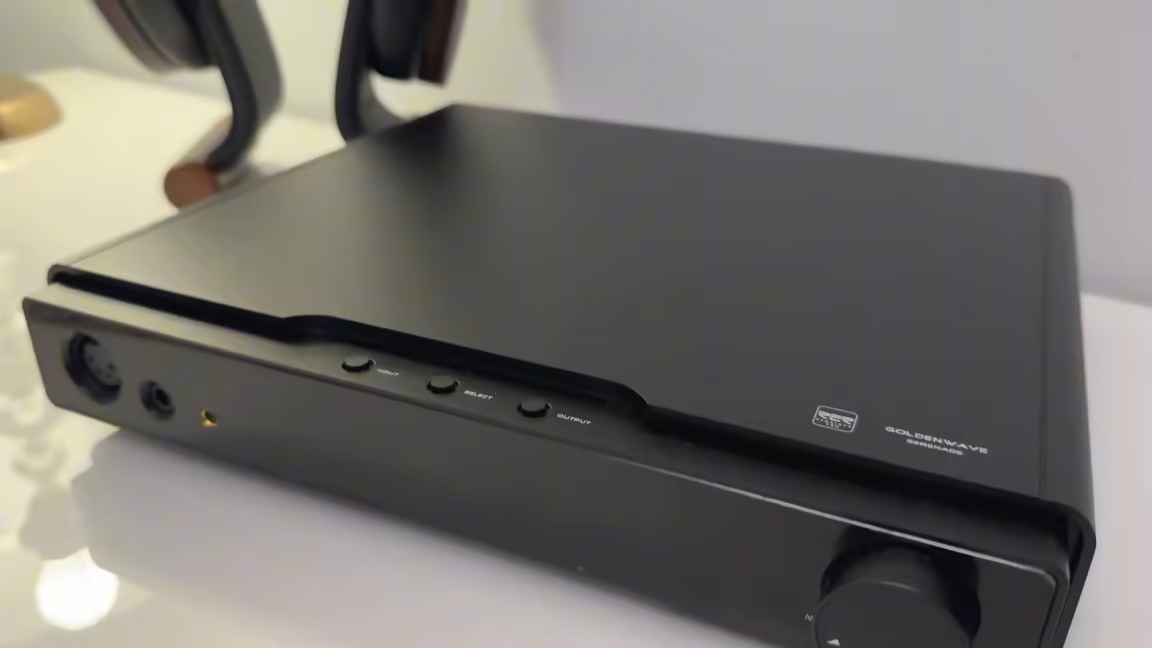
HIFIMAN Serenade Review: One Box to Replace Your DAC, Amp, and Streamer
HIFIMAN's all-in-one R2R DAC, discrete Class A amp, and hi-res network streamer in one 3kg box - lush, musical, and powerful enough to drive almost anything.
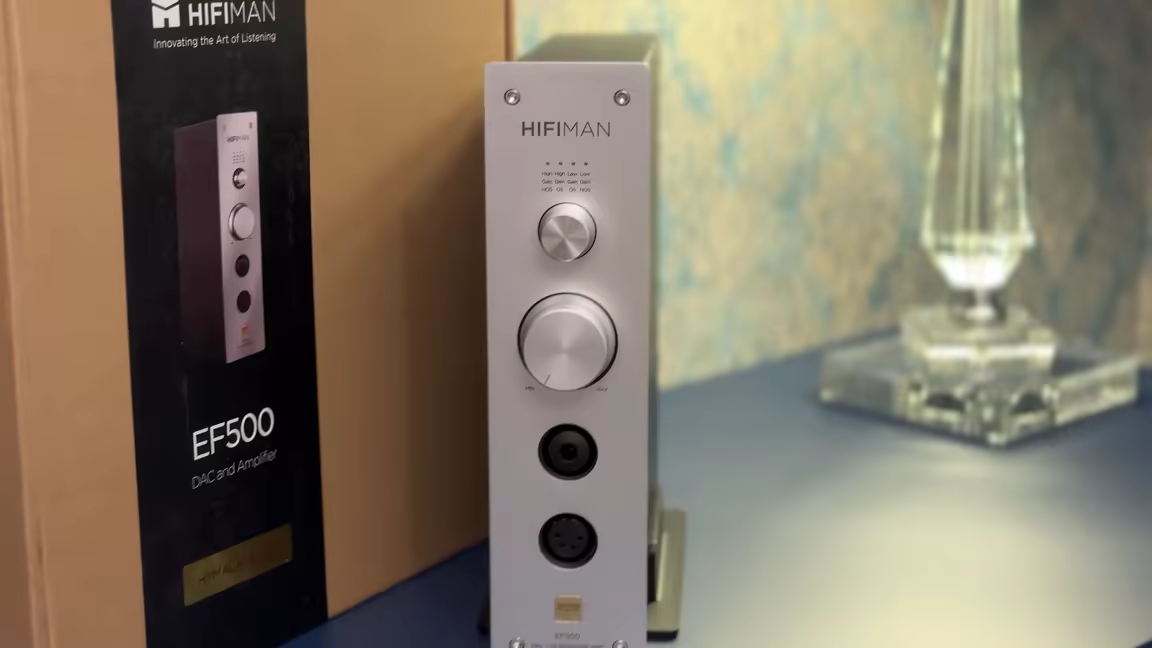
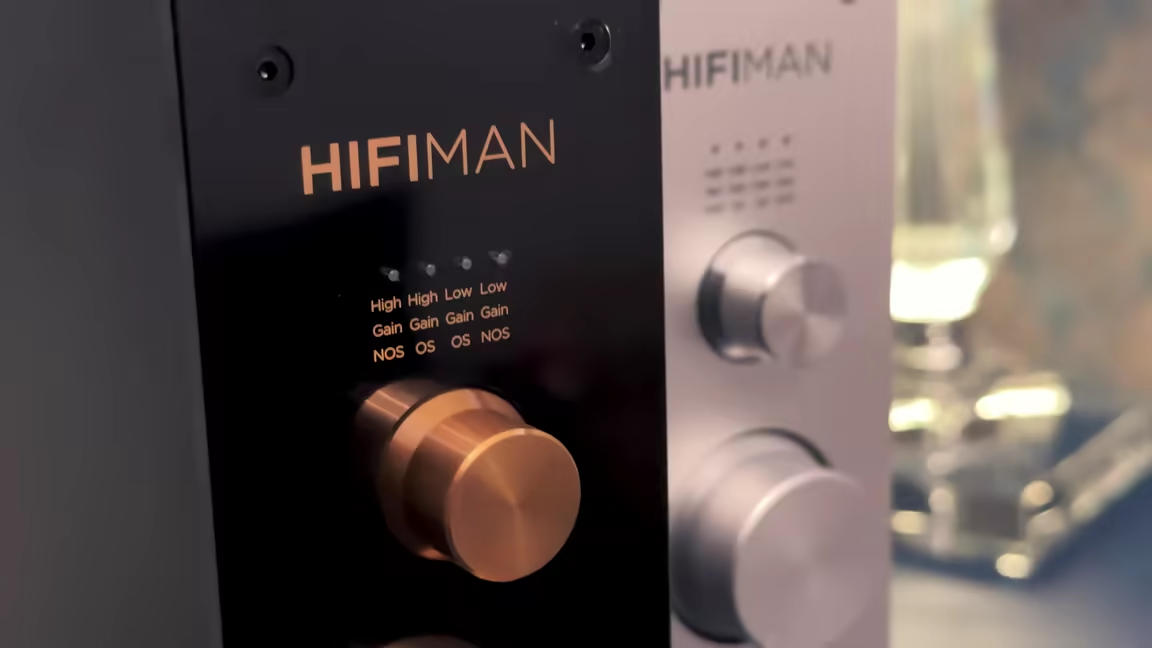
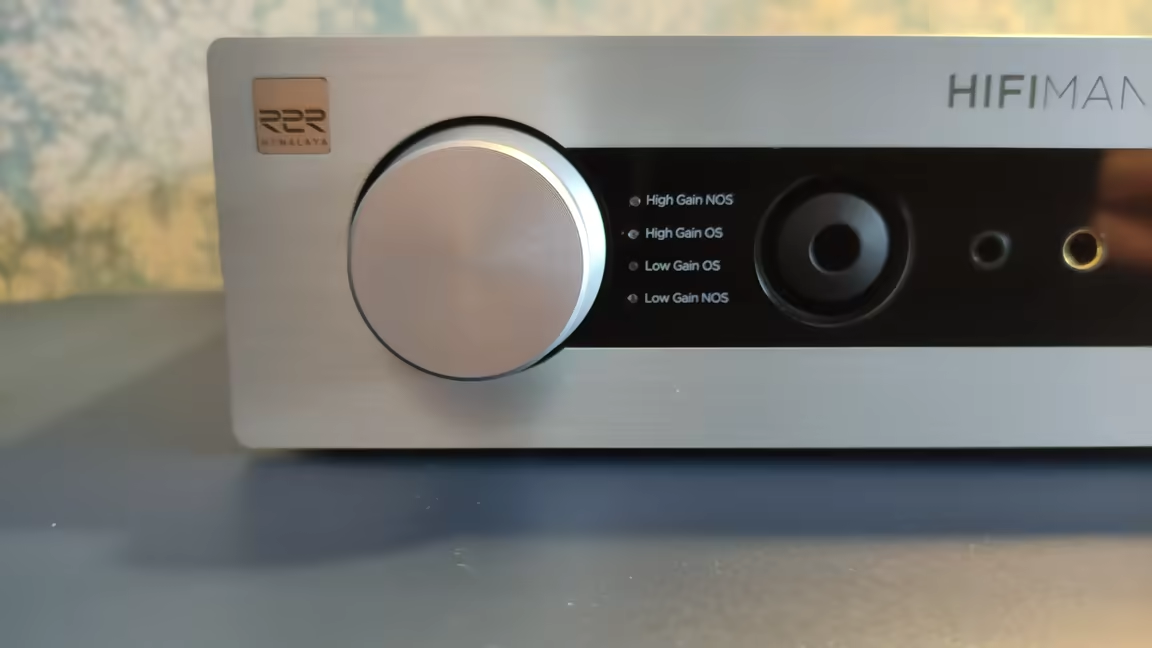
HIFIMAN EF500 Review: The Cheapest Himalaya R2R DAC
The most affordable HIFIMAN unit to feature their proprietary Himalaya R2R DAC chip - 4.5W per channel balanced, network streaming, and a vertical tower form factor.
HIFIMAN EF499 Review: A Real R2R DAC/Amp Under $300
A balanced R2R DAC/headphone amp with built-in network streaming for under $300 - warm, musical, and a serious one-box answer to the separates-or-not question.
HIFIMAN EF400 Review: R2R at $399, but Check the Power First
An entry-level Class AB amp/DAC with HIFIMAN's Himalaya R2R DAC, fun subjective sound, and a slightly soft character - underpowered for the hardest planar loads.
Every headphone amplifier on this page drove the catalogue's reference planar, the HIFIMAN HE1000se, fed from the Denafrips Enyo 15th DAC and Hermes 12th transport. Output is measured for clipping headroom into the actual load rather than the spec-sheet nominal impedance, so what gets scored is the voltage and current the amp really delivers at musical levels. Speaker power amps, integrated amps and line preamps are reviewed separately, on the speaker amps & preamps hub - a desktop headphone amp and a speaker amp are not the same buying decision, and this site never ranks them against each other.
Continuous output into the actual load and peak transient capability, measured at the impedance the headphone actually presents rather than its nominal spec. Whether the amp brings the catalogue's hardest-to-drive planars to reference level with crest-factor headroom still in hand.
Output impedance behaviour
The amp's own source impedance against the headphone's. Keep it well below the headphone's figure or the frequency response starts to follow the headphone's impedance curve instead of the recording - the single most common way a technically fine amp ruins a technically fine headphone.
Noise floor against sensitivity
Quiet between notes on a sensitive IEM, dynamic swing on demand from an insensitive planar, and no soft compression on transients. Output-stage noise matters more here than anywhere else in the chain, because a sensitive in-ear turns hiss into a permanent part of the sound.
Tonal character
How neutrally the amp delivers the signal: solid-state transparency, the harmonic texture of Class A, the upper-harmonic spice of well-implemented tubes. Both transparent and characterful approaches can earn high scores; both have to be coherent.
Build, connectivity and value
Headphone outputs of each type, single-ended and balanced, gain options, the feel of switches and knobs over multi-month listening windows - and whether the amp's character pairs across a range of headphones rather than flattering one pairing.
How to read the scores: A 9.0 headphone amplifier is a category benchmark: reference-tier drive, low-distortion electronics, and a coherent voicing in one box. An 8.0 is the top of its price bracket without being category-defining. The lower the score, the more specific the flaw - not enough voltage or current for the load, audible coloration that does not serve the music, or build below the price bracket.
Terms you will hit in the reviews
Class A
An amplifier topology that runs both output devices on continuously at high bias. Lowest crossover distortion, hottest operation, lowest efficiency. Often described as the most "natural" sounding.
Class AB
The mainstream hi-fi topology, where output devices share the signal across a small overlap region. Efficient enough to scale to high power, low enough crossover distortion to satisfy audiophile demands.
Output impedance
The amplifier's own resistance, looking back into its headphone jack. High figures let the headphone's impedance curve shape the frequency response; low figures leave the recording alone.
Balanced (XLR / 4.4mm)
A signal connection that carries the two phases separately. On a headphone amp the practical effect is usually the doubled voltage swing of the topology behind it, not the noise rejection the connector is named for.
We do not score headphone amplifiers by published wattage, by topology marketing, or by tube nostalgia. The rubric is built around measured drive into real headphone loads and weeks of listening with the actual reference transducers on the end of the cable.
Headphone Amps reviews: common questions.
Buying advice, terminology, and how the headphone amps category is reviewed on The Audio Stuff.
How much power does a headphone amplifier need?
It depends on the headphone's impedance and sensitivity: a 600 ohm Sennheiser HD 800 needs orders of magnitude more voltage than a 32 ohm Audeze, and a low-sensitivity planar like the Susvara wants watts where a sensitive IEM wants milliwatts. The headphone power calculator gives the exact requirement from those two numbers, so you can match drive to the load instead of guessing.
Tube amps vs solid-state: what is the difference?
Tubes typically add a small amount of even-order harmonic distortion that many listeners describe as warmer or more dimensional, especially with vocals and acoustic instruments. Solid-state aims for transparency: lower distortion, flatter response, more current on tap. Output-transformerless (OTL) tube amps also run high output impedance, which suits high-impedance dynamics but can soften the bass of low-impedance planars.
Do I need a balanced amplifier for headphones?
For most headphones, no. Single-ended is fine and often electrically simpler. Balanced amplifiers double the voltage swing on tap, which helps with low-sensitivity flagships (Susvara-class) that need extreme drive, and usually lower the noise floor a few dB. If your headphone is easy to drive, balanced topology buys you nothing audible.
How do I match a headphone amplifier to my headphones?
Three numbers: headphone impedance, headphone sensitivity, and amplifier output impedance. Output impedance should be at least 8x lower than the headphone impedance (the "rule of eighths") to avoid frequency-response shifts. Power should exceed the calculator-derived requirement at that impedance. Match these and the amp will not be the bottleneck.
Are DAC/amp combos as good as separate boxes?
Under roughly $500 total, a competent DAC/amp combo usually buys more performance per dollar than splitting the budget across two boxes and a pair of interconnects. Above ~$1,000, separates start to win because the DAC and the amplifier can be optimised independently rather than sharing one chassis and power supply. A streaming all-in-one trades some of that ceiling for the convenience of one box and zero cable runs.

 Headphone Amps Serenade