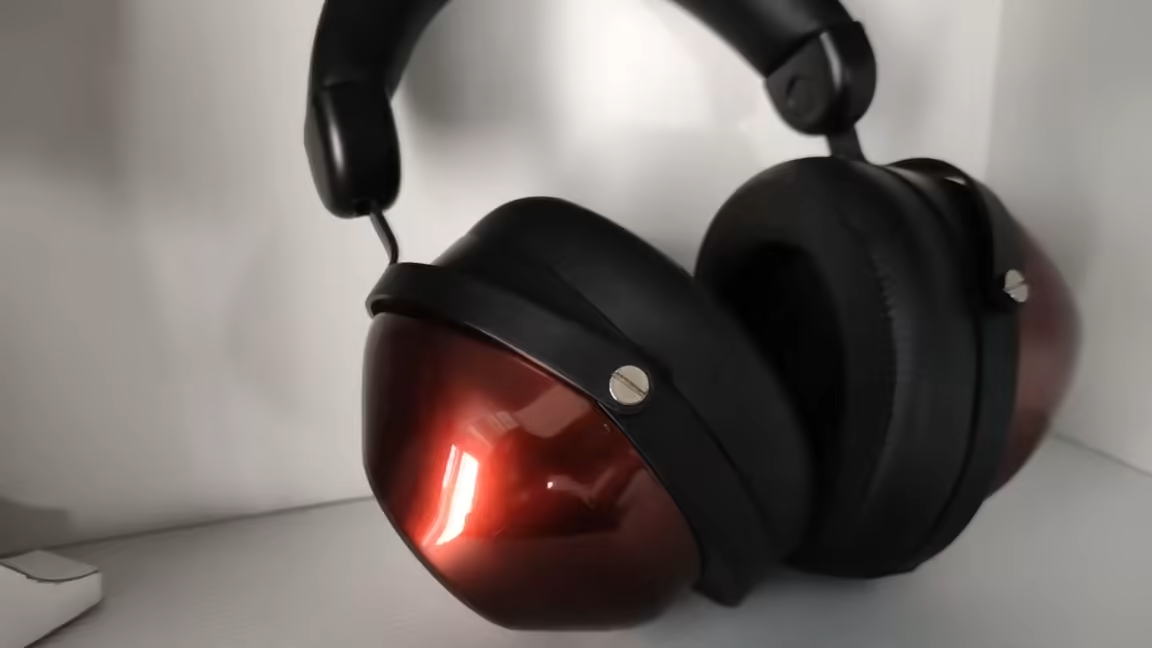
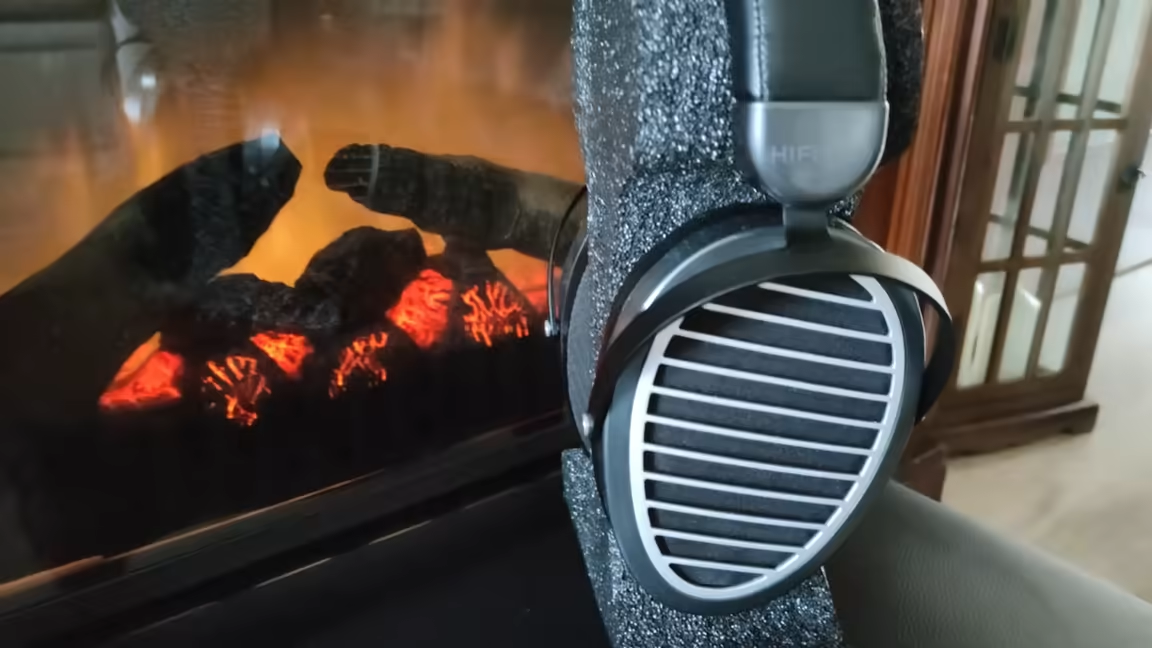
Long-form headphone reviews across open-back and closed-back, dynamic and planar magnetic, full-size and IEMs. Every pair driven on its native amplifier match, compared head-to-head against the category reference list, and scored on the one published rubric before a verdict ships.
30 reviews published so far, scored against the same reference list.
Filter by form factor, driver / topology, price, impedance and connectivity. Pick within a row to widen; combine rows to narrow. Only options the catalogue actually covers are shown.
Form factor
Driver / topology
Price
Impedance
Connectivity
Open-backHE1000se
9.3
Reference
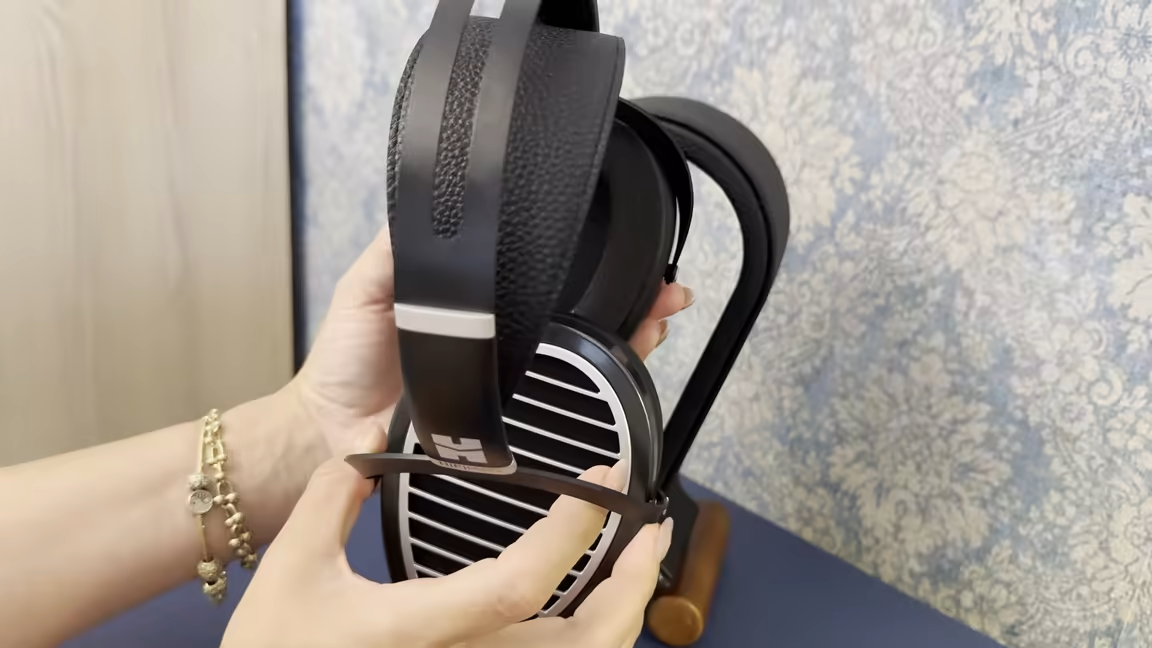
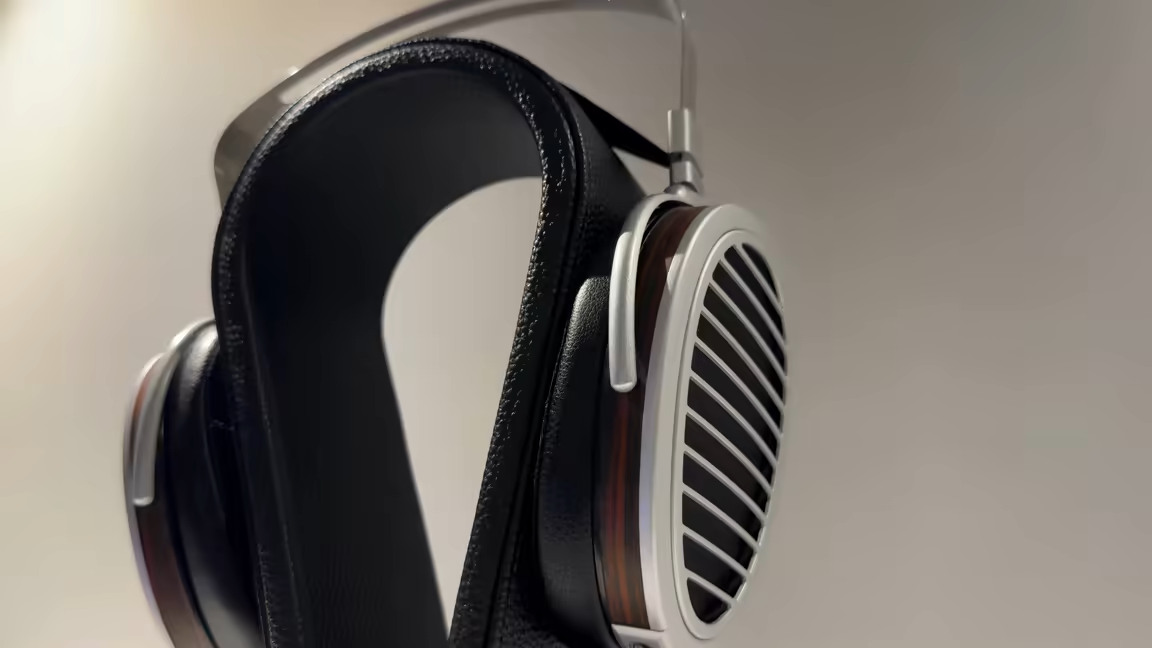
HIFIMAN HE1000se Review: The $1,700 Flagship Planar
An ex-$3,500 flagship, now $1,700: nanometer diaphragm, Stealth Magnets, a holographic soundstage, and state-of-the-art detail - bright, honest, merciless with bad sources.
HIFIMAN HE1000 Stealth Review: Flagship Planar at a Lower Price
A years-old HIFIMAN flagship, cheaper than ever: Stealth Magnets, a nanometer diaphragm, a wide open soundstage, and a fun, bright tuning - mind the treble peaks and the large fit.
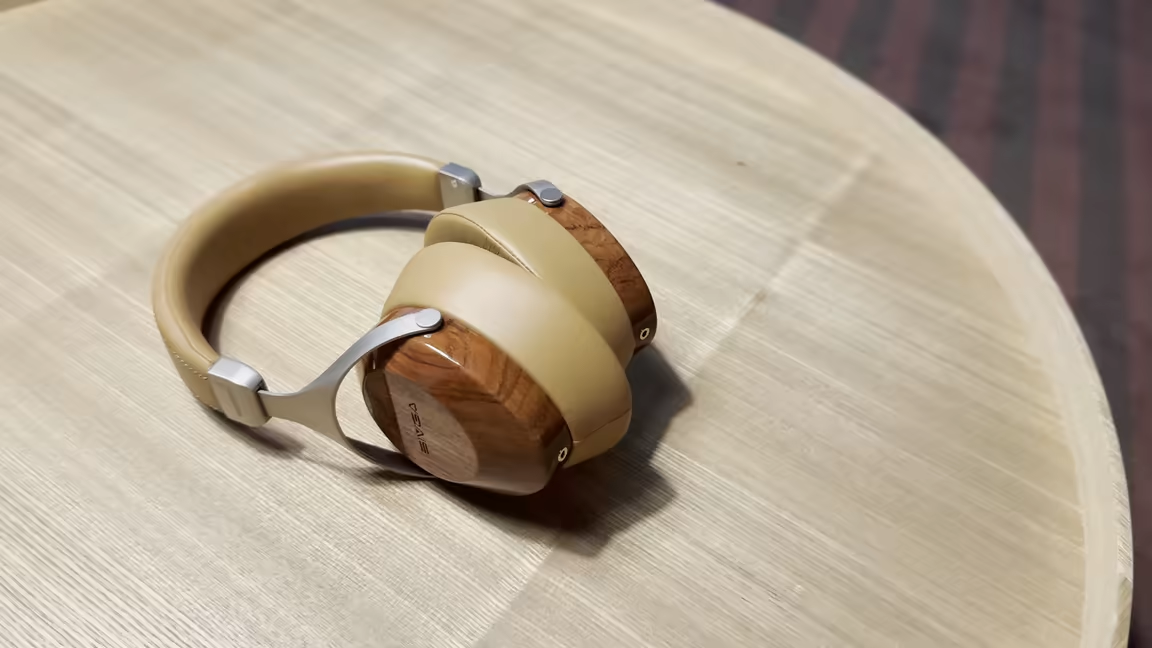
Sivga SV021 Pro Review: A Fun, Wooden Closed-Back for $179
A $179 wood-earcup closed-back with a fun, bass-forward sound. A revised driver fixes the original's treble sibilance, though isolation and midrange refinement still lag.
Meze 105 Silva Review: The Most Beautiful Headphone Under $500?
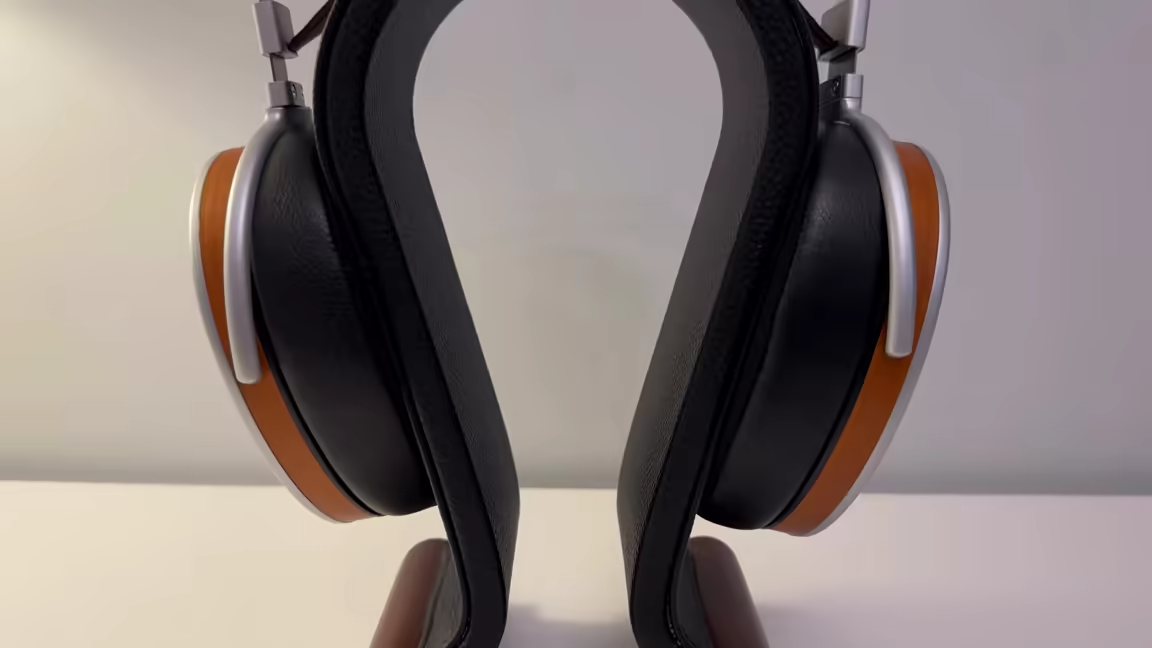
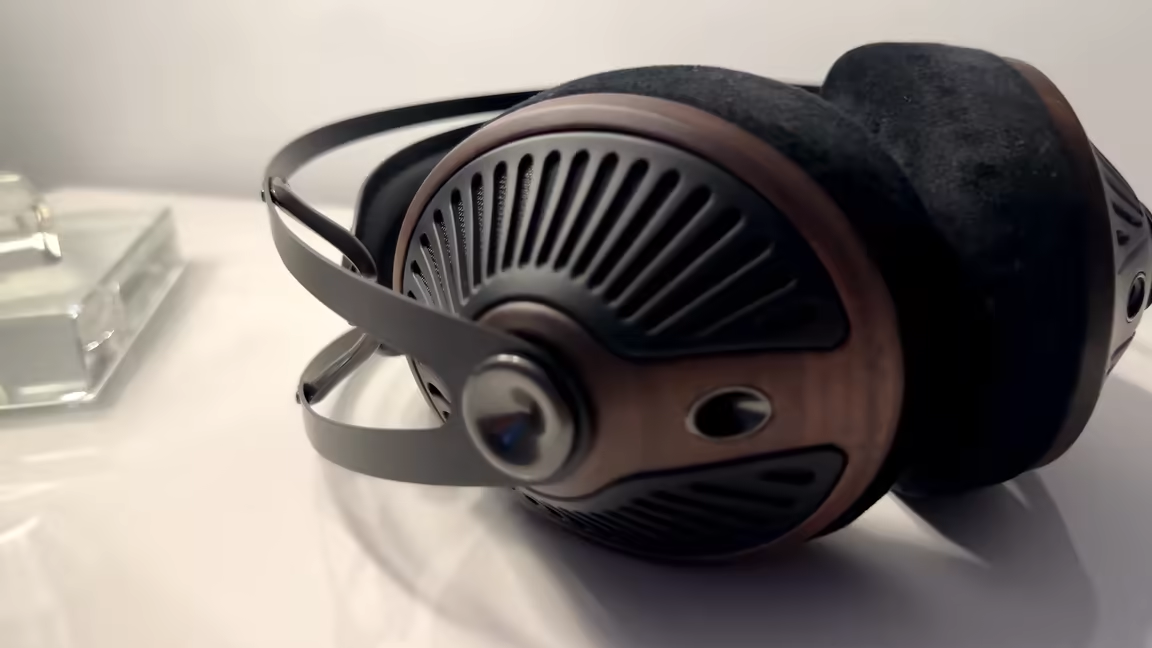
A $499 open-back dynamic with hand-polished walnut cups, a custom 50mm carbon-fiber driver, and a warm, fun, easy-to-drive tuning that punches well above its price.
Kiwi Ears Belle vs Cadenza II vs Orchestra II Review: Which One Should You Buy?
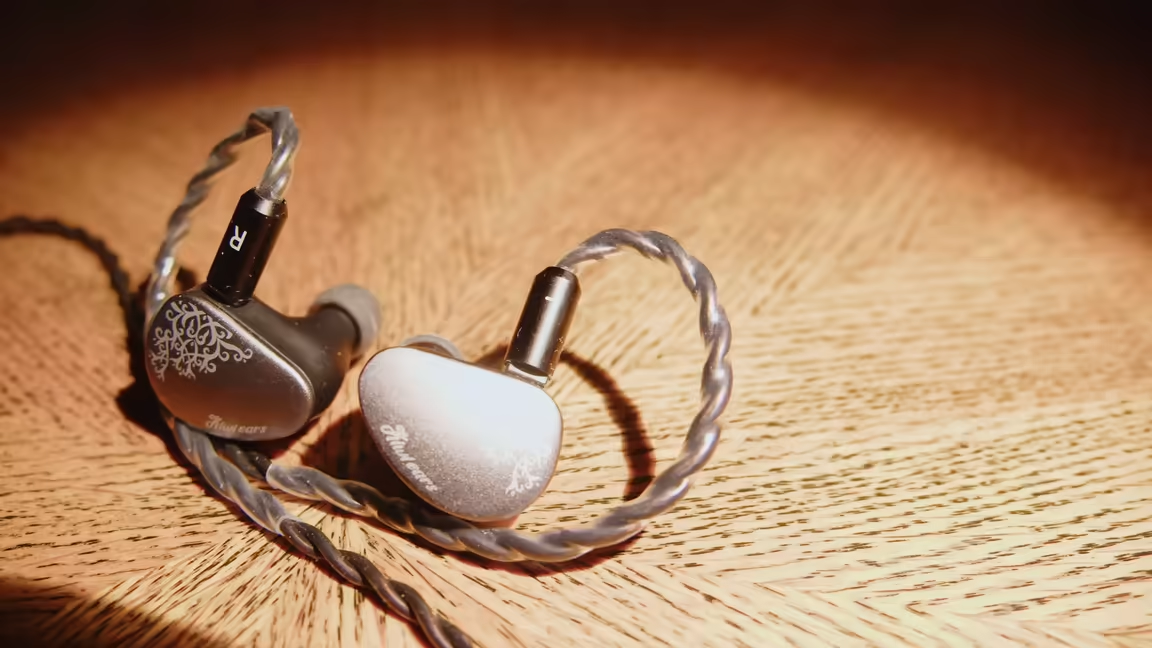
Three Kiwi Ears IEMs head-to-head - the $30 Belle with a mic, the $50 Cadenza II with KARS 2.0, and the 10-BA $350 Orchestra II flagship. Which is the value pick?
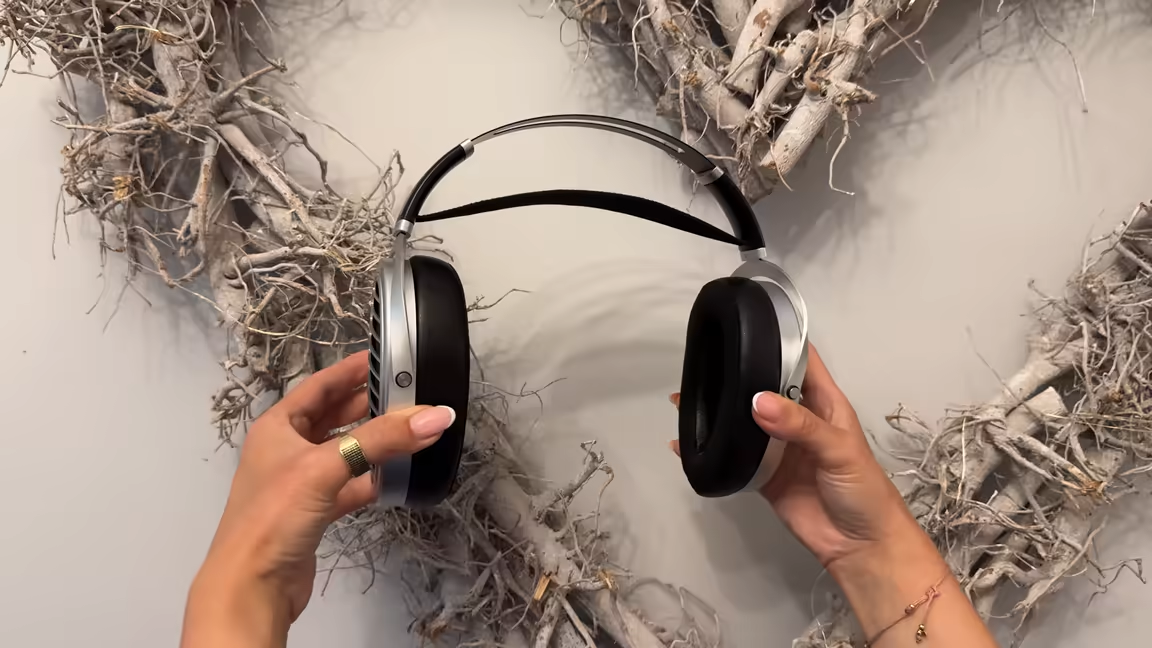
HIFIMAN Arya Unveiled Review: A Planar Too Fragile to Own?
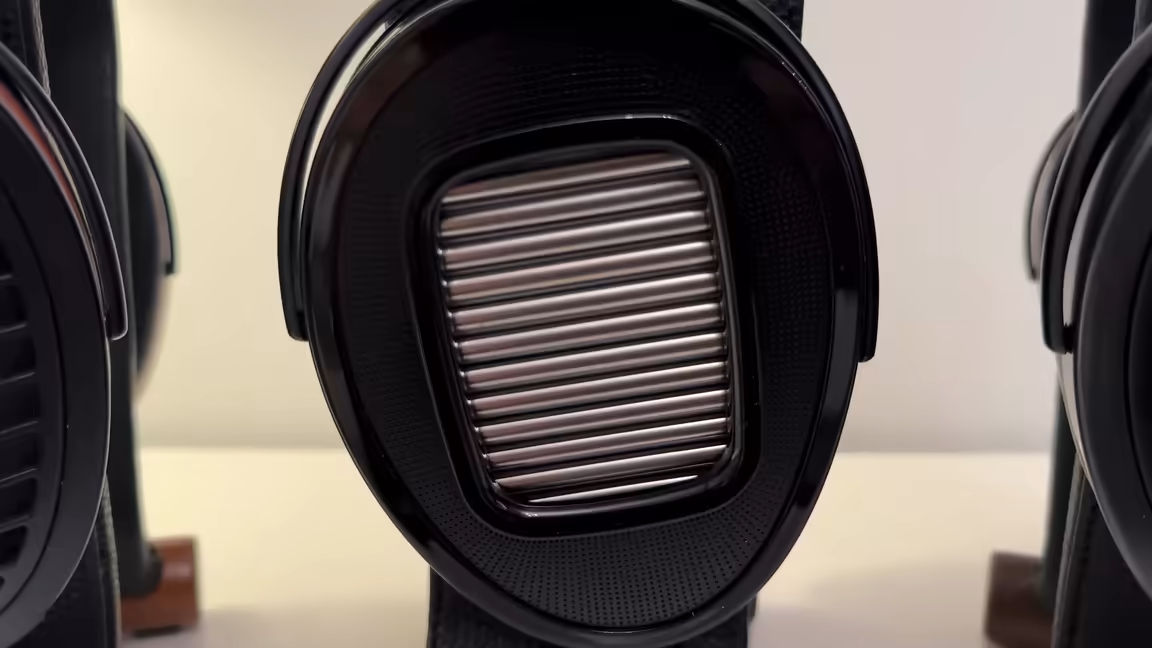
An open-back planar that strips away the outer grill entirely - exposing the driver to deliver dead-silent backgrounds, holographic imaging, and the smoothest Arya treble yet.
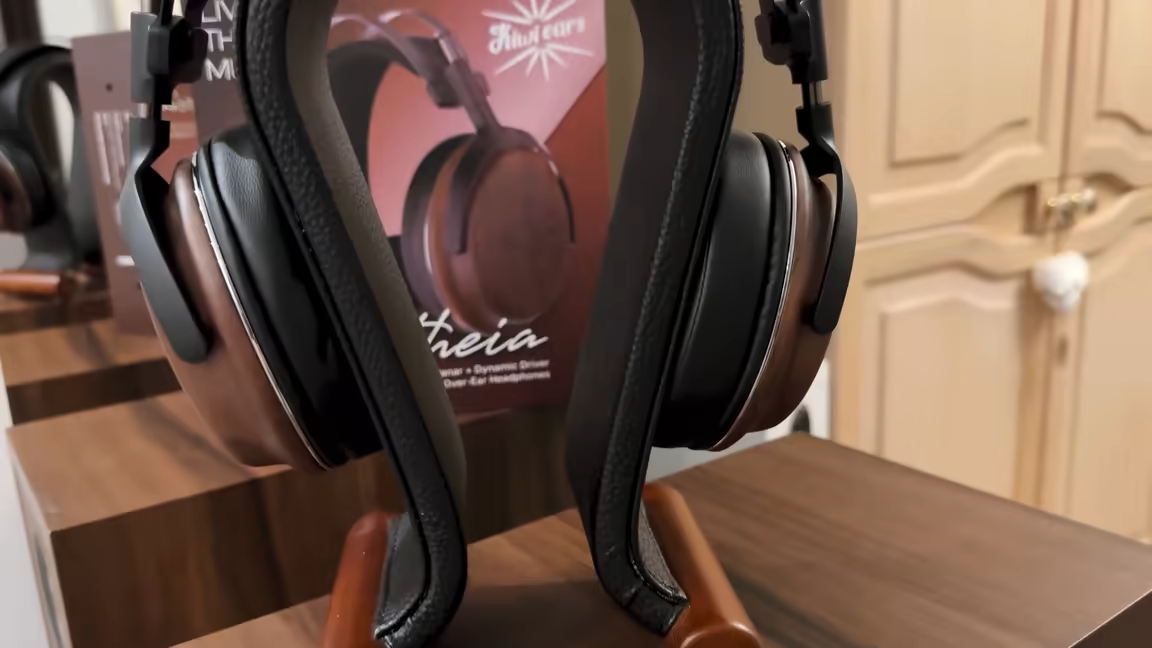
Kiwi Ears Atheia Review: A $349 Planar + Dynamic Closed-Back
A closed-back hybrid headphone pairing a 50mm dynamic driver with a 14.5mm planar - dynamic slam on the bottom, planar speed on top, in a walnut and aluminum chassis.
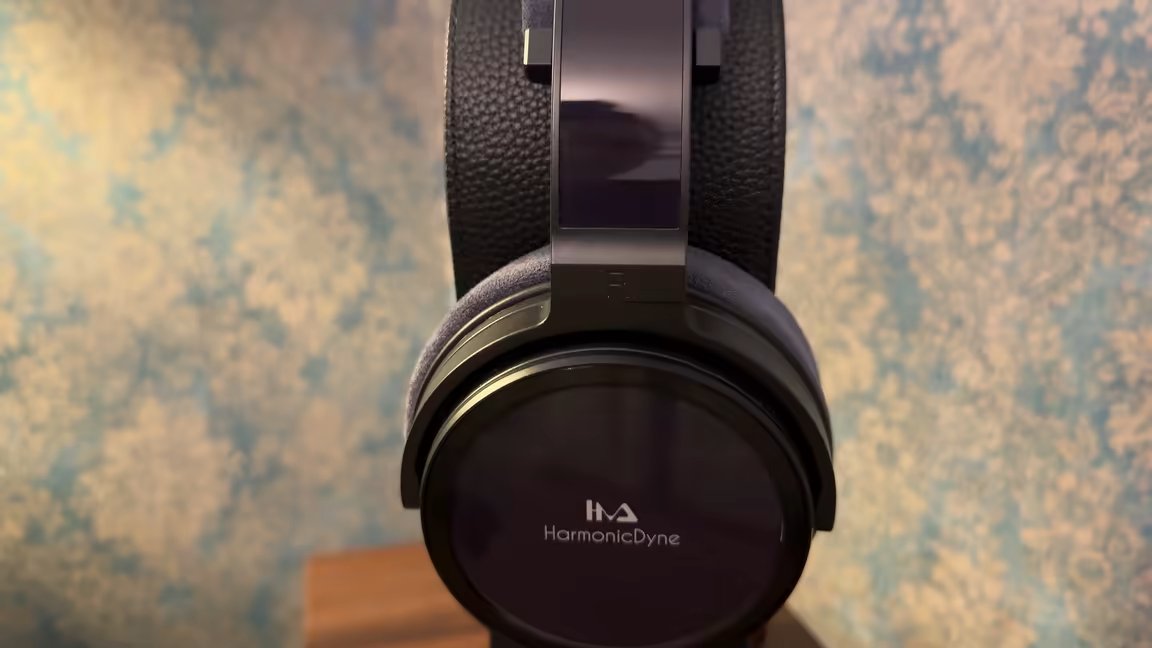
HarmonicDyne Eris Review: The Most Absurd Headphone Bass?
A semi-closed dynamic with 50mm ceramic-metal drivers and a deliberately overwhelming sub-bass tuning - tactile, fun, and tailor-made for EDM, hip-hop, and bass-heavy genres.
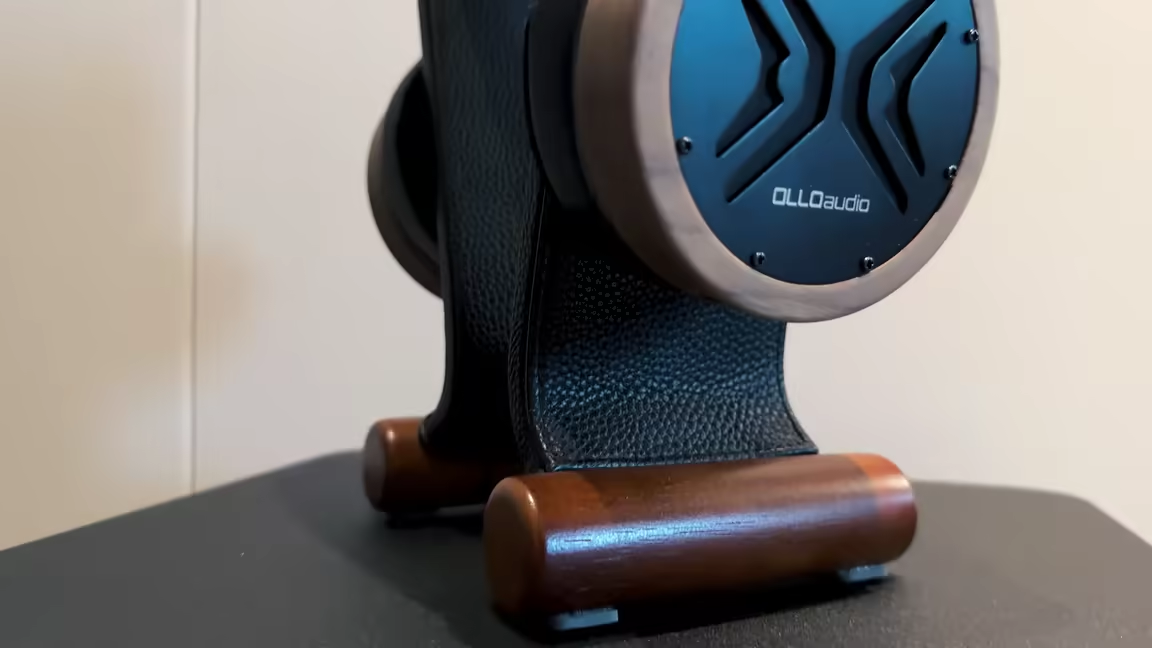
OLLO Audio X1 Review: A $549 Open-Back Studio Headphone
An open-back studio reference headphone with AI-assisted per-unit calibration (±1dB), modular design, real wood cups, and a flat tuning that works for both mixing and music.
Sivga Anser Review: Open-Back Bass That $2k Cans Can't Touch
A $200 open-back dynamic with real wood cups and a tuning that delivers springy, bouncy mid-bass you won't find on $2,000 headphones - musical, fun, and built to last.
KBEAR KB02 Review: A $39 Bone Conduction Hybrid IEM
A $40 hybrid IEM combining a 10mm beryllium-plated dynamic driver with a bone conduction driver tuned for sub-bass - V-shaped, punchy, and surprisingly capable.
Kiwi Ears Orchestra Lite Review: An 8-Driver IEM for $249
An 8-balanced-armature IEM with a 3-way crossover at $250 - mid-forward, naturally warm, with depth-focused staging that's the opposite of most IEMs in its class.
HIFIMAN RE2000 PRO Silver Review: Does IEM Shape Matter for Sound?
An older HIFIMAN flagship IEM with the same topology driver as the RE800 but a CNC-machined aluminum shell - by far the most detailed IEM I've ever heard at $350.
HIFIMAN RE800 Silver Review: An IEM That Will Save You $500
An older flagship IEM with topology driver tech, now $100 (down from $600) - audiophile-grade performance with surprisingly wide staging and an interesting non-target tuning.
HIFIMAN Arya Organic Review: Endgame Resolution at $1,099
A continuation of the Arya series at $1,300 (or $1,100 on sale) - the most resolving headphone at this price, with spectacular detail and bass you can feel.
HIFIMAN Arya Stealth Review: A Warm $759 Planar Flagship
An exceptionally comfortable HIFIMAN flagship at $759 with a rare warm-leaning balance, unbeatable imaging, and a taste of high-end sound at a non-flagship price.
Sivga Robin SV021 Review: A $149 Closed-Back, Messy Mids
A $150 closed-back dynamic with real wood earcups, masterpiece-level build, and a fun, exciting V-shaped sound that breaks the 'budget closed-back' mold.
HIFIMAN Ananda Nano Review: Is This an Upgrade vs Ananda Stealth?
A nanometer-thickness diaphragm trickled down into the Ananda line - one of the best picks in its price range, with detailed treble that can occasionally cross the line.
HIFIMAN Ananda Stealth Review: The Overlooked $359 Planar
An overlooked HIFIMAN planar at $360 with a slightly warm tonality, fantastic imaging, and a 'pleasantly wet' sound that beats the Edition XS in almost every way.
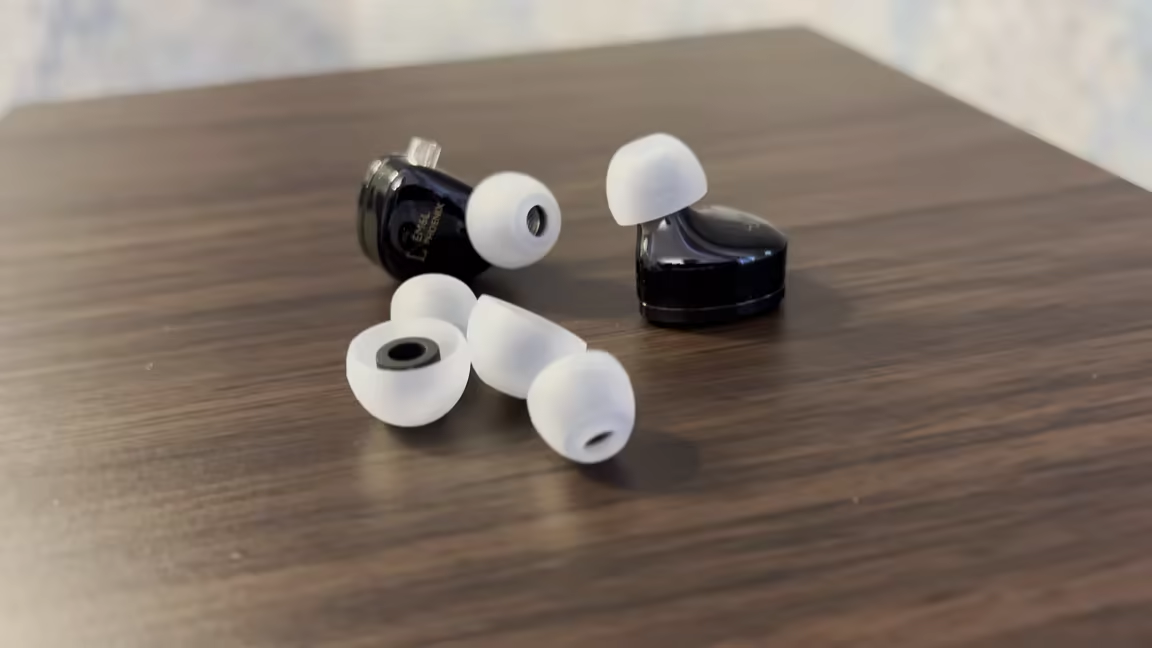
Simgot EM6L Review: Five Drivers, $109, and a Weirdly Big Soundstage
A budget hybrid IEM with 1 dynamic + 4 BA drivers, a 3-way crossover, and an attempt at the Harman 2019 target - mostly successful, with a fun 'weirdly big' soundstage.
Unlike anything you've heard or seen. The E-PROTOTYPE goes to extremes - both positive and negative - using proprietary technologies you won't find anywhere else.
HIFIMAN Svanar Wireless Review: R2R in a $499 Wireless IEM
A $500 single dynamic driver TWS with an R2R DAC and LDAC. It's both lacking and feature-packed at the same time - and it actually delivers where it matters.
HIFIMAN Sundara Closed-back Review: An Entirely Different Headphone
Sundara, but cheaper, better isolation, easier to drive? Nope, not even close. An entirely different headphone that manages to be mediocre in every way that matters to me.
HIFIMAN HE-R9 Review: The $200 Closed-Back Bass Monster
Both terrible and amazing at the same time - the HE-R9 is a closed-back bass monster at $200 with a tuning that's either perfect for you, or completely wrong.
HIFIMAN Edition XS Review: Brilliant at $269, Held Back by the Headband
An exceptional open-back planar at $269 with a sound signature that's hard to find elsewhere - held back only by a controversial headband design choice.
Curated shortlists and free calculators to take you from browsing the list above to a decision you can act on.
Buying guideBest Budget HeadphonesOver-ear headphones under $200 we can recommend, ranked by score against a published reference chain. What the money buys, and what it does not.Read the guide
Buying guideBest Budget IEMsIn-ear monitors under $200, ranked by score against a published reference chain. What a budget IEM does better than an over-ear, and where each gives up.Read the guide
Buying guideBest Headphones Under $500Over-ear headphones under $500, ranked by score against a published reference chain. Open-back, closed-back and semi-open, with the trade-off each asks for.Read the guide
Buying guideBest IEMsIEMs that earned their score on the chain, from budget buds to flagship multi-driver in-ear monitors. Weeks of real listening, ranked, never sponsored.Read the guide
Buying guideBest Open-Back HeadphonesEvery open-back worth recommending, tested against a published reference list, ranked by score. Planar and dynamic, flagship to budget, with the trade-offs.Read the guide
Buying guideBest Planar Magnetic HeadphonesPlanar magnetic done right, entry level to flagship. Tested for weeks each against the published reference list, then ranked by score. Never sponsored.Read the guide
CalculatorHeadphone Power CalculatorHow much amplifier power your headphones need to hit a target listening level. Sensitivity (dB/mW or dB/V), impedance, headroom: required mW, RMS volts, and peak voltage swing.Open the tool
TrainingEQ Ear Training GameTrain your ears to identify frequencies from 20Hz to 22kHz. Adaptive difficulty, five training modes, score tracking, and a shareable Golden Ear Rating.Open the tool
Listening testSound Signature QuizA blind A/B preference test over royalty-free music. Pick by ear between more or less bass, mids, treble, reverb, dynamics, even-harmonic warmth, and stereo width - then get your signature in plain English.Open the tool
Head-to-head comparisons for headphones
The headphones we get asked about most, compared on one page - scores, sound signature, and which one to actually buy.
Every headphone review on this page is the result of weeks of daily listening on the catalogue's reference chain: the HIFIMAN Serenade amp/DAC (Himalaya Pro R2R) fed bit-perfect by the Hermes 12th transport over USB, with the HIFIMAN HE1000se sitting in as the open-back planar reference. Each new pair is volume-matched at the output, compared head-to-head against the published reference list in its price tier, and scored only after the listening window is complete. No first-impressions takes, no demo-room verdicts, no review-on-arrival pieces.
Frequency response evenness across the band, with extra weight on the 2-5 kHz presence region (where mistakes are most audible) and sub-bass extension below 50 Hz (where most headphones fail or fake it).
Technical performance
Detail retrieval, soundstage width and depth, imaging precision, dynamics, and transient speed. The "wow on first listen" factors that fade or strengthen across weeks of use.
Build and comfort
Materials, pad design and replaceability, headband ergonomics over multi-hour sessions, cable hardware and connector type. A flagship that hurts after 90 minutes is not a flagship.
Drive requirements
Sensitivity, impedance, and the actual amplifier voltage needed to reach reference listening levels with proper crest-factor headroom. Hard-to-drive flagships get scored against amps that can drive them, not against dongles.
Value at the tier
Performance versus the reference for the price bracket. A $1,500 headphone is judged against $1,500 references, not against $500 ones, and a $500 pair that holds its own against $1,500 references gets the score it earned.
How to read the scores: A 9.0 on a headphone means the pair sits in the top decile of the reference list, genuinely flagship-class performance, comparable in stature to a 9.0 on a DAC or a speaker. An 8.0 means the pair is the best in its bracket without being a category benchmark. A 7.0 means competent and recommendable but with at least one clear weakness; anything below 7.0 ships rarely and only when the piece is genuinely interesting at its price.
Terms you will hit in the reviews
Planar magnetic
Driver topology using a flat diaphragm with a printed conductive trace, suspended between magnet arrays. Typically lower distortion and faster bass than dynamic drivers, at the cost of weight and drive demand.
Open-back vs closed-back
Open-back vents the rear of the driver to ambient air, giving a wider stage at the cost of isolation; closed-back seals the rear chamber for stronger isolation and more bass impact but a more constricted soundstage.
Sensitivity (dB/mW)
How loud the headphone gets per milliwatt of input. Used with impedance to calculate the amplifier voltage and current required for a target SPL.
Impedance (Ω)
AC resistance of the headphone driver. High-impedance models (250-600Ω) need amplifier voltage; low-impedance models (16-32Ω) need amplifier current.
IEM
In-Ear Monitor, earphones designed to seal inside the ear canal. Tuned and measured differently from full-size headphones; uses a 711-coupler frequency response target.
We do not score headphones by marketing tier, by brand prestige, or by what the rest of the audio press has said. The reference list is the only anchor, and pieces that fail against the references get the verdict they earned regardless of how the manufacturer markets them.
Headphones reviews: common questions.
Buying advice, terminology, and how the headphones category is reviewed on The Audio Stuff.
What are the best audiophile headphones to buy?
It depends on the use case and budget. For open-back home listening, planar magnetic flagships like the HIFIMAN Arya Organic and Susvara dominate. For closed-back portable or studio use, dynamic flagships from Sennheiser, Focal, and Beyerdynamic lead. Sort the headphone reviews by score. Any piece marked "Reference" or "Highly Recommended" is worth a serious listen at its price tier.
Open-back vs closed-back headphones: which is better?
Open-back leak sound both ways but reward you with wider soundstage, better imaging, and more natural air. Closed-back contain sound for office, commuter, and studio tracking use, with stronger isolated bass but a more constricted stage. For pure home listening, open-back almost always wins; for any other context, closed-back is the practical pick.
Are planar magnetic headphones better than dynamic?
For technicalities (detail, bass extension, low distortion at high SPL), usually yes, especially at the high end. For tonality and naturalness, well-tuned dynamics like the Sennheiser HD 600 series and Focal Utopia line still trade blows with planars. Planars also need more amplifier current. Read the review of the specific model rather than buying by topology.
Do I need a separate amplifier for my headphones?
For low-impedance, high-sensitivity headphones (most IEMs, many closed-backs under 32 ohms), no, a phone or laptop drives them fine. For high-impedance (250+ ohm Sennheisers, Beyerdynamics) and demanding planars (HIFIMAN flagships, Audeze), yes, a dedicated headphone amplifier matters. The headphone power calculator gives you the exact power requirement.
What is the best burn-in period for new headphones?
For your ears, not the drivers: 2-4 weeks of regular listening for tonal acclimation. Driver burn-in itself is largely myth for modern transducers; measurements before and after dozens of hours rarely show differences. Treat the listening period as ear training and stage break-in, not driver conditioning.

 Open-back HE1000se