Henry Audio DA 256 Review: A €1,600 Open-Source DAC That Skips XLR on Purpose
Twenty years of one engineer's work in a €1,600 box: a published schematic and firmware, reclocked coax and optical, RCA only, PCM to 24-bit/192 kHz, and every omission deliberate.
higher than 56% of everything we have tested
Value Steep. You are buying performance here, not value.
- Standout
- Thick brushed aluminum case on a real solid wood base, designed in Norway and built in Germany
- Watch out for
- No XLR outputs at all
- Better alternative
- Denafrips Enyo 15th Anniversary: has an easier listen, $1,000 less, scores 0.9 higher.
Is it for you?
- You want a big, out-of-your-head stage
- You want vocals right in front of you
- €1,600 has to buy value as well as performance
Pick #2 of 8 in our Best DACs guide.
€1,600, no XLR, no power supply, capped at 24-bit 192. Twenty years of one man's life went into this DAC, and everything it's missing he cut on purpose.
Build Quality: Aluminum on a Solid Wood Base
Watch this part (0:23)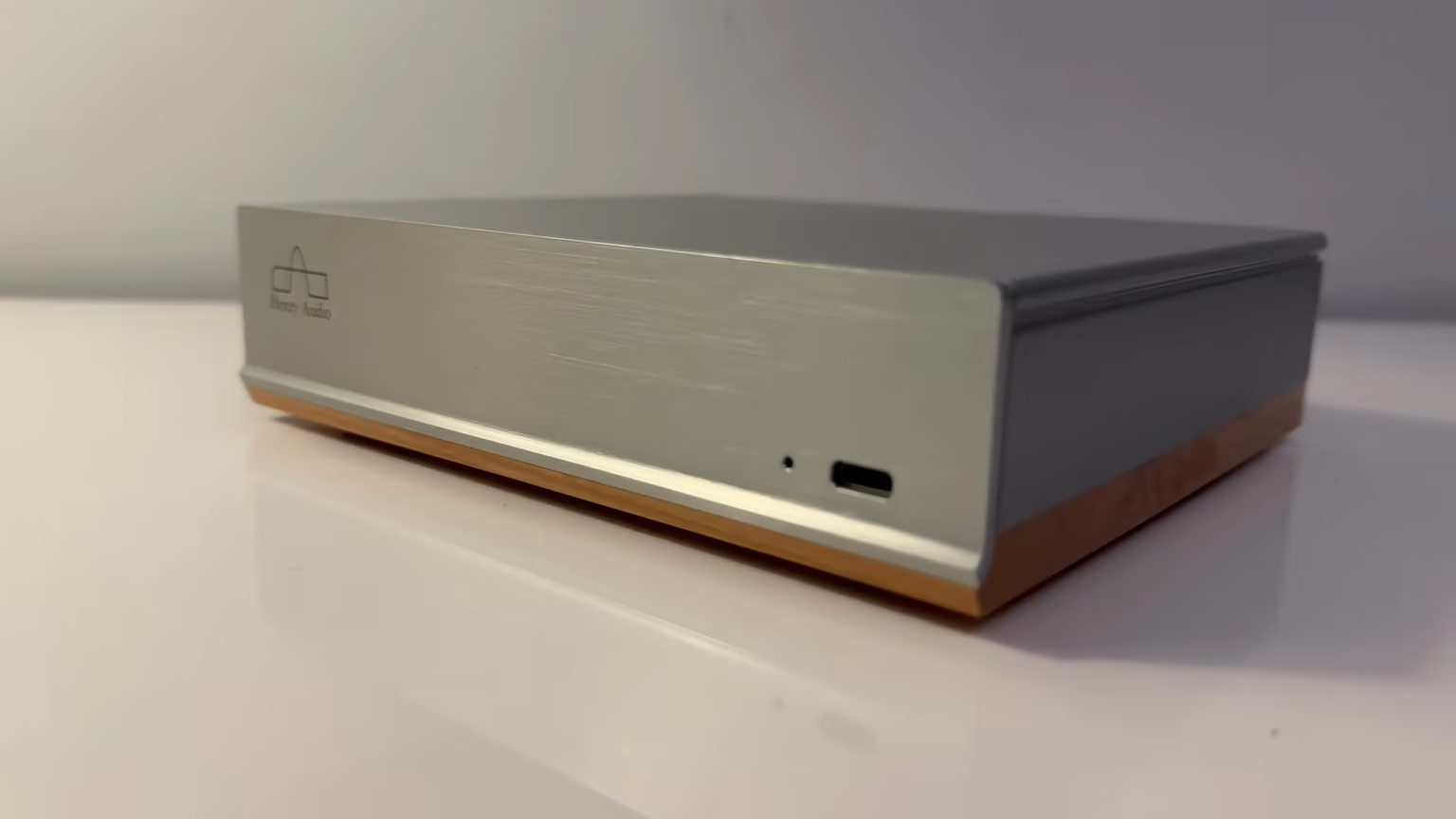 (view larger)
It's a lot smaller than it looks in photos. It's just over 17 centimeters wide and under 5 centimeters tall, so it's closer to a desktop DAC than a full-size component. It's also heavy for that size, a little over a kilogram, and that weight comes from the case. There's no thin sheet metal anywhere. The whole enclosure is thick, brushed aluminum, and the front plate is a separate, thicker piece that sticks out a little past the body. An industrial designer did the case, not the engineer, and it doesn't look like an extruded box with a faceplate screwed on. The logo seems to be engraved into the metal, not printed, so it's not going to wear off.
The base is real, solid wood, not veneer. Henry Audio says the wood also damps vibration going into the electronics. I'm not sure how much that does, but it looks very good against brushed aluminum, and real wood is rare on a DAC at this price.
It's designed in Norway and built in Germany, and by early this year only a little over a hundred had been delivered, so this is a small batch. The fit and finish match that - everything lines up, nothing rattles, and there's no ringing when you tap it. The company is named after the founder's grandfather, Henry, who was a shipbuilder, and the rule is that nothing gets his name on it unless it's rock-solid.
The front is nearly empty. There's the logo, one tiny LED, a USB-C port, and that's all - no display, no knob, no buttons, no remote. In the box there's the DAC and not much else. There's no power supply.
Inputs and Outputs: Five Digital In, RCA Out
Everything you plug in goes on the back, except for one USB-C on the front, which is meant for a phone or a portable player. On the back there's a USB-B input for a computer or a streamer, a coaxial input and two optical inputs, so a TV, a CD transport and a console can all stay connected at the same time.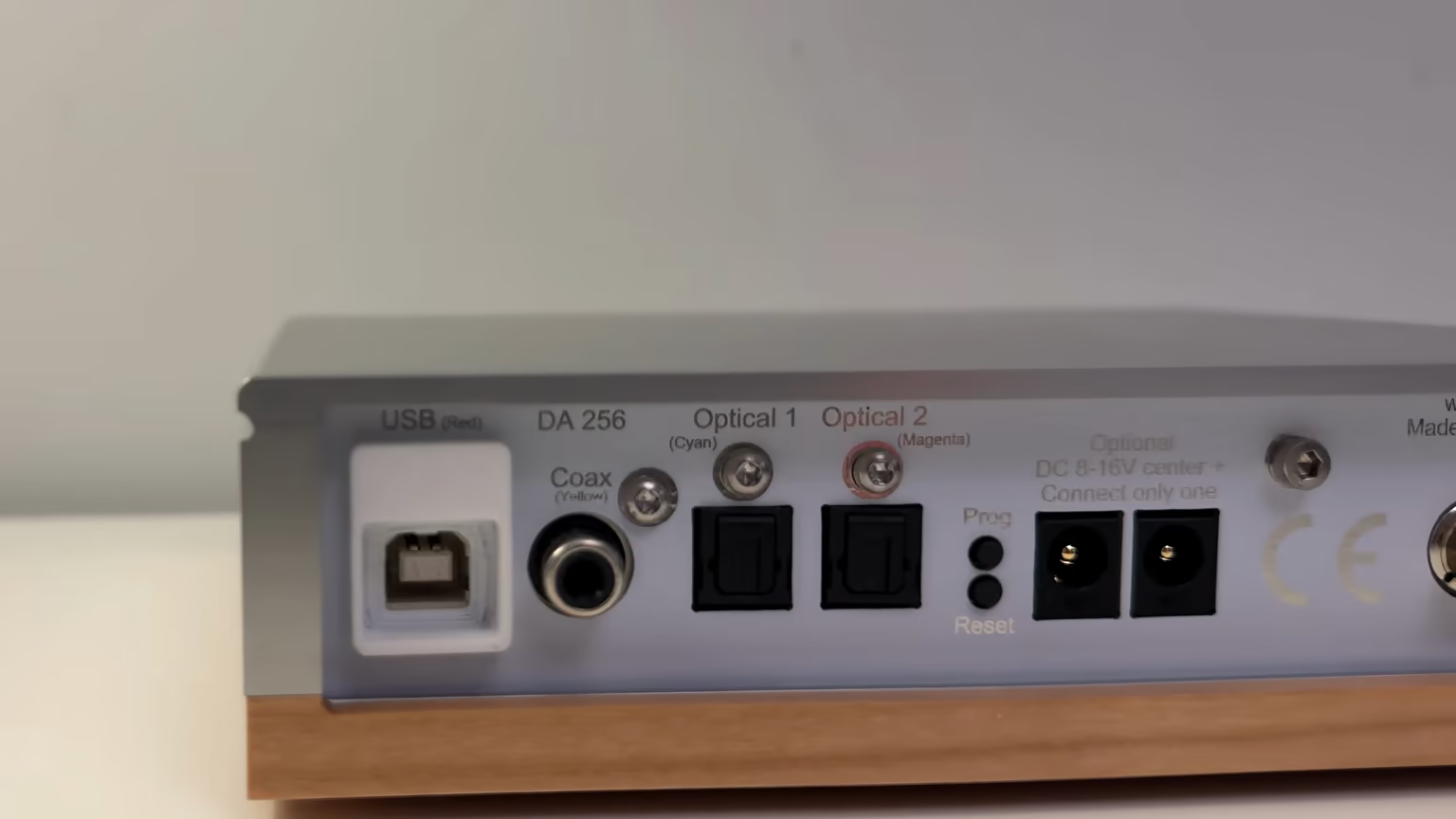 (view larger)
Then there's power. There are two DC barrel jacks, one for a 2.1 millimeter plug and one for a 2.5 millimeter plug, and it takes anything from 8 to 16 volts. Or you plug in nothing and let it run off the USB cable from your computer. Next to the jacks there are two tiny buttons, Prog and Reset, sitting right on top of each other, so at some point you might press the wrong one.
And as for the output, you get one pair of RCAs, and that's it. No XLR. For a normal setup - a regular cable from the DAC into an amp or a preamp with RCA inputs - you're not missing anything, because balanced connections mostly pay off with long cable runs and electrically noisy environments. If your amp only has XLR inputs, this isn't the DAC for you. Why he left it out, I'll get to in a minute.
Features: Open Source, Auto Switching
None of what's missing here is an accident. There's no input selector because the software watches all the inputs at once, and the second one of them starts playing it locks onto it and the LED changes color. You connect everything, press play on whatever you want, and that's the whole interface. There's no volume control either - it's a fixed line-level output, so volume happens at your preamp or amp.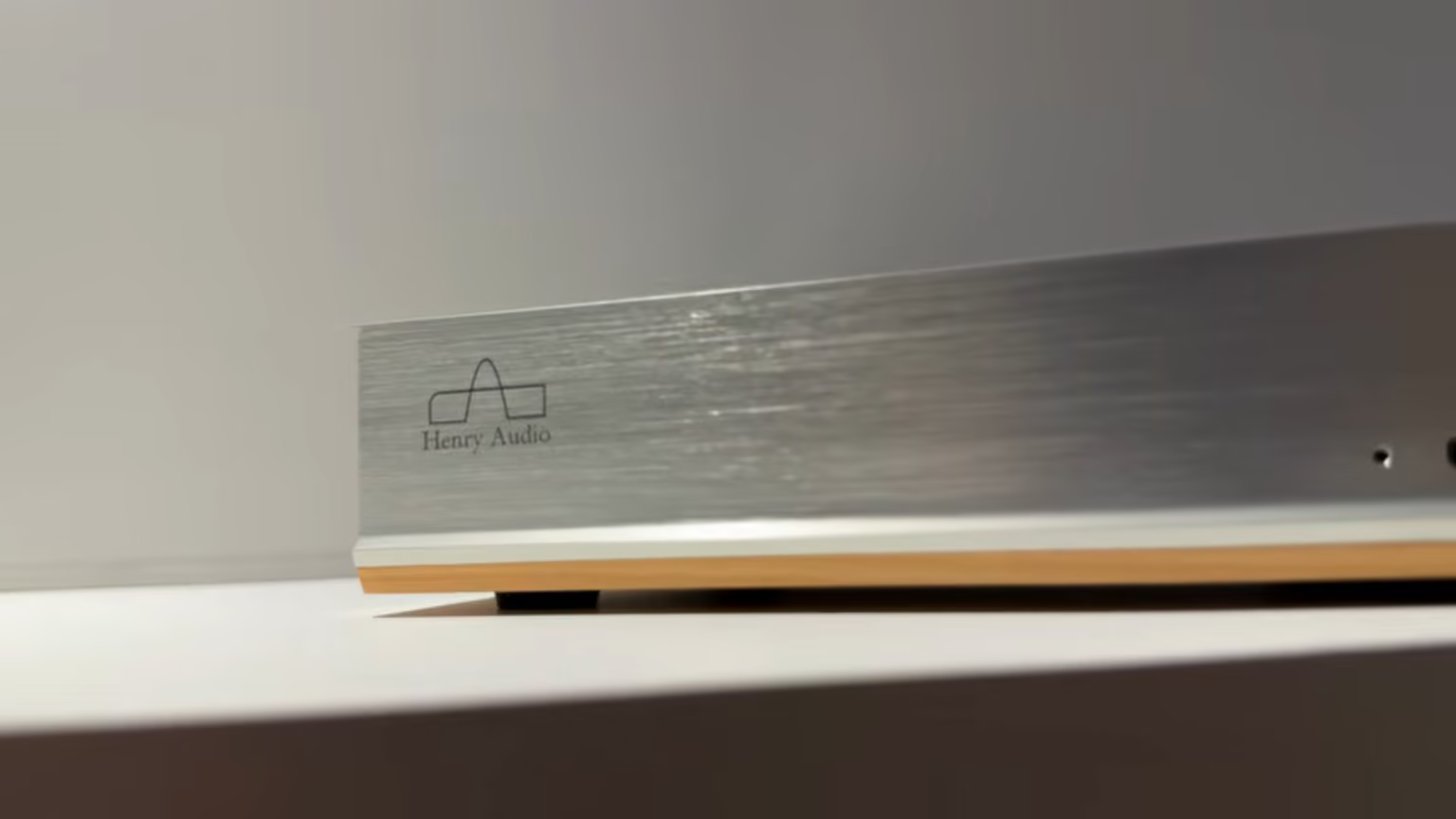 (view larger)
The clever part is coax and optical. Normally a DAC has to follow the clock of whatever is feeding it, so a cheap CD player or a TV hands over its timing problems along with the music. Here the incoming data is buffered and then played back on the DAC's own precision clocks, the same ones the USB input uses. The firmware is also written to survive badly behaved sources like noisy computers and out-of-spec coax signals, and he wrote nearly all of it himself, in C, with the USB parts in assembly.
Then there's power. It needs very little - it runs off the USB cable from your computer, off any 8 to 16 volt supply, and even off a 9-volt battery. He left the supply out on purpose. The choice is yours, and he didn't want to charge you for one you may not need. The power feeding the converter chip is filtered extremely hard, and that circuit came out of a research project he did for Norway's defence research institute, where the job was catching extremely fast, precise pulses from sensors. A matching supply from Henry Audio is already in the works.
The whole DAC is open source. The full schematic is published and so is the firmware, so you can see exactly what you paid for, and it can be repaired long after most DACs are e-waste. The mysterious Prog button on the back shows you the sample rate through the LED color.
And the XLR question. A proper balanced output means building the analog stage twice, and that's not what this DAC is about. He's said he'd like to build a balanced DAC one day, but there's no ETA. The same thinking applies to what it won't play: there's no DSD, no MQA, and the sample rate has a ceiling. The exact numbers are in the specs.
Technical Specs: A PCM5142, Capped at 24/192
This is one of the shortest spec sheets I've had on the channel.
Every input takes 16 or 24 bit PCM up to 192 kHz, and that's the ceiling. No DSD, no MQA. In practice that covers everything, because no major streaming service goes above 24/192 anyway, and DSD only matters if you have SACD rips. He skipped it on purpose - supporting DSD would have meant an FPGA or a much smaller choice of chips, and he'd rather do PCM properly.
And then there's the chip, which is going to upset some people. It's a Texas Instruments PCM5142, a modern delta-sigma chip from the same family you'll find on Raspberry Pi audio boards. There's no upsampling or processing before it, the chip's own filter does the work, and he picked that filter by listening. The effort went into the power feeding the chip, and the analog output is just the low-pass filter the datasheet asks for, built with high-grade parts. The published numbers reflect that: 2 volts out, 112 dB signal-to-noise, which is basically what the chip is rated for, and no distortion figure at all. I've said before that the chip is the least important part of a DAC. This is that idea taken as far as it goes, in a €1,600 box.
How Does It Sound? Neutral, Deep Bass, Superb Timing
So, does a chip from a Raspberry Pi board sound like a Raspberry Pi board? No.
It's a neutral DAC. There's no fat bass or lifted treble to impress you in the first minute, and after a while that's exactly what makes it convincing. It doesn't have that dry, slightly gray character most chip-based DACs share, where everything is clean but nothing feels alive. Voices have body and texture, music flows with no artifacting or glare on top, and it just doesn't sound digital.
The bass is the surprise. It's full and goes deep, with real authority behind kick drums and bass lines, and it stays controlled, so it never gets bloated. And the timing is the best thing about this DAC. Rhythms lock in, notes start and stop cleanly, and busy, complex tracks stay separated instead of turning into a wall of sound. That's the clocking and buffering doing what he said they would, and you hear it most on coax and optical.
The midrange is very natural. Vocals have presence and emotion without being pushed forward, and there's plenty of detail without it ever turning analytical. The treble is open and extended and never gets sharp. Two honest caveats though. Whenever you feed it a truly terrible source it can get a touch bright. And against DACs at two or three times the money there's a slight veil over the finest details - you won't hear it on its own, only in direct comparison.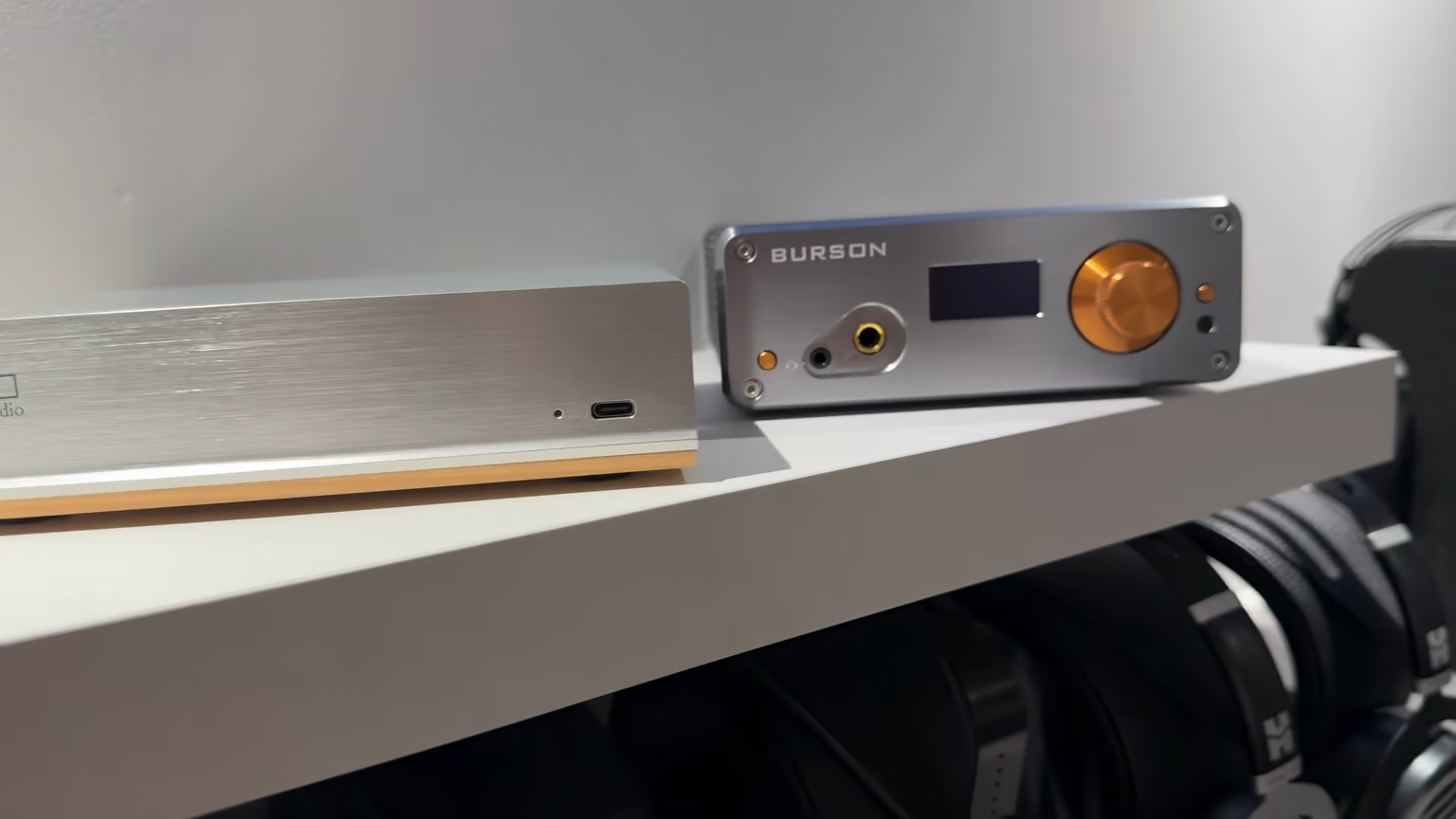 (view larger)
The soundstage is wide and, more surprisingly, deep, with real layering front to back. Imaging is the standout - every instrument sits in its own spot, and you can position each instrument in its place. The noise floor is dead silent, and with the power to the chip filtered from ten hertz to a gigahertz, it should be.
Now, the two things that change the sound. First, the input. USB is the more precise, more revealing one. Coax and optical are a touch mellower. The gap is smaller than on most DACs, thanks to the buffering, but it's there, and I preferred USB. Second, the power supply. In most cases an external supply changes almost nothing. Only in comparison to running it off a workstation desktop PC, it does. A decent linear supply makes the sound bigger, calmer and more dynamic, with more depth, while a cheap switching brick can push it harder and brighter. So the €1,600 is the entry ticket and the supply is where you tune it, for as little or as much as you want.
If you want a DAC that gets out of the way, sounds natural, runs off almost anything, and your amp has RCA inputs, this is an easy recommendation for something unique. If you need XLR, DSD, a display or a remote, you already know it's not for you - and that's the whole point of the design.
Sound signature
Derived from the words this review uses: each axis runs between two opposite descriptors, and the shape leans toward whichever side the writing does.
- Warm ↔ Bright Sits close to centre
- Relaxed ↔ Analytical Leans analytical
- Polite ↔ Aggressive Leans aggressive
- Lean ↔ Bass-heavy Neutral, no clear signal in the review language
- Intimate ↔ Wide stage Leans wide stage
Hear what "analytical, aggressive, wide stage" means: a short synthesised loop, flat and then with those leanings. An illustration of the words, not a recording of the DA 256.
Not sure which signature suits you? Find yours with a blind A/B test
Watch the video review
Subscribe on YouTube (opens in new tab)Prefer to read? The written review above covers everything in the video.

- 0:00 Do Even You NEED A Balanced DAC? (opens in new tab)
- 0:23 Design & Build Quality - Minimalistic Construction, Size, Real Wood Base, Aluminum Case (opens in new tab)
- 2:35 Inputs / Outputs - Analog Outputs, Front USB-C, DC Barrel Jacks, Coaxial, Optical, USB-B (opens in new tab)
- 4:07 Features - Data Buffering, Fixed Level Output, Automatic Input Selection (opens in new tab)
- 6:57 Technical Specs - PCM Sample Rate, Bit Depth, DAC Chip, Output Voltage, SNR (opens in new tab)
- 8:50 Sound Quality - Texturing, Timing, Neutral Tonality, Detail Retrieval, Sound Stage Depth (opens in new tab)
Common questions about the DA 256
Is the Henry Audio DA 256 worth it?
Yes, for the right listener - 8.2/10, Recommended, higher than 56% of everything we have tested, against a catalogue median of 8.1. On value it rates steep: better value exists in DACs, so you are buying performance here, not value. Price: €1,600 (≈ $1,730 approx.).
Who should buy the Henry Audio DA 256, and who should skip it?
Buy it if you want a big, out-of-your-head stage. Skip it if you want vocals right in front of you, and €1,600 has to buy value as well as performance.
What should I consider instead of the Henry Audio DA 256?
The pieces we have actually run against it: the SMSL DO100 PRO scores 0.2 lower and costs $1,511 less and the SMSL RAW-MDA1 scores 0.2 lower and costs $1,491 less. Every one of those matchups has its own page in the head-to-head section.
Does the Henry Audio DA 256 have XLR outputs?
No. You get one pair of RCAs and that is it. A proper balanced output means building the analog stage twice, and that is not what this DAC is about - he has said he would like to build a balanced one some day, but there is no ETA. For a normal setup, a regular cable from the DAC into an amp or a preamp with RCA inputs, you are not missing anything, because balanced connections mostly pay off with long cable runs and electrically noisy environments. If your amp only has XLR inputs, this is not the DAC for you.
Why does the DA 256 stop at 24-bit/192 kHz, with no DSD and no MQA?
Because supporting DSD would have meant an FPGA or a much smaller choice of chips, and he would rather do PCM properly. Every input takes 16 or 24 bit PCM up to 192 kHz and that is the ceiling. In practice that covers everything, because no major streaming service goes above 24/192 anyway, and DSD only matters if you have SACD rips. If you do have them, this is a real limitation rather than a technicality.
Do you have to buy a power supply for the DA 256?
No, which is why there is not one in the box. It needs very little: it runs off the USB cable from your computer, off any 8 to 16 volt supply, and even off a 9-volt battery. He left the supply out on purpose because he did not want to charge you for one you may not need, and a matching supply from Henry Audio is already in the works. In most cases an external supply changes almost nothing - the exception is running it off a workstation desktop PC, where a decent linear supply makes the sound bigger, calmer and more dynamic.
Is the PCM5142 too ordinary a chip for a DAC at this price?
It is a modern delta-sigma chip from the same family you will find on Raspberry Pi audio boards, and no, it does not sound like one. There is no upsampling or processing before it, the chip's own filter does the work, and he picked that filter by listening. The effort went into the power feeding the chip, filtered from ten hertz to a gigahertz, and the analog output is just the low-pass filter the datasheet asks for, built with high-grade parts. The published numbers reflect that: 2 volts out and 112 dB signal-to-noise, which is basically what the chip is rated for.
Does it matter which input you use on the DA 256?
A little. USB is the more precise, more revealing one, and coax and optical are a touch mellower. The gap is smaller here than on most DACs, because the incoming data is buffered and then played back on the DAC's own precision clocks instead of the source's, but it is there, and I preferred USB. The flip side is that a cheap CD player or a TV cannot hand this DAC its timing problems along with the music, and that is exactly where the standout timing comes from.
How do you switch inputs with no selector, no display and no remote?
You do not. The software watches all the inputs at once, and the second one of them starts playing it locks onto it and the LED changes color. You connect everything, press play on whatever you want, and that is the whole interface. There is no volume control either, since it is a fixed line-level output, so volume happens at your preamp or amp. The one button on the back that looks like a control is Prog, and all it does is show you the sample rate through the LED color.
What does open source actually get you on a DAC?
The full schematic is published and so is the firmware, which he wrote nearly all of himself, in C, with the USB parts in assembly. Two things follow from that. You can see exactly what you paid for instead of taking a product page's word for it, and it can be repaired long after most DACs are e-waste, because whoever fixes it does not have to reverse-engineer it first. On a product from a small maker that has delivered a small batch, that second one matters more than it sounds.