
HIFIMAN Arya Stealth Review: A Warm $759 Planar Flagship
An exceptionally comfortable HIFIMAN flagship at $759 with a rare warm-leaning balance, unbeatable imaging, and a taste of high-end sound at a non-flagship price.
higher than 73% of everything we have tested
Value Steep. You are buying performance here, not value.
- Standout
- Most comfortable HIFIMAN at this price
- Watch out for
- Doesn't feel premium when you pick it up
- Better alternative
- HIFIMAN HE1000se: $950 more, scores 0.6 higher.
Is it for you?
- You want a big, out-of-your-head stage
- You want vocals right in front of you
- $759 has to buy value as well as performance
Pick #7 of 11 in our Best Planar Magnetic Headphones guide.
Audiophile headphones involve preferences. Some of them are detailed, some are wide, some dynamic, deep, or extend well. The Arya Stealth has it all for just $759.
Is It Comfortable? Light, Not Luxurious
It's built to be lightweight, not premium. That's probably why you don't immediately feel that it's a premium product when you pick it up. On the other hand, it's the cheapest headphones from HIFIMAN that's so comfortable.
It features their highest-end headband style, which has a suspension strap design. It allows for full 360-degree cup rotation, tilt, and size adjustment. This, combined with these large earcups, and low weight, makes it extremely comfortable, even for extended listening sessions.
This headband, unlike lower-end ones, is a bit different. Besides allowing for swivel, it also has a different shape, making its clamp force more evenly spread. But it looks kind of silly when you wear it. When it's on a headphone stand it looks very nice, all blacked out for a stealthy (pun intended) look. One more difference between this headband and the cheaper ones is that it's also padded on the side that touches your head. There's a thin layer of soft foam that helps to even out the pressure just a little more. It's not clamping super hard - it's more in the lower medium territory, I'd say.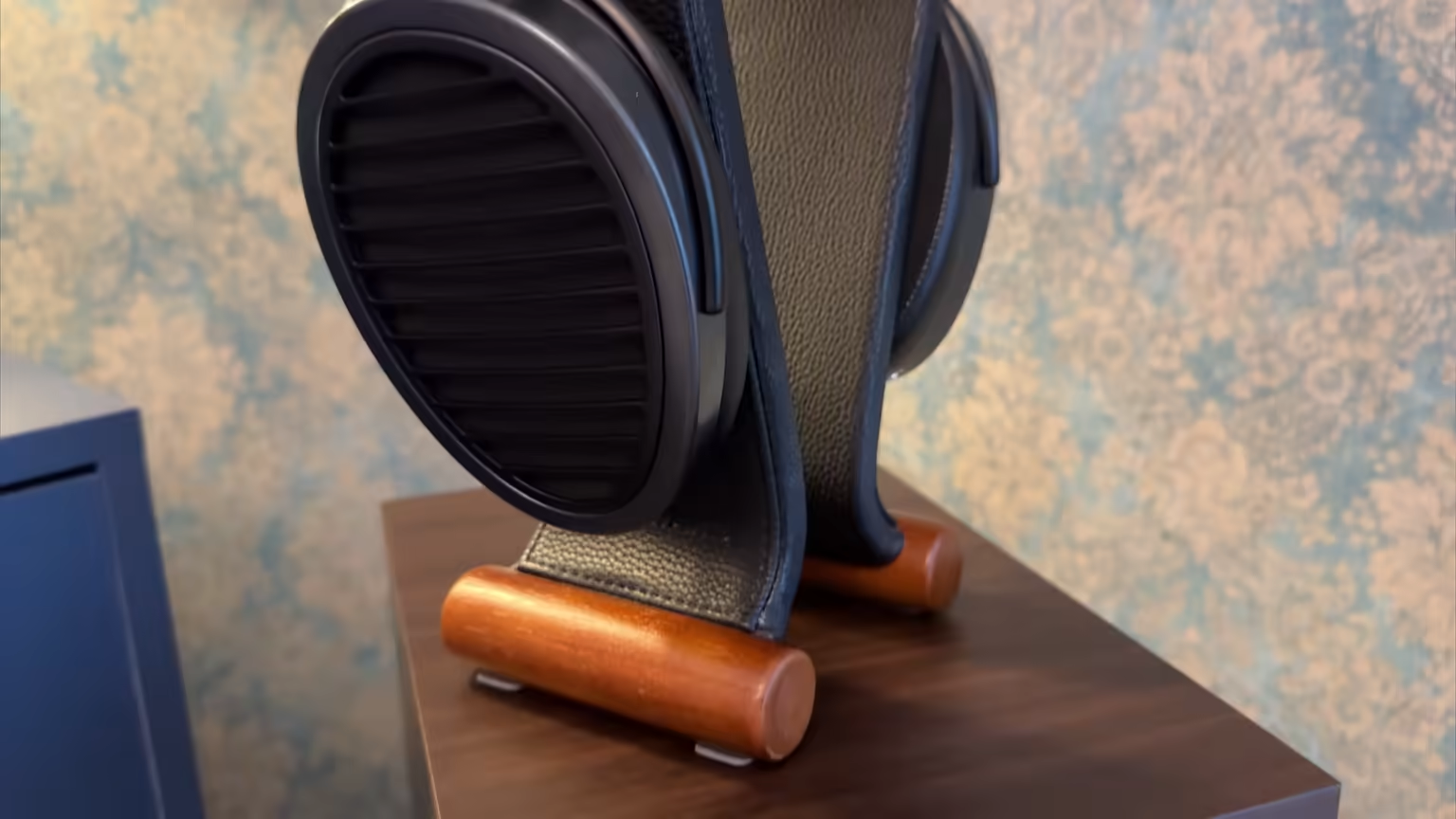 (view larger)
The pads are, of course, huge - good luck finding a headphone with larger pads than these. They're also a hybrid of 3 materials, which is a thing HIFIMAN likes to do.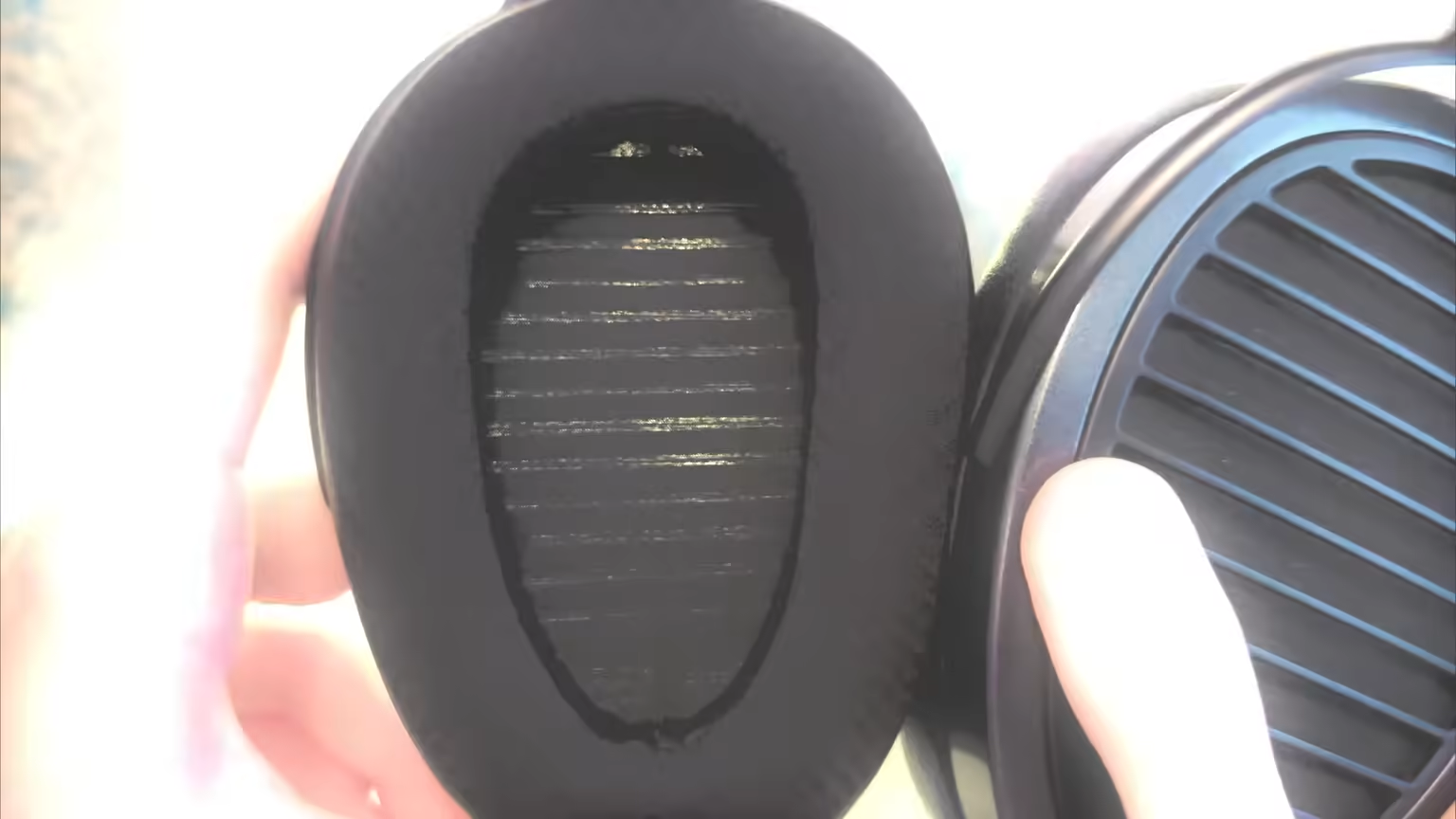 (view larger)
The only thing I'm not a fan of is one small aspect of its appearance, namely the earcups material and color. It's not a true black - more like a gunmetal color, which upon closer inspection looks a bit cheap, but does its job just fine.
For the connectors, they are regular 3.5mm jacks - one on each earcup, which allows for a balanced connection with an aftermarket cable, or single-ended with the included one. HIFIMAN is known for its ergonomically problematic cable. They used to offer the copper-colored ones with the conductors sitting freely inside a long time ago, which I have to say were quite terrible. Then they switched to something very simple - just regular, black, rubberized cables. That was nothing special but solved most of the issues with the previous version.
The cable we're getting in a box now is yet another improvement. It has a material braiding over it, making it feel much nicer and more premium while adding a bit to the ergonomics, as the cable doesn't have as much memory. The connectors are generally decent, but the 1/4-inch plug has a huge strain relief.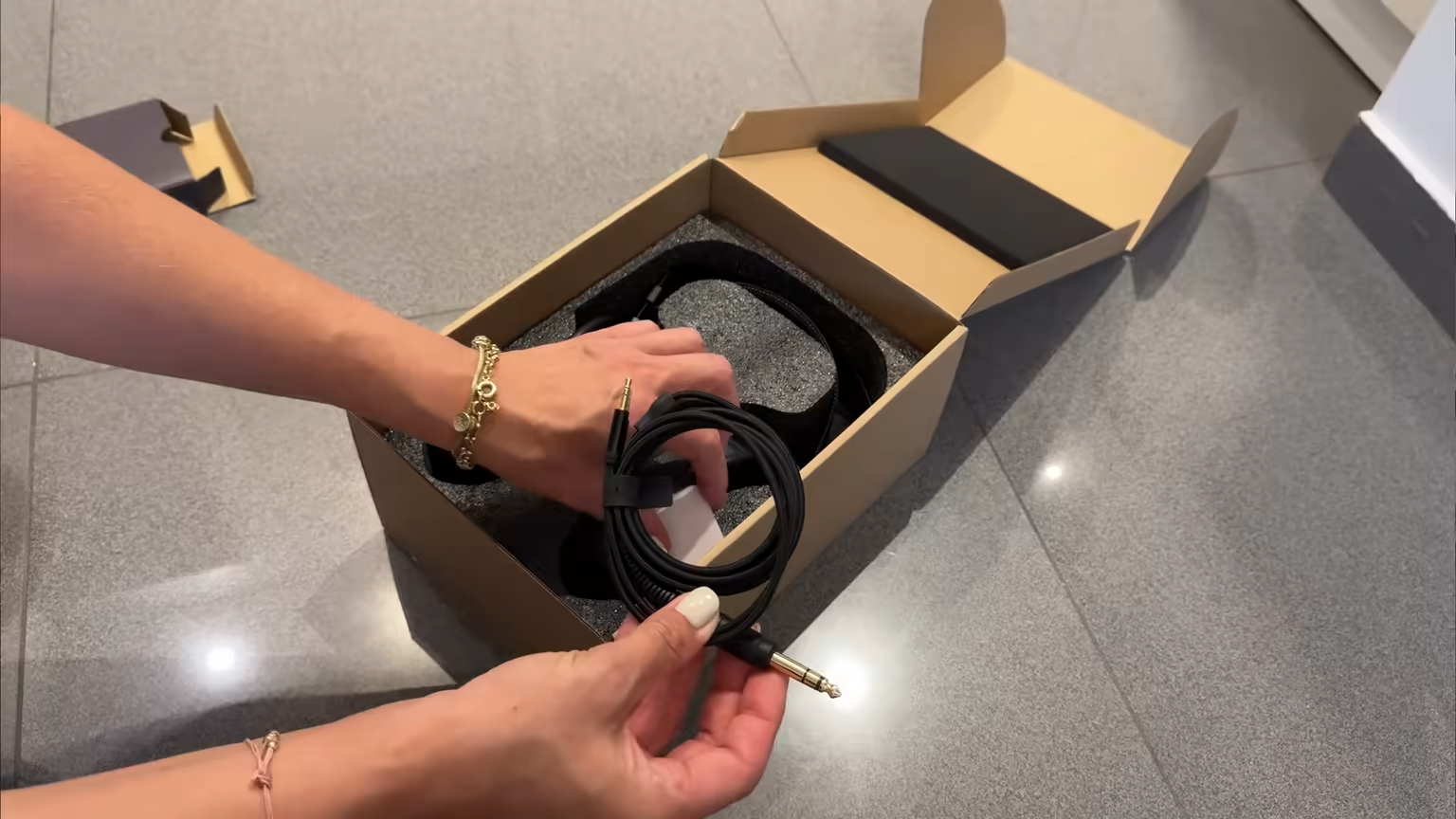 (view larger)
Technologies: All the Flagship Trickle-Downs
All sorts of trickle-down goodies can be found here. Starting from the Window Shade Grills, that offer special geometry made to decrease reflections, which are detrimental to optimal sound quality. Luckily enough, they're blacked out, unlike the Anandas or the Edition XS.
Then, as the name suggests, we have Stealth Magnets. It's the first iteration of Arya with this tech. It allows the sound waves to pass through them without generating any sort of interference, to create an acoustically transparent design.
Lastly, it's equipped with a nanometer-thickness diaphragm for fast transient response, more details, and lower distortion. All that, in theory, means that HIFIMAN put all of their best stuff in there to make a very good headphone at a price point much lower than a flagship - without cutting down on features just to get you to spend more.
Does It Need an Amp? Loves Power, Isn't Picky
Its frequency response ranges from 8Hz up to 65kHz. That's just crazy - this driver is capable of doing pretty much everything it's asked to do. And it does it quite efficiently, with a sensitivity of 94dB/mW (not the highest, but quite high for a big planar) and an impedance of 32 ohms (again, not the lowest, but pretty low for what it is). This combo makes the Arya greatly benefit from a good and powerful amplifier, but you don't have to go crazy, and it's not that picky about the amplification quality.
Sound Quality: Warm Balance, Unbeatable Imaging
I expected it to sound a bit bright, like most HIFIMAN's planars do. However, in reality, it's very difficult to call it a bright headphone. It's leaning on the warmer and fuller presentation, in comparison to other headphones from this company. It isn't soft, recessed, or lean in the top end. Likewise, it retains all that, while lacking the typical boost in the treble that a lot of people find fatiguing.
Generally, it is a very tonally balanced sound, with just a slight dip in the upper midrange that can be described as starting the ear gain region about one kilohertz later than the Harman target calls for.
The bass is well extended, down to 20Hz. It's fast and transparent but doesn't offer a sense of weight. It's mostly true to the recording. The vocal presentation is good, yet slightly less weighty than you'd expect.
In terms of the soundstage, I've heard that the Stealth Magnets shrink it down quite a bit. At least in the Stealth Magnet edition Arya, it's not a super wide soundstage, but it can get out of your head easily - simply not too far out. But what it can lack in soundstage, it makes up in the precise imaging. It's very nice, with lots of places where sounds can be. In most songs, it gives you an impression of being a real 3-dimensional experience. I'd say that if anything, the imaging would be the only real stand-out of this headphone - it's simply unbeatable.
It also can do large-scale music extraordinarily well. It might not sound that wide, but it does sound big, especially in the vertical sense - it tends to stretch things to a great extent, probably because of the driver's shape, which is a pretty tall rectangle.
The timbre, while not top-of-the-line level, isn't annoying. It has just a tint of plasticky nature. Sounds are separated in a way that leaves space in between them. You can easily tell when one instrument ends and another one starts.
Detail retrieval - it's very inoffensive. You have to try to hear the underlying, hidden elements of the music, but it's available to you. It doesn't scream "details" at you like the Ananda Nano or the Sundara. That's mostly related to the frequency response being tamed down in the top registers. Nevertheless, it's a fairly resolving headphone - not the most, far from that actually, but it's not lacking.
This headphone generally gives you a taste of high-end at a price that's not usually associated with high-end products of this category. It doesn't have one single thing it shines at - rather it's a combination of all things that make it a genuinely satisfying package.
Sound signature
Derived from the words this review uses: each axis runs between two opposite descriptors, and the shape leans toward whichever side the writing does.
- Warm ↔ Bright Sits close to centre
- Relaxed ↔ Analytical Leans analytical
- Polite ↔ Aggressive Leans aggressive
- Lean ↔ Bass-heavy Neutral, no clear signal in the review language
- Intimate ↔ Wide stage Leans wide stage
Hear what "analytical, aggressive, wide stage" means: a short synthesised loop, flat and then with those leanings. An illustration of the words, not a recording of the Arya Stealth.
Not sure which signature suits you? Find yours with a blind A/B test

Watch the video review
Subscribe on YouTube (opens in new tab)Prefer to read? The written review above covers everything in the video.

- 0:00 Why THIS Headphone Is SO SPECIAL? (opens in new tab)
- 0:22 Build Quality & Comfort (Weight, Suspension Strap Design With Tilt, Swivel, Ear Cup Rotation, Clamp Force, Big Hybrid Pads, Materials, 3.5 mm Jack Connectors, Single-Ended/Balanced Connection) (opens in new tab)
- 2:12 Stock Cable (Ergonomics, Sound Quality, Improvements, Braiding) (opens in new tab)
- 3:06 Technologies (Window Shade Grills, Stealth Magnets, Nanometer Thickness Diaphragm) (opens in new tab)
- 4:02 Technical Specifications (Frequency Response, Sensitivity, Impedance/Ohms, Drivability, Amplification) (opens in new tab)
- 4:42 Sound Quality (Bass Extension, Speed, Midrange, Vocals, Sound Stage, Dynamics, Tonality, Scale, Detail Retrieval, 3D Imaging, Sound Separation) (opens in new tab)
Common questions about the Arya Stealth
Is the HIFIMAN Arya Stealth worth it?
Yes. It scored 8.7/10, Highly Recommended, higher than 73% of everything we have tested, against a catalogue median of 8.1. On value it rates steep: better value exists in headphones, so you are buying performance here, not value. Price: $759.
Who should buy the HIFIMAN Arya Stealth, and who should skip it?
Buy it if you want a big, out-of-your-head stage. Skip it if you want vocals right in front of you, and $759 has to buy value as well as performance.
What amplifier does the HIFIMAN Arya Stealth need?
The HIFIMAN Arya Stealth is a 32 Ω load, so the matching rule is the rule of eighths: an amplifier's output impedance should sit at or below 4 Ω, an eighth of the headphone's, or its frequency response shifts audibly and usually in the bass. That is a property of the amp rather than its power rating, so a high-output-impedance tube amp can fail it while a phone jack passes. About 40 mW to reach 110 dB peaks, which is most dongle DACs.
What should I consider instead of the HIFIMAN Arya Stealth?
On the same chain, against the same recordings: the HIFIMAN Ananda Stealth scores 0.1 higher and costs $400 less, the HIFIMAN Ananda Nano scores 0.1 lower and costs $260 less, and the HIFIMAN HE1000 Stealth scores 0.2 lower and costs $360 more. Each of those has a full head-to-head page below.
Is the Arya Stealth comfortable enough for all-day listening?
It is the most comfortable HIFIMAN at anything like this price, and comfort is the reason to buy it as much as the sound. You get their highest-end headband: a suspension strap with full 360-degree cup rotation, tilt and size adjustment, shaped so the clamp spreads evenly, and padded on the side that touches your head with a thin layer of foam. Clamp sits in the lower-medium range. The pads are enormous. It looks a bit silly on your head and you will stop caring within a week.
Is the Arya Stealth a bright headphone?
No, and I expected it to be. Most HIFIMAN planars lean bright; this one leans warm and full, which is rare enough from this company to be the headline. It has not been softened to get there - the top end is not recessed or lean - it simply lacks the treble boost a lot of people find fatiguing. Tonally it is very balanced, with a slight dip in the upper mids that amounts to the ear gain region starting about a kilohertz later than the Harman target asks for.
How wide is the Arya Stealth's soundstage?
Not very, and this is the honest limitation. It gets out of your head easily but never travels far out - the widest-staging headphones in the catalogue beat it, including the Arya Organic. What it does instead is height and scale: large-scale music comes across as genuinely big, stretched vertically, most likely because the driver is a tall rectangle. So it sounds large without sounding wide, which is an unusual combination and better suited to orchestral material than to anything that wants to surround you.
Does the Arya Stealth need a powerful amp?
It benefits from one without demanding one, and it is not fussy about quality. The sensitivity is 94dB/mW and the impedance is 32 ohms - neither figure is extreme, but both are reasonable for a big planar - and the combination means a good powerful amplifier will give you more while a modest one will not embarrass itself. You do not need to go crazy here. This is one of the easier flagship-adjacent headphones to feed.
Why does the Arya Stealth not feel premium in the hand?
Because it was built to be light, not to feel expensive, and those goals pull against each other. Pick it up and there is no reassuring heft. The earcup material does not help - it is a gunmetal colour rather than a true black, and under close inspection it reads slightly cheap, though it does its job perfectly well. The trade is deliberate and I think it is the right one: you spend far more time wearing a headphone than holding it.
Is the Arya Stealth detailed?
Resolving, but never showy about it. Detail retrieval here is inoffensive - the hidden layers are all available to you, and you have to go looking for them rather than having them pushed at you the way the Ananda Nano or the Sundara do. That is a direct consequence of the tamed top end. It is not the most resolving headphone at the money and it is not trying to be; what it offers is a taste of high-end sound as a complete package rather than one standout number.
Is the included Arya Stealth cable worth replacing?
Not for the sake of it. HIFIMAN cables have a bad reputation earned over several generations, and the one in this box is the best of them: braided, nicer in the hand, and with much less memory than the plain rubberised ones it replaced. The connectors are decent, though the quarter-inch plug carries an enormous strain relief. The real reason to buy a cable here is not quality but topology - there is a 3.5mm jack on each cup, so an aftermarket cable is how you get a balanced connection.