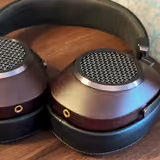
HIFIMAN Edition XS Review: Brilliant at $269, Held Back by the Headband
An exceptional open-back planar at $269 with a sound signature that's hard to find elsewhere - held back only by a controversial headband design choice.
higher than 73% of everything we have tested
Value Excellent. It is one of the best-value pieces we have scored.
- Standout
- Unique, pretty earcup design
- Watch out for
- Solid headband (no suspension strap) creates a hotspot after a few hours
- Better alternative
- HIFIMAN Sundara: leans more analytical, $30 more, scores 0.3 higher.
Is it for you?
- You want a big, out-of-your-head stage
- You want the most performance per dollar on the list
- You want vocals right in front of you
Pick #3 of 12 in our Best Headphones Under $500 guide.
Edition XS is one of the latest HIFIMAN headphones, and I absolutely can't believe they decided to do a few things with them, which I'll discuss below.
Edition XS is an open-back, planar magnetic headphone, and you can get it for around $269. Many say it's one of the best in this price category - but is it, actually?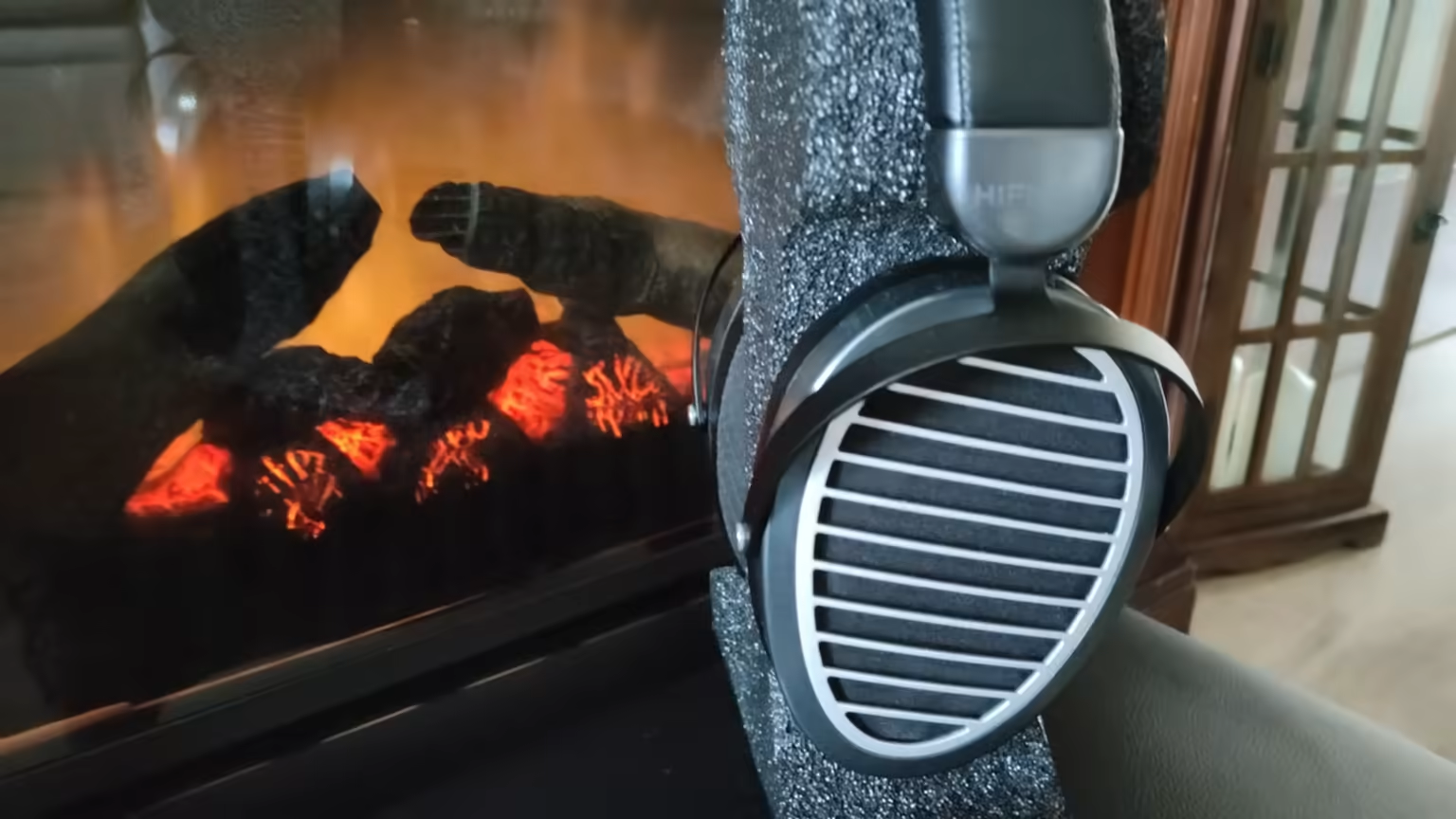 (view larger)
Build: Great Cups, Flawed Headband
Let's start with the most obvious and controversial part: the build.
They share the typical higher-end HIFIMAN egg-shape earcups. I'm a huge fan of the way they look - they're unique and just pretty to my eyes. The earcups are pretty large to accommodate any size or shape of ears without touching them or being squished by the pads, which for me always leads to an uncomfortable and unenjoyable experience. They're also pretty deep, so it's unlikely they're going to touch the drivers. (view larger)
The headband is my main concern, and I'm clueless why HIFIMAN decided to go with that style. Fine, it makes the earcups swivel a bit for increased comfort, but the top piece is solid - it doesn't use the suspension strap that was present on older or even cheaper, lower-end HIFIMAN headphones, including the previous version of the Edition XS: 2015's Edition X. I think it's a huge downgrade in terms of comfort. The solid headband creates a hotspot on the top of my head, and after a few hours it gets uncomfortable. Although the Edition XS weighs just over 400 grams - which is pretty light, especially for its size - it doesn't have sufficient clamp force at all, which makes the entire weight of the headphones rest on the top of your head, not properly distributed around the ears.
The adjustment provided by the headband is also likely to be insufficient. It doesn't get small enough for many heads, which leads to the weird feeling of the earcups sitting too low on the jaw, or perhaps not even fitting entirely on the jaw. Each and every one of these issues could have been solved easily by implementing their suspension strap instead of the solid headband.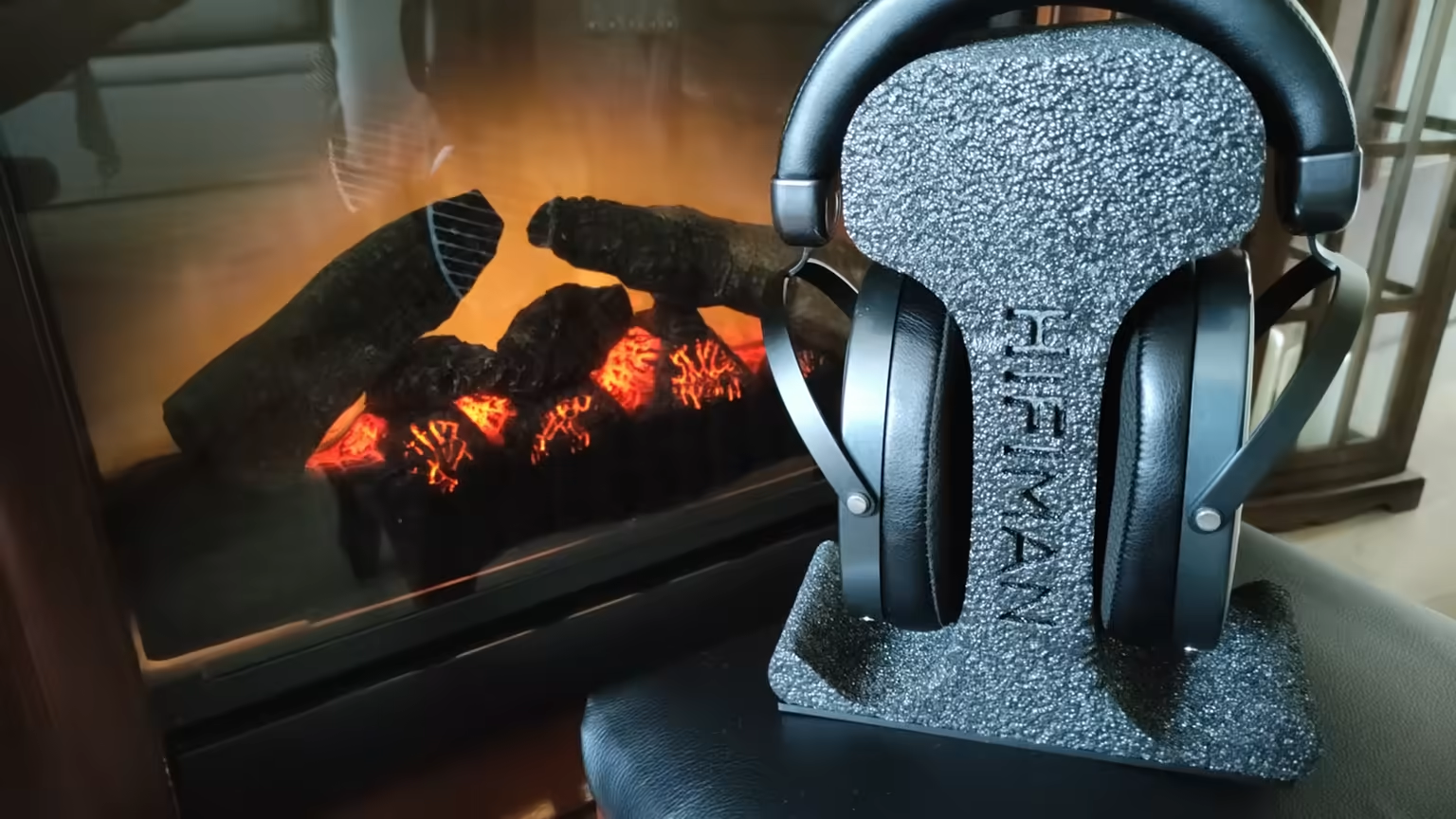 (view larger)
Sound Quality: V-Shaped, Detailed, Easy to Drive
Either way, let's get to the most important part: their sound quality.
First of all - do you need a beefy dedicated amp to drive them? No. They're going to be just fine plugged into a dongle or some cheap, lower-end amp. Not to say they won't scale up and sound better with a better source - I'm just saying they're fine with something cheaper without a lot of juice.
Now that we've got that out of the way, let's talk about the actual sound characteristics, looking at the frequency graph made by headphones.com. Starting from the low frequencies, there's a really low extension to the bass, which goes all the way down to 20Hz, perhaps even lower, below the audible range. There's a slight slope down from around 100Hz, but while actually listening to the headphones, it has little to no effect on the sound. The bass generally doesn't hit the hardest, but it's clean and free of distortion or any other unwanted mess.
The lower mids are boosted to an extent, which makes them sound a little bit warmer, which is compensated by the quite large boost in the high frequencies. The frequency graph hasn't been smoothed to the same degree as the dotted Harman target curve, which is why you can see some weird-looking dips.
The highs are really clean and energetic, but sometimes I feel like they need some work. Even though this is the Stealth Magnets edition - which is supposed to improve the harshness and sibilance of the highs - it's still not perfect. In some songs, they sound plasticky and sibilant.
Generally, the sound is pretty much V-shaped, with an emphasis on the high frequencies, which leads to a feeling of a lot of detail.
Soundstage and Positioning: Wide but Distant
The soundstage is fantastic, especially for the price. It's really wide, and the positioning is pretty unique - let me explain. Everything seems a bit further from you than I feel it should be. There's no direct proximity while listening - you may like that, you may not. Vocals usually sound like they're coming from the back of your head. It probably sounds stupid, but it's literally the way I perceive them. The high frequencies seem to come slightly from the top of my head; it's not a bad thing per se - just a characteristic of this headphone.
The image separation is amazing. You can clearly hear the different layers of music, and it doesn't get overwhelmed by a lot of sounds at the same time, which is common in lower-end headphones. The Edition XS isn't the most natural-sounding headphone in the world, but it doesn't bother me at all - they sound natural enough, and most importantly, really fun!
Is the Edition XS Worth It?
The sound signature it offers at a price point of $269 is truly exceptional and rarely found elsewhere. HIFIMAN has done an outstanding job overall, with only a few minor shortcomings that I personally don't mind, considering the excellent value it provides.
Sound signature
Derived from the words this review uses: each axis runs between two opposite descriptors, and the shape leans toward whichever side the writing does.
- Warm ↔ Bright Neutral, no clear signal in the review language
- Relaxed ↔ Analytical Leans relaxed
- Polite ↔ Aggressive Neutral, no clear signal in the review language
- Lean ↔ Bass-heavy Neutral, no clear signal in the review language
- Intimate ↔ Wide stage Leans wide stage
Hear what "relaxed, wide stage" means: a short synthesised loop, flat and then with those leanings. An illustration of the words, not a recording of the Edition XS.
Not sure which signature suits you? Find yours with a blind A/B test

Watch the video review
Subscribe on YouTube (opens in new tab)Prefer to read? The written review above covers everything in the video.
Common questions about the Edition XS
Is the HIFIMAN Edition XS worth it?
Yes. It scored 8.7/10, Highly Recommended, higher than 73% of everything we have tested, against a catalogue median of 8.1. On value it rates excellent: top 24% for the price in headphones, so it is one of the best-value pieces we have scored. Price: $269.
Who should buy the HIFIMAN Edition XS, and who should skip it?
Buy it if you want a big, out-of-your-head stage, and you want the most performance per dollar on the list. Skip it if you want vocals right in front of you.
What should I consider instead of the HIFIMAN Edition XS?
On the same chain, against the same recordings: the HIFIMAN Arya Unveiled scores 0.4 higher and costs $1,030 more, the HIFIMAN Sundara scores 0.3 higher, and the OLLO Audio X1 scores 0.2 higher and costs $280 more. Each of those has a full head-to-head page below.
Why does the Edition XS headband get uncomfortable?
Because HIFIMAN replaced the suspension strap with a solid top piece, and it is the one decision I cannot make sense of. Older and even cheaper HIFIMANs use the strap, including this headphone's own predecessor, the Edition X from 2015. The solid band puts a hotspot on the top of my head that becomes uncomfortable after a few hours, and the problem is made worse by there being too little clamp force - so the whole weight sits on your crown instead of being shared around your ears. Every part of that was solvable with the strap they already make.
Will the Edition XS headband adjust small enough for your head?
Possibly not, and this is the fit risk to check before you buy. The adjustment range does not go small enough for a lot of heads, and when it runs out you get the odd sensation of the cups sitting too low - down on the jaw rather than around the ear, or not quite landing on it at all. It is not a subtle misfit when it happens. If you have a smaller head, try before committing, because no amount of pad swapping fixes an adjustment range that has run out.
Do you need a dedicated amp for the Edition XS?
No. A dongle or a cheap, low-powered amp will drive these perfectly well, and that is unusual enough at this level to be worth saying plainly. They will scale with a better source - nothing here is immune to a cleaner feed - but you are not obliged to buy an amplifier to make them work. Budget the money for the headphone and add the source later if you want to.
Are the Edition XS highs sibilant?
In some songs, yes. The tuning is broadly V-shaped with a large lift up top, which is where the sense of detail comes from - and it is genuinely energetic and clean most of the time. But it is not perfect: on certain tracks the highs go plasticky and sibilant, and this is the Stealth Magnets version, which is supposed to be the fix for exactly that. If you are sensitive to treble glare, this is the specific thing that will bother you.
Why do vocals on the Edition XS sound like they are behind you?
Because the whole presentation sits further away than you expect, and vocals get the most of it. Everything is placed at a slight distance - there is no sense of proximity here - and to my ears the voices read as coming from the back of my head, with the highs arriving slightly from above. It sounds ridiculous written down and it is exactly what I hear. Some people love the space it creates; others never settle into it. It is a characteristic, not a fault, but it is one you should know about before you spend.
Will the Edition XS fit large ears?
Yes, easily. The egg-shaped cups are large enough to take any ear size or shape without the pads squashing them, and they are deep as well as wide, so it is unlikely your ears will touch the drivers. That combination is genuinely rare and it is the part of the build I have no complaints about - all of this headphone's comfort problems are above your ears, not around them.
Does the Edition XS leak sound?
Yes, in both directions - it is an open back, so the room hears you and you hear the room. That rules out an office, a shared space or a commute, and it is the standing condition of the wide soundstage and the separation that make this worth $269 in the first place. Buy it for a room where nobody minds.