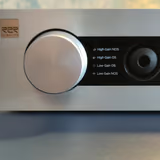
HIFIMAN EF499 Review: A Real R2R DAC/Amp Under $300
A balanced R2R DAC/headphone amp with built-in network streaming for under $300 - warm, musical, and a serious one-box answer to the separates-or-not question.
higher than 49% of everything we have tested
- Standout
- All-metal chassis, no QC issues
- Watch out for
- No analog input
- Closest rival
- HIFIMAN EF500: $250 more, a near-tie on score.
Is it for you?
- You want one amplifier that will not be the limit on whatever you buy next
- You want the R-2R presentation rather than the last decimal of measured linearity
- You listen mostly on sensitive in-ears, where reserve like this is gain you have to turn down
- You choose a converter by its measurements and want the lowest distortion figure at the price
Named Best Value in our Best Headphone Amplifiers guide.
If someone had asked me a few years ago for a headphone DAC/amp recommendation up to $300, I would have likely suggested buying two separate devices, a pair of interconnects, and some time to set them up. But now, we have the HIFIMAN EF499 with a built-in R2R DAC.
Design & Build Quality: A Real Step Up for HIFIMAN
HIFIMAN sometimes receives mixed feedback on build quality. The EF499 presents a generally positive picture. This new generation of products solves all critical issues, and you don't have to worry about any QC or durability issues. They finally figured out a way to mature their manufacturing.
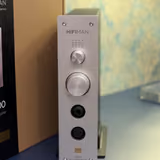
From a purely aesthetic perspective, it adheres to HIFIMAN's characteristic minimalist design language. It avoids digital displays, opting for a functional UI. The all-metal chassis contributes to a sense of solidity and durability. The weight of the unit is substantial enough to indicate quality. It sits firmly on the desk without sliding around.
The volume control operates smoothly and precisely. The resistance is satisfying, allowing for fine adjustments. The potentiometer used here is not the same as in older amps like the EF400 or EF600. It has virtually no wobble, more linear resistance, and feels massively better. Besides volume control, there's a smaller knob for gain and oversampling settings - it offers strong tactile feedback.
Turning to the rear panel, the connectors are sturdy and well-seated. There's a snug fit when inserting cables - it should withstand repeated use with ease. The matte black finish on the sides is both attractive and practical. It masks fingerprints and resists smudges, maintaining a clean appearance. On the other hand, the front is a black, glossy plexiglass. Together with the golden knobs, it reminds me a lot of the stereotypical Chinese electronics design. Not in a bad way though, it doesn't look cheap - it looks fancy and stands out.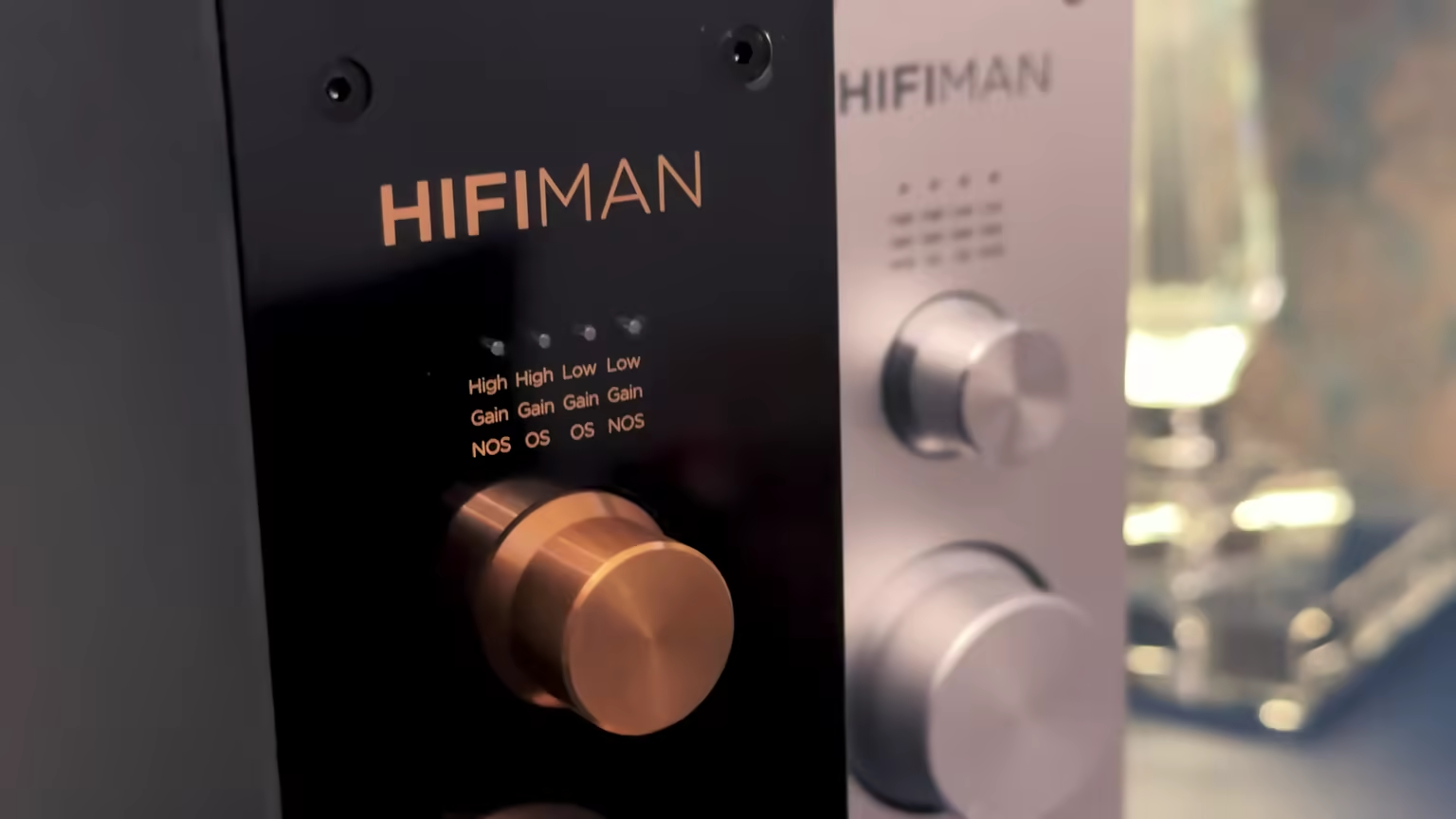 (view larger)
The size of the EF499 is compact, but it's clearly a desktop-oriented device, not intended for portability. It's important to note that this unit is primarily made for vertical use. That way you can use it as a somewhat decent headphone stand, if you wish. Would it make for the best headphone stand in the world? No, but it's better than putting your headphones straight on the desk, where they can get easily damaged, including pad deformation. If you must use it horizontally, I think you can find a way to do so, by unscrewing and removing the stand - it's not intended to be used in that way.
Overall, the EF499 is a solid, well-constructed piece of equipment that generally lives up to expectations. Compared to some previous offerings from HIFIMAN, it shows a clear step forward in build quality and attention to detail.
Inputs & Outputs: USB, Coax, and an Ethernet Jack
On the digital side, there is a USB type-B and C - you can use one at a time, but you have a choice of which one suits you better. If you have bulky, expensive audiophile-grade cables terminated with USB-B, you can use them. If that's not your cup of tea, a chunky coaxial input is waiting for you. However, in case you want to maximize the value you're getting out of this device, you can use the ethernet jack to play music from a NAS or streaming services. It's a unique thing, usually not seen on budget DAC/amps. You get a solid switch to pick from Coax or network + USB.
There's a power plug, as the device is AC powered - so you can swap the cables to your liking, and a power switch to turn it off. I would rather recommend leaving it always turned on, so it's always ready to work at its fullest.
For the analog outs, it's nothing surprising, in a good way. A pair of RCAs and balanced XLRs are present. Unfortunately, any form of analog input is missing, so you can't use an external DAC with it. Although on the good side, for the headphone outputs, there's a full-sized single-ended jack and a 4-pin balanced XLR connection. So this device is fully balanced.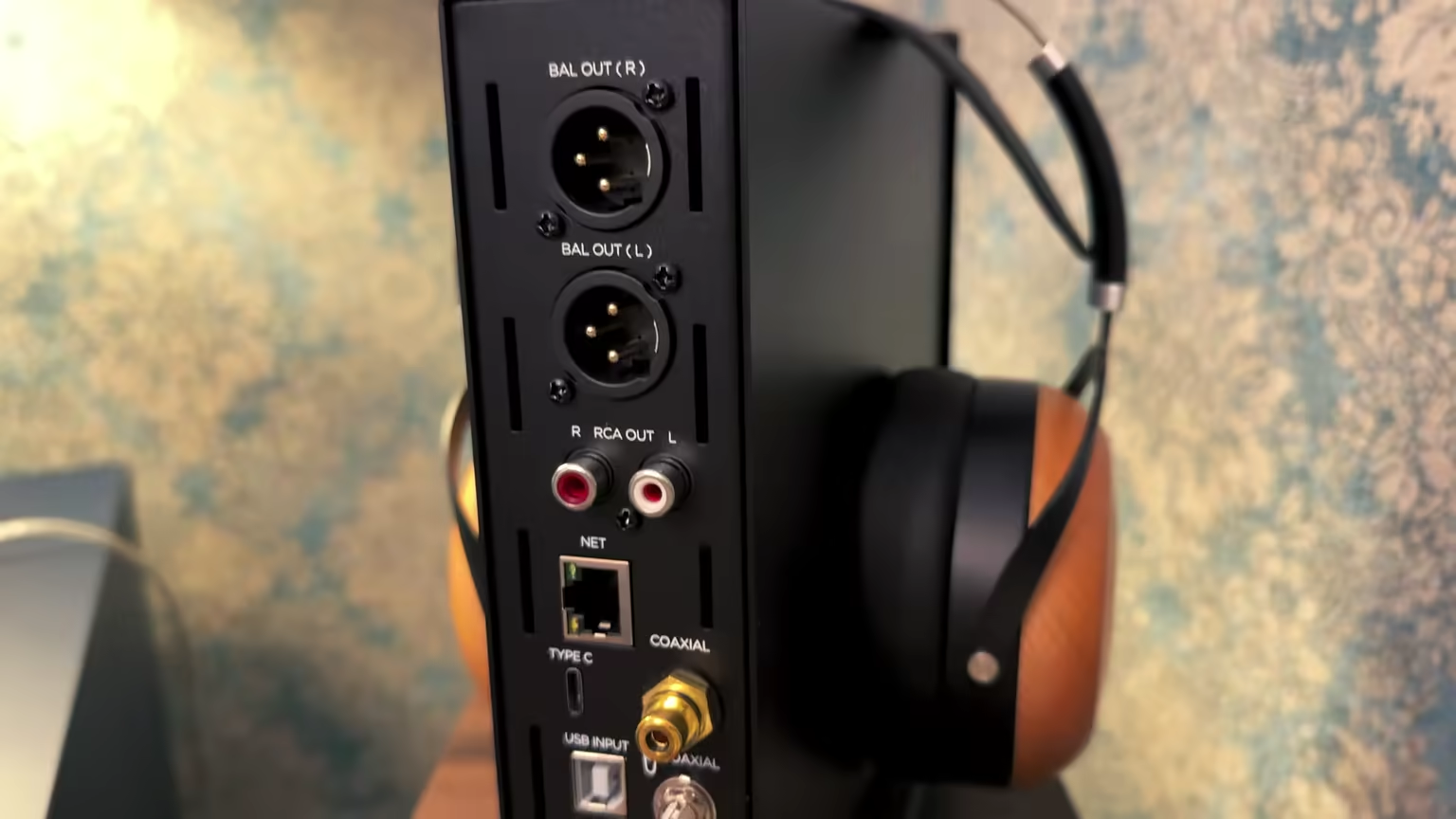 (view larger)
Features: R2R, NOS/OS Modes, Network Streaming
Inside the EF499 is its R2R DAC architecture. For those unfamiliar, R2R DACs are known for their natural, musical sound reproduction. They tend to offer a smoother, more analog-like presentation compared to some other DAC designs.
A really cool feature here is the NOS/OS selector. This lets you choose between Non-Oversampling (NOS) and Oversampling (OS) modes. NOS mode often provides a more raw, direct sound, while OS mode can offer increased detail and refinement.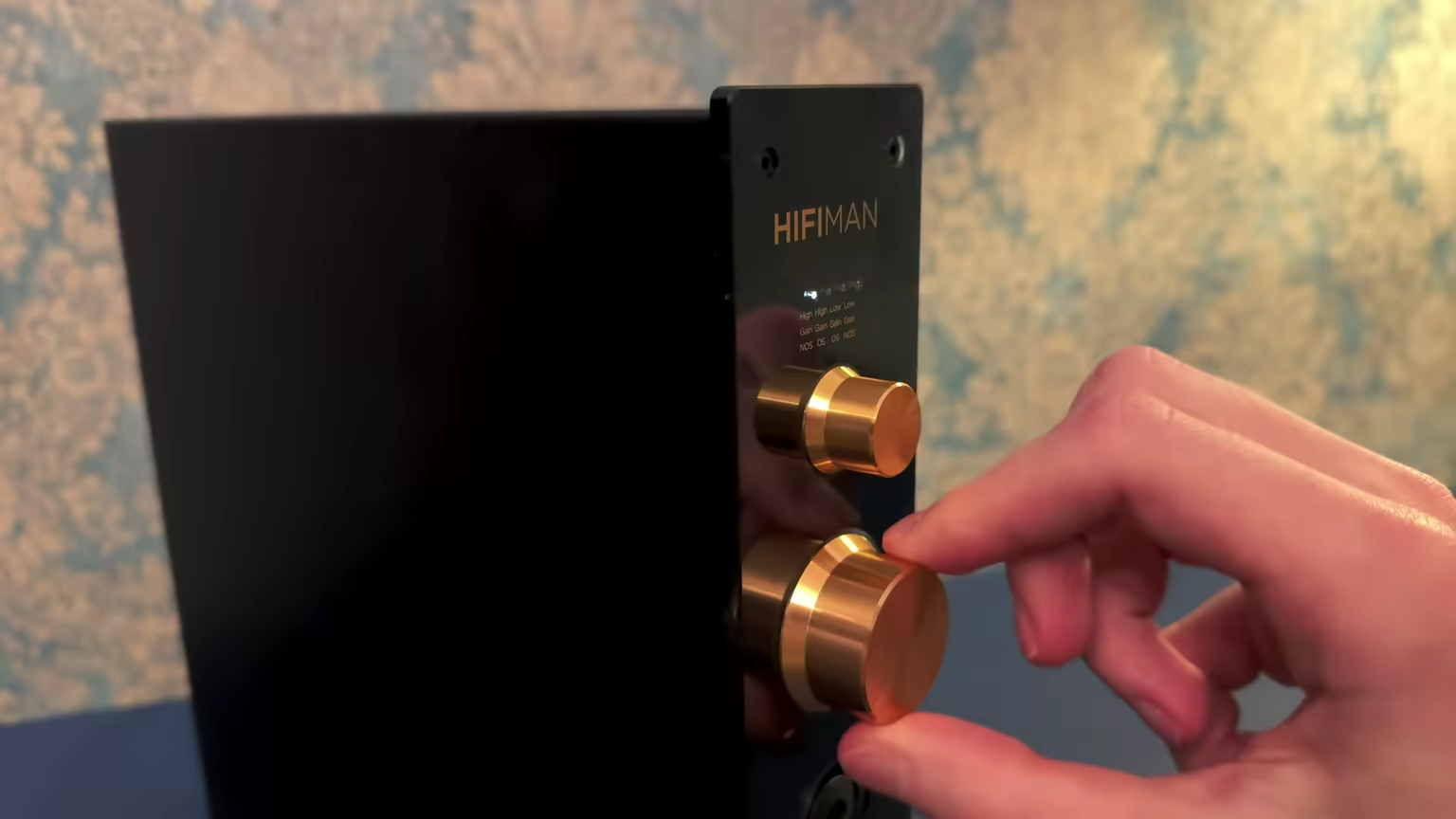 (view larger)
The EF499 also includes high and low gain settings, which are essential for pairing the amp with various headphones. Low gain is ideal for sensitive in-ear monitors, while high gain provides the power needed to drive demanding over-ear headphones. This ensures optimal performance and prevents unwanted distortion.
Additionally, it's a network streamer. This means you can connect it to your home network and stream music directly from services like Tidal, Qobuz, or your own digital library. It adds a whole new level of convenience and opens up a world of high-quality audio sources.
Technical Specifications: 4.35W of Balanced Power
The EF499 uses an R2R chip from Philips, so it's not the typical HIFIMAN Himalaya architecture that can be seen in higher-end units. It has a rather unimpressive THD+N of 0.008% at the line level, but don't worry - such a result is nothing to be concerned about for resistor ladder devices.
Channel separation is listed as 95dB, which is important for a wide and accurate stereo image. The A-weighted measurement of the signal-to-noise ratio is 99dB. This tells us how loud the desired audio signal is compared to the background noise. The higher the SNR is, the better.
Now, let's talk power. The EF499 can push a maximum power output of 4.35 Watts per channel into 32Ω in balanced mode, and 1.28 Watts per channel into 32Ω in unbalanced mode. That's a significant amount of power, especially in balanced mode. This should be enough to drive a wide range of headphones, including many planar magnetics, which are known to be power-hungry.
How Does It Sound? Warm, Lush, Never Harsh
In oversampling mode, the EF499 presents a more refined and detailed sound. There's a greater sense of precision, and subtle nuances in the music are brought forward. Non-oversampling mode, conversely, delivers a more organic and relaxed presentation. It emphasizes the natural harmonics of instruments and vocals, creating a smoother, more mellow listening experience. I personally prefer the NOS mode for two reasons - its sound signature is a slightly better match to my headphones and I like the fact of skipping one stage of digital signal processing for a more pure experience.
Tonally, this amplifier leans slightly towards the warmer side of neutral. It's not overly colored, but it possesses a richness and body that makes the music feel full and engaging. This warmth is most evident in the lower frequencies, but it extends into the midrange, adding a lushness to vocals and instruments.
The bass performance is a definite highlight. It's deep, impactful, and remarkably well-controlled. The EF499 reaches down into the sub-bass frequencies with authority, delivering a satisfying rumble that you can sometimes feel as much as hear. However, this bass presence never becomes overwhelming or muddy. It's rather tight and defined.
It truly excels in the midrange. It's lush, detailed, and incredibly natural-sounding. Vocals are rendered with exceptional clarity and presence. Instruments in the midrange, such as guitars and pianos, also benefit from this richness and detail. They sound full-bodied and lifelike, with a palpable sense of texture.
The treble is more or less well-extended and refined. It adds just a touch of airiness and sparkle to the overall sound, preventing the warmth from making the presentation feel too thick or veiled. On the other hand, the treble is never harsh or sibilant, even with brighter recordings or headphones. It's always smooth, allowing the higher frequencies to shine through without becoming fatiguing.
Soundstage and Dynamics: Spacious and Alive
The EF499's soundstage is spacious and well-defined. It's not the widest soundstage I've encountered, but it offers excellent instrument separation and imaging. You can easily pinpoint the location of instruments within the sonic landscape. While the layering could be slightly more refined, it's still very good for this price range.
Dynamics are another strong point of this device. It handles both micro and macro scales with ease. From delicate passages to powerful hits, it beautifully captures the dynamic range of the music.
Verdict: Musicality First
Overall, the HIFIMAN EF499 delivers a highly engaging and musical listening experience. It's a DAC/amp that prioritizes musicality and enjoyment, making it a great choice for anyone who wants to truly connect with their music.
What the EF499 will drive
Rated at 4.35 W balanced / 1.28 W single-ended into 32 Ω, it clears every one of the 23 headphones we have published a power figure for - including the hungriest, the HIFIMAN HE-R9, which wants about 313 mW to reach 110 dB peaks.
Requirements are each headphone's own published figure, computed from its impedance and sensitivity by the same calculator its review runs. Where a review states a sensitivity without naming its reference, the figure used here is the worst case, so a headphone counts as driven only if the amplifier clears it either way. The rating above names more than one output; the lowest is the one used. Reproduce any of it in the headphone power calculator, or open a row's review to move the listening level and watch its figure change.
| Headphone | Needs | Drives it |
|---|---|---|
| HIFIMAN HE-R9 | 313 mW | Yes |
| Sivga Luan | 263 mW | Yes |
| OLLO Audio X1 | 248 mW | Yes |
| Sivga Robin SV021 | 99 mW | Yes |
| HIFIMAN RE2000 PRO Silver | 84 mW | Yes |
| Sivga Anser | 83 mW | Yes |
| HIFIMAN HE400se | 79 mW | Yes |
| Sivga SV021 Pro | 56 mW | Yes |
| HIFIMAN RE800 Silver | 53 mW | Yes |
| HIFIMAN Ananda Stealth | 50 mW | Yes |
| HIFIMAN HE1000 Stealth | 50 mW | Yes |
| HIFIMAN Arya Organic | 40 mW | Yes |
| HIFIMAN Arya Stealth | 40 mW | Yes |
| HIFIMAN Arya Unveiled | 40 mW | Yes |
| HIFIMAN Sundara | 40 mW | Yes |
| Kiwi Ears Orchestra Lite | 39 mW | Yes |
| HIFIMAN HE1000se | 25 mW | Yes |
| Verum Audio Verum 1 | 25 mW | Yes |
| HIFIMAN Sundara Closed-back | 16 mW | Yes |
| Meze 105 Silva | 15 mW | Yes |
| Kiwi Ears Atheia | 6 mW | Yes |
| HarmonicDyne Eris | 5 mW | Yes |
| Simgot EM6L | 5 mW | Yes |
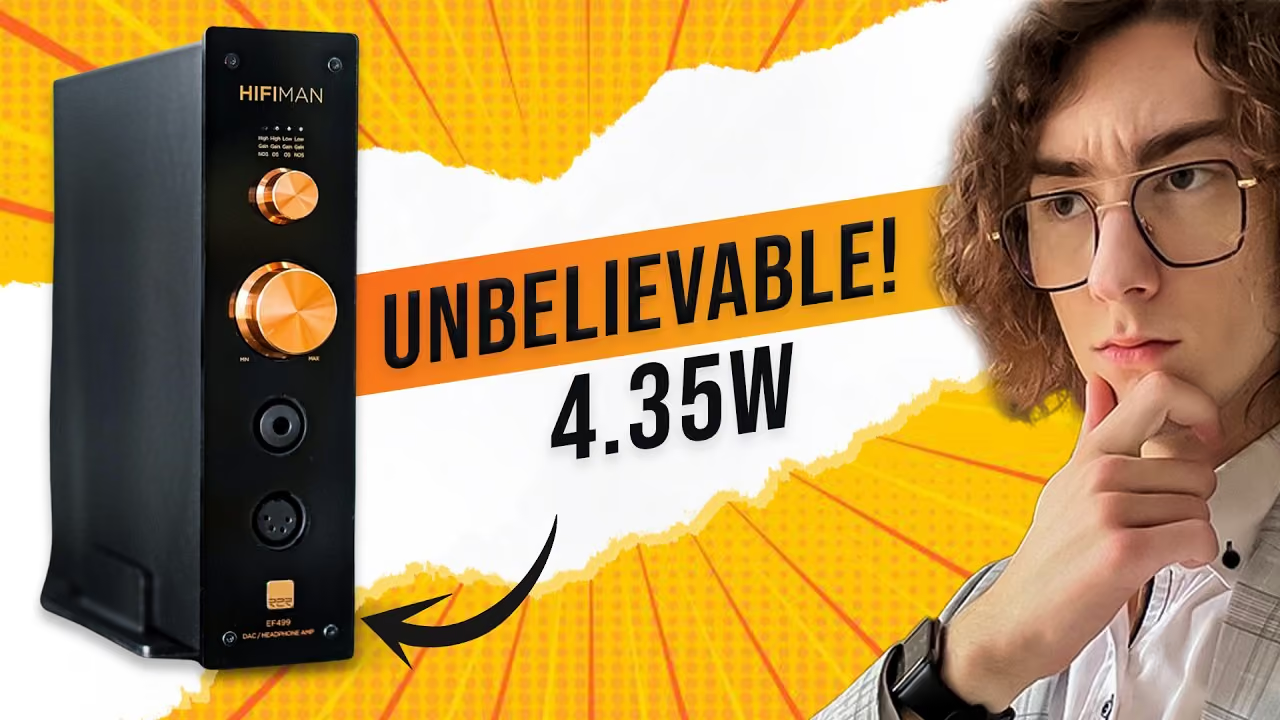
Watch the video review
Subscribe on YouTube (opens in new tab)Prefer to read? The written review above covers everything in the video.
- 0:00 Are Separate Audio Components BETTER? (opens in new tab)
- 0:18 Design & Build Quality (Critical QC Issues, Durability Problems, Matte Finish) (opens in new tab)
- 3:16 Inputs & Outputs (Digital Ins, Network Streamer Functionality, Balanced XLR Analog Out, RCA) (opens in new tab)
- 4:39 Features (R2R Resistor Ladder Array, Non-oversampling (NOS), High/Low Gain) (opens in new tab)
- 5:59 Technical Specifications (Power Output, Philips R2R Chip, THD+N, Channel Separation, SNR) (opens in new tab)
- 7:10 Sound Quality (NOS vs OS, Detail Retrieval, Soundstage Width, Tonal Balance, Dynamics, Warmth) (opens in new tab)
Common questions about the EF499
Is the HIFIMAN EF499 worth it?
Yes, for the right listener. It scored 8.1/10, Recommended, higher than 49% of everything we have tested, against a catalogue median of 8.1. On value it rates strong: above average for the price across the catalogue. Price: $299.
Who should buy the HIFIMAN EF499, and who should skip it?
Buy it if you want one amplifier that will not be the limit on whatever you buy next, and you want the R-2R presentation rather than the last decimal of measured linearity. Skip it if you listen mostly on sensitive in-ears, where reserve like this is gain you have to turn down, and you choose a converter by its measurements and want the lowest distortion figure at the price.
What should I consider instead of the HIFIMAN EF499?
On the same chain, against the same recordings: the HIFIMAN EF500 scores 0.1 higher and costs $250 more. Each of those has a full head-to-head page below.
Can the EF499 be used as a standalone headphone amp?
No, and it is the one real limitation. There is no analog input of any kind, so you cannot feed it from an external DAC - whatever you play goes through the Philips R2R inside. If your plan was to buy this for the amplifier section and bring your own converter, this is the wrong box. Everything else about the connectivity is generous: USB-B, USB-C, coaxial and an Ethernet jack, with RCA and balanced XLR line outs.
What does the EF499's network streaming actually give you?
A source, without another box or another set of interconnects. The Ethernet jack lets you play from a NAS or from services like Tidal and Qobuz directly, which is genuinely unusual on a budget DAC and amp. That is the feature that changes the buying decision: a few years ago a $300 recommendation meant two devices, a pair of cables and an afternoon of setup. This is one unit that covers the streamer, the converter and the amplifier.
Is the EF499 powerful enough for planar magnetics?
For most of them, comfortably. It makes 4.35 watts per channel into 32Ω balanced, and 1.28 watts single-ended - so the balanced output is where the headroom lives, and it is a significant amount of power at this price. That covers a wide range of headphones including many planars, which are the power-hungry ones. High and low gain settings are there too, so sensitive in-ears get a usable range instead of all the volume in the first eighth of the pot.
Is the EF499 built better than the EF400?
Yes, noticeably, and the volume pot is the clearest evidence. It is not the same potentiometer used in the EF400 or EF600: virtually no wobble, more linear resistance, and it simply feels massively better under your fingers. The all-metal chassis is solid and heavy enough to stay put on a desk, the rear connectors are well-seated with a snug fit, and the matte black sides hide fingerprints. HIFIMAN's old QC reputation does not apply to this generation.
Does the EF499 have to be used vertically?
It is designed for it, and the upright orientation doubles as a headphone stand - not the best stand in the world, but far better than resting a headphone on a desk where the pads deform and the cups get scratched. If you need it horizontal you can probably manage by unscrewing and removing the stand, but that is not what it was built for. Plan your desk around vertical placement rather than assuming you can lay it down.
NOS or OS mode on the EF499?
I prefer NOS, for two reasons. Oversampling gives you a more refined, more detailed presentation with subtle nuances pushed forward. Non-oversampling is more organic and relaxed, emphasising the natural harmonics of instruments and voices for a smoother, mellower sound. It suits my headphones slightly better, and I like skipping a stage of digital signal processing for a purer path. Neither is wrong - the switch is there because the answer depends on your gear and the record.
Does the EF499's 0.008% THD+N matter?
Not for a resistor ladder device, no. It is not a chart-topping figure and nobody should pretend otherwise, but that result is nothing to be concerned about in an R2R design - the architecture is chosen for how it sounds rather than how it measures. The supporting numbers are reasonable too: 95dB channel separation for a wide, accurate stereo image and 99dB A-weighted signal-to-noise. This unit prioritises musicality, and its own spec sheet says so honestly.
How wide is the EF499's soundstage?
Spacious and well-defined rather than enormous, and I want to be accurate about which of those it is. It is not the widest I have heard, but instrument separation and imaging are excellent - you can pinpoint where things sit without hunting. Layering is the part that could be slightly more refined, though it is still very good for the money. Dynamics are a genuine strength, handling both delicate passages and powerful hits without compressing either.