HIFIMAN EF500 Review: The Cheapest Himalaya R2R DAC
The most affordable HIFIMAN unit to feature their proprietary Himalaya R2R DAC chip - 4.5W per channel balanced, network streaming, and a vertical tower form factor.
higher than 56% of everything we have tested
- Standout
- First Himalaya R2R DAC chip at this price point
- Watch out for
- Gets warm during long sessions with demanding cans
- Better alternative
- HIFIMAN Serenade: $450 more, scores 1.1 higher.
Is it for you?
- You want one amplifier that will not be the limit on whatever you buy next
- You want the R-2R presentation rather than the last decimal of measured linearity
- You listen mostly on sensitive in-ears, where reserve like this is gain you have to turn down
- You choose a converter by its measurements and want the lowest distortion figure at the price
Pick #2 of 4 in our Best Headphone Amplifiers guide.
The HIFIMAN EF499 may look virtually identical to the EF500 - but these DAC/amps are more different than they seem. The EF500 not only features a more powerful headphone amplifier section, but it's also the most affordable model to include HIFIMAN's proprietary Himalaya digital-to-analog converter chip with R2R ladder technology. But is that enough to make it worth it?
Design & Build Quality: A Solid Vertical Tower
The first thing that strikes you when you unbox the HIFIMAN EF500 is just how substantial and well-built it feels. This isn't a lightweight desktop toy - it's a serious piece of gear. The chassis is all metal, with a clean, industrial design that feels very intentional. It has this vertical, tower-like form factor that really sets it apart from the more typical flat DAC/amp designs. It reminds me a lot of the EF600.
The front panel is pretty minimal and functional. You've got a large, very smooth volume knob that feels great to the touch. Next to it, there's a simple selector for high and low gain, and choosing between oversampling modes. The finish itself is matte silver with black accents, and honestly, it looks better in person than it does in photos. It has this slightly retro-futuristic vibe that reminds me of vintage studio gear. This thing can get a little warm during long sessions, especially if you're driving demanding headphones.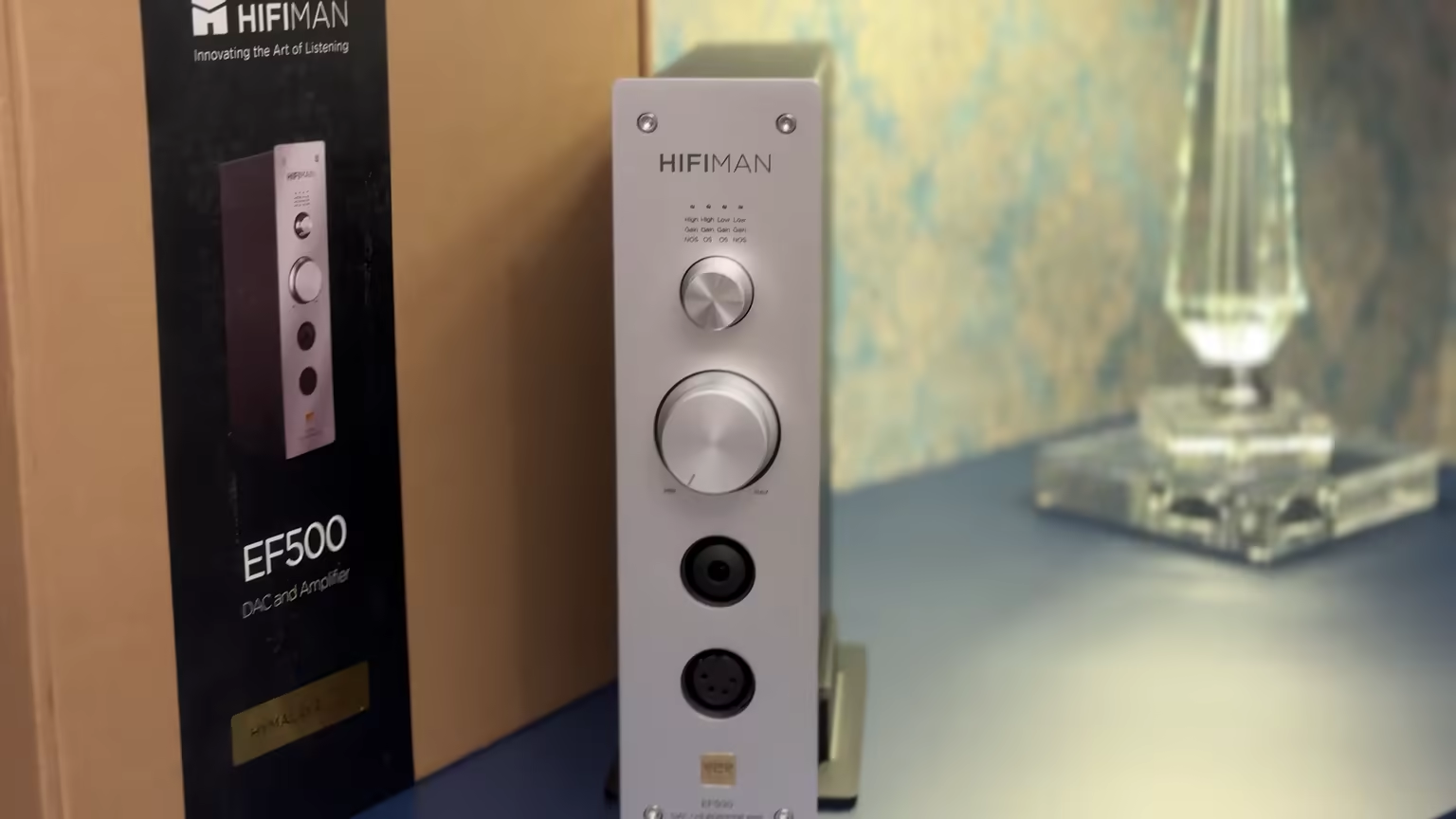 (view larger)
Everything is neatly arranged and the ports themselves feel solid - nothing loose or misaligned. You can tell HIFIMAN took their time with the physical engineering, which honestly isn't something you can say for all DAC/amps in this range. The EF500 feels rock-solid. It looks clean and professional. You put this on your desk, and it doesn't take up a lot of horizontal real estate - it's just a smart, serious design.
Inputs & Outputs: Balanced Out, Ethernet In
The EF500 actually gives you a really solid set of inputs and outputs - more than you'd probably expect at this price in this form factor. Around the back, you've got balanced XLR outputs and single-ended RCA outs, so whether you're running powered monitors or feeding a separate amp, you're good to go. For digital inputs, there's a USB Type-B and a USB Type-C port, which is super convenient. There's also a coaxial input for traditional digital sources, and an RJ45 Ethernet port for network streaming. Next to the inputs, there's a small switch that lets you toggle between the USB+Network or the coax. And of course, you've got a standard IEC power connector - no wall wart, which is always a plus.
On the front, you get two headphone outputs: a balanced 4-pin XLR and a standard 1/4-inch jack. Everything on the back is spaced out well, clearly labeled, and feels durable.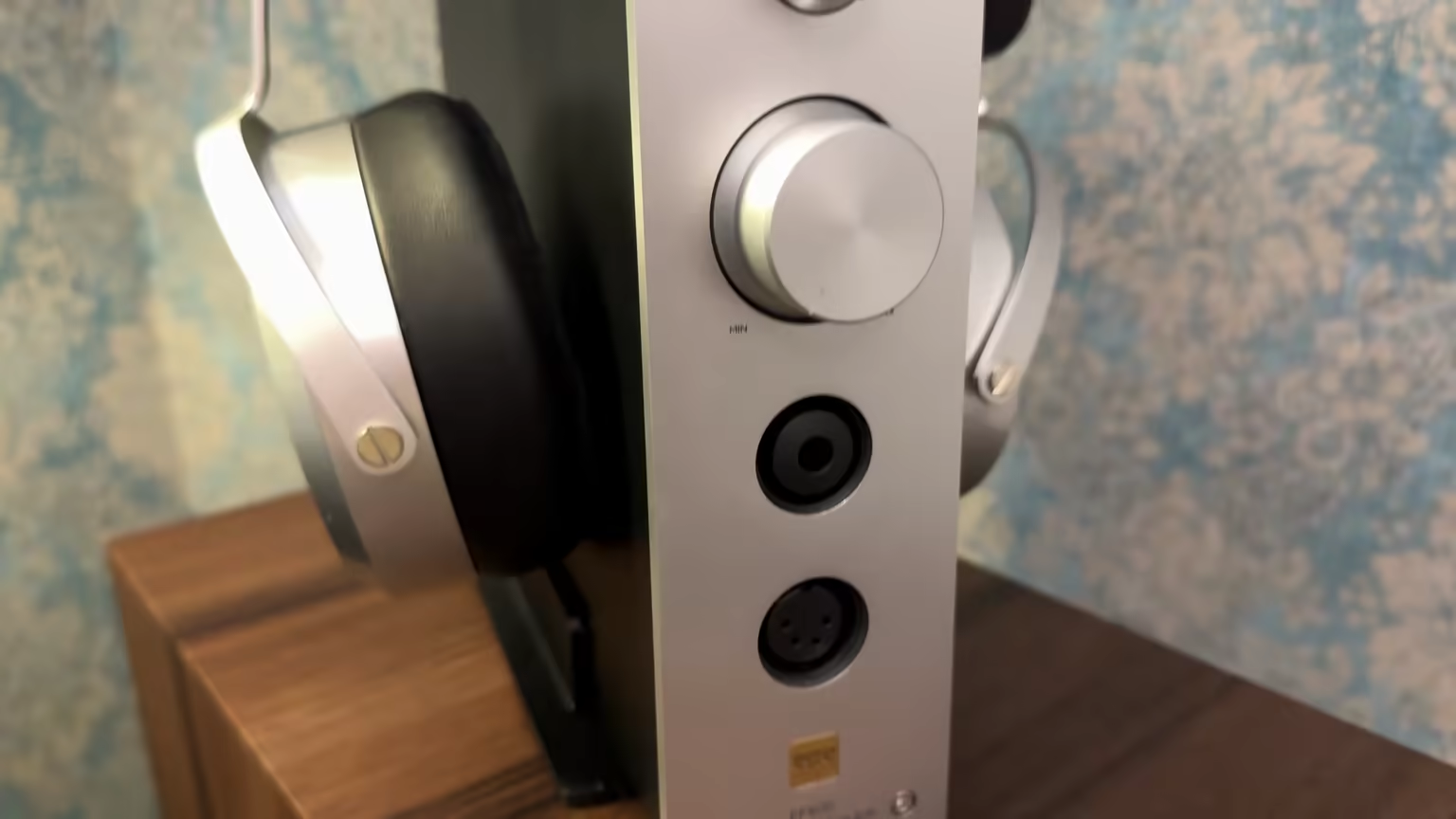 (view larger)
Features: Himalaya R2R at Its Cheapest Yet
What really makes the EF500 interesting, especially at its price point, is how feature-packed it is. One of the standout features here is that it uses HIFIMAN's own Himalaya R2R DAC chip. This is a big deal because R2R ladder DACs are typically reserved for much more expensive gear. They're known for their natural, analog-like sound and HIFIMAN's implementation is based on resistor ladders on a chip, rather than the delta-sigma approach used in most modern DACs. It's the same architecture used in their higher-end units, so you're getting almost flagship-level digital decoding in a much more affordable chassis.
On top of that, the EF500 offers both high and low gain modes, which makes it more flexible for headphone pairing. Then there's the oversampling filter selector. You can choose between OS and NOS digital filter modes - so you can subtly tailor the sound to your preference. These filters affect things like impulse response and treble presentation, and while the differences can be subtle, they're definitely noticeable with the right headphones and material.
And lastly, it's worth pointing out again that you've got streaming functionality built right in. With the Ethernet port, the EF500 can serve as a network DAC, which opens it up for more integrated use in a home audio setup.
Technical Specifications: 4.5W per Channel, Balanced
On the digital side, you get HIFIMAN's custom Himalaya DAC module, which supports PCM decoding up to 24-bit / 768kHz. On the analog side, the headphone amp section is fully balanced, and HIFIMAN rates the output at 4.5 watts per channel at 32Ω from the balanced out. That's a serious amount of power, enough to comfortably drive most full-size headphones, including planars. From the single-ended quarter-inch jack, you'll get a little less, but still plenty.
In terms of signal-to-noise ratio, it measures in at around 117dB, which is respectable. The total harmonic distortion is rated at <0.0025%, so we're talking about a very transparent signal path here. The channel separation is very high - 131dB. It's basically a full-featured desktop DAC/amp that doesn't cut corners in the spec sheet - everything from the power output to the decoding capabilities is designed to compete with much more expensive gear.
Sound Quality: Smooth, Organic, Quiet Background
Starting with tonality, the EF500 offers a sound signature that leans toward a natural and balanced presentation. Thanks to the Himalaya R2R DAC chip inside, the tonal reproduction is incredibly smooth and organic, with a warmth and richness that you don't often hear at this price. It avoids the harshness or a clinical sound. Vocals come through with a lifelike quality - clear, intimate, and well-defined without ever sounding pushed forward or recessed. Instruments have a nice weight to them, whether it's a plucked acoustic guitar or a deep cello, and there's a sense of texture that adds to the immersion.
The soundstage is another area where it impresses. It's not artificially wide or exaggerated, but it's got a bit of depth and layering. This creates a more engaging and three-dimensional listening experience, especially on recordings with complex arrangements or live performances. It's not quite at the level of some ultra-high-end gear with extreme soundstage width, but for a desktop DAC/amp in this class, it's really solid.
Dynamics are handled rather well, too. This amplifier has a good grip on micro and macro scale dynamics, meaning that quiet details come through cleanly, while louder passages don't feel compressed. The amp section delivers clean power, so you don't get distortion or fatigue even at higher volumes, which is great if you're driving more demanding headphones like planars or high-impedance dynamic drivers. The high gain mode adds extra headroom without introducing any noticeable noise or distortion.
Another subtle but important factor is the noise floor. The EF500 is exceptionally quiet, which keeps the background dead silent. This allows you to pick up on delicate nuances in the music without distraction. No matter if you're listening to acoustic jazz or highly detailed classical pieces, it lets you hear those fine details and ambient cues that make a track come alive.
One feature that also affects the sound subtly but effectively is the oversampling filter selection. Having two different filter options lets you tweak the tonal balance and transient response slightly - OS offers a sharper attack with a bit more brightness, while NOS smooths out the highs for a warmer, more relaxed sound. It's not a massive difference, but it gives you some personal customization depending on your headphone or music style.
Measurements & Output: Flat, Clean, Low Impedance
Objectively, measurements show that the EF500 maintains excellent linearity across the frequency spectrum, with very low total harmonic distortion. This aligns well with what you hear - an accurate, mostly uncolored sound that respects the source material without adding unwanted artifacts or noise. The frequency response is impressively flat but with a slight, pleasant lift in the lower mids and upper bass that adds warmth without sacrificing clarity.
The output impedance is low enough to drive most headphones cleanly without altering their inherent tuning. This is important for preserving the character of whatever headphone you pair it with.
Verdict: Musical and Detailed at Once
Overall, the EF500 delivers a sound experience that feels both musical and detailed. It's smooth and warm enough to be engaging and enjoyable for casual listening, but detailed and transparent enough for critical listening sessions. Whether you're into rock, jazz, classical, or electronic music, it handles each genre with finesse and clarity.
This DAC/amp stands out for its natural tonality, wide and precise soundstage, controlled dynamics, and low noise floor - all powered by a unique R2R DAC implementation that elevates it above most competitors in this price range. If you value sound quality that's both emotionally satisfying and technically competent, it definitely deserves a serious listen.
What the EF500 will drive
Rated at 4.5 W balanced into 32 Ω, it clears every one of the 23 headphones we have published a power figure for - including the hungriest, the HIFIMAN HE-R9, which wants about 313 mW to reach 110 dB peaks.
Requirements are each headphone's own published figure, computed from its impedance and sensitivity by the same calculator its review runs. Where a review states a sensitivity without naming its reference, the figure used here is the worst case, so a headphone counts as driven only if the amplifier clears it either way. Reproduce any of it in the headphone power calculator, or open a row's review to move the listening level and watch its figure change.
| Headphone | Needs | Drives it |
|---|---|---|
| HIFIMAN HE-R9 | 313 mW | Yes |
| Sivga Luan | 263 mW | Yes |
| OLLO Audio X1 | 248 mW | Yes |
| Sivga Robin SV021 | 99 mW | Yes |
| HIFIMAN RE2000 PRO Silver | 84 mW | Yes |
| Sivga Anser | 83 mW | Yes |
| HIFIMAN HE400se | 79 mW | Yes |
| Sivga SV021 Pro | 56 mW | Yes |
| HIFIMAN RE800 Silver | 53 mW | Yes |
| HIFIMAN Ananda Stealth | 50 mW | Yes |
| HIFIMAN HE1000 Stealth | 50 mW | Yes |
| HIFIMAN Arya Organic | 40 mW | Yes |
| HIFIMAN Arya Stealth | 40 mW | Yes |
| HIFIMAN Arya Unveiled | 40 mW | Yes |
| HIFIMAN Sundara | 40 mW | Yes |
| Kiwi Ears Orchestra Lite | 39 mW | Yes |
| HIFIMAN HE1000se | 25 mW | Yes |
| Verum Audio Verum 1 | 25 mW | Yes |
| HIFIMAN Sundara Closed-back | 16 mW | Yes |
| Meze 105 Silva | 15 mW | Yes |
| Kiwi Ears Atheia | 6 mW | Yes |
| HarmonicDyne Eris | 5 mW | Yes |
| Simgot EM6L | 5 mW | Yes |
Watch the video review
Subscribe on YouTube (opens in new tab)Prefer to read? The written review above covers everything in the video.

- 0:00 Is A DAC & AMP Combo Unit Good For You? (opens in new tab)
- 0:25 Design & Build Quality (Similarities To The EF600, Aluminium Chassis, Volume Knob) (opens in new tab)
- 2:14 Inputs & Outputs (Balanced XLR, Single-Ended RCA, Digital Sources, Network) (opens in new tab)
- 3:24 Features (Filter Selection - Oversampling, Non-Oversampling, Streaming, High Gain) (opens in new tab)
- 4:55 Technical Specs (Himalaya R2R Ladder Chip, Power Output, THD, SNR, Channel Separation) (opens in new tab)
- 6:02 Sound Quality (Tonal Balance, Sound Stage, Dynamics, Depth, Layering, Vocal Performance) (opens in new tab)
Common questions about the EF500
Is the HIFIMAN EF500 worth it?
Yes, for the right listener - 8.2/10, Recommended, higher than 56% of everything we have tested, against a catalogue median of 8.1. On value it rates fair: mid-pack for the price across the catalogue. Price: $549.
Who should buy the HIFIMAN EF500, and who should skip it?
Buy it if you want one amplifier that will not be the limit on whatever you buy next, and you want the R-2R presentation rather than the last decimal of measured linearity. Skip it if you listen mostly on sensitive in-ears, where reserve like this is gain you have to turn down, and you choose a converter by its measurements and want the lowest distortion figure at the price.
What should I consider instead of the HIFIMAN EF500?
The pieces we have actually run against it: the HIFIMAN EF499 scores 0.1 lower and costs $250 less. Every one of those matchups has its own page in the head-to-head section.
EF500 or EF499 - what is the actual difference?
Two things, and they look nearly identical otherwise. The EF500 has the more powerful amplifier section, and it is the cheapest unit HIFIMAN make that carries their own Himalaya R2R chip rather than a third-party ladder. That is the real upgrade: the same architecture used in their higher-end units, in a much more affordable chassis. The feature sets overlap heavily and the EF500 costs more, so if the Himalaya chip and the extra power do not matter to you, the EF499 is the sensible buy.
Can the EF500 be used as a standalone amplifier?
No. There is no analog input, so you cannot feed it from an external DAC - the Himalaya converter is always in the path. It has generous digital connectivity instead: USB-B, USB-C, coaxial and an Ethernet port for network streaming, with a switch to pick between USB and network or coax. On the output side you get balanced XLR and single-ended RCA line outs, so it will happily feed powered monitors or a separate power amplifier.
Does the EF500 get hot?
It gets warm during long sessions, particularly when you are driving demanding headphones. It is not alarming and it is not a fault - it is a well-built metal box doing real work - but it is worth knowing if you were planning to tuck it into a tight shelf or stack something on top of it. The vertical tower form factor helps here as well as saving desk space, since there is less surface in contact with anything else.
Is the EF500 powerful enough for planar headphones?
Yes, comfortably. HIFIMAN rate the fully balanced amplifier section at 4.5 watts per channel into 32Ω from the balanced output, which is enough to drive most full-size headphones including planars with headroom left. The single-ended quarter-inch jack gives you less but still plenty. High gain adds extra headroom without introducing noticeable noise or distortion, and low gain keeps sensitive in-ears usable.
Is the difference between the EF500's OS and NOS filters audible?
Subtle, and real. OS gives a sharper attack with a bit more brightness; NOS smooths the highs for a warmer, more relaxed presentation. The differences affect impulse response and treble more than anything else, and they become noticeable with the right headphones and the right material rather than jumping out at you on every track. Treat it as fine tuning to taste, not as two different devices in one.
How quiet is the EF500?
Exceptionally, and it is one of the things I noticed most. The background is dead silent, which is what lets delicate nuances and ambient cues come through instead of sitting just under a layer of hiss. The supporting figures back it up: 117dB signal-to-noise, under 0.0025% total harmonic distortion and 131dB channel separation. The output impedance is also low enough to drive most headphones without altering their tuning, which matters more than any of those numbers.
If you're interested in this
All 4 headphone amps reviewsClosest alternatives