
HIFIMAN HE-R9 Review: The $200 Closed-Back Bass Monster
Both terrible and amazing at the same time - the HE-R9 is a closed-back bass monster at $200 with a tuning that's either perfect for you, or completely wrong.
higher than 4% of everything we have tested
Value Steep. You are buying performance here, not value.
- Standout
- Massive, punchy bass that doesn't bleed into the mids
- Watch out for
- Pads are too shallow
- Better alternative
- HIFIMAN Ananda Stealth: $160 more, scores 1.9 higher.
Is it for you?
- You want a big, out-of-your-head stage
- You want vocals right in front of you
- $199 has to buy value as well as performance
For the wider field, our Best Open-Back Headphones guide ranks 14 rivals in this class. This one is not among them.
HIFIMAN HE-R9 headphones are both terrible and amazing at the same time. Let me explain why that's the case.
First of all, the HE-R9 is a closed-back dynamic driver headphone from HIFIMAN. You can get it for $200 directly from HIFIMAN's website, and there's also a wireless version available for $440. They use the "topology diaphragm" technology, which features a special nanoparticle coating applied to its surface, supposedly resulting in a more natural and detailed sound.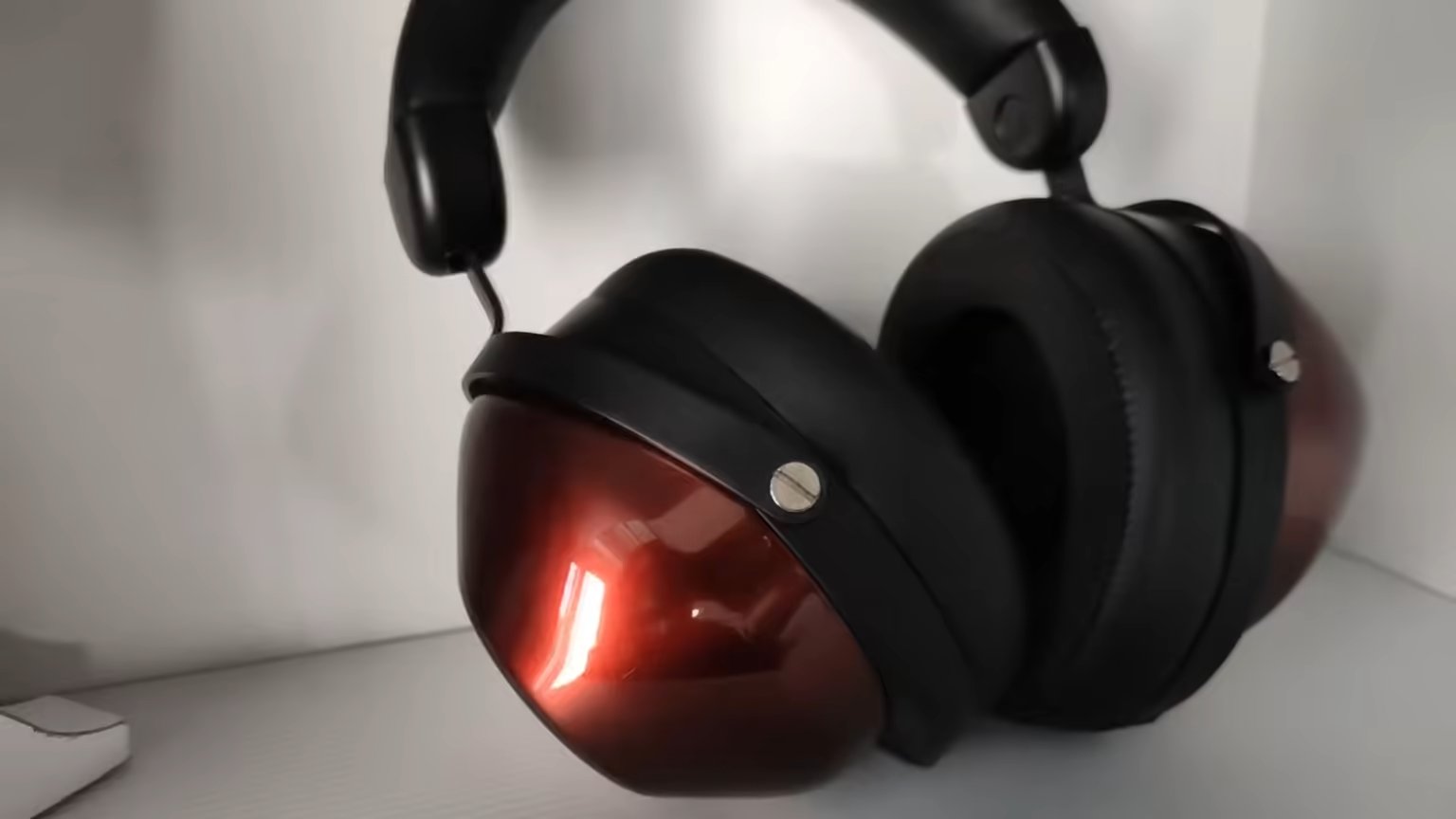 (view larger)
Build: Light on the Head, Shallow in the Pads
Let's begin with their build. I'm going to say it's... interesting.
They feature the solid headband, which I was not a fan of on the Edition XS, as it was causing some hotspots on top of my head. But here's the thing: the HE-R9s are much lighter - really lightweight - so at least in my case, there are no uncomfortable hotspots. The headband has some swivel and a little bit of tilt.
The pads are very soft, but not deep enough. My ears touch the drivers, and it's a little bit uncomfortable. You have to keep that in mind and simply get used to it.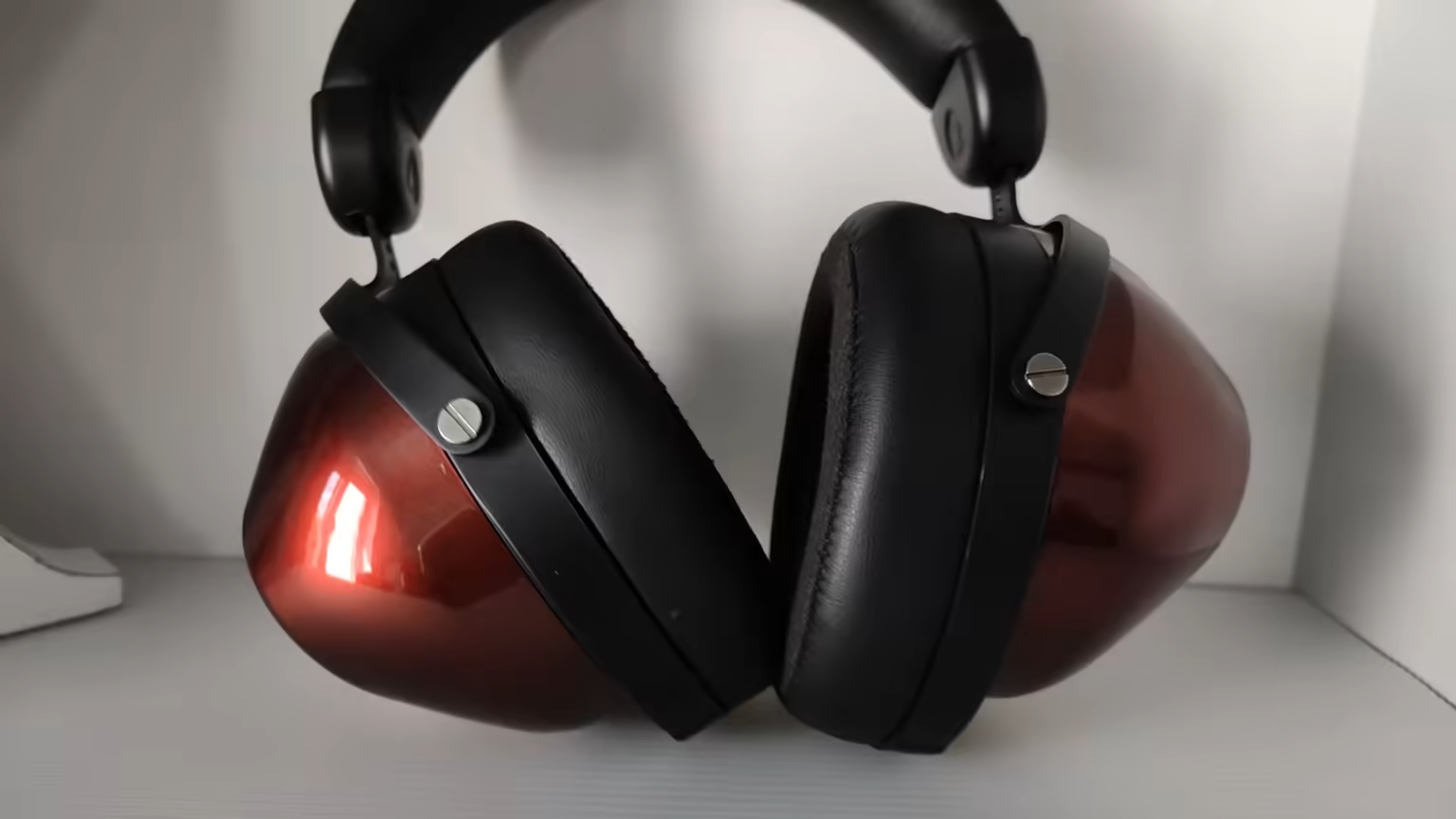 (view larger)
Design: Huge, Glossy, Unapologetically Plastic
The design aspect of this headphone is... weird.
They're huge and can look really dumb on your head. I've heard mixed opinions on their aesthetics - some people think they look cool, others don't. But it has a reason to be so huge, which I'll discuss later.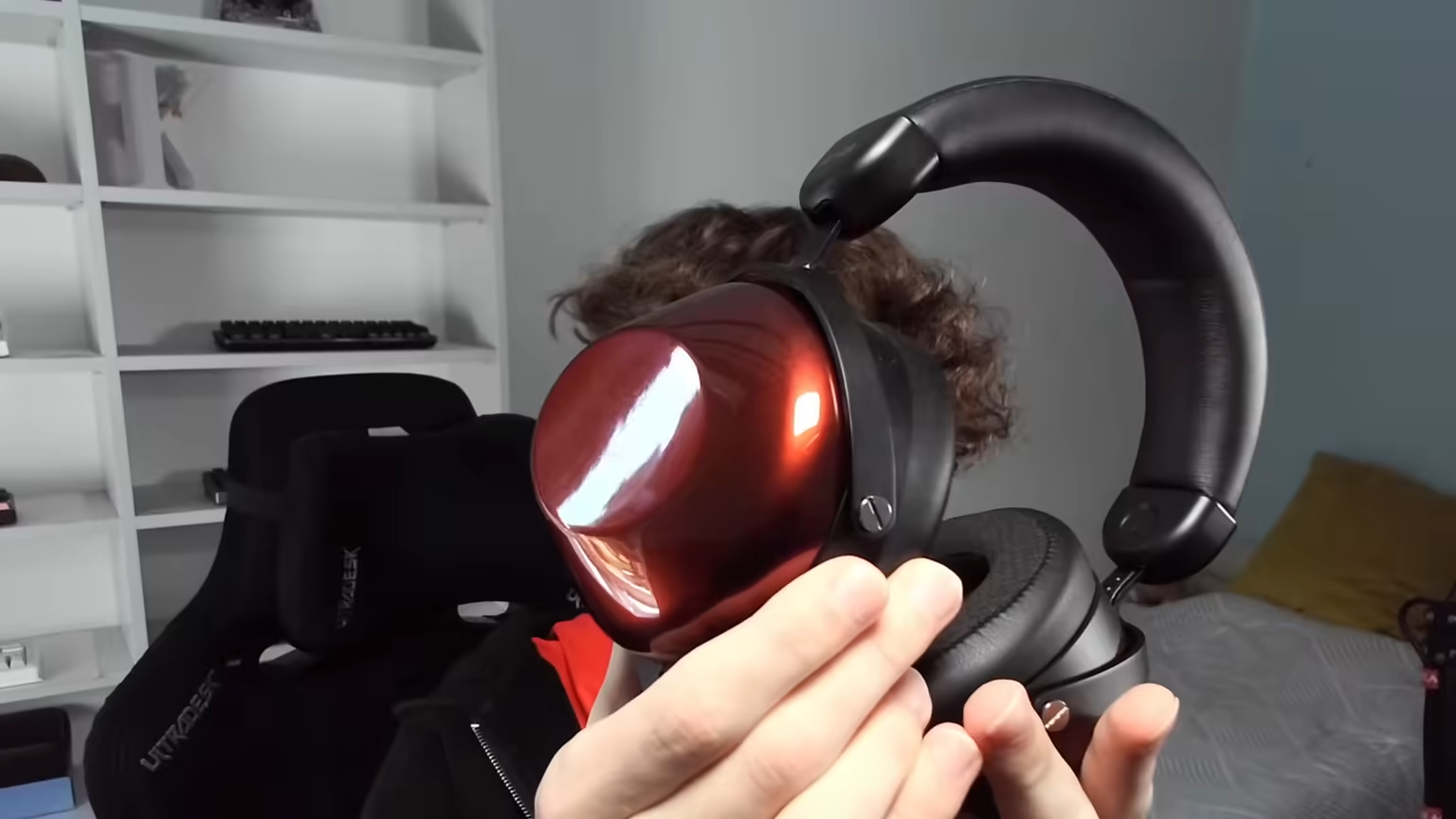 (view larger)
The headphone generally feels cheap. It's all made of plastic, and really light - which makes them more comfortable, but on the other hand makes them feel cheap. I don't necessarily have a feeling of them being fragile or anything like that, so I wouldn't be worried about their longevity.
How Does It Sound? A Bass Cannon, Easy to Drive
They're extremely easy to drive, being a dynamic driver with a low impedance of 32 ohms and a high sensitivity of 100dB. You don't need to worry about their amplification at all.
Now the tonality - haha, that's the fun part. Just take a look at the frequency response graph.
There's a massive, enormous boost to the bass and low mids - I'm pretty sure that the big size of the earcups has an effect on the bass, as it has room to reflect. That's paired with stepped-back upper mids and somewhat peaky highs. That combination has one downside, which I found really noticeable: it makes many female vocals sound boring and lacking in energy.
The HE-R9 specializes in bass. There's a lot of it, and it's really punchy. I'm not sure what they did, but the bass doesn't bleed into the mids most of the time. With that crazy amount of bass boost, it's unexpected. What's also unexpected is that it doesn't sound muddy - at least most of the time. There are songs where it can get a tiny bit muddy.
Soundstage and Separation: Wide for a Closed-Back
For a closed-back dynamic headphone, you'd think it's going to have an extremely intimate sound, but you couldn't be more wrong. Fine, it doesn't sound the most open - because it's not an open back - but the massive space behind the driver makes them sound significantly wider.
The sound separation is not the greatest. It's not quite what this headphone is trying to achieve, but it can get easily overwhelmed by a lot of sounds at once, so you won't be able to catch every sound and instrument in the mix. This effect is even more amplified by the lack of higher frequencies, which often lead to a sense of detail in sound.
Verdict: For Bass Heads, Yes
Should you buy the HIFIMAN HE-R9? It depends on what you're looking for. If you're a bass head, then sure - it's pretty cheap for the bass quality and quantity it offers. If you're in the market for some unique-looking and sounding headphones, and it's not your only pair, then probably it would be a good buy. But if you're in the market for a headphone with a really wide soundstage, image separation, sound clarity, or the ability to hear every single detail, it's definitely not a headphone for you - look elsewhere.
Sound signature
Derived from the words this review uses: each axis runs between two opposite descriptors, and the shape leans toward whichever side the writing does.
- Warm ↔ Bright Neutral, no clear signal in the review language
- Relaxed ↔ Analytical Leans relaxed
- Polite ↔ Aggressive Leans aggressive
- Lean ↔ Bass-heavy Neutral, no clear signal in the review language
- Intimate ↔ Wide stage Leans wide stage
Hear what "relaxed, aggressive, wide stage" means: a short synthesised loop, flat and then with those leanings. An illustration of the words, not a recording of the HE-R9.
Not sure which signature suits you? Find yours with a blind A/B test

Watch the video review
Subscribe on YouTube (opens in new tab)Prefer to read? The written review above covers everything in the video.

Common questions about the HE-R9
Is the HIFIMAN HE-R9 worth it?
Only for some buyers - 6.9/10, Mixed, higher than 4% of everything we have tested, against a catalogue median of 8.1. On value it rates steep: better value exists in headphones, so you are buying performance here, not value. Price: $199.
Who should buy the HIFIMAN HE-R9, and who should skip it?
Buy it if you want a big, out-of-your-head stage. Skip it if you want vocals right in front of you, and $199 has to buy value as well as performance.
What amplifier does the HIFIMAN HE-R9 need?
Impedance is 32 Ω. By the rule of eighths the amplifier feeding it wants an output impedance no higher than 4 Ω, otherwise the interaction between the two tilts the frequency response rather than simply making it quieter. Power is the separate question. At most 313 mW to reach 110 dB peaks, which is a desktop headphone amplifier. The review records 100 dB without saying against what, and the two conventions differ by a factor of 31 at this impedance - so that is the worst case, and the real figure is at or below it.
What else have you tested around the price of the HIFIMAN HE-R9?
No head-to-head page for this one yet. The closest reference points we have scored in the same bracket: the Sivga Anser at 8.0/10, the OneOdio Max 1 at 7.0/10, and the Sivga SV021 Pro at 7.6/10.
Do your ears touch the drivers on the HE-R9?
Mine do, and it is the build complaint I would take most seriously. The pads are very soft but simply not deep enough, so my ears make contact with the drivers and it is a little uncomfortable. You have to know about it going in and decide whether you can get used to it - I did, but it is the sort of thing that some people never stop noticing. Everything else about wearing them is fine: they are genuinely light, so the solid headband causes none of the hotspots it does on the Edition XS.
Why is the HE-R9 so big?
Because the space behind the driver is doing acoustic work. The cups are huge, they look really dumb on your head, and opinion on the aesthetics is genuinely split - but the size is not styling. That big internal volume gives the bass room to reflect, and it is a large part of why a closed-back dynamic ends up sounding significantly wider than you would expect. The looks are the price of the sound here, not a separate mistake.
Is the HE-R9 muddy?
Mostly no, which is the surprise. There is an enormous boost to the bass and low mids - the kind of shape that normally means mud - and yet the bass does not bleed into the midrange most of the time and does not sound muddy most of the time. There are songs where it gets a tiny bit muddy, and bass-heavy tracks are where it happens. For the amount of low end on offer, the control is better than it has any right to be.
Why do female vocals sound flat on the HE-R9?
Stepped-back upper mids, paired with the massive low-end boost below them. That combination is the one downside I found genuinely noticeable: many female vocals come across as boring and lacking energy, because the region that gives a voice its presence has been pulled down while everything under it was pushed up. If vocals are what you listen for, this is the wrong headphone and no amount of bass quality will make up for it.
Does the HE-R9 need an amp?
Not at all. It is a dynamic driver at a low 32 ohms with a high 100dB sensitivity, so it is extremely easy to drive and you do not need to think about amplification. That matters more than usual here, because this is a $199 headphone likely to be bought as a second pair or a fun pair - the last thing it should come with is a mandatory box to go with it.
Who should buy the HE-R9?
Bass heads, and people who want something that is not their only pair. If you want bass quantity and bass quality for the money, this is cheap for what it does and it is genuinely fun. If you are shopping for soundstage precision, image separation, clarity or the ability to hear every detail in a mix, look elsewhere - it gets overwhelmed when a lot happens at once, and the recessed top end takes away the usual cue for detail. Both of those sentences are true of the same headphone.