HIFIMAN HE400se Review: $109 Planar Magnetic Headphone?
A stupidly cheap open-back planar with Stealth Magnets technology at $109 - loved by some, criticized by others. So what's actually going on with it?
higher than 17% of everything we have tested
Value Excellent. It is one of the best-value pieces we have scored.
- Standout
- Stealth Magnets technology at just over $100
- Watch out for
- Bass extension lacking below 60Hz
- Better alternative
- HIFIMAN Edition XS: $160 more, scores 1.1 higher.
Is it for you?
- You want to listen for hours without being analysed at
- You want the most performance per dollar on the list
- You are listening for detail rather than for pleasure
Named Best Value in our Best Budget Headphones guide.
The HIFIMAN HE400se seems to be criticized by some people and loved by others. The opinions about that headphone seem to be so vastly different, depending on whom you ask, that it's unbelievable they're talking about the same headphone.
So what's up with it?
The HE400se is a stupidly cheap open-back planar magnetic headphone. Its price has dropped to $109 - that's REALLY cheap. Being a budget planar, it still offers HIFIMAN's rounded-off Stealth Magnets technology, to achieve less distortion and more transparency in sound. Stealth Magnets used to be present only in higher-end headphones, but as we can see, they're possible to implement at a very low price.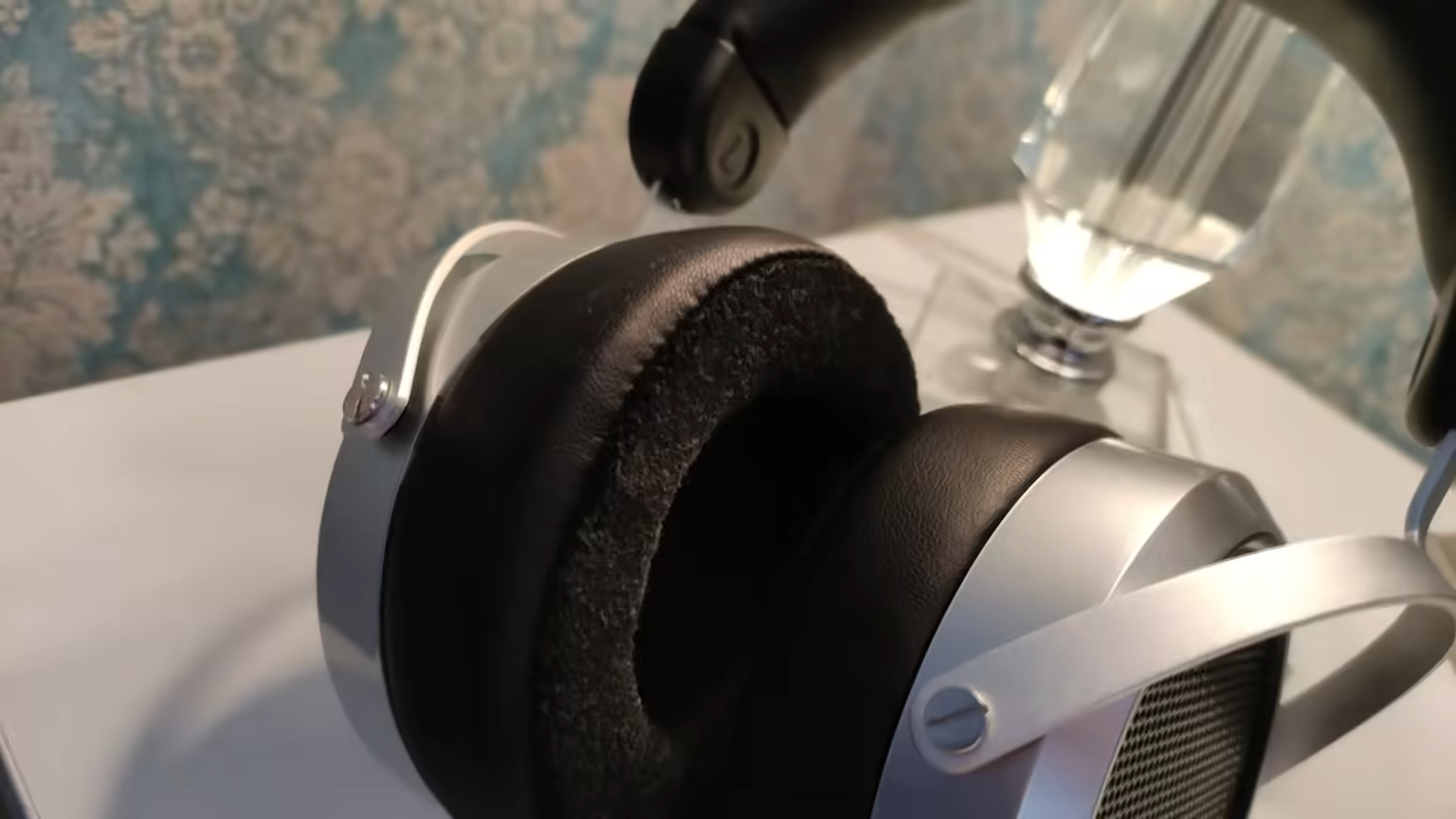 (view larger)
Build and Comfort: Plastic, but Nothing to Break
They don't feel like a top-of-the-line product at all. Hmm, maybe because they aren't? I'm not going to complain about it, as they cost just a little over $100 - and I did not find any potential points of failure. They simply aren't made entirely out of metal, but rather plastic. The earcups, covers, and headband are all plastic. The only metal part is the yoke.
They feature the Deva-style solid headband, without the suspension strap. They're quite lightweight though, so it shouldn't result in any hotspots on your head - unless the headband's curvature really doesn't match your head shape.
The earcups swivel, tilt, and can be adjusted. But I'm really not a fan of this type of adjustment - it doesn't feel right when you do it. Doesn't sound right when I say it...
The pads on the HE400se can be either amazing or not so great for you. They're generally really soft, angled to fit your head shape better, and hybrid - meaning three different materials to achieve the ultimate comfort in contact with your head and to improve the sound.
But the thing you need to take into consideration is the inner diameter of them. Your ears are somewhat likely not to fit entirely inside. In that case, they're going to touch the pads from the inside. For some folks it's not a problem, for others it can get slightly uncomfortable. I wouldn't be too worried about it though - just a little soft touch never hurt nobody.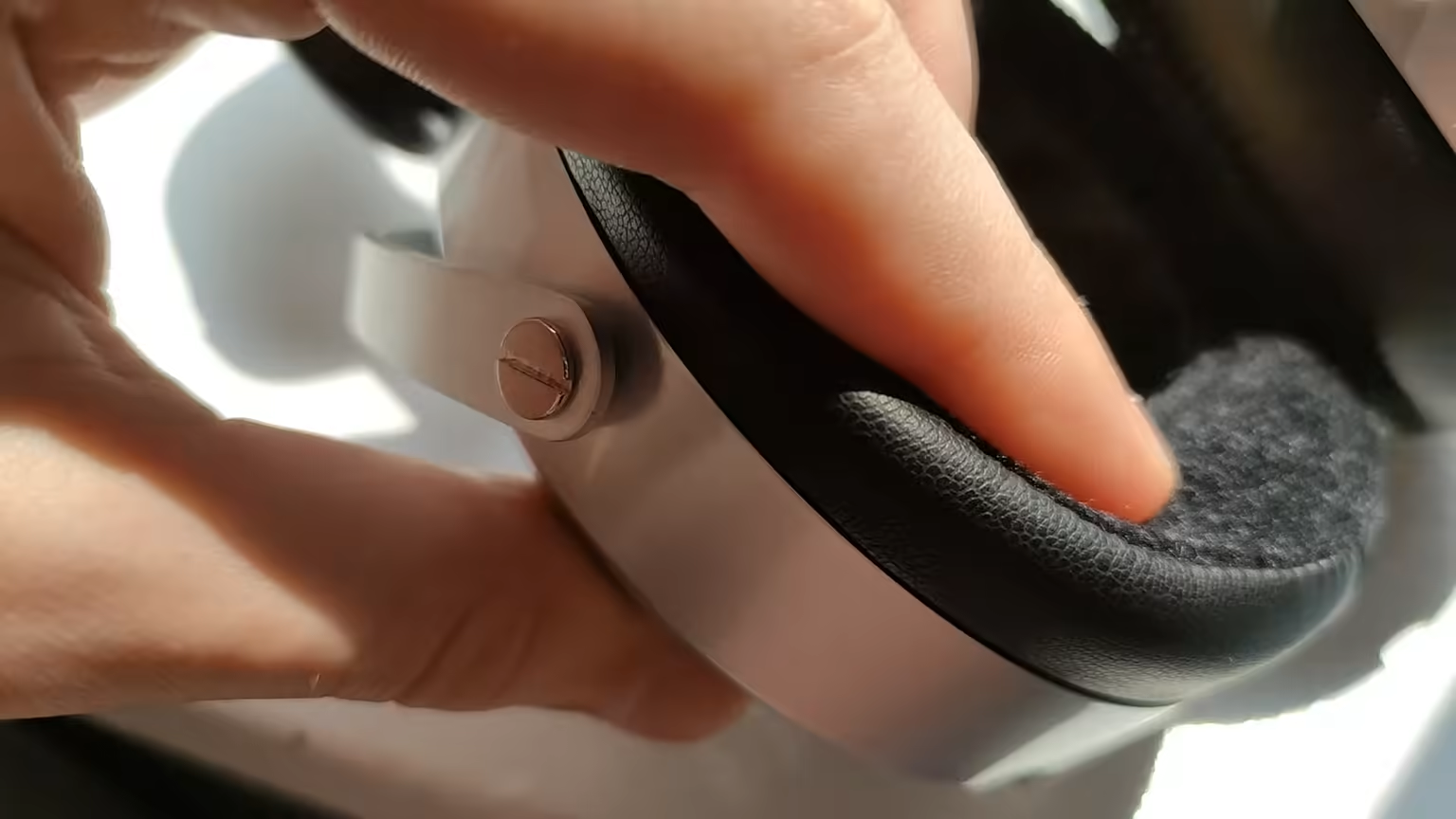 (view larger)
Amplification and Sound Quality: Wants Real Power
A sensitivity of 91dB and impedance of 32 ohms is a combination that makes them want some juice to unfold their potential. Nothing crazy is needed, don't get me wrong - I believe you're going to be just fine with most decent amps. I wouldn't recommend using them without any external amplification though, as their loudness and sound quality can easily degrade, leading to a tiny, thin, and quiet sound.
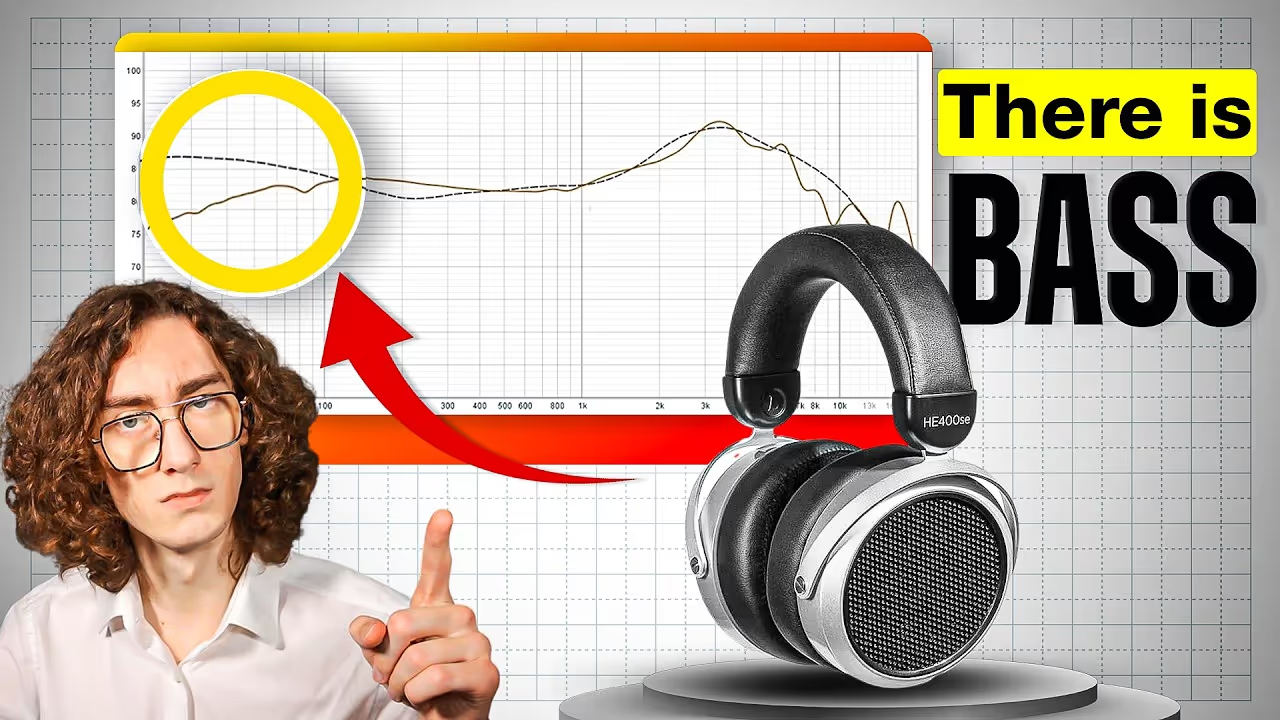
Tonally, they sound... interesting. I found many frequency response graphs, and they're vastly different from each other. Some indicate a huge drop in the bass, some a linear response all the way down to 20-ish Hz.
Starting from the bass: extension is simply lacking below 60Hz. It may seem like they don't have a lot of slam and punch in the bass region, but from my experience, they absolutely have it. It's not crazy, for sure, but they can definitely hit somewhat hard in the bass. There isn't a lot of information or detail in the lows, but they are clean and pleasant.
The mids sound just like every other HIFIMAN's headphone - with a larger dip at around 2kHz, which emphasizes the boosted treble even more. The mids sound quite muffled for some reason, which I'm not a huge fan of.
The highs are alright. There's some detail, not a crazy amount, and it's not the brightest headphone on the market. There are a bunch of typical peaks and dips, which is a common characteristic of planar magnetic technology. They don't really affect the sound nearly as much as it looks like.
Soundstage and Vocals: Narrow but Decent for $109
The soundstage is pretty narrow. They don't get wide, no matter what you listen to. It's not too precise, so if you're looking for a wide soundstage, look elsewhere. But for the price - it's pretty nice. There are much narrower headphones on the market, even at a higher price point. Because of the pretty narrow soundstage, the positioning is also lacking a little bit, but it's still decent. In games specifically, I've had no problems telling which way enemies are making sounds.
Vocals are a little bit backed off. They don't cut right through the mix, but rather stay blended in. That doesn't make them sound boring though - just not as forward compared to the rest of the mix.
Detail Retrieval: Strong for the Price
It's really good for the price, considering the HE400se costs around $100 at the moment. It obviously can't compete with higher-end headphones in terms of detail retrieval - but that would be a bit too much to ask for. It simply doesn't quite give you the sense of clarity present in other, more expensive options. The sound can seem a little muffled, which I'm not a fan of, but at this price, with that great tonality and other characteristics, I think it shouldn't be a problem to take one compromise, which is just that.
Sound signature
Derived from the words this review uses: each axis runs between two opposite descriptors, and the shape leans toward whichever side the writing does.
- Warm ↔ Bright Neutral, no clear signal in the review language
- Relaxed ↔ Analytical Leans relaxed
- Polite ↔ Aggressive Leans aggressive
- Lean ↔ Bass-heavy Neutral, no clear signal in the review language
- Intimate ↔ Wide stage Sits close to centre
Hear what "relaxed, aggressive" means: a short synthesised loop, flat and then with those leanings. An illustration of the words, not a recording of the HE400se.
Not sure which signature suits you? Find yours with a blind A/B test
Watch the video review
Subscribe on YouTube (opens in new tab)Prefer to read? The written review above covers everything in the video.
Common questions about the HE400se
Is the HIFIMAN HE400se worth it?
Yes, for the right listener. It scored 7.6/10, Recommended, higher than 17% of everything we have tested, against a catalogue median of 8.1. On value it rates excellent: top 14% for the price in headphones, so it is one of the best-value pieces we have scored. Price: $109.
Who should buy the HIFIMAN HE400se, and who should skip it?
Buy it if you want to listen for hours without being analysed at, and you want the most performance per dollar on the list. Skip it if you are listening for detail rather than for pleasure.
What amplifier does the HIFIMAN HE400se need?
The HIFIMAN HE400se is a 32 Ω load, so the matching rule is the rule of eighths: an amplifier's output impedance should sit at or below 4 Ω, an eighth of the headphone's, or its frequency response shifts audibly and usually in the bass. That is a property of the amp rather than its power rating, so a high-output-impedance tube amp can fail it while a phone jack passes. About 79 mW to reach 110 dB peaks, which is most dongle DACs.
What else have you tested around the price of the HIFIMAN HE400se?
We have not run it head-to-head against anything yet. In the same category and the same rough money we have scored the Sivga Robin SV021 at 7.8/10, which is the nearest thing to a shortlist until a matchup page exists.
Does the HE400se need an amp, or will a phone do?
It needs one, and this is the single most important thing to know before buying. At 91dB and 32 ohms it wants some juice to unfold - nothing extreme, and most decent amps will do it - but run it straight out of a phone and both the loudness and the sound quality fall away into something thin, small and quiet. That is where a lot of the disagreement about this headphone comes from: people are describing badly fed ones and properly fed ones as if they were the same product.
Why do opinions on the HE400se differ so much?
Because two different things get reported as one. Some of it is amplification - underpowered, this headphone sounds thin, and plenty of people have only ever heard it that way. Some of it is fit, because the pad opening is tight enough that your ears may touch the inside. And some of it is honest disagreement about the tuning: the mids are dipped around 2kHz and read as muffled, which you will either shrug at for $109 or find you cannot ignore. All three opinions are about the same headphone.
How is the HE400se's bass?
Better than its measurements suggest, within a real limit. Extension is simply lacking below 60Hz, so if you want the bottom octave this is not the headphone - but in listening it punches harder than the graphs imply, and it is clean and pleasant with no distortion or mush. There is not much detail down there. What it does have is a satisfying hit, which is not what you expect from a budget planar.
Is the HE400se's plastic build going to break?
I do not think so. It is plastic almost throughout - earcups, covers and headband, with only the yoke in metal - and it does not feel like a premium product, because at just over $100 it is not one. What matters is that I could not find a point of failure on it. The cups swivel, tilt and adjust, and while I dislike how that adjustment feels in the hand, nothing about it reads as fragile.
Will the HE400se's pads fit your ears?
Maybe not entirely, and it is worth knowing in advance. The pads themselves are excellent for the money - soft, angled to follow your head, and a three-material hybrid - but the inner diameter is small enough that a lot of ears will touch the inside rather than sit clear. For some people that is nothing; for others it becomes uncomfortable over time. I would not let it stop you at this price, but if you have already found small pad openings painful on other headphones, expect the same here.
Is the HE400se good for gaming?
Serviceable rather than special. The soundstage is narrow and does not open up regardless of what you feed it, and the positioning is correspondingly less precise than the wide open-backs people usually recommend for games. That said, I have had no trouble telling which direction enemies are making noise from. If competitive positioning is the whole reason you are buying, spend more; if you want one cheap headphone that also handles games, this is fine.