
HIFIMAN Sundara Review: Still Exceptional at $300, if Your Ears Fit
An amazing value proposition - the latest Sundara revision performs exceptionally well at $300 in the open-back planar market. It's just steel.
higher than 86% of everything we have tested
Value Excellent. It is one of the best-value pieces we have scored.
- Standout
- Balanced and neutral tonality
- Watch out for
- Inner pad diameter likely too small for many ears
- Closest rival
- HIFIMAN Ananda Stealth: $60 more, scores 0.2 lower.
Is it for you?
- You want the balance to lean warm, with the top end eased
- You want the most performance per dollar on the list
- You want every last bit of treble detail
Named Best Overall in our Best Headphones Under $500 guide, ahead of 11 others.
The HIFIMAN Sundara used to be priced at $500, which was an okay deal back then. Later they slashed its price to $350, which made it a really great value purchase, considering its outstanding audio quality and the state of the market back then. Then, they made it even better with the new silent revision. And now, its price has dropped to just $300 - which sounds just crazy. Let's take a closer look at it.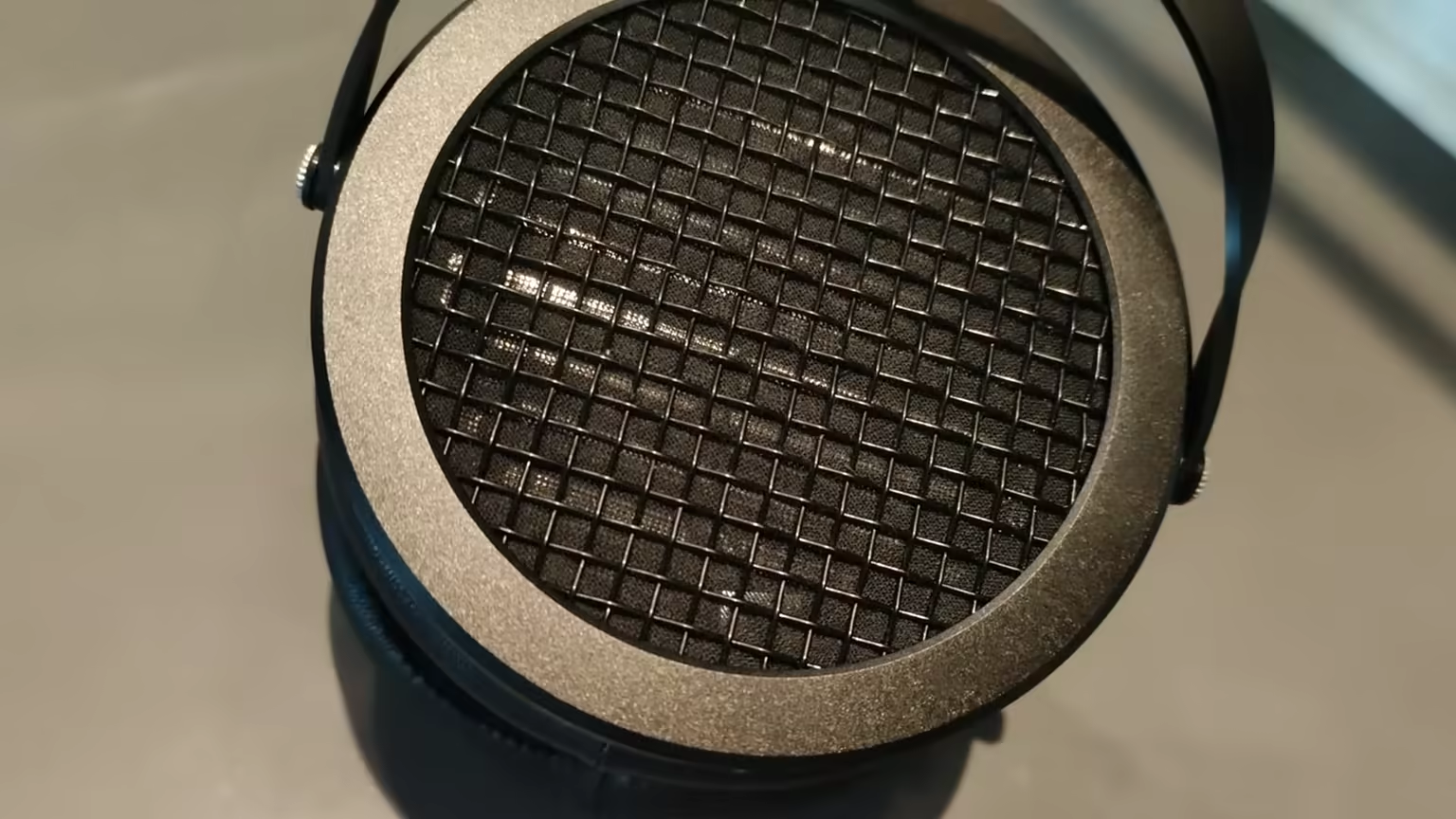 (view larger)
The Sundara is an open-back, full-size, planar magnetic over-ear headphone from HIFIMAN. Its first revision was released in 2017. The latest version features HIFIMAN's NEO Supernano Diaphragm, which is supposed to result in a faster, more detailed response. As far as I know, it does not include Stealth Magnets.
Build: Solid Metal Throughout
It's built extraordinarily well - metal parts, a solid feel, a suspension strap, and a dual 3.5mm connector that can take a single-ended or balanced connection.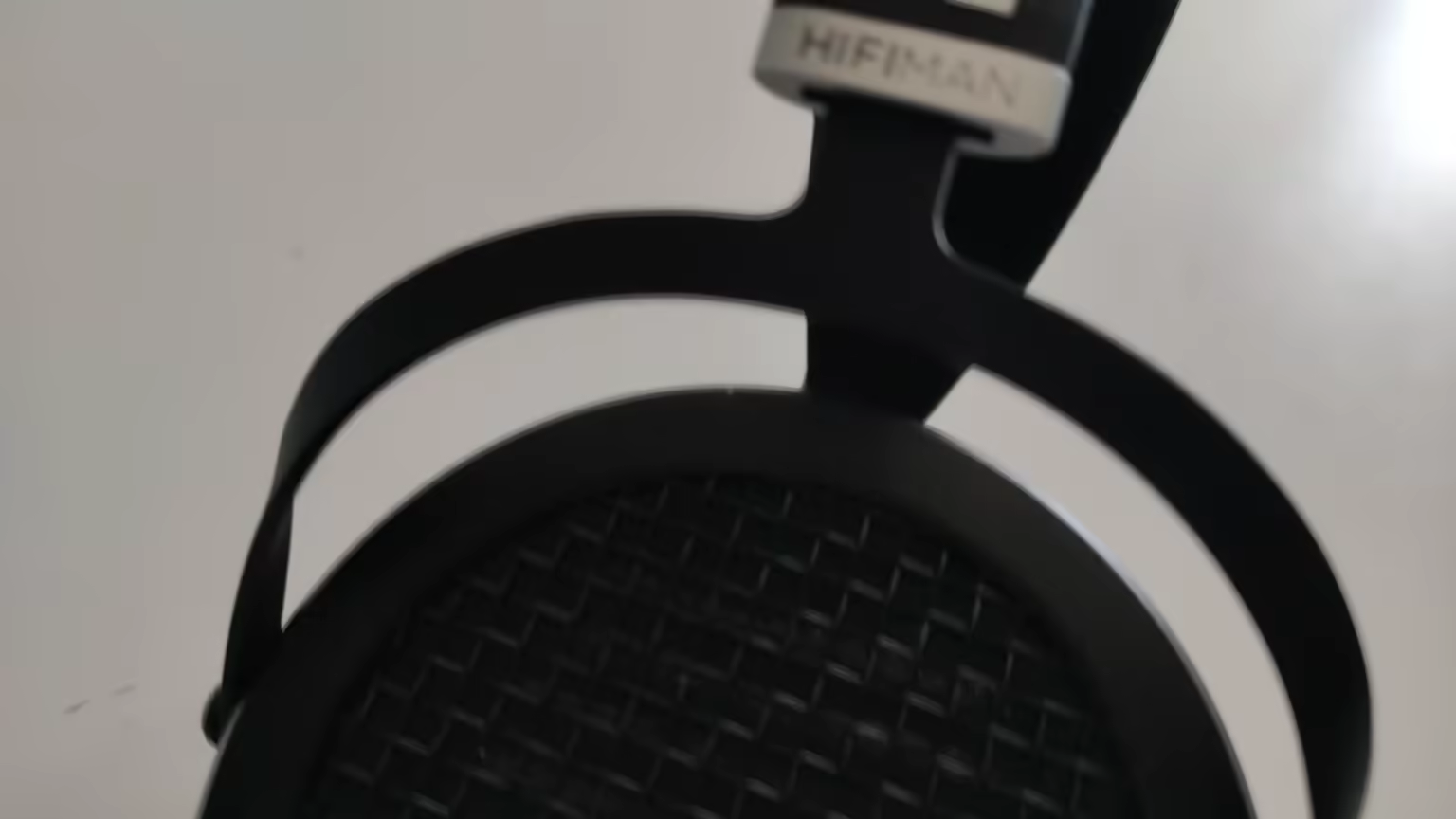 (view larger)
Is the Sundara Comfortable for Long Listening?
In terms of comfort, it can be hit or miss for some of you. The hybrid pads are great, but their inner diameter is rather small, likely too small for many ears, and they can get warm inside after some time. The suspension strap helps reduce hotspots on top of your head, but it doesn't swivel. There's quite a bit of clamp force - which helps to distribute the weight more evenly, instead of making it all hang from the top of your head... ahem, Edition XS. It's also quite lightweight, at 372g.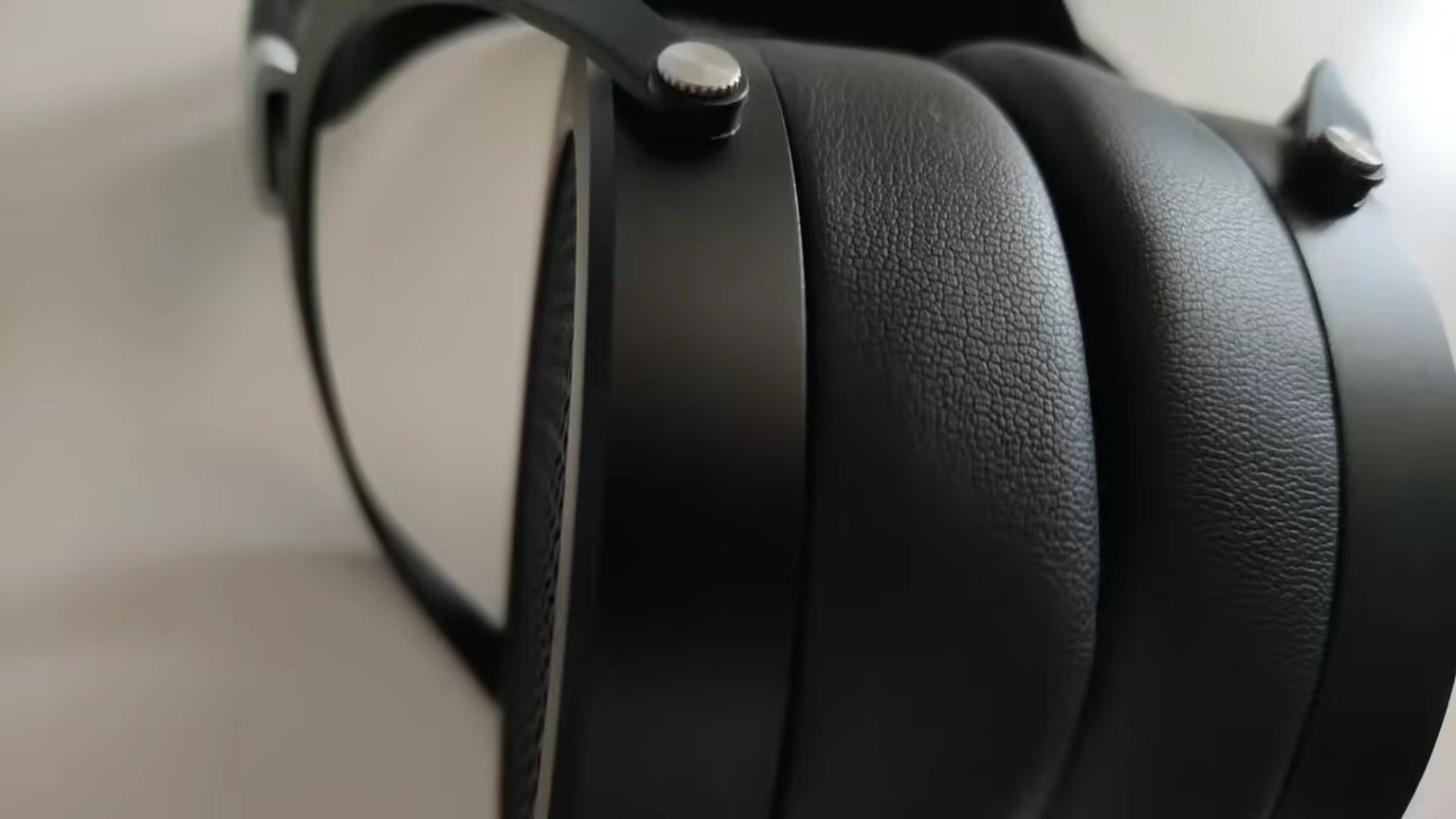 (view larger)
Sound and Amplification: Neutral, Never Boring
With an impedance of 32Ω and a sensitivity of 94dB, it's rather on the more efficient side. Not the most efficient in the world, but pretty easy to drive nonetheless. It can be powered from mobile devices, though there's some benefit to using higher-end external, especially clean, amplification.
Okay, how does it sound? Tonality-wise it's balanced and neutral in a good way - it's not boring sounding. The bass is definitely present, but not artificially boosted. There's good sub-bass extension, sloping downwards from 50-ish Hz - and you can hear 20Hz, it's there! I prefer the bass being deep, rather than artificially boosted without extending far into the sub-bass territory, and the Sundara definitely delivers on that.
The mids are a bit above the target and the highs are a little below it, which results not only in the lack of sibilance but also leans slightly on the warmer side.
Sound Characteristics: Wide Stage, Real Slam
The soundstage is great, wide, and decently accurate, which is unheard of at this price. It puts you in front of the sound source and surrounds you with it. It doesn't sound disconnected though. It's not extremely wide like some higher-end headphones, but the way it goes about the soundstage is just really well done. And it does not sound as open as HIFIMAN's bigger planars, but it's still pretty wide.
Sundara has a great dynamic range, with a strong punch or slam in the bass and mids that make it enjoyable to listen to. It's one of the things this headphone especially packs above its league. It's also one of my favorite aspects of it. Without it, I believe it would be much more boring sounding.
Sound Separation: Clean, Not Showy
Sound separation is at a decent level. Sounds aren't getting blended in with each other, which leads to a clean and pleasant presentation. It's not as good as something like an Edition XS - with Sundara you can't differentiate all the instruments in the mix as easily. You can absolutely still tell that there are drums, strings, and all that - it just doesn't scream at you with the sound separation.
Detail Retrieval: Where It Truly Shines
That's another area where it truly shines. The level of detail, especially micro-detail, is impeccable. This headphone doesn't sound too bright, so it doesn't give a forced sense of detail - it just comes naturally, and you're able to hear a lot more than with other headphones, even at a slightly higher price point.
It's simply done better than on most, even more expensive, currently available headphones.
Fast Transients: A Genuinely Fast Driver
Sundara is just a really fast headphone. It doesn't lack in the speed department at all. The decay is also above average. All that, in combination with great dynamics, makes for a really fun and kind of unique audio presentation.
Vocals: Typical, with a Warm Tint
Both male and female vocals sound neither boring nor energetic, but definitely not dull - I would call it a typical performance in this category. It gives all vocals a slightly warmer tint to them, but we're talking really slightly. It's not an inherently warm or thick-sounding headphone in the vocals.
Verdict: Is It Worth $300? Amazing Value
HIFIMAN's Sundara presents an amazing value proposition in the current open-back planar magnetic headphone market, considering that you can get an improved version that performs exceptionally well for $300. It's just steel.
Sound signature
Derived from the words this review uses: each axis runs between two opposite descriptors, and the shape leans toward whichever side the writing does.
- Warm ↔ Bright Leans warm
- Relaxed ↔ Analytical Leans analytical
- Polite ↔ Aggressive Leans aggressive
- Lean ↔ Bass-heavy Leans bass-heavy
- Intimate ↔ Wide stage Leans wide stage
Hear what "warm, analytical, aggressive, bass-heavy, wide stage" means: a short synthesised loop, flat and then with those leanings. An illustration of the words, not a recording of the Sundara.
Not sure which signature suits you? Find yours with a blind A/B test
Watch the video review
Subscribe on YouTube (opens in new tab)Prefer to read? The written review above covers everything in the video.

- 0:00 Sundara - A crazy good deal? (opens in new tab)
- 0:25 General information, technology (opens in new tab)
- 1:02 Build, Appearance (opens in new tab)
- 1:34 Stock Cable (opens in new tab)
- 1:59 Comfort (opens in new tab)
- 2:26 Sound Quality (Tonality) (opens in new tab)
- 4:08 Sound Quality (Characteristics) (opens in new tab)
- 7:16 Conclusion, final thoughts (opens in new tab)
Common questions about the Sundara
Is the HIFIMAN Sundara worth it?
Yes - 9.0/10, Highly Recommended, higher than 86% of everything we have tested, against a catalogue median of 8.1. On value it rates excellent: top 21% for the price in headphones, so it is one of the best-value pieces we have scored. Price: $299.
Who should buy the HIFIMAN Sundara, and who should skip it?
Buy it if you want the balance to lean warm, with the top end eased, and you want the most performance per dollar on the list. Skip it if you want every last bit of treble detail.
What amplifier does the HIFIMAN Sundara need?
Impedance is 32 Ω. By the rule of eighths the amplifier feeding it wants an output impedance no higher than 4 Ω, otherwise the interaction between the two tilts the frequency response rather than simply making it quieter. Power is the separate question. About 40 mW to reach 110 dB peaks, which is most dongle DACs.
What should I consider instead of the HIFIMAN Sundara?
The pieces we have actually run against it: the HIFIMAN Ananda Stealth scores 0.2 lower and costs $60 more, the HIFIMAN Edition XS scores 0.3 lower, and the Meze 105 Silva scores 0.3 lower and costs $200 more. Every one of those matchups has its own page in the head-to-head section.
Will the Sundara's pads fit normal-sized ears?
Often not, and it is the first thing to check rather than the last. The hybrid pads themselves are good, but the inner diameter is rather small - small enough that many ears will press against the inside of the opening instead of sitting inside it, which turns a comfortable headphone into a pressure point over a long session. They also warm up inside after a while. If your ears are on the larger side, settle this before you read another word about the sound, because nothing else on the list matters if the opening does not clear your ear.
Is the Sundara comfortable if you wear glasses?
Mixed, and the clamp force is why. There is quite a bit of it here, deliberately - it spreads the load instead of hanging all 372g off the top of your head - but clamp plus glasses is exactly where temple arms start to press into the side of your skull. The suspension strap deals with hotspots on the crown, and it does not swivel, so the cups cannot rotate to follow your head shape. If you wear glasses through long sessions, expect to take a break sooner than the low weight suggests.
Does the Sundara get fatiguing over a long session?
Not tonally, no. The highs sit a little below target and the mids a little above, which is the shape that keeps sibilance off the table entirely - this never gets sharp, and the micro-detail arrives without being pushed at you. That is the rare combination, and it is why the detail does not tire you out the way a brighter headphone's does. What ends a long session here is physical rather than tonal: the pads warm up inside, and if the opening is tight on your ears you will feel that first.
Can the Sundara be driven properly from a phone?
Yes. At 32Ω and 94dB it sits on the efficient side for a planar, and it is not one of the hungry HIFIMANs - a phone or a dongle will get it loud enough. What better amplification buys is cleanliness rather than volume, and that matters more here than usual, because this headphone's whole case is micro-detail and a noisy source is exactly what buries it. So a phone is a legitimate place to start, not a compromise you have to fix in week one.
Is the Sundara the Stealth Magnet version?
No. As far as we can tell it does not use HIFIMAN's Stealth Magnets, and that is the main technical line between it and the pricier planars in the range. What the current revision does carry is the NEO Supernano Diaphragm, and that is the part doing the work - the speed, the above-average decay and the micro-detail the review keeps returning to. Do not buy this expecting Stealth Magnets, and do not skip it for lacking them either.
How much does the Sundara leak, and can you use it in an office?
It leaks, in both directions, and that is the design rather than a defect. The honeycomb grille is open to the room, so whoever is next to you hears your music and you hear them. That rules out an open-plan office, a shared room and anything resembling a commute. It wants a room you control - which is also the condition the soundstage needs to do what it does, so the two constraints are really the same constraint.
Which Sundara revision should you buy, and is the price drop a catch?
No catch - the unusual part is that the price fell without the headphone getting worse. It launched at $500, went to $350, and now sits at $300, and somewhere in that run HIFIMAN quietly revised it, so the newer units sound better rather than cheaper. The one you want is the current revision with the NEO Supernano Diaphragm. What you are buying is a 2017 design that has been refined and then repeatedly discounted, which is a different thing from a design being cleared out.
Does the Sundara's stock cable need replacing?
Not on sound. The part that actually matters is the connector: dual 3.5mm, which means you can run single-ended today and move to a balanced cable later without touching the headphone itself. At this price that flexibility is worth considerably more than any cable upgrade - it is the difference between being tied to one output and being able to follow your amplifier wherever it goes next.