
KBEAR KB02 Review: A $39 Bone Conduction Hybrid IEM
A $40 hybrid IEM combining a 10mm beryllium-plated dynamic driver with a bone conduction driver tuned for sub-bass - V-shaped, punchy, and surprisingly capable.
higher than 4% of everything we have tested
Value Excellent. It is one of the best-value pieces we have scored.
- Standout
- Lightweight resin shell with no rough edges
- Watch out for
- Faint resonating spring sound when tapping the shell
- Better alternative
- Kiwi Ears Belle, Cadenza II, Orchestra II: $10 less, scores 1.2 higher.
Is it for you?
- You want weight and slam low down
- You want the most performance per dollar on the list
- You want the bass to stay out of the mids
For the wider field, our Best IEMs guide ranks 7 rivals in this class. This one is not among them.
We all know the drill: sound needs air. No air? No sound. That's why the Moon's concert scene is, well, non-existent... In a vacuum, it'd be silent. But how can these IEMs bend the laws of physics?
Is It Comfortable? Resin Shells That Disappear
Even the best-sounding IEMs are worthless if they feel like torture devices in your ears. Thankfully, KBEAR has put a lot of thought into the KB02's ergonomics and construction. The shell is crafted from a lightweight yet sturdy resin. I won't call it a bold material choice, as almost all serious IEMs are made of resin. It just works. You get a sense of solidity. I've tried some in-ear monitors that felt premium but not tough or solid. I was so afraid to just throw them in a backpack that often I didn't use them at all. What's the point of having something well-made if you won't take advantage of it? There are no visible gaps or rough edges, which contributes to a smoother, more comfortable fit.
The nozzle is angled slightly, which is an important choice. This allows the KB02 to sit more naturally in the ear canal, minimizing pressure points and creating a more secure fit. It provides a good grip for the ear tips, preventing them from slipping off unexpectedly. Getting a piece of rubber stuck in your ear canal is a scary thing to happen.
Speaking of ear tips, KBEAR includes a selection of silicone tips in various sizes. You get 3 types - the white ones, the black ones, and the gray ones. The included tips are of a decent quality, soft, and pliable, but nowadays, a company would have to try to mess it up.
Now, the comfort. I had to give my ears some time to adjust - around a week of regular use. After that period, once inserted, the KB02s practically disappear. I've worn these for hours on end, and I've experienced only minimal discomfort at times. There's no sense of pressure or fatigue, which is a huge plus for long listening sessions. They are also relatively small and do not protrude stupidly far from your ear. What's even more important is that the nozzle isn't overly thick, which is often a concern with some unique or multi-driver IEMs.
There's just one quite bizarre thing about the build. Something inside of their shell is resonating. It's not something you could notice during regular listening, but when you tap on them, it sounds like a resonating spring for a little bit. You can even feel the vibrations when you hold one IEM in your hand and you tap it with your other hand. I'm pretty sure it has to do something with the bone conduction driver.
Moving on to the cable, it's fairly generic. It uses a detachable design with standard 2-pin connectors. You can easily replace the cable if it gets damaged or if you want to upgrade to a different one. Keephifi offers a variety of earphone cables that are much nicer than the stock one. The included cable is braided, which helps to minimize tangling. It's also relatively lightweight and flexible, but don't expect any miracles.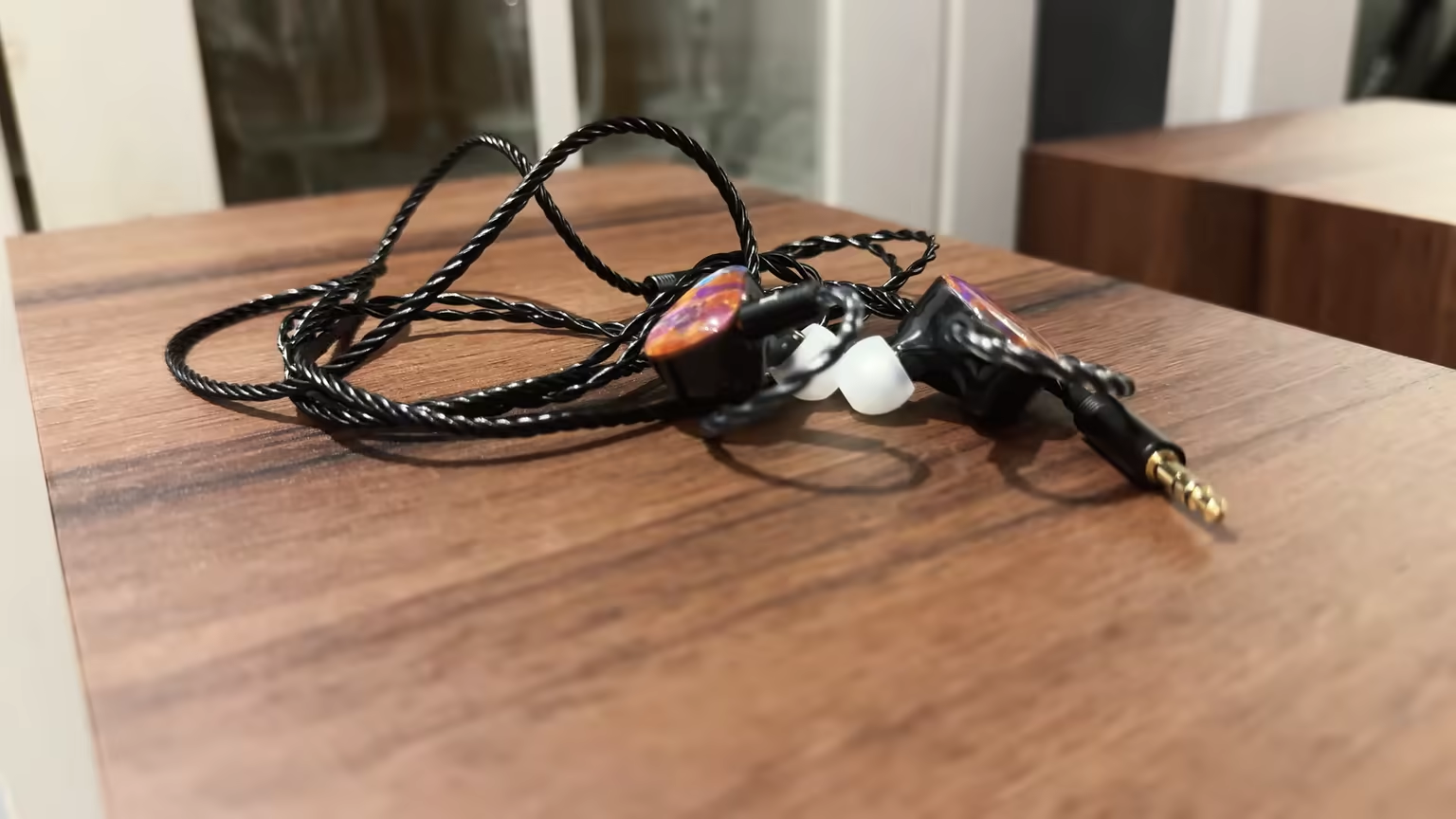 (view larger)
Visually, the KBEAR KB02 is available in three distinct colorways - Maple Brown, Misty Blue, and Crystal Violet. All of the finishes are done exceptionally well, with a lot of detail on the faceplate and some extra sparkle. It looks amazing, expensive, and refined, making them a stylish addition to your collection.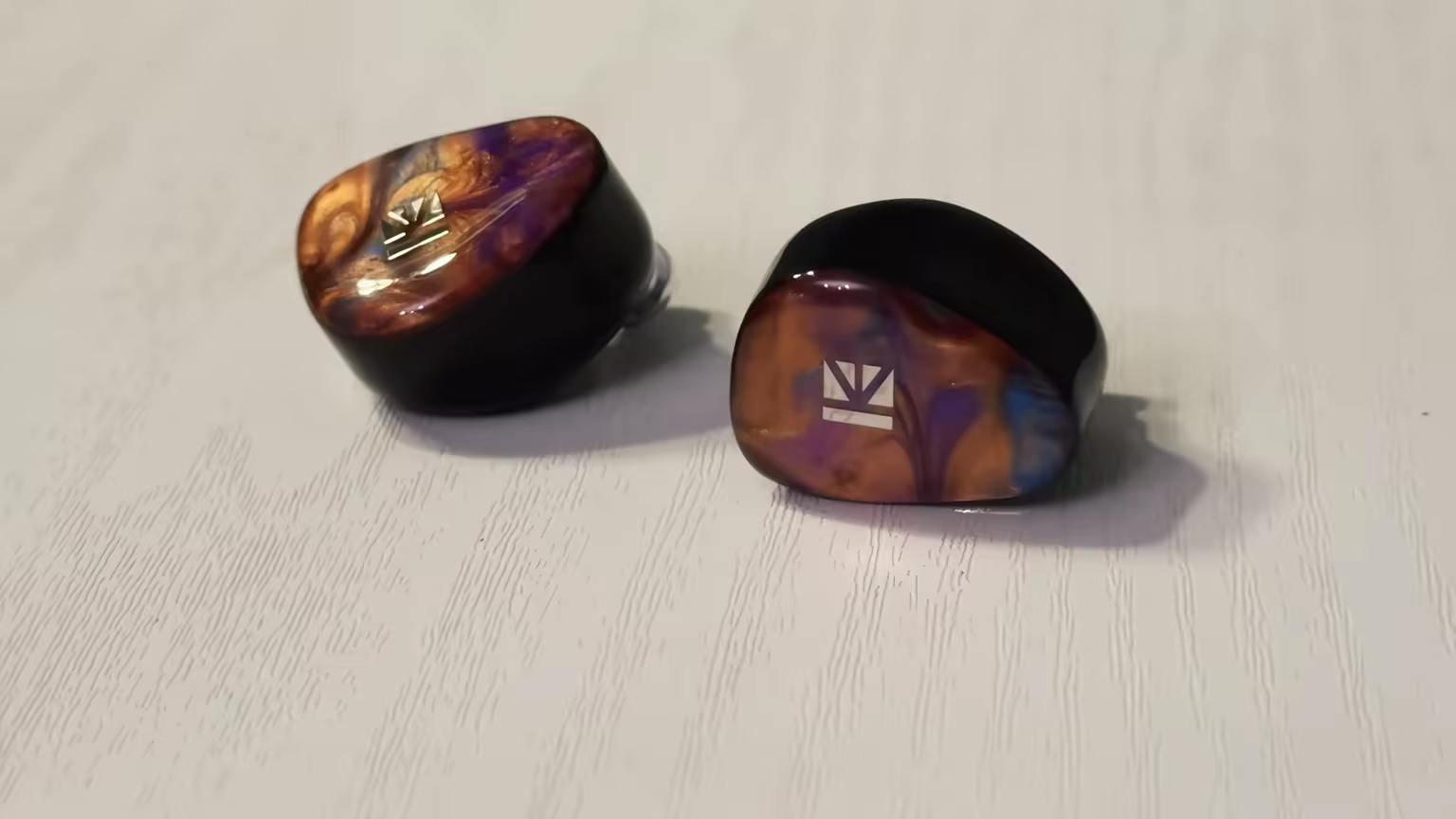 (view larger)
Features: Bone Conduction Meets Beryllium
This isn't just your average IEM - it's a hybrid design with some interesting tech under the hood.
The KB02 runs a dual-driver setup. We're talking about a 10mm beryllium-plated dynamic driver paired with a 10mm elastic-piece type BC driver.
BC stands for Bone Conduction. In traditional IEMs, sound is delivered through air vibrations that reach your eardrums. Bone conduction takes a different approach. These drivers vibrate, and that vibration is transmitted directly through the bones of your skull, bypassing the eardrums. In the KB02, it's used to enhance the lower frequencies. KBEAR has specifically tuned it for low and extremely low-frequency compensation. This means they've focused on boosting the sub-bass and bass regions to provide a more impactful and immersive listening experience.
The primary dynamic driver utilizes a beryllium-plated diaphragm. Beryllium is known for its exceptional rigidity and lightweight properties. This translates to faster transient response, improved detail retrieval, and reduced distortion, especially in the higher frequencies.
Does It Need an Amp? Phone-Friendly Sensitivity
Sensitivity is a measure of how loud the IEMs will get with a given amount of power. Here, at 108dB/mW means that for every milliwatt of power supplied, the KB02 will produce 108 decibels of sound. It indicates that they can be driven effectively by most smartphones and portable audio players.
Frequency response of 20Hz to 20kHz is the range of frequencies the IEMs are capable of reproducing. This range is generally considered the standard range of human hearing. So, the KB02 covers the full spectrum of audible sound. However, it's important to note that frequency response alone doesn't tell the whole story. How well those frequencies are reproduced is just as important.
How Does It Sound? Warm V-Shape, Dominant Bass
Tonality is where we'll start. The KB02 presents a profile that, while aiming for a consumer-friendly warmth, can be quite pleasing. It leans towards a warm, slightly V-shaped sound. This is achieved through a noticeable emphasis in the bass and a gentle lift in the treble. However, the execution of this tuning is where the nuances lie.
Immediately, the bass asserts itself. It's not just present - it's dominant. The low end is undeniably boosted, delivering a substantial thump that's satisfying for modern genres like EDM and hip-hop. The bass, while powerful, lacks some finesse I'd expect from more refined, or more expensive IEMs. There's a noticeable bloom, that results in a degree of bleed into the lower midrange. This can create a slightly congested feel, but for me that wasn't a problem, and I'm not even a bass head.
The midrange is where the V-shape becomes most apparent. It's definitely recessed compared to the bass and treble, making vocals and instruments sound slightly distant. However, it's not completely scooped out. There's still a decent amount of detail present, but it requires a bit more focus to pick up. The warmth from the bass does carry over into the lower mids, giving them a slightly thicker, richer sound.
The treble, while elevated, is generally smooth and avoids harshness or sibilance. This is an important point, as boosted treble can easily become fatiguing. The KB02 manages to strike a balance, offering a sense of excitement and detail without being overly aggressive. It excels with genres like electronic music, hip-hop, pop, and rock. It provides the necessary bass punch and treble sparkle to make these genres come alive.
Soundstage and Imaging: Average, in a Good Way
The KBEAR KB02 presents a soundstage that's best described as average. It's not overly expansive, nor is it claustrophobic. You get a sense of space, but it's more intimate than grand. The width is decent, allowing for some lateral separation of instruments. However, the depth is more limited. This means that while you can perceive instruments positioned to the left and right, the sense of front-to-back layering is less pronounced. Nevertheless, for an IEM of this price, it's a strong performer.
The imaging precision is adequate for its price range. You can generally pinpoint the location of instruments and vocals within the soundstage, but it isn't quite razor-sharp. The separation between instruments is decent, preventing them from sounding overly congested.
In terms of dynamics, the KB02 delivers a punchy and engaging performance. The contrasts between loud and quiet passages are handled well. The bass, in particular, contributes to a sense of impactfulness, providing a satisfying thump and rumble. However, the microdynamics - the subtle nuances and variations in volume - are less pronounced.
Is the KB02 Worth $40? Big Fun
This IEM offers a respectable technical performance for its price point. While it may not excel in any single area, it provides a balanced and enjoyable listening experience. All this makes it a fun and engaging IEM for a variety of genres. The KBEAR KB02 is fun, engaging, and energetic. It's not a reference-grade monitor, but it offers a satisfying listening experience for its price. The warm, V-shaped sound signature, combined with the punchy dynamics and decent imaging, makes it a great choice. For around $40 it is a compelling option for those seeking a fun and energetic sound on a budget.
Sound signature
Derived from the words this review uses: each axis runs between two opposite descriptors, and the shape leans toward whichever side the writing does.
- Warm ↔ Bright Sits close to centre
- Relaxed ↔ Analytical Sits close to centre
- Polite ↔ Aggressive Leans aggressive
- Lean ↔ Bass-heavy Leans bass-heavy
- Intimate ↔ Wide stage Leans intimate
Hear what "aggressive, bass-heavy, intimate" means: a short synthesised loop, flat and then with those leanings. An illustration of the words, not a recording of the KB02.
Not sure which signature suits you? Find yours with a blind A/B test
Watch the video review
Subscribe on YouTube (opens in new tab)Prefer to read? The written review above covers everything in the video.

- 0:00 Why THESE IEMs Do NOT Could Work In A VACUUM?! (opens in new tab)
- 0:17 Comfort & Build Quality (Polished Resin Shell, Angled Nozzle, Ear Tips, Resonance, Stock Cable) (opens in new tab)
- 3:47 Technologies (Bone Conduction Driver, Beryllium Plated Dynamic Driver, Bass Compensation) (opens in new tab)
- 5:03 Technical Specification (High Sensitivity, Wide Frequency Response) (opens in new tab)
- 6:03 Sound Quality (Warm Tonal Balance, Bass Emphasis, Midrange Realism, Stage Width, Dynamics) (opens in new tab)
Common questions about the KB02
Is the KBEAR KB02 worth it?
Only for some buyers - 6.9/10, Mixed, higher than 4% of everything we have tested, against a catalogue median of 8.1. On value it rates excellent: top 3% for the price in headphones, so it is one of the best-value pieces we have scored. Price: $39.
Who should buy the KBEAR KB02, and who should skip it?
Buy it if you want weight and slam low down, and you want the most performance per dollar on the list. Skip it if you want the bass to stay out of the mids.
What else have you tested around the price of the KBEAR KB02?
No head-to-head page for this one yet. The closest reference points we have scored in the same bracket: the Kiwi Ears Belle, Cadenza II, Orchestra II at 8.1/10.
What does the KB02's bone conduction driver actually do?
It handles sub-bass, and only sub-bass. Conventional drivers push air to your eardrum; a bone conduction driver vibrates and transmits that vibration through the bones of your skull, bypassing the eardrum entirely. KBEAR tuned this one specifically for low and extremely low frequency compensation, so it exists to add impact underneath rather than to reproduce the whole range. The 10mm beryllium-plated dynamic driver does everything else.
Why does the KB02 rattle when you tap it?
Almost certainly the bone conduction driver, and it is genuinely bizarre. Tap the shell and you hear something resonating inside like a spring for a moment - you can even feel the vibration if you hold one and tap it with your other hand. It is not audible during normal listening at all, so I would file it as a curiosity rather than a defect. Everything else about the resin shell is solid, with no visible gaps or rough edges.
How long does the KB02 take to get comfortable?
About a week of regular use, in my case. After that they practically disappear once inserted, and I have worn them for hours with only minimal discomfort and no sense of pressure or fatigue. The slightly angled nozzle is doing real work here - it lets the earphone sit naturally in the canal and grips the tips so they do not stay behind in your ear. The nozzle is also not overly thick, which multi-driver designs often get wrong.
Is the KB02's bass too much?
It is dominant, and how much that bothers you depends on what you listen to. The low end is undeniably boosted with a substantial thump that suits EDM and hip-hop, and it lacks the finesse a more expensive earphone would bring: there is a noticeable bloom that bleeds into the lower midrange and creates a slightly congested feel. That did not trouble me and I am not a bass head. The midrange is recessed rather than scooped - detail is there, it just takes more attention.
Should you replace the KB02's cable?
It is the obvious upgrade if you want one. The stock cable is fairly generic - braided, so it does not tangle much, reasonably light and flexible, and nothing more than that. The 2-pin connector is detachable and standard, so replacing it is easy whether it fails or you simply want better. Keephifi sell a range of cables well above this one. At $39 for the earphone, a cable upgrade is a real decision rather than an obvious one.
Is the KB02's treble fatiguing?
No, and that is the part of the tuning I would praise. The treble is elevated as part of the V-shape, and boosted treble is exactly what usually turns tiring - but this stays generally smooth and avoids harshness and sibilance. It manages excitement and detail without aggression. Combined with the bass, it makes electronic music, hip-hop, pop and rock come alive, which is the honest scope of what this earphone is for.
If you're interested in this
All 30 headphones reviewsClosest alternatives