Kiwi Ears Belle vs Cadenza II vs Orchestra II IEM Review: Which One Should You Buy?
Three Kiwi Ears IEMs head-to-head - the $30 Belle with a mic, the $50 Cadenza II with KARS 2.0, and the 10-BA $350 Orchestra II flagship. Which is the value pick?
- Belle
- 7.8/10, Recommended
- Cadenza II
- 8.2/10, Highly Recommended
- Orchestra II
- 8.3/10, Highly Recommended
- Standout
- Covers three budgets
- Watch out for
- Belle's ear tips are a real fight to fit and swap
- Closest rival
- KBEAR KB02: scores 1.2 lower.
Pick #2 of 7 in our Best IEMs guide.
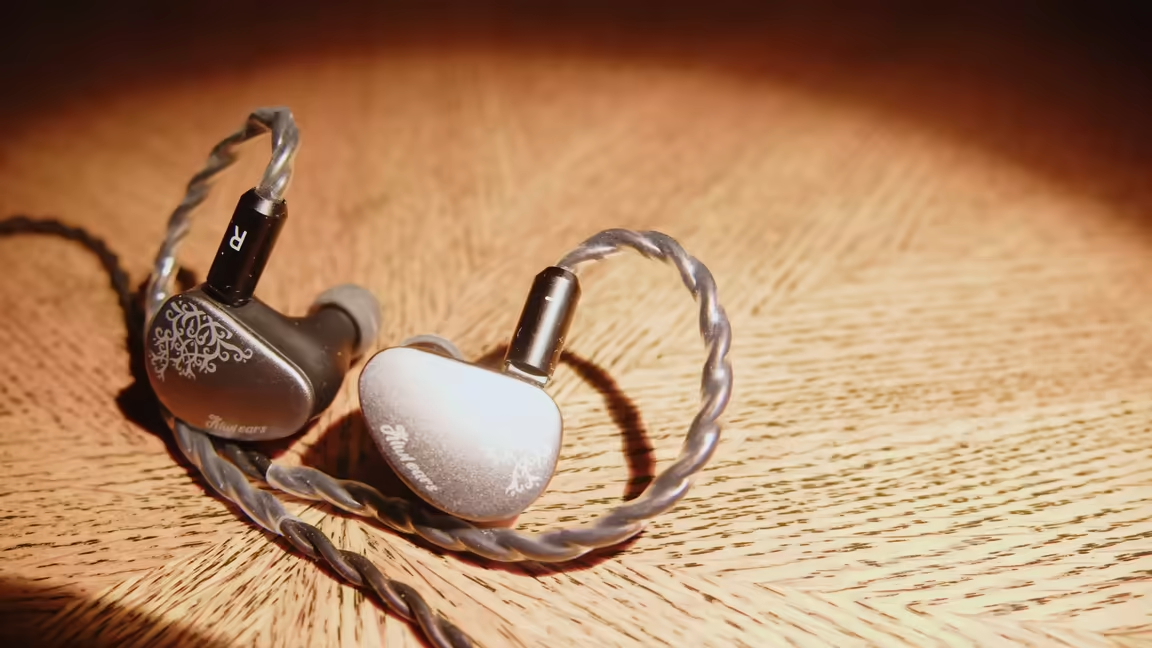
Kiwi Ears makes an in-ear monitor at almost every price point, so what actually changes as you climb the ladder? To find out, I lined up three of them: the Belle at $29.99, the Cadenza II at $49.99, and the Orchestra II at $349. That is an entry-level single-dynamic, a slightly fancier single-dynamic at nearly double the price, and a ten-driver flagship that costs roughly seven times the Cadenza II. Where is the best value, which one sounds best, and which one is right for you? Let's go through them one at a time and then put them head-to-head.
The $29.99 Belle is the only one with a microphone
The Belle is only $29.99, and for that money you get a genuinely nice little IEM with a 2-core silver-plated copper cable, two sets of ear tips, and a microphone. The two tip sets are there to shape the sound: the transparent ones have a softer core, which leans the tuning warmer, while the black ones have a harder core for a more transparent, detailed presentation. You can feel the difference just by pinching each tip between your fingers - the hard ones give themselves away immediately.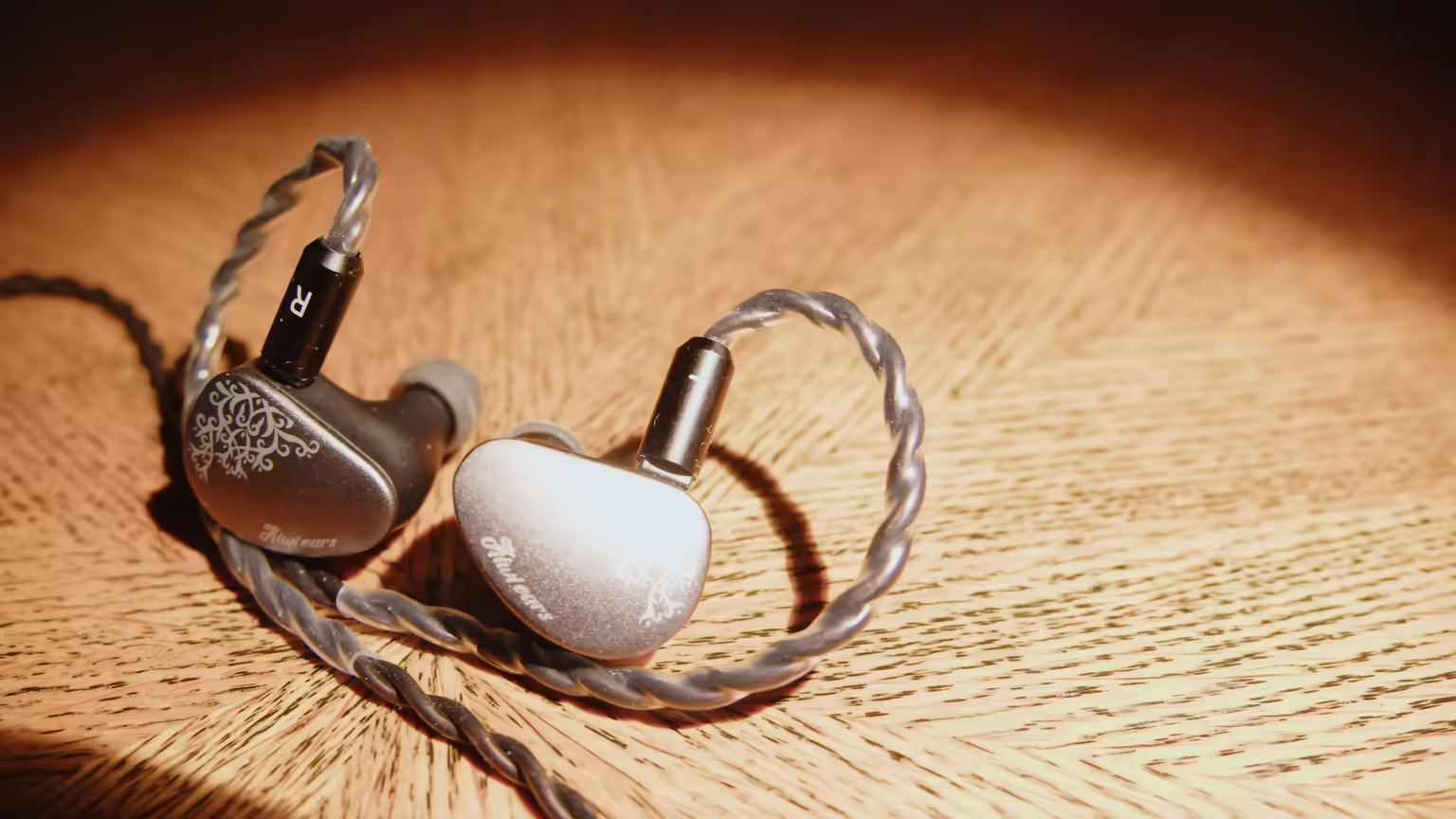 (view larger)
I do have one real complaint, though, and it is the ear tips. It took me a solid ten minutes just to swap them to my size - they simply would not seat on the nozzle. I ended up using a cotton swab with a drop of olive oil and then pressing hard while twisting to get them on. It was frustrating, and it is something Kiwi Ears should fix, especially because the Cadenza II and the Orchestra II were completely painless by comparison - five seconds and two seconds, respectively.
Under the metal faceplate sits a 10mm diamond-like-carbon (DLC) dynamic driver. At 1kHz the Belle measures 32 ohms of impedance with a sensitivity of 103dB, and the frequency response is rated across the full 20Hz to 20kHz span. Each earpiece weighs just 3.5g, so they all but disappear in the ear. The standout extra is that microphone - neither the Cadenza II nor the Orchestra II has one - which makes the Belle the obvious pick if you take calls on your IEMs.
The Cadenza II adds KARS 2.0, loses the mic
The Cadenza II comes in at $49.99, almost double the Belle. You get a nice single-crystal copper cable and a set of ear tips in different sizes that are easy to remove and change - but there is only the one set, so you cannot play with tip density to voice the sound the way you can on the Belle.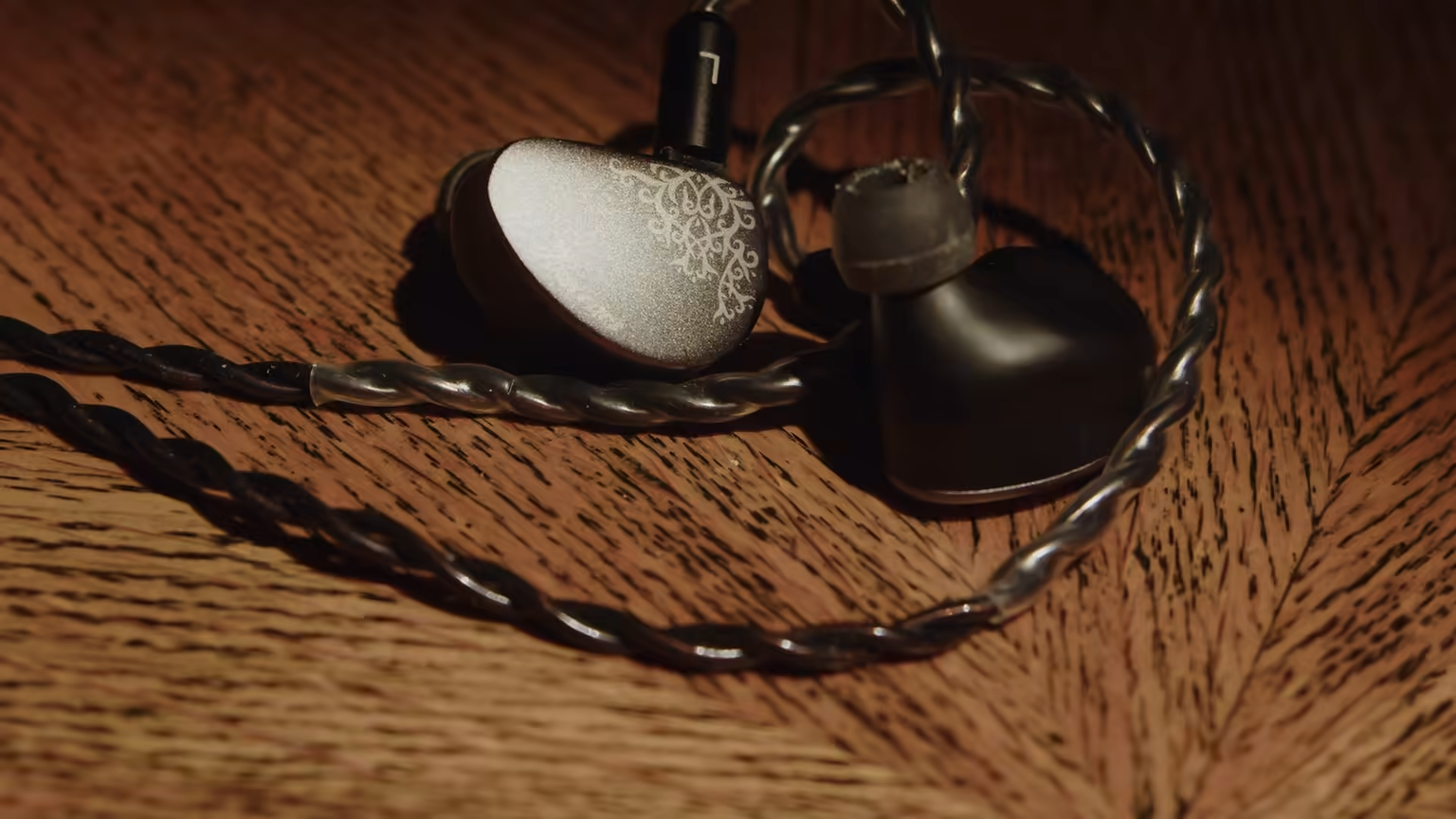 (view larger)
Inside is a 10mm titanium-coated diaphragm dynamic driver with what Kiwi Ears calls KARS 2.0 - the Kiwi Acoustic Resonance System. It uses a labyrinth tube structure to manage airflow and control the low frequencies, with the goal of a more balanced, natural sound and an improved midrange. The key numbers are an impedance of 18 ohms at 1kHz and a sensitivity of 106dB, with a frequency range that reaches lower and higher than the Belle's, from 10Hz all the way up to 29kHz. Each earpiece weighs about 4.5g, still very light, though a gram heavier than the Belle.
So the Cadenza II costs nearly twice as much, drops the microphone, gives you only one set of tips, and adds a gram of weight. The obvious question is whether it sounds better to make up for all that - and I'll get to that below.
The Orchestra II packs ten armatures a side
The Orchestra II is the flagship of this group at $349, and it comes loaded. Instead of a single dynamic driver it uses ten balanced armatures per side, split across a 4-way crossover: two for the lows, four for the mids, two for the highs, and two for the ultra-highs. The aim is to cover the whole 20Hz to 20kHz range in a linear fashion, and this is squarely an IEM built with audio professionals in mind.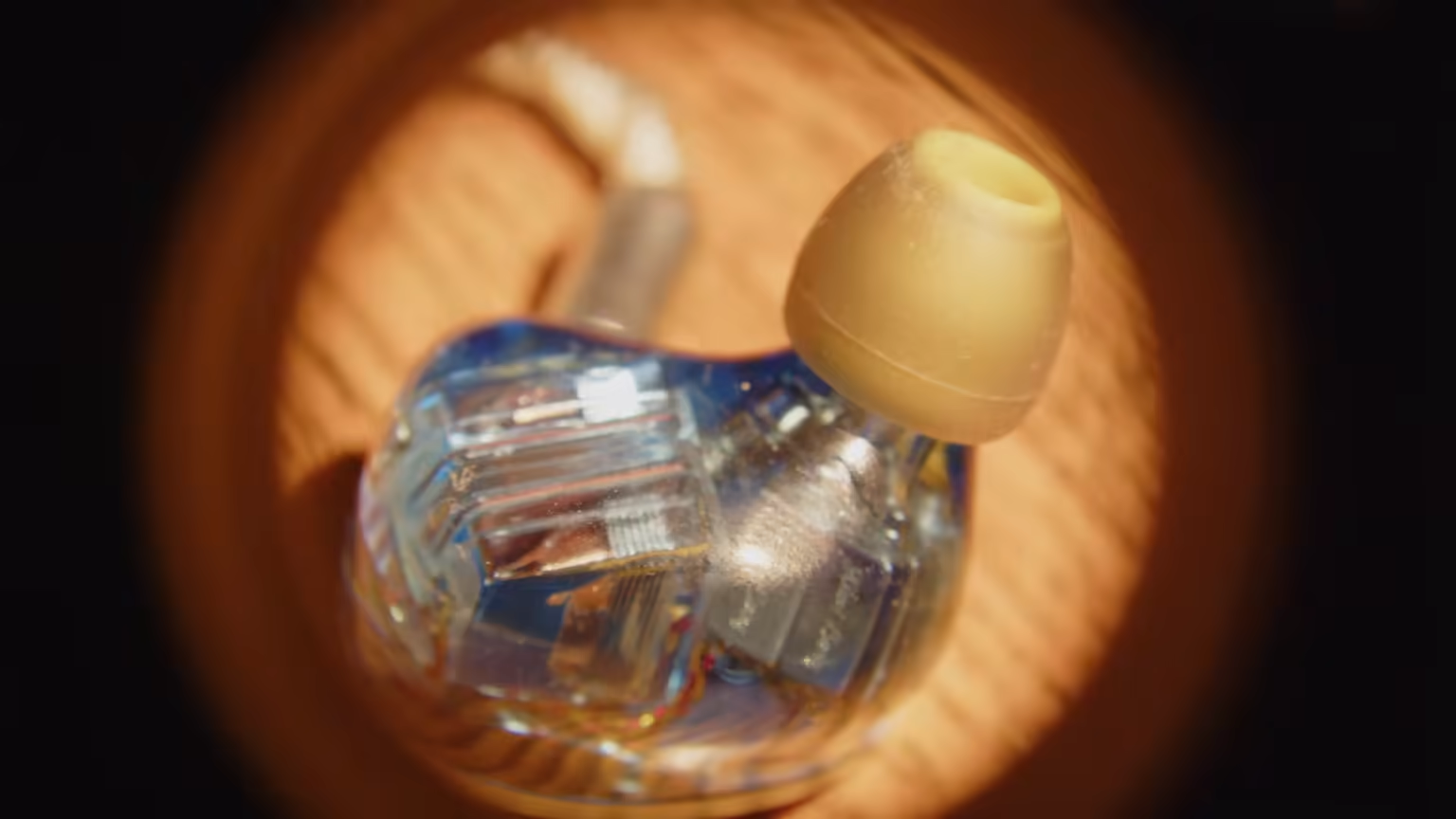 (view larger)
The accessories match the ambition. The cable is a lovely 4-core single-crystal copper design with a silver plating, and it ships with two terminations - a 3.5mm single-ended plug and a balanced 4.4mm plug. There is no microphone, but you do get four sets of ear tips in different densities so you can fine-tune the sound, plus a very nice carrying case.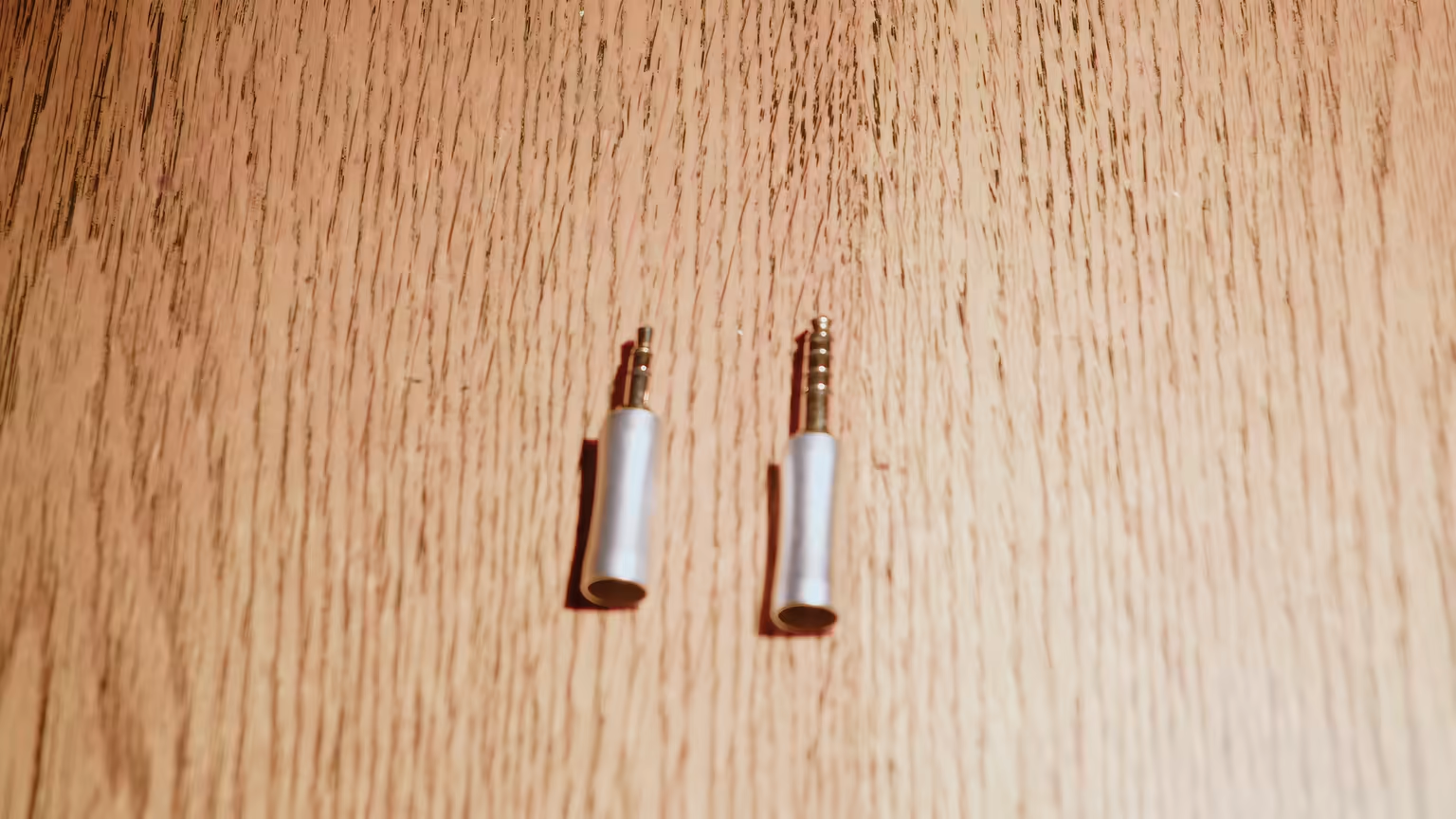 (view larger)
There is a catch to all this, and it is weight. Each earpiece is about 7g - twice the Belle - and combined with the larger, heavier cable, the Orchestra II starts to make itself felt on the ears. It is fine for walking around town or sitting on a train, but I would not go jogging in them; they are too heavy and would work loose. The impedance sits between 15 and 30 ohms with a sensitivity of 109 to 112dB, and the shells are non-vented, which improves isolation. The medical-grade resin body also helps limit vibration, which is good for the sound.
They sound best with a dongle and a deep fit
Before the verdicts, a quick word on method. For all three I used the hardest ear tips on offer, aiming for the most transparent, detailed presentation. I listened straight out of an Android phone and a MacBook M1 Max, then through a dongle - the iFi Go Link Max, which goes for around $79 - and finally through my reference amplifier, the Billy Amp Mk II from Evan11, a Class D amp with a tube preamp fed over Toslink. Source material came from Qobuz Hi-Res: Patricia Barber for jazz, Thievery Corporation for electronic, simple Mozart sonatas for classical, a spread of rap from Lorde to Harry Mack, and some reggae from Proto G.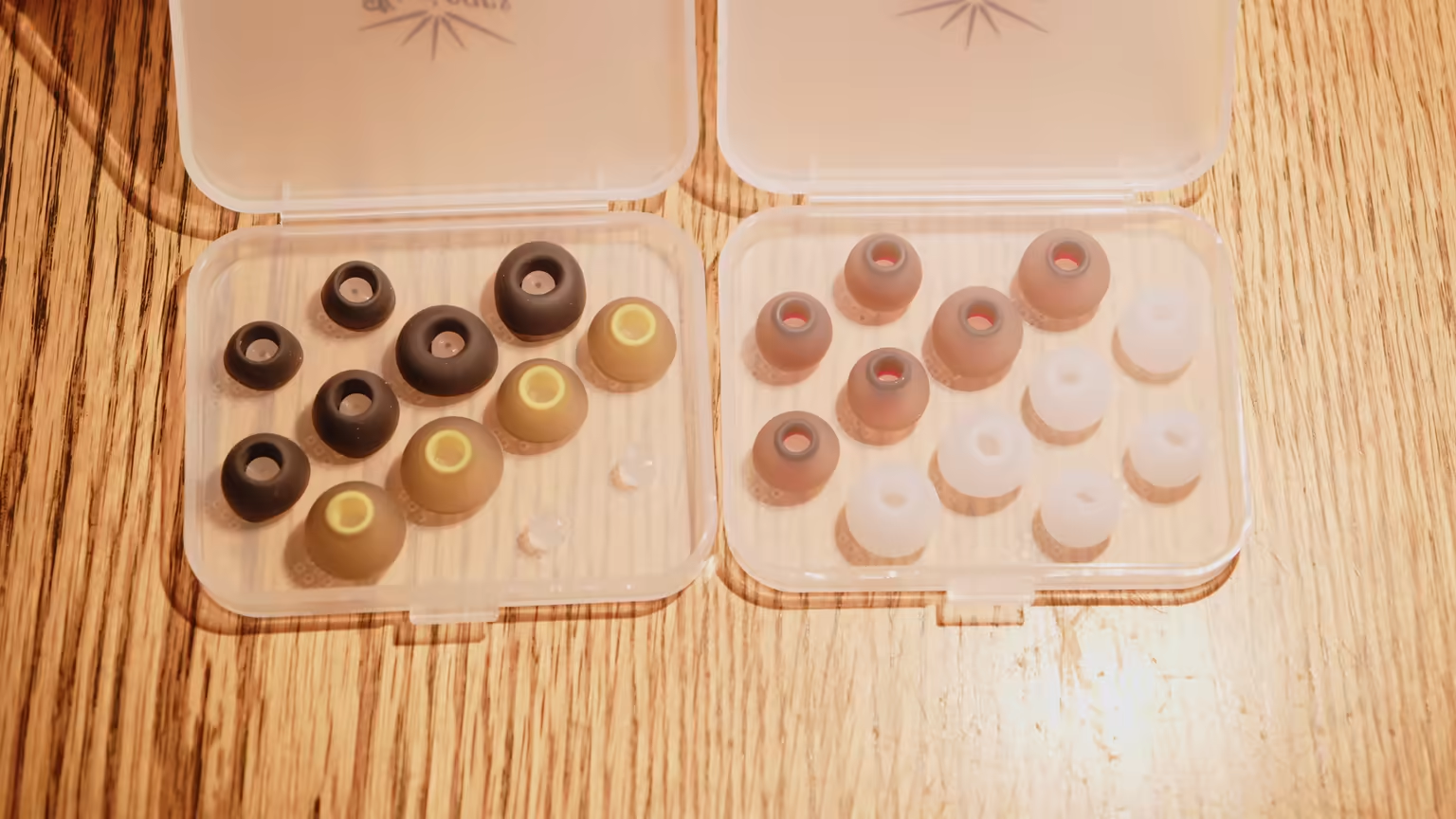 (view larger)
A few things held true across all three. The Belle was the hardest to drive, the Cadenza II a little easier, and the Orchestra II the most sensitive of the lot. With every one of them I had to seat the tips deep in the ear canal to get the bass to show up properly. And the bonus there is that a deep fit also tightens the isolation, which made them all fine for the street or the subway.
More importantly, straight out of a phone the low bass and the high treble roll off on every model; they sound a bit closed-in. The moment I added a dongle with a real DAC and amp, the bass and the top end came alive. I genuinely would not buy any of these without budgeting for something like that ~$79 dongle - it is the difference between "fine" and "very good."
The Belle: A Clear V That Punches Above $30
For the money, the Belle sounds really good. It has a clear V-shape, so the bass and treble are pushed up a little, which suits electronic music and hip-hop nicely. Add in the microphone and it is the easy choice if you want a budget IEM with good sound that you can also take calls on. With a dongle behind it, the Belle punches well above $30 - it is a tremendous value and hard to beat at the price.
The Cadenza II: A More Elegant V-Shape
Is the Cadenza II worth nearly double the Belle? Yes. The driver is clearly a step up in quality and it is a touch easier to drive. The bass is a little less exaggerated but more dynamic and agile, and the treble is more detailed. It is still a V-shaped signature, just a more elegant one. Comfort is great and it stays light, which makes it a good pick if you are a runner. In short, it beats the Belle in every respect except the missing microphone. If your priority is music rather than calls, the small extra outlay is worth it - and, again, a dongle takes it to another level.
The Orchestra II: Linear, but Feed It Properly
The Orchestra II is the most detailed and most linear of the three. Out of a phone, though, the gap over the Cadenza II is subtle - so subtle that I redid my listening just to be sure. Then I plugged it into the dongle and it blossomed: clear low bass and fine treble detail with no loss of midrange, the kind of separation that justifies the flagship label.
The non-vented resin body keeps vibration in check, and the real party trick is the linearity - you hear detail at every frequency, with no audible overlap between the ten drivers and no obvious dips. It is coherent in a way that is genuinely impressive. But you only really hear that price difference over the Cadenza II once a dongle is involved, and the 4.4mm balanced connection takes it further still, adding presence, detail, and articulation. Make sure whatever dongle you choose has that balanced output.
Which Kiwi Ears model should you buy?
All three are very good value, but they are not for the same person. If your budget is small and the plan is to use these with your phone for music and calls, the Belle is a tremendous value and hard to beat - the microphone seals it. If you mostly want them for music, pay the little extra for the Cadenza II: it has no microphone, but it is sonically superior across the board, and it stays light enough for running. Step up to the Orchestra II only if you can also afford a balanced dongle in the ~$79 class - without one, you will not hear its full potential and the price jump is hard to justify. Pair it with that dongle and a 4.4mm balanced cable, though, and its linearity is the most impressive thing here. The Belle is for everyday phone use, the Cadenza II for music lovers and runners, and the Orchestra II for serious listeners and pros who are ready to feed it properly.
Watch the video review
Subscribe on YouTube (opens in new tab)
Prefer to read? The written review above covers everything in the video.
Common questions about the Belle, Cadenza II, Orchestra II
Are these three Kiwi Ears IEMs good value?
All three are good value for their price. The roundup scored 8.1/10 with an excellent value rating: the $29.99 Belle is hard to beat for the money, the $49.99 Cadenza II is worth its small premium for the sound, and the $349 Orchestra II justifies its price only once it has a balanced dongle. Whichever you pick, set aside around $79 for a dongle too.
What alternatives to the Kiwi Ears Belle, Cadenza II, and Orchestra II at a similar price have been tested?
No comparison page covers it. In the same category and the same rough money we have scored the KBEAR KB02 at 6.9/10.
Who is each of these Kiwi Ears IEMs for?
The Belle suits everyday phone use for music and calls, as the only one of the three with a microphone. The Cadenza II is for music lovers and runners: better-sounding, mic-less and still light. The Orchestra II is for serious listeners and pros ready to feed it a balanced dongle, and at about 7g per side it's too heavy for jogging.
Will these Kiwi Ears IEMs sound right from a phone?
Not at their best. From a phone the low bass and high treble roll off on all three, and they sound a bit closed-in. A dongle with a real DAC and amp, such as the roughly $79 iFi Go Link Max used here, brings both ends alive.
Does the Cadenza II sound better than the Belle?
Yes, in every sonic respect. Its driver is clearly a step up and a touch easier to drive, the bass is a little less exaggerated yet more dynamic and agile, and the treble is more detailed, a more elegant version of the same V-shape. For nearly double the price you lose the microphone and the Belle's second tip set, and gain a gram per side.
Is the Orchestra II a big step up from the Cadenza II?
From a phone, barely: the gap is so subtle that the reviewer redid the listening to be sure. On a dongle the Orchestra II opens up, with clear low bass, fine treble detail, no loss of midrange and ten armatures that sound coherent, with no audible overlap between them. Its cable ships with both a 3.5mm and a 4.4mm plug, and the balanced 4.4mm connection adds presence, detail and articulation, so pick a dongle with a balanced output.
How do you fit new tips on the Belle?
With patience. The Belle's tips refused to seat on the nozzle, and the swap took a solid ten minutes, finished with a cotton swab, a drop of olive oil and a hard press while twisting. The Cadenza II and Orchestra II took five and two seconds. Kiwi Ears should fix it.
How deep should these Kiwi Ears IEMs sit in the ear?
Deep. On all three, the bass only showed up once the tips sat deep in the ear canal, and the deep fit also improved isolation enough for the street or the subway. On the Belle and Orchestra II, harder-cored tips sound more transparent and detailed, softer ones warmer.
Sources
- IEC 60268-7: Headphones and earphones
Standard International Electrotechnical Commission Paid full text
How the impedance, sensitivity and frequency response that headphone makers publish are defined. The figures quoted here are published ones; nothing is measured in-house.
- Jensen (2014): Nonlinear distortion mechanisms and efficiency of balanced-armature loudspeakers
Thesis Technical University of Denmark
A doctoral thesis on how a balanced-armature driver works, where its distortion comes from and how efficient it is.
- IEC 60318-4: Occluded-ear simulator
Standard International Electrotechnical Commission Paid full text
The occluded-ear simulator: the coupler an in-ear monitor is measured on, standing in for the ear canal its tip seals.
Alternatives to the Belle, Cadenza II, Orchestra II
All 30 headphone reviewsNearest we have reviewed
- HIFIMAN RE800 Silver a near-tie on score 8.0