
Melodika Brown Sugar BSSC3300 Review: Clean and Neutral, a Little Too Calm
Polish-made LITZ speaker cables with Multi-Gauge Core technology - clean, neutral, and detail-rich, but the 3.3mm² gauge is on the lighter side for full dynamic punch.
higher than 14% of everything we have tested
- Standout
- True LITZ construction
- Watch out for
- Slightly calmer and less dynamic than expected
- Better alternative
- AudioMica 4-all-in-1 Cable Set: scores 1.0 higher.
Is it for you?
- The room, the speakers and the amplifier are settled and this is the part that is left
- Something upstream of the cable is still the obvious limit
Pick #13 of 13 in our Best Hi-Fi Accessories guide.
Speaker cables are among the most important cables in any stereo setup - they can make the biggest difference in sound, whether positive or negative. They can impact various aspects of sound quality such as tonality, bass tightness, detail retrieval, transient response, dynamics, and more. I know that not everyone believes in this. If you're one of them, you can keep reading to hear my thoughts.
Today we'll take a closer look at speaker cables made by a Polish company, Melodika. The model I have with me today is their Brown Sugar series BSSC3300. Their product naming can be a little confusing, so to make it easier: BSSC means it's made for single wiring, instead of bi-wiring or bi-amping, as they also make cables suited for that. The "33" refers to the conductor diameter, in this case 2 x 3.3mm². The last two numbers mean the length - I have these cables in 2.5m, as it was perfect for my previous speaker placement. I stand by the rule that you should get cables as short as you can, to minimize sound degradation.
Build Quality and Design: The Brown Sugar Look
All of the cables in the Brown Sugar series are available in a light brown and white color combination. It looks very pleasing in person and can aesthetically complement a neutral-colored setup. It can also complement systems that have silver electronics, which are very common, due to the way the white color looks - and systems with wooden-oriented materials, because of the light brown color. My system is a combination of both actually, meaning speakers with a wooden finish and mostly silver electronics. I have to say, I love the way it looks, and I love their naming scheme - it quite literally looks like brown sugar.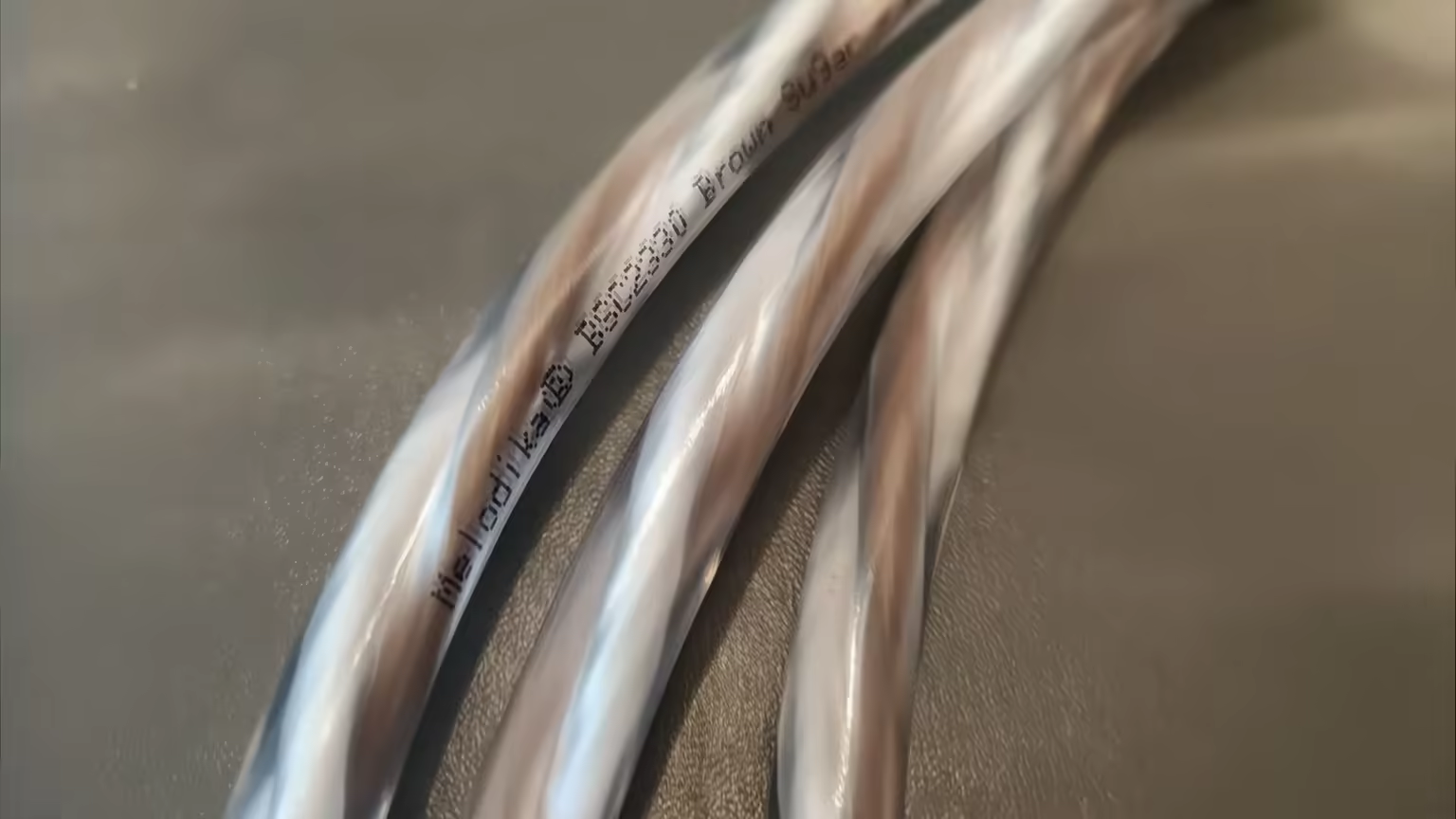 (view larger)
The only visual complaint I have here is the connector-splitting jacket. It's quite loose and is too thick for this specific cable thickness. On the good side, Melodika offers higher-diameter versions of this product, which I'd assume make a better fit with this jacket.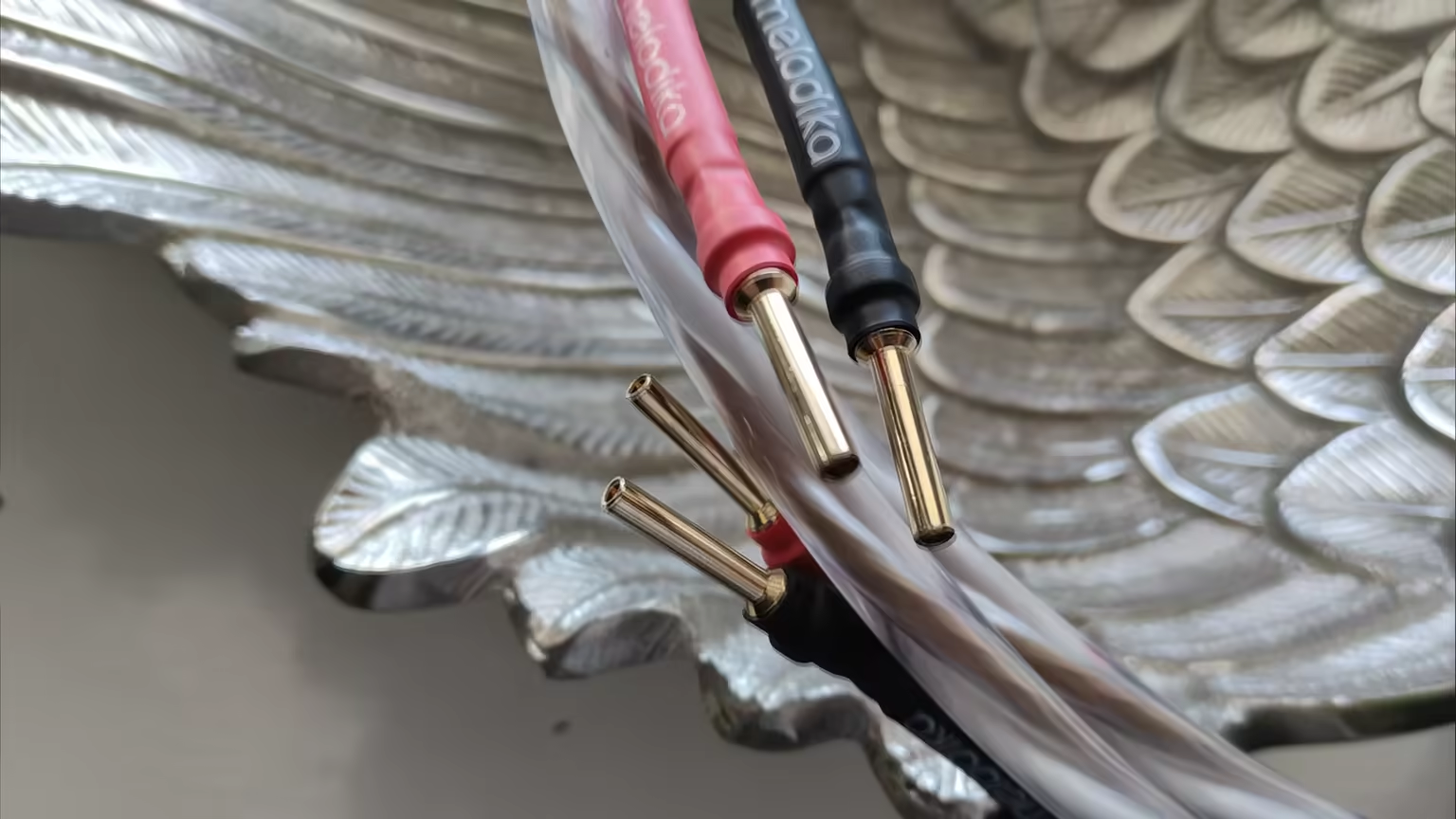 (view larger)
Internal Structure: LITZ and Multi-Gauge Cores
Inside this cable, there are some interesting technologies that Melodika developed or implemented.
First of all, it's a LITZ cable, so every single conductor is separately insulated. This is a scientifically proven way to greatly reduce the skin effect, which is especially prominent in solid-core wires. Going to stranded wire, of course, helps, but the electrons can still jump from one strand to another, which leads to the loss of micro-level information buried in the recording. With a LITZ structure, this is a non-issue, as it isolates every single strand from each other.
To reduce the skin effect even more and divide the frequencies a little, the Multi-Gauge Core technology was implemented here. It's something I found quite interesting, as it simply means that they put 3 different thicknesses of internal wires, this way the bass, mids, and high frequencies are going through different strands and interfering with each other less. This is so simple, yet brilliant in its simplicity.
To minimize EMI and other forms of interference without compromising sound quality, they twisted two conductors to create a dual wire braid, instead of shielding the cable.
For the isolation, they didn't cheap out, as it has a tremendous effect on the cable's performance. The conductors have triple dielectric insulation made of LDPE, which is a low-density material, superior to a lot of higher-density insulators.
Sound: Calmer, Cleaner, Less Fatiguing
This cable has been developed with a lot of work and science, but how does it affect the sound of my system?
Surprisingly, it makes it slightly calmer and less dynamic, but I believe that higher gauge models of this series would improve that. In addition, the sound is less harsh. It's a clean, neutral-sounding cable that doesn't overemphasize the treble region but still brings out a lot of details.
The soundstage is quite spacious - not the biggest I've ever heard, but it's wide and deep enough. However, it doesn't seem to get diffused or stretched out, as it doesn't make the imaging any less precise. It's often difficult to achieve a sense of depth in a stereo setup due to factors such as the speakers themselves, electronics, or most importantly, speaker placement.
While no cable can magically turn a terrible system into a perfect one, this one can slightly improve the technical performance of a well-established system and provide a more realistic experience, getting a step closer to how things sound in real life - but with less listening fatigue, especially during long listening sessions.

Watch the video review
Subscribe on YouTube (opens in new tab)Prefer to read? The written review above covers everything in the video.
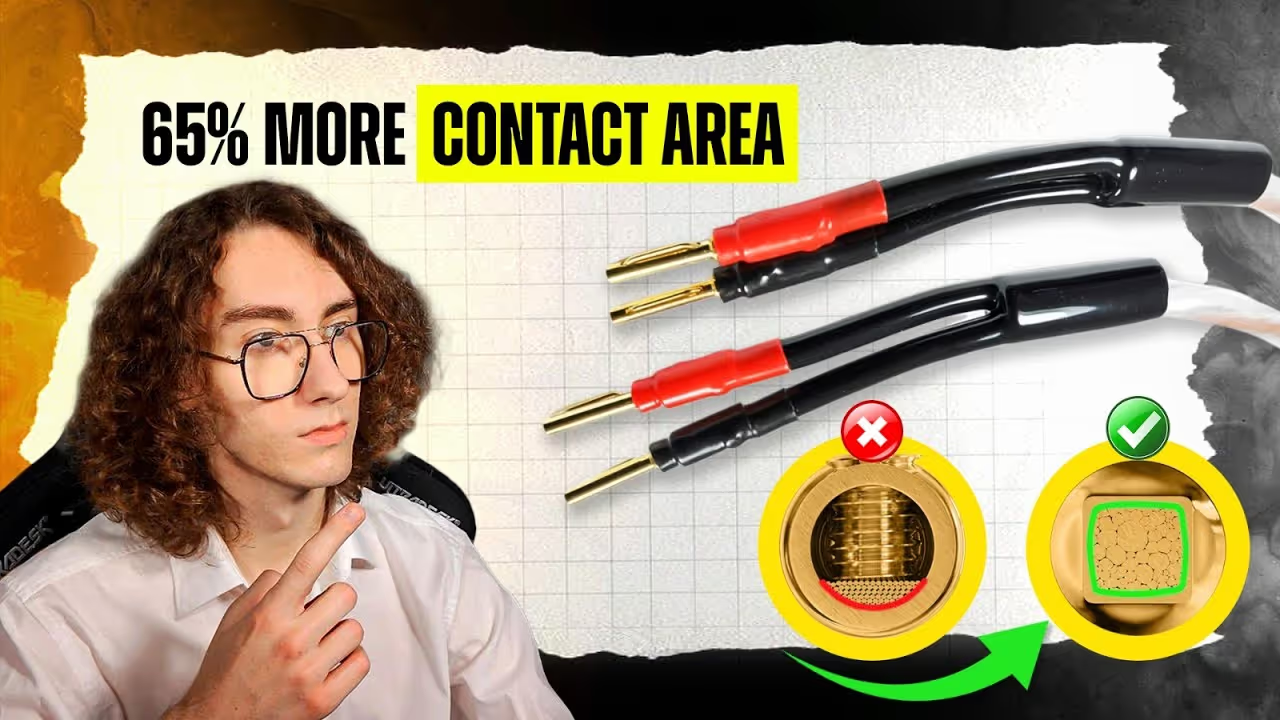
- 0:00 How Do Speaker Cables Affect The Sound Quality? (opens in new tab)
- 0:32 Melodika Brown Sugar Product Line (Single Wiring, Bi-Amping, Bi-Wiring) (opens in new tab)
- 1:00 Build Quality & Design (Colorway, Jacket, Thickness) (opens in new tab)
- 1:57 Technologies & Features (LITZ Structure, Multi-Gauge Core, Twisted Conductor Braid, LPDE Dielectric Insulation) (opens in new tab)
- 3:32 Sound Quality (Dynamics, Harshness, Detail Retrieval, Neutrality, Soundstage, Imaging) (opens in new tab)
Common questions about the Brown Sugar BSSC3300
Is the Melodika Brown Sugar BSSC3300 worth it?
Yes, for the right listener - 7.5/10, Recommended, higher than 14% of everything we have tested, against a catalogue median of 8.1. Price: Varies by length.
Who should buy the Melodika Brown Sugar BSSC3300, and who should skip it?
Buy it if the room, the speakers and the amplifier are settled and this is the part that is left. Skip it if something upstream of the cable is still the obvious limit.
What else have you tested that is close to the Melodika Brown Sugar BSSC3300?
No matchup page yet, and no close price match in the catalogue either. The nearest things we have scored in the same category: the DH Labs, iFi, Vera-Fi HiFi Tweaks Roundup at 7.8/10, the Monosaudio PS75R1R, CAT 8, P903M0 at 7.8/10, and the Monosaudio P902E6R + USB Cables at 7.8/10.
What does Melodika's model naming mean?
It is decodable once you know the pattern. BSSC means the cable is built for single wiring rather than bi-wiring or bi-amping - they make separate cables for those. The middle digits are the conductor diameter, so 33 is 2 x 3.3mm². The last two numbers are the length; mine are 2.5m. Worth knowing before you order, because the naming is the only place some of that information appears.
What is Multi-Gauge Core?
Three different internal wire thicknesses in one cable, so bass, mids and highs travel down different strands and interfere with each other less. It also reduces skin effect further on top of the LITZ construction. It is simple to the point of being obvious once stated, and brilliant for the same reason - most cables use one gauge throughout and let every frequency share it.
Is the BSSC3300 thick enough?
Probably not, and that is my main reservation. It made my system slightly calmer and less dynamic than I expected, and I believe the higher gauge models in the same series would fix that. The tell is physical too: the connector-splitting jacket is loose because it is too thick for this gauge, which suggests it was designed around a bigger cable. If you are choosing within this range, step up.
Why is there no shielding on the BSSC3300?
Because twisting does the job without the sonic cost. The two conductors are twisted into a dual wire braid to reject EMI and other interference, which is a deliberate alternative to wrapping the cable in a shield. The insulation is where they did not economise: triple dielectric LDPE, a low-density material that outperforms many higher-density insulators, and it matters more to a cable's performance than most people assume.
What does the BSSC3300 actually do to the sound?
It makes things cleaner and less fatiguing rather than more exciting. The tonality is clean and neutral, it does not overemphasise the treble, and it still brings out a lot of detail - the net effect is less harshness over a long session. The soundstage is spacious without being the biggest I have heard, wide and deep enough, and crucially it never gets diffused or stretched, so the imaging stays precise.