Melodika BSSC4500 Review: Are Thicker Speaker Cables Better?
A higher-tier 4.5mm² LITZ speaker cable that delivers tighter mid-bass, better instrument separation, and a more natural, lifelike sound - a clear upgrade over the BSSC3300.
higher than 56% of everything we have tested
- Standout
- Larger 4.5mm² conductor with 6N OFC copper
- Watch out for
- About 50% more expensive than the BSSC3300
- Better alternative
- AudioMica 4-all-in-1 Cable Set: scores 0.3 higher.
Is it for you?
- The room, the speakers and the amplifier are settled and this is the part that is left
- Something upstream of the cable is still the obvious limit
Pick #6 of 13 in our Best Hi-Fi Accessories guide.
Speaker cables are the place where resistance plays the biggest role in loudspeaker systems. That's a signal path element where you can no longer hope that a balanced audio connection will do its thing and help you out with noise. There's usually no shielding or error correction, as it's a fully passive stage, so you just have to hope the signal stays high-quality through the entire road from your power amplifier to your speakers.
Recently I reviewed the BSSC3300 series cables from Melodika. But it's a great time for an upgrade. The BSSC4500 is a higher-tier model with a thicker diameter, more copper, lower resistance, and around 50% higher price tag. Let's see how it performs in comparison and find out whether thicker speaker cables are better, or not.
Build and Sizing: Thicker, Heavier, Premium
They come in various lengths, but as always, in most cases, you should get the shortest one that's just long enough to reach your speakers, plus some extra. In my case, that's 2.5 meters. That's a bit too long, and I would optimally aim for 2 meters, but that's what I'm working with today. It's important not to go crazy and have many meters of unnecessary cable being looped somewhere for no reason. It introduces unwanted resistance and other effects that are detrimental to good sound quality. Of course, it's no huge deal, but if you're trying to optimize your audio setup, it's better to do it the proper way.
They're also available in two connector variants: either bananas or spades. I have the version with banana plugs, which is the connection type I tend to prefer.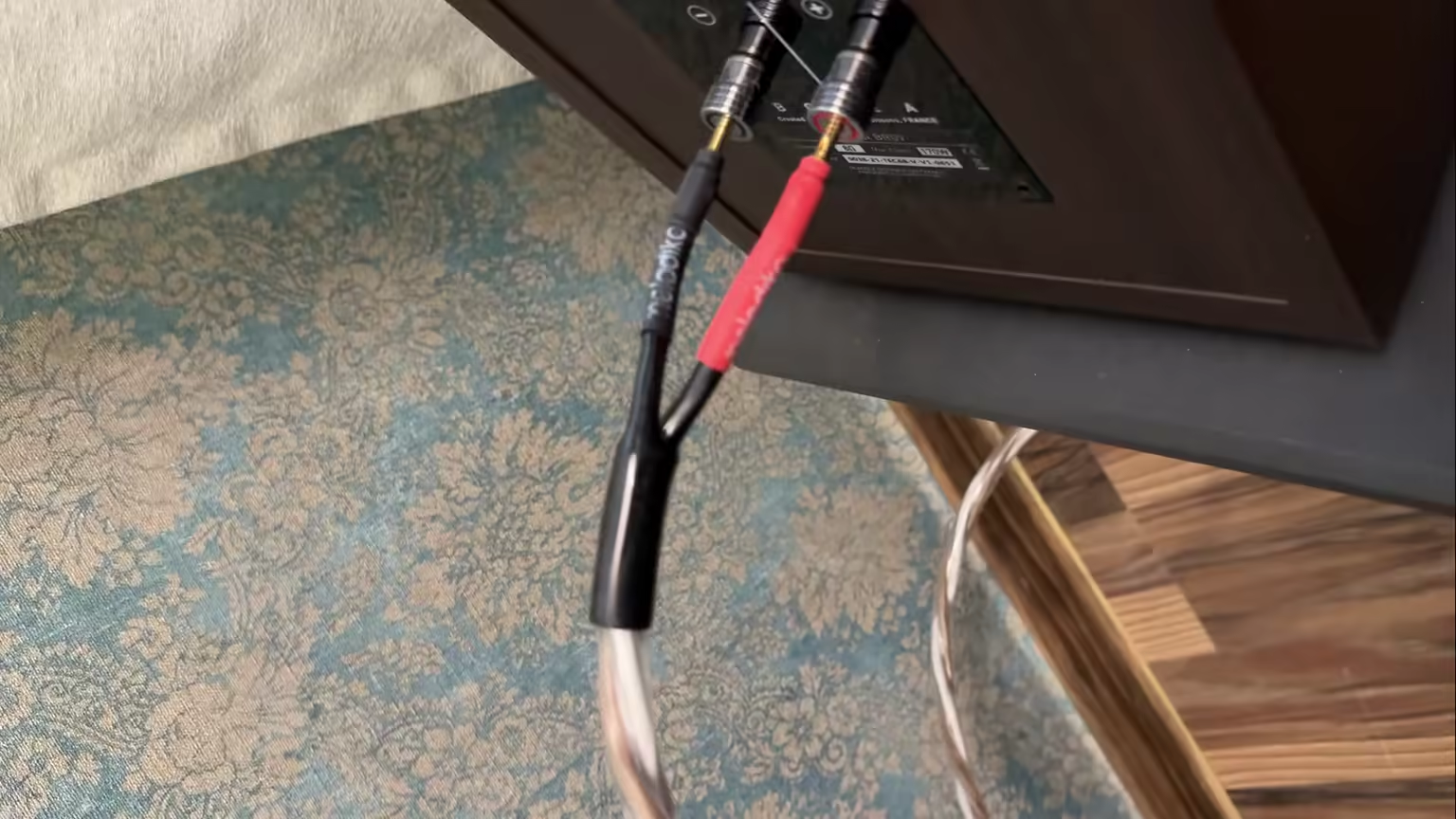 (view larger)
The cables from Melodika I previously reviewed were just over 3mm thick in diameter. These however are 4.5mm. That might not sound like much, but even from a listening distance, you can notice it easily. That makes for a premium feel and adds some weight, which emphasizes this effect.
Internal Structure: Spiral LITZ and a BassCore
It uses 6N purity OFC copper as a conductor.
It features their Spiral LITZ technology, which means that every single wire of this cable is individually insulated, so it doesn't make contact with the other wires, and they're all twisted, which results in greatly reduced skin effect and self-interference.
The cable features triple dielectric insulation with LDPE, which makes it suitable for in-wall runs and safe for situations where the cable is in contact with any conductive material, which can happen in HiFi systems.
Additionally, the cable is terminated with Solid Grip technology, which involves tightly pressing the conductors, eliminating free spaces between them, which makes for more efficient current transfer and lower losses in the places where there normally would be air gaps - and as we all know, air is an insulator, not a conductor.
Regarding conductors, lots of different diameters are used, from a thick BassCore that's 0.85mm² and is made for lower frequencies, to lots of much thinner internal wires that are great for the highs. This cable is a combination of elements that result in being great for every frequency range.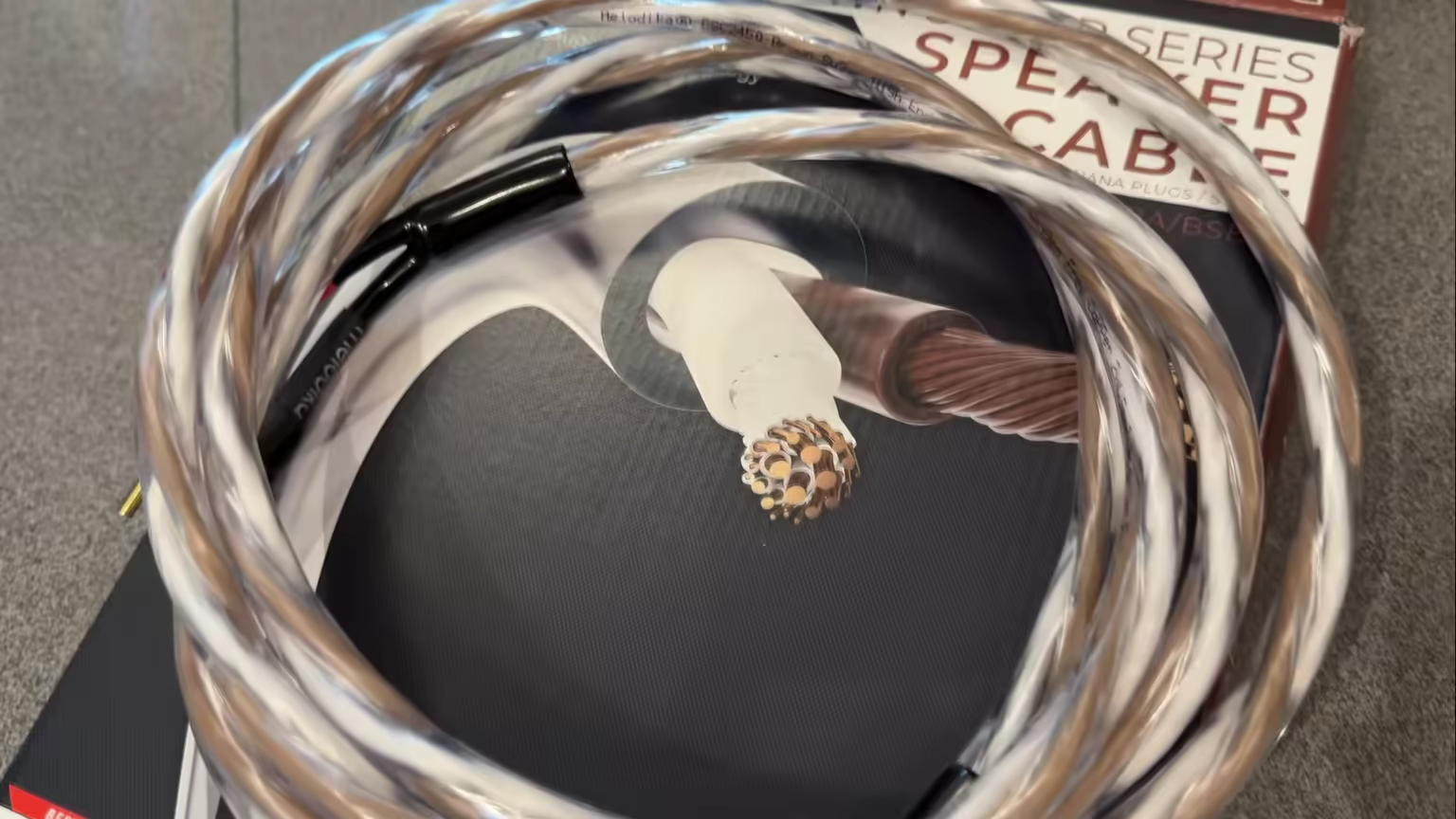 (view larger)
What's nice to see is a 10-year warranty. While you're unlikely to ever need that, it inspires confidence in the product, as the company is committed to replacing it within 10 years from purchase, in case anything goes wrong.
Sound Quality: Tighter Mid-Bass, More Space
Are thicker cables any better than identical thinner ones? It depends on a few factors.
The first of them is your system's resolving capability. If it's a pair of tiny speakers that aren't positioned well, a cheap DAC, and a mediocre amplifier without power filtering, no speaker cable is going to make your system sound good. There are lots of people who do not understand this very thing and are calling cables snake oil because of this fact. But if your system's got some serious resolving power and is dialed in just right, then thicker cables can step up your sound game.
In my experience, these bad boys delivered tighter, punchier mid-bass that my old cables just weren't able to. This is a clear upgrade over its little brother.
Dynamic range is one of the main things that makes a system impressive. When your friends come in, you want them to be wowed by your system - to feel the impact of the music and discover details they might have missed before.
Another thing that happened was seemingly more space between instruments and vocals. They didn't get disconnected at all - simply less blended in with each other, which made it a bit easier to listen to. Maybe that's because there are more individual conductors in the cable, and since it's a LITZ cable they're separated. Either way, the sound also got a bit more natural, ever so slightly warmer, and a bit more lifelike.
That's something I'm mainly chasing in my system: realism. Upgrading speaker cables got me just one step closer to achieving that.
Watch the video review
Subscribe on YouTube (opens in new tab)Prefer to read? The written review above covers everything in the video.
- 0:00 Are THICKER Speaker Cables BETTER? - Melodika BSSC4500 (opens in new tab)
- 0:50 Technical Properties (Length, Connectors, Banana & Spade, Resistance) (opens in new tab)
- 1:37 Build Quality (Thickness / Diameter / Gauge, Litz, Skin Effect, Twisting, Dielectric LDPE Insulation) (opens in new tab)
- 3:28 Sound Quality (Resolution, Dynamics, Tonality, Realism, Bass, Sound Separation, Warmth) (opens in new tab)
Common questions about the Brown Sugar BSSC4500
Is the Melodika Brown Sugar BSSC4500 worth it?
Yes. It scored 8.2/10, Highly Recommended, higher than 56% of everything we have tested, against a catalogue median of 8.1. Price: Varies by length.
Who should buy the Melodika Brown Sugar BSSC4500, and who should skip it?
Buy it if the room, the speakers and the amplifier are settled and this is the part that is left. Skip it if something upstream of the cable is still the obvious limit.
What else have you tested that is close to the Melodika Brown Sugar BSSC4500?
There is no head-to-head page for this one yet, and nothing we have scored sits close enough in price to call a direct rival. The nearest reference points in the same category: the AudioMica 4-all-in-1 Cable Set at 8.5/10, the Melodika Brown Sugar BSSC95xx at 8.5/10, and the DH Labs, iFi, Vera-Fi HiFi Tweaks Roundup at 7.8/10.
Are thicker speaker cables actually better?
It depends on two things, and the first one decides the argument. If your system is a pair of small badly positioned speakers, a cheap DAC and a mediocre amplifier with no power filtering, no cable will rescue it - and a lot of people conclude cables are snake oil on exactly that basis. If the system genuinely resolves and is dialled in, thicker cable can step things up. In my case it delivered tighter, punchier mid-bass my old cables could not.
Is the BSSC4500 worth 50% more than the BSSC3300?
In my system, yes - it is a clear upgrade over its little brother. The mid-bass is tighter and punchier, there is more apparent space between instruments and voices without them becoming disconnected, and the whole presentation got a little more natural, slightly warmer and more lifelike. That last quality is what I chase, and this got me a step closer. The cost is real: 50% more money and a stiffer cable to route.
How long should your speaker cables be?
The shortest length that reaches, plus a little slack. Mine are 2.5 metres and I would optimally want 2 - that is the level of precision worth caring about. What you should not do is run many metres of unnecessary cable looped behind a rack for no reason, because it introduces resistance and other effects that work against you. It is not a catastrophe, and if you are optimising a setup, do it properly.
What is Solid Grip termination?
The conductors are pressed tightly into the connector rather than screwed in, which eliminates the free spaces that would otherwise sit between them. Air is an insulator, not a conductor, so those gaps are real losses at the point where current transfer matters most. It also avoids introducing another material into the signal path. Both banana and spade versions are available; I have the bananas, which I prefer.
Can the BSSC4500 be run inside a wall?
Yes - the triple LDPE dielectric insulation makes it suitable for in-wall runs and safe where the cable contacts conductive material, which happens more often in a hi-fi system than people expect. That is a genuine practical advantage if you are hiding a run rather than draping it behind furniture. There is also a 10-year warranty, which you are unlikely to need and which says something about the company's confidence.
What is the BassCore in the BSSC4500?
The thickest conductor in the bundle, at 0.85mm², dedicated to low frequencies - with many much thinner internal wires alongside it handling the highs. Every strand is individually insulated under Spiral LITZ and the whole set is twisted, which cuts both skin effect and self-interference. The point of the mixture is that no single gauge is good at everything, so the cable uses several and lets each band take the wire that suits it.