Melodika BSSC95xx Review: Does 9.5mm² of Copper Actually Help?
Melodika's flagship 9.5mm² LITZ speaker cable - super thick OFC copper, hand-finished Italian leather, and a big improvement in extension, dynamics, and treble air.
higher than 63% of everything we have tested
- Standout
- Massive 9.5mm² conductor with 6N OFC copper
- Watch out for
- Heavy and stiff due to massive thickness
- Closest rival
- AudioMica 4-all-in-1 Cable Set: a near-tie on score.
Is it for you?
- The room, the speakers and the amplifier are settled and this is the part that is left
- Something upstream of the cable is still the obvious limit
Pick #5 of 13 in our Best Hi-Fi Accessories guide.
At some point, every stereo system needs high-end speaker cables - ones that are thick, high-quality, with interesting geometry, and technologies, and made for audiophiles. I think I just described what the Brown Sugar BSSC95-series cables are like.
Build Quality: Heavy Copper, Italian Leather
Melodika offers lots of cable types, for different devices, use cases, and of different series. The BSSC95 is their flagship speaker cable from the Brown Sugar series. Or simply speaking, the best speaker cable they make.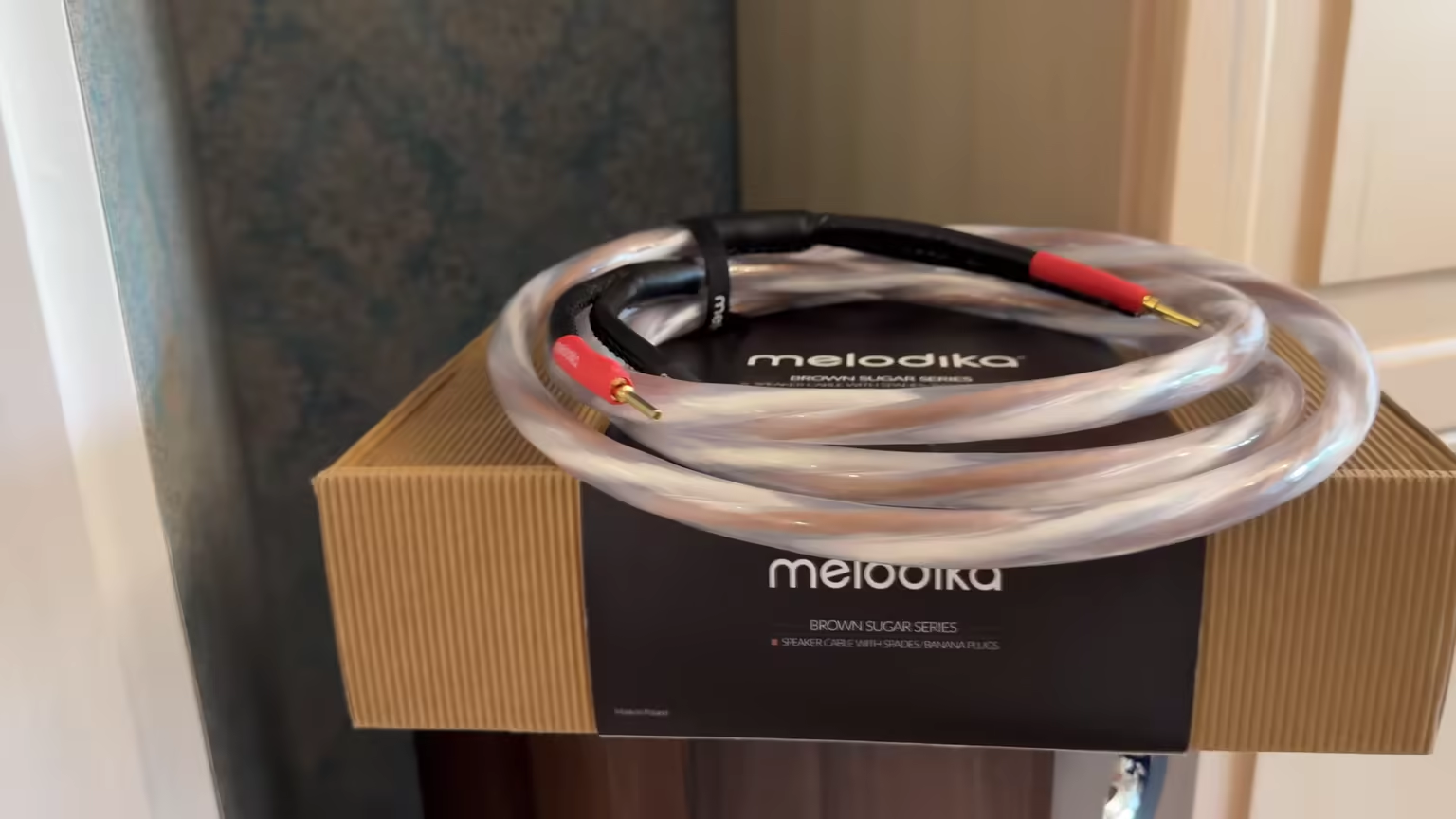 (view larger)
It is enough to pick it up to realize that it means serious business. It's super heavy, despite my unit not being overly long. And that's for a simple reason - it's very thick, and the conductors are mostly what makes them so thick. I love this approach. It's basically figuring out what's the thickest speaker cable that is manageable in most systems, then putting a lot of copper inside.
The aesthetical part of it is also there. One conductor is white, and the other one is brown, as it's trying to mimic what brown sugar looks like. I enjoy products that are not boring. I also enjoy it when the company standing behind them likes to have some fun, either in the naming, or the visual aspects of their devices, or like in this case, both.
The cable is finished off in a very premium way - it is made by hand, using real, natural Italian leather.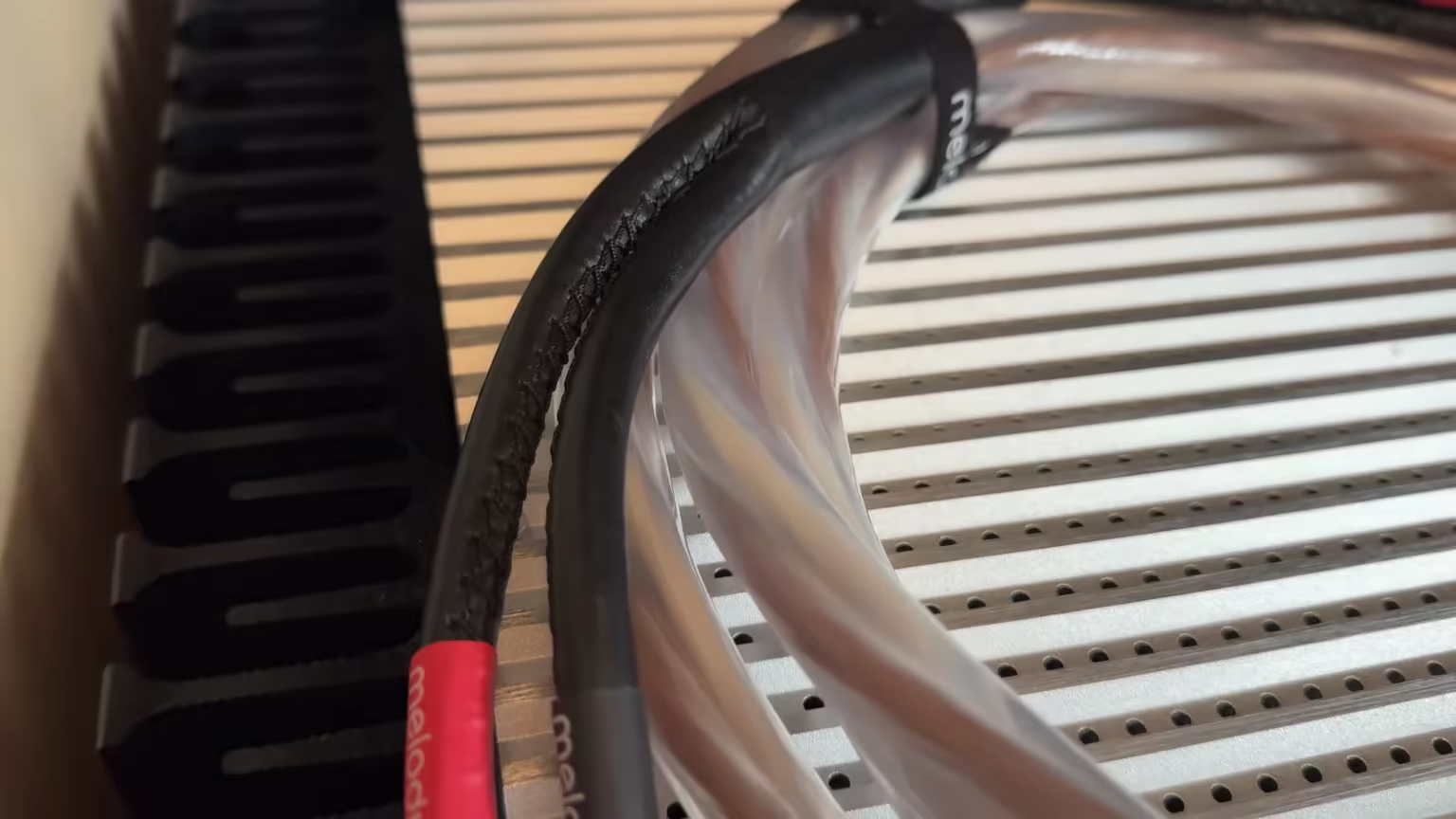 (view larger)
Technologies: 6N Copper in a LITZ Build
It's not using some crazy material - like silver, gold, or graphite as a conductor - rather regular but high-quality OFC copper with 6N purity, that's obtained from local mines. Why didn't they use for example silver?
Firstly, it's not the tuning they were going for. Another reason, regarding resistance and other parameters, is that they didn't have to. Silver is around 7% more conductive than copper, but you can achieve the same conductivity using 7% more copper. The latter approach is what they did. This cable has a 9.5mm² diameter per conductor, which in each cable, there are two of.
The last reason for not using pure silver is the price - silver is extremely expensive compared to oxygen-free copper. If you want to, you can find other cables that are made of silver and are similarly thick. Is it going to be better? Maybe, maybe not. It depends, but at what cost?
The easiest way to greatly reduce self-interference, which is detrimental to sound quality, is to twist two conductors together. It's not rocket science, as it's something known to science for many years, yet I'm seeing a lot of manufacturers ignoring it. Sometimes the best approach is to start from the simplest things.
If you thought that this cable was a solid core, you'd be mistaken. If you think it's stranded wire, you're also wrong. It's a LITZ construction - the best of the best for avoiding skin effect, as every single strand is individually insulated and doesn't touch the one next to it.
Solid Grip technology is a fancy way of saying "We don't use screw-in connectors, instead they're being pressed using a machine." That increases the contact area with the plug and doesn't introduce another element or material in the cable. The connectors are gold-plated bananas in my case, but this cable also comes in spades, if it's something you prefer.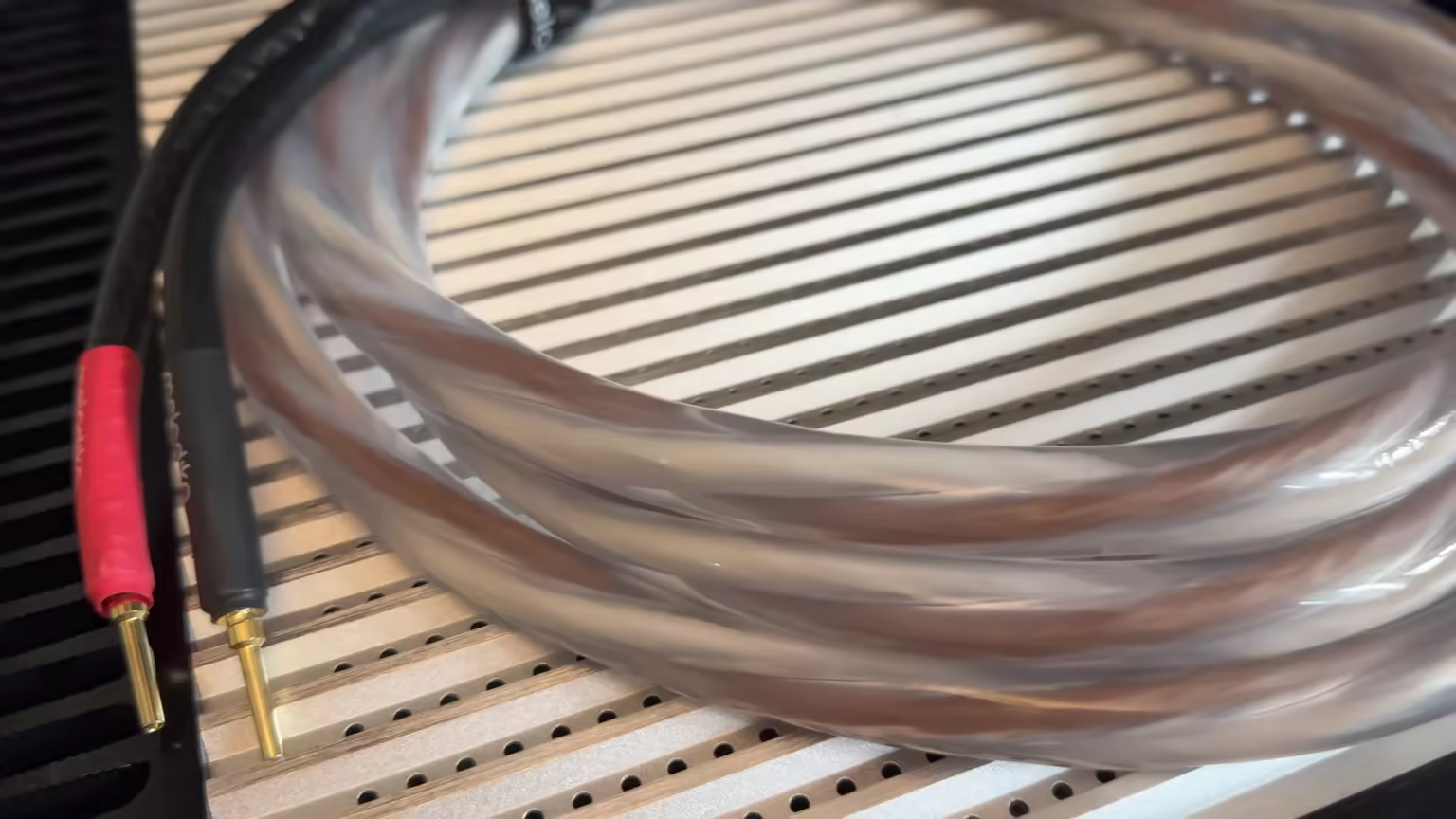 (view larger)
The entire cable is also directional, which you shouldn't ignore or miss. The signal flow direction is written using small black text on the cable - you have to find it and connect it accordingly.
Sound Quality: Deeper Sub-Bass, Airier Treble
The possible use cases of this flagship cable are wide. I like to bi-wire my speakers, as I find that to improve the sound enough to be worth it. In that case, this cable is performing super well on the bottom, as it's very thick and low resistance, allowing the low notes to be impactful and well extended. At the same time, it's superb for the top end, mainly because of the LITZ construction and high purity. It shows lots of vocal clarity, intelligibility, and textures. That makes it super universal, and in some way, for a lot of people, defeats the need to use two different sets of cables.
The bottom end is, of course, very impactful and dynamic, but what caught my attention is the sub-bass retrieval characteristics. My stereo setup with these cables feels like it goes just a few hertz lower and deeper than it used to. Or perhaps the very low end is boosted ever so slightly, to increase the bass presence, yet it accomplishes it without affecting the tonal balance. It leaves the upper bass and midrange as it is, with some added weight.
The detail retrieval is up there with some of the better cables at this price point. I think that the treble has to do a lot with it, as it's super airy, open, and articulate. The edge where the high frequencies are being cut off seems to be pushed a little bit higher - that way you can discover even more than you otherwise would.
Here's what I like the most: the soundstage. The cables themselves can't do that much in terms of it, but this one definitely helps - extending it by I'd say 5 to 7%, compared to my regular cables. That's not a huge improvement, but you're not sacrificing anything to get it. The imaging is still razor sharp and doesn't take the slightest hit.
Overall this cable, while being somewhat expensive, gets my recommendation for its good objective performance, due to the implemented technologies, and subjective performance, that comes with listening tests.

Watch the video review
Subscribe on YouTube (opens in new tab)Prefer to read? The written review above covers everything in the video.
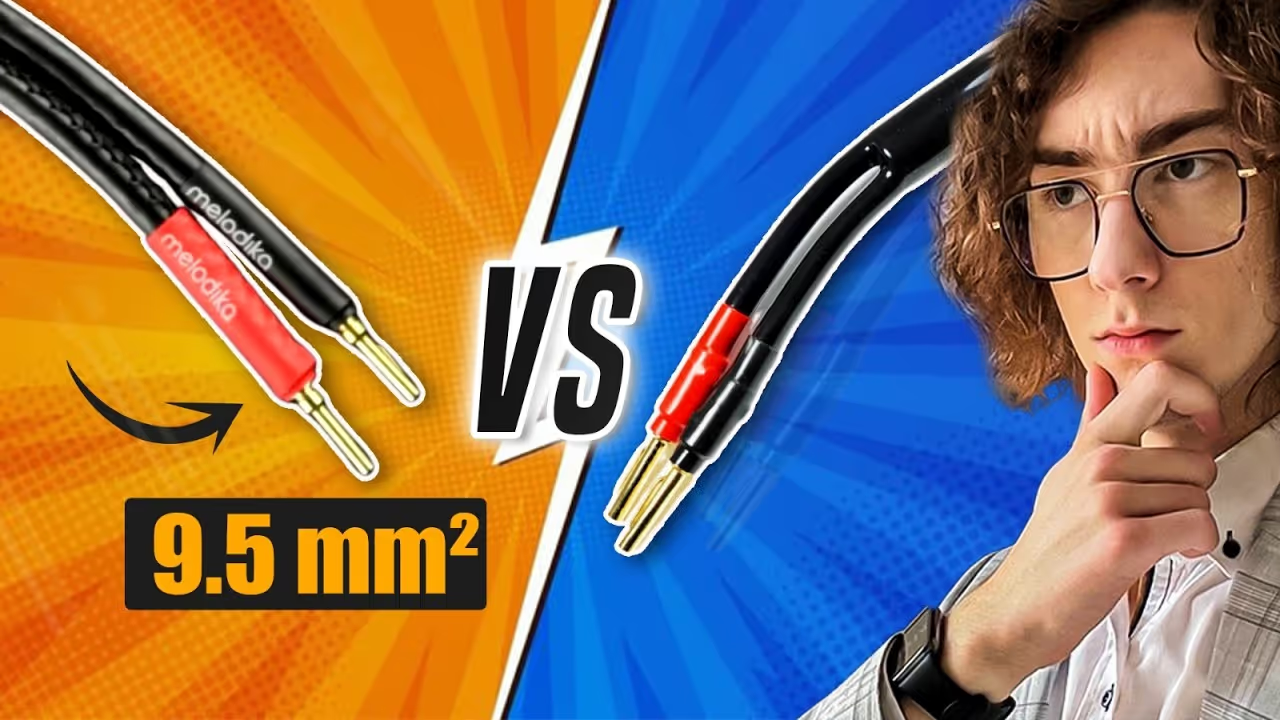
- 0:00 Do You NEED HiFi Speaker Cables? (opens in new tab)
- 0:20 Build Quality & Aesthetics (Flagship Cable, Thickness/AWG, Diameter, Real Italian Lether Finish) (opens in new tab)
- 1:39 Technologies (Conductor Material, 6N Copper, 9.5mm2, Twisted Wire Pair, LITZ, Solid Grip, Multi-Gauge Core, Directionality) (opens in new tab)
- 3:53 Sound Quality (Bi-Wiring, Sub-Bass tightness, Detail Retrieval, Vocal Clarity, Texturing, Sound Stage Width, Frequency Extension) (opens in new tab)
Common questions about the Brown Sugar BSSC95xx
Is the Melodika Brown Sugar BSSC95xx worth it?
Yes. It scored 8.5/10, Highly Recommended, higher than 63% of everything we have tested, against a catalogue median of 8.1. Price: Varies by length.
Who should buy the Melodika Brown Sugar BSSC95xx, and who should skip it?
Buy it if the room, the speakers and the amplifier are settled and this is the part that is left. Skip it if something upstream of the cable is still the obvious limit.
What else have you tested that is close to the Melodika Brown Sugar BSSC95xx?
There is no head-to-head page for this one yet, and nothing we have scored sits close enough in price to call a direct rival. The nearest reference points in the same category: the AudioMica 4-all-in-1 Cable Set at 8.5/10, the Melodika Brown Sugar BSSC4500 at 8.2/10, and the DH Labs, iFi, Vera-Fi HiFi Tweaks Roundup at 7.8/10.
Why copper instead of silver in the BSSC95?
Because you can buy the same conductivity with copper and spend the difference on thickness. Silver is around 7% more conductive, and 7% more copper gets you to the same place - which is exactly what Melodika did, at 9.5mm² per conductor. It also was not the tuning they were after, and silver is enormously more expensive than oxygen-free copper. You can find silver cables this thick. Whether they are better is genuinely open, and the price is not.
Does the direction of the BSSC95 matter?
Melodika say so, and either way you should not ignore it - the signal flow direction is printed in small black text on the cable, so find it and install accordingly. It takes a minute and it costs nothing. If you are the kind of listener who finds directionality claims hard to accept, the practical answer is the same: follow the marking, because there is no upside to guessing.
What does LITZ construction actually do?
It kills the skin effect properly rather than partly. This is neither solid core nor ordinary stranded wire: every single strand is individually insulated so it never touches the one beside it. In plain stranded cable electrons can hop between strands, which loses micro-level information; LITZ makes that impossible. The two conductors are then twisted together, which is the simplest known way to cut self-interference and one plenty of manufacturers still skip.
Can the BSSC95 do both halves of a bi-wire run?
That is what makes it unusually universal. Bi-wiring is worth it in my system, and this cable performs very well on the bottom because it is thick and low-resistance, so low notes stay impactful and extended - while the LITZ construction and high purity make it just as good on the top, with a lot of vocal clarity and texture. For many people that removes the reason to buy two different cables for the two halves.
How much does the BSSC95 change the soundstage?
About 5 to 7% wider than my regular cables, which is the part I liked most. That is not a huge improvement, and the reason it matters is that you sacrifice nothing to get it - the imaging stays razor sharp and does not take the slightest hit. A cable cannot do much for staging in absolute terms, and within that limit this one genuinely helps.
Will the BSSC95 improve any system?
No, and I would rather say so than sell you a cable. The improvements are only audible in a resolving system, and no cable will fix a poorly set up room or a chain that is holding itself back. If your speakers are badly positioned or your amplifier is the weak link, spend the money there first. In a system that is already dialled in, this does what it says.
Is the BSSC95 hard to install?
It is heavy and stiff, which is the direct cost of the thickness - there is a lot of copper in there, and picking it up tells you so immediately. Plan the routing before you buy, particularly for tight runs behind a rack. The termination helps: Solid Grip means the connectors are machine-pressed rather than screwed on, which increases contact area and avoids adding another material to the path. Gold-plated bananas or spades, your choice.