
Meze 105 Silva Review: The Most Beautiful Headphone Under $500?
A $499 open-back dynamic with hand-polished walnut cups, a custom 50mm carbon fiber-reinforced dome driver, and a warm, fun, easy-to-drive tuning that punches well above its price.
Corrections
- - Weight corrected from 350 g to 354 g, and the driver described as Meze does (a carbon fiber-reinforced cellulose W-dome with a titanium-coated torus, not a carbon-fiber driver), to match Meze's published specifications.
Lowest price now
$499 at Apos Audio, Audio46 and 3 more on
The same as the $499 list price. In stock at all 5 US stores we check daily. Price tracking began on Oct 6, 2026. Compare all 5 stores
- Standout
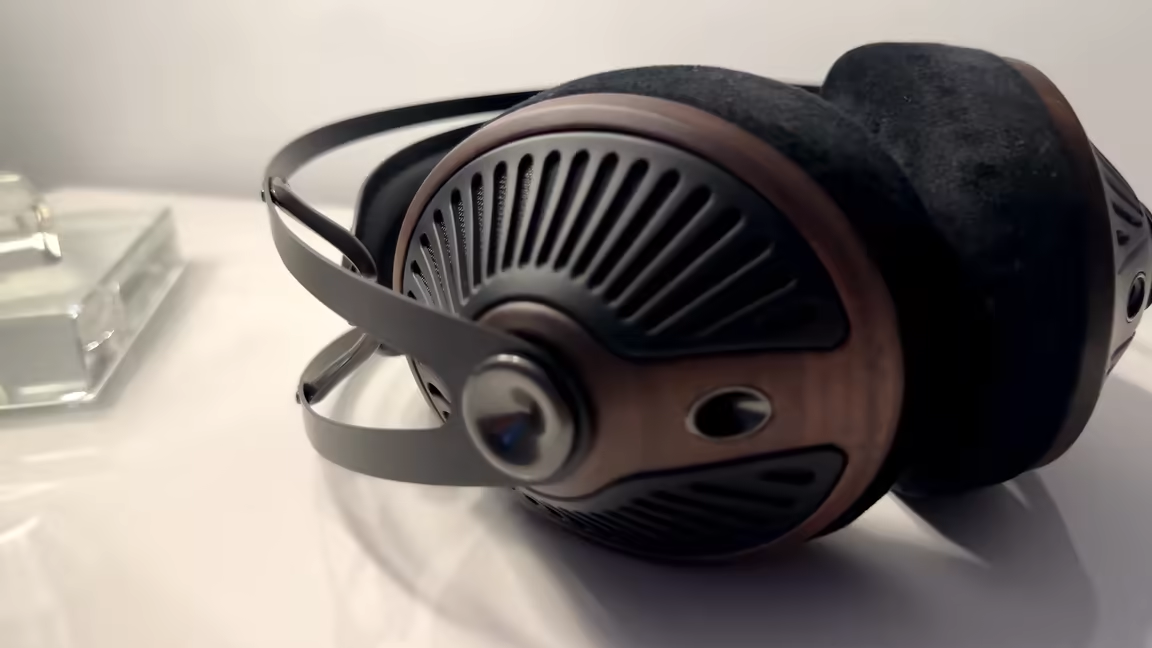
- Hand-polished walnut earcups with intricate radial grille
- Watch out for
- Musical, warm tuning
- Better alternative
- HIFIMAN Arya Organic: $600 more, scores 0.5 higher.
Pick #3 of 8 in our Best Headphones Under $500 guide.
You can easily drop over a thousand dollars on flagship headphones, only to end up with cheap plastic and a sterile, boring sound. But the Meze 105 Silva comes in at just $499, and it makes those expensive flagships look ridiculous. With genuine walnut ear cups and an incredibly fun sound signature, this might be the ultimate sweet spot in audio right now.
Hand-polished walnut and all-day comfort
Meze is known for making some of the most visually stunning audio gear on the planet, and the 105 Silva leans heavily into this gorgeous mid-century modern aesthetic. The ear cups are crafted from genuine, hand-polished walnut wood, paired with a really intricate radial grille pattern. It perfectly blends that vintage, classic hi-fi charm with a clean look. That's why I always have them in my background on display.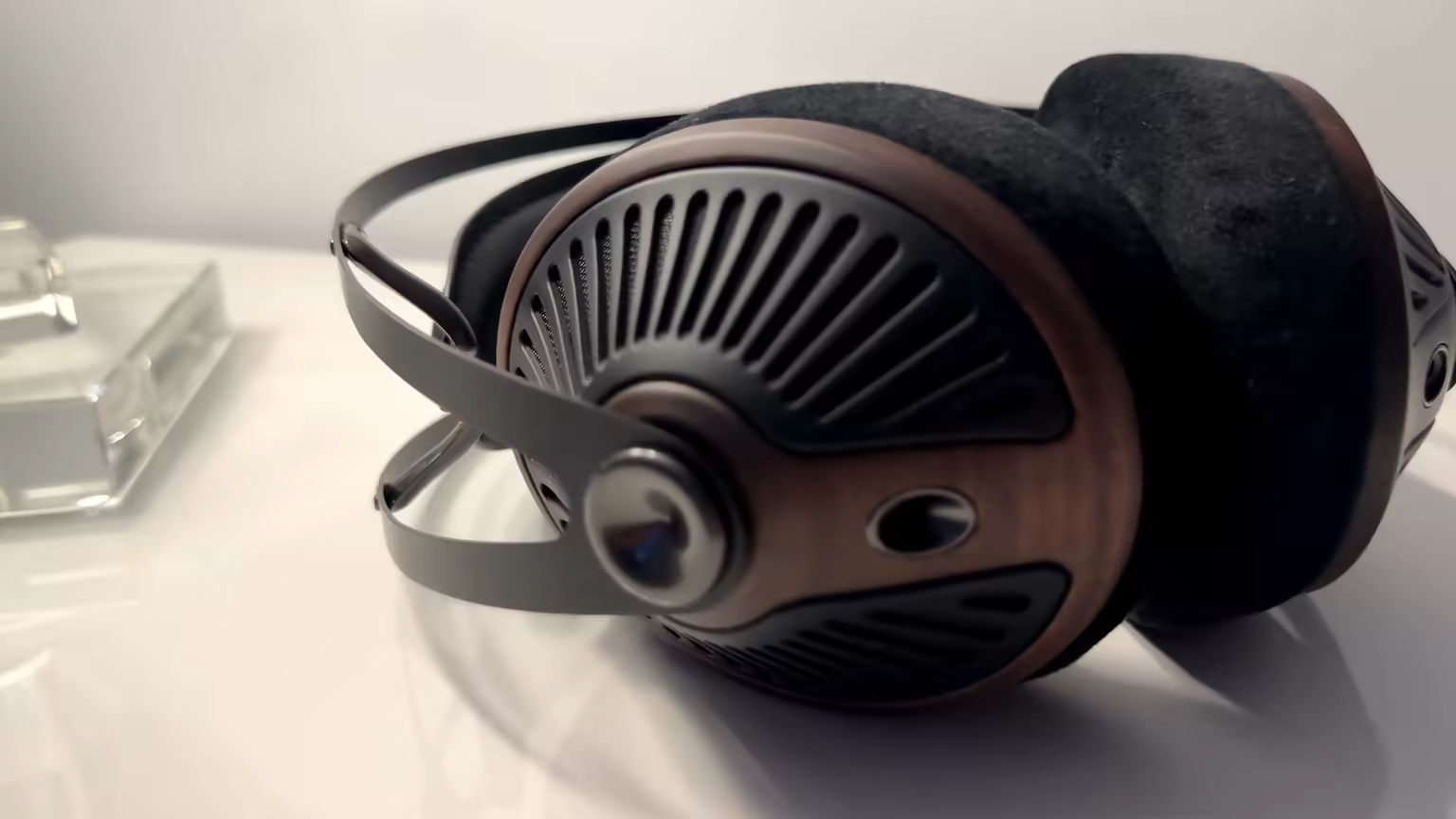 (view larger)
When you hold them in your hands, the build quality feels incredibly premium. There's no creaking, no hollow-feeling plastics, just beautiful wood, aluminum accents, and a sturdy frame. And one of the best things about Meze is that they build their headphones to last; everything here is assembled with screws, meaning they are completely modular and easily serviceable down the road.
But a beautiful headphone is useless if you can't wear it. Thankfully, comfort is where Meze consistently knocks it out of the park. It's a company known primarily for making products that feel good, look good and don't break.
The 105 Silva features their signature self-adjusting suspension headband. But the good things don't end here - as the strap used here has a lot of padding. The chance of you getting any hotspots is zero. This system is especially smart, as there are also no clicks, no stiff sliders, and no messing around trying to get the left and right sides perfectly even. You just put them on your head, and the elastic leather band perfectly fits to your head shape, distributing the weight evenly.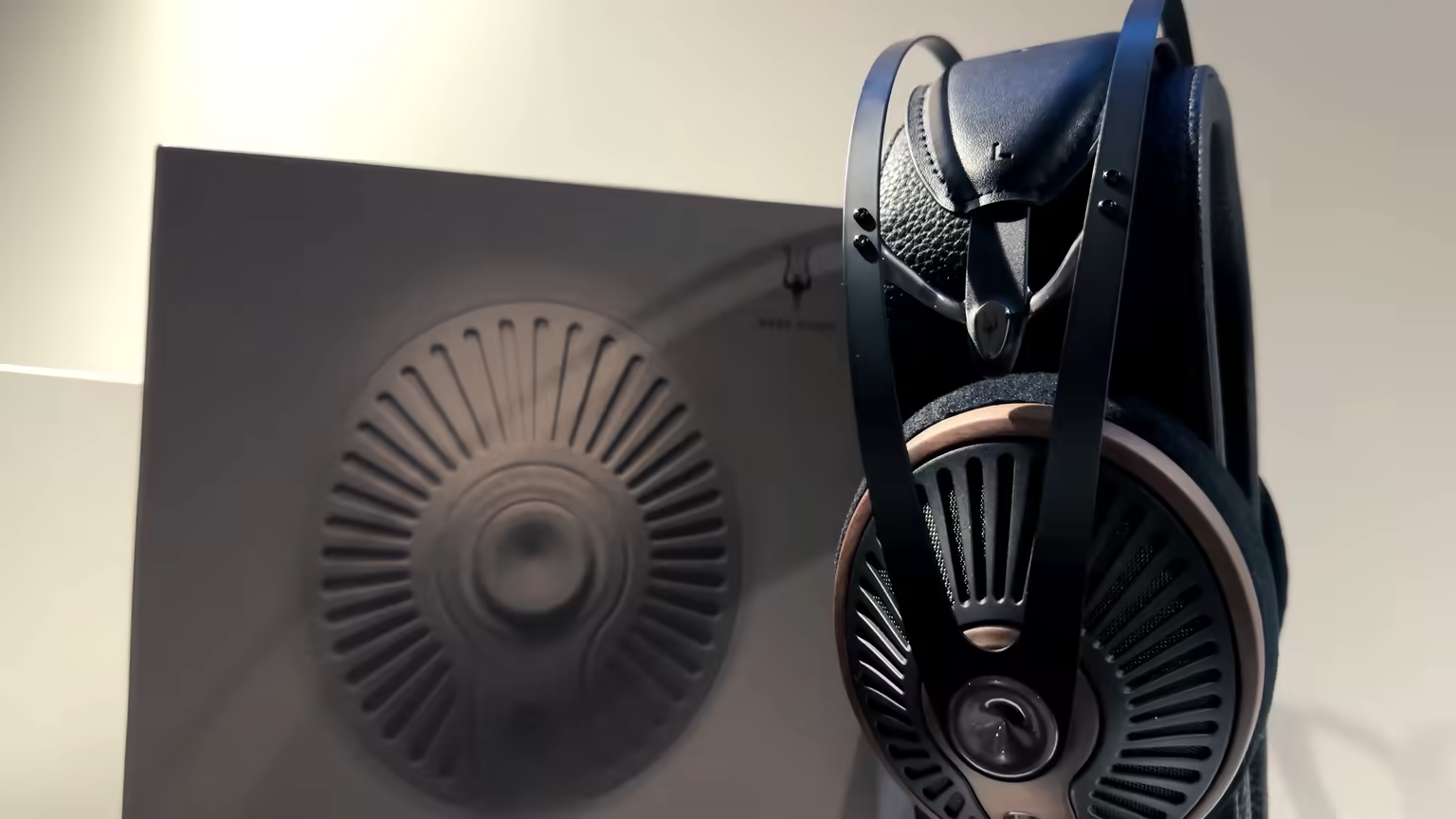 (view larger)
Speaking of weight, they come in at around 350 grams, which makes them feel incredibly light for a full-sized wooden headphone. On top of that, the earpads are made from plush, breathable velour material and they seal beautifully without trapping heat or being uncomfortable even if you, like me, wear glasses. What you get is a headphone that you can easily wear for an entire workday or a long late-night listening session without any signs of fatigue.
If that wasn't enough to convince you that Meze means real business despite the lower pricetag, the accessories will. You get a hard shell carrying case that seems to be waterproof. There's a cable pouch with a zipper, a 1/4 inch jack adapter, a USB-C dongle for using the headphones with a phone. And finally a super nice 3.5mm headphone cable that's twisted and braided with solid metal connectors - Meze might be shooting themselves in the foot with that one. Why you might ask? Because they're also selling what's meant to be an even higher-end cable for $250 on their website. I personally can't imagine a headphone cable to get much better than the stock one though, it's just that good.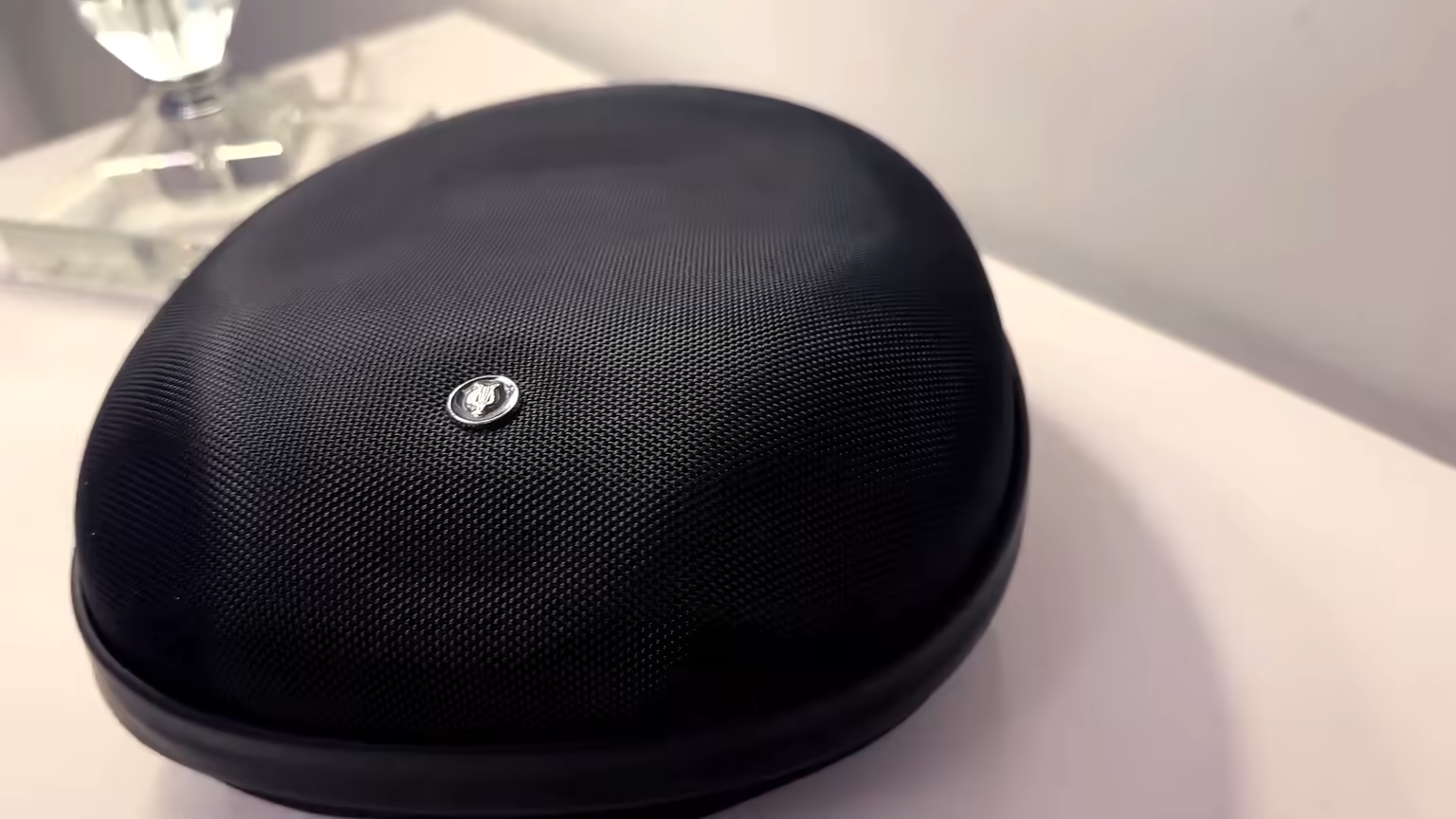 (view larger)
A custom 50mm driver with a W-shaped dome
As for what's inside, Meze didn't just drop an off-the-shelf driver in here. The "speaker" of the 105 Silva is a custom 50-millimeter dynamic driver, and the way it's built is actually pretty fascinating.
The center of the driver features a W-shaped dome made from a carbon fiber-reinforced cellulose composite. This material is incredibly rigid but lightweight. It allows it to push out super high frequencies without any of the nasty artifacts like ringing or resonance that usually causes unwanted distortion.
That dome is surrounded by a titanium-coated torus. By applying a microscopic layer of titanium, Meze kept the membrane stiff and fast. This is what gives the headphone its quick transient response and that beautifully textured, punchy bass, but more about that later. They even carved precisely angled grooves into it to control how the driver flexes, whole assembly is wrapped in a copper-zinc alloy ring to absorb problematic vibrations. Basically, they engineered every millimeter of this driver to keep the sound as musical and accurate as possible.
Easy to drive, with a dongle in the box
Regarding the hard numbers that the engineers are sharing with us, let's keep things short. However, the specs on the 105 Silva tell a very specific story about how you're supposed to use them and so does one of the things that comes with the headphone.
The absolute most important numbers here are the 42-ohm impedance and the massive 112-decibel sensitivity. In plain English, that means these are incredibly easy to drive. You absolutely do not need a giant, expensive desktop amplifier to make them sound their best. In fact, Meze includes a custom USB-C dongle with a built-in DAC and amp right in the box. You can plug these straight into your phone, laptop, or tablet and get fantastic volume and dynamic range immediately. Don't waste your money on expensive solutions for this headphone, as it simply doesn't care all that much.
The frequency response is rated from 5 Hertz all the way up to 30 kilohertz. While human hearing taps out way before that top number, and even the bottom one, that extreme 5-Hertz low-end extension shows that these drivers can dig deep for that sub-bass rumble without much strain. And because of the premium materials we just talked about, Total Harmonic Distortion sits at under 0.1 percent. So even when you crank up the volume quite a lot, listening to your favorite tracks, the sound stays perfectly composed and the immersion doesn't go away.
Warm, with punchy bass and sparkly treble
If you want a pair headphones that shows you every flaw in a recording, these aren't for you. Meze clearly tuned the 105 Silva to be fun, musical, and easy to listen to. It has this warm, dynamic character that makes you want to simply enjoy your music.
Let's start with the bass, as open-backs sometimes struggle to give you that deep, satisfying extension, but not these. The bass is slightly forward, especially in the mid-bass. What that gives you is a really nice sense of physical punch and slam. It hits with authority, but because of the driver speed we talked about earlier, it doesn't get muddy or bleed into the rest of the track. It just sounds full and lively.
In the midrange, the 105 Silva stays very smooth. There is a small step back in the lower mids, but it makes up for it with a tiny lift in the upper midrange. Since not all of you reading this are audio experts - that means voices still cut through the mix clearly and have a nice sense of presence without sounding shouty or boxy. It's a very relaxed, natural presentation that works great with pretty much any singer.
Then we get to the treble. Meze gave this headphone a noticeable amount of extra sparkle and airiness up top. It has this shimmering quality that adds a lot of life and space to the music. Audio purists will probably prefer a perfectly flat treble, but the way Meze did it here avoids that unwanted sharp feeling you get on some other headphones. You get the detail and the air, but you don't get any fatigue.
To understand where the Silva sits in the current market, let's compare it to some other popular headphones in this price bracket - specifically planar magnetic headphones like the HIFIMAN Sundara or the HIFIMAN Edition XS. If you buy the Edition XS, you are getting that massive, wide planar soundstage and a very fast, neutral tuning. The HIFIMANs are fantastic for absolute clarity, but their budget offerings can and will feel a bit dry or overly analytical depending on the song.
The Meze 105 Silva is basically the opposite approach. It doesn't try to beat HIFIMAN at being a flat reference monitor. Instead, it offers way more bass punch, a warmer overall tone, and a much more engaging, energetic personality. Plus, you don't need a powerful amplifier to make the Silva sound alive, whereas those HIFIMAN planars really demand extra power from a dedicated amp to open up and sound their best.
Overall, the soundstage on the Silva is really well-layered and gives the music plenty of room to breathe. It doesn't sound trapped inside your head. It's easily one of my favorite headphones right now for casual listening, watching movies and actually enjoying my music instead of overthinking it.
105 Silva sound signature
The review describes the Meze 105 Silva as bass-heavy and energetic.
Charted from the review's own words, quoted under each line.
Bass: Bass-heavy
Also bass-heavy, nearest in price: Kiwi Ears Atheia, HarmonicDyne Eris and KBEAR KB02.
- “…that extreme 5-Hertz low-end extension shows that these drivers can dig deep for that sub-bass rumble without much strain” (in Easy to drive, with a dongle in the box)
Energy: Energetic
Also energetic, nearest in price: Kiwi Ears Atheia, HIFIMAN Sundara and HarmonicDyne Eris.
- “Warm, with punchy bass and sparkly treble” (a section heading)
- “It just sounds full and lively” (in Warm, with punchy bass and sparkly treble)
Hear what "bass-heavy, energetic" means: a short synthesized loop, flat and then with those leanings. An illustration of the words, not a recording of the 105 Silva.
Not sure which signature suits you? Find yours with a blind A/B test
105 Silva price history
$499 at Apos Audio, Audio46 and 3 more is the lowest current new price at US stores, the same as the $499 list price.
In stock at all 5 stores. Checked .
| Store | Price | Stock | Checked |
|---|---|---|---|
| Apos Audio | $499 | In stock | |
| Audio46 | $499 | In stock | |
| Bloom Audio | $499 | In stock | |
| Headphones.com | $499 | In stock | |
| Upscale Audio | $499 | In stock |
US prices are before sales tax and shipping.
Tracking began on Oct 6, 2026. Before that, archived copies of these store pages show it at $499 since Jul 2025, and the current lowest is at or below every one of them.
- Since Oct 6, 2026
- unchanged at $499
- Tracked
- 15 days
Earlier prices from archived store pages
Read from the Internet Archive's Wayback Machine, one copy of a store page a month at most, each checked like a daily reading and linked to the copy it came from. They are the dots on the chart above.
Archived copies of these store pages in the Internet Archive's Wayback Machine go back to Jul 2025. They show it at $499 throughout. They are one copy a month at most, so a price can have changed between them.
| Store | Price | Archived copy |
|---|---|---|
| Upscale Audio | $499 | Aug 2025 to Oct 2025 |
| Bloom Audio | $499 | Aug 2025 to Apr 2026 |
| Apos Audio | $499 | Aug 2025 |
| Audio46 | $499 | Aug 2025 to Sep 2026 |
| Headphones.com | $499 | Jul 2025 to Oct 2025 |
New units only, at the price each store listed on the day shown. Every store is read once a day and a price can change at any time. No link here is an affiliate link, and no store pays to be listed. How prices are tracked
Watch the video review
Subscribe on YouTube (opens in new tab)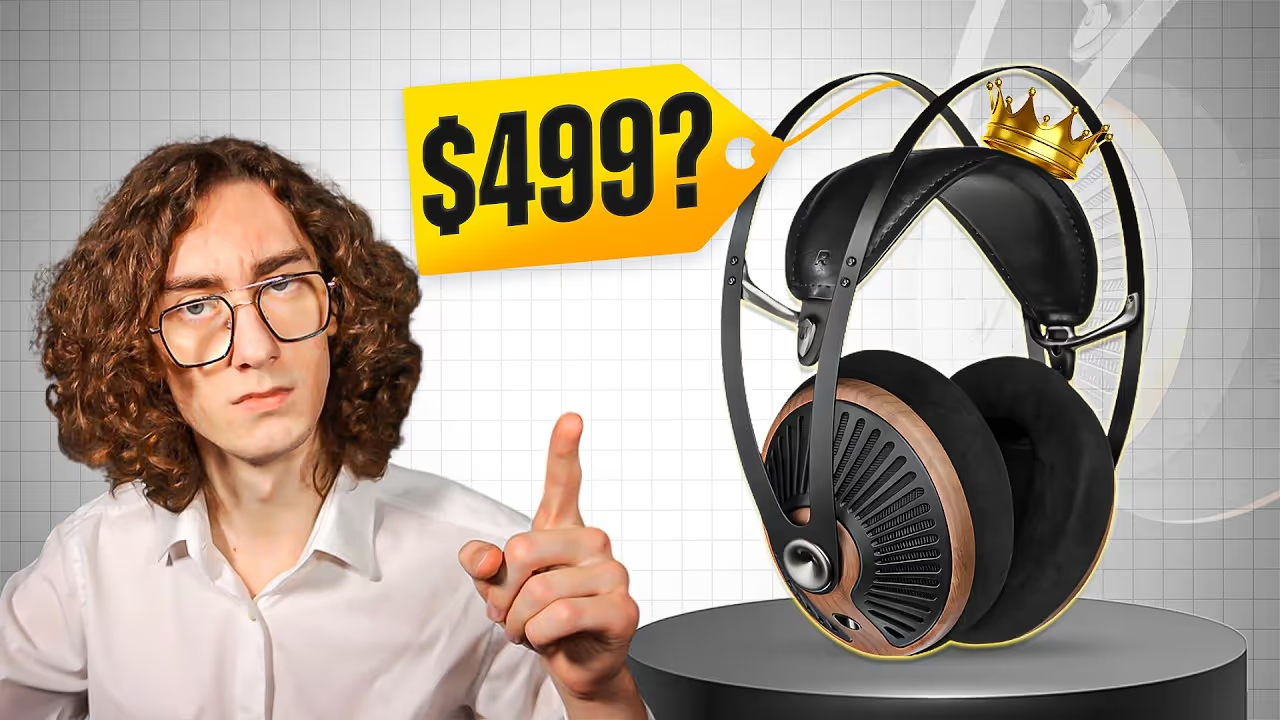
Prefer to read? The written review above covers everything in the video.
- 0:00 Meze Audio WILL Make Your Ears And Eyes Happy. (opens in new tab)
- 0:29 Comfort & Build Quality | Walnut Wood, Metal Grilles, Suspension Strap (opens in new tab)
- 3:52 Technologies | W-Shaped Dome, 50 mm Dynamic Driver (opens in new tab)
- 5:02 Technical Specification | Efficiency, Impedance, AMP Pairing (opens in new tab)
- 6:10 Sound Quality | Sound Stage, Vocals, Dynamic Range, Tuning (opens in new tab)
- 7:49 Meze vs HiFiMan - What's Better For YOU? (opens in new tab)
Common questions about the 105 Silva
Is $499 a fair price for the Meze 105 Silva?
Its 8.7/10 score and Highly Recommended verdict say it is. The money buys hand-polished walnut cups, a custom 50mm W-dome driver, a suspension headband with no hotspots and a box that holds a USB-C DAC dongle, a hard case and a good braided cable. The tuning is warm and fun, with forward mid-bass and extra treble sparkle, so anyone after a neutral reference should look elsewhere.
Is the 105 Silva a good headphone for casual listening?
That is where it shines. Meze tuned it to be fun, warm and easy to listen to, so it suits casual listening, movies and long sessions. Skip it if you want a flaw-revealing reference or a flat tuning, if your ears are sensitive to bright treble, or if you listen in a shared space, since the open back leaks sound.
Can you run the Meze 105 Silva from a phone?
Yes. Meze includes a USB-C dongle with a built-in DAC and amp in the box, and the 42Ω impedance and 112 dB sensitivity make the headphone very easy to drive from a phone, laptop or tablet. Expensive amplification is money wasted here, because the 105 Silva doesn't respond to it much. At most 15 mW to reach 110 dB peaks, within reach of a phone jack or any dongle. The review records 112 dB without saying against what, and the two conventions differ by a factor of 24 at this impedance - so that is the worst case, and the real figure is at or below it.
Which is better for you, the 105 Silva or the Edition XS?
Pick a HIFIMAN planar such as the Edition XS or Sundara for a wide, neutral presentation, and the 105 Silva for warmth and bass punch. The Edition XS brings a massive planar soundstage and a fast, neutral tuning, and the HIFIMANs are fantastic for clarity, though their budget models can feel dry or overly analytical on some songs. The Silva goes the opposite way, with more bass punch, a warmer tone and a more energetic personality.
Can you wear the 105 Silva with glasses?
Comfortably. The plush, breathable velour pads seal well without trapping heat, even over glasses, which the reviewer wears. The self-adjusting suspension headband spreads the weight with no hotspots, and at 354 g the headphone is light for a full-size wooden design, so a whole workday or a late-night session is no problem.
Do you need Meze's $250 upgrade cable for the 105 Silva?
No. The stock cable is a twisted, braided 3.5mm lead with solid metal connectors, good enough that the $250 upgrade Meze sells on its website is hard to justify. The rest of the box holds up too: a hard case that seems to be waterproof, a zipped cable pouch, a quarter-inch adapter and the USB-C dongle.
Is the 105 Silva built to last?
It is designed that way. Everything is assembled with screws, so the headphone is modular and easy to service down the road, and the build shows no creaking or hollow plastic anywhere: hand-polished walnut, aluminum accents and a sturdy frame.
Sources
- IEC 60268-7: Headphones and earphones
Standard International Electrotechnical Commission Paid full text
How the impedance, sensitivity and frequency response that headphone makers publish are defined. The figures quoted here are published ones; nothing is measured in-house.
- Olive (2022): The perception and measurement of headphone sound quality: what do listeners prefer?
Paper Acoustical Society of America
What listeners prefer in a headphone, from the research that measured how far a tuning can lean warm, bright or V-shaped before preference drops.
Discussed in A custom 50mm driver with a W-shaped dome
Alternatives to the 105 Silva
All 30 headphone reviewsSimilar type and price
 HIFIMAN Arya Stealth $250 more, a near-tie on score 8.7
 HIFIMAN Ananda Nano a near-tie on score 8.6
Step up
 OLLO Audio X1 $50 more, scores 0.2 higher 8.9
Step down
 Sivga Luan $200 less, scores 0.6 lower 8.1