The recording chain, as it has been reviewed here: condenser, tube, dynamic and USB microphones, and the audio interface that turns one into a file. A microphone is judged on a real voice and on the room it is standing in, not on the spec sheet - where its response is lifted or dipped, how much hiss it adds against a quiet source, how much of the room comes with it and how loud it can be pushed before it stops telling the truth. An interface is judged on the same take, on what its preamps, converters and monitoring do to it.
4 reviews published so far, scored against the same reference list.
Filter by driver / topology, price and connectivity. Pick within a row to widen; combine rows to narrow. Only options the catalogue actually covers are shown.
Driver / topology
Price
Connectivity
Microphones & RecordingOC16
8.7
Highly Recommended
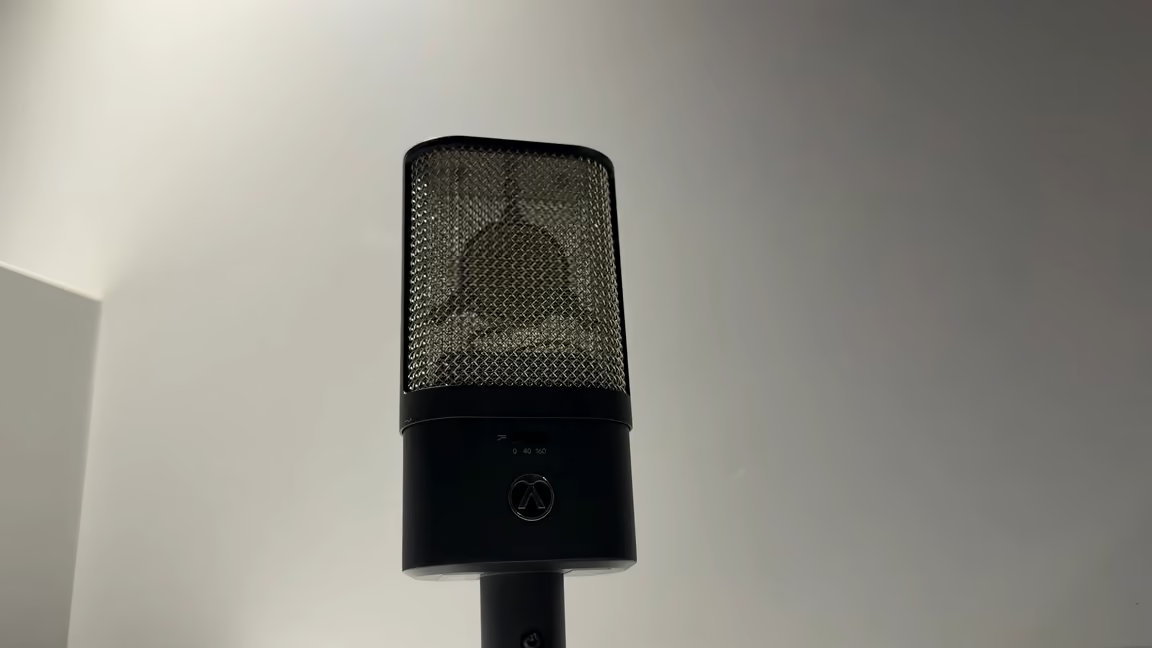
Austrian Audio OC16 Review: A $449 Condenser With a Hand-Built Vienna Capsule
A $449 cardioid condenser built around the CKR6, a ceramic-ring capsule hand-assembled and measured in Vienna: 148 dB max SPL, 14 dB(A) self-noise, one high-pass filter.
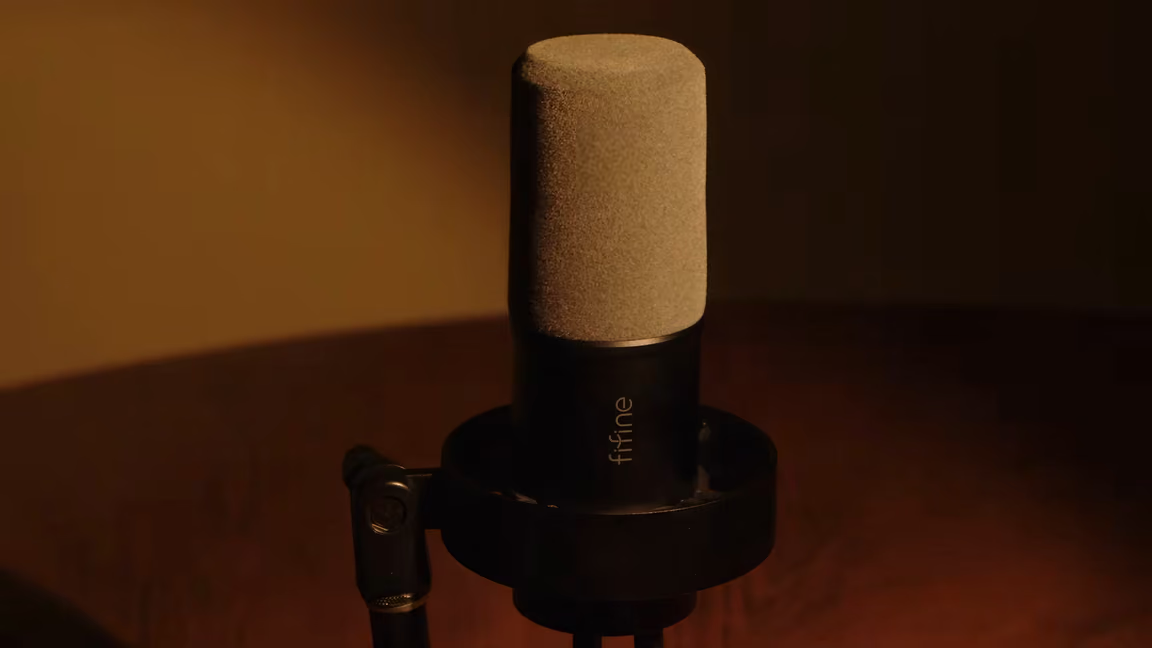
FIFINE K688 Review: A $69 XLR and USB Broadcast Mic
A dynamic broadcast microphone with both XLR and USB-C outputs, so the audio interface is already inside it: cardioid rejection, 130 dB max SPL, on-body gain and mute.
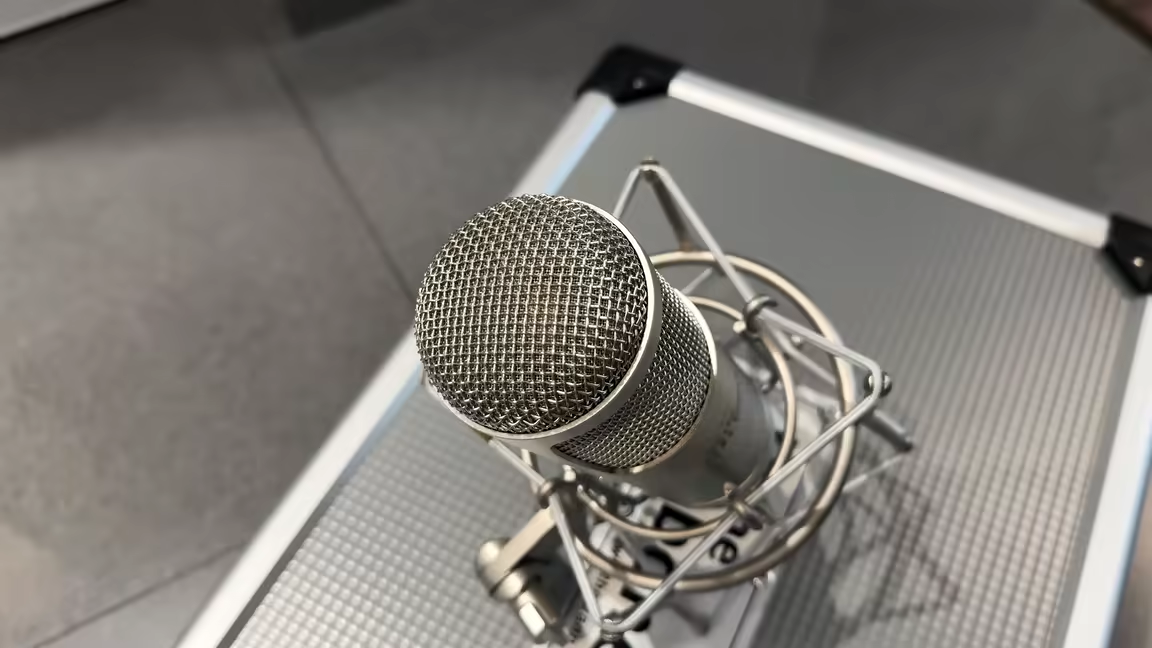
t.bone SCT 2000 Review: A $231 Tube Mic That Robs the Industry
A large-diaphragm tube condenser at $231 with a real 12AX7B tube, nine polar patterns, gold-sputtered diaphragm, and a sound that competes with mics 3-5x the price.
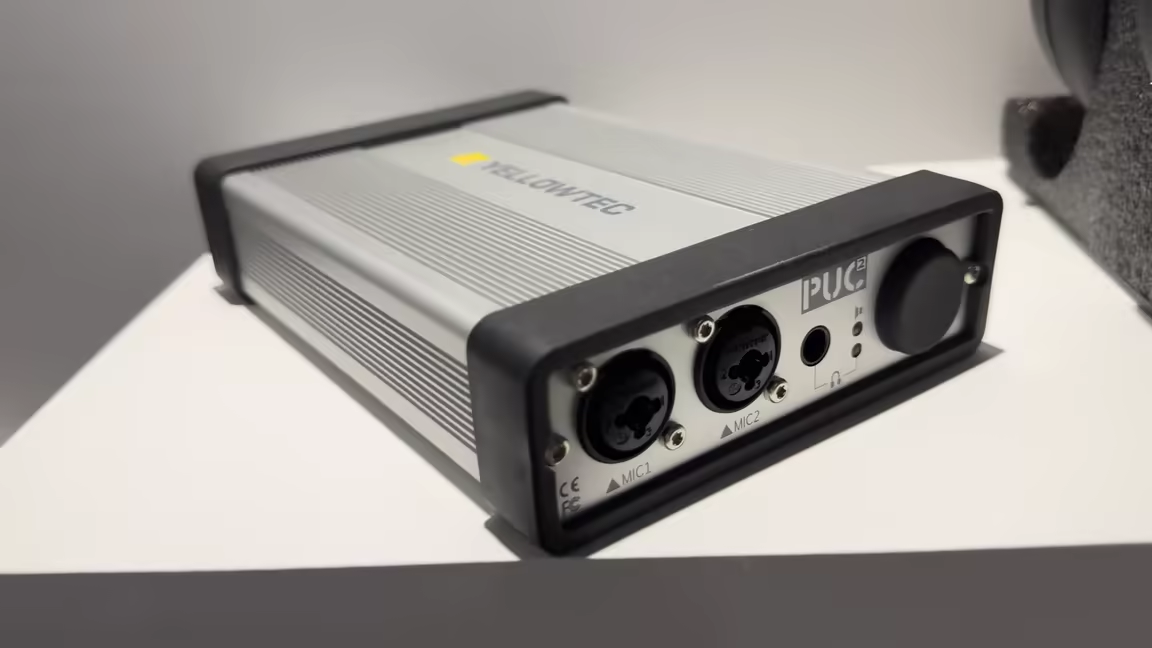
Yellowtec PUC2 Mic LEA Review: An Audio Interface With LEA
A €769 audio interface from Germany with proprietary LEA leveling technology - automatic perfect mic levels, zero-latency monitoring, and a slightly warm, transparent sound.
Curated shortlists and free calculators to take you from browsing the list above to a decision you can act on.
Buying guideBest MicrophonesCondenser, tube and USB microphones ranked by score after hands-on recording, from a $69 USB broadcast mic to a $449 condenser built around a Vienna capsule.Read the guide
CalculatorAcoustic Panel CalculatorPlot the absorption coefficient of any porous acoustic panel from 20 Hz to 8 kHz. Thickness, flow resistivity, and air-gap depth into NRC, SAA, and a frequency curve. Presets for Owens Corning 703, Rockwool RW3, GIK 242, Auralex foam.Open the tool
How microphone and recording reviews work on this site.
Every review on this page covers the recording chain: condenser, tube, dynamic and USB microphones, and the audio interface that turns them into a file. A microphone is judged on a real voice in a real room, and where a comparison is the point it is recorded side by side - the FIFINE K688 went through the same sentences three ways, over USB, over XLR and against a $1,300 Neumann TLM 103, so the difference between the paths is on the recording rather than in a claim. An interface is judged on the same kind of take, on what its preamps, conversion and monitoring do to it. Hi-fi playback sources - DDCs and transports - are on their own hub; a microphone and a reclocker are not the same buying decision.
What we score in microphones & recording
The scale is normalised across categories: every score is built from the same five weighted axes (how a score is built), each judged against the reference at the product's own price tier. What earns the points on each axis is specific to the category, and in microphones & recording it is this.
Capture character, stated plainly scored under Sound 30%
Where the response is lifted or dipped and what that does to a real voice or instrument - a presence lift, a sibilance dip, a lean or a full low end. A microphone that flatters one voice and ruins another is described that way rather than scored as neutral, because the right mic depends on the source in front of it.
Noise, headroom and gain scored under Technical performance 25%
Self-noise against the quiet sources the mic will be asked to record, maximum SPL against the loud ones, and output level against the preamp it will meet - a hot condenser leaves a budget interface gain to spare, a quiet dynamic asks a lot of it. For an interface, the same question from the other side: clean gain, conversion and a monitoring path with no latency.
The room it brings with it scored under System fit 15%
How much of the room the capsule hears. A dynamic cardioid rejects a fan and a keyboard; a detailed condenser records an untreated room as clearly as it records you. That is not a flaw in either, but it decides which one suits the room a reader actually has, so every review says it.
Connectivity and workflow scored under System fit 15%
XLR, USB or both, phantom power, an external tube power supply, on-body gain and mute, a DC barrel the interface cannot run without. Whether the piece works with the gear and the software a reader already has, or demands a second box before it will talk to a computer.
Build, accessories and value scored under Build & comfort 15% + Value 15%
Body, grille, mount, cable and case - a shockmount that sags under an unsupported XLR is a real defect and is scored as one. Value is the same question it is everywhere else: what the piece does against the reference at its own price, which for a $69 USB mic and a $449 condenser are very different references.
How to read the scores: A 9.0 here would be a benchmark with no condition on the voice, the room or the workflow. An 8.0 to 8.9 is excellent with a stated condition - the Austrian Audio OC16 at 8.7 is a hand-built Vienna capsule that leans bright and records your room as clearly as your voice. The 7s do the job they are built for and say where they stop: the FIFINE K688 is a voice microphone whose response ends at 50 Hz and 16 kHz, which is a 7.2 for a podcast and the wrong mic for a drum kit.
Terms you will hit in the reviews
Condenser / dynamic
A condenser capsule is a charged diaphragm next to a backplate, sensitive and detailed and needing power; a dynamic capsule is a moving coil, less sensitive and far more forgiving of a noisy room.
Self-noise
The noise a microphone produces with no sound reaching it, quoted in dB(A). It sets the quietest source the mic can usefully record: 14 dB(A) is quiet enough for close detail work, high teens is audible on a whisper.
Max SPL
The loudest sound pressure a microphone takes before its own electronics distort. 148 dB is past the inside of a kick drum; a mic with that headroom needs no pad to survive a loud source.
Phantom power
The 48 V an interface sends up the XLR pair to run a condenser microphone's electronics. Dynamic microphones neither need it nor are harmed by it; a tube microphone uses its own external supply instead.
Polar pattern
The directions a microphone hears from: cardioid rejects the back, omni hears everywhere, figure-8 hears front and back. A multi-pattern mic lets you choose; a single-pattern one chooses for you.
Zero-latency monitoring
Hearing your own voice in headphones straight from the interface's input, before it reaches the computer, so there is no delay between speaking and hearing it.
We do not score a microphone by what its capsule is claimed to be "the same as", by its feature list, or by a frequency-response chart printed on the box. What it does to a real voice, in a real room, against a reference is the thing; everything else is an input to the verdict, not the verdict.
Microphones & Recording reviews: common questions.
Buying advice, terminology, and how the microphones & recording category is reviewed on The Audio Stuff.
Condenser or dynamic microphone: which should I buy?
Decide by the room first. A dynamic microphone such as the FIFINE K688 hears what arrives directly at it and rejects much of the room, which suits an untreated space and a voice close to the capsule. A condenser such as the Austrian Audio OC16 is more sensitive and more detailed, and records the room as clearly as it records you. In a treated room the condenser usually wins; in a bare one, the dynamic often does.
Do I need an audio interface for a microphone?
For an XLR microphone, yes - or a mixer - because something has to amplify it, supply phantom power to a condenser and convert it to digital. A USB microphone such as the K688 has an interface built in and plugs straight into a computer. A separate interface is worth buying when you want better preamps, more inputs or features like the automatic levelling and zero-latency monitoring of the Yellowtec PUC2 Mic LEA.
What does microphone self-noise mean?
It is the hiss a microphone produces with nothing in front of it, quoted in dB(A), and it sets the quietest source the mic can usefully record. The OC16's 14 dB(A) is quiet enough for close detail work; the t.bone SCT 2000's 16 dB is impressively low for a tube microphone but not pro-grade silent. It matters most on quiet voices and acoustic instruments, and hardly at all on a loud source.
Is a tube microphone worth it?
If you want the sound, yes. A tube condenser such as the SCT 2000 adds a smooth, flattering harmonic lift that makes a voice sound finished before any processing, but it needs its own external power supply, time to warm up and a bit more space, and its smoothness can be too much for clinical work. A solid-state condenser is the simpler tool when neutrality matters more than character.
Will a better microphone fix an untreated room?
No. A more detailed microphone records the room more clearly, not less. In a bare, echoey space the cheaper fixes come first: get closer to the capsule, choose a dynamic that rejects the room, or treat the wall behind you. Spend on the microphone once the room is no longer the loudest thing in the recording.

 Microphones & Recording OC16