Monosaudio Cables Review: Can These Chinese HiFi Cables Make a Difference?
Affordable audiophile cables from AliExpress that genuinely deliver - silver RCA interconnects, OFC CAT 8 Ethernet, and a power cord with real, audible improvements.
higher than 21% of everything we have tested
Value Excellent. It is one of the best-value pieces we have scored.
- Standout
- PS75R1R RCAs use pure silver conductors with 4 shielding layers
- Watch out for
- Improvements are small and system-dependent
- Better alternative
- Melodika Brown Sugar BSSC95xx: scores 0.7 higher.
Is it for you?
- The room, the speakers and the amplifier are settled and this is the part that is left
- You want the most performance per dollar on the list
- Something upstream of the cable is still the obvious limit
Named Best Value in our Best Hi-Fi Accessories guide.
You can get these fancy, thick audiophile cables on AliExpress for quite an affordable price. But can they sound any better than these regular, cheap stock cables? Let's figure that out.
Whether cables can make an audible difference is... well... the most controversial topic amongst audiophiles ever. I'll help you understand what is complete BS and what isn't, as it's straightforward. But before I say anything about it, I need you to know that everything I say is MY experience alone. I'm neither forcing you to believe in my view of reality, nor am I trying to sell you something to profit from it.
With that out of the way, I'll demystify a bunch of total BS to begin with.
Companies, or generally people, that claim cables will make your system sound 10x better, soundstage twice as wide, allow you to hear god with them, or say that cables can be a limiting factor in your setup, are obviously, straight-up telling you lies without a doubt. You shouldn't listen to them. You shouldn't buy anything from them.
The difference can be THIS big only in cases where you're comparing a broken or incorrectly made cable to one that functions properly. Not with an okay-quality cable versus an audiophile-grade one.
The last misconception people fall into is that HiFi cables can NEVER improve the sound over stock cords.
So what's the truth? It's simple. Audiophile cables can make a small but audible change in your system. Notice how I said CAN instead of WILL. Only some systems and listeners are going to benefit at all from this effort.
Your system can be not revealing enough - and while it can sound like nonsense, think about it: when your amplification is noisy, it can cover up whatever your cables are improving upon noise-wise. External cables cannot fix the poor internal wiring of your components. The same goes for distortion, impedance matching, and most obviously your ears and experience in audio. It's absolutely fine not to hear any difference - arguably it's even better for you financially.
So, let's see what we have there.
RCA Interconnects: The Silver-Conductor PS75R1R
First of all, RCA interconnects. The model I have here is the PS75R1R - what a complicated name. It comes in this kind of blue, Monosaudio-branded box. I think all of their cables come in such boxes - at least all that I've got. They're well protected, including the connectors, so any damage during shipping is unlikely.
These RCA interconnects have pure silver conductors, which is their main characteristic. Silver is a better conductor than copper - it has lower resistance and is subjectively known to sound brighter and bring out more details and textures. The conductor diameter in these cables is 0.8mm. The outer diameter, however, is 8mm - that's pretty thick for an RCA cable. But wait till we get to their power cords.
It features 4 shielding layers, which is always good to see in unbalanced audio cables. The first layer is made out of aluminum alloy, the second one is electrically conductive PVC, the third is aluminum alloy again, and the fourth is pure copper, nickel-plated braid. They used Teflon (PTFE) as an insulator. Finally, they put a soft, nice-to-touch, and good-looking black nylon braided layer on the outside.
With all these layers, combined with the thickness, you'd expect it to be stiff and difficult to work with, right? You couldn't be more wrong. They are highly flexible, easy to position, and can make somewhat sharp bends without damaging the internal wire structure. A lot of HiFi cables with similar thicknesses cannot do that.
The connectors used here are, simply put, impressive. Monosaudio also sells them separately under the name R201R. What's so impressive about them? They use typical high-purity copper as a conductor. The crazy part is that the housing is made out of polished brass, with a chrome-plated finish. As a result, the connectors are very heavy-duty, sturdy, and beautiful looking. Functionally, they didn't sacrifice anything. They have a locking mechanism that ensures secure contact until intentionally unscrewed. The screwing in or out is so smooth and frictionless - just take a look. It indicates high-quality machining and attention to detail.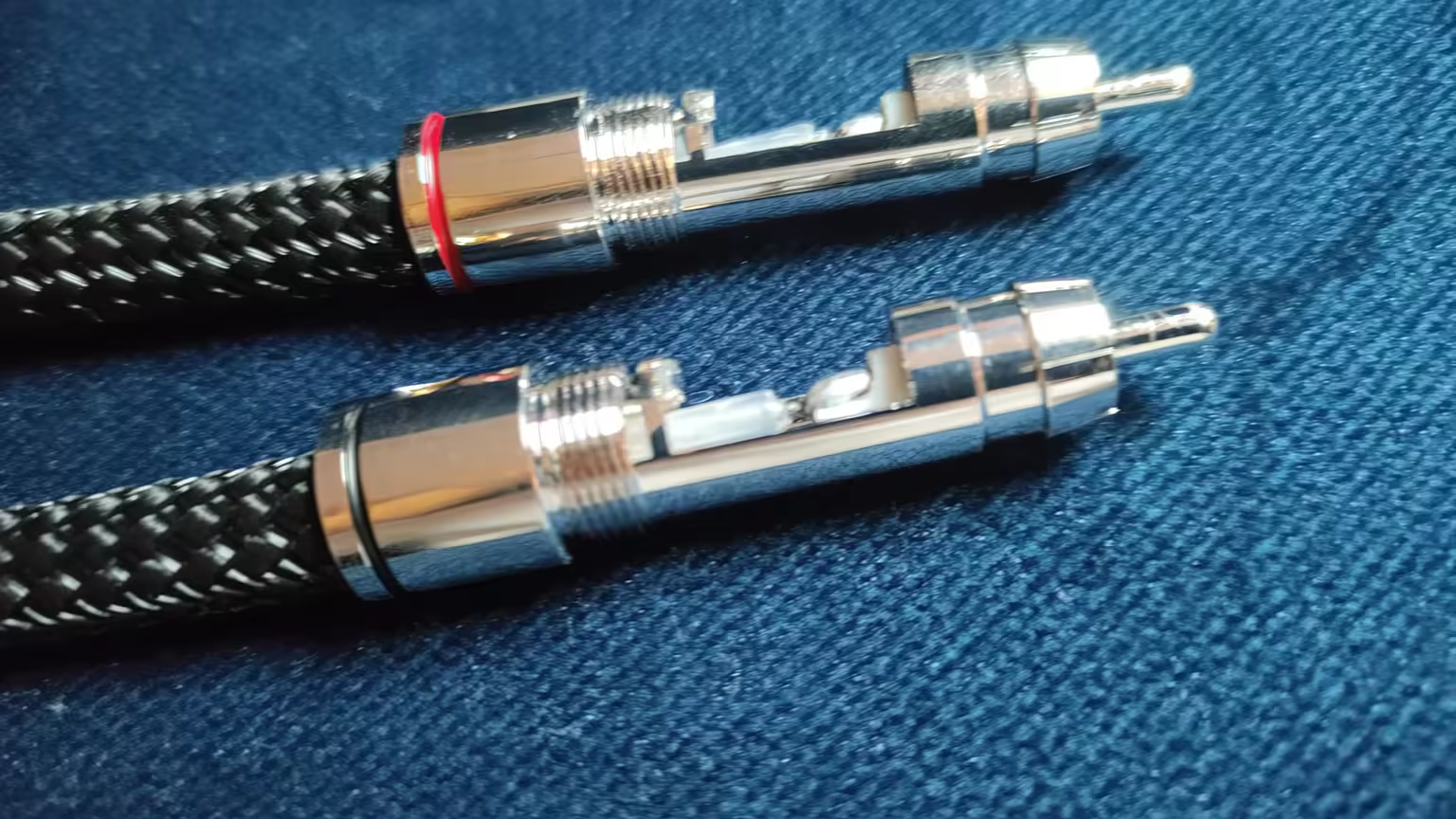 (view larger)
How about the sound? Is it any better than generic stock RCAs? Yes. I've heard the biggest improvement in the treble region - it got more refined, slightly accentuated, and seemingly more detailed. I didn't notice soundstage, imaging, or dynamics change - however, my system could be simply not resolving enough to hear that. Your mileage may vary. I'm constantly working on improving my system and making it as revealing as possible, but it takes time and much money.
Ethernet Cable: True OFC CAT 8
It's time to check out another product from Monosaudio - their RJ45 Ethernet cable. It's available in a variety of lengths ranging from 75 cm to 5 meters. The run I'm making with it is very short, going from my network switch to my music server, where all my lossless audio files are stored. At the moment, I only possess one of these cables. Therefore, not all Ethernet connections in my network setup use this cable type. Because of this, the improvements resulting from upgrading the network cable are limited. To see more significant improvements, I would need to upgrade all the cables in the chain to the Monosaudio ones.
The conductors of this cable are made of pure oxygen-free copper, with 99.998% purity. Although it may not seem like a big deal, many Ethernet cable conductors are made of copper-clad aluminum (CCA), whereas this cable offers true OFC with high purity.
It is a CAT 8 cable. If you are not familiar with the term, let me explain it briefly. CAT stands for "Category". The higher the number after it, the higher the speed and frequency of the signal that the cable can support and is guaranteed to work with. For example, regular CAT5e can support up to 1 Gbps. CAT 6 can support up to 10 times as much over a short distance and requires the cable to have shielding, which is not mandatory for lower categories. On the other hand, CAT 8 can push up to 25 or 40 Gbps over a long distance of at least 100 meters, supporting a bandwidth of 2000 MHz. This is a significant upgrade over lower categories.
You may be wondering how high-speed Ethernet cables relate to audio. Ethernet cable categorization is a standardized method that ensures cables meet certain requirements like geometry, shielding, and conductor quality. The higher the category, the better the cable's quality needs to be to meet the requirements of that category. With CAT 8 cables, you can expect the most sophisticated shielding, conductor pair twisting, materials, and internal geometry, since it is the highest category available.
This cable's outer diameter is very thick for what it is, measuring an entire centimeter, with a soft, nice-to-touch, grey and black braided mesh layer on the outside. They used industrial-grade metal connectors, providing extra shielding and sturdiness, unlike other cables with plastic connectors.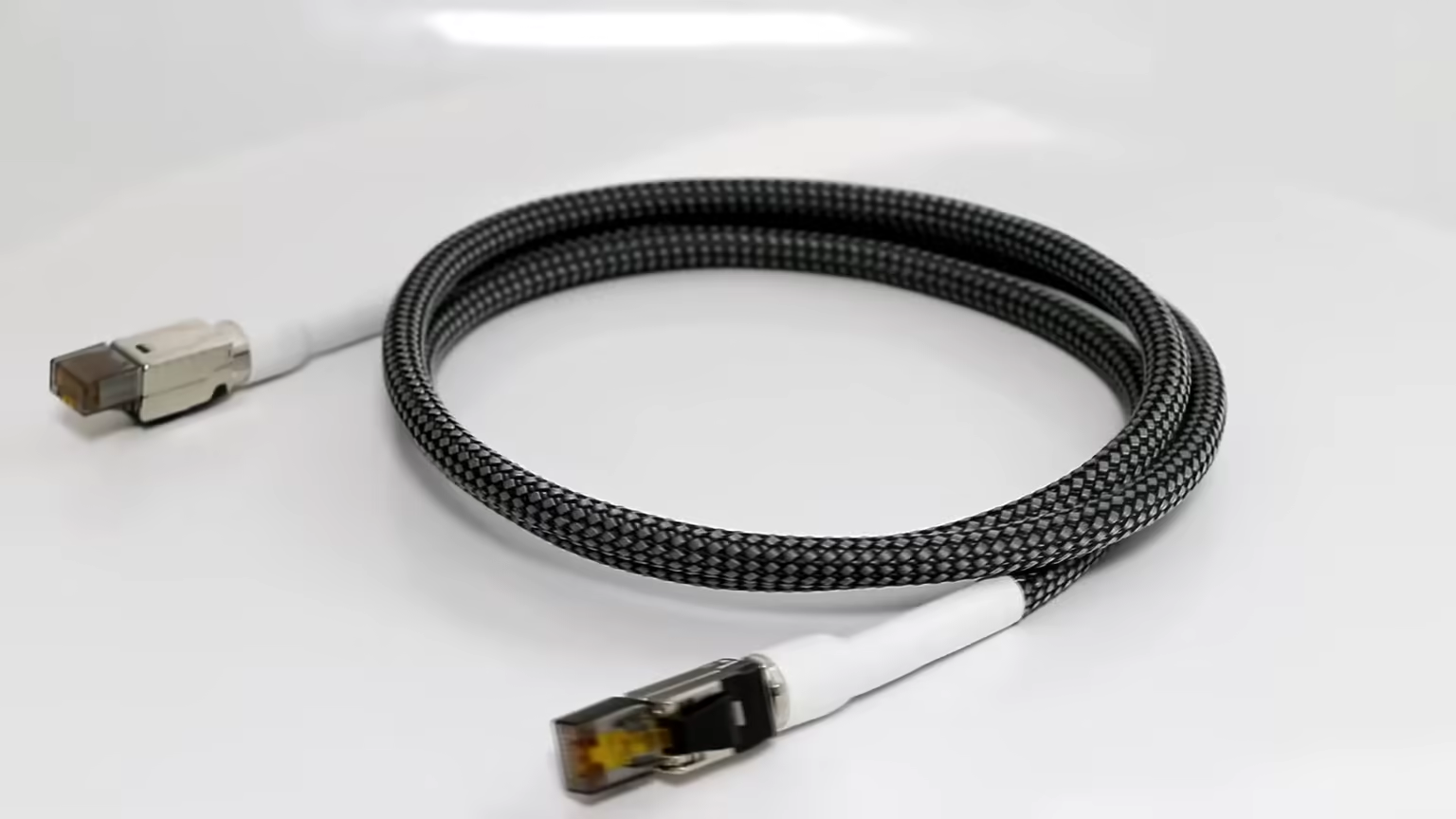 (view larger)
If you replace only one of your Ethernet cables with this one, what changes can you expect? You'll get a slightly lower noise floor and lower jitter, which can contribute to a wider, more accurate soundstage. However, these improvements may be barely noticeable, if at all. There's a chance that I'm just imagining it. If you want to see a bigger improvement, you should consider upgrading all of your Ethernet cables, rather than just one.
Power Cable: P903M0, the Star of the Set
Finally, they have a product that might be one of the most impressive ones they offer, both in terms of build quality and sound performance: the Monosaudio P903M0 power cable.
What makes it so special? The conductors are thicker than regular and are made out of high-purity oxygen-free copper. This combination offers lower resistance and thus lower voltage losses, which means that less energy is lost to heat, resulting in a more stable signal over time and under varying loads. Polyethylene is used as an insulator, and there are four layers of shielding, each with a different material. The layers include a 100% transparent membrane, 80% pure copper braid, 100% aluminum foil, and conductive PVC.
The other mesh covering on the cable has a luxurious feel and looks fancy, but it doesn't provide any additional flexibility to the cable. This is because there are many layers inside the cable which make it quite stiff. However, this stiffness is not a significant issue, as power cables are typically not adjusted much once they are in place. It's worth noting that the cable has an outer diameter of 13.6mm, so flexibility is not expected to be a strong point.
The connectors are not my favorite. The heavy and metal connectors are my preference over the current ones. You can also get these connectors separately under the E100 or F100 name, depending on the plug your country uses. Their conductors are also made out of high-purity OFC copper, to accommodate the wire's conductor. It's worth noting that this plug has no plating over the copper prongs. This reduces contact resistance, but it's unclear how it will affect the cable's longevity. Luckily, Monosaudio lets you opt-in for their version with the protective plating of your choice.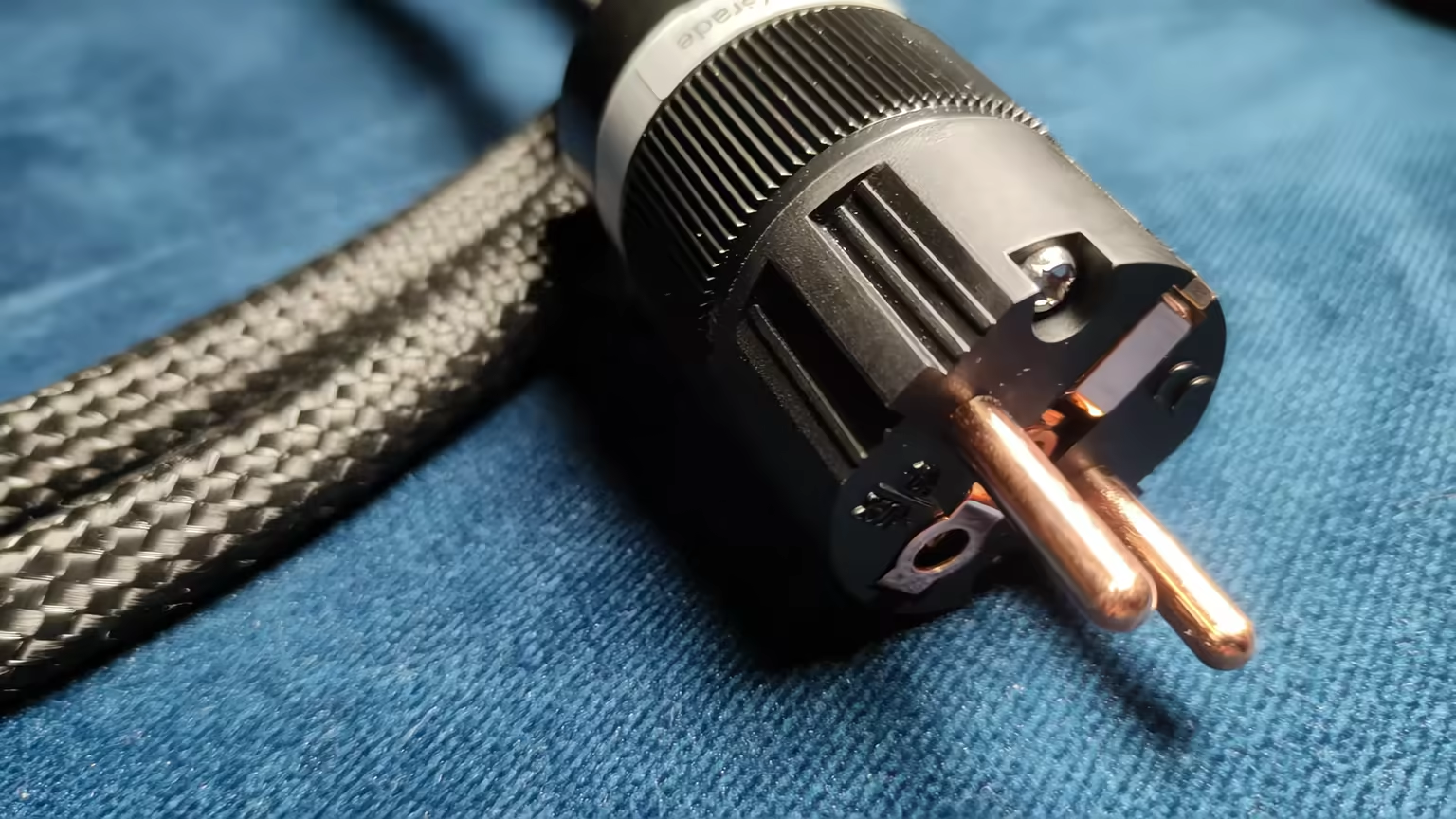 (view larger)
I can understand how signal cables, or even digital cables, can make an audible difference, but the idea that a power cable could make that much of a difference just doesn't make sense to me. Don't get me wrong, we're still talking about a very small improvement, but it's important to remember that we're talking about a power cable that doesn't carry any audio signal.
Yet, with this cable, the dynamics - punch and slam - are noticeably better. That's the main thing. I'd assume that the lower resistance played a big role in it. Additionally, the sound seems to be fuller and cleaner, and I believe it's due to the better shielding that prevents noise from getting into the cable and radiating out to other components. Good job, Monosaudio.

Watch the video review
Subscribe on YouTube (opens in new tab)Prefer to read? The written review above covers everything in the video.

- 0:00 Is it possible for high-quality HiFi interconnects to sound different compared to cheap cables? (opens in new tab)
- 2:00 Monosaudio Pure Silver PS75R1R RCA Cable (Conductors, Connectors, Shielding) (opens in new tab)
- 4:42 Monosaudio CAT8 RJ45 Audiophile Ethernet Network Cable (Length, Metal Industrial Connectors, Pure OFC Copper) (opens in new tab)
- 7:38 Monosaudio P903M0 HiFi Power Cable (EU Schuko / US Plug, Thickness, Audio Quality) (opens in new tab)
Common questions about the PS75R1R, CAT 8, P903M0
Is the Monosaudio PS75R1R, CAT 8, P903M0 worth it?
Yes, for the right listener - 7.8/10, Recommended, higher than 21% of everything we have tested, against a catalogue median of 8.1. On value it rates excellent: top 13% for the price in accessories, so it is one of the best-value pieces we have scored. Price: From $30.
Who should buy the Monosaudio PS75R1R, CAT 8, P903M0, and who should skip it?
Buy it if the room, the speakers and the amplifier are settled and this is the part that is left, and you want the most performance per dollar on the list. Skip it if something upstream of the cable is still the obvious limit.
What else have you tested that is close to the Monosaudio PS75R1R, CAT 8, P903M0?
No matchup page yet, and no close price match in the catalogue either. The nearest things we have scored in the same category: the DH Labs, iFi, Vera-Fi HiFi Tweaks Roundup at 7.8/10, the Monosaudio P902E6R + USB Cables at 7.8/10, and the Melodika Brown Sugar BSSC3300 at 7.5/10.
Can audiophile cables really improve your sound?
They can, and notice that I said can rather than will. Anyone claiming a cable will make your system sound ten times better or double the soundstage is straightforwardly lying to you - a difference that size only exists between a broken cable and a working one. The opposite belief, that cables can never improve on stock, is also wrong. The truth is a small but audible change, in some systems, for some listeners.
Why might you hear no difference at all from cables?
Several reasons, and none of them is a failing on your part. Your system may not be revealing enough: noisy amplification covers up whatever a cable improves noise-wise, and an external cable cannot fix poor internal wiring inside your components. The same applies to distortion and impedance matching. Then there is experience and your own ears. It is absolutely fine to hear nothing - arguably it is better for you financially.
What does the PS75R1R actually change?
The treble, in my system. It got more refined, slightly accentuated and seemingly more detailed. I did not notice any change to soundstage, imaging or dynamics - which may simply mean my system is not resolving enough to show it. The conductors are pure silver, which is lower-resistance than copper and subjectively known to sound brighter and bring out texture, so the result matches what the material would predict.
Is a thick RCA cable hard to route?
Not this one, which surprised me. With four shielding layers - aluminium alloy, conductive PVC, aluminium alloy again, then nickel-plated pure copper braid - a PTFE insulator and an 8mm outer diameter, you would expect something stiff. They are highly flexible, easy to position, and take fairly sharp bends without damaging the internal structure. A lot of hi-fi cables at similar thickness cannot do that.
Will one upgraded Ethernet cable help?
Barely, and I want to be honest about how little. I run one of these from my network switch to my music server, so not every connection in the chain uses it, and that limits what any single cable can do. What you might get is a slightly lower noise floor and lower jitter, contributing to a wider and more accurate soundstage - improvements that may be barely noticeable, if at all. There is a chance I am imagining it.
Why does a CAT 8 rating matter for audio?
Because the category is a standard for construction, not just speed. The higher the number, the stricter the requirements a cable must meet on geometry, shielding, conductor pair twisting and materials - and CAT 8 is the highest available, supporting 25 to 40 Gbps and 2000 MHz of bandwidth. You are not buying the bandwidth for audio. You are buying the build quality the rating forces. This one also uses genuine 99.998% OFC copper rather than the copper-clad aluminium many Ethernet cables hide.
Does a power cable really change the sound?
I struggle with the idea myself, and the result was still there. A power cable carries no audio signal, so the mechanism should not work - yet with the P903M0 the dynamics, punch and slam are noticeably better, which I would attribute mainly to the lower resistance. The sound also came out fuller and cleaner, most likely from the better shielding keeping noise out of the cable and stopping it radiating into other components. It is a very small improvement, and it was real.