Monosaudio P902E6R Review: Sub-$150 Power and USB Cables
Sub-$150 high-end power cables and audiophile USB cables that brought tighter bass, a wider soundstage, and unexpectedly large clarity gains across an entire HiFi chain.
higher than 21% of everything we have tested
Value Excellent. It is one of the best-value pieces we have scored.
- Standout
- Thick 17mm diameter with 5.5mm² cross-section
- Watch out for
- Power cable itself is stiff (especially at shorter lengths)
- Better alternative
- Melodika Brown Sugar BSSC95xx: scores 0.7 higher.
Is it for you?
- The room, the speakers and the amplifier are settled and this is the part that is left
- You want the most performance per dollar on the list
- Something upstream of the cable is still the obvious limit
Named Best Budget in our Best Hi-Fi Accessories guide.
High-end power cables - they have many advantages over the stock, thin, and cheaply made cords. Some of them include much superior build quality, aesthetics, durability, the ability to choose a perfect length, and most importantly, possible sound quality improvements due to lower resistance, better shielding, more purity in the conductors, or other factors.
That's why I decided to replace all power cables in my audio setups with better ones and see what happens, and what improvements each one can bring. I also upgraded one more part of my setups - the USB cable - and the result surprised me more than I expected.
The P902E6R Power Cables, Up Close
Let's start with a general overview of the power cords I have. They are the Monosaudio P902E6R, and you can get them for under $150 for a 180 cm version in either the EU or the US variant. I've got the European version, but the only difference between both is the power plug style.
Getting into the technical details, these cables are thick with a 17mm diameter, use high-purity 99.998% OFC copper for excellent conductivity, and feature a 5.5mm² cross-section. They come with 100% copper shielding to minimize interference and Teflon insulation for exceptional heat resistance. This makes it feel really strong, but it also makes it stiff, especially for shorter lengths. It comes with an aluminum piece that has a copper-colored badge, which does not serve any purpose besides looking pretty - but it adds one more bit of premium feel, at the cost of making tight bends even more difficult.
Moving on to the plugs - they're big. They use high-purity copper conductors for optimal signal transmission and feature a durable aluminum alloy body for a lightweight yet solid build. This entire element with the blue sticker is metal, not plastic. The plugs are also rated for a maximum of 16 amps and 250 volts AC. The pins have an anti-corrosion plating, which doesn't affect resistance a lot but ensures longevity. I prefer having some thin plating on my plugs instead of bare copper - it also matches the silver aesthetics of the cable.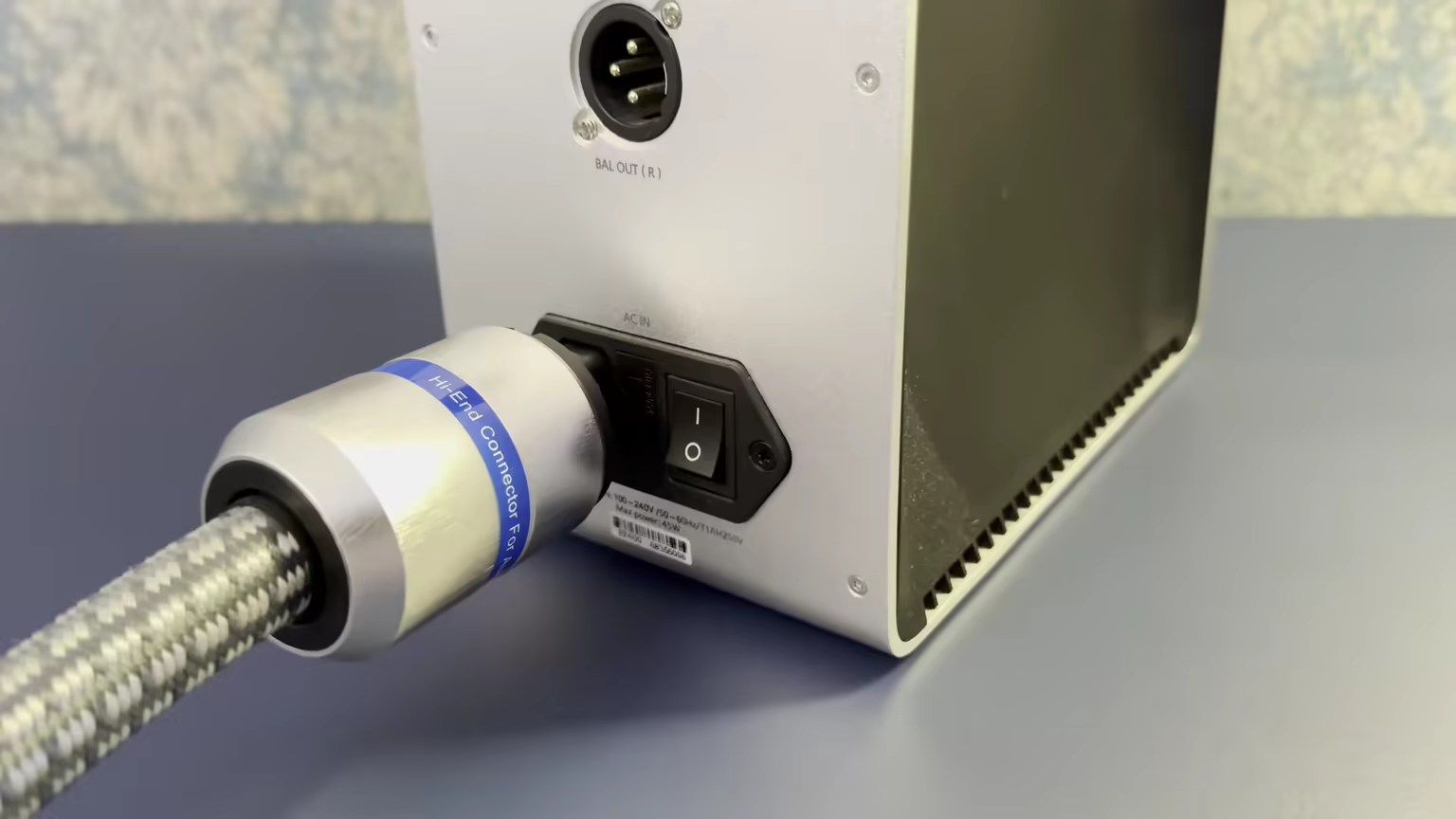 (view larger)
How does it affect the sound quality when used with different components though? I've invested a lot of time and effort into investigating this.
On a Power Amplifier: Tighter Bass, Cleaner Sound
First, I tried it with my high-end Class A speaker power amplifier, which takes a tiny electrical signal and pumps it up, driving your speakers. The improvements I noticed after replacing its power cable were:
Tighter bass. A thicker gauge cable, with its increased capacity for current flow, can ensure a steady stream of power. This leads to more controlled bass, especially during dynamic passages. Of course, it won't fix your room problems, so don't think about it that way. The bass only got more refined, yet more present in the frequency spectrum.
Cleaner overall sound. Think of dirty electricity as static on a radio. A good power cable can help filter out some of this electrical noise, or just not pick up as much from the outside, leading to a cleaner overall experience.
On a Preamplifier: Wider Stage, Quieter Background
How about the preamplifier? It handles the sensitive low-level signals coming from your source, like a turntable or streamer. With better power cables, it was an upgrade in many areas - but a small one.
Wider soundstage. The minimization of electromagnetic interference from other devices in a system translates to a quieter common noise on both channels. Fewer similarities in the left and right signals mean better channel separation, which is mostly what soundstage is about.
Reduced background noise. Ever hear a slight hiss coming from your speakers when the music stops? This can be caused by electrical noise in your system that's being left unfiltered by a preamp. Minimizing this effect can create a more immersive listening experience. With a quiet background, you'll be able to appreciate every delicate keystroke.
On a DAC: Small Gains in Clarity and Timbre
Lastly, let's go to the digital side of things - a DAC powered by an upgraded power cable. How much did it help?
Enhanced clarity and detail. This ties back to the reduction in electrical noise. Often there can be a noticeable, but barely so, improvement in the overall clarity and detail of the sound. Clearer and more transparent presentation that reveals subtle nuances in the performer's voice, like the texture and breath control, are always nice. However, you have to keep in mind that this effect is tiny.
Improved timbre. Here, the impact of power cables is highly subjective, but in my case easily apparent. Generally, you can expect improvements in the naturalness and accuracy of timbre. It can also result in a more realistic and lifelike reproduction of the instrument's sound, which allows you to appreciate its unique sonic characteristics.
Bonus: The USB Cable That Surprised Me Most
To amplify this effect, I have a bonus for you: digital cables. And yes, they can make an actual, perceivable difference.
Monosaudio produces HiFi USB cables. You can get them in various lengths, and the price isn't super high. Their connectors are very high quality and have an aluminum finish. The USB plugs are gold-plated to avoid corrosion. In addition to that, there are high-purity copper internal conductors. In terms of thickness, they're quite thick for a USB cable, but it's nothing crazy. I would say that it's roughly 3 times as thick as a standard cheap USB data cable.
But if you think that is going to make it stiffer or anything, you'd be totally wrong. They are some of the most flexible cables I own. The very, very soft braiding helps a lot in giving a more luxurious feel.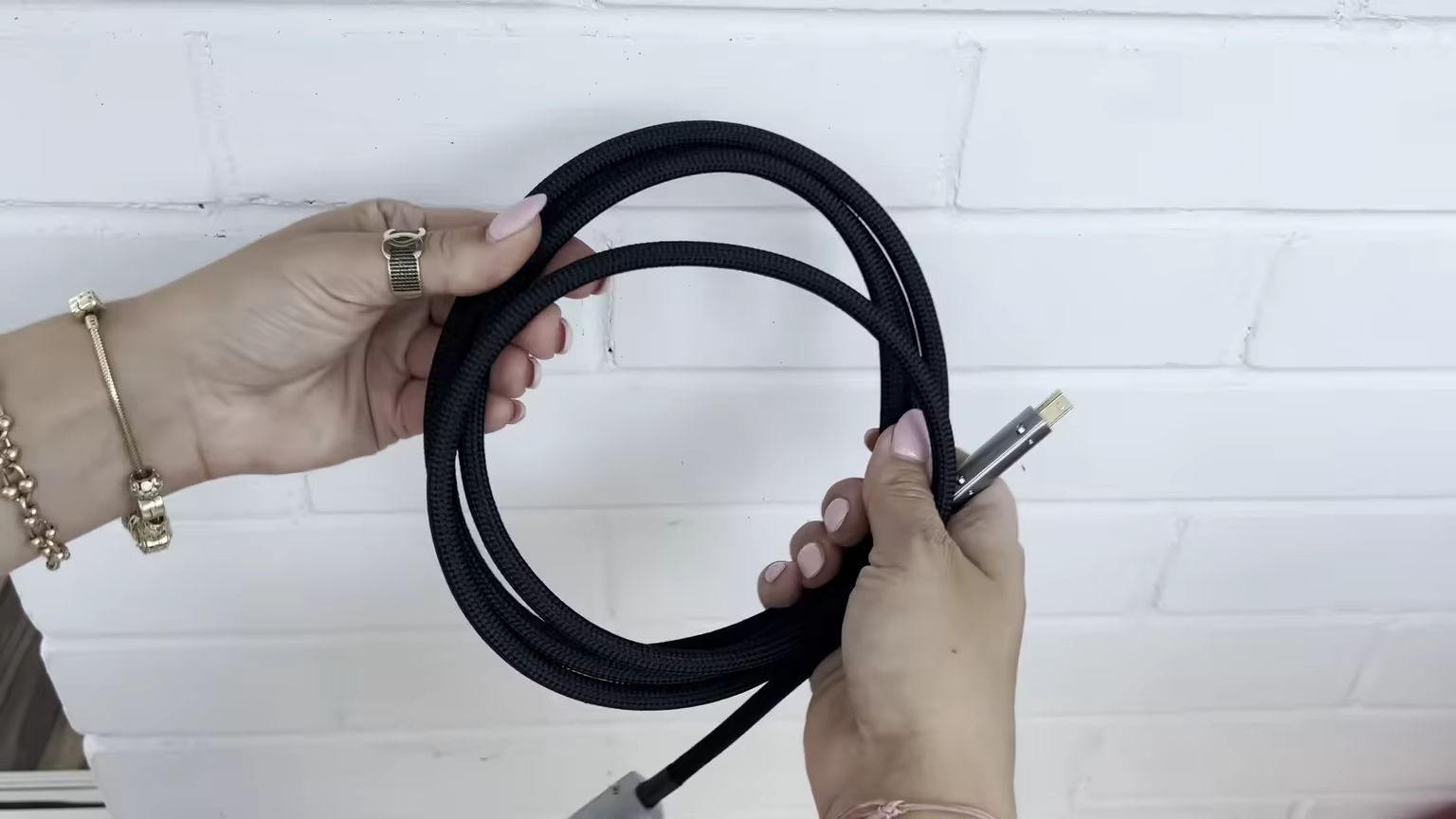 (view larger)
Technical specifications are important, but what sonic enhancements can it make?
Details. Standard USB cables can often leave a veil on the sound. Upgrading to a well-made cable with superior shielding and construction can be like clearing away that haze. You'll start hearing more than before. And trust me - I was going back and forth between a regular cable and this one, as I was left in disbelief that the difference could be that big for just a cable.
Soundstage depth. Standard cables can sometimes restrict the illusion of depth, making instruments feel congested and close together. A better cable can create a deeper, but in this case not that much more expansive, sonic environment. Instruments seem to take their proper place in the mix, with a distinct sense of separation in front and behind you.

Watch the video review
Subscribe on YouTube (opens in new tab)Prefer to read? The written review above covers everything in the video.

- 0:00 Why Are HiFi Cables Important? (Do Power Cables Matter?) (opens in new tab)
- 0:19 I replaced ALL POWER Cables With THESE! (opens in new tab)
- 0:42 What Audiophile-Grade Power Cables Did I Use? (Monosaudio P902E6R) (opens in new tab)
- 1:00 Technical Specification (Thickness, OFC Copper Conductors, 5.5 sq mm, Shielding, Teflon) (opens in new tab)
- 1:37 Power Connectors (High-Purity Copper, Aluminum Metal Shell, 16 AMPs, 260V AC, Plating) (opens in new tab)
- 2:27 What Impact Does A Power Cable Have On A Class A HiFi Amplifier? (Bass tightness, Dynamics, Refinement, Clarity, Electrical Noise) (opens in new tab)
- 3:17 What Impact Does A Power Cable Have On A HiFi PRE-AMP? (Soundstage Width, EMI, Channel Separation, Background Noise) (opens in new tab)
- 4:12 What Impact Does A Power Cable Have On A HiFi DAC? (Detail Retrieval, Texture, Vocals, Timbre) (opens in new tab)
- 5:16 What Impact Does A Digital USB Cable Have On A DAC? (Directional Copper Conductors, Material Braiding, Aluminum Plugs, Sound Stage Depth) (opens in new tab)
Common questions about the P902E6R + USB Cables
Is the Monosaudio P902E6R + USB Cables worth it?
Yes, for the right listener - 7.8/10, Recommended, higher than 21% of everything we have tested, against a catalogue median of 8.1. On value it rates excellent: top 14% for the price in accessories, so it is one of the best-value pieces we have scored. Price: Under $150.
Who should buy the Monosaudio P902E6R + USB Cables, and who should skip it?
Buy it if the room, the speakers and the amplifier are settled and this is the part that is left, and you want the most performance per dollar on the list. Skip it if something upstream of the cable is still the obvious limit.
What else have you tested that is close to the Monosaudio P902E6R + USB Cables?
No matchup page yet, and no close price match in the catalogue either. The nearest things we have scored in the same category: the DH Labs, iFi, Vera-Fi HiFi Tweaks Roundup at 7.8/10, the Monosaudio PS75R1R, CAT 8, P903M0 at 7.8/10, and the Melodika Brown Sugar BSSC3300 at 7.5/10.
Which component benefits most from a better power cable?
The power amplifier, in my testing - that is where the change was clearest. The thicker gauge carries current more freely, which steadies the supply and shows up as tighter, more controlled bass during dynamic passages, plus a cleaner overall sound as less electrical noise gets in. The preamp gained a wider soundstage and a quieter background; the DAC gained a little clarity and better timbre. All of those are small. The amplifier's was the least subtle.
Why would a power cable widen the soundstage?
Through channel separation, which is most of what a soundstage is. Minimising electromagnetic interference from other devices leaves a quieter common noise on both channels - and fewer similarities between the left and right signals means better separation. That is the mechanism I would point to on the preamplifier, which handles the sensitive low-level signal from a turntable or streamer and is therefore the component most exposed to it.
Was the USB cable the bigger upgrade?
It surprised me more than any of the power cables did. I went back and forth between a regular cable and this one in disbelief that the difference could be that large. Standard USB cables can leave a veil on the sound, and better shielding and construction clears that haze away - you hear more than before. Depth improved too: instruments took their proper place with real separation front to back, though the stage did not get much more expansive.
Are the P902E6R cables difficult to install?
They are stiff, particularly in shorter lengths, and the plugs are big. At 17mm diameter with a 5.5mm² cross-section, 100% copper shielding and Teflon insulation, it feels genuinely strong and bends reluctantly. The decorative aluminium piece with the copper badge adds premium feel and makes tight bends harder still. In a crowded power strip the plug size becomes a real layout problem, so plan the spacing.
Should power plug pins be plated or bare copper?
I prefer some thin plating, and the trade is genuine. Bare copper prongs reduce contact resistance, and it is unclear how they hold up over years. The anti-corrosion plating on these does not affect resistance much and it does ensure longevity, which is the thing you actually notice a decade later. It also matches the silver aesthetic of the cable. Monosaudio offer both, so it is a choice rather than a compromise.
Is a $150 power cable worth it?
Only if the rest of the system resolves well enough to show what it does, and only if you accept that per-component gains are subtle rather than transformative. What you also get for the money is not sonic: much better build quality than a stock cord, real durability, aesthetics, and the ability to pick a length that fits your rack instead of coiling two spare metres behind it. Those benefits are certain in a way the sonic ones are not.