
OLLO Audio X1 Review: A $549 Open-Back Studio Headphone
An open-back studio reference headphone with AI-assisted per-unit calibration (±1dB), modular design, real wood cups, and a flat tuning that works for both mixing and music.
higher than 84% of everything we have tested
- Standout
- USC II per-unit calibration to ±1dB tolerance
- Watch out for
- Tight clamp force
- Better alternative
- HIFIMAN Arya Organic: $550 more, scores 0.3 higher.
Is it for you?
- You want the balance to lean bright, with the detail pushed forward
- You're treble-sensitive
- A desktop amplifier is not on the cards - it needs at most 248 mW to reach 110 dB SPL at 32 Ω and 101 dB
Pick #5 of 14 in our Best Open-Back Headphones guide.
Studio headphones are designed for mixing and mastering - built to be neutral, honest, and yeah, sometimes a little boring. Audiophile headphones, on the other hand, are all about sounding pleasing, emotional, and fun. But can a studio headphone like the OLLO Audio X1 actually do both? Is it real Hi-Fi?
Comfort & Build Quality: Modular, Repairable, Wood
From the moment you open the box, it's clear the OLLO Audio X1 isn't your average pair of headphones. The packaging is simple, sturdy, and fully recyclable - no flashy graphics, just a focus on sustainability. Everything about the X1 feels purposeful, from the materials to the way it's built - this is gear made to last, not something disposable or overly hyped. But the manufacturer knows that the end of its life cycle will inevitably come, so they design their products not to contain many plastic elements which take a long time to decompose.
From the moment you pick it up, you get that reassuring heft. At just under 400 grams, it's not exactly featherweight, but it doesn't feel bulky either. The weight is well distributed, and the headband does a great job of keeping pressure off the top of your head.
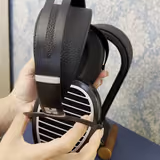
Speaking of the headband - it's made of solid painted steel, with a self-adjusting suspension strap underneath that uses elastic bands to gently contour to your head. The ear cups are where things really stand out. Each one is machined from real wood - not a plastic veneer, not a painted finish, but actual, beautifully crafted wood. It adds character, warmth, and most importantly, durability. The finish is smooth but not flashy, and there's a new faceplate design with the stylized "X" cutout.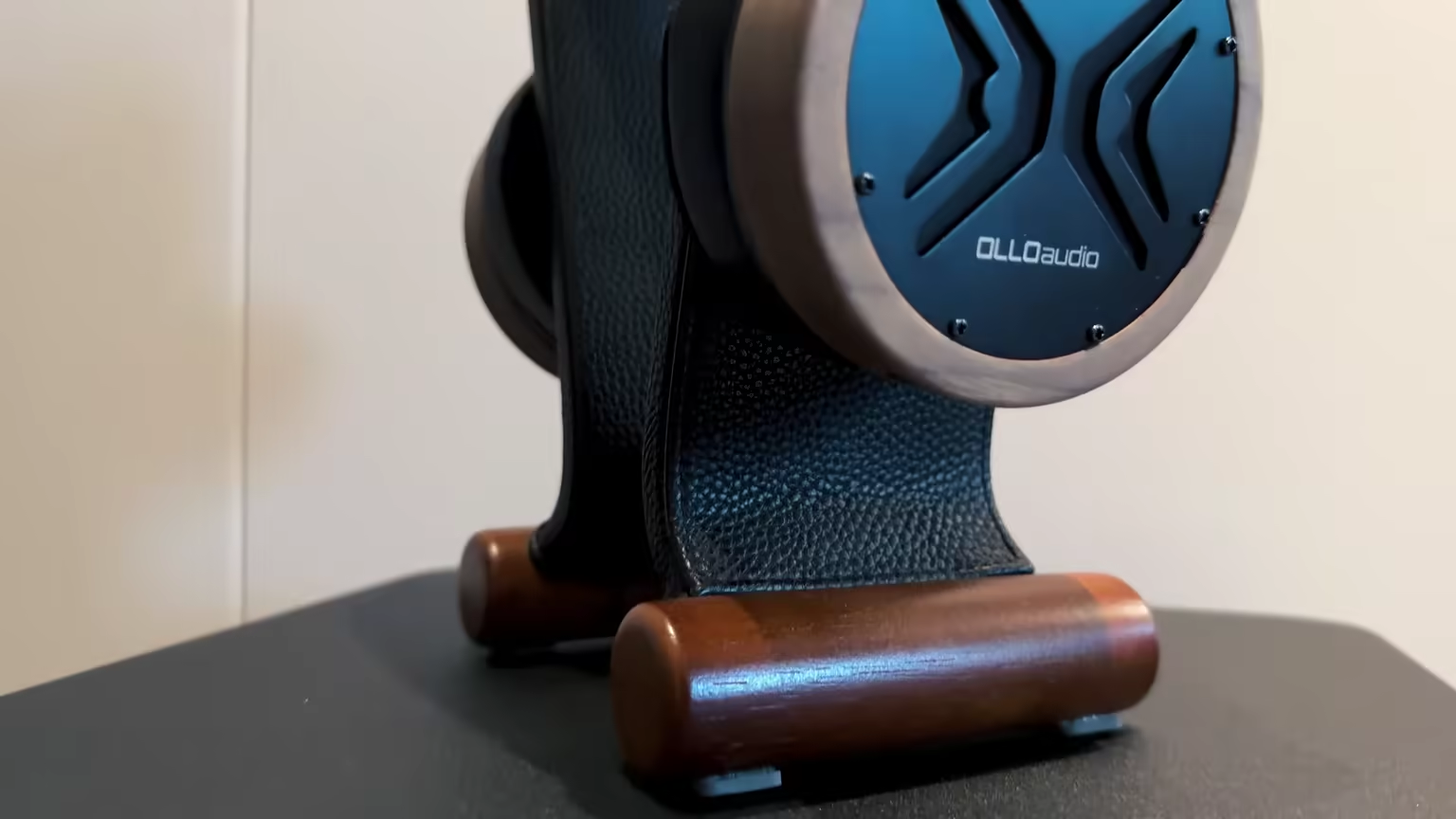 (view larger)
Now onto the pads: these are hybrid pads using a combination of materials - velour on the contact surface for comfort and breathability, and perforated leather on the inner and outer rings to help control acoustics. The memory foam inside is firm but forgiving, and they're deep enough to avoid ear contact for most people. The fit is snug, and the clamp force is on the tighter side, but that seal is essential for accurate monitoring. If you're used to looser-fitting audiophile cans, this might take a bit of adjusting, but once they settle in, they stay put and do their job well.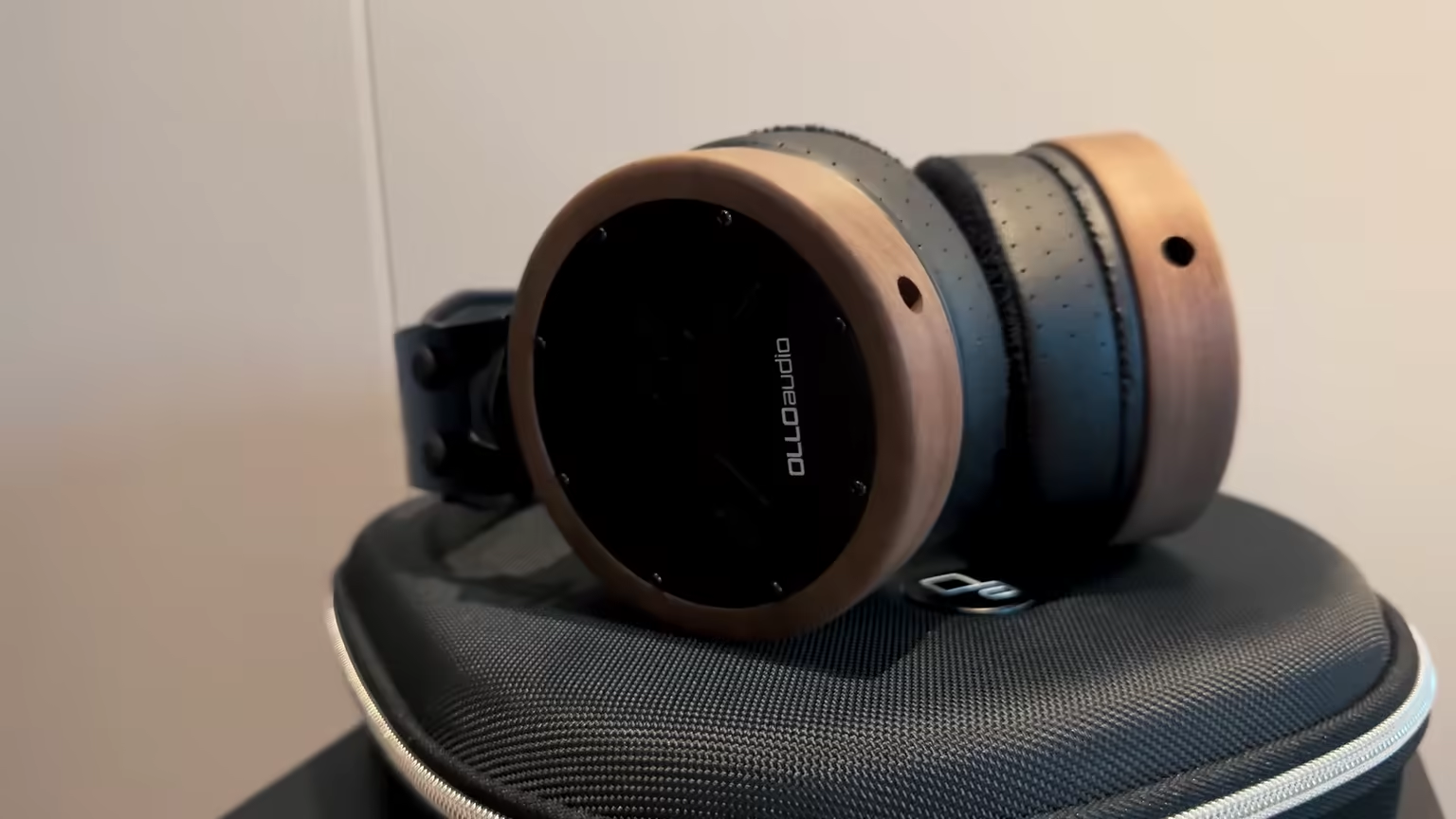 (view larger)
The pads are also user-replaceable - not just in theory, but in a way that actually makes sense. The whole headphone follows this philosophy: modular, repairable, and service-friendly. That's basically unheard of in this price range - or honestly, in headphones in general.
The X1 also comes with a very sturdy hard carrying case. This isn't a soft pouch or something you'll toss in a drawer - it's a molded, semi-rigid case with a handle, designed to actually protect your gear. Inside, it has room for the headphones and the included cable, which is 2 meters long and terminates in a standard 3.5mm plug with an extra 1/4 inch adapter. It's a dual 2.5mm connection at the cups, with locking connectors that feel super secure. There's also a forward angle to the cable entry, so it hangs more naturally.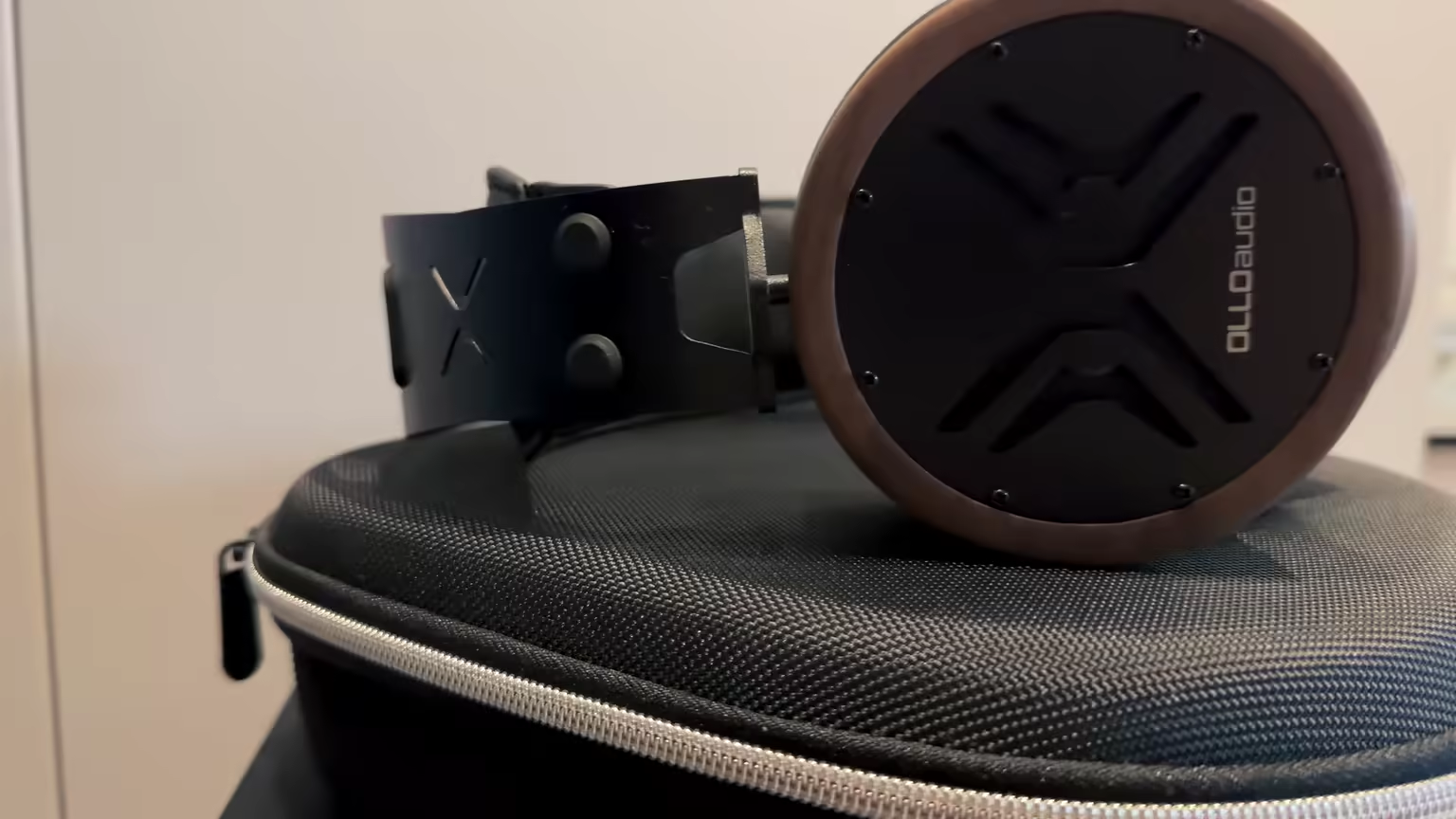 (view larger)
As for day-to-day comfort - it's solid. Not luxurious, but functional, stable, and ergonomic.
Technologies: Per-Unit Calibration with USC II
What's something unique here, that you don't get in any audiophile grade headphones is the tech. First of all we have the USC II technology which is a Unit-Specific Calibration system. Every single pair of X1s is individually tested and calibrated using a detailed AI-assisted process. This ensures that each unit follows the same flat frequency response curve with incredibly tight tolerances - typically within ±1dB. That's tighter than what many big-name calibration plugins can guarantee, and you don't need third-party software to get there.
You can run the calibration as a plugin on your DAW, or apply it directly as EQ values to your DSP-enabled audio interface or analog gear. It's a system fully compatible with almost everything that travels with you.
The X1 also supports mix translation tools like studio, and car environment emulations, powered by Realphones technology. These let you simulate how your mix will sound in real-world playback systems - straight from your headphones.
And for producers working in immersive audio, the X1 can switch into spatial mixing mode, complete with a binaural profile and even the popular Harman curve, so you can cross-check your mix against more consumer-tuned references. All of this makes the X1 not only a reliable monitor - but a full mixing ecosystem you can trust, and allows you to tinker with it for audio enjoyment in HiFi setups.
Technical Specifications: Flat Within ±1dB
The X1 is an open-back, over-ear headphone with a 50mm dynamic driver, running on neodymium magnets and a proprietary composite membrane made of PU and PET. That gives you a fast transient response, clean mids, and a well-controlled low end - essential for critical work.
It has an impedance of 32Ω, which makes it super easy to drive. Whether you're plugging into a high-end interface or just your laptop, you'll get plenty of volume and detail.
Frequency response is 5Hz to 22kHz, with an extremely flat tuning within a tight tolerance - not just on paper, but per unit, thanks to OLLO's calibration. You're getting full-spectrum accuracy from sub-bass to the uppermost harmonics.
Sensitivity sits at 101dB SPL at 1kHz, so again, no power-hungry nonsense here. You won't need a dedicated headphone amp unless you really want one.
In terms of distortion, the X1 maintains less than 0.05% total harmonic distortion at 94dB which is very clean. Out of which the 2nd order distortion is lower than 0.02%. That means you're hearing your music, not driver artifacts.
How Does It Sound? As Neutral as Headphones Get
First and foremost: it sounds correct - that's a good start. The OLLO X1 doesn't color, hype, or sweeten the music - it just shows you what's there.
Its tonal balance is impressively flat. And that's not a vague claim - each pair is individually measured and calibrated using AI-assisted tools, so what you hear is consistent and true to the original mix. There's no boosted bass, no scooped mids, and no splashy highs. It's as neutral as headphones get - but it doesn't sound dry or sterile. You can call it boring, but is it really?
The bass is tight and quick. It reaches pretty deep without sounding bloated or soft. You can clearly tell sub from midbass, and the control here gives real insight into how the low end was built. There's weight when it's needed, but never boom.
The midrange is natural and unforced - vocals, instruments, ambient cues - everything feels like it belongs in the mix. Nothing is pushed forward, nothing buried. You just hear the music as it was intended.
In the treble, the X1 stays smooth and refined. There's enough extension to catch air and texture, but without any harshness. You don't get sharp peaks, and it never gets fatiguing - even during long sessions. That balance is rare in something in this price range.
Soundstage, Dynamics, and Detail: Realism over Wow
Soundstage and imaging are focused more on realism than wow factor. You don't get a huge, cavernous space, but placement is precise, and there's a real sense of depth - not just left and right, but slightly front to back too. It doesn't exaggerate things for show - it just presents them honestly.
Dynamics feel alive. The X1 is quick to react to transients, but never in an aggressive way. Drums hit with real energy, strings have nuance, vocals breathe. It's expressive without being shouty.
Detail retrieval is subtle but satisfying. You'll catch fades, tiny reverbs - all the micro stuff - but the headphone doesn't scream "look at this!" It just reveals what's there, clearly and quietly.
Comparison: OLLO X1 vs. Beyerdynamic DT 990
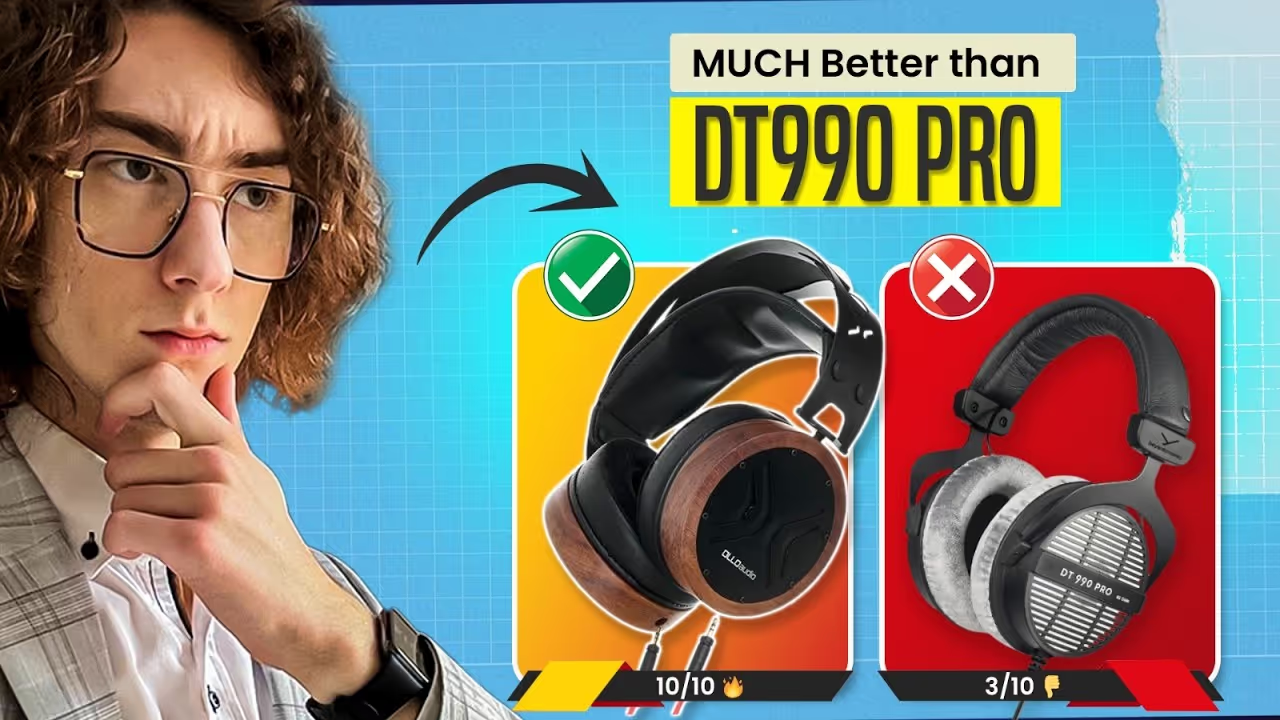
Compared to something like the Beyerdynamic DT 990, the difference is big. The DT 990 often gets recommended for mixing, but it's aggressively bright - it can make you chase problems in a track that don't exist anywhere else. For Hi-Fi listening, it's even more of an issue: sharp treble, unnatural tone, and limited technical ability. It might sound flashy at first - but that gets old pretty fast. The X1 avoids all that.
Verdict: A Monitor You Can Trust
And that's the key here: trust. Whether you're mixing, listening critically, or just enjoying your favorite album, the X1 gives you a version of the music that's honest and deeply listenable. It doesn't flatter - it just delivers. Studio-ready, Hi-Fi-capable, and reliable enough to do both without compromise. Whether it's the sound that you want is obviously up to you.
Sound signature
Derived from the words this review uses: each axis runs between two opposite descriptors, and the shape leans toward whichever side the writing does.
- Warm ↔ Bright Leans bright
- Relaxed ↔ Analytical Leans analytical
- Polite ↔ Aggressive Leans aggressive
- Lean ↔ Bass-heavy Leans lean
- Intimate ↔ Wide stage Leans wide stage
Hear what "bright, analytical, aggressive, lean, wide stage" means: a short synthesised loop, flat and then with those leanings. An illustration of the words, not a recording of the X1.
Not sure which signature suits you? Find yours with a blind A/B test

Watch the video review
Subscribe on YouTube (opens in new tab)Prefer to read? The written review above covers everything in the video.
- 0:00 What's The Difference Between STUDIO And AUDIOPHILE Headphones? (opens in new tab)
- 0:25 Comfort & Build Quality (Real Wood, Hybrid Leather Pads, Suspension Strap Headband) (opens in new tab)
- 3:38 Technologies (USC II technology, Mix translation tools, Dynamic Driver, Open-back Construction) (opens in new tab)
- 5:09 Technical Specification (Neodymium Magnets, PU & PET Membrane, THD, Impedance, Sensitivity) (opens in new tab)
- 6:25 Sound Quality (Coloration, Transparency, Tonality, Bass Detail, Sound Stage & Imaging) (opens in new tab)
Common questions about the X1
Is the OLLO Audio X1 worth it?
Yes - 8.9/10, Highly Recommended, and fair on value. Price: $549.
Who should buy the OLLO Audio X1, and who should skip it?
Buy it if you want the balance to lean bright, with the detail pushed forward. Skip it if you're treble-sensitive, and a desktop amplifier is not on the cards (it needs at most 248 mW to reach 110 dB SPL at 32 Ω and 101 dB).
What amplifier does the OLLO Audio X1 need?
Impedance is 32 Ω. By the rule of eighths the amplifier feeding it wants an output impedance no higher than 4 Ω, otherwise the interaction between the two tilts the frequency response rather than simply making it quieter. Power is the separate question. At most 248 mW to reach 110 dB peaks, which is a desktop headphone amplifier. The review records 101 dB without saying against what, and the two conventions differ by a factor of 31 at this impedance - so that is the worst case, and the real figure is at or below it.
What should I consider instead of the OLLO Audio X1?
The pieces we have actually run against it: the HIFIMAN Edition XS scores 0.2 lower and costs $280 less. Every one of those matchups has its own page in the head-to-head section.
What is USC II calibration on the OLLO X1?
Per-unit calibration, which is the genuinely unusual thing here. Every single pair is individually tested and calibrated through a detailed AI-assisted process so that each unit follows the same flat frequency response within roughly ±1dB - tighter than many big-name calibration plugins guarantee, and you do not need third-party software to reach it. You can run it as a plugin in your DAW, or apply the EQ values directly to a DSP-enabled interface or analog gear.
Is the OLLO X1 boring to listen to?
You can call it that, and I think the question is worth turning around. It does not colour, hype or sweeten anything - no boosted bass, no scooped mids, no splashy highs - and yet it does not sound dry or sterile either. The bass is tight and quick, reaching deep without bloat, and you can clearly hear sub separate from mid-bass. The midrange is natural and unforced, and the treble stays smooth with enough extension for air but no harshness.
Is the OLLO X1's clamp too tight?
Tighter than most audiophile headphones, deliberately. That seal is essential for accurate monitoring, so the fit is snug by design rather than by oversight. If you are used to looser-fitting cans it will take some adjusting, and once settled they stay put. The pads are a hybrid - velour where they touch you for comfort and breathability, perforated leather on the inner and outer rings to control the acoustics - and deep enough that most people's ears never touch anything.
Can the OLLO X1 be repaired?
Yes, and the whole headphone is designed around it - modular, repairable and service-friendly, which is close to unheard of at this price or honestly in headphones generally. The pads are user-replaceable in a way that actually works rather than in theory. There is a deliberate environmental logic behind it too: OLLO avoid plastic elements that take a long time to decompose, and the packaging is simple, sturdy and fully recyclable.
Does the OLLO X1 need an amplifier?
No. At 32Ω and 101dB SPL at 1kHz it is easy to drive from a high-end interface or from a laptop, with plenty of volume and detail either way. You will not need a dedicated headphone amp unless you want one. Distortion stays under 0.05% at 94dB, with second-order distortion below 0.02%, so what you hear is the music rather than driver artefacts.
OLLO X1 or Beyerdynamic DT 990 for mixing?
The X1, and it is not close. The DT 990 gets recommended for mixing constantly and it is aggressively bright - bright enough to make you chase problems in a track that do not exist anywhere else, which is the worst failure mode a monitor can have. For hi-fi listening it is worse still: sharp treble, unnatural tone and limited technical ability. It sounds flashy at first and that gets old fast.
How wide is the OLLO X1's soundstage?
Realistic rather than impressive, and that is the point. You do not get a huge cavernous space - what you get is precise placement and a real sense of depth, not just left and right but slightly front to back. It does not exaggerate anything for show. Detail retrieval follows the same philosophy: you catch the fades and the tiny reverbs, but the headphone never screams about them.
If you're interested in this
All 30 headphone reviewsClosest alternatives
 HIFIMAN Sundara leans weightier low down, $250 less, a near-tie on score 9.0
 HIFIMAN Ananda Stealth leans warmer, $190 less, a near-tie on score 8.8
Step down
 Meze 105 Silva leans weightier low down, scores 0.2 lower 8.7