Ortvik Parametric Tower Review: An Acoustic Panel and Diffuser
A freestanding acoustic tower that scatters and absorbs at the same time - handmade Czech oak over a recycled PET felt core, placed wherever the room needs it.
higher than 63% of everything we have tested
- Standout
- Diffusion and broadband absorption from one freestanding unit
- Watch out for
- No bass absorption
- Better alternative
- Synergistic Research PowerCell 14: scores 0.7 higher.
Is it for you?
- You listen on speakers and the room is the loudest thing in the chain
- You listen on headphones, where the room gets no vote
Tick anything that sounds like you.
Ortvik Parametric Tower - reviewed by Jakub Charkiewicz for The Audio Stuff. Score 8.5 out of 10, Highly Recommended. Full review: https://theaudiostuff.com/reviews/ortvik-parametric-tower/
Pick #3 of 13 in our Best Hi-Fi Accessories guide, where 2 products rank above it.
For a long time I had been fighting the same three problems in this room. Bad asymmetry, a reverb time that ran far too long, and no absorption at all on my first reflection points. If none of that means anything to you, the short version is that it is bad, and very bad for audio. But what if you could fix all of it, and get a serious jump in sound quality, just by standing one piece of acoustic furniture in the room? That is what the Ortvik Parametric Towers claim to do.
Design & Build Quality: It Doesn't Look Like Treatment
Strong point: Handmade in the Czech Republic, no glue marks or rough edges
Watch out: The 2025 units shipped with caster feet still in prototype form
When the towers first arrived, my brain genuinely did not register them as acoustic treatment. They looked like something you would find in the lobby of an expensive hotel, not in a listening room.
They are tall. Almost 2 meters, so they have real presence. Each one is 60 centimeters wide and only 15 centimeters deep, which keeps the profile slim and elegant instead of bulky, and it stops the tower from eating precious floor space. Mine came in the natural oak rather than the black oak, and honestly, the natural wood is what makes it stand out. Every slat catches the light a little differently. The grain is gorgeous. And because of that parametric pattern, the way the slats vary in depth and shape, the whole surface seems to move as you walk past it or shift your head up and down. It plays a small optical trick on you. It never feels like a flat panel bolted to a stand.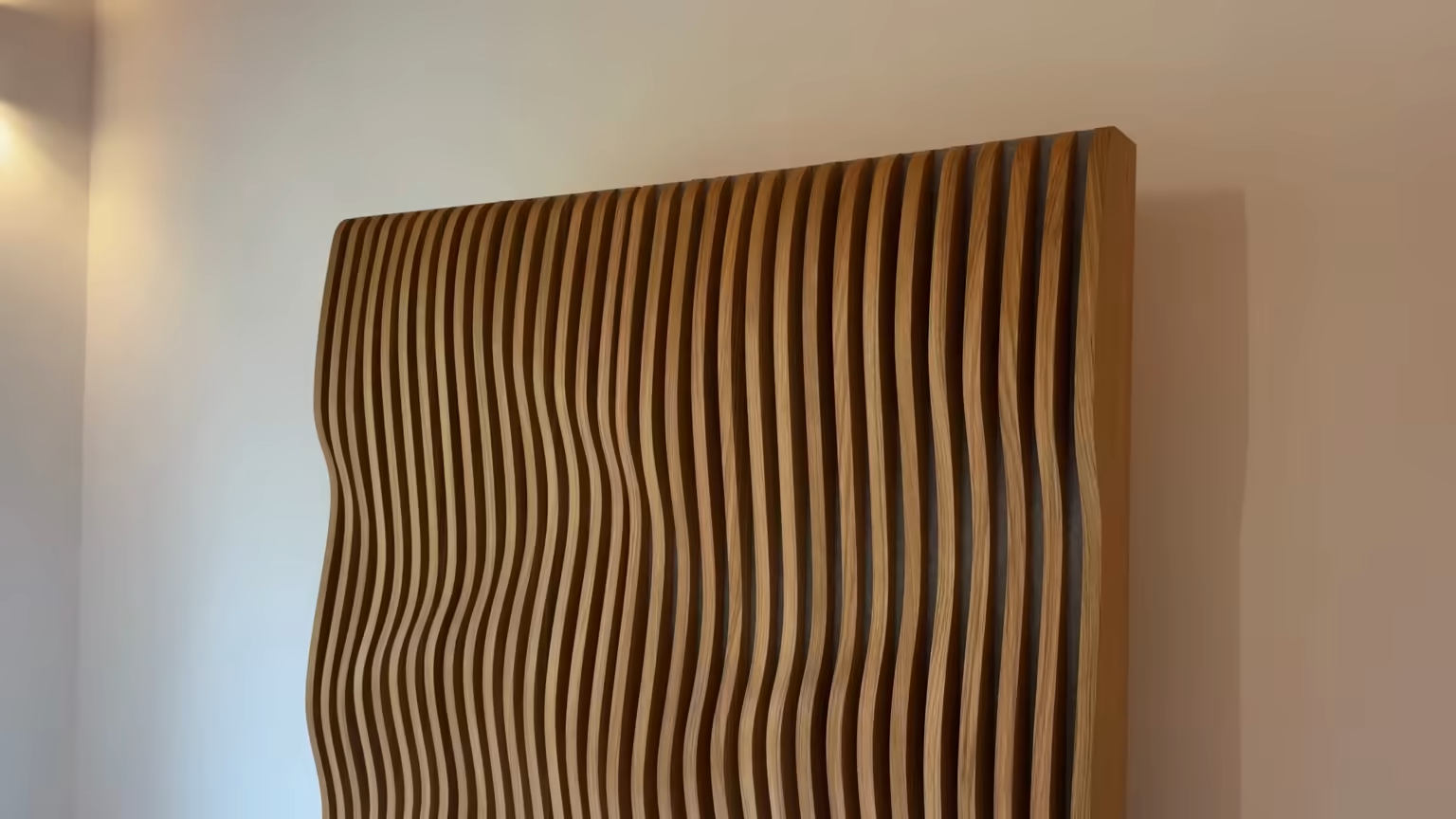 (view larger)
About that stand. This is where you start to notice how seriously Ortvik takes the details. The unit I have here is one of the 2025 builds, back when the caster feet were still being prototyped. Production models got a big design upgrade this year with much better looking feet. Casters always come in the box, because the tower is so heavy that being able to roll it is genuinely useful at trade shows or any time you need to move things around, but fitting them is entirely optional.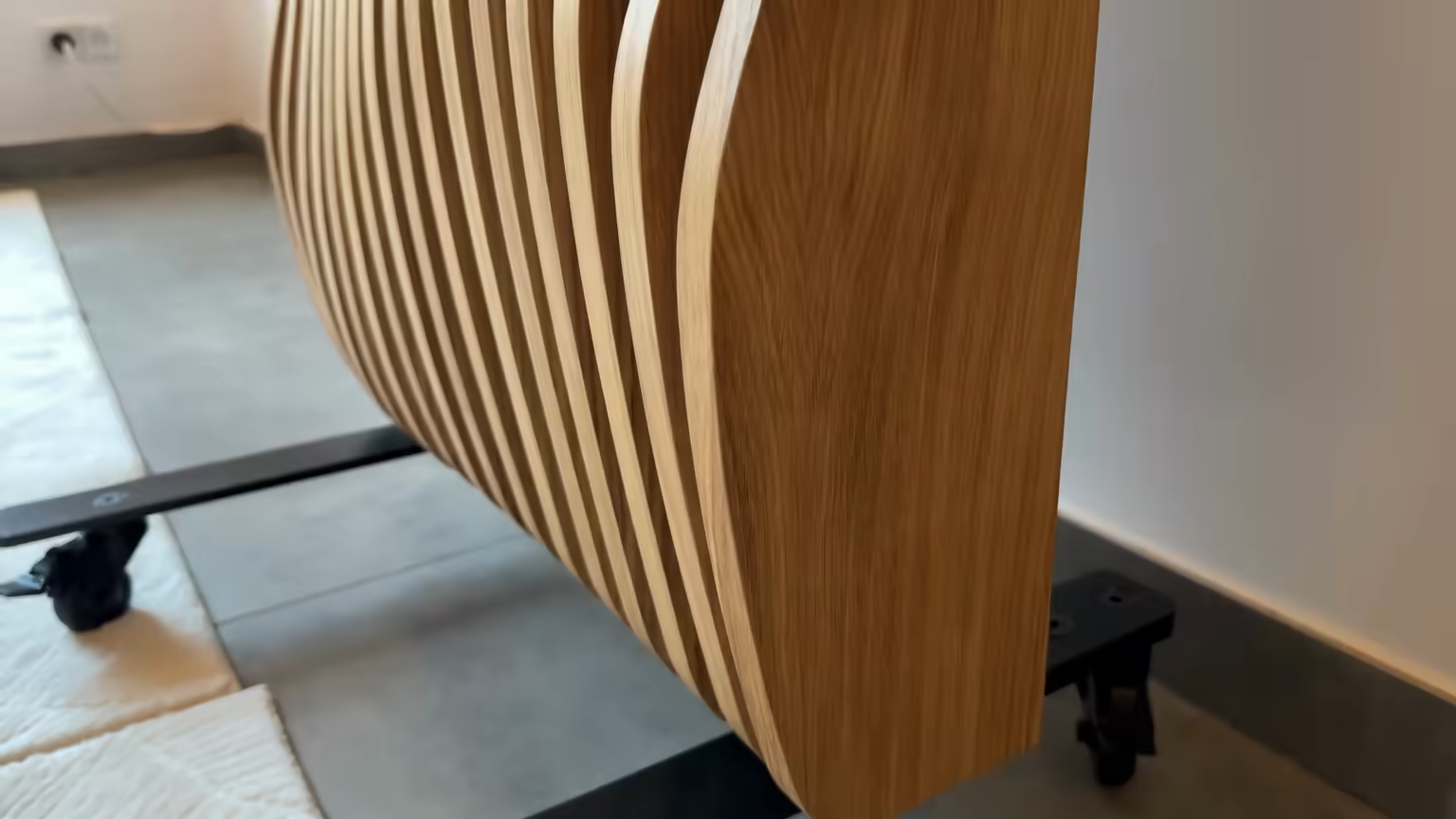 (view larger)
The wood looks insane. It is the sort of thing you do not consciously register at first, and it is exactly why the tower looks even better up close than it does across the room. The wife approval factor is very high. This is a proper piece of furniture, with a metal base that has clearly been engineered rather than bolted together, and a solid slab of wood sitting on top of it.
Speaking of weight, try picking one up. Each tower is over 30 kilograms, and you will want somebody's help putting it together. That mass is not dead weight either. You can feel that there is real density in there, and that density is doing acoustic work.
Behind the oak and a layer of felt sits a material called Envizol, a high-density acoustic felt made entirely from recycled PET. Recycled plastic bottles, in other words, processed into a dense acoustic core. There is zero mineral or glass wool in this thing. None of that itchy, hazardous nonsense you find inside most acoustic treatment, which for someone who spends hours a day in this room is a big deal.
The whole thing is handmade in the Czech Republic, and you can tell. The slat edges are clean. There are no glue marks, no sloppy gaps, no rough corners waiting to catch you. It has the quality you get when a small team that actually cares builds something, rather than a factory pushing out thousand-unit batches. This is also the product Ortvik officially debuted at AXPONA 2026, inside a 2.1-million-dollar system alongside brands like Estelon and Crystal Cable, which tells you what kind of company they are comfortable keeping.
The last thing worth flagging here is the customization. This is not a take-it-or-leave-it product. The slat pattern can be tailored. The finish can be changed. You can even request fully made-to-measure dimensions if your space needs something specific. In a market where most companies sell you two colors and one size, that is genuinely rare.
Technologies: Scatter the Good, Absorb the Rest
Strong point: Diffusion and broadband absorption from one freestanding unit
Watch out: No bass absorption - the absorptive layer behind the slats is thin
So how does one panel do all of this? Here is the thing. Most acoustic products do exactly one job. Foam and fiberglass absorb. A diffuser scatters. You normally have to pick a side. The tower does both at once, and that is the whole trick.
Start with diffusion. Look at the slat pattern. Every slat sits at a slightly different depth and curve, and that is where the word parametric comes from. It is not random, it is calculated. It is not a classic QRD diffuser either, because it follows a different formula.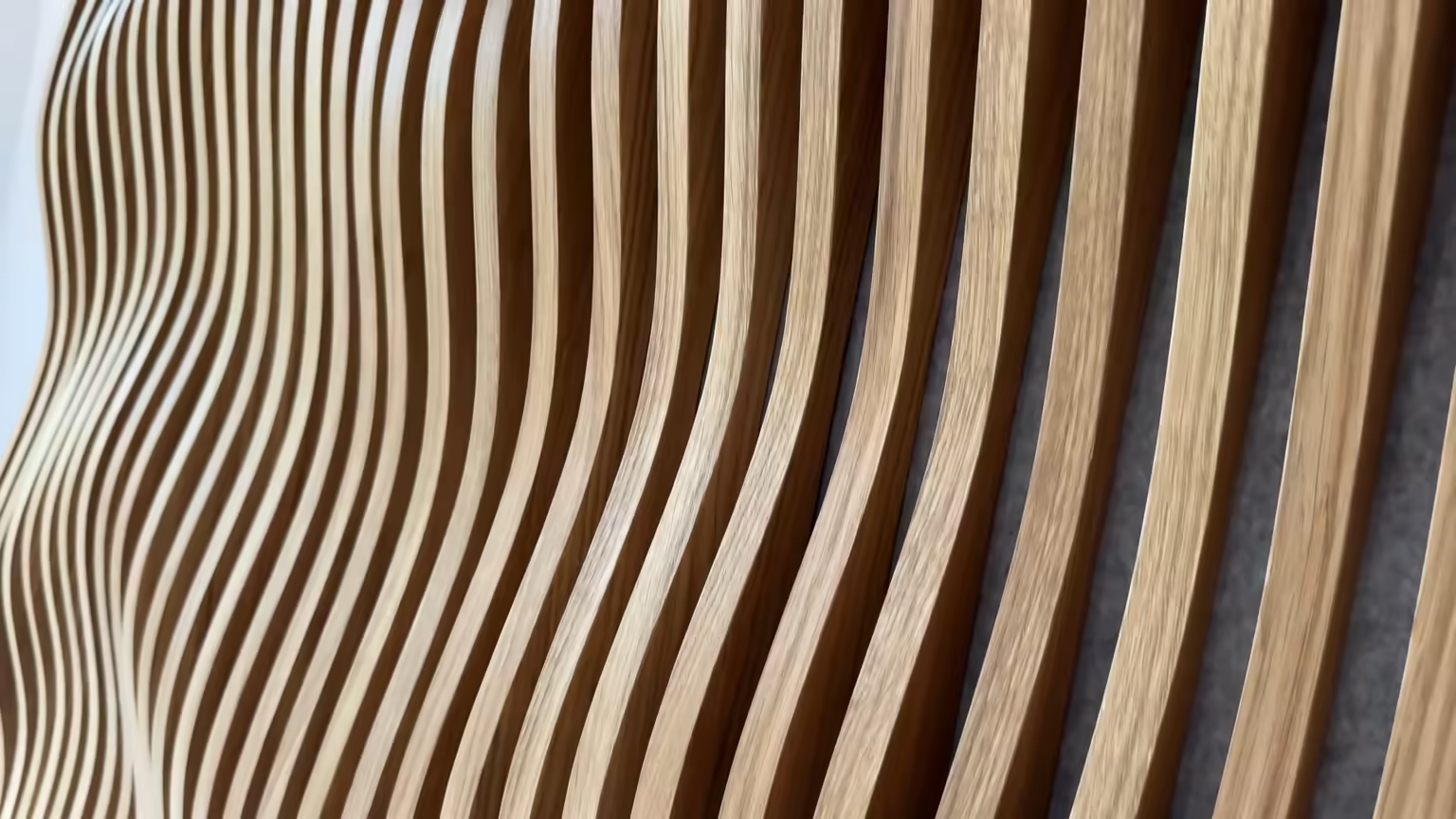 (view larger)
One way to picture it: shine a flashlight at a mirror and you get a single harsh beam straight back. Shine it at frosted glass and the light spreads out, soft and even. A flat wall is the mirror. The tower is the frosted glass. It takes a sharp reflection that would have slapped your ears in an obvious way and scatters it instead, especially through the mids and highs, where you are most sensitive to direct reflections.
Then there is the absorption. Behind those slats it behaves like a broadband absorber, pulling energy out across a wide band, not just the highs but down into the mids, where most rooms struggle and cheap panels do nothing at all. Do not expect anything in the lower mids, and certainly not bass absorption. That is a fairly thin layer of absorptive material.
The combination is the key, though. It diffuses the reflections worth keeping and kills the rest. And because it stands on its own rather than hanging on a wall, you can put it exactly where the room needs it, including places where there is no wall to mount anything at all. Remember that last part. It is the reason it fixed my biggest problem.
Sound Quality: A Centered Stage in a Lopsided Room
Strong point: Stands anywhere, so it treats spots no wall panel can reach
Watch out: Not a whole-room fix on its own - my space still has work left
I was skeptical that one object could do this much in my room, but it looked so good that I gave it a go anyway.
The first time I pressed play I put on a track I have heard a thousand times in here. Ten seconds in I could not believe my ears. The room had changed. Not into a different room exactly, but into a much better one.
My room had problems, remember. Problem number one, the big one, was asymmetry. There is a wall on my left and open space on my right. Stereo only works when both ears get the same sound, mirrored. In here they did not. Sound reflected off the left wall and came straight back at me, while on the right it just escaped and faded. So the soundstage never locked in. Vocals that should have sat dead center drifted. It felt like the band was always standing slightly to one side, never quite centered.
So I put the tower on the open right, out in the room, where there had never been a wall to treat. Now that empty side had something to work against. Because it diffuses as well as absorbs, it did not simply deaden that side, it scattered energy back in a controlled way, so the right started behaving like the left. They matched. And the soundstage snapped to center. The vocals locked between the speakers. That pull to one side is gone. The room finally sounds symmetrical, even though it isn't.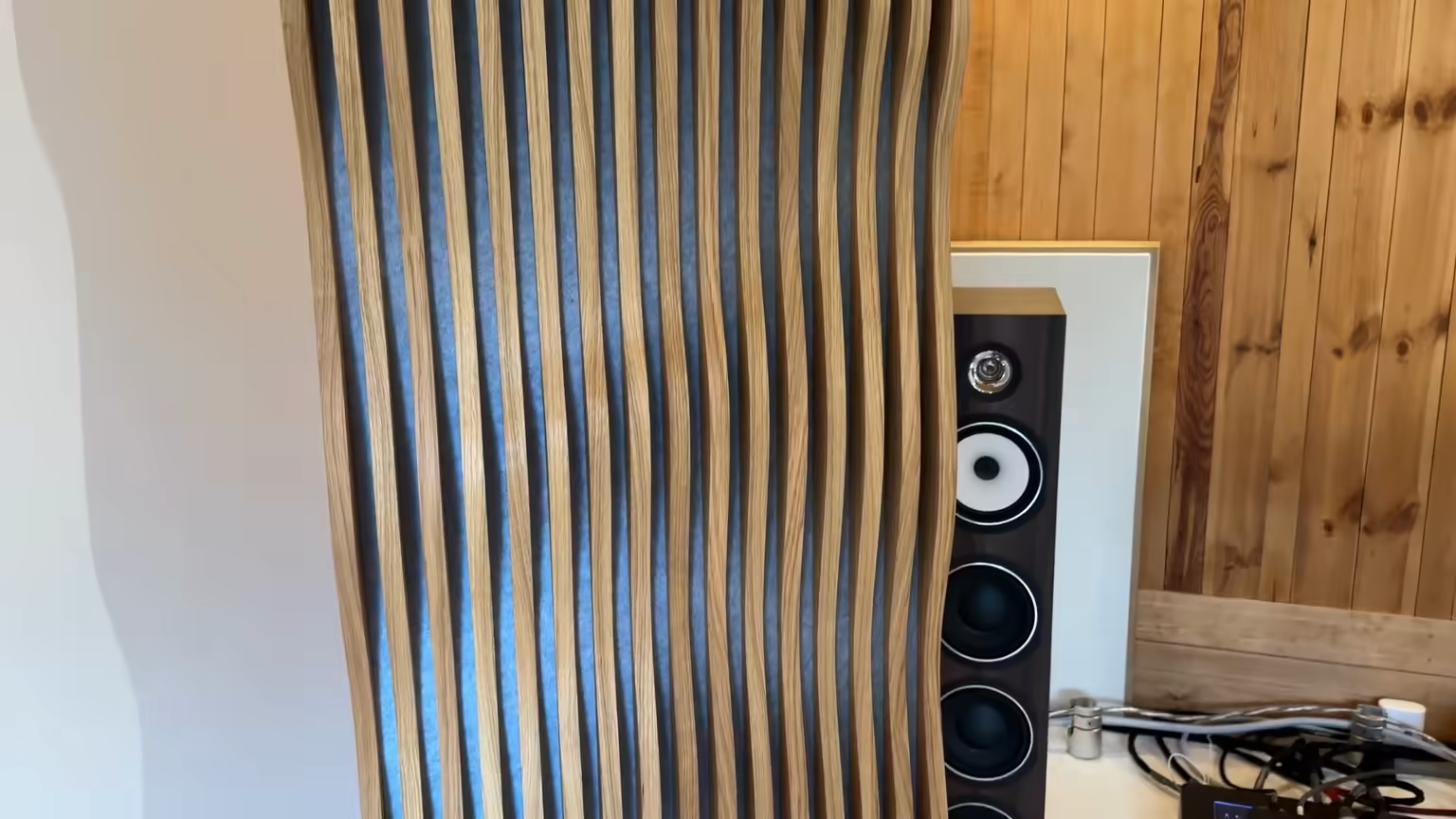 (view larger)
Problem number two was having no absorption on my first reflection points. Why does that matter? Some sound travels straight to your ears, and some bounces off the nearest surface and arrives a couple of milliseconds later. That delay is so short your brain cannot separate the two, so it blends them, and the reflection smears the direct sound. Instruments stop sounding quite right, and the sweet spot shrinks until leaning slightly to one side kills it.
I set the tower right at that reflection point. The early bounce got absorbed and scattered before it reached me, and the jump in clarity was instant. Blurry sounds became pinpoint, and I could put my finger on exactly where everything sat. Details I had never heard in this room simply showed up, because they were no longer blended into unpredictable reflections. That fragile sweet spot got a little more forgiving too.
Problem number three was the long reverb time. You feel this one even when you are not listening loud. The room rings on too long, so every new note lands while the last one is still bouncing around. It piles up. I will call it what it is: mud, and nothing pleasant. Boomy bass, poor intelligibility, busy passages collapsing into noise. Broadband absorption targets exactly that and brings the decay down. Here is the special part, though. Most people chase a reverb problem by throwing thin foam everywhere, which can kill a room's sound outright. The tower does not do that. Because it diffuses as well as absorbs, it tames the echo without leaving the room dead.
So I got both: the clarity of a tight room with the open, breathing feel of a live one. I can hear right into a dense mix now. Sessions that used to fry my ears or come up short on detail are much better.
And that is the whole story. One product solved all three acoustic issues because it does everything at once, and because it goes exactly where the room needs it rather than where the room lets you put something. Three problems I have carried for a long time are now largely handled by a single object. This room has never sounded the way it does right now. It still has a way to go overall, but the improvement is significant.
Watch the video review
Subscribe on YouTube (opens in new tab)Prefer to read? The written review above is a complete text version - everything covered in the video is in the article.

- 0:00 Your Room Struggles With Those Too... (opens in new tab)
- 0:37 Design & Build Quality - Materials, Weight, Caster Feet, Wooden Finish, Customizability (opens in new tab)
- 4:46 Technologies - Broadband Absorption, Parametric Formula Diffuser (opens in new tab)
- 6:52 Sound Quality - Clarity, Imaging Precision, Unmasking of Details, Comb Filtering (opens in new tab)
New gear lands on @TheAudioStuff (opens in new tab) first - every written review gets a video companion on the same chain.
Common questions about the Parametric Tower
Is the Ortvik Parametric Tower worth it?
Yes. It scored 8.5/10, Highly Recommended, higher than 63% of everything we have tested, against a catalogue median of 8.1. Price: Varies.
Who should buy the Ortvik Parametric Tower, and who should skip it?
Buy it if you listen on speakers and the room is the loudest thing in the chain. Skip it if you listen on headphones, where the room gets no vote.
What else have you tested that is close to the Ortvik Parametric Tower?
There is no head-to-head page for this one yet, and nothing we have scored sits close enough in price to call a direct rival. The nearest reference points in the same category: the AudioMica 4-all-in-1 Cable Set at 8.5/10, the Melodika Brown Sugar BSSC95xx at 8.5/10, and the Melodika Brown Sugar BSSC4500 at 8.2/10.