Simgot EM6L Review: Five Drivers, $109, and a Weirdly Big Soundstage
A budget hybrid IEM with 1 dynamic + 4 BA drivers, a 3-way crossover, and an attempt at the Harman 2019 target - mostly successful, with a fun 'weirdly big' soundstage.
higher than 17% of everything we have tested
Value Excellent. It is one of the best-value pieces we have scored.
- Standout
- 1 dynamic + 4 BA drivers with hybrid 3-way crossover
- Watch out for
- Mid-bass has extra energy that can sound bloaty
- Better alternative
- HIFIMAN RE800 Silver: scores 0.4 higher.
Is it for you?
- You want a big, out-of-your-head stage
- You want the most performance per dollar on the list
- You want vocals right in front of you
Pick #4 of 4 in our Best Budget IEMs guide.
This IEM contains multiple drivers with a 3-way crossover, and tries to achieve the Harman 2019 target. It all sounds very promising, as marketing materials usually do. But how well does it actually perform in practice?
The Simgot EM6L is priced at $109, which I would consider to be in the budget range for an IEM, although some people might call it mid-range.
Is It Comfortable? Small Shells, Standout Cable
It features a glossy black shell that's made with a high-precision 3D printing process. There are no visible imperfections or rough texture, making it impossible to tell that it was 3D printed.
The IEM shell is rather small, making it a great fit for those with smaller ears. I believe that their round shape prevented them from falling out by increasing the contact area and thus creating a bit more friction.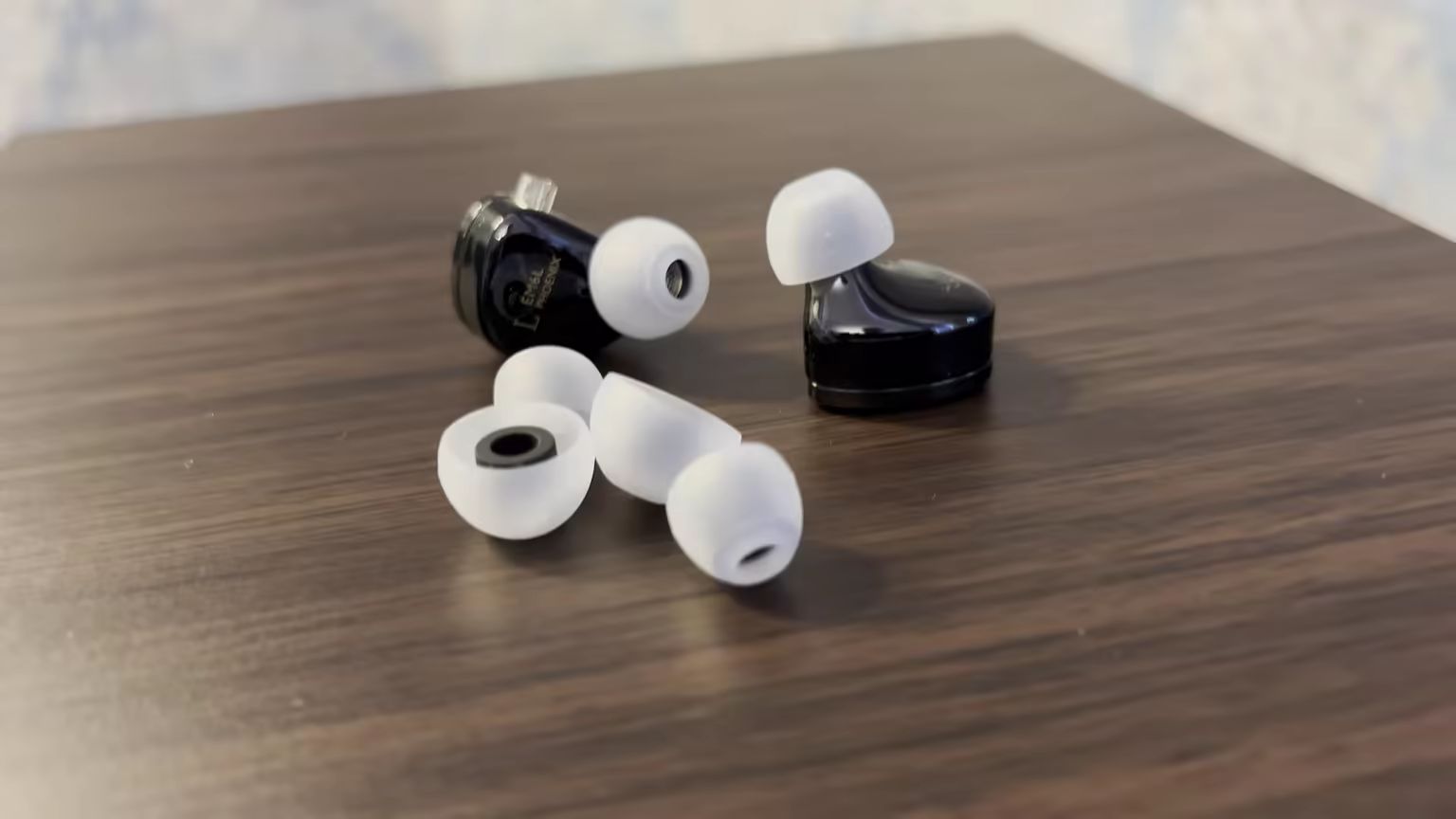 (view larger)
It has a 2-pin connector and comes with a fantastic, for this price range, cable. It's made out of oxygen-free copper and is silver-plated. Some of you might not care about what it's made out of, but I appreciate the effort put into making sure that the entire signal path is of high quality. It's braided as well, to minimize interference and make it look better. On the visual side, it perfectly complements the IEM with its gold and black color scheme. It has great ergonomics and doesn't cause any discomfort like some cheap cables do. Overall, it stays out of the way and doesn't interrupt the listening experience.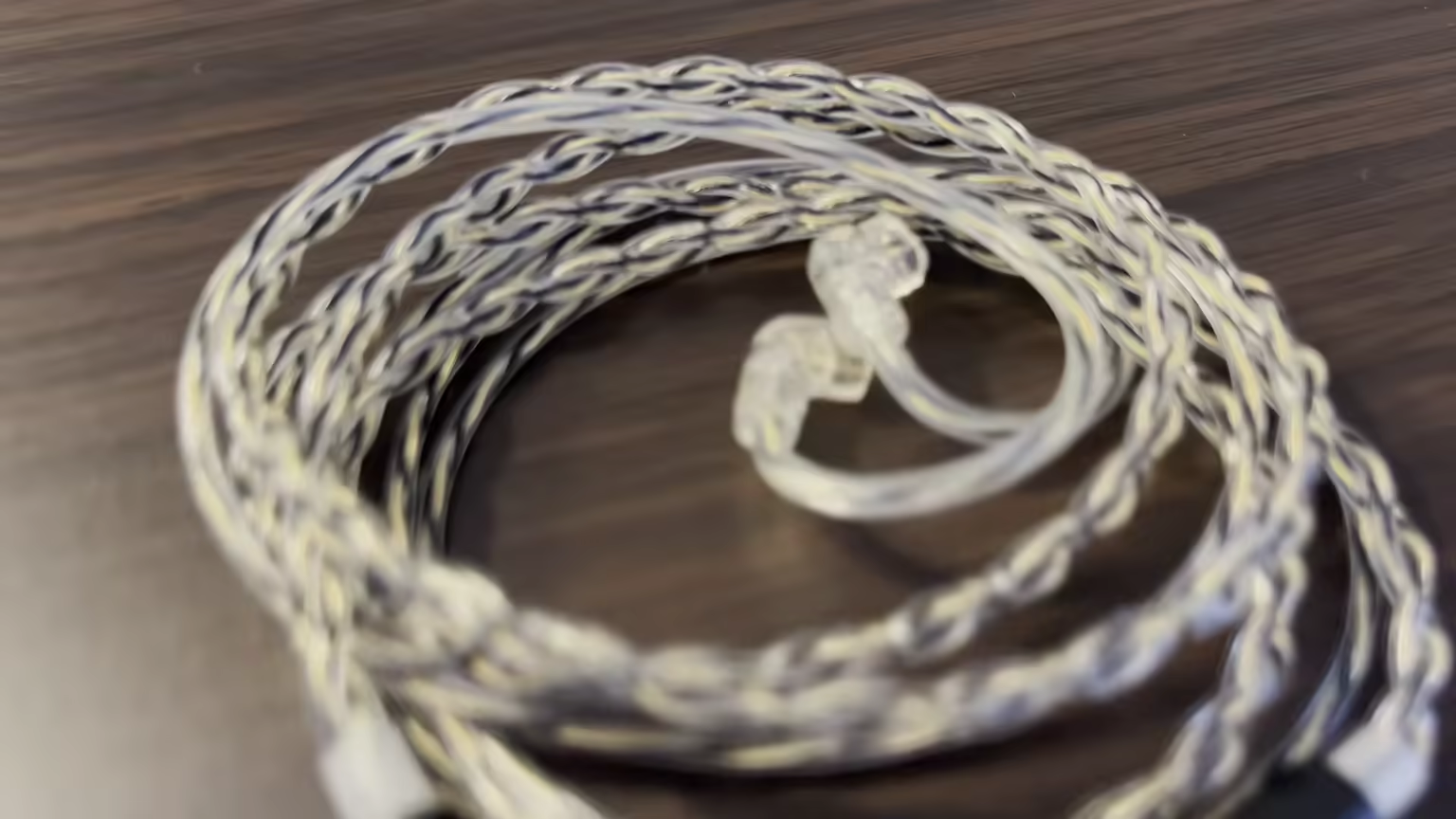 (view larger)
Technical Specifications: 1 Dynamic + 4 Armatures
In terms of the drivers, there is one dynamic driver and four balanced armature drivers, which are controlled by a hybrid three-way crossover.
The impedance of the IEM is listed as 26Ω, and the sensitivity is rather high at 119dB/V. All of the drivers work together to produce a frequency response of 8Hz to 40kHz, which is beyond the typical human hearing range - but that's a very good thing, especially in the lower limit. It indicates that there's very little or virtually no low-frequency roll-off.
Sound Quality: Near-Harman, with Mid-Bass Bloat
Looking at a frequency response graph, you can see that the treble and sub-bass are mostly in line with Simgot's goal of achieving the Harman 2019 in-ear curve. The lower end of frequencies is lifted to match that target. However, in the mid-bass, there's some additional energy, that can be perceived as bloaty. It surely makes for some additional warmth - if you're into that and you don't mind its muffling effect on vocals, obscuring some of the finer details and clarity.
Treble is pretty smooth in terms of peakiness, however, its amplitude is not being compromised in any way, besides not extending exactly to 20kHz.
Finally, we come to the soundstage, which is where things get intriguing. The EM6L can be described as having a "weirdly big" soundstage. A wide soundstage typically enhances the listening experience, creating a sense of spaciousness and immersion. However, we lack a bit of pinpoint precision in the placement of instruments within the sound field. Although it can be wide, it doesn't provide a sense of large scale, which some people desire. This is usually challenging to achieve in in-ear monitors, and these ones are no exception.
But what it does provide is great channel separation, which in IEMs is often very good, as there's very little sound leakage. You might be surprised by how much of a difference it makes!
These in-ear monitors can do one more thing pretty well: punch. Not necessarily slam (meaning a large surface hit), but they can punch you with a concentrated and small surface type of hit.
Sound signature
Derived from the words this review uses: each axis runs between two opposite descriptors, and the shape leans toward whichever side the writing does.
- Warm ↔ Bright Neutral, no clear signal in the review language
- Relaxed ↔ Analytical Neutral, no clear signal in the review language
- Polite ↔ Aggressive Leans aggressive
- Lean ↔ Bass-heavy Neutral, no clear signal in the review language
- Intimate ↔ Wide stage Leans wide stage
Hear what "aggressive, wide stage" means: a short synthesised loop, flat and then with those leanings. An illustration of the words, not a recording of the EM6L.
Not sure which signature suits you? Find yours with a blind A/B test
Watch the video review
Subscribe on YouTube (opens in new tab)Prefer to read? The written review above covers everything in the video.

- 0:00 The BEST Budget HiFi IEM? (opens in new tab)
- 0:34 Build Quality & Comfort (Small 3D Printed Shell, Round Shape, Connector, OFC Silver Plated Cable) (opens in new tab)
- 1:45 Technical Specification (DD + BA Drivers, Impedance, Sensitivity, Frequency Response) (opens in new tab)
- 2:24 Sound Quality (Tonality, Treble, Mids, Bass, Sound Separation, Sound Stage) (opens in new tab)
Common questions about the EM6L
Is the Simgot EM6L worth it?
Yes, for the right listener. It scored 7.6/10, Recommended, higher than 17% of everything we have tested, against a catalogue median of 8.1. On value it rates excellent: top 14% for the price in headphones, so it is one of the best-value pieces we have scored. Price: $109.
Who should buy the Simgot EM6L, and who should skip it?
Buy it if you want a big, out-of-your-head stage, and you want the most performance per dollar on the list. Skip it if you want vocals right in front of you.
What amplifier does the Simgot EM6L need?
The Simgot EM6L is a 26 Ω load, so the matching rule is the rule of eighths: an amplifier's output impedance should sit at or below 3.3 Ω, an eighth of the headphone's, or its frequency response shifts audibly and usually in the bass. That is a property of the amp rather than its power rating, so a high-output-impedance tube amp can fail it while a phone jack passes. About 4.8 mW to reach 110 dB peaks, which is a phone jack or any dongle.
What else have you tested around the price of the Simgot EM6L?
We have not run it head-to-head against anything yet. In the same category and the same rough money we have scored the HIFIMAN RE800 Silver at 8.0/10 and the Flare Audio E-PROTOTYPE at 8.0/10, which is the nearest thing to a shortlist until a matchup page exists.
Does the Simgot EM6L hit the Harman target?
Mostly. Looking at the frequency response, the treble and sub-bass line up well with Simgot's stated goal of the Harman 2019 in-ear curve, and the low end is lifted to match. Where it departs is the mid-bass, which carries extra energy that reads as bloaty. That adds warmth if you like warmth, and it comes with a cost: a muffling effect on vocals that obscures some of the finer detail and clarity.
Is the EM6L's cable worth keeping?
Yes, and it is unusual at this price. It is oxygen-free copper with silver plating, braided to reduce interference and to look better, on a standard 2-pin connector. You may not care what a cable is made of, and I appreciate the effort of keeping the whole signal path to a decent standard rather than saving a few dollars at the last step. Ergonomically it stays out of the way and causes none of the discomfort cheap cables do.
Will the EM6L fit small ears?
Yes - the shell is rather small, which makes it a good fit if bigger in-ears have defeated you. The rounded shape also seems to help it stay put, increasing the contact area and with it the friction. The shell is 3D printed at high precision with a glossy black finish and no visible imperfections or rough texture; you genuinely cannot tell it was printed.
What is 'weirdly big' about the EM6L's soundstage?
The width is there without the scale, which is an odd combination to describe. It is wide, spacious and immersive - genuinely more so than you expect at $109 - but instrument placement lacks pinpoint precision within that space, and it never gives the sense of large scale some listeners want. That last part is hard for any in-ear to achieve and these are no exception. What they do have is excellent channel separation, which in-ears manage well because so little sound leaks between sides.
How does the EM6L handle bass impact?
It punches rather than slams, and the distinction matters. There is no large-surface wallop here - what you get is a concentrated, small-surface hit that lands cleanly and precisely. The frequency response starts at 8Hz, which tells you there is virtually no low-frequency roll-off, so the extension underneath is genuinely there. It is the mid-bass energy above it, not the extension below, that causes the bloat.