Sivga Anser Review: Open-Back Bass That $2k Cans Can't Touch
A $200 open-back dynamic with real wood cups and a tuning that delivers springy, bouncy mid-bass you won't find on $2,000 headphones - musical, fun, and built to last.
higher than 34% of everything we have tested
- Standout
- Solid wood earcups with aluminum grilles and yokes
- Watch out for
- Soundstage is on the intimate side
- Better alternative
- HIFIMAN Sundara: leans weightier low down, $100 more, scores 1.0 higher.
Is it for you?
- You want the balance to lean warm, with the top end eased
- You want more performance per dollar than most of its peers
- You want every last bit of treble detail
Named Best Overall in our Best Budget Headphones guide, ahead of 3 others.
Can a $200 headphone really deliver sound quality in at least one area that even $2,000 gear can't touch? Can it also be super comfortable, built with real wood, and actually look good - all at the same time? Turns out, yeah. The answer is the Anser. The Sivga Anser.
Design & Build Quality: Wood, Metal, No Plastic
These headphones look and feel premium. The earcups are made from solid wood, which gives them a classy, natural look that you don't see that often in headphones at this price range. The metal parts, like the grille and the yokes, are made of sturdy aluminium.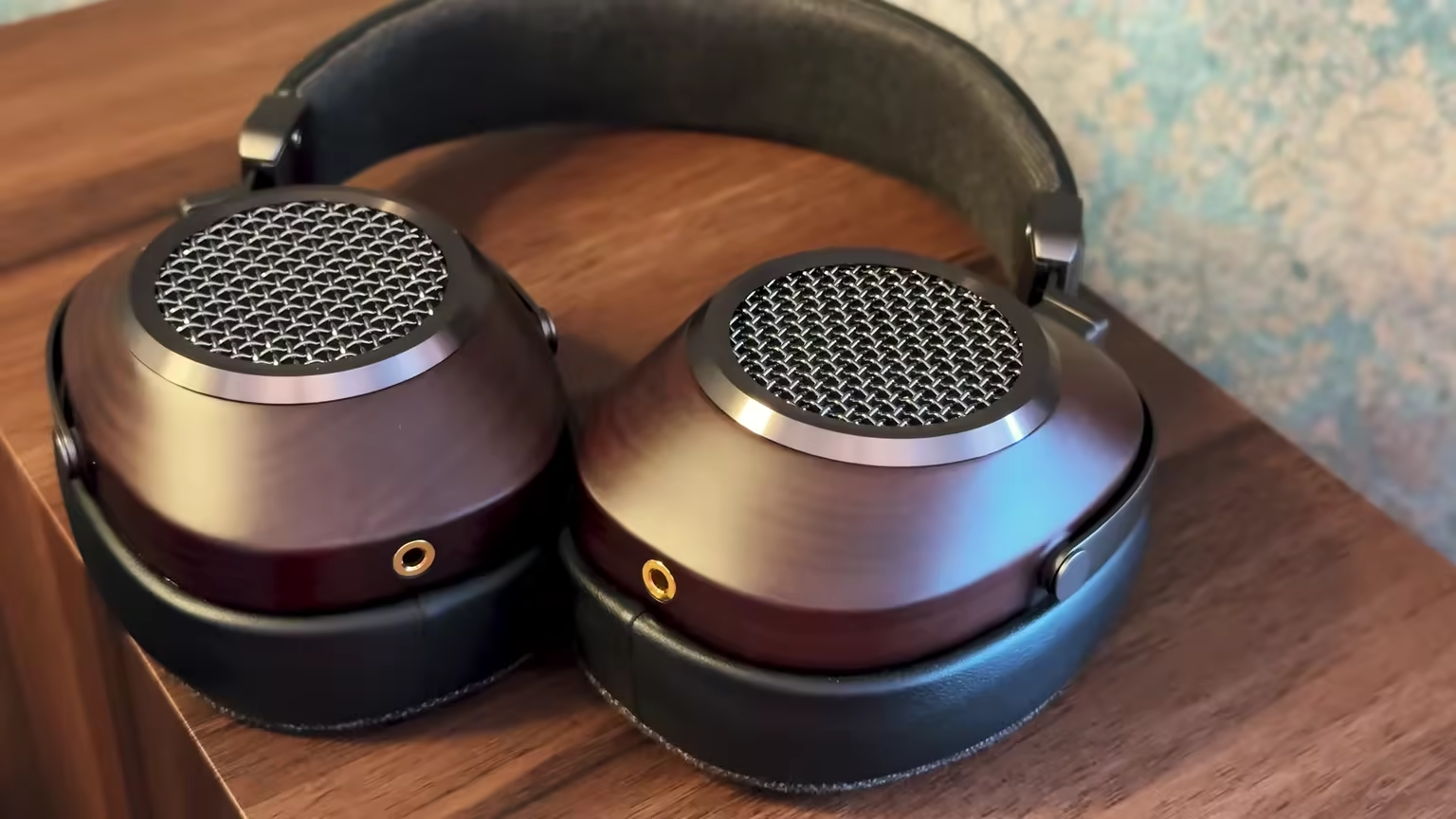 (view larger)
The headband is covered with soft leather on top, and the bottom part is lined with fabric. Another nice touch is that the earcups can rotate 180 degrees, which means you can adjust them for the best fit. The white stitching on the headband adds a bit of extra style and makes the whole thing look a little more polished.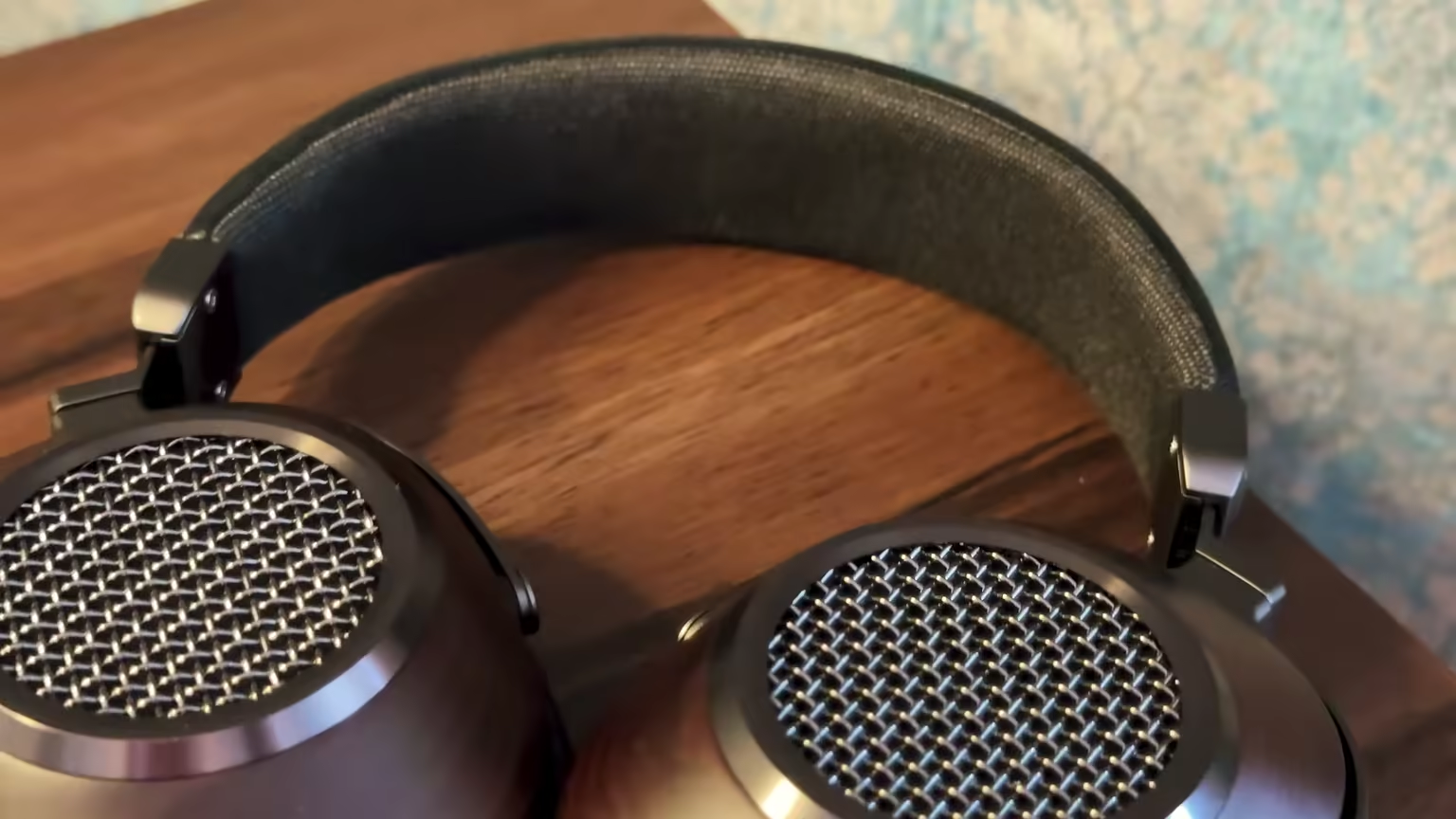 (view larger)
There are no plastic parts - just wood, metal, and leather. The materials feel solid, and there's a premium heft to them when you pick them up. The yokes and headband are all metal, which really gives you the sense that you're holding something well-made.
For comfort, the Anser headphones are pretty impressive. They weigh only 342 grams, which is light for over-ear headphones, so you can wear them for hours. The ear pads are made from memory foam and covered with a soft fabric. The clamping force isn't too tight, so they stay in place without applying too much pressure.
What's in the Box
It's pretty straightforward, but everything you need is there. You get a 2-meter cable that'll connect to most devices, whether that's your phone, computer, or an amp, along with a 3.5mm to 1/4-inch adapter for plugging into a bigger audio system. Protecting it all is a simple hemp bag - it's not the most protective thing in the world, but it'll keep the dust off when the headphones aren't in use. Overall, the packaging is minimal and eco-friendly.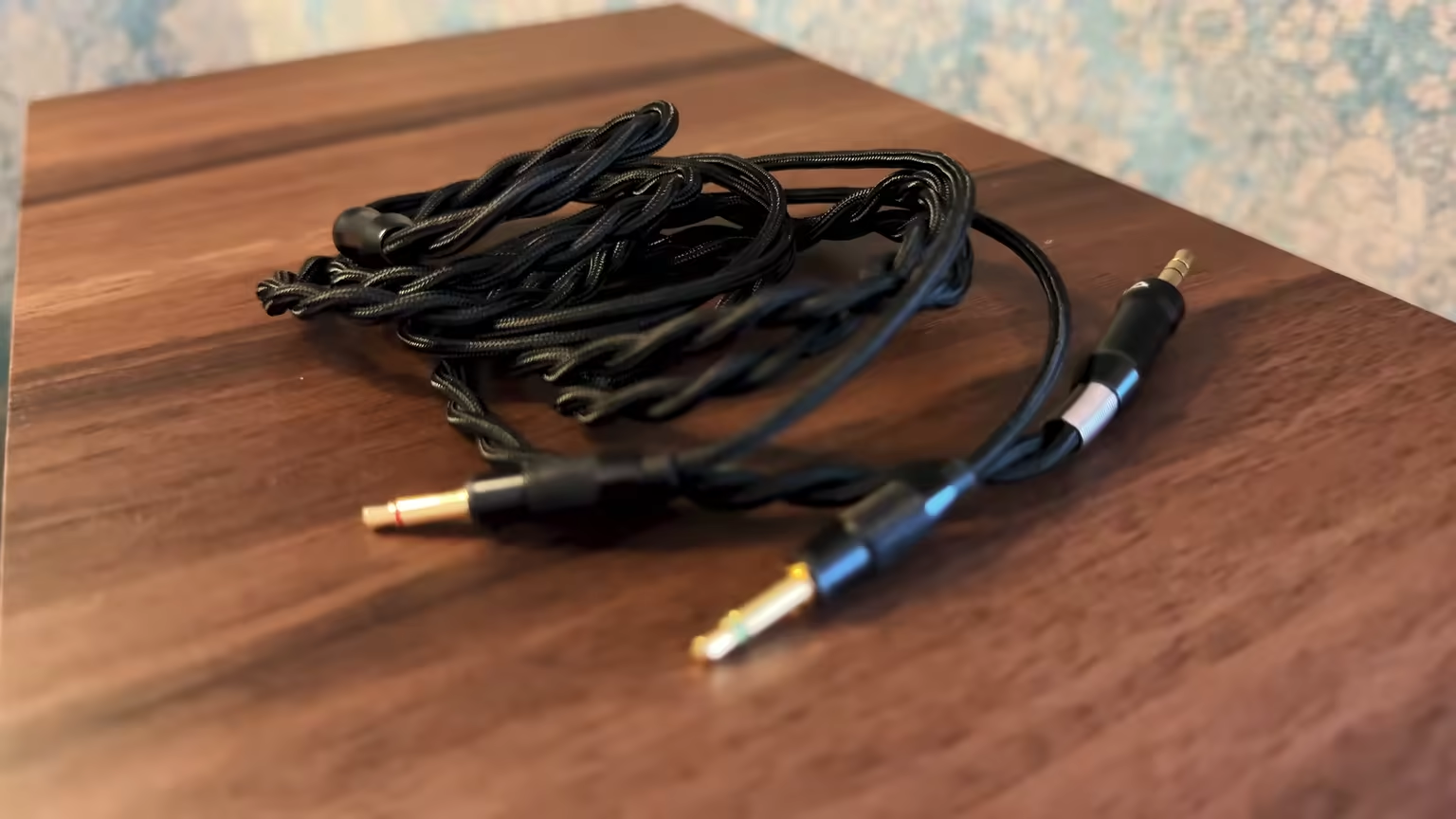 (view larger)
Technologies: A Titanium-Plated 50mm Driver
The heart of the Anser is its custom-designed 50mm dynamic driver. It features a titanium-plated diaphragm, which combines lightness with rigidity and elasticity. This design helps in delivering clear and dynamic sound. The diaphragm's dome is made from a high-molecular organic carbon fiber polymer, which effectively absorbs and suppresses unwanted vibrations.
To drive the driver efficiently, the Anser uses a powerful 24.5mm neodymium iron boron magnet. Its strong magnetic field enhances the driver's movement, leading to high sensitivity and precise sound resolution.
Inside the driver, the voice coil is made from copper-clad aluminum. This combination offers the best of both worlds - copper's conductivity and aluminum's lightness. It helps the driver respond quickly to audio signals, improving overall sound precision and detail.
The driver frame features a multi-hole design with balanced openings. It controls airflow inside the earcup. Why does this matter? Well, it's for a smooth transition from bass to treble, preventing any muddiness in the sound, for a more cohesive sound.
The Anser features an open-back design, meaning the earcups are open at the back. This allows sound to flow freely, creating a more natural and spacious soundstage. However, this also means they don't block out external noise, so they're best used in quiet environments.
Does It Need an Amp? Easy to Drive, Scales Well
The frequency response goes from 20Hz to 20kHz. This is the standard range of human hearing, and the Anser covers it from top to bottom.
At 38Ω, the Anser is fairly easy to drive. That means you don't need a powerful headphone amp to enjoy them. You can plug them directly into a laptop, phone (with a dongle), or portable DAC, and they'll sound great. But if you do pair them with a proper amp, they scale up nicely - opening up the soundstage and improving clarity even more.
A sensitivity of 105dB means the Anser gets loud easily, even from low-powered sources. You don't have to crank up the volume to get satisfying output. This also contributes to better battery life if you're using a portable DAC or player.
At 342 grams, the Anser isn't ultra-light, but it's very manageable for long sessions. It never feels heavy. Even after several hours, it doesn't cause pressure or fatigue.
How Does It Sound? The Springiest Bass at $200
On paper, it looks like it's aimed at casual listeners who want something good-looking and comfy. But when you actually put these on and start listening, you realize something pretty quickly. The Anser has a genuinely well-thought-out tuning, one that balances fun and energy with surprising detail and technical ability.
Let's start with the bass - because, honestly, that's one of the most surprising parts of the whole experience. The low end here isn't flat or overly tight like you might find in some neutral or reference-style headphones. Instead, it's got this boosted mid-bass that adds warmth and punch. But what really stands out - and I haven't heard this quite like this on any other headphone - is how springy and bouncy the bass feels. It has this elastic, lively quality that gives music a physical energy. It's super fun and addictive, and it's something that immediately jumped out to me. That springiness adds a sense of rhythm and movement that makes tracks feel alive, especially in genres like electronic, hip-hop, funk, or pop. Sub-bass is present too, but it's not the main focus. It's the kind of bass that makes you smile.
Moving into the mids - vocals sound natural and full-bodied, with just the right amount of warmth. Instruments have this smooth, slightly rich tone to them that makes them feel lifelike and real. The mids are clear and forward enough to stay engaging, but they're not super clean. There's also a nice balance between detail and warmth here. You can hear the texture in a voice, the subtle breath between notes, but it never feels analytical or dry. The upper mids do have a little bit of extra energy, which gives some presence and clarity to vocals and certain instruments. Depending on what you're used to, that little peak might stand out in some tracks, but for me, it just adds excitement without ever becoming harsh or sibilant.
As for the treble - it's nicely extended and energetic. It's not super refined, but it's clean, clear, and detailed enough to catch most of the nuances in your music. Cymbals have shimmer, strings have bite, and there's enough air to keep things from sounding boxed in. But again, it's fun. It's exciting without being fatiguing, and that's a really tough balance to strike.
Dynamics, Soundstage, and Timbre: Punchy but Intimate
One area that really surprised me was dynamics. These headphones have excellent macro-dynamics for this price range. When the music swells or the beat drops - boom, it hits hard. It never sounds compressed or flat.
The soundstage on the Anser is not huge - it's more on the intimate side. You're not going to get that wide, airy, kind of space, but it's also not just stuck in your head. There's decent width, and the depth is actually better than I expected. Instrument separation is solid, and everything has its own space, even when there's a lot going on. That said, if you're coming from something with a really expansive or holographic soundstage, the Anser might feel a bit more centered. But with a good source it opens up a bit more.
Timbre is another area where Sivga really nailed it. Instruments and voices sound super warm, but also natural. There's a nice organic quality to the sound - probably helped by the wooden earcups and dynamic driver design.
Verdict: Fun, Musical, Easy to Love
Overall, I'd say the Sivga Anser has one of the most enjoyable tunings I've heard at this price point. It's meant to be fun, musical, and something you actually want to listen to for hours. Yes, the soundstage could be wider. Yes, the treble could be a little more refined. But those are small trade-offs considering how dynamic, unique, and musical the Anser sounds.
Sound signature
Derived from the words this review uses: each axis runs between two opposite descriptors, and the shape leans toward whichever side the writing does.
- Warm ↔ Bright Leans warm
- Relaxed ↔ Analytical Sits close to centre
- Polite ↔ Aggressive Leans aggressive
- Lean ↔ Bass-heavy Leans lean
- Intimate ↔ Wide stage Leans wide stage
Hear what "warm, aggressive, lean, wide stage" means: a short synthesised loop, flat and then with those leanings. An illustration of the words, not a recording of the Anser.
Not sure which signature suits you? Find yours with a blind A/B test

Watch the video review
Subscribe on YouTube (opens in new tab)Prefer to read? The written review above covers everything in the video.

- 0:00 The BEST Budget Bass Headphone (opens in new tab)
- 0:27 Comfort & Build Quality (Headband, Ear Pads, Stock Cable, Wooden Finish) (opens in new tab)
- 2:21 Technologies (Titanium Diaphragm, Neodymium Magnet, Open-back Design) (opens in new tab)
- 4:04 Technical Specification (Frequency Response, Low Impedance, Drivability, High Sensitivity) (opens in new tab)
- 5:01 Sound Quality (Tonality, Emphasized Bass, Dynamic Range, Natural Midrange, Imaging) (opens in new tab)
Common questions about the Anser
Is the Sivga Anser worth it?
Yes, for the right listener. It scored 8.0/10, Recommended, higher than 34% of everything we have tested, against a catalogue median of 8.1. On value it rates strong: above average for the price in headphones. Price: $199.
Who should buy the Sivga Anser, and who should skip it?
Buy it if you want the balance to lean warm, with the top end eased, and you want more performance per dollar than most of its peers. Skip it if you want every last bit of treble detail.
What amplifier does the Sivga Anser need?
The Sivga Anser is a 38 Ω load, so the matching rule is the rule of eighths: an amplifier's output impedance should sit at or below 4.8 Ω, an eighth of the headphone's, or its frequency response shifts audibly and usually in the bass. That is a property of the amp rather than its power rating, so a high-output-impedance tube amp can fail it while a phone jack passes. At most 83 mW to reach 110 dB peaks, which is most dongle DACs. The review records 105 dB without saying against what, and the two conventions differ by a factor of 26 at this impedance - so that is the worst case, and the real figure is at or below it.
What should I consider instead of the Sivga Anser?
On the same chain, against the same recordings: the Sivga Luan scores 0.1 higher and costs $100 more and the Verum Audio Verum 1 scores the same and costs $150 more. Each of those has a full head-to-head page below.
What is the springy bass on the Sivga Anser?
The thing I would buy this headphone for, and I have not heard it quite this way anywhere else. The low end is not flat or tightly damped like a reference tuning - there is a boosted mid-bass that adds warmth and punch, and on top of that an elastic, bouncy quality that gives music real physical energy. It adds a sense of rhythm and movement that makes tracks feel alive, especially in electronic, hip-hop, funk and pop. It is addictive, and it is the kind of bass that makes you smile.
Is the Sivga Anser's soundstage too small?
It is on the intimate side, and that is the main thing you trade away at this price. You will not get a wide, airy space - but it is not stuck inside your head either. There is decent width, the depth is better than I expected, and instrument separation holds up when a lot is happening at once. Coming from something expansive or holographic it will feel more centred. A good source opens it up a bit.
Does the Sivga Anser need an amplifier?
No, though it rewards one. At 38Ω and 105dB sensitivity it is easy to drive and gets loud from low-powered sources - a laptop, a phone with a dongle or a portable DAC will all sound good, and you will not be cranking anything to get there. Pair it with a proper amp and it scales nicely: the soundstage opens up and clarity improves. That is a bonus rather than a requirement.
Is the Sivga Anser's treble refined?
Not especially, and it is the honest weak point. It is nicely extended and energetic, clean and clear enough to catch most of the nuance in a track - cymbals shimmer, strings have bite, there is enough air to stop things sounding boxed in - but it is not a refined top end. What it is instead is fun: exciting without being fatiguing, which is a genuinely hard balance to strike and the reason I do not hold it against the headphone at $199.
Is the hemp bag enough protection for the Anser?
Not really - it keeps dust off and that is about the limit of it. The packaging is minimal and eco-friendly, which I like as an approach, but if you plan to carry these anywhere you will want a proper case. What is in the box otherwise is sensible: a two-metre cable that will reach a phone, computer or amplifier, and a 3.5mm to quarter-inch adapter for a full-size system.
Is the Sivga Anser well built for $199?
Unusually so. There is no plastic anywhere - solid wood cups, aluminium grilles and yokes, leather on top of the headband with fabric lining underneath, and white stitching that lifts the whole thing. It has real heft in the hand without being heavy on your head at 342 grams. The cups rotate a full 180 degrees to find a fit, the memory foam pads are covered in soft fabric, and the clamp is light enough to wear for hours.
Can you use the Sivga Anser in a quiet office?
No. It is an open back, so the cups are open at the rear and sound flows freely in both directions - that is what creates the natural, spacious presentation, and it also means no isolation whatsoever. These are for quiet environments where nobody else is listening. If you need to block the world out or keep your music to yourself, this is the wrong design, not just the wrong model.