SMSL DO100 PRO Review: A $219 DAC With a Tinkerer's Switch
A balanced lower-mid-range DAC with dual ESS chips, MQA, DSD512, and a tinker-friendly DPLL value control - solid sound that doesn't break records but offers great value.
higher than 34% of everything we have tested
- Standout
- Dual ESS DAC chips with 6 OPA1612 op-amps
- Watch out for
- Slight wobble in the (digitally stepped) plastic knob
- Closest rival
- SMSL RAW-MDA1: a near-tie on score.
Is it for you?
- You want the balance to lean bright, with the detail pushed forward
- You want more performance per dollar than most of its peers
- You're treble-sensitive
Pick #5 of 8 in our Best DACs guide.
DACs play a critical role in delivering high-quality sound in any audio system that isn't purely analog. Digital-to-analog converters bridge the gap between the digital world of your music files and the analog world of sound waves our ears perceive. By converting digital data into analog signals, DACs directly influence the overall quality and character of the audio you experience.
Today we'll explore the SMSL DO100 PRO, a new option in the lower-mid-range price segment.
Build: Aluminum, with All the I/O You Need
Is it built like a tank? No, but you wouldn't expect it to be for a bit over $200. Is it constructed poorly then? Nope, not that either.
Pick it up and you might be surprised. On one hand, it feels quite lightweight despite clocking in at nearly 1.5 kg (over 3 pounds). On the other hand, it features a full aluminum body - not the thickest one, but it's miles ahead of being made of plastic.
The bottom is supported by 4 tall rubber feet, which can be upgraded if needed, as they're held down by screws. They do a decent job - the unit doesn't slide very easily on the desk.
The top has a Hi-Res Audio Wireless sticker, which is a nice addition, but it doesn't mean anything useful for the actual audio quality as far as I'm aware.
The DO100 PRO features a front screen that can display lots of useful information, like the current sampling rate, the input you're using, the high-frequency digital filter, brightness, and the DPLL value (more on which later). A retro-style knob located on the right side is plastic, with some wobble - but that's not a very big issue, as it's fully digitally stepped with a distinct tactile feel. It lets you go through all the options and set them up how you want them.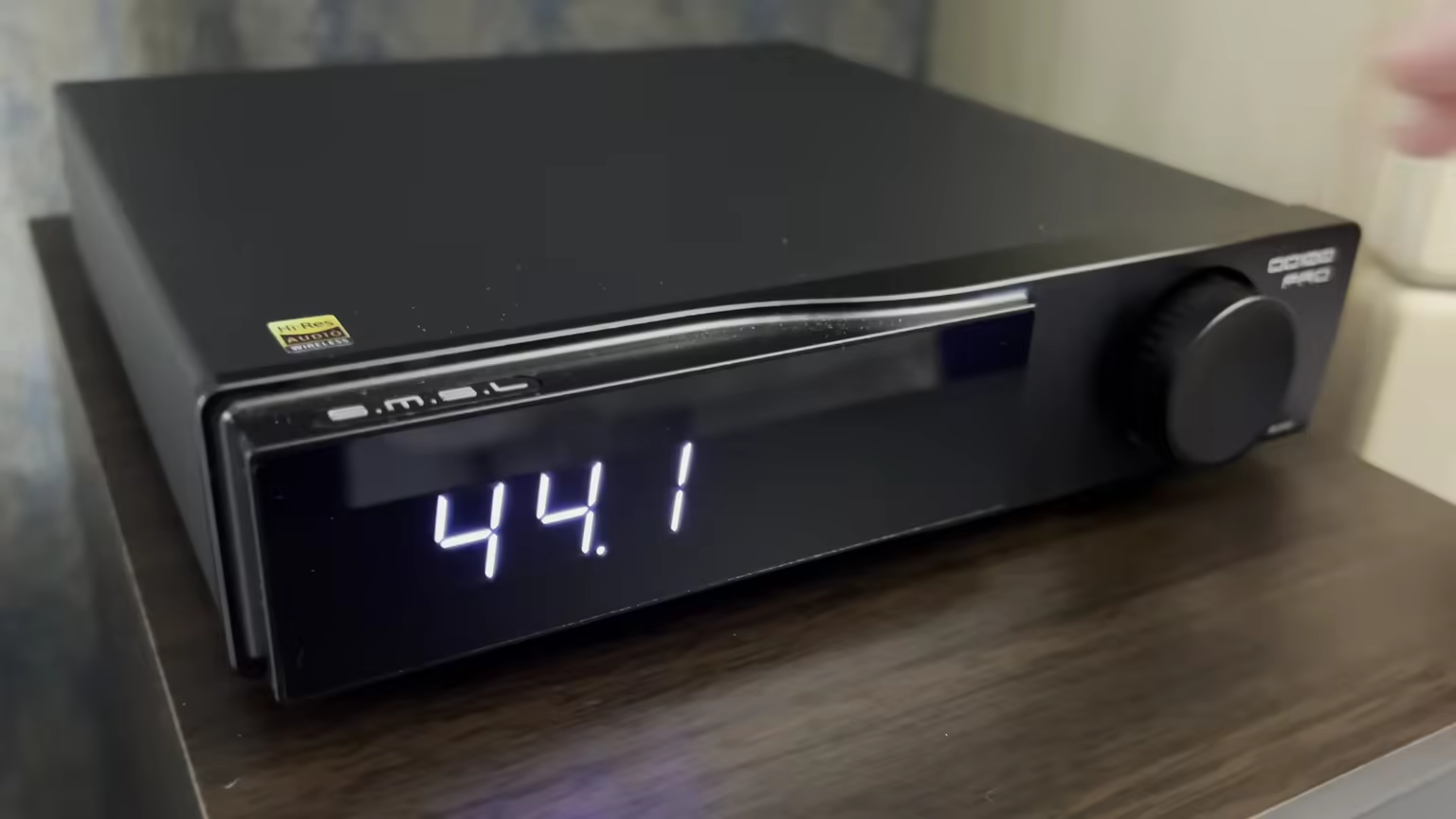 (view larger)
On the back, you'll find all the I/O: an AC input with a power switch, USB-C for digital connections, a Bluetooth antenna port for wireless audio streaming, HDMI ARC, Optical Toslink, and Coaxial. For the analog outputs, there are single-ended RCA and balanced XLR outputs. It's worth noting that the DO100 PRO is a balanced DAC internally, and I noticed a slight improvement in sound quality when utilizing the balanced XLR outputs.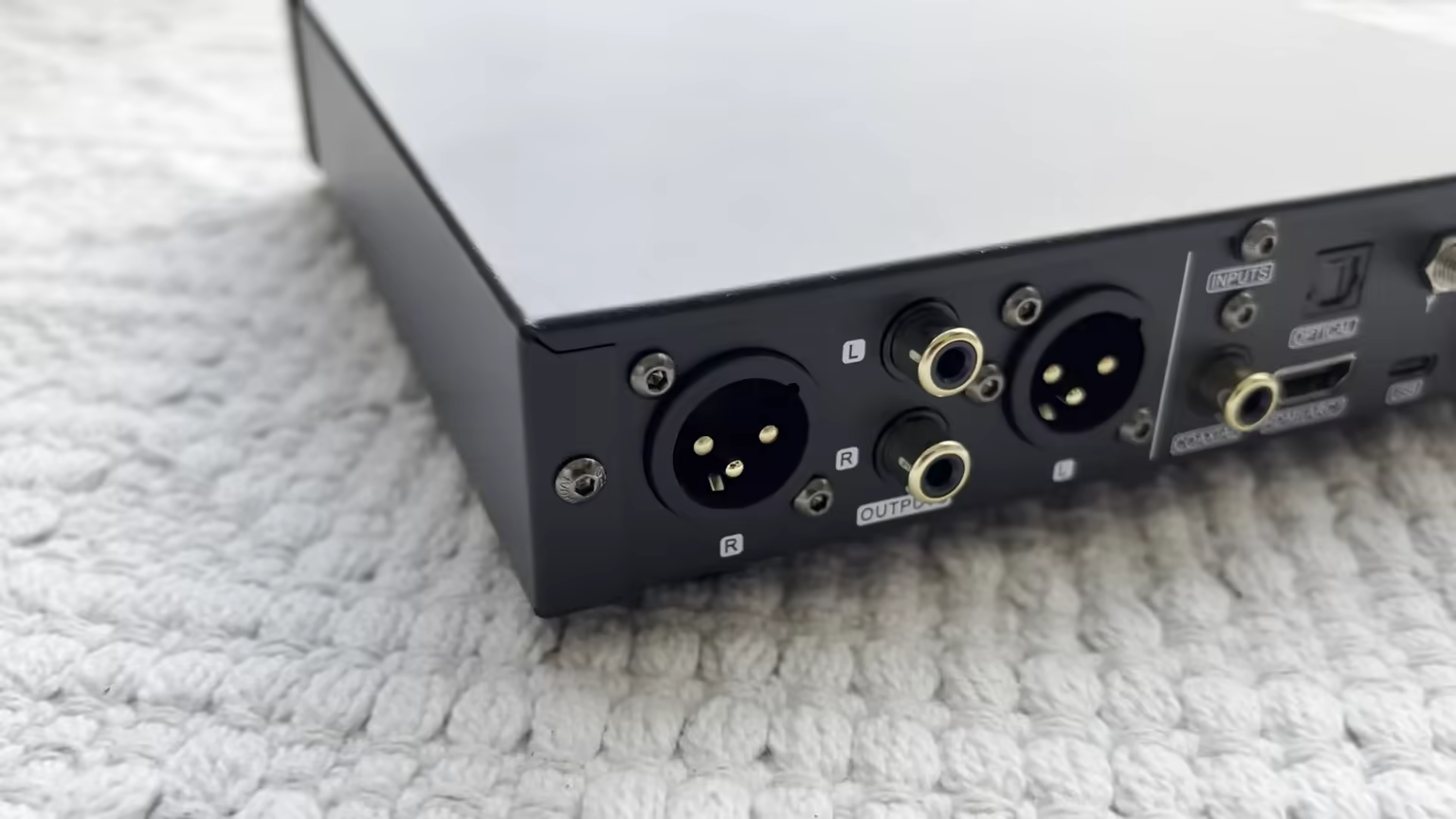 (view larger)
Features: ESS Chips, DSD512, DPLL Control
Now, onto the features - there's a lot. At its core sit two new-generation high-end ESS DAC chips, working together with six high-end OPA1612 dual op-amps, fed by a brand-new third-generation XMOS chip that supports up to PCM 32-bit/768kHz and DSD512. It'll happily decode DSD as well as DoP64, and it even handles the most controversial formats on Earth - MQA and MQA-CD - which is nice to have whether or not you ever end up using them. On the connectivity and convenience side you get two selectable USB modes, 1.1 and 2.0, depending on the device you're hooking up to, plus a Japan Audio Association Hi-Res certification, a choice of multiple digital filters, and a lightweight remote that does its job just fine.
The ESS chips feature a DPLL value control, a special function typically not exposed to the end user. This function allows you to select a value between 1 and 9, based on the clock jitter and accuracy. If the clock stability is high, you can decrease this value to improve system performance and achieve slightly superior sound quality. On the other hand, increasing the value would be beneficial if you encounter a significant amount of clock jitter leading to audio artifacts such as digital noise and pops.
The maximum supported PCM sampling rate is 768kHz at a 32-bit dynamic range, which is close to the highest possible PCM resolution you can achieve. This leaves you with a lot of room for upsampling using software like HQPlayer or PGGB.
That's a lot of functions for a DAC in this price category. But how does it sound?
Sound: Solid, Slightly Analytical, a Touch Soft
First of all, it's solid - really solid. There are no sonic issues with it that could be bothersome. It leans slightly to an analytical side of tonality, likely due to the ESS DAC chips used inside. However, it's not sharp or unpleasant, and if you don't like the ever-so-slightly enhanced top-end presentation, you can use a faster and more aggressive filter.
For systems that are neutral or slightly lacking in treble detail, the DO100 PRO is unlikely to push things into excessively bright territory. In these cases, it could potentially enhance clarity, detail, and definition without introducing harshness. Besides that, the tonal presentation is mostly neutral, without any added warmth or bass energy.
Resolution-wise, it's a bit above average. I'd say it can resolve details fairly well on a macro scale, as you'd expect for a modern DAC, and it does just fine on a micro scale. Unless your expectations are sky-high, you won't be disappointed.
The soundstage presentation isn't huge, but it doesn't collapse in any of the dimensions. Width is there, depth is there, and height is also there - but to a lesser extent. Of course, it does not sound HUGE like top-of-the-line DACs that cost multiple times more, but it is definitely not collapsing the sound and making it tiny.
Let's talk dynamics. It's not room-shaking, not at all. But what I feel it's doing is being true to source, and capable enough for most kinds of music and gear. Generally, I felt a slight sense of softness - not particularly a lack of dynamics, but softness. That didn't bother me much, and it's already miles ahead of SMSL's lower-end products.
So in terms of the DO100 PRO, I think it's priced well. It doesn't break any world records, but it's just a good-sounding DAC for this price, which can be a decent step up from some cheaper units. It lets you have fun with lots of options, adjust them to your liking, and explore different flavors of digital audio.
Sound signature
Derived from the words this review uses: each axis runs between two opposite descriptors, and the shape leans toward whichever side the writing does.
- Warm ↔ Bright Leans bright
- Relaxed ↔ Analytical Leans analytical
- Polite ↔ Aggressive Leans aggressive
- Lean ↔ Bass-heavy Neutral, no clear signal in the review language
- Intimate ↔ Wide stage Neutral, no clear signal in the review language
Hear what "bright, analytical, aggressive" means: a short synthesised loop, flat and then with those leanings. An illustration of the words, not a recording of the DO100 PRO.
Not sure which signature suits you? Find yours with a blind A/B test
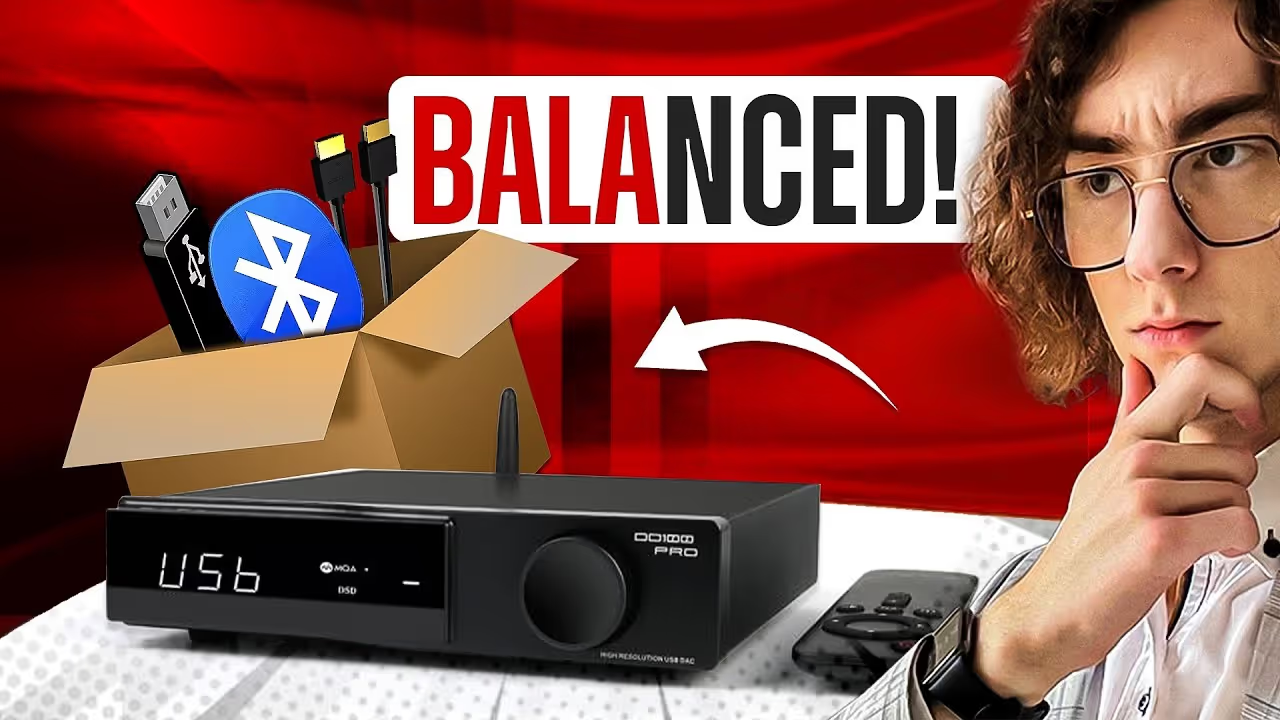
Watch the video review
Subscribe on YouTube (opens in new tab)Prefer to read? The written review above covers everything in the video.
- 0:00 Why Are DACs Important For Hi-Res Audio? (opens in new tab)
- 0:20 Build Quality (Aluminum Body, LED Display, Digital Rotary Knob) (opens in new tab)
- 1:42 Inputs & Outputs (Digital USB, HDMI (ARC), Bluetooth, Coax, Optical, Analog XLR & RCA) (opens in new tab)
- 2:15 Features (768k Sampling Rate, 32bit, MQA, DSD512, DoP64, Op-Amps, Digital Filters, DPPL Jitter) (opens in new tab)
- 4:00 Sound Quality (Tonality, Soundstage, Dynamics, Resolution, Details, Scale, Noisefloor) (opens in new tab)
Common questions about the DO100 PRO
Is the SMSL DO100 PRO worth it?
Yes, for the right listener. It scored 8.0/10, Recommended, higher than 34% of everything we have tested, against a catalogue median of 8.1. On value it rates strong: above average for the price in DACs. Price: $219.
Who should buy the SMSL DO100 PRO, and who should skip it?
Buy it if you want the balance to lean bright, with the detail pushed forward, and you want more performance per dollar than most of its peers. Skip it if you're treble-sensitive.
What should I consider instead of the SMSL DO100 PRO?
On the same chain, against the same recordings: the Henry Audio DA 256 scores 0.2 higher and costs $1,511 more, the SMSL DL100 scores 0.2 higher, and the SMSL RAW-MDA1 scores the same. Each of those has a full head-to-head page below.
What is the DPLL value on the DO100 PRO, and should you change it?
It is a jitter-tolerance setting the ESS chips have and almost no manufacturer exposes. You pick a value between 1 and 9. If your source's clock is stable, lowering it improves performance and can give slightly better sound. If you are getting digital noise, pops or artefacts, raising it gives the converter more room to lock on. Start low, and only raise it if you actually hear a problem - this is a dial to solve a symptom, not one to turn for fun.
Is the DO100 PRO too analytical?
It leans that way, most likely because of the ESS chips, but it is never sharp or unpleasant. If the slightly enhanced top end is not to your taste, a faster and more aggressive filter reins it in. On a neutral system, or one a little short of treble detail, it is unlikely to push anything into bright territory - it tends to add clarity, detail and definition without harshness. Beyond that the presentation is mostly neutral, with no added warmth or bass lift.
Does the DO100 PRO's wobbly knob matter?
Not really. It is plastic and there is some play in it, which is the least premium thing about the unit - but it is fully digitally stepped with a distinct tactile detent, so the wobble never translates into an imprecise adjustment. You are not turning a potentiometer, you are clicking through positions. It cycles every setting the DAC has, which on a feature-heavy box like this one is what actually matters.
Should you use the DO100 PRO's XLR outputs?
Yes, when you can. The unit is balanced internally, and I noticed a slight improvement in sound quality through the balanced XLR outputs over the RCAs. The gap is smaller here than on some other SMSL units, so the RCAs are a perfectly reasonable connection rather than a fallback - but if the amplifier or the active speakers downstream take XLR, that is the connection to make.
How big is the DO100 PRO's soundstage?
Modest but intact, and the distinction matters. It does not sound huge the way DACs costing several times as much do. What it does not do is collapse: width is there, depth is there, and height is there to a lesser extent. Cheap converters tend to flatten everything into a small box between the speakers, and this avoids that. Resolution is a bit above average - fine on the macro scale, fine on the micro scale, and unlikely to disappoint unless your expectations are sky-high.
Are the DO100 PRO's dynamics weak?
Not weak - soft. Nothing here is room-shaking, and what I felt was a slight softness rather than an outright lack of dynamic range. It stays true to the source and it is capable enough for most music and most systems. It did not bother me, and it is already miles ahead of SMSL's lower-end products. If macro-dynamic slam is what you are chasing, that is the reason to spend more rather than a fault at this price.
If you're interested in this
All 8 DACs reviewsClosest alternatives