SMSL PS100 Review: A $29 'Audiophile' DAC - Can't Be Good, Right?
Below $30 for a DAC. It's not a measurement monster and the sound doesn't shine in any aspect, but it does what it has to do - and frees up your budget for a better amp.
higher than 7% of everything we have tested
Value Excellent. It is one of the best-value pieces we have scored.
- Standout
- Below $30 for a dedicated DAC
- Watch out for
- Sound is decent but doesn't shine in any aspect
Is it for you?
- You are adding one piece to a system that already works
- You want the most performance per dollar on the list
- You want one box that covers the whole chain
Named Best Value in our Best DACs guide.
It's wise to investigate a product's performance before deciding if its price is reasonable. If it is, then it's a good purchase. If the price is even lower than expected, it's an excellent value. However, this time we will do things differently, as the product we're taking a closer look at is one of the cheapest on the market - which is its biggest selling point.
The SMSL PS100 is a DAC that costs below $30, which can already make some people buy it without giving it a second thought. DACs that cheap are something we rarely see on the HIFI market.
Build: Corners Cut in the Right Places
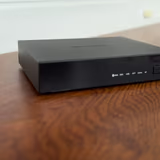
It's a small black box with three RCA plugs sticking out from the back. There's an SMSL logo on the top. Almost every piece is made out of black matte plastic, but on the front they went for glossy black plastic, which is a fingerprint magnet - so if you touch your DACs as often as I touch my cables, it's going to require cleaning pretty often to remain clean.
Speaking of the front, there are individual white LED input indicators plus a single button that acts as an input selector. The button feels okay - I don't think it's going to fail you with normal use.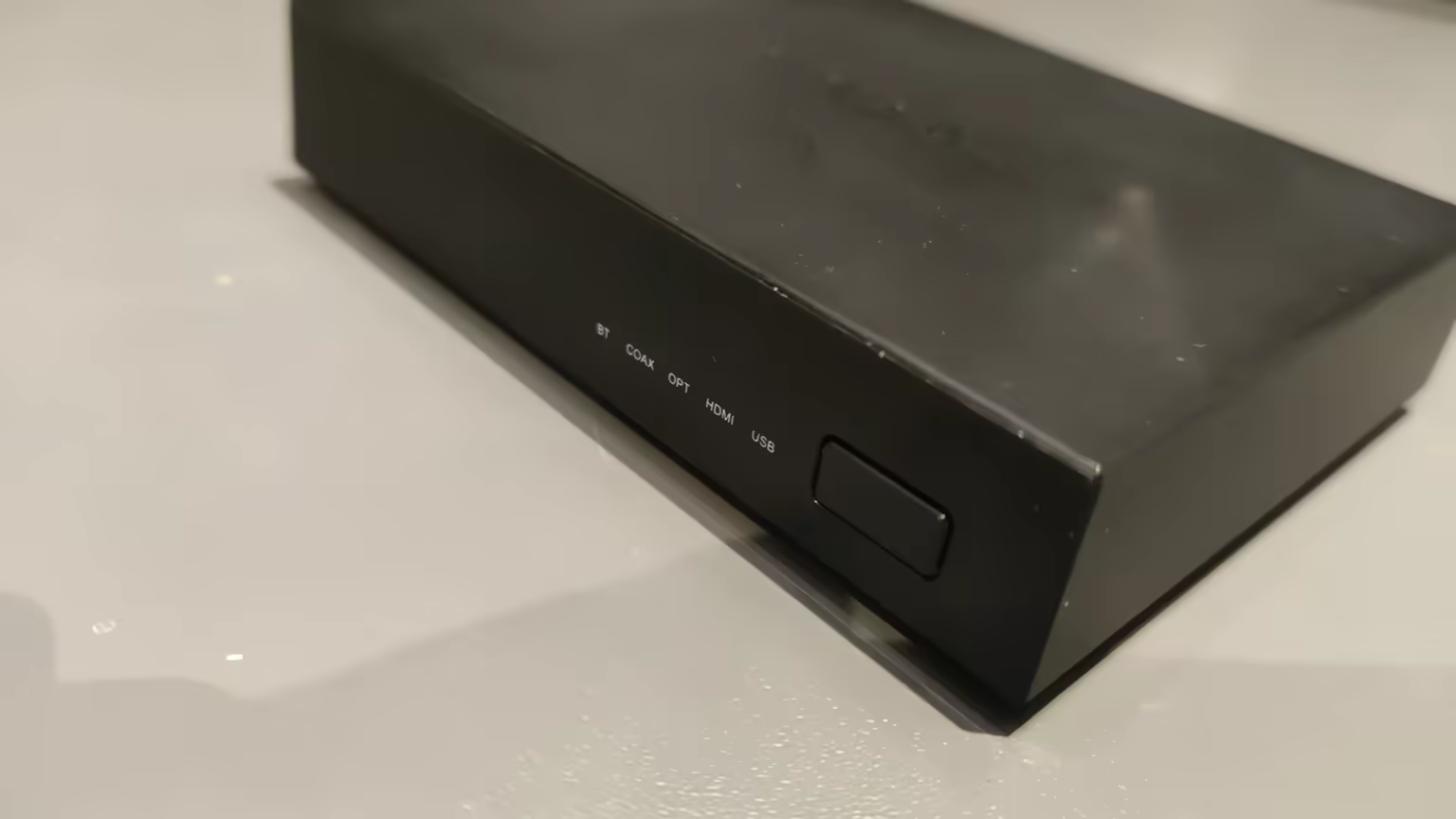 (view larger)
We've got four rubber feet on the bottom that are very effective at making it stay in place - unless there's a stiff, heavy cable hanging off of it, then its weight is just unable to keep up and it's going to float.
Generally, it's made pretty decent. You can hear some rattling inside while shaking it like crazy, but for a product this cheap, you don't expect it to be made out of brass or gold, do you? What's most important is that it doesn't feel like it could break easily - it's just solid for what it is.
They had to cut corners heavily to make this product, and I think that the build quality is where they decided to do that. I would say that they did it perfectly, without sacrificing anything important like the ports' quality too much.
Inputs and Outputs: Five Inputs Under $30
While we're on the topic of the ports, let's see what inputs it's equipped with.
Going from the left, there's USB Type-C, HDMI, Optical Toslink, and Digital Coax. On the very right side, we've got left and right RCA analog outputs. There's also Bluetooth built in - but no fancy codecs, sadly. Their licensing costs wouldn't allow this device to be so affordable.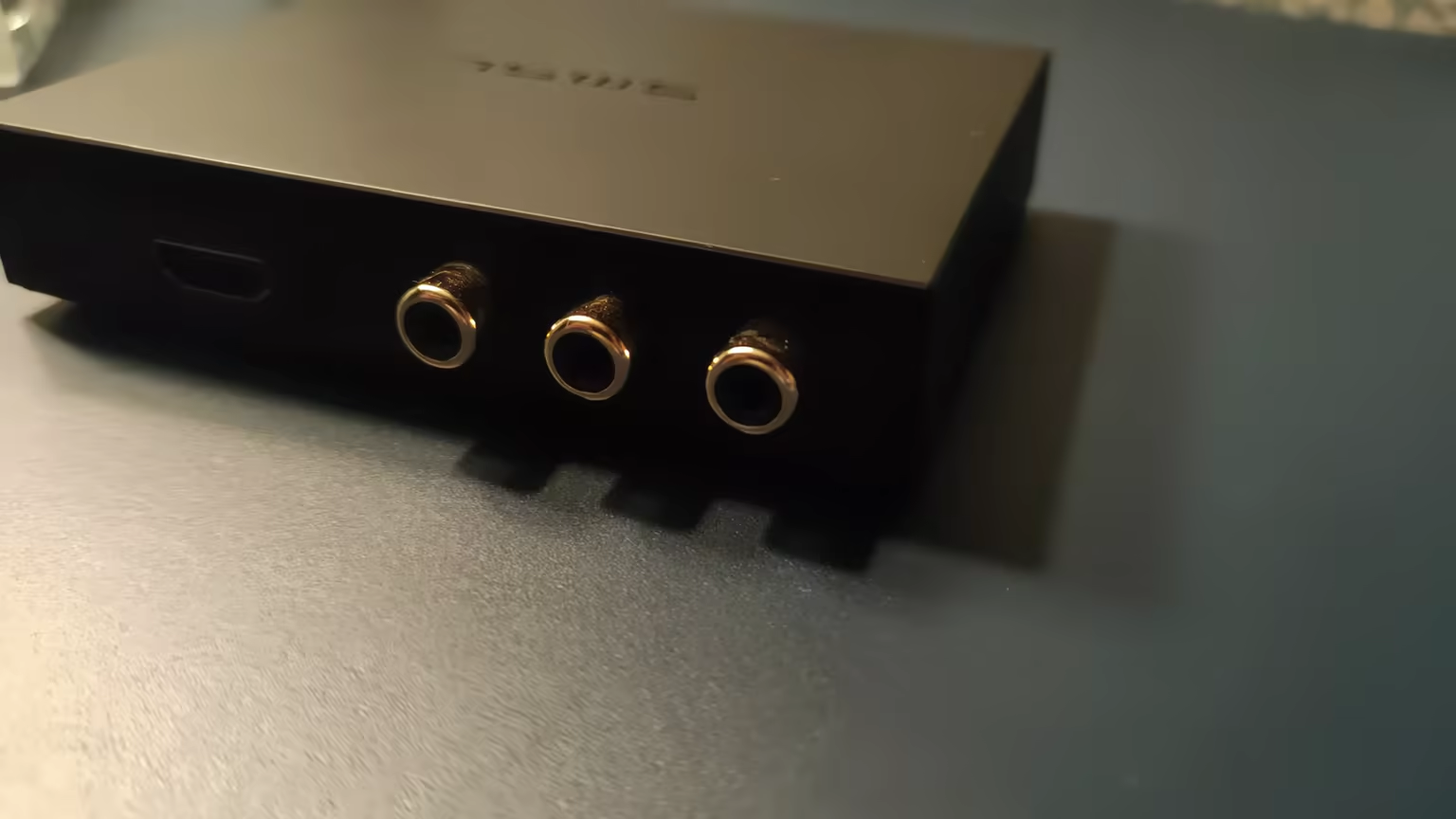 (view larger)
Specifications: 16-Bit Limits, Honest Numbers
Technical specifications listed by the manufacturer mention the output level to be 1.9V RMS, which I think is a bit lower than regular - but it's understandable, since with a higher DAC output voltage and no level control, you could be distorting your amp and have no way of fixing that, since the PS100 has no volume control.
Going down the spec sheet, the total harmonic distortion plus noise (THD+N) is 0.005%, or -85dB. It's not a measurement monster, of course, but for the price I think it's doing very well.
The dynamic range is 96dB, as the maximum supported bit depth is just 16 bits. For the sampling rate, the maximum value depends on what we use as the input - with USB it maxes out at 48kHz, and with optical and coaxial it goes up to 192kHz, which is very good. Why is there this discrepancy between USB and other inputs? I would assume it's because they wanted to save a little bit on the USB chip, as they can be costly with higher specs.
For the DAC chip, they're using one of the ESS solutions - namely the ES9023.
How Does It Sound? Decent, and That's the Point
Did replacing a high-end DAC with this one make my headphones or speakers sound terrible, unusable, or unpleasant to listen to? Let me surprise you - it didn't.
DACs don't make as big of a difference as amplifiers, and far less of a difference than the actual headphones or speakers. The sound was decent, however - it didn't shine in any aspect. The clarity was fine, nothing spectacular, same for the soundstage and imaging. The bass amount was seemingly increased, but it wasn't more impactful or anything. I experienced a little bit of dryness in the sound, and the instrument separation wasn't too distinct.
But just because this DAC doesn't sound amazing, doesn't mean that it can't make your system sound better. What do I mean? When you have a set, limited budget for source gear (DAC + amp), you could pick up this DAC, saving some money here that you could put into a better amp - which is going to make a bigger positive sonic difference to your audio system.
I believe that's the best thing you can do in a situation like that - saving on the DAC to put more money into the amp, or even better, if possible, into your headphones or speakers.
Sound signature
Derived from the words this review uses: each axis runs between two opposite descriptors, and the shape leans toward whichever side the writing does.
- Warm ↔ Bright Neutral, no clear signal in the review language
- Relaxed ↔ Analytical Neutral, no clear signal in the review language
- Polite ↔ Aggressive Neutral, no clear signal in the review language
- Lean ↔ Bass-heavy Neutral, no clear signal in the review language
- Intimate ↔ Wide stage Neutral, no clear signal in the review language
Not sure which signature suits you? Find yours with a blind A/B test
Watch the video review
Subscribe on YouTube (opens in new tab)Prefer to read? The written review above covers everything in the video.
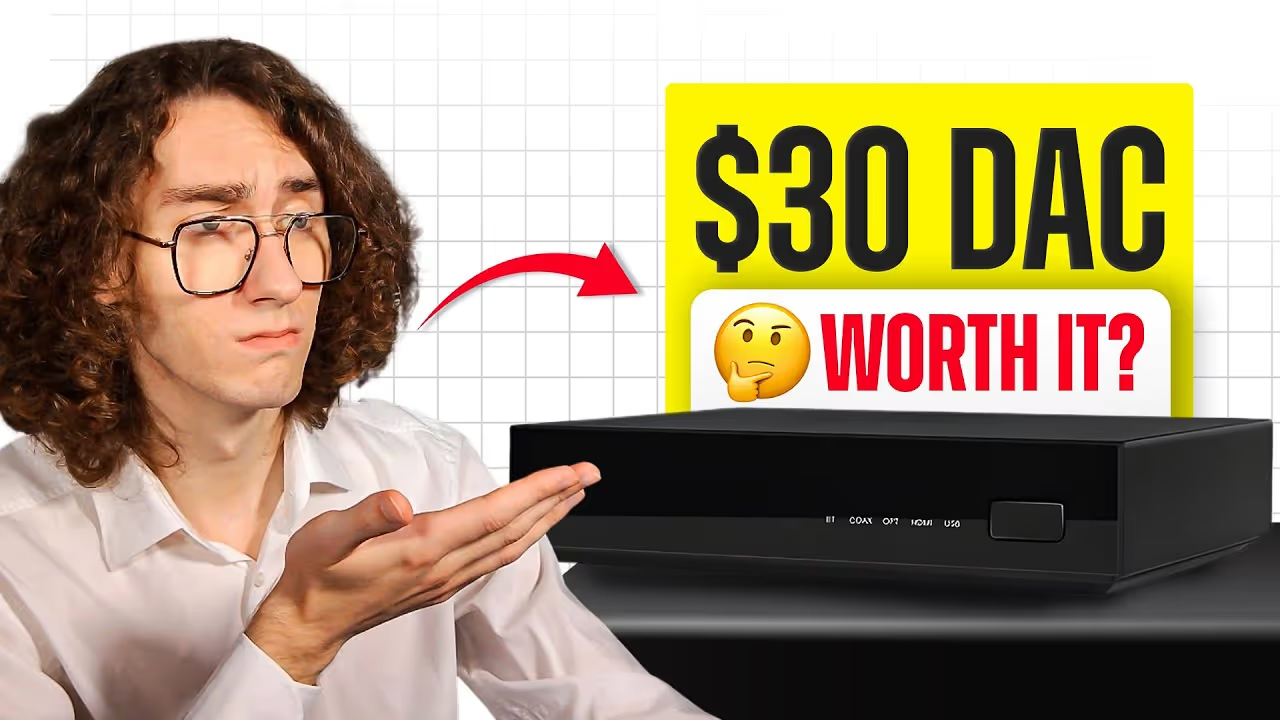
- 0:00 How much is it?! (opens in new tab)
- 0:32 Build Quality & Design (opens in new tab)
- 1:54 Input Options (USB-C, HDMI ARC, Toslink, RCA Coaxial, Bluetooth) (opens in new tab)
- 2:14 Technical Specification (Bit Depth, Sampling Rate, THD+N, Dynamic Range) (opens in new tab)
- 3:26 Sound Quality Impressions (vs. R2R, Soundstage, Imaging, Bass, Separation) (opens in new tab)
- 4:17 It Can Make Your Setup Sound BETTER! - How? Best Budget DAC? (opens in new tab)
Common questions about the PS100
Is the SMSL PS100 worth it?
Yes, for the right listener - 7.0/10, Recommended, higher than 7% of everything we have tested, against a catalogue median of 8.1. On value it rates excellent: top 13% for the price in DACs, so it is one of the best-value pieces we have scored. Price: $29.
Who should buy the SMSL PS100, and who should skip it?
Buy it if you are adding one piece to a system that already works, and you want the most performance per dollar on the list. Skip it if you want one box that covers the whole chain.
What else have you tested that is close to the SMSL PS100?
No matchup page yet, and no close price match in the catalogue either. The nearest things we have scored in the same category: the SMSL PS200 at 7.0/10, the Fosi Audio ZD3 at 7.1/10, and the SMSL DO100 PRO at 8.0/10.
Why does the PS100 only do 48kHz over USB?
Almost certainly cost. Optical and coaxial both reach 192kHz here, and USB stops at 48kHz - the discrepancy points at the USB receiver chip, which gets expensive fast as the specification rises. On a DAC selling below $30 that is exactly where I would expect the saving to be made. If high sample rates over USB matter to you, this is the wrong product; if you are feeding it from a TV, a console or a CD transport over optical or coax, it is a non-issue.
Is 16-bit a problem on the PS100?
In practice, rarely. Sixteen bits caps the dynamic range at 96dB, which is CD quality, and CD quality is more headroom than almost any listening room can use. It does mean this is not the DAC for anyone building around hi-res files as a matter of principle. What it is not is a source of audible harm on ordinary material played at ordinary levels.
Why is there no volume control on the PS100, and does it matter?
There is none, and the output level is set low at 1.9Vrms partly because of it. That is lower than the usual line-level standard, and deliberately so: with no way to turn the DAC down, a hotter output could clip your amplifier and you would have no means of fixing it. So the two facts are connected rather than being two separate compromises. Use it with an amplifier or active speakers that have their own volume control, which is nearly all of them.
Will the PS100 make my system sound worse?
No, and I was surprised too. Swapping a high-end DAC for this one did not make my headphones or speakers sound terrible, unusable or unpleasant. DACs make less difference than amplifiers, and far less than the headphones or speakers themselves. The sound was decent without shining anywhere: clarity fine, soundstage and imaging fine, a slight dryness, and instrument separation not especially distinct.
Who should buy the PS100?
Somebody with a fixed budget for source gear who wants it in the right place. That is the real argument for this DAC: spend under $30 here and put what you saved into a better amplifier, which will make a bigger sonic difference to your system - or better still, into the headphones or speakers, where it matters most of all. Buying this because it is cheap is fine. Buying it as part of a plan is better.
Is the PS100 built well enough to last?
For the money, yes. Almost everything is black matte plastic, the front is glossy and a fingerprint magnet, and you can hear something rattle if you shake it hard. None of that reads as fragile - it simply does not feel like it could break easily. The corners were cut in the build rather than in the ports, which is the right call. The four rubber feet hold it in place too, unless a stiff heavy cable is hanging off the back, in which case it will float.
If you're interested in this
All 8 DACs reviewsClosest alternatives