SMSL PS200 Review: Why DAC Chips Are NOT Everything
A $90 ESS-based DAC that measures fantastically but illustrates why specs aren't the whole story - it sounds fine, just not exceptional.
higher than 7% of everything we have tested
- Standout
- ES9039Q2M chip
- Watch out for
- All-plastic chassis
- Better alternative
- SMSL DL100: $90 more, scores 1.2 higher.
Is it for you?
- You want a big, out-of-your-head stage
- You want more performance per dollar than most of its peers
- You want vocals right in front of you
Named Best Budget in our Best DACs guide.
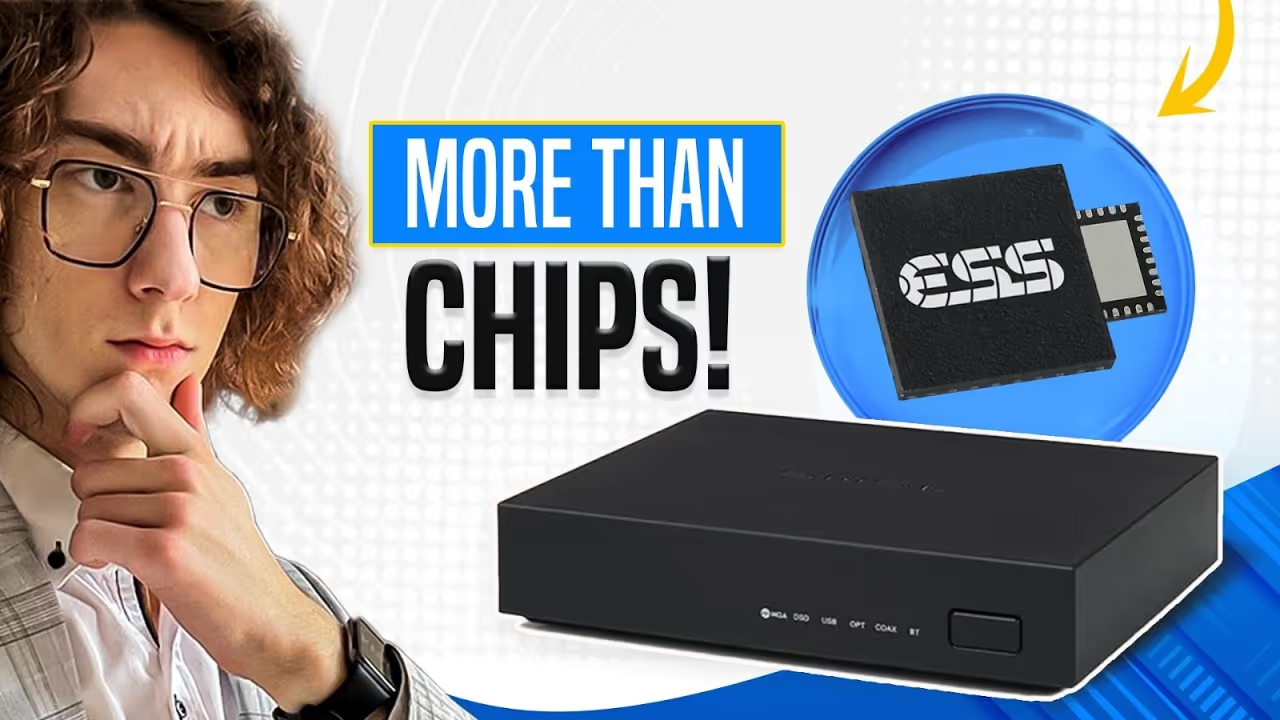
Some people think that the DAC chip is all that matters for sound in a DAC. Others argue the chips make no difference, and that it's all about the output stage, power supply, and filters.
The SMSL PS200 is a $90 tiny digital-to-analog converter that focuses exclusively on measurements. Is it a good approach?
Build Quality and Design: A Tiny Recycled Shell
It's a very small, lightweight box. It can fit easily in the palm of my hand. It's so light that it's very easy for it to get pulled by the connected cables. It doesn't feel super fancy or anything. Likewise, it's made fully out of black plastic.
What's interesting, they used the same shell as on the PS100, to reduce manufacturing and R&D costs. On the front, there's a rectangular button used to control the DAC's inputs and power it on or off. The top of the unit features an engraved SMSL logo. It's one of my favorite ways of branding products. It looks way better than regular printed text or a logo.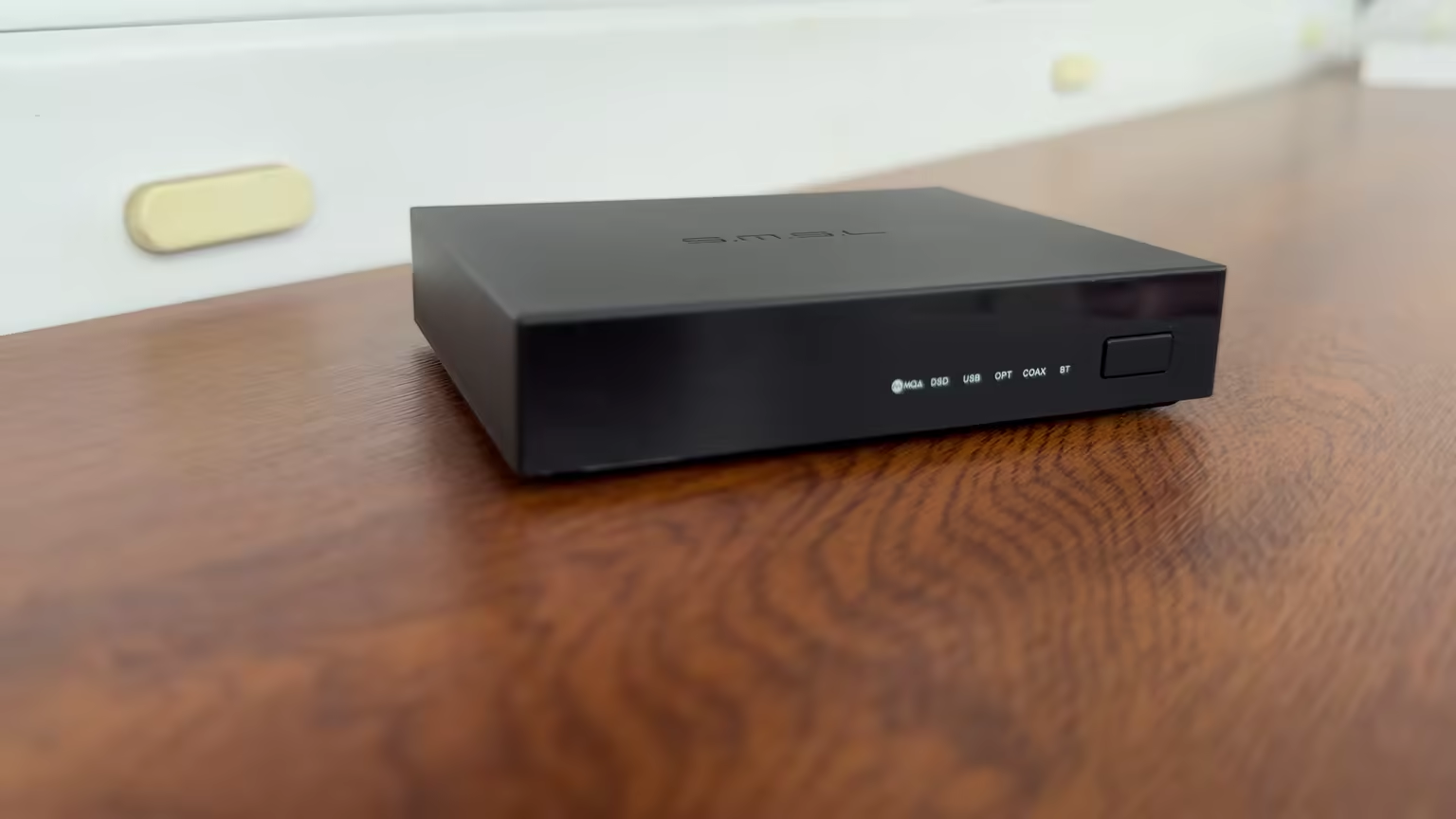 (view larger)
Inputs/Outputs: Single-Ended, Sensibly So
It uses a USB-C connector for power. No matter if you're also using it for data, it has to be plugged into a phone charger or some other form of linear PSU.
There's a USB 1.1 and 2.0 switch, made to increase compatibility with older devices and maximize performance with newer ones. Next to it, there's an optical input, which can be a good idea if you're trying to use it with a noisy source like a computer's motherboard. Toslink uses light as a form of communication - unlike electrons, it can't transfer any electrical noise.
Lastly, there's a regular coaxial input, going through an RCA plug. For the analog outs, we have a single-ended pair of RCAs. You can't expect such a small and inexpensive DAC to be balanced. Moreover, going single-ended cuts down on the cabling costs, as XLR cables tend to be significantly more expensive. It also makes the process easier for beginners - as they don't have to worry about so many things and make so many difficult decisions.
Finally, there's Bluetooth 5.0 for wireless audio.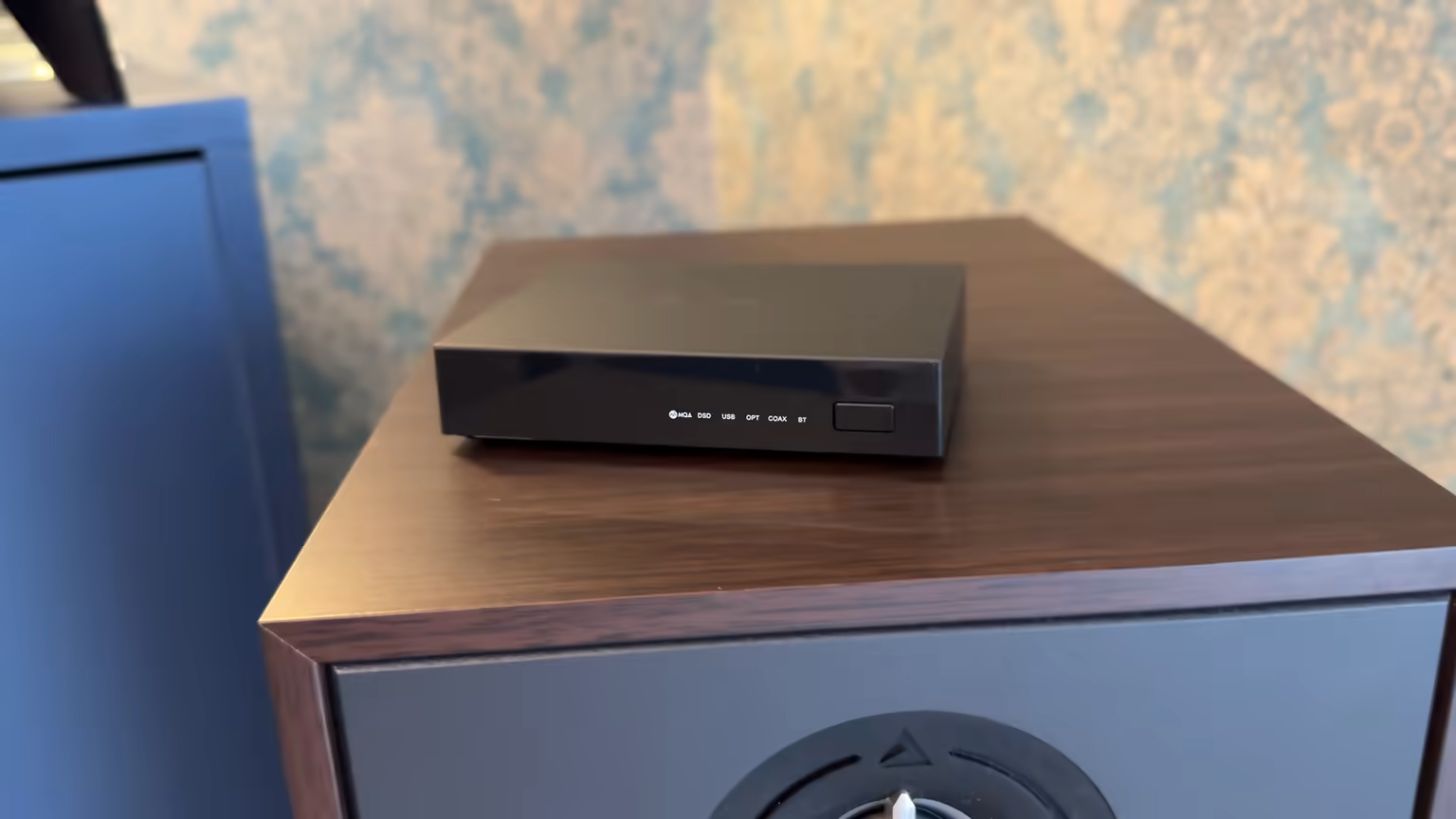 (view larger)
Technical Specifications: Measurement-First at $90
The output voltage is flat 2 volts RMS, which is a standard for RCA. Its THD+N is at 0.0001%, or -118dB. The dynamic range and the signal-to-noise ratio are 123dB. It means one thing: the internals are not purposefully messed up, and it measures fairly well.
It can decode up to 768kHz PCM at 32-bit. The maximum DSD rate is very high - 512. For USB decoding, it uses a 3rd gen XMOS solution - I'm starting to see a pattern with the XU-316 chip. SMSL almost always uses this one. For digital-to-analog conversion, an ES9039Q2M chip is being used. That's a good chip, one of the higher-end ones from ESS. It also has 4 dual op-amp chips, presumably in the output stage.
Sound Quality: Fine, Until Your System Outgrows It
Looking at the measurements and the chips, which are both good, would indicate that it has to sound great. However, the truth is a little different.
Luckily, it doesn't sound terrible, wrong, or off in any way. In less resolving setups, DACs don't make such a huge difference that this device could be a limiting factor. At some point, I'm sure it is going to be. For example, my reference speaker setup, being quite resolving, shows clear signs of system mismatch. It doesn't make the sound unpleasant or collapsed, but I definitely wouldn't build such a system with high-end speakers, an expensive amplifier, and such a budget-oriented DAC.
On the other hand, the PS200 can do a fantastic job in many cases. Dedicated headphone amplifiers paired with budget to lower-medium range headphones or active speakers are some of them.
Regarding its sound characteristics: the tonality is just fine, with a slight bright tilt - it's important, as the perceived tonality itself is one of the bigger factors. Bass punch is also there - ESS chips tend to overemphasize it slightly, in my experience. Nonetheless, while this DAC can perform well in some aspects, it can't do everything.
The soundstage width doesn't seem to be super wide. It doesn't shrink it down a lot, but it does it a little bit. The sense of depth is also not there, but it's understandable, as that's something usually associated with high-end components.
Timbral accuracy is not bad, but it has a plasticky sound added to strings or brass sound sources.
If you feel like your HiFi system isn't worthy of a super expensive DAC, you care only about the measurements, or simply don't hear large differences between DACs, this one will be perfect for you. Especially since it offers lots of audio formats and connection possibilities, I'd consider it a perfect beginner-friendly option.
Comparisons: PS100, DO100 PRO, and DL100
If you're on a tight budget and would like to explore some more options from SMSL, there are quite a few.
First, their even cheaper PS100 is performing quite similarly. What you're losing with it is the ability to decode higher sampling rate and bit depth formats, DSD, MQA, and some sound fidelity. By that I mean the sound is less refined, more closed in, and less detailed. However, the output stage and other components must be similar enough in both PS100 and PS200, since they generally sound alike.
The DO100 PRO is a clear upgrade in almost every aspect - it sounds better, is built to a higher quality standard, has more functions, and has lots of input/output options. However, it costs more and is much larger. There's also the DL100, which can be the most interesting option.
Sound signature
Derived from the words this review uses: each axis runs between two opposite descriptors, and the shape leans toward whichever side the writing does.
- Warm ↔ Bright Neutral, no clear signal in the review language
- Relaxed ↔ Analytical Leans analytical
- Polite ↔ Aggressive Neutral, no clear signal in the review language
- Lean ↔ Bass-heavy Neutral, no clear signal in the review language
- Intimate ↔ Wide stage Leans wide stage
Hear what "analytical, wide stage" means: a short synthesised loop, flat and then with those leanings. An illustration of the words, not a recording of the PS200.
Not sure which signature suits you? Find yours with a blind A/B test
Watch the video review
Subscribe on YouTube (opens in new tab)Prefer to read? The written review above covers everything in the video.
- 0:00 Is The DAC Chip Everything In A DAC? (opens in new tab)
- 0:26 Build Quality (Small Size, Low Weight, PS100 Shell, Stealth Logo) (opens in new tab)
- 1:10 Inputs & Outputs (USB-C Power, 1.1/2.0, Optical Toslink, Coaxial, Analog RCA, Bluetooth 5.0) (opens in new tab)
- 2:21 Technical Specification (Measurements, Output Voltage, THD+N, Dynamic Range, SNR, PCM, MQA, DSD, Output Stage) (opens in new tab)
- 3:29 Sound Quality (Resolution, Sound Stage, Punch, Sound Stage Width, Depth, Timbral Accuracy) (opens in new tab)
Common questions about the PS200
Is the SMSL PS200 worth it?
Yes, for the right listener. It scored 7.0/10, Recommended, higher than 7% of everything we have tested, against a catalogue median of 8.1. On value it rates strong: above average for the price in DACs. Price: $89.
Who should buy the SMSL PS200, and who should skip it?
Buy it if you want a big, out-of-your-head stage, and you want more performance per dollar than most of its peers. Skip it if you want vocals right in front of you.
What else have you tested that is close to the SMSL PS200?
There is no head-to-head page for this one yet, and nothing we have scored sits close enough in price to call a direct rival. The nearest reference points in the same category: the SMSL PS100 at 7.0/10, the Fosi Audio ZD3 at 7.1/10, and the SMSL DO100 PRO at 8.0/10.
Do good measurements mean the PS200 sounds good?
Not on their own, and this DAC is the clearest illustration I have of that. It measures excellently - 0.0001% distortion, 123dB dynamic range - and it carries the ES9039Q2M, one of ESS's higher-end chips. It does not sound bad at all. It also does not sound exceptional: the stage narrows a little, there is no real depth, and strings and brass pick up a plasticky quality. Chips and numbers are inputs to the result, not the result.
When would the PS200 hold a system back?
When the rest of the system is resolving enough to show it. On my reference speaker setup there are clear signs of mismatch - not unpleasant, not collapsed, but visible. I would not build a system with high-end speakers, an expensive amplifier and a budget DAC like this. Where it does a genuinely fine job is with a dedicated headphone amplifier feeding budget to lower-mid headphones, or with active speakers in that same tier.
PS200 or PS100?
The PS200, if the formats matter. They share the same shell - SMSL reused it to cut manufacturing and development costs - and they sound generally alike, which suggests the output stage and surrounding components are similar. What the PS100 gives up is higher sample rates and bit depths, DSD, MQA, and some refinement: it is more closed in and less detailed. If you are only feeding CD-quality material into a modest system, the cheaper one is not much of a compromise.
PS200 or DO100 PRO?
The DO100 PRO is a clear upgrade in almost every aspect - it sounds better, it is built to a higher standard, it has more functions and far more input and output options. It also costs more and is much larger, which is the whole argument for the PS200 in the first place. If desk space and money are tight, the small one is the point. If neither is, do not buy the PS200 to save a bit; also look at the DL100, which may be the most interesting of the three.
Why is the PS200 single-ended only?
Size and cost, and it is a reasonable call rather than a cut corner. You cannot expect a DAC this small and this cheap to be balanced, and going single-ended saves the buyer money too, since XLR cables are significantly more expensive than RCAs. It also keeps things simple for somebody early in this hobby, who has enough decisions to make already. The USB-C port is power only, by the way - there is no battery, so it needs a charger or a linear supply regardless of how you feed it data.
If you're interested in this
All 8 DACs reviewsClosest alternatives