The front of the chain, as it has actually been reviewed here: digital-to-digital converters that reclock and re-format a stream before it reaches a DAC, the audio interfaces that put a performance into a chain, and the studio microphones that decide what exists to be reproduced later. Each one runs on the same reference chain, at matched levels, with everything else held constant - which matters more at the front than anywhere else, because the differences are smaller here than they are at the loudspeaker end. Network streamers, transports and turntables belong in this category and are not in it yet; nothing on this page pretends otherwise.
6 reviews published so far, scored against the same reference list.
Filter by driver / topology, price and connectivity. Pick within a row to widen; combine rows to narrow. Only options the catalogue actually covers are shown.
Driver / topology
Price
Connectivity
SourcesOC16
8.7
Highly Recommended
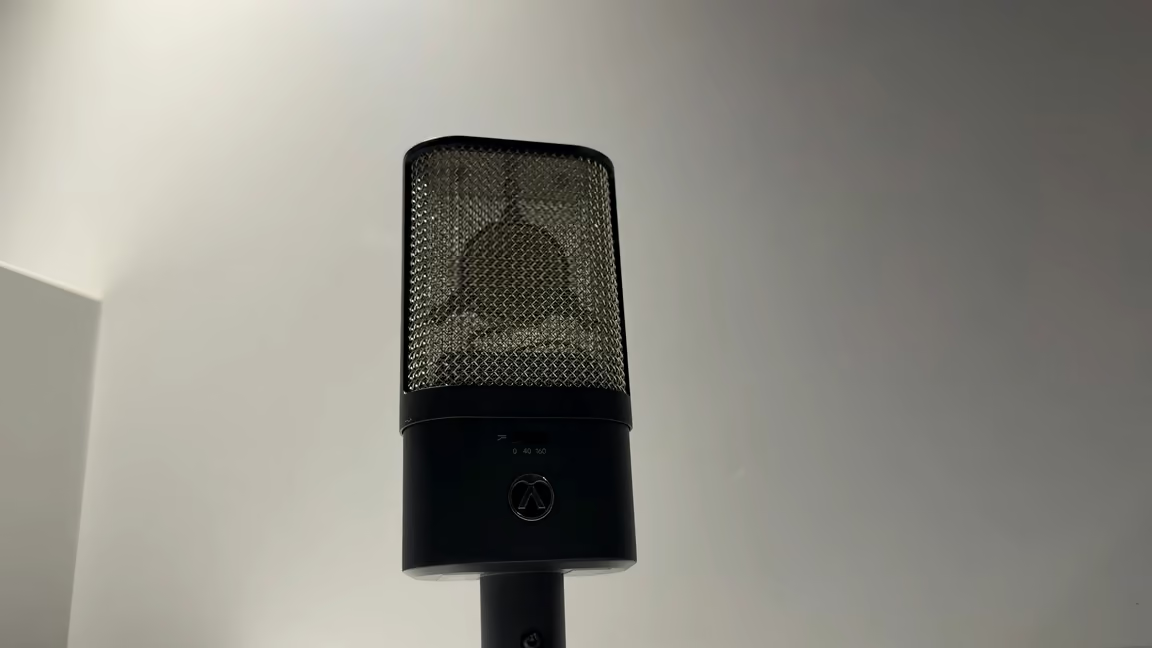
Austrian Audio OC16 Review: A $449 Condenser With a Hand-Built Vienna Capsule
A $449 cardioid condenser built around the CKR6, a ceramic-ring capsule hand-assembled and measured in Vienna: 148 dB max SPL, 14 dB(A) self-noise, one high-pass filter.
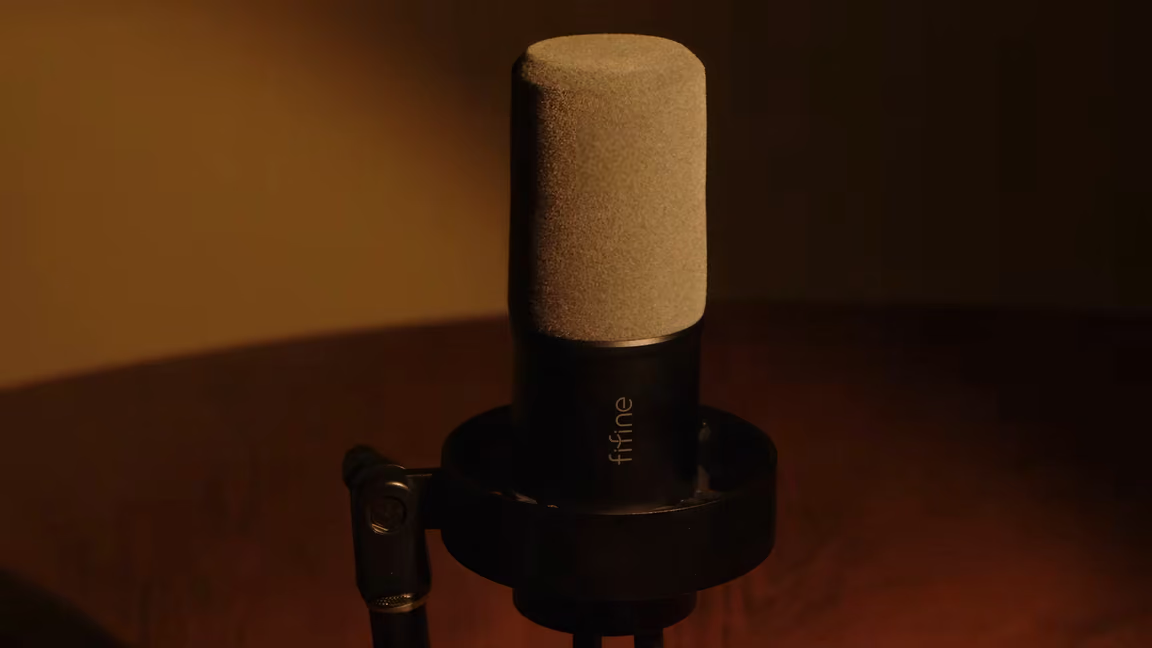
FIFINE K688 Review: A $69 XLR and USB Broadcast Mic
A dynamic broadcast microphone with both XLR and USB-C outputs, so the audio interface is already inside it: cardioid rejection, 130 dB max SPL, on-body gain and mute.
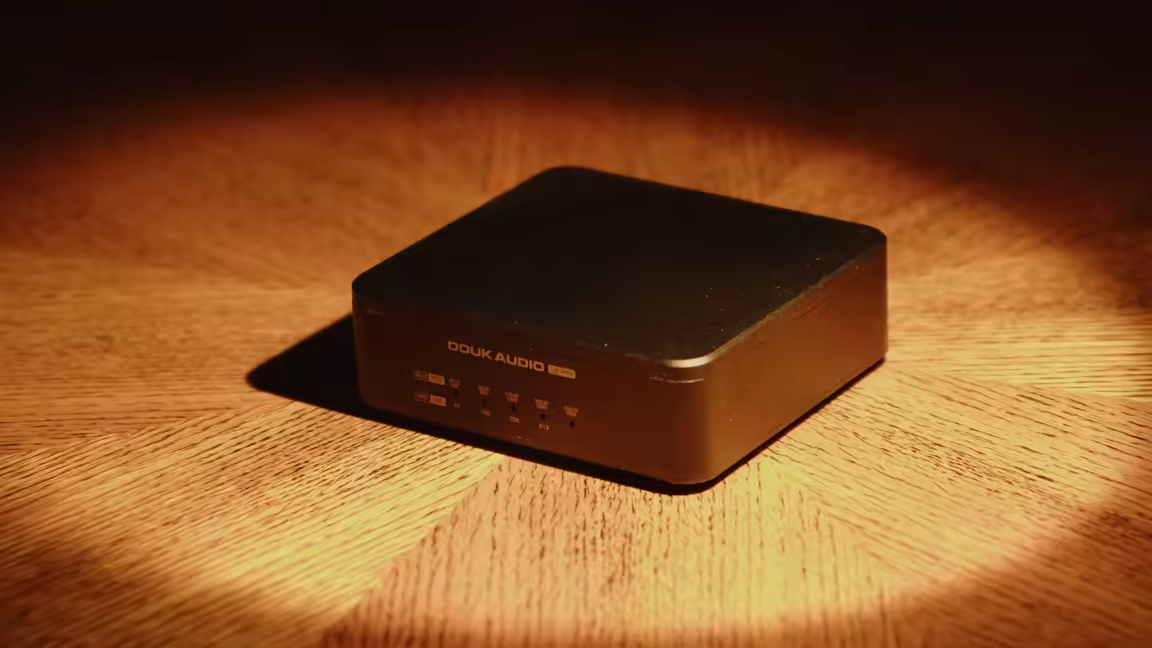
Douk Audio U2 Pro Review: Does a $70 DDC Reclocker Actually Work?
A $70 XMOS XU316 DDC reclocker (USB-C in; TOSLINK, coax, I²S out). Tighter timing and a fuller, more detailed sound - at the cost of some air and openness.
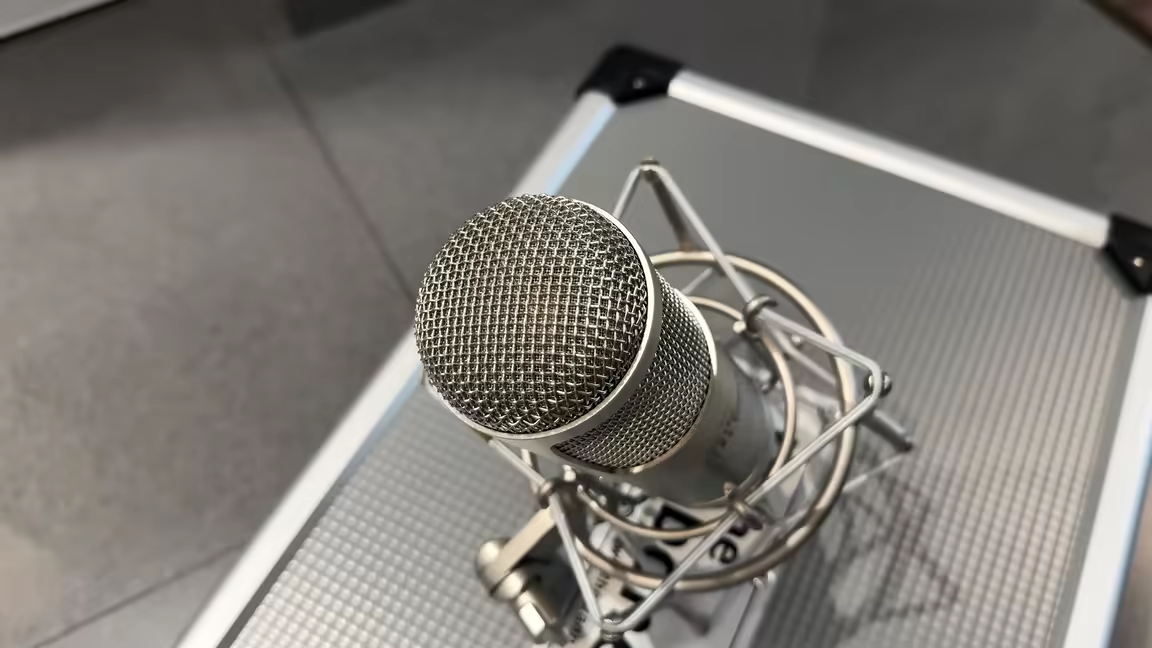
t.bone SCT 2000 Review: A $231 Tube Mic That Robs the Industry
A large-diaphragm tube condenser at $231 with a real 12AX7B tube, nine polar patterns, gold-sputtered diaphragm, and a sound that competes with mics 3-5x the price.
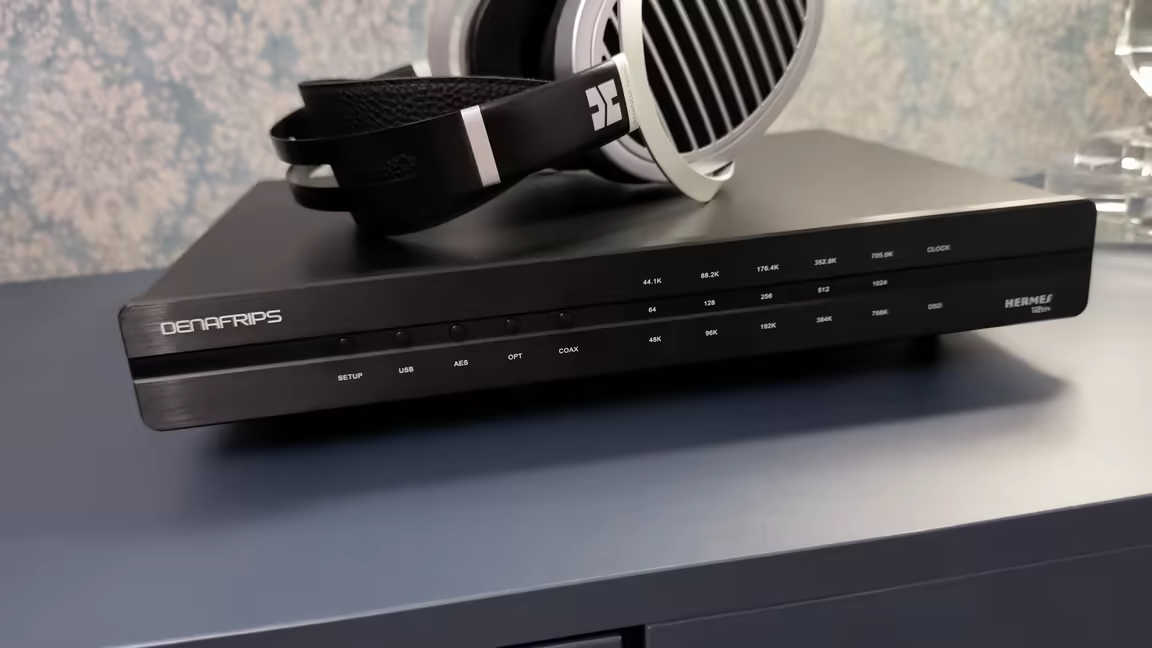
Denafrips Hermes 12th Review: Are DDC Reclockers Snake Oil?
A serious DDC with OCXO clocking, FIFO reclocking, dual I²S outputs, and two BNC clock inputs - removes the veil between your source and DAC without coloring the sound.
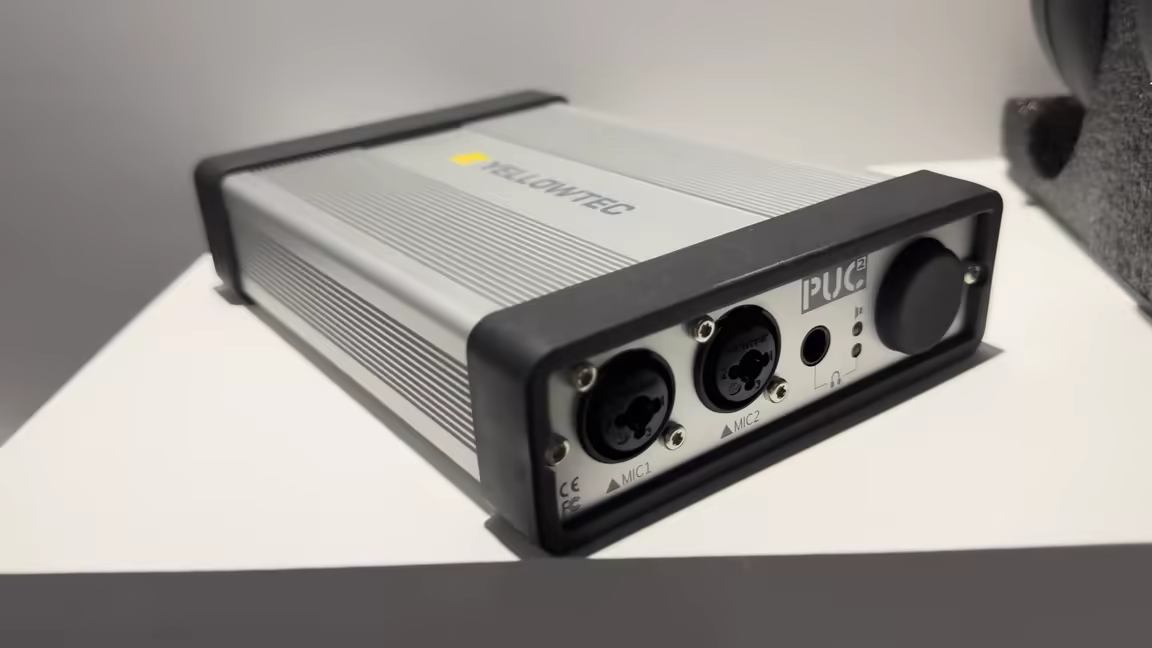
Yellowtec PUC2 Mic LEA Review: An Audio Interface With LEA
A €769 audio interface from Germany with proprietary LEA leveling technology - automatic perfect mic levels, zero-latency monitoring, and a slightly warm, transparent sound.
Curated shortlists and free calculators to take you from browsing the list above to a decision you can act on.
Buying guideBest Audio SourcesFront of the chain, ranked by score: digital-to-digital converters, audio interfaces and studio mics tested on one reference chain. A small, honest list.Read the guide
AnalyzerFLAC & Hi-Res Audio CheckerDrop any audio file and see its real frequency content via FFT spectrogram. Catches upsampled fakes where a "192kHz" file secretly contains only 44.1kHz content.Open the tool
CalculatorBit Depth Calculator: Digital Volume LossFind out how many bits of audio resolution you lose when lowering digital volume in Windows or macOS. Shows effective bit depth and noise floor rise.Open the tool
CalculatorCable Capacitance CalculatorTwo modes: the -3 dB treble roll-off a line-level run loses to cable capacitance, and whether your cable plus phono-stage input stays inside a cartridge's recommended loading.Open the tool
How sources reviews work on this site.
Every review on this page covers the front of a chain: the digital-to-digital converters that reclock and re-format a stream before a DAC sees it, the audio interfaces that put a performance into a chain, and the studio microphones that decide what exists to be reproduced later. Each one was tested on the catalogue's own reference chain at matched levels, which matters more here than anywhere else - the differences at the front of a chain are smaller than the differences at the end of it, so anything else changing at the same time would swamp them. Network streamers, transports and turntables belong in this category and have not been reviewed yet.
For a converter: whether the data arrives unmodified, with no silent resampling and no DSP by default, and what the unit's own clock does to the timing of the stream it hands on. Bit-identical and well-timed are two different claims and both get checked.
Behaviour at the edges, not the middle
A spec sheet describes the comfortable case. What gets tested is the claimed limit: the top of a converter's sample-rate range, a microphone at its stated maximum SPL, an interface at the gain setting its own front panel makes easy to reach.
Capture character, stated plainly
For microphones: where the response is lifted or dipped and what that does to a real voice or instrument, self-noise against the quiet sources it will be asked to record, and how much the room comes with it. A mic that flatters one source and ruins another is described that way rather than scored as neutral.
Connectivity and integration
Inputs and outputs for the role - USB, S/PDIF, AES, I²S, XLR, phantom power, monitoring - and whether the piece slots into a system that already exists rather than demanding a rebuild around it. An external PSU or a DC barrel jack is part of the product, not a footnote.
Build and longevity
Materials, connector reliability, chassis and capsule protection, power-supply isolation from sensitive stages. Front-of-chain gear is handled, moved and cabled more than anything else in a system, so a mount that sags or a socket that loosens is a real defect and is scored as one.
How to read the scores: A 9.0 here does its one job with no audible cost and no caveat about when to use it. An 8.0 is excellent with a stated condition - a microphone that needs close, on-axis technique, an interface that wants its own power supply. Below 7.0 means a real trade: the Douk U2 Pro tightens timing and takes air and stage width away doing it, which is a 6.5 rather than a pass because the trade is genuine and some chains will want it.
Terms you will hit in the reviews
DDC (digital-to-digital converter)
A box that takes one digital input, buffers and reclocks it against its own oscillator, and outputs the same audio on a different interface - typically USB in, I²S or coax out. It converts nothing to analog; it replaces the DAC's input stage.
Reclocking / FIFO buffer
Writing an incoming stream into a buffer and reading it out on a local clock, so the timing of what leaves is set by the unit's own oscillator rather than by whatever sent it. This is the mechanism a DDC is sold on.
OCXO clock
Oven-controlled crystal oscillator: a crystal held at a constant temperature so its frequency drifts far less than a bare one. The precision clock reference at the high end of the converter market.
Self-noise
The noise a microphone produces with no sound reaching it, quoted in dB(A). It sets the quietest source the mic can usefully record: 14 dB(A) is quiet enough for close detail work, high teens is audible on a whisper.
Max SPL
The loudest sound pressure a microphone takes before its own electronics distort. 148 dB is past the inside of a kick drum; a mic with that headroom needs no pad to survive a loud source.
Phantom power
The 48 V an interface sends up the XLR pair to run a condenser microphone's electronics. Dynamic microphones neither need it nor are harmed by it.
We do not score the front of a chain by femtosecond figures on a data sheet or by what a capsule is claimed to be "the same as". What the unit does to a real stream and a real voice on a chain that does not change between tests is the thing; everything upstream of that is an input to the verdict, not the verdict.
Sources reviews: common questions.
Buying advice, terminology, and how the sources category is reviewed on The Audio Stuff.
What is the best network streamer for audiophile use?
Depends on your library and software. For Roon, any RAAT endpoint (Sonore, Auralic, MicroRendu, Eversolo) works equally well. For UPnP and direct-attached storage, all-in-ones like the Eversolo DMP-A6 or Auralic Aries combine streamer, DAC, and pre-amp. Bit-perfect playback is the baseline; pick the one with the software you actually want to use.
Do streaming sources sound different from each other?
Bit-perfect streamers playing the same file should sound identical: the DAC sees the same bits. Differences appear when streamers add internal DSP (Roon DSP, EQ, room correction), use different clocks feeding the DAC, or have noisy USB/S/PDIF outputs. The audible part is mostly clock quality and noise; the bits themselves are the bits.
Are turntables still worth buying for music quality?
For sound quality versus a great DAC and digital chain, no, vinyl loses on dynamic range, noise floor, and channel separation. For experience, ritual, mastering quality on certain reissues, and the unmistakable analog character, yes. Treat turntables as a different format with different strengths, not as the "purer" audio source they are sometimes marketed as.
What is Roon and is it worth the subscription?
Roon is library and streaming management software with rich metadata, multi-room playback, and excellent RAAT-protocol streaming to compatible endpoints. The interface, search, and discovery are best-in-class. Worth the subscription if your library is large and tagged, and you want one consistent UI across multiple rooms; overkill for a single-stack listener who lives in Spotify.
Can I just use my phone or computer as the source?
Yes, especially with an external USB DAC. A phone or laptop running Tidal, Qobuz, Apple Music Lossless, or local FLAC files into a $300+ USB DAC matches the sound of dedicated streamers in the same price tier. The "best" source for sound is whatever feeds your DAC bit-perfect; the question is software experience, not bit transmission.
 Sources OC16